



What Are Antioxidants in Skincare? What They Do, Which Ones to Use & How to Layer Them
Antioxidants are in almost every routine, but what do they actually do? Here is the simple version, plus which ones to use and how to layer them.
Author
askINKEY skincare advisor
Published
07 September, 2026
Time to read
15 minutes
Read the back of almost any serum, moisturiser or SPF and you will find the word somewhere. Antioxidant. It sits on packaging like a badge of quality, and almost nobody stops to explain what it means. It has become one of those skincare words everyone nods along to and very few people could define out loud.
Antioxidants in skincare are ingredients that help defend skin against free radicals — unstable molecules produced by everyday exposure to things like UV light, pollution and general daily stress. Used consistently, they help protect the look of your skin over time and support a brighter, more even, healthier-looking complexion.
That is the short version. Below is the longer one.
This guide covers what antioxidants actually are, what they do for your skin day to day, which ones are genuinely worth your money, how to layer them without overloading your face, how to choose based on your own skin type and concern, and the questions people ask us most often about all of it.
One honest expectation to set before we start. Antioxidants are a daily defence and support step. They are not an overnight fix, and anyone telling you otherwise is selling something. Think of them the way you think of brushing your teeth — unglamorous, cumulative, and much more powerful over five years than over five days. If you are still working out the basic order of things, our skincare routine guide is a good place to start before you go further here.
So what exactly are these ingredients defending your skin against?
What are antioxidants in skincare?
To understand antioxidants, you have to understand the thing they are up against. That means talking about free radicals — another phrase that gets thrown around constantly and explained almost never.
Here is the plain version. Molecules like to exist in pairs, electron-wise. A free radical is a molecule that has ended up with an unpaired, loose electron, and that makes it unstable and reactive. To settle itself down, it goes looking for a spare electron from whatever is nearby — a neighbouring molecule in your skin, for example. It takes one. Now thatmolecule is short an electron, so it does the same thing to its neighbour. And on it goes, a chain reaction of tiny thefts happening at a scale far too small to see.
Free radicals are not exotic or unusual. Your skin produces them naturally, all the time, as a normal by-product of being alive. The problem is not their existence. The problem is volume.
Where free radicals come from
Everyday life generates far more of them than your body’s baseline production. The usual sources are:
- UV exposure — the single biggest environmental contributor, and it happens on cloudy days and through windows too
- Air pollution — particulate matter, traffic fumes, general urban air
- Cigarette smoke — including secondhand
- Daily stress, poor sleep and general life admin — the boring, unavoidable stuff
Your skin is not defenceless against this. It comes with its own built-in antioxidant systems, quietly neutralising free radicals in the background without you ever noticing. That is the default state, and for a lot of the time it works perfectly well.
Oxidative stress is what happens when that balance tips. When free radical production outpaces your skin’s own ability to neutralise them, the surplus starts having a visible effect over time.
The comparison everyone understands is a cut apple. Slice one open, leave it on the counter, and within twenty minutes the exposed flesh starts browning. Nothing has been done to it. It has simply been exposed to air. Squeeze lemon juice over the same apple — vitamin C, an antioxidant — and it stays looking fresh for considerably longer. Your skin is not an apple, and the analogy only stretches so far. But the underlying principle of exposure, oxidation and visible change is close enough to be genuinely useful.
The single most useful idea in this article
Here is the reframe that makes everything else click into place, and the one thing we would ask you to take away if you read nothing else:
Antioxidant is a job description, not an ingredient.
This matters more than it might sound. People search for “an antioxidant serum” the way they might search for “a moisturiser”, as though it were one specific thing sitting on a shelf. It isn’t. Vitamin C is an antioxidant. So is niacinamide. So are vitamin E, Q10, and vitamin A in its various forms. They are chemically distinct ingredients, with different textures, different tolerability profiles and different secondary talents — all of them holding down the same broad job.
Once you understand that, the skincare aisle stops looking like a wall of interchangeable marketing claims and starts looking like a set of options you can actually choose between. You are not asking “should I use an antioxidant?” You are asking “which antioxidant suits my skin, my concern and my routine?” That is a far better question, and the rest of this article is built around helping you answer it.
Why topical antioxidants are worth bothering with
If your skin already makes its own, why apply more?
Because those internal reserves are finite, and they get used up. Every hour of UV exposure, every day spent in city air, draws down the supply. Your skin does replenish them, but its capacity to do so declines with age and with sustained exposure. The gap between what your skin needs and what it can produce tends to widen over the years.
Topical antioxidants are, in the most literal sense, a top-up. They add reinforcements at the surface where a great deal of the daily assault is landing.
What the difference looks like on your face
None of this is visible in real time, which is exactly why antioxidants are so easy to skip. But sustained oxidative stress shows up eventually, and it tends to show up as:
- A barrier that looks and behaves as though it is struggling — tight, reactive, easily upset
- Dullness, and skin that has lost its natural light-catching quality
- Uneven tone and patchiness
- Visible signs of ageing appearing earlier than they otherwise might
- Areas of pigmentation and dark spots becoming more noticeable
- Visible redness and other visible signs of skin stress
Note the word running through all of that: visible. We are describing how skin looks, because that is what skincare works on and what you can reasonably expect to influence with a serum.
And yes, you can eat antioxidants too — that question comes up constantly, and it deserves a proper answer rather than a throwaway line here. We have given it one in the FAQ section further down.
Now that we know what they are defending against, let’s talk about what they actually do for you.
What do antioxidants do for your skin?
If you want the practical answer rather than the chemistry answer, antioxidants do three jobs. Everything else is a variation on one of them.
Defend
This is the headline job and the reason antioxidants belong in your morning routine specifically.
Applied consistently, antioxidants help protect your skin against the environmental stressors it meets during the day — UV exposure, pollution, the general oxidative pressure of being outside and being alive. They are working from the moment you apply them, whether or not you can perceive anything happening.
This is genuinely important to sit with, because it is the least satisfying benefit in all of skincare. Defence is invisible by definition. You cannot see the damage that did not occur. There is no before-and-after photograph for a Tuesday in March when your skin was slightly better protected than it would otherwise have been. The payoff is real, but it is deferred and it is quiet, which is precisely why so many people abandon antioxidants after three weeks of “not seeing anything”.
Support
The second job is supportive rather than protective.
Over time, antioxidants help support the look of your skin barrier and improve the appearance of skin that has already been through a lot — sun exposure over years, environmental wear, the accumulated evidence of ordinary life. If your barrier is currently in a bad way, it is worth understanding what is actually going on with a damaged skin barrier before you start layering actives on top of it.
Support is slower and subtler than defence, and it compounds. Skin that has been consistently supported tends to look more resilient, more comfortable and less easily thrown off course.
Even out
The third job is the one people actually notice, and it is why antioxidants have a reputation at all.
Many antioxidants help visibly brighten skin and improve the look of uneven tone, dullness and dark spots. This is the benefit that produces the “have you done something different?” comment from a colleague. It is also the benefit that takes the longest to arrive and requires the most patience.
Different antioxidants are better at this than others, and the differences between them matter more than most marketing suggests. If you want a proper side-by-side of how the main players actually compare, we have written that up in full in our glow ingredient showdown — it is the natural next read after this one.
Being honest about what antioxidants will not do
We would rather tell you this now than have you disappointed in a month.
Antioxidants are preventative and cumulative. They are not corrective and they are not fast. You will not wake up after three days of vitamin C with visibly different skin, and if a product promises you that, treat the promise as a warning sign rather than a selling point.
What you can reasonably expect: a gradual, compounding improvement in how your skin looks over a period of weeks, alongside a defence benefit that is working from day one but that you will never directly observe. Consistency beats intensity every single time. A gentle antioxidant used every morning for a year will do far more for your skin than a heroic one used sporadically for a fortnight.
Antioxidants and SPF do different jobs — you need both
This is the most commonly misunderstood point in this entire subject, so let’s be unambiguous about it.
SPF and antioxidants are not alternatives. They are colleagues.
SPF works by reducing how much UV radiation reaches your skin in the first place. It is a filter — a barrier at the door. It is extremely effective at what it does, and nothing in this article replaces it.
Antioxidants work on the free radicals that are generated by the UV exposure that still gets through, because no sunscreen filters everything and nobody on earth applies the laboratory-standard quantity every two hours without fail. Antioxidants are the second line, dealing with what the first line inevitably misses.
Using antioxidants instead of SPF is a genuine mistake. Using SPF without antioxidants is a missed opportunity. Using both is the actual answer, and it is why our Dewy Sunscreen SPF 30 sits at the end of the same morning routine as your antioxidant serum rather than in competition with it. We have written more on why the pairing works in vitamin C and SPF: why you always need both, and if sunscreen itself is the part you are unsure about, start with our SPF guide.
So which ingredients actually do all this? Let’s get specific.
The main antioxidant ingredients worth knowing
Now that antioxidant is a job description rather than a mystery ingredient, here are the main candidates for the role. Each does the same broad work in a different way, with different side benefits and different levels of tolerability.
Vitamin C
The most famous antioxidant in skincare, and the one most people reach for first. It is best known for helping to brighten skin and improve the appearance of uneven tone and dark spots, while defending against environmental stress during the day.
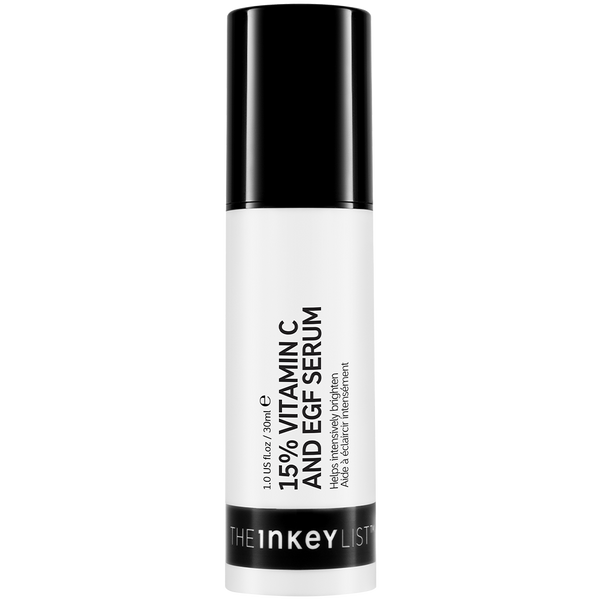
Our 15% Vitamin C + EGF Serum uses ascorbyl glucoside rather than pure L-ascorbic acid. Ascorbyl glucoside is a stable form of vitamin C that converts on the skin, which makes it considerably more forgiving and generally gentler than the pure form — a meaningful difference if you have found traditional vitamin C serums tingly or difficult. The EGF alongside it is a plant-based peptide that supports skin renewal.
Vitamin C is a subject in its own right, and we are not going to try to cram it in here. For concentrations, forms, storage and everything else, go to our full vitamin C pillar page, or if you are just getting started, the best vitamin C skincare routine for beginners.
Niacinamide
Niacinamide is vitamin B3, and it is the quiet overachiever of this list.
It functions as an antioxidant, but it is unusual in how much else it does at the same time. It helps improve the look of excess oil and visible shine, helps with the appearance of blemishes and breakouts, helps visibly calm the look of redness, and supports the skin barrier. That is an unusually broad remit for one ingredient.
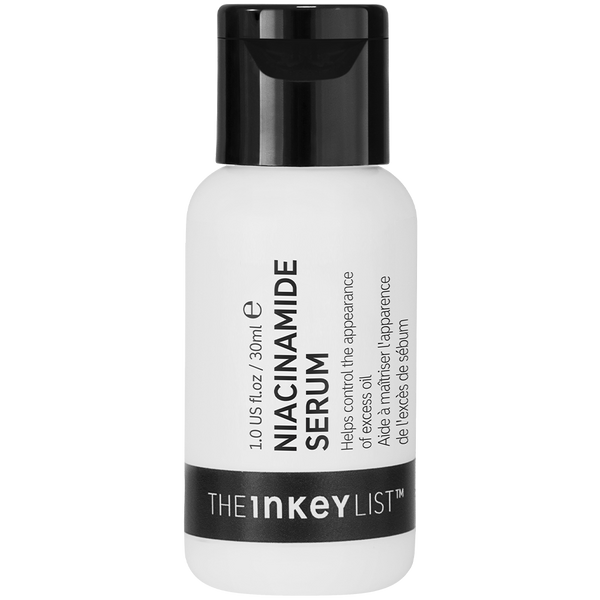
It is also one of the most tolerable actives in skincare, which makes it an excellent starting point if you are new to antioxidants or if your skin tends to object to things. Our 10% Niacinamide Serum is a straightforward way in, and there is more detail on the ingredient itself on our niacinamide page.
A question we get constantly: yes, you can generally use it with vitamin C, despite what the internet occasionally insists. We have addressed that properly in can you use niacinamide and vitamin C together.
Vitamin A — retinol and retinal
Vitamin A derivatives are best known for renewal and for the appearance of fine lines and texture. Less widely known is that they have antioxidant properties too, working alongside those better-known benefits rather than instead of them.
The important practical points: retinoids are PM only, and they need to be introduced gradually rather than enthusiastically. Starting too strong too fast is the most common retinoid mistake there is, and it usually ends with a fortnight of irritated skin and an abandoned bottle.
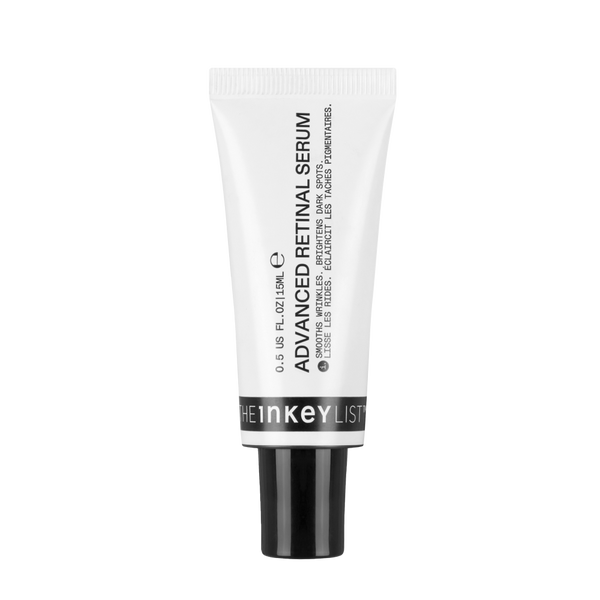
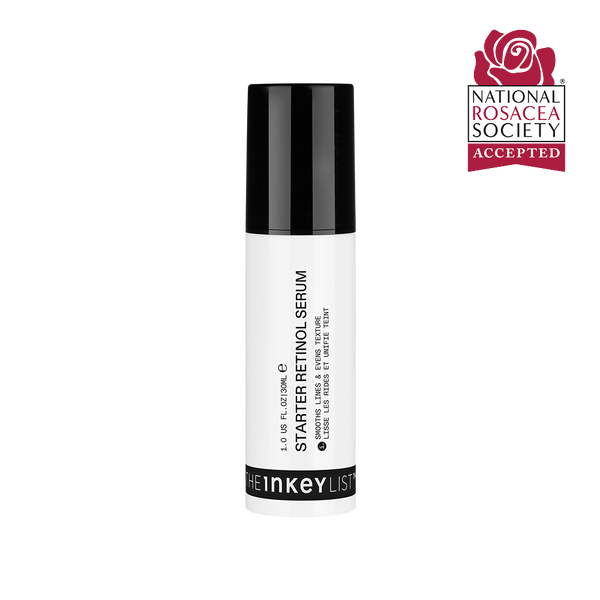
If you are new to vitamin A, our Starter Retinol Serum is designed as an entry point. If you have used retinoids before and your skin handles them comfortably, the Advanced 0.2% Retinal Serum is the step up. The difference between the two ingredient types is explained in retinol vs retinal, and the broader picture lives on our retinol page.
Vitamin E
Vitamin E is the supporting actor that makes the leads look better.
It is oil-soluble, which is the key thing about it. Where vitamin C works in the water-based parts of the skin, vitamin E works in the lipid layers — the fatty portions of the skin’s structure. That makes the two complementary rather than redundant, which is why the vitamin C and vitamin E pairing is one of the oldest and most reliable combinations in cosmetic formulation.
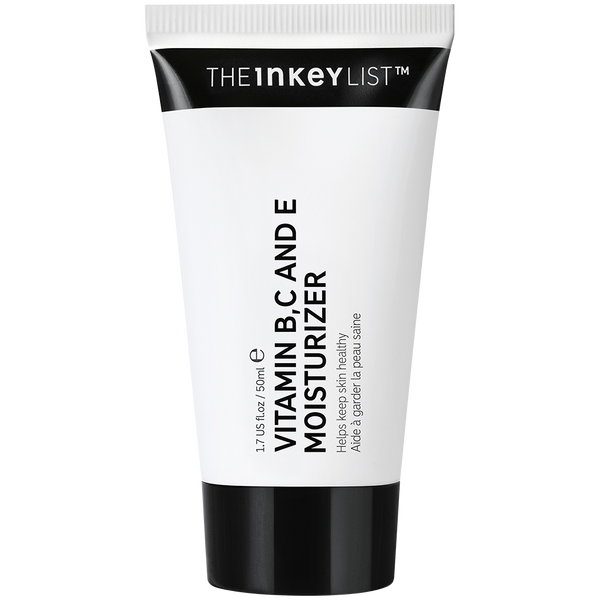
You will rarely see vitamin E sold alone as a hero product, and that is not an oversight. It is generally formulated alongside other antioxidants, where it does its best work. You will find it doing exactly that in our Vitamin B, C and E Moisturiser, sitting alongside two of the other antioxidants on this list.
Q10 (Ubiquinone)
Q10, also called Coenzyme Q10 or Ubiquinone, is one of the antioxidants your body already makes. It occurs naturally in your skin as part of its own defence system, working away in the background without any input from you.
The catch is the familiar one. Natural Q10 levels decline with age, and they are depleted further by sustained environmental exposure — UV in particular. The skin that has the most call for Q10 is very often the skin that has the least of it left, which is a slightly unfair arrangement and exactly the sort of gap topical skincare exists to fill.
Applied topically, Q10 contributes antioxidant protection at the surface, helping to defend against the daily stressors that deplete it in the first place.
A note for anyone who has been with us a while and is looking for it specifically: our standalone Q10 Serum has been discontinued. Q10 has not disappeared from the range, though. It now features as one of the actives within our Exosome formula, where it sits alongside several other ingredients doing rather different jobs.
Which brings us neatly to a product that is not an antioxidant, but contains one.
Exosomes: the glow step that works alongside your antioxidants
Let’s be precise about what this section is and is not.
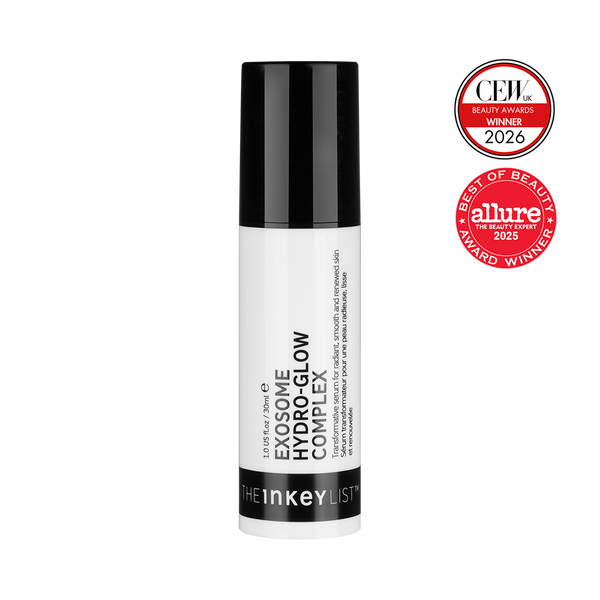
The Exosome Glow Serum is not an antioxidant serum. It is not on the list above and it does not belong there. Exosomes are a completely different category of ingredient doing a completely different job, and we are not going to blur that line to make a neater story.
It appears here for one specific and honest reason: the formula contains Q10 (Ubiquinone), which delivers antioxidant protection to defend against daily stressors. That is the direct link back to the Q10 section above. If you were previously using our standalone Q10 Serum for its antioxidant benefit, this is where that ingredient now lives — inside a formula that does considerably more besides.
So consider this a “pairs well with” entry rather than another candidate for the antioxidant job.
What is actually in it
The Exosome Glow Serum is built around 1% Cica Exosomes, derived from Centella Asiatica. Around them sit 1% Kollaren tripeptide, multi-level hyaluronic acid, Ectoin, Q10 and prickly pear extract. Six actives, each pulling in a slightly different direction, formulated to work as one step.
The texture is light and it layers cleanly, which matters when you are already running an antioxidant serum and a moisturiser in the same routine.
What it has been shown to do
These are the clinically supported claims for the formula:
- 100% saw more glowing skin, clinically proven*
- Clinic worthy rejuvenated skin in 14 days*
- 55% reduction in visible signs of skin stress (redness, puffiness, visible irritation)**
- 63% increase in skin renewal activity in 8 hours**
- 6-in-1 skin rejuvenation: clinically proven to visibly improve radiance, hydration, tone, firmness, elasticity, and texture*
- Proven to deliver up to 12-hours of hydration**
- Helps support natural collagen production
*4-week clinical study of 26 people
**Clinical study of 31 people
*In-vitro testing of Cica Exosomes showed a 55% reduction in pro-inflammatory markers and a 63% increase in markers associated with skin renewal after 8 hours.
Who it is for and how to use it
It suits all skin types, which is not something we say lightly or often.
Application is straightforward. Apply it after cleansing, onto damp skin, before your moisturiser. Damp skin matters here — the hyaluronic acid in the formula works better with moisture available to it, and you will get a noticeably nicer finish.
If you want to understand the ingredient category itself rather than the product, we have written it up in exosomes explained, and there is a fuller technical picture on our exosomes page.
Ingredients are only half the equation, though. Where they go in your routine is the other half.
How to layer antioxidants, morning and night
You can own excellent products and still get mediocre results from them if the order is wrong. Layering is not fussy perfectionism — it determines what actually reaches your skin and what simply sits on top of something else.
The one principle that covers most situations
Cleanse first. Then apply your products from thinnest to thickest, finishing with moisturiser. In the morning, SPF goes on last, over everything.
That is genuinely most of it. Watery serums before creams, creams before oils or balms, sunscreen at the end. If you can remember thin-to-thick, you can construct a sensible routine without memorising anything else.
Your morning routine
Mornings are for defence, which makes it prime antioxidant territory.
- Cleanse — a straightforward start
- Antioxidant serum — vitamin C is the classic morning choice
- Hydrating layers — hyaluronic acid or similar, if you use them
- Moisturiser — to seal everything in
- SPF — non-negotiable, every day, last step
The logic is simple. You are about to spend the day being exposed to UV and pollution, so you are layering protection on before the exposure rather than after it.
Your evening routine
Evenings are for treatment and recovery.
- Cleanse — properly, especially if you have worn SPF or makeup
- Treatment — retinol or retinal, if it is part of your routine
- Hydrating and barrier support — the counterweight to your actives
- Moisturiser — the final step
Retinoids are PM only. This is not a stylistic preference. Keep vitamin A to the evening and your skin will thank you.
For a fuller walkthrough of routine construction, see how to layer skincare and how to build your skincare routine.
Can you use more than one antioxidant at once?
Yes — in most cases, and some combinations genuinely work better together than apart. Vitamin C and vitamin E are the classic example, which is why you so often find them in the same bottle.
The limiting factor is your skin’s tolerance, not chemistry. The reason to be cautious about piling on five actives is not that they will cancel each other out. It is that your skin can only absorb so much change at once before it protests, and if you introduce everything simultaneously you will have no idea which product caused the reaction.
Introduce one new active at a time. Give it two to three weeks. Then add the next.
The pairings people worry about
Briefly, because each of these has its own dedicated guide:
Niacinamide and vitamin C — fine together for most people, despite the persistent internet rumour. Full explanation in can you use niacinamide and vitamin C together.
Vitamin C and retinol — usually best separated across morning and evening rather than combined. See can you use vitamin C and retinol together.
Hyaluronic acid and vitamin C — a genuinely good pairing, and hyaluronic acid goes on first. More in can you use hyaluronic acid with vitamin C.
Retinol and everything else — there are a few genuine cautions here, covered in what not to mix with retinol.
For the general picture, what products should I not layer together covers the rest. And on timing specifically, when to use vitamin C answers the morning-versus-evening question properly.
Patch test first
Always, and particularly with retinoids.
Apply a small amount to a discreet area — inner forearm or behind the ear — and leave it for twenty-four hours before committing it to your face. It takes a day and it can save you a fortnight. Here is why patch testing matters.
One last practical note: if you are choosing sunscreen alongside all this, SPF 30 vs SPF 50 settles the question.
Routine order is more or less universal. Which antioxidant you put in it is entirely personal.
Choosing the right antioxidant for your skin type and concern
There is no universally correct antioxidant, and anyone who names one is guessing on your behalf. The right choice depends on what your skin is actually doing. Here is how we would think it through.
Dull or uneven tone
Vitamin C is the starting point, and it is the starting point for a reason. Brightening and improving the appearance of uneven tone is what it is best known for and best at.
If dark spots and patches are your main concern, our hyperpigmentation page goes deeper into what causes them and what realistically helps.
Oily skin, visible pores and breakout-prone skin
Niacinamide, comfortably.
It helps with the look of excess oil and shine, the appearance of blemishes, breakouts and blackheads, and the look of enlarged pores — all while doing its antioxidant work in the background. For oily skin it is close to a default recommendation.
More on managing it in our oily skin guide, and if blemishes are the priority, our Blemishes & Breakouts collection is the place to look.
Early signs of ageing, texture and fine lines
Retinoids at night, low and slow.
That phrase is doing a lot of work. Start with the lowest strength, use it twice a week, and build up only when your skin is comfortably tolerating it. Nobody has ever improved their results by rushing this.
Sensitive or easily irritated skin
Go gentler and less often. Both are legitimate strategies.
Stable forms of vitamin C such as ascorbyl glucoside are considerably more forgiving than pure L-ascorbic acid, which makes them a much better entry point for reactive skin. Niacinamide is also generally well tolerated. Patch test everything, without exception, and build frequency slowly.
Our sensitive skin page has more, and can you use vitamin C on sensitive skin tackles that specific worry head-on.
Dehydrated skin
Antioxidants layer beautifully over hydrating serums, so this is less a conflict than a sequencing question. Hydrate first, then apply your antioxidant, then seal with moisturiser.
Worth knowing: dehydrated skin is a condition, not a skin type, and oily skin can absolutely be dehydrated too. Our dehydrated skin guide explains the difference.
Redness-prone skin
Choose gentler options and introduce them cautiously. Niacinamide is often well tolerated, and azelaic acid is worth knowing about for the look of redness and uneven tone.
Our redness page covers the appearance-based approach in more detail.
The most useful advice in this whole article
A good routine is consistent, not crowded.
Two or three well-chosen steps used every day will comfortably outperform ten steps used erratically, and they will cost you less and irritate your skin less along the way. The most common mistake we see is not choosing the wrong product. It is choosing too many.
If you would like help narrowing it down, our skincare quiz builds a personalised routine from your actual skin and concerns rather than from what happens to be trending.
The bottom line on antioxidant skincare
Antioxidants help defend your skin against free radicals and the daily environmental stress that generates them, and they reward consistency far more than intensity. This is a long game. The results arrive quietly, over months, in the form of skin that looks brighter, more even and more resilient than it otherwise would have.
The word covers a job, not an ingredient — which means the right antioxidant for you depends entirely on what your skin is dealing with. Dullness points to vitamin C. Oiliness and breakouts point to niacinamide. Texture and early signs of ageing point to retinoids at night. And whichever you choose, it works alongside your SPF, never instead of it.
One or two well-chosen steps, used every day, are genuinely enough. Because you do not need more skincare — you need clarity you can trust.
If you would like help putting it together, our bundle builder is a good place to start.
Still got questions? Ask us
If you are unsure where antioxidants fit into your routine, or which one is right for your skin, talk to the askINKEY team. No question is too big or too small, there is no judgement and no jargon — just a straight answer from someone who knows the ingredients.
Prefer to work it out yourself? Our skincare quiz will build you a personalised routine in a few minutes.
Frequently Asked Questions
Got a question?
Our askINKEY team are a friendly bunch of skincare experts with deep product knowledge and zero judgement. Whether you're an ingredient obsessive or just starting out, we'll make it make sense. No question too big. No question too small. We Give A Care, Every Day.


