



How to Get Glass Skin: What It Is and the Full Routine
Glass skin is not a filter. It is what healthy, deeply hydrated skin looks like, and here is exactly how to build a routine that gets you there.
Author
askINKEY skincare advisor
Published
17 February, 2026
Time to read
18 minutes
Glass skin is skin so well hydrated and so healthy that light reflects off it evenly, giving a smooth, luminous, almost translucent finish. That is the whole definition. It is not a filter, it is not perfection, and it is not something you either have or do not have.
It is also not one look. Glass skin appears differently on everybody, because skin type, skin tone, age and natural texture all shape the result. On one person it reads as a soft sheen across the cheekbones. On another it reads as comfort and plumpness, with fine lines sitting less sharply than they did. What stays constant across every version is not the finish. It is the underlying condition of the skin producing it.
This is where the trend tends to lose people. Glass skin gets sold as an aesthetic, or as a shopping list of ten products applied in a specific order, when it is actually an outcome. Two things create it: hydration and a functioning skin barrier. Everything else in a glass skin routine exists to serve those two things. Once you understand that, the routine stops being a ritual you copy and starts being a set of decisions you can make for your own face.
Here is what this article covers. First, what glass skin actually is and where the idea came from. Then the three principles that produce it, the ingredients that deliver each one, and a full morning, evening and weekly routine you can start tonight. After that, the mistakes that stall most people, an honest timeline for results, and why none of this requires a large budget.
Let us start with the definition, and with the myth attached to it that causes the most damage.
What Is Glass Skin, and Where the Trend Came From
The mechanism behind glass skin is optical, and it is simpler than the marketing around it suggests. When skin holds water well and its surface is relatively even, light hits that surface and bounces off in a consistent direction. Your eye reads that consistency as glow. When skin is dry, rough or flaking, the surface is irregular at a microscopic level, and light hits it and scatters in every direction at once. Your eye reads that scattering as dullness.
That is the entire difference between skin that looks lit from within and skin that looks tired. It is not pigment, it is not the product sitting on top, and it is not genetics deciding the matter before you were born. It is the physical evenness of a surface and how much water sits beneath it.
So when you strip the trend back to what it is actually describing, glass skin has four defining characteristics:
- Smoothness. An even surface texture, without rough patches, flaking or areas where dead cells have built up unevenly.
- Luminosity. A natural light-reflecting quality coming from the condition of the skin itself, rather than from a product creating shine on the surface.
- Deep hydration. Skin that feels comfortable and plump rather than tight, particularly in the first minutes after cleansing.
- Even tone. Consistent colour across the face, so light reflects cleanly rather than being interrupted by patches of discolouration.
Now look at what is missing from that list.
Pores are not on it, and they never should be. Pores are a normal, permanent and functional part of your skin. They deliver oil to the surface and keep it conditioned, which is a job you actively want done. Hydration and barrier health genuinely change how visible your pores appear, because plumper, better-supported skin sits more evenly around each opening. But nothing shrinks a pore, and nothing removes one. Any routine sold on that promise is selling you something skin cannot do.
We are being direct about this because the poreless framing is the single most common distortion attached to glass skin, and it sets readers up to fail. If your benchmark is the elimination of a normal anatomical feature, no product will ever satisfy you, and you will keep buying in the belief that the next one might. The honest version of the goal is better anyway: skin that is hydrated, even and comfortable enough that light behaves predictably across it.
Glass Skin Versus Dewy Skin: The Difference That Matters
These two terms get used interchangeably, and they should not be, because the distinction tells you something practical about what to aim for.
Dewy skin describes a finish. It is moist, fresh and radiant, and it is largely about surface moisture. You can create a dewy finish relatively quickly, and you can create a convincing imitation of one with the right product sitting on top of your skin.
Glass skin includes dewiness and then adds something dewiness does not require: smoothness and evenness of texture. Dewy is about moisture. Glass skin is moisture plus a refined surface. That is why a dewy finish can be achieved in an afternoon while glass skin takes weeks, and it is why the two respond to completely different interventions. Dewiness responds to what you apply. Glass skin responds to how your skin is actually doing.
This also explains why glass skin cannot be a single template. On oily skin, it presents as a natural sheen concentrated through the centre of the face, and the goal is balance rather than suppression. On dry or mature skin, it presents as softness and comfort, with fine lines appearing less etched because the surface around them is plumper and better supported. Across different skin tones, light catches differently again, interacting with undertone in ways no single reference image can represent. Anyone telling you glass skin looks like one specific thing is describing a photograph, not a physiological state.
Korean Glass Skin: Where the Trend Came From
The term originates in Korean beauty culture, where the guiding philosophy is prevention over correction. That framing matters more than any individual step. The emphasis falls on gentle, consistent care and layered hydration applied over long periods, rather than aggressive interventions deployed after a problem has already appeared. You look after the skin so the problem does not arrive, instead of waiting for the problem and then attacking it.
Here is the sharp point, and it is the one most often lost in translation. In its original context, the glowing finish was never the objective. It was the visible side effect of looking after skin properly over months and years. The glow was evidence, not aim.
Then the trend travelled west and got flipped. The look became the goal and the process became optional. That inversion is why so many people feel they are failing at glass skin: they adopted the destination without the road, and then judged themselves against an outcome that only exists at the end of a long, unglamorous, entirely repetitive process. K-beauty experts have traced the origins of glass skin back to exactly this preventative tradition, and it is worth reading the cultural history rather than only the product recommendations.
The original idea was always about skin health. Somewhere between Seoul and your feed, it got flattened into flawless. Flawless is a photographic standard. Healthy is a biological one. Only one of those is available to you, and fortunately it is the one that actually feels good to live in.
One practical note before we move on. If your skin currently feels tight, looks dull despite an oily surface, or drinks up moisturiser within minutes, the underlying issue is very often dehydration rather than anything more complicated. Dehydration is a lack of water, and it can happen on any skin type including oily. It is the most common blocker standing between people and the finish they are chasing, and it is also one of the most fixable.
The other thing worth establishing before you buy anything is your skin type, because every recommendation that follows should be filtered through it. A routine that produces glass skin on oily skin in July can leave dry skin uncomfortable and compromised in January.
Now that the destination is clear, what follows are the principles that get you there, because glass skin is a set of conditions rather than a shopping list.
How to Get Glass Skin: The Core Principles
Most glass skin content hands you a list of products. This section hands you a model instead, because a model works with the products you already own, survives a formula being discontinued, and lets you evaluate anything new on its merits.
There are three principles. Not five, not ten. Three, because a model you can actually remember is a model you will actually apply.
- Hydration layering. Build moisture in thin layers rather than relying on one heavy product to do everything.
- Barrier support. Keep the outer layer of skin intact, so that the moisture you added stays where you put it.
- Consistency over intensity. A simple routine done daily will outperform an elaborate one done occasionally, every single time.
Hydration Layering: Thin to Thick, Onto Damp Skin
Hydration is not one action, and hydrating products are not one category. There are three distinct jobs happening, and understanding which product does which is what turns a routine from a sequence into a system.
Humectants draw water into the skin and hold it there. Hyaluronic acid and glycerin are the familiar examples. They are the most immediately gratifying category, because a humectant applied correctly produces visible plumping quickly.
Emollients soften and smooth the surface. They fill the microscopic gaps between skin cells, which is directly relevant here, because a smoother surface reflects light more evenly. Emollients are doing optical work as well as tactile work.
Occlusives sit on top and slow the rate at which water escapes. They are not adding hydration themselves. They are protecting the hydration already present, which makes them the least glamorous and most structurally important part of the routine.
Order matters, and the rule is thinnest to thickest. A light watery serum cannot penetrate a heavy cream that arrived first, so applying in the wrong order does not just reduce the benefit, it can waste the step entirely. Start with the most fluid textures and work upward.
Then there is the damp skin technique, which is the highest-return habit in this entire article and costs nothing. Humectants draw in water, and they need water available to draw. Applied to bone-dry skin in a dry room, a humectant has very little to work with, and in genuinely dry conditions it can end up pulling moisture from deeper in the skin rather than from the environment. Applied to skin still slightly damp from cleansing, it has an immediate reservoir. This is why the instruction to apply serum to damp skin appears constantly and is worth taking literally. Research on hydration and the stratum corneum shows that water uptake physically alters the structure of the outermost layer of skin, which is precisely the change you are trying to produce.
Barrier Support: The Part That Decides Whether Any of It Lasts
Your skin barrier is the outermost layer, and the standard analogy is a brick wall. The skin cells are the bricks. The mortar holding them together is built largely from ceramides, fatty acids and cholesterol, arranged in structured layers between the cells.
When that mortar is intact, two things happen simultaneously. Water stays in, and irritants stay out. When it is compromised, both fail at once. Water evaporates out of your skin faster than it should, a process called transepidermal water loss, and at the same time irritants that would normally be blocked get through, producing sensitivity, redness and rough texture.
That combination is the exact opposite of glass skin. Rough texture scatters light. Redness disrupts even tone. Water loss undoes hydration faster than you can apply it. A damaged barrier does not just slow your progress, it actively reverses it, which is why the single most effective intervention for many people is not adding an active but removing one.
Research on how skin holds onto water makes the dependency clear: surface hydration relies on the outer layer retaining its natural moisturising factors and its lipid structure. Hydration and barrier function are not two separate goals you pursue in parallel. They are one system, and neglecting the second guarantees you will keep paying for the first.
Consistency: Why Glass Skin Is Cumulative
Glass skin is cumulative, and this is the part the format of social media is worst at communicating.
Skin renews on a cycle measured in weeks, not days. That means the results of what you do today are not visible today. They are visible in a fortnight, quietly, as an absence of the tightness you had stopped noticing. Results compound rather than arrive. There is rarely a morning where you look in the mirror and something has obviously happened. There is instead a Tuesday six weeks in where you realise your skin has felt comfortable for a while.
A four-step routine performed every day will outperform a ten-step routine performed twice a week. This is not a compromise position or a concession to busy people. It is how the biology works. Intermittent intensity gives skin repeated shocks with no continuity. Modest consistency gives it a stable environment in which to rebuild.
Here is how the three principles close the loop. Hydration gives the barrier the water it needs to function properly. The barrier keeps that hydration where it belongs instead of letting it evaporate. Consistency lets both of those compound into change you can actually see. Remove any one of the three and the other two underperform.
One honest closing note. No single product creates glass skin. Not one serum, not one moisturiser, not one treatment. Anything marketed as a one-step route to it is overpromising, and the promise is easy to make precisely because it is impossible to audit. What follows are ingredients that each serve one of the three principles well, which is a genuinely different claim.
With the principles clear, the next section covers the ingredients that deliver each one, matched to what your skin is actually short of.
The Best Glass Skin Products and Ingredients
You do not need all of these. The point of the section is not accumulation, it is matching. Work out which principle your skin is failing at, then choose the ingredient that addresses it. Someone with a compromised barrier and someone with uneven tone need genuinely different routines, and buying the full set is how people end up irritated and no closer.
One caveat that applies to every ingredient below. Each of these refines texture and improves how evenly your skin reflects light. None of them erase pores, because nothing does. Any description here that sounds like it might be promising that is not.
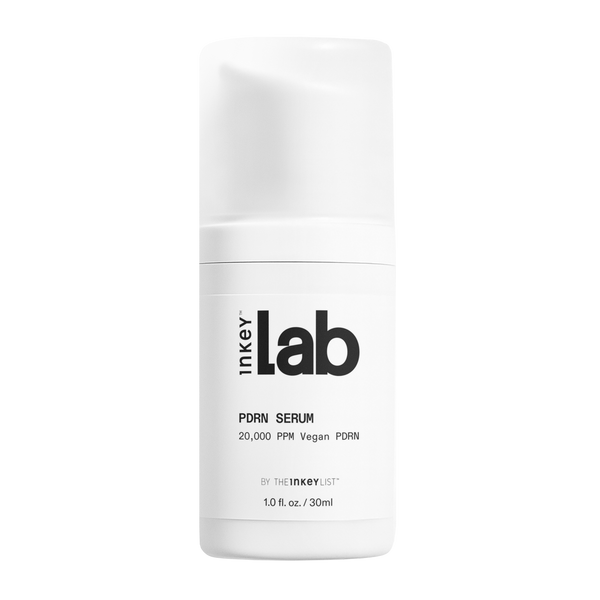
PDRN: The Newest Route to Instant Glass Glow
PDRN stands for polydeoxyribonucleotide. It sounds intimidating, and the concept underneath it is genuinely simple: DNA fragments that signal to your skin to renew itself and to support its own collagen and hyaluronic acid production.
That distinction is what makes it interesting. Most skincare adds something to the surface. PDRN prompts your skin to do more of its own work, which means the benefit is generated internally rather than applied externally.
The PDRN Serum uses 20,000 PPM, which is 2 percent, INJIN Vegan PDRN, in a low molecular weight formula developed specifically for penetration. Molecular weight matters with an ingredient like this, because a signalling molecule that cannot reach the right depth cannot signal anything.
The vegan point deserves proper attention rather than a footnote. Traditional PDRN is derived from salmon DNA, which rules it out entirely for a significant number of people on ethical, dietary or religious grounds. This version is 100 percent vegan and plant-derived from Artemisia capillaris, with no salmon involved at any stage.
Three things it does:
- Promotes skin cell renewal, which addresses surface smoothness directly.
- Supports your skin’s own collagen and hyaluronic acid levels, working with your biology rather than substituting for it.
- Delivers an instant glass skin glow from first use, with visibly smoother, bouncier skin at four weeks.
On the data. Clinical studies on 2 percent INJIN PDRN show a 25 to 35 percent increase in collagen synthesis over 8 to 12 weeks, and hydration improving by 45 percent after 4 weeks.
Those studies were run by the ingredient supplier, not by an independent lab. We are telling you that up front because we think you should know where a number comes from before you decide what it is worth. Supplier research is not worthless, and it is also not the same thing as independent verification. You are entitled to weigh it accordingly.
Two practical details that come up constantly. PDRN is safe to use during pregnancy and breastfeeding. And unlike hyaluronic acid, it does not require damp skin, so it slots into any routine at any point without you having to reorganise around it. If you want the fuller ingredient breakdown, the PDRN explainer goes deeper than we can here.
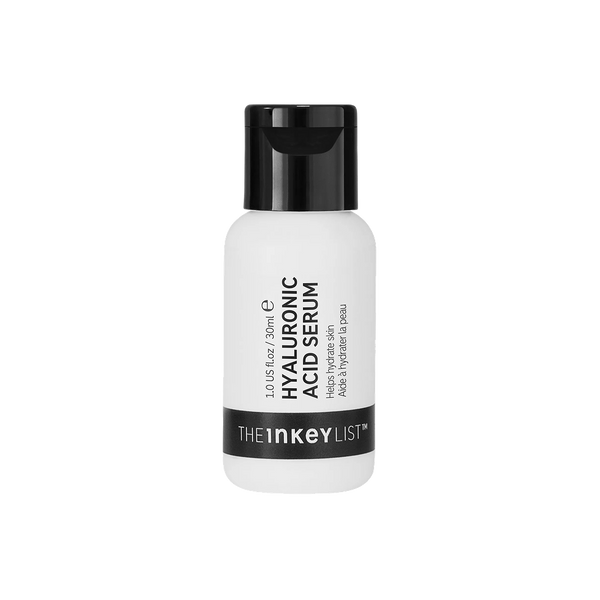
Hyaluronic Acid: The Hydration Foundation
Hyaluronic acid is a humectant, which means it draws water into the skin and holds it there. The visible result is a plumper surface, softer-looking fine lines, and more even light reflection. It is the foundation of principle one, and for most people it is the single most useful place to start.
Molecular weight is the detail worth understanding. Different molecular sizes hydrate at different levels of the skin’s surface. A single-weight formula hydrates a single depth, which is why the Hyaluronic Acid Serum combines three molecular weights rather than relying on one. You get hydration distributed through the upper layers instead of concentrated in a single plane.
The application technique is non-negotiable here in a way it is not with other ingredients. Apply to damp skin, then seal with moisturiser. On dry skin in a dry room, a humectant has very little water available to work with, and the step underdelivers through no fault of the formula. Damp skin, then seal. Every time.
If you are not sure whether dehydration is your issue in the first place, that diagnostic is worth running before you buy anything, because dehydration and dryness present similarly and respond to different things. The hyaluronic acid page covers the ingredient itself in more detail.
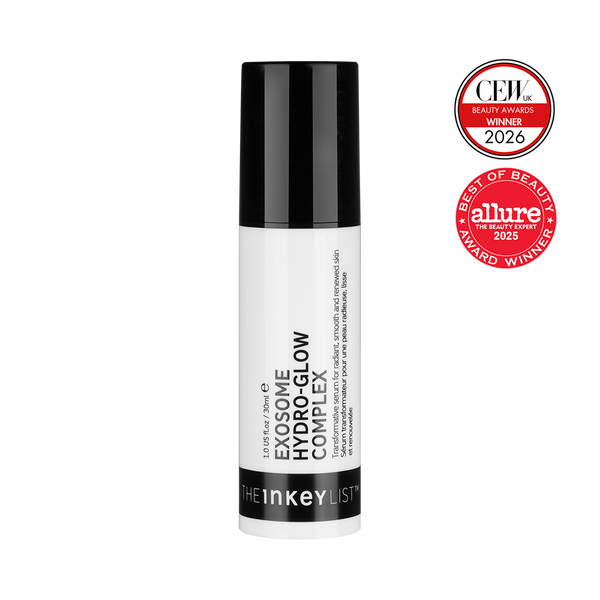
Exosomes: Better Communication, Better Glow
Exosomes are tiny messenger vesicles, and their job is communication. They help ingredients reach where they need to go, and they prompt your skin’s own renewal processes to step up their activity. Think of them less as a payload and more as instructions.
The Exosome Glow Serum delivers 50,000 active signalling molecules per application. The broader science here is developing quickly, and a review of the clinical applications of exosomes in dermatology gives useful peer-reviewed context on why this category has attracted so much attention across both medical and cosmetic settings.
What makes the formula particularly suited to glass skin specifically is the pairing with cica, which is calming rather than stimulating. That combination suits skin that wants glow without provocation, which describes a lot of people who have already tried the aggressive route and found it counterproductive. The exosomes page is the place to go if you want the mechanism explained properly.
Ectoin: Hydration Plus Barrier Defence
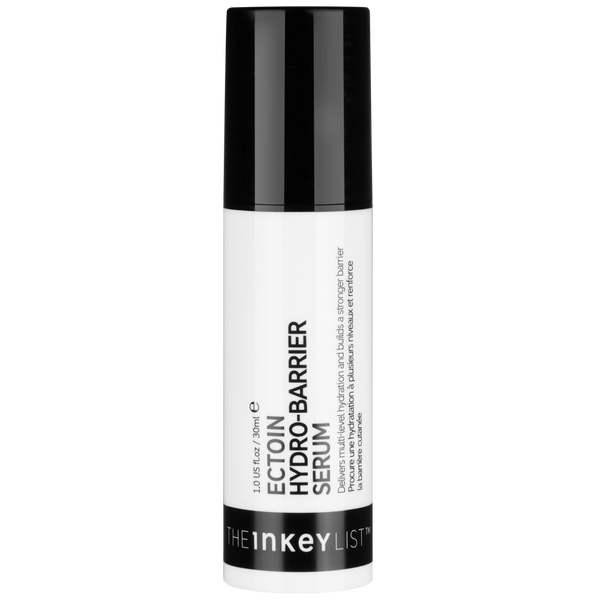
Ectoin does two jobs simultaneously, which is unusual. It hydrates, and it strengthens the barrier, reducing water loss and calming sensitivity at the same time.
That dual action makes the Ectoin Hydro-Barrier Serum the smartest pick for reactive, easily irritated or recovering skin. If your skin has been through a period of over-exfoliation, or reacts unpredictably to new products, this is where to begin rather than with anything more ambitious.
There is an optical argument here too, not just a comfort one. Calm skin reflects light better than inflamed skin, every time. Redness disrupts tonal evenness, and inflammation disrupts surface texture. Reducing both is a legitimate glass skin intervention, not merely a remedial one. More detail on ectoin is worth a read if sensitivity is your recurring theme.
Ceramides: The Seal That Keeps It All In
Ceramides are already part of your skin. They are lipids that sit between skin cells and hold the structure together, and the mortar-between-bricks analogy is worth repeating because it is accurate rather than merely convenient. Take out the mortar and the wall does not collapse dramatically. It just leaks.
Topping ceramides up helps reduce water loss and smooths texture over time. A review of skin barrier function sets out how central these lipids are to keeping water in and irritants out, and the two functions are inseparable.
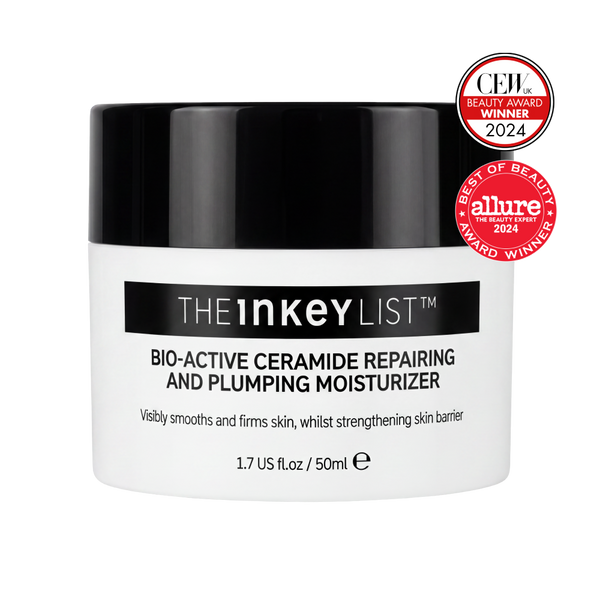
The Bio-Active Ceramide Moisturiser is the step that locks in everything applied before it. This is worth being blunt about: it is the step people skip most often, and it is the one that makes the rest of the routine worthwhile. Applying an excellent hydrating serum and then leaving it unsealed is close to applying nothing at all. If you are going to remove a step from your routine for time reasons, do not remove this one. More on ceramides if you want the fuller picture.
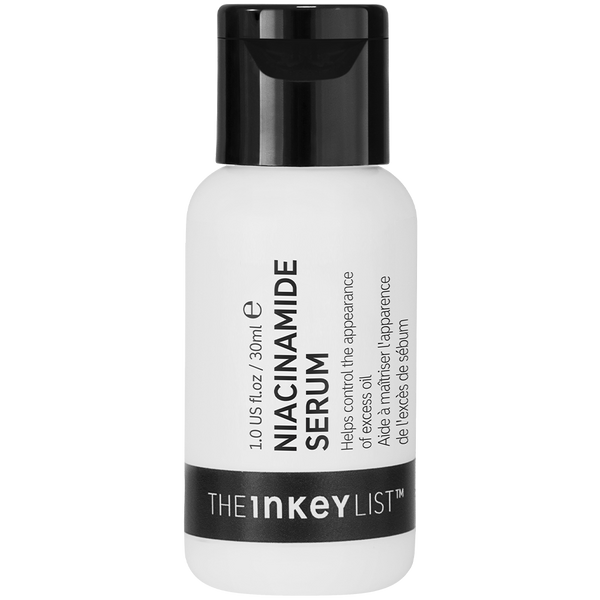
Niacinamide: Balance, Tone and Texture
Niacinamide helps manage excess oil, supports more even tone, and refines the look of surface texture. It is unusually well tolerated, which is why it appears in so many routines without incident.
There is one clarification that trips almost everybody up, so it is worth stating plainly. Less oil is not the same as less hydration. Oil and water are separate things. Your skin can produce plenty of oil while still being distinctly short of water underneath, and that combination, oily and dehydrated at once, is extremely common. Treating the oil while ignoring the dehydration is how people end up with skin that is simultaneously shiny and tight.
The Niacinamide Serum handles the oil and tone side. For oily or breakout-prone skin that finds a ceramide cream too rich, the Omega Water Cream is the oil-free swap at the moisturiser step. That is a specific recommendation for a specific skin type, not a general one. If your skin is not oily or congestion-prone, stay with the ceramide moisturiser. The niacinamide page covers the ingredient in more depth.
Vitamin C: Evening Out Tone for Cleaner Light Reflection
Uneven tone interrupts even light reflection. This is the mechanism people miss when they treat pigmentation as purely a colour issue: patches of hyperpigmentation break up the consistency of the surface optically, which is why skin with uneven tone can look duller than its actual hydration level would suggest. You can be well hydrated and still look flat if the light is hitting an inconsistent canvas.
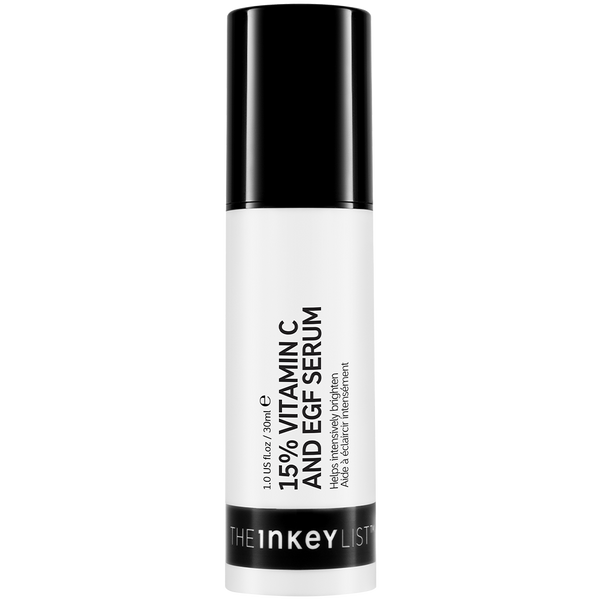
Vitamin C works on tone over time, so that light meets a more uniform surface. The 15% Vitamin C and EGF Serumuses ascorbyl glucoside, a stable form that is gentler than pure L-ascorbic acid while remaining effective. Stability is not a technicality worth skimming: an unstable vitamin C oxidises and degrades before it can do anything for you, which means the number on the front of the bottle stops describing what is inside it.
Use it in the morning, before SPF. More on vitamin C and how to work it into an existing routine.
PHA: Gentle Exfoliation That Does Not Wreck Your Barrier
Dead surface cells scatter light, and that scattering is a direct cause of dullness. Removing them helps. But how you remove them decides whether you gain ground or lose it, and this is where more glass skin routines fail than anywhere else.
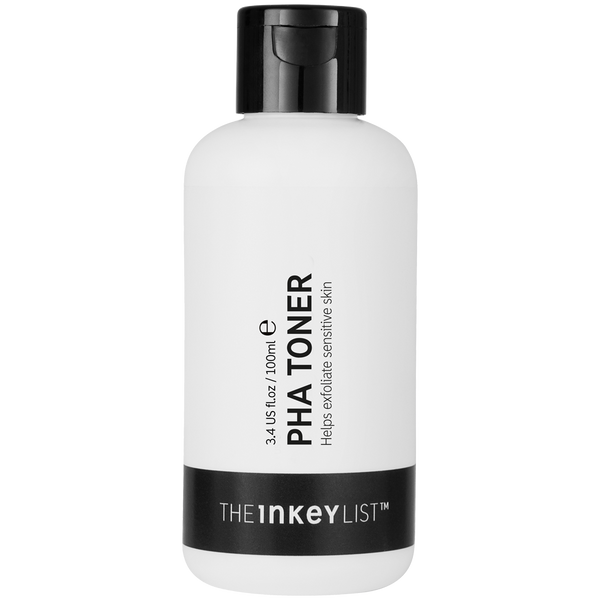
PHAs have a larger molecular size than AHAs, which means they work more gradually and at a shallower depth. That sounds like a weakness and is actually the entire point. Slower, gentler exfoliation suits sensitive skin far better and is much harder to overdo. The PHA Toner is built around that principle.
Once or twice a week. Never daily. Exfoliation is a supporting act in a glass skin routine, not the main event, and treating it as the main event is the fastest route to the compromised barrier described earlier. If you are combining it with other actives, what products should I not layer together is worth reading first. More detail on PHA itself is available too.
With the ingredients understood, the next section puts them in the right order across a day.
Your Glass Skin Routine: Morning, Evening and Weekly
This is a template, not a prescription. Skip anything your skin does not need. Add steps gradually rather than all at once, because introducing five new products simultaneously means that when something reacts, you will have no idea which one caused it.
Your Glass Skin Routine: Morning
- Cleanse gently. If your skin felt balanced overnight, a light cleanse is enough. Over-cleansing in the morning strips the oils your skin produced during overnight repair, which means starting the day at a deficit you then spend the rest of the routine trying to correct.
- Hydrating serum on damp skin. Apply while your face is still slightly wet. Press it in with your palms rather than rubbing it around, which distributes it more evenly and wastes less.
- Treatment step. A pea-sized amount of PDRN Serum across face and neck. It does not need damp skin, so the timing here is flexible and you do not need to rush.
- Moisturiser to seal. Ceramide moisturiser as the default. Oily or breakout-prone skin swaps in Omega Water Cream, an oil-free option that hydrates without the weight.
- SPF. Broad spectrum SPF 30 or higher, every morning, no exceptions. UV exposure breaks down collagen and drives uneven tone, which means skipping it actively undoes the work every other step is doing. If you are unclear on what SPF actually means in terms of the numbers and the labelling, that explainer is short and worth it. The Dewy Sunscreen SPF 30 fits the finish this routine is aiming for.
Optional finishing touch: the Hydro-Surge Dewy Face Mist for an instant hydration and glow top-up. It works over makeup, which makes it useful mid-afternoon as well as at the end of the routine.
The morning in five lines:
- Gentle cleanse
- Hydrating serum onto damp skin
- PDRN Serum
- Moisturiser
- SPF 30 or higher
Your Glass Skin Routine: Evening
- Double cleanse. Balm first, to melt makeup, SPF and the day’s buildup, then a gentle second cleanse to clear what the balm loosened. The Oat Cleansing Balm handles the first step and the Glycerin Gentle Purifying Cleanser handles the second. Give it a full 60 seconds rather than rushing, because the time is what does the work. If you want the full method, the complete guide to double cleansing walks through it properly.
- Hydrating serum on damp skin. Same technique as the morning. Damp face, press in with palms.
- Treatment step. For an extra glow boost, apply the exosome serum first, then PDRN Serum on top.
- Moisturiser. Apply slightly more generously than in the morning, since nothing is going over it and skin loses more water overnight than it does during the day.
An optional addition: the Caffeine Eye Cream before moisturiser, if the eye area is a concern for you.
One note on stacking. If you are already using retinol, do not pile everything onto the same night. Alternate across the week instead, giving each active its own evening. This is the most common cause of the irritation that people then blame on whichever product they happened to add last. What products should I not layer together covers the specific combinations to avoid.
Weekly Extras
- Gentle exfoliation, once or twice a week, with a PHA toner. Never daily, regardless of how well your skin seems to be tolerating it.
- Oat Cleansing Balm as a ten minute mask. Apply a generous layer, leave it for ten minutes, then remove as normal. It is a nourishing hydration boost from a product you already own for a different purpose.
- Face mist kept in the fridge. A cooling, de-puffing refresh that costs nothing extra and is particularly good on mornings after not enough sleep.
An honest closing note on this part. Weekly extras are enhancements. They are not the thing that creates results. The daily basics do the heavy lifting, and if you are inconsistent with the daily routine but rigorous about the weekly mask, you have the ratio backwards.
The next section covers what actually stalls most people, which is rarely a missing product.
Glass Skin Mistakes to Avoid, and How Long It Actually Takes
Glass Skin Mistakes to Avoid
Over-exfoliating. The most common and most counterproductive mistake by a wide margin. It damages the barrier, causing water loss, sensitivity and rough texture, which is the precise opposite of what you are working toward. The fix if you are already here: pause all actives for one to two weeks and focus purely on hydration and barrier repair. Ectoinis the gentlest way back, because it hydrates and reinforces at the same time without asking anything of already-stressed skin.
Over-cleansing. If your face feels squeaky and tight after washing, that is not clean. That is stripped. The fix is a gentler cleanser and less frequent cleansing, particularly in the morning.
Skipping SPF. This undoes progress faster than anything else on this list, and it does so slowly enough that most people never connect the two. The fix is not complicated. Wear it daily.
Using too many actives at once. Introduce one at a time and give it several weeks before adding another. More actives is not more results. It is usually just more irritation, plus the diagnostic problem of never knowing what caused what.
Chasing dewiness with the wrong products. Highlighter and heavy face oils sit on top of skin and create shine. Glass skin comes from hydration inside the skin. These two look similar in a photograph and behave completely differently in real life, over a full day, in changing light. The fix is to treat surface shine as a cosmetic choice rather than a skincare result.
Skipping moisturiser because your skin is oily. Oily skin can be dehydrated at the same time, and skipping hydration often makes oiliness worse as skin overcompensates for the water it is missing. The fix is a lighter texture, not the absence of one.
Copying someone else’s exact routine. What works for oily skin in a humid summer can be entirely wrong for dry skin in winter. Start with your skin type and build outward from there, rather than importing a routine wholesale from someone whose skin you have only seen in a video.
Quitting too early. Switching products every two weeks guarantees you will never find out whether anything was working. Skin renews on a cycle measured in weeks, so a two-week trial is not a trial, it is an interruption.
If your skin feels tight, you have not done more. You have done too much.
How Long Does It Take to Get Glass Skin?
There is no single moment of transformation to wait for, so here is the honest staged version.
Within the first few uses, you get immediate surface hydration and plumping. This is real, and it is also largely surface-level. It is the most visible change you will experience and the least durable.
Across the first two to four weeks, comfort improves noticeably and texture starts to smooth. This is usually the point where you stop actively thinking about your skin feeling tight, which is easy to miss precisely because it registers as an absence.
Between six and twelve weeks of consistent use, you see more meaningful change in tone and overall smoothness. This is the stage that reflects genuine change in skin condition rather than temporary hydration, and it is the one that requires patience most people are not warned they will need.
On the three-day question, which comes up constantly and deserves a straight answer: yes, you can get a temporary hydrated glow in three days. No, you cannot fundamentally change your skin health in that time. Both effects are real. Only one of them lasts. If you have an event on Saturday, the three-day approach is legitimate and will work. Just do not mistake it for the other thing.
Pace also depends on your starting point, your consistency, your sleep, your water intake, your sun exposure and the season. Skin behaves differently in January than it does in July, and a routine that felt perfect in one may need adjusting in the other. That is not failure, it is responsiveness.
The finish line is your skin at its healthiest, not someone else’s face.
None of this requires a large budget, which leads directly into the next point.
Glass Skin on a Budget
Glass skin is a hydration and barrier outcome, and neither of those requires expensive products. Skin responds to ingredients and to consistency. It has no way of knowing what you paid, and no mechanism by which price could influence the result.
The Minimum Viable Routine
Four things:
- A gentle cleanser
- A hydrating serum
- A moisturiser that seals it in
- Daily SPF
That is a complete glass skin routine. Everything beyond it is an upgrade rather than a requirement. If you are starting from nothing, start here, run it for six weeks, and only then decide what to add.
What a Clinic Course Costs Against a Bottle at Home
Professional exosome facials run to several hundred pounds per session, and practitioners typically recommend a course of four to six sessions rather than a single appointment. That takes the full course into the thousands. Against that, one bottle of the Exosome Glow Serum provides approximately 60 applications, which works out at pennies per application.
That comparison is not an argument for compromising on quality, and it should not be read as one. It is the same class of signalling molecules used in professional treatments, formulated at meaningful concentrations, in a format designed for daily use at home rather than a course of appointments spread across a diary.
Here is the part that actually matters, and it is the punchline of this entire section. The reason affordability is worth discussing is not that spending less is inherently virtuous. It is that a product you can afford to keep using is the only kind that compounds. Everything in this article depends on consistency. Consistency is what delivers the result. Price is what determines whether consistency is realistic for you over the six to twelve weeks that actual change requires. An exceptional product used for three weeks and then abandoned on cost grounds will always lose to a good one used for a year.
Getting More From What You Already Own
- The Oat Cleansing Balm doubles as a ten minute mask. Same product, second function, no additional outlay.
- The damp skin method gets more out of every drop of hydrating serum. Applying to damp skin means less product achieves more, which extends how long a bottle lasts while improving the result.
- Keeping the face mist in the fridge turns a hydration top-up into a cooling, de-puffing treatment at no extra cost.
Build Gradually
Add one product at a time and give your skin a few weeks to respond before deciding what to add next. This spreads the cost, and more usefully, it teaches you considerably more about what your skin actually wants than buying a full routine in one go and hoping the net effect is positive.
If you do not know which four products you need, the skincare quiz narrows it down in a couple of minutes without you having to guess.
None of the above is a promotional angle. The hero products in a glass skin routine are priced to make consistent long-term use realistic, because a routine nobody can sustain is not a routine, it is a purchase.
The whole approach comes back to three simple ideas.
The Takeaway on Glass Skin
Glass skin is not a filter, a face, or a finish you can buy. It is what healthy, deeply hydrated skin looks like when light hits it evenly.
Three principles produce it. Hydrate in layers, thinnest to thickest, onto damp skin. Support the barrier so that the hydration stays where you put it. Stay consistent, because skin changes on its own timeline and not on yours.
The slow pace is worth reframing. It reads as a disappointment when you first encounter it, and it is actually the most encouraging thing about the whole process. Results build gradually, which means there is no single day you can ruin and no window you can miss. Every day you show up counts toward the next one.
And the variation point that opened this article is the one worth closing on. Glass skin looks different on everybody, because skin type, tone, age and texture all shape the result. The version worth chasing is your own skin at its healthiest, not a version borrowed from a screenshot. If you are unsure where your skin actually sits, your skin type is the honest starting point.
Clear guidance, proven ingredients, real results.
Where to Start
Two steps matter most, and you can begin with either.
Start with the PDRN Serum for an instant glass skin glow and skin cell renewal support from the very first use.
Or start with the Hyaluronic Acid Serum for the deep hydration that everything else in the routine builds on.
If you would rather not choose alone, take the skincare quiz and get a routine matched to your skin in about two minutes.
Frequently Asked Questions
Got a question?
Our askINKEY team are a friendly bunch of skincare experts with deep product knowledge and zero judgement. Whether you're an ingredient obsessive or just starting out, we'll make it make sense. No question too big. No question too small. We Give A Care, Every Day.


