



What Not to Mix with Retinol: Ingredients to Avoid
A clear, no-confusion guide to the skincare ingredients that clash with retinol — and the simple timing strategies that let you keep using them all.
Author
askINKEY skincare advisor
Published
07 September, 2022
Time to read
15 minutes
Retinol is one of the most well-researched, clinically validated ingredients in modern skincare. Decades of dermatological study back its ability to smooth fine lines, refine skin texture, encourage cell renewal, and improve the overall appearance of ageing skin. If you want a full breakdown of how it works at a cellular level, our retinol ingredient guide covers everything from the science to the ideal routine order.
But knowing what not to mix with retinol is just as important as knowing what it does. Retinol’s effectiveness is not just about the ingredient itself — it depends enormously on the environment you create for it. Pair it with the wrong ingredients in the wrong order, and you risk reducing its efficacy, causing unnecessary irritation, or compromising the very skin barrier you are trying to improve.
This guide is not a scare piece. It is a practical, empowering resource that gives you exactly what you need to make intelligent decisions about your routine. We will cover the specific ingredients that conflict with retinol, the science behind why those conflicts happen, and — crucially — the simple timing strategies that mean you do not have to give any of them up. We will also cover what retinol works brilliantly with, how to structure a morning and evening routine around it, and how to start if your skin is new to the ingredient.
Getting retinol right is not complicated. You just need to know the rules. Let us begin.
Why Skincare Ingredient Combinations Matter
Before we get into the specific conflicts, it is worth spending a moment on why certain ingredient combinations cause problems at all. Understanding the underlying mechanisms means you will not just memorise a list of rules — you will actually understand them, which makes building a routine a lot more intuitive.
The most significant factor is pH. Skincare ingredients are formulated to be active and effective within specific pH ranges. Retinol functions optimally in a more neutral environment — roughly pH 6 to 7. Many of the most popular skincare actives, particularly chemical exfoliants and Vitamin C in its most potent form, are designed to work at a much lower, more acidic pH — around 3.5 to 4. When you layer these ingredients together in the same routine, you shift the skin’s local pH environment. The result is that neither ingredient is operating at its optimal range, which reduces their individual efficacy and significantly increases the likelihood of irritation and redness. Think of pH like a setting dial on a piece of equipment — when two ingredients need fundamentally different settings, they end up working against each other rather than in harmony.
The second mechanism is oxidation. Certain ingredients are chemically reactive with retinol on contact. Benzoyl peroxide, for instance, oxidises retinol on the skin — meaning it actively breaks down the retinoid molecule and renders it inactive. You could be applying a carefully formulated retinol serum and, if benzoyl peroxide is in the picture, achieving very little of the intended result.
The third concern is over-exfoliation. Retinol promotes accelerated cell turnover — it encourages the skin to renew itself more rapidly. Many popular skincare actives, particularly AHAs and BHAs, are also exfoliants, working through chemical mechanisms to dissolve the bonds between dead skin cells. Stack both types of exfoliation into the same routine and you are asking a great deal of your skin. The outcome is often a compromised skin barrier — something that manifests as increased sensitivity, persistent redness, tightness, and moisture loss. If your skin barrier becomes compromised, you may notice increased sensitivity and redness — find out more in our damaged skin barrier guide.
The skin barrier is not just a protective concept — it is the foundation of everything your skincare routine is trying to achieve. A weakened barrier means your skin is less able to retain moisture, more reactive to products, and more vulnerable to environmental stressors. The irony is that the very ingredients designed to improve your skin can cause harm when combined carelessly. But the solution is never to stop using them — it is simply to use them at the right time and in the right order.
With that foundation in place, let us move through the specific ingredients you need to keep separate from retinol — and exactly how to work each one into your routine without conflict.
Skincare Ingredients Not to Mix with Retinol
This is the core of what you need to know. Each ingredient below is covered clearly: what the conflict is, why it happens, and — most importantly — the practical solution. None of these conflicts require you to give up an ingredient entirely. They simply require a little strategic timing.
Vitamin C and Retinol: Use Them at Different Times of Day
Can you use retinol and Vitamin C together? It is one of the most searched skincare questions out there — and the answer is: not at the same time, but absolutely together across a full routine.
The most potent and widely studied form of Vitamin C is L-Ascorbic Acid, which is most stable and effective at a low pH of around 3.5. Retinol, as we have established, performs best closer to a neutral pH. When you layer the two in the same routine — particularly in the same PM session — you create a pH conflict that can destabilise both formulas and raise the risk of irritation, redness, and sensitivity. There is also an oxidation dimension: both ingredients can become less effective when exposed to the same environmental conditions simultaneously, as they are competing actives that degrade under similar stressors.
The good news is that the solution could not be simpler: use Vitamin C in the morning and retinol at night. Not only does this eliminate the conflict entirely, it creates a genuinely complementary dynamic. Vitamin C in the morning provides antioxidant protection against UV and pollution damage throughout the day. Retinol at night drives cell renewal while you sleep. Together — separated by twelve hours — they are one of the most effective pairings in skincare.
It is also worth noting that not all Vitamin C forms are equal in this regard. Our 15% Vitamin C + EGF Serum uses ascorbyl glucoside — a stabilised, gentler form of Vitamin C that is less pH-sensitive than L-Ascorbic Acid. That said, the AM/PM split remains best practice regardless of which Vitamin C format you are using. For a deeper look at timing and formulation, our Vitamin C ingredient guide and when to use Vitamin C guide cover the topic in full.
AHAs (Glycolic Acid and Lactic Acid): Alternate Nights, Not the Same Session
Alpha Hydroxy Acids — the most common being glycolic acid and lactic acid — are chemical exfoliants that work by dissolving the bonds between dead skin cells at the surface, revealing fresher, smoother skin beneath. They are brilliant ingredients. They are also designed to work at a low pH of around 3.5 to 4, which creates the same pH conflict with retinol as Vitamin C does.
More significantly, AHAs are exfoliants — and so is retinol, in effect. Retinol accelerates the skin’s natural cell turnover, which is itself a form of biological exfoliation. Combining an AHA and retinol in the same PM routine means you are applying two forms of exfoliation to the skin simultaneously. The cumulative effect is a meaningful increase in irritation risk: over-exfoliation, a compromised skin barrier, redness, flaking, and sensitivity. Even if your skin tolerates both ingredients individually, the combination can tip the balance.
The solution is straightforward: use AHAs and retinol on separate nights. This is actually the foundation of the increasingly popular skin cycling method (which we will cover in more detail in the routine section). For those with sensitive skin who are looking for a gentler exfoliation option alongside their retinol routine, our best exfoliator for sensitive skin guide is a useful resource.
BHAs (Salicylic Acid): Keep to Separate Evenings or the Morning Routine
Beta Hydroxy Acids, most commonly salicylic acid, work differently from AHAs but present a similar challenge when combined with retinol. Salicylic acid is oil-soluble, which means it can penetrate deep into the pore lining — making it particularly effective for blemish-prone skin. It exfoliates from within the pore, helping to prevent congestion and breakouts. Like AHAs, it works at a low pH, and like retinol, it encourages skin renewal.
The temptation to combine the two is understandable — particularly for those managing blemish-prone, oily skin who want to address both congestion and ageing concerns. But stacking salicylic acid and retinol in the same PM routine significantly increases the risk of barrier disruption. The skin is being asked to process two forms of resurfacing at once, and for most people, that is simply too much.
The solution: use salicylic acid in the morning routine or on non-retinol nights. You can have both in your routine — you simply need to give each its own dedicated session. Our salicylic acid ingredient guide has the full detail on how to work it in, and we have also written a dedicated piece on salicylic acid and retinol — can you use them together? if you want a deeper exploration.
Benzoyl Peroxide: A Strict AM/PM Split Is Essential
Benzoyl peroxide is a powerful anti-bacterial ingredient, widely used in routines targeting blemishes and breakouts. It works by introducing oxygen into the pore environment, which is hostile to the bacteria associated with blemish formation. It is effective — but it presents a very specific problem when it comes to retinol.
Benzoyl peroxide oxidises retinol on contact. That means it chemically breaks down the retinoid molecule, rendering it inactive. The practical implication: if you apply benzoyl peroxide and retinol in the same routine, your retinol is doing very little at all. You are using an active ingredient and getting almost none of its intended benefit, while simultaneously exposing your skin to two potentially drying agents at once.
The fix is a strict AM (benzoyl peroxide) / PM (retinol) split, with no overlap. There is no workaround here — the ingredients are chemically incompatible in close proximity. Keep them separated by your full daytime routine and the oxidation issue is eliminated entirely.
Azelaic Acid: Beginners Should Alternate Nights
Azelaic acid occupies a slightly different category from the acids above. It is a gentler ingredient overall — well-tolerated by most skin types and widely used to address uneven skin tone, redness, and blemish-prone skin. Unlike AHAs and BHAs, azelaic acid does not work primarily through low-pH chemical exfoliation. However, when layered with retinol, particularly for those new to either ingredient, it can contribute to cumulative irritation over time.
For beginners, the guidance is clear: keep azelaic acid and retinol on separate nights. Your skin needs the capacity to adjust to each ingredient individually before you consider combining them — even in a staggered, alternating format.
For more experienced users whose skin has fully adjusted to retinol over several weeks or months, carefully alternating azelaic acid and retinol on different nights may be possible — but this should not be the starting point. Assess your skin’s tolerance over time before making that call. Our azelaic acid ingredient guide and the dedicated can you use azelaic acid with retinol? guide both offer further clarity.
Other Retinoids and Retinaldehyde: Choose One, Not Two
This one is less about pH or oxidation and more about simple logic. If you are using retinol, do not layer it with another retinoid — such as retinaldehyde — in the same routine. Different retinoid forms do not compound their results when stacked together. What they do compound is irritation risk.
Each retinoid form sits at a different point on the potency scale — retinaldehyde is one step closer to retinoic acid than retinol, making it more potent but also more likely to cause sensitivity, especially for those new to the retinoid family. Using both simultaneously does not accelerate results; it simply overloads the skin. For a clear breakdown of the differences between options, our retinol vs retinal guide explains exactly where each sits and which is right for different stages of a skincare journey. Choose one retinoid that suits your current skin tolerance, and use it consistently.
Physical Scrubs and Mechanical Exfoliants: Keep to Separate Days
Physical exfoliants — face scrubs, exfoliating cloths, or any product that uses friction to buff the skin’s surface — create micro-abrasions. In isolation, used carefully, they can be part of a balanced routine. But retinol already makes the skin more sensitive and supports rapid cell turnover. The skin is, in effect, in a state of accelerated renewal on retinol nights. Introducing a physical exfoliant on the same day — or even the day after — significantly increases the risk of barrier damage, redness, and micro-irritation.
If physical exfoliation is part of your routine, keep it to a dedicated day that does not coincide with retinol use. Give your skin at least one full recovery day in between.
Knowing what to keep apart from retinol is only half the picture. The next step is understanding what retinol genuinely works well alongside — and there is a reassuringly long list.
The Ingredients That Work Brilliantly with Retinol
If the previous section felt like a list of restrictions, this one is the antidote. Retinol has a number of excellent companion ingredients — ones that either support the skin barrier during the adjustment period, amplify its effects, or simply sit comfortably alongside it without any conflict. Building your PM routine around these pairings is the key to getting real results from retinol without unnecessary discomfort.
Hyaluronic Acid is perhaps retinol’s most natural partner. Hyaluronic acid is a humectant — it draws moisture into the skin and helps maintain hydration levels throughout the night. Because retinol can cause dryness, particularly in the early weeks of use, layering hyaluronic acid into the same routine is one of the most effective ways to offset that effect. The method matters: apply hyaluronic acid to slightly damp skin before your retinol, or layer it on top afterwards to lock in moisture. Our Hyaluronic Acid Serum (£12.00) is formulated to do exactly this — and if you want to understand exactly how the ingredient works, our hyaluronic acid ingredient guide covers it in depth. Can you mix retinol with hyaluronic acid? Absolutely — and you should.
Niacinamide is another outstanding companion. A well-studied multitasker, niacinamide helps calm visible redness, supports the skin’s natural barrier function, and reduces the appearance of enlarged pores. For anyone experiencing visible irritation or flushing when they first introduce retinol, niacinamide applied after retinol in the same PM routine can make a meaningful difference. Our Niacinamide Serum (£12.00) is designed to be layered exactly this way. Can you use retinol and niacinamide together? Yes — and it is one of the most widely recommended pairings in skincare. Our dedicated guide on can you use niacinamide with retinol? explains the pairing in full.
Peptides are another excellent addition to a retinol routine. Peptides are short chains of amino acids that signal the skin to support collagen production and barrier repair. They do not compete with retinol on pH or exfoliation, and their skin-supportive mechanism is genuinely complementary to retinol’s cell-renewal action. Together, they address skin renewal and structural support from two different angles. Our peptides ingredient guide covers the detail.
PHA (Polyhydroxy Acid) is worth mentioning for those who still want some form of exfoliation in their routine alongside retinol. PHAs are a gentler generation of chemical exfoliant — larger molecules that work more slowly and with significantly less irritation potential than AHAs. For those who find that AHAs are too much to alternate with retinol, PHAs offer a softer option for exfoliation nights. Our PHA Toner (£14.00) is formulated as an approachable, well-tolerated option. Our PHA ingredient guide has the full picture.
Ectoin is an ingredient that deserves more attention in conversations about retinol routines. A natural extremophile molecule, ectoin works by forming a protective layer around skin cells and proteins — strengthening the barrier and locking in moisture. It is precisely what the skin needs when it is adjusting to a new retinol routine: a buffer that reinforces rather than challenges. Our Ectoin HydroBarrier Serum (£16.00) was built with exactly this kind of barrier-first thinking. Learn more in our ectoin ingredient guide or in our practical guide on how to use ectoin with retinol and other actives.
SPF the morning after is non-negotiable, and it deserves to be listed here alongside the supporting cast. Retinol increases the skin’s photosensitivity — it makes it more vulnerable to UV-induced damage. Following any night of retinol use with a broad-spectrum SPF the next morning is essential practice, not optional. Our SPF ingredient guidecovers what to look for and why it matters.
Retinol works best when it is supported, not isolated. Build a routine that hydrates, protects, and replenishes around it — and the results will follow.
With a clear picture of what works with retinol and what does not, the next step is pulling all of this together into a practical routine framework.
How to Build a Retinol Routine That Actually Works
Understanding individual ingredient rules is important — but what most people actually need is a clear, actionable routine they can follow without second-guessing every step. Here is how to build one that incorporates everything covered so far.
The Morning Routine
Your AM routine is where Vitamin C belongs. It is also where SPF is non-negotiable. A clean, effective morning routine for a retinol user looks like this:
- Cleanser - Start with a gentle, non-stripping cleanser.
- Vitamin C Serum - Apply your 15% Vitamin C + EGF Serum (£16.00) to clean, dry skin. This is the antioxidant layer that protects throughout the day.
- Hyaluronic Acid or Ectoin Serum - If your skin needs additional hydration or barrier support, layer this after Vitamin C.
- Moisturiser - Seal in your serums with a moisturiser suited to your skin type.
- SPF - Applied last, every single morning without exception. See our SPF ingredient guide for guidance on choosing the right formula.
The Evening Routine (Retinol Nights)
On nights when you are using retinol, keep the routine focused and free from conflicting actives:
- Cleanser - Double cleanse if you have worn SPF or makeup during the day.
- Hyaluronic Acid Serum (optional) - Apply to slightly damp skin before retinol to boost hydration and act as a buffer layer.
- Retinol Serum - Apply a pea-sized amount to dry skin. If you are new to retinol or have sensitive skin, you can apply a thin layer of moisturiser first as a buffer (more on this below).
- Niacinamide Serum - Apply after retinol to calm any visible redness and support the barrier.
- Moisturiser - Lock everything in with a nourishing night moisturiser.
Do not add any exfoliating acids to a retinol night. There is no place for AHAs, BHAs, or azelaic acid in this PM session.
The Evening Routine (Non-Retinol Nights)
This is where your other actives earn their place. On nights when you are not using retinol, you can introduce exfoliating acids or azelaic acid — making the most of the skin renewal window without overloading the skin. A structured rotation known as skin cycling is an excellent framework for managing this. The basic principle: Night 1 is an exfoliation night (AHA or BHA), Night 2 is a retinol night, and Nights 3 and 4 are recovery nights focused on hydration and barrier support. Our skin cycling guide covers this method in full and is an excellent starting point for anyone trying to structure a multi-active routine.
For a broader look at how to sequence all of these steps and ingredients across different skin types, our how to build your skincare routine guide is a comprehensive resource.
One additional method worth noting for those new to retinol: the buffering technique. Applying a thin layer of moisturiser to clean skin before your retinol serum dilutes the active and reduces the intensity of the initial application. It is a particularly effective approach for those with sensitive skin who want to build tolerance gradually, without skipping retinol nights entirely.
Remember: SPF the morning after every retinol night is not optional. It is the final, essential step in making retinol work safely for your skin.
Starting Retinol: Tips for Beginners and Sensitive Skin
For anyone new to retinol, the idea of introducing it can feel slightly daunting — particularly with all the guidance around what not to combine it with. But the entry point is simpler than it might seem, and the adjustment period, managed correctly, is very achievable. The key principle is one that experienced retinol users will recognise immediately: start low, go slow.
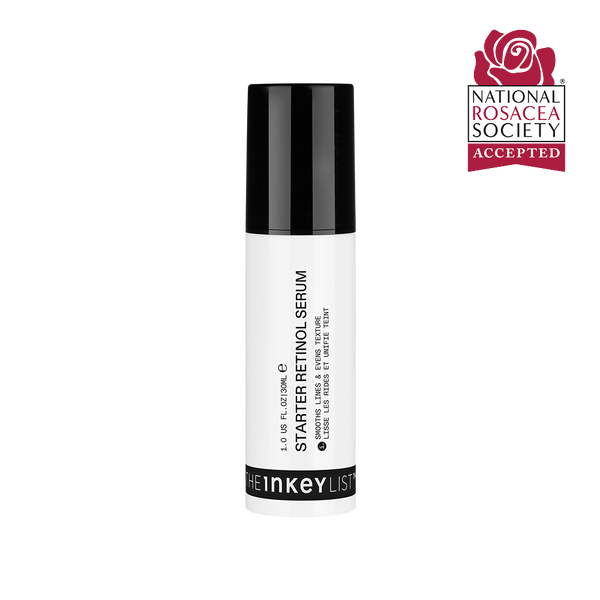
Begin with a lower-concentration formula used just two to three nights per week. Our Starter Retinol Serum (£13.00) is formulated specifically for this purpose — a clinically proven entry point into retinol that allows the skin to adjust before building towards more frequent use. There is no benefit to starting at a high concentration or using retinol nightly from day one. The skin needs time to acclimate, and the results from a lower-concentration formula used consistently over time will always outperform a high-concentration formula that causes irritation and forces you to stop.
Do not introduce retinol at the same time as other new actives. If you are also considering adding a new exfoliant, a new Vitamin C, or any other significant active ingredient to your routine, introduce them one at a time. Starting retinol in an otherwise stable, familiar routine gives you a clear baseline and means that if any sensitivity occurs, you know exactly what has caused it.
Be aware of the initial adjustment period. In the first two to four weeks of retinol use, some mild flaking or slight redness is entirely normal. This is not a sign that retinol is wrong for your skin — it is a sign that your skin is responding and adjusting. It is sometimes referred to as a “retinol purge,” and understanding it in advance makes it far easier to manage. Do not discontinue retinol based on early adjustment — give it time. Our retinol purge guide explains what to expect and how to distinguish a normal adjustment period from a genuine adverse reaction.
For those with sensitive skin specifically, the timing of application matters. Always apply retinol to dry skin — wait 20 to 30 minutes after cleansing before applying. Applying retinol to damp skin increases the rate of absorption, which can intensify both the effects and any potential irritation. Our retinol for beginners and retinol and sensitive skin guides are both tailored to readers navigating this stage.
For those who find that even a gentle retinol formula is too much for their skin’s current tolerance, bakuchiol is a well-regarded plant-derived alternative. It supports similar skin-renewal benefits with a much gentler, non-irritating profile. It is not a retinoid — it works through different mechanisms — but it is a genuinely effective option for those who are not ready for retinol, or who want to support their skin during a retinol break. Our bakuchiol ingredient guide and natural alternatives to retinol guide explore this in depth.
One important note: retinol is not recommended during pregnancy or breastfeeding. If you are pregnant, breastfeeding, or managing an active skin condition that has not been assessed by a medical professional, speak with your GP or dermatologist before introducing retinol into your routine.
Building Your Retinol Routine: UK Product Recommendations
The INKEY List was built on a simple belief: that effective, well-formulated skincare should be accessible to everyone. Every product in the retinol routine below reflects that — premium formulations at honest prices. Here is the complete toolkit, in routine order.
Starting with retinol:
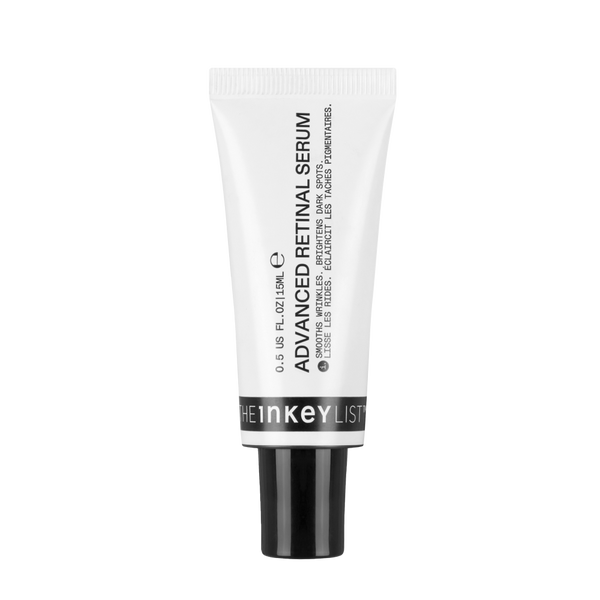
The Starter Retinol Serum (£13.00) is the natural entry point. Clinically proven to smooth fine lines in 7 days, it is formulated to be effective while remaining accessible for skin that is new to retinoids. If you are ready to step up in potency after several months of consistent use, the Advanced 0.2% Retinal Serum (£18.00) uses retinaldehyde — one step closer to retinoic acid than retinol, and significantly more powerful. For a convenient way to begin, the Beginners Retinol Duo pairs the Starter Retinol Serum with the Retinol Eye Cream — a considered bundle for those starting a full retinol routine from scratch.
Targeting the eye area:
The Retinol Eye Cream (£13.00) is specifically formulated for the delicate skin around the eyes — an area where the fine lines that retinol addresses are often most visible, and where the skin requires a gentler, more targeted approach than a standard serum.
The morning complement:
The 15% Vitamin C + EGF Serum (£16.00) is the AM partner to your PM retinol routine. Applied in the morning after cleansing, it delivers antioxidant protection, brightness support, and the additional skin-renewing benefit of EGF (Epidermal Growth Factor) — all in one formula.
The supporting cast for your PM routine:
The Hyaluronic Acid Serum (£12.00) provides deep hydration and barrier support on retinol nights. The Niacinamide Serum (£12.00) follows retinol to calm any visible redness and reinforce the skin barrier. The Ectoin HydroBarrier Serum (£16.00) adds another layer of barrier-strengthening support, particularly useful in the early weeks of retinol use.
For exfoliation nights:
The PHA Toner (£14.00) is the gentler exfoliation option for non-retinol nights — particularly well-suited to those who find traditional AHAs too intense to alternate alongside retinol.
Getting Your Retinol Routine Right: A Final Word
Ingredient combinations can sound complicated at first — but once you understand the logic behind them, the rules become second nature. Keep Vitamin C in the morning and retinol at night. Reserve your exfoliating acids — AHAs, BHAs, azelaic acid — for non-retinol evenings. Avoid benzoyl peroxide in any session that includes retinol. And build your PM retinol routine around the ingredients that support it: hyaluronic acid, niacinamide, peptides, and ectoin.
Pair all of that with SPF every morning, a gradual approach to frequency, and a little patience during the early weeks — and retinol will deliver on everything it is clinically proven to do. The results are not immediate, but they are real, and they compound with consistent use.
If you are just starting your retinol journey, our retinol purge guide is worth reading so you know exactly what to expect in the first few weeks. And for a deeper understanding of how retinol works at a scientific level, our retinol ingredient guide covers everything from mechanism to routine order.
Retinol is not a complicated ingredient. It simply rewards those who use it correctly.
New to retinol? Start with our Starter Retinol Serum — £13.00, and clinically proven to smooth fine lines in 7 days.
Want to tackle fine lines and eye area concerns together? The Beginners Retinol Duo pairs our Starter Retinol Serum with the Retinol Eye Cream — a complete first step into retinol, at a value price.
Frequently Asked Questions
Got a question?
Our askINKEY team are a friendly bunch of skincare experts with deep product knowledge and zero judgement. Whether you're an ingredient obsessive or just starting out, we'll make it make sense. No question too big. No question too small. We Give A Care, Every Day.


