



How To Get Plump Skin: The Complete Guide to Hydration, Firmness and Bounce
Plump skin comes down to two things, water in your skin and structure underneath it, and here is exactly how to support both.
Author
askINKEY skincare advisor
Published
31 August, 2026
Time to read
19 minutes
Plump skin is skin that looks and feels well hydrated, firm and naturally full, with a bit of bounce to it when you smile or gently press it. It is not a filter, a finish or a single hero product. It is a state your skin is in.
Here is the idea this entire guide hangs on. Plumpness has two halves. There is the water your skin holds, and there is the structure underneath holding everything up. Most people only ever address the first half, which is exactly why their results feel temporary. If you have been wondering how to get plump skin and nothing seems to stick, that gap is usually the reason.
We should also be honest about what skincare can and cannot do, because that honesty is the whole point of this article. A good routine can visibly improve hydration, firmness, texture and bounce. It cannot rebuild your face, and anyone telling you otherwise is selling something.
So here is what you will get below: why skin loses plumpness in the first place, the ingredients that genuinely help, a morning and night routine you can start tonight, realistic timelines for results, and straight answers to the questions people actually search.
First, a proper definition. Most of us use “plump”, “dewy” and “glass skin” interchangeably, and they mean quite different things.
What does plump skin actually mean?
Plump skin holds water well, has structural support underneath it, and bounces back. That is the definition in one sentence. Visually it reads as full, smooth and very slightly cushioned, rather than flat, crepey or tired. It catches light softly instead of settling into every line.
The word “bounce” does a lot of work here, and it is worth unpacking because it is the most useful everyday test you have. Press a fingertip gently into your cheek and release it. Skin with good hydration and good elasticity settles back almost instantly. Skin that is low on water, or low on structural support, takes a moment longer to recover. You are not diagnosing anything medical with this, and it is not a precise measurement. It is simply a quick way to feel the difference between surface hydration and the deeper support that sits beneath it.
This is also where three popular terms get tangled together, so let us separate them cleanly.
- Dewy skin is about surface finish. It describes how light bounces off your skin, that fresh, slightly damp-looking sheen. It is largely about the very top layer and how you finish your routine.
- Glass skin is about smoothness and evenness of texture. The reference point is a pane of glass, so the goal is uniformity, minimal visible texture and a reflective surface.
- Plump skin is about fullness and bounce. It is the only one of the three that is structural as well as surface level, because it depends on what is happening underneath as much as on top.
You can have dewy skin that is not especially plump. You can have smooth, even skin that still looks a little flat. Plumpness is the one that asks you to think about both layers of the problem, and that is why skin plumping takes slightly more strategy than simply layering on something shiny.
One more distinction that trips people up constantly. Plumpness is not puffiness. Puffiness is fluid retention. It is usually temporary, often worst first thing in the morning, and frequently shows up around the eyes after a salty dinner or a short night. It can make skin look swollen rather than supported. Plumpness is the opposite feeling, a healthy fullness that looks rested rather than inflated. If you wake up looking puffy and it settles within an hour or two, that is fluid, not structure.
It is also worth naming the reason plumpness fluctuates so much, which is that a good part of it depends on your skin’s ability to hold water. Skin that struggles to hold onto water will look flatter and feel tighter, regardless of how much product you apply on top. If that sounds familiar, our guide to dehydrated skin is the deeper explanation and it sets up everything in the next section.
Now for the honest limit. Plumpness is a look. It is a look you can genuinely influence, sometimes quite noticeably, with the right ingredients used consistently. But it is a look, not a transformation. Nobody is promising you a different face, different bone structure or the skin you had at nineteen. What is realistically on the table is skin that holds water better, feels firmer, looks smoother and recovers faster. That is a meaningful difference, and it is achievable.
If you are still working out how to plump skin in a practical sense, the honest answer is that it starts with understanding the order things go in rather than the number of products you own. Our skincare routine guide covers that structure if you want the basics locked down first.
So that is the target. The obvious next question is why your skin does not already look like that.
Why is my skin not plump?
There is rarely one single culprit. Loss of plumpness is usually several small things stacking up quietly over months or years, which is good news, because it means there are several places to intervene.
Collagen and elastin decline with age
Two proteins do most of the structural work in your skin. Collagen is the scaffolding. It gives skin its firmness and its support, and there is a great deal of it. Elastin is the recoil. It is what allows skin to stretch when you smile and snap back when you stop.
From roughly the mid-twenties onwards, natural production of both begins to slow. It is gradual and it is universal. Less collagen means less structural support, so skin reads as slightly less full. Less elastin means slower recovery, so skin elasticity drops and that bounce test takes a fraction longer. Combined, they explain why skin firmness changes over time even when your routine has not.
This is not a fault or a failure. It is simply biology, and framing it as a problem to panic about helps nobody. What matters is that both processes respond to support, and that the external factors accelerating them are largely within your control.
Dehydration, the biggest and most fixable cause
If you take one thing from this section, take this. Dehydration is a lack of water in the skin, not a lack of oil. Those are two entirely different things, and confusing them is behind an enormous number of skincare mistakes.
Because dehydration is about water rather than oil, every skin type can be dehydrated. Oily skin can be dehydrated. Blemish-prone skin can be dehydrated. Combination skin very often is. In fact, people with oily skin are among the most likely to end up dehydrated, because the instinct when skin looks shiny is to strip it. Foaming cleansers twice a day, astringent toners, frequent exfoliation, skipping moisturiser because it “feels greasy”. Every one of those steps removes water and damages the barrier that keeps water in.
The result is skin that produces more oil to compensate, still feels tight underneath, and looks flat rather than full. Dehydrated skin often shows up as fine lines that appear more visible than usual, a dull tone, and that unmistakable feeling of tightness after cleansing.
A compromised barrier and water escaping
Your skin barrier is the outermost layer, and one of its main jobs is keeping water inside your body rather than letting it evaporate into the air. That evaporation happens constantly at a low level and is entirely normal. It is called transepidermal water loss.
The problem starts when the barrier is compromised. Over-cleansing, over-exfoliating, harsh actives, cold weather, central heating and air conditioning can all weaken it. When that happens, water leaves faster than you can put it back. You end up in a frustrating loop where you apply hydrating products, see a brief improvement, and watch it disappear within an hour.
This is the single most important mechanical fact in the whole article. No amount of hydrating serum fixes a leaking barrier on its own. You have to patch the barrier at the same time, which is where ceramides come in, and why the next section is structured the way it is.
Sun exposure
Of all the external factors affecting how plump your skin looks over the long term, sun exposure is the biggest by a wide margin. Ultraviolet exposure is the leading external contributor to loss of firmness and elasticity over the years, and it accumulates quietly from ordinary daily life, not just from holidays.
This is genuinely the highest-return habit in skincare, and it is also the least exciting, which is presumably why it gets skipped. We pick it up properly in the lifestyle section further down, but if you want to act on it immediately rather than waiting, start with what SPF actually is and how to use it.
Sleep, stress and recovery
Skin does most of its renewal work overnight. That is when the repair processes run, when your barrier does its housekeeping and when the products you applied before bed have uninterrupted time to work.
Short, broken or irregular sleep cuts that window down. Sustained stress affects skin too, often showing up as dullness, sensitivity and a tired, flat appearance. None of this means you need a perfect eight hours to have good skin, which is not realistic for most people. It simply means that if your sleep has been poor for a stretch and your skin looks flatter than usual, those two things are probably related, and it will recover.
Age, framed honestly
Skin changes over time. That is not a problem to be corrected, it is a normal process you can support. The aim of everything below is not to reverse time. It is to keep your skin as hydrated, comfortable, supported and resilient as it can be at whatever age you are.
Look back over those causes and you will notice they fall into two neat groups. Some are water problems. Some are structure problems. That split is the framework that organises everything from here.
The two halves of plumpness: getting water in and keeping it there
Here is the mental model that makes every product decision easier. Humectants pull water into your skin. Barrier ingredients stop it leaving. You need both.
Doing only the first is the most common plumpness mistake there is, and it is the reason so many people conclude that hydrating serums “do not work” for them. They work. They just need something to hold the door shut behind them.
Humectants pull water in. Barrier ingredients keep it there. You need both.
The water-in half: humectants
A humectant is an ingredient that attracts and binds water, drawing it into the upper layers of your skin and holding it there. If you have ever used a serum that made your skin feel instantly softer and look slightly fuller within minutes, you have used a humectant. There are three that genuinely matter for plumpness.
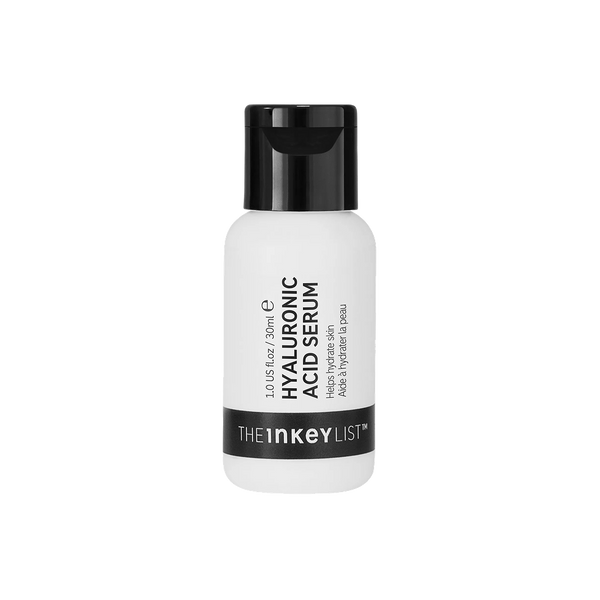
Hyaluronic Acid is the famous one, and it earns its reputation. It can hold up to 1000 times its own weight in water, which is why it delivers such a visible difference so quickly. The detail people miss is molecular weight. Hyaluronic Acid comes in different molecular sizes, and a well-formulated product uses multiple weights so that hydration is delivered across different levels of the skin’s surface rather than all sitting in one place. That multi-level approach is what separates a serum that feels nice for twenty minutes from one that keeps working. If you want the full ingredient breakdown, our Hyaluronic Acid guide covers it properly, and the Hyaluronic Acid Serum is the straightforward way to get it into your routine.
Glycerin is the quiet, unglamorous, genuinely excellent one. It rarely gets a marketing campaign because it has been in formulations for decades and nobody can pretend it is new. It is a proven, gentle, extremely well tolerated humectant that works for practically everyone, including sensitive skin. If you scan the ingredient list of almost any good moisturiser, glycerin will be near the top. It deserves far more credit than it gets.
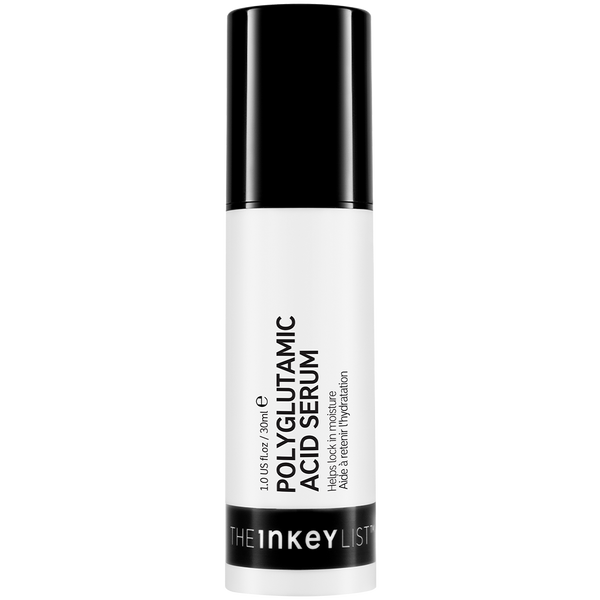
Polyglutamic Acid works differently and that difference is the point. Rather than only drawing water in, it forms a light, breathable film on the surface of the skin that helps lock in the moisture sitting below it. That makes it an excellent partner for Hyaluronic Acid rather than a competitor to it. Apply your HA, then layer Polyglutamic Acid Serum over the top, and you have both drawn water in and given it a reason to stay.
The water-locked-in half: barrier lipids
Think of the outer layer of your skin as a brick wall. The skin cells are the bricks. The lipids between them are the mortar. Ceramides are a major part of that mortar, and when levels drop, the wall gets leaky.
Restoring ceramides is how you stop water escaping. It is genuinely that simple, and it is why applying a moisturiser after a hydrating serum is not an optional extra step for people who enjoy skincare. It is the mechanism that makes the hydrating serum worth using at all. A plumping serum with no seal over the top is half a routine.
This is also why people with oily skin who skip moisturiser so often struggle. They have plenty of oil, but oil is not the same as barrier lipids, and the barrier still needs support. A lightweight ceramide moisturiser is not going to make oily skin oilier. It is going to stop the water leaving.
The practical rule that changes everything
Apply humectant serums to damp skin, then seal with a moisturiser.
This is the single highest-impact tip in this article and it costs nothing. Cleanse, do not fully dry your face, apply your hydrating serum while skin is still slightly damp, then follow with moisturiser within a minute or two.
Here is why it matters. A humectant needs water to bind to. Applied to damp skin, it grabs the water sitting on the surface and pulls it in. Applied to bone-dry skin in a dry environment, such as an air-conditioned office or a centrally heated flat in February, it has no surface water to work with and can instead draw moisture from deeper in your skin, where you actually wanted it to stay. You can genuinely end up feeling tighter than before you started.
Damp skin, then seal. It takes no extra time and it changes the outcome.
Ectoin, the ingredient that does a bit of both
Worth knowing about separately, because it straddles the two halves. Ectoin is a hydrating ingredient that also supports the skin barrier, which makes it a particularly good option if your skin is sensitive, reactive or easily irritated and you have had a difficult experience with more aggressive actives. The Ectoin Hydro-Barrier Serum is the route in if that sounds like your skin.
Get both halves right and you will see a real difference in how hydrated and full your skin looks, often within days. But water is only half the story. Now for what holds everything up underneath.
The structural half: firmness and skin elasticity
Hydration works fast and it works on the surface. Structure works slowly and it works underneath. Both are real, both matter, and confusing their timelines is how people end up disappointed with perfectly good products.
Collagen provides firmness and support. Elastin provides recoil. Both decline gradually with age, and both are accelerated by sun exposure over the years. When people ask how to improve skin elasticity, what they are really asking is how to support those two proteins and protect what they already have. There is no ingredient that rebuilds that network wholesale. There are ingredients with genuine evidence behind them for supporting the look of firmer, more elastic skin over time, and there is a great deal of value in protecting what you have from further avoidable damage.
Peptides
Peptides are short chains of amino acids. Amino acids are the building blocks of proteins, and proteins include collagen and elastin, which is why peptides come up in every conversation about firmness.
The useful way to think about them is as supporters of structure. They work with your skin over time to support the look of firmer, smoother skin. They are well tolerated, they play nicely with almost everything else in a routine, and they are a sensible long-term addition rather than a dramatic overnight fix.
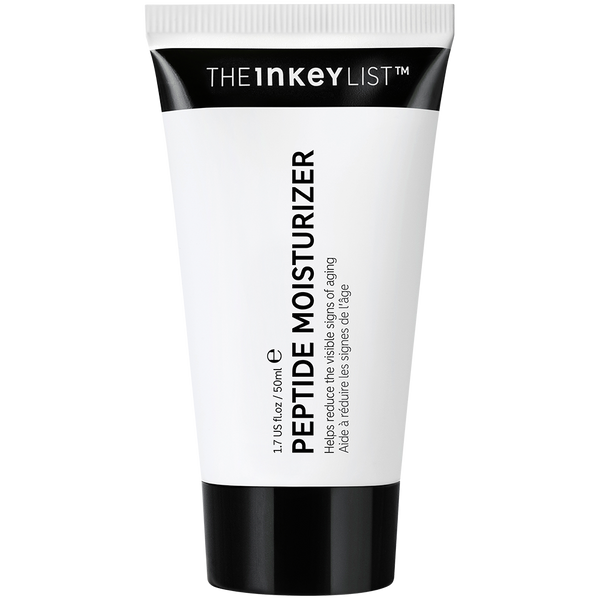
The practical way to add them is through a moisturiser, because that way they do two jobs at once, delivering peptides while sealing in the hydration from the steps before. Our Peptide Moisturiser does exactly that at £16, and if you want the deeper background first, our guide to peptides explains how they work.
There is one place peptides matter even more than they do on the rest of your face, and that is around the eyes.
The eye area needs its own approach
The skin around your eyes is thinner than anywhere else on your face, it moves constantly, and it shows dehydration and loss of firmness before the rest of you does. That is why a face moisturiser, however good, is not quite the right tool for the job there.
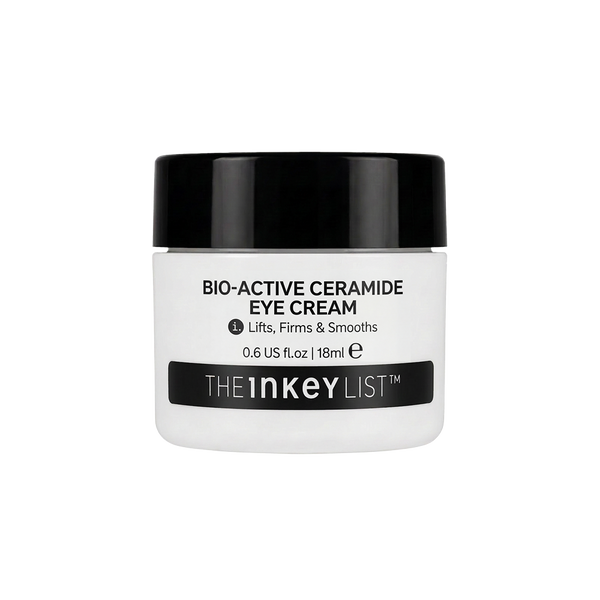
The Bio-Active Ceramide Eye Cream at £15 is built specifically for that area, and it is a genuinely neat fit for this article because it covers both halves of the plumpness model in one step. Bio-Active Ceramides support the barrier around the eye, which is the water-keeping half. A 4% Tetrapeptide Complex works on the look of fine lines and visibly lifts and firms the eye contour, which is the structural half. There is also 0.5% LIFTILIENCE® for an instant lift and sculpt.
The clinical results, quoted exactly as tested:
- “Clinically proven to lift eyelids by 29% in 4 weeks” ⁶
- “Clinically proven to improve skin firmness & elasticity” ⁶
- “89% saw fine lines smoothed and blurred instantly” ⁷
- “Up to 4x wrinkle reduction” ⁵
It is lightweight, absorbs quickly, layers under makeup and SPF, and it is suitable for sensitive eyes, dermatologist and ophthalmologist approved, fragrance free and alcohol free. Use it AM and PM, after your serum and before your moisturiser. Pat a pea-sized amount around the orbital bone with your ring finger, working from the inner corner outwards. Do not apply it directly to the eyelid or waterline.
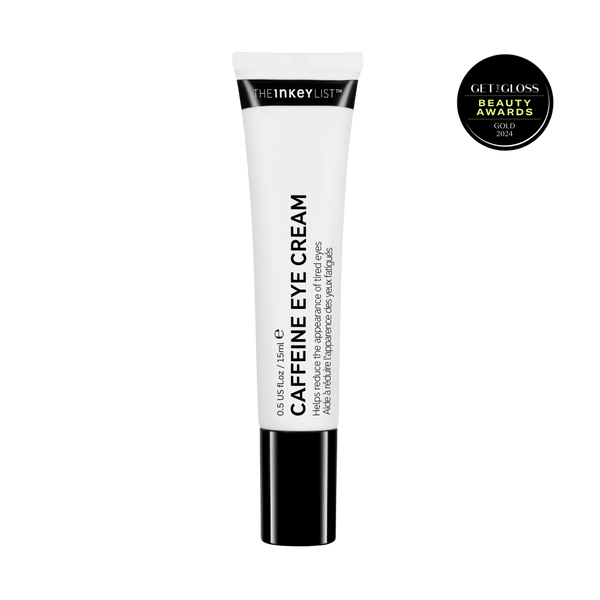
One honest note on what it is not for. This formula targets fine lines, firmness and lifting. It is not a puffiness or dark circles product, and given how often people confuse plumpness with puffiness, that distinction matters. If those are your concerns, the Caffeine Eye Cream at £12 is the one you want, and you can layer Caffeine first with the Bio-Active Ceramide Eye Cream over the top.
⁵ 12-week independent clinical study of 30 people, comparing the performance of the ingredient Ceramide NP at 0.2% vs a placebo formulation.
⁶ Clinically tested on 32 participants over 28 days.
⁷ Tested on 32 participants.
Exosomes
Exosomes are the newest ingredient in this article and the one most likely to be unfamiliar, so it is worth explaining properly rather than just name-dropping.
The clearest way to describe them is as a delivery system. They help other ingredients get to where they need to be. They are remarkably small, far smaller than a pore, which is central to how they function.
INKEY’s are plant-derived Cica Exosomes, and they are glow boosting. The clinically substantiated results are specific, and we will only ever quote them as they were tested:
- “100% saw more glowing skin, clinically proven” ¹
- “6-in-1 skin rejuvenation: clinically proven to visibly improve radiance, hydration, tone, firmness, elasticity, and texture” ¹
- “55% reduction in visible signs of skin stress (redness, puffiness, visible irritation)” ³
- “63% increase in skin renewal activity in 8 hours” ³
Exosomes also help support natural collagen production, which is relevant to a conversation about firmness and worth stating plainly and without exaggeration.
If you want the full explanation of the science, what exosomes are is the primer, and Exosomes Explained is the deep dive for anyone who wants to go properly down the rabbit hole without derailing this article.
¹ 4-week clinical study of 26 people.
³ In-vitro testing of Cica Exosomes showed a 55% reduction in pro-inflammatory markers and a 63% increase in markers associated with skin renewal after 8 hours.
PDRN
PDRN has become one of the most talked-about ingredients in skincare, largely off the back of its popularity in professional treatments. In a topical formula, it is positioned around skin renewal and an instant glass glow, giving skin a smooth, luminous, well-rested look.
It is lightweight, water based and layers easily, which makes it straightforward to slot into an existing routine. For the full background, see what PDRN is.
If you have just met two new ingredients in the space of three paragraphs and are wondering which one you actually need, that is an entirely reasonable question and we wrote a whole piece on it. PDRN vs Exosomes compares them directly.
Retinol
Retinol is the long game. It is one of the most extensively studied ingredients in skincare, and over time it refines texture, softens the appearance of fine lines and helps even out tone. For structural concerns it remains a genuinely strong option, provided you use it sensibly.
Three practical points. It is a PM ingredient, so use it at night only. It should be introduced slowly, starting a couple of nights a week and building up as your skin tolerates it. And here is the part that matters specifically for plumpness: retinol can cause dryness and some flaking when you first start, which temporarily makes skin look less plump, not more. That is a normal adjustment phase, not a sign it is failing, but it does mean you need to pair it with proper hydration from day one and build up gradually rather than diving in.
Start with what retinol is if you are new to it. If you are choosing between formats, Retinol vs Retinal breaks down the difference so we do not have to repeat it here. And before you start layering, what not to mix with retinol will save you an uncomfortable week.
You now have both halves of the picture. Here is every ingredient in one place, in the order you would build them up.
Ingredients that visibly plump skin
This is your reference section. It runs from hydration through to structure, so the further down you read, the longer the timeline on results.
Hyaluronic Acid
A humectant that holds up to 1000 times its weight in water. Multiple molecular weights allow it to hydrate across different levels of the skin’s surface rather than sitting in one spot. Always apply to damp skin and seal with moisturiser afterwards. Suits every skin type. More on Hyaluronic Acid.
Glycerin
A proven, gentle, thoroughly unglamorous humectant that has been quietly doing excellent work for decades. It draws water into the skin and is exceptionally well tolerated. You will find it near the top of the ingredient list on most good moisturisers, including several of ours. Suits everyone, including sensitive and reactive skin. More on Glycerin.
Polyglutamic Acid
Forms a light, breathable film on the surface of the skin that locks in the moisture below it. Works beautifully layered over Hyaluronic Acid, because one draws water in and the other keeps it there. Good for anyone whose hydration seems to vanish by mid-morning.
Ceramides
Barrier lipids that act as the mortar between skin cells. Restoring them means the water you have added stays put, which is the entire reason a ceramide moisturiser belongs in a plumpness routine rather than being an optional extra. Particularly valuable for dry, sensitive or compromised skin. More on Ceramides.
Peptides
Short chains of amino acids that support the look of firmness and smoothness over time. A slow-burn ingredient rather than an instant one. Well tolerated and easy to layer, and especially worth having around the eye area where firmness tends to go first. More on Peptides.
Exosomes
Glow boosting, plant-derived and clinically tested. “6-in-1 skin rejuvenation: clinically proven to visibly improve radiance, hydration, tone, firmness, elasticity, and texture” ¹, and “proven to deliver up to 12-hours of hydration” ². Suitable for all skin types including sensitive, safe to use in pregnancy and while breastfeeding, vegan and fragrance free. More on Exosomes.
¹ 4-week clinical study of 26 people.
² Clinical study of 31 people.
PDRN
Focused on skin cell renewal and an instant glass glow. Lightweight and water based, so it sits early in a serum routine. A good option if your main concern is dullness and uneven-looking texture alongside plumpness. More on PDRN.
Vitamin C
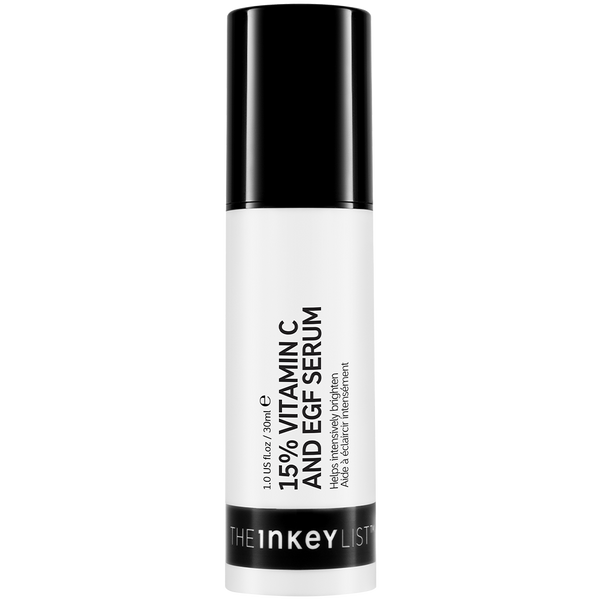
An antioxidant that brightens, helps even out tone and defends skin against daily environmental stress. The form matters. 15% Ascorbyl Glucoside is a stable derivative that converts on the skin, which makes it noticeably gentler than pure L-ascorbic acid while still delivering radiance benefits. Ours sits in the 15% Vitamin C + EGF Serum at £16. More on Vitamin C.
Choosing between the glow actives? Vitamin C vs Niacinamide vs Exosomes settles it.
Retinol
Refines texture and softens the look of fine lines over time. PM only, start slow, expect an adjustment period and hydrate generously alongside it. Not for use in pregnancy. More on Retinol.
Ectoin
Hydrates while supporting the skin barrier, covering both halves of the plumpness equation in one step. The pick for sensitive or easily irritated skin that still wants visible plumpness without the risk of a reaction.
Knowing the ingredients is one thing. Knowing what order to put them on in is what actually delivers the result.
The INKEY routine for plump skin, morning and night

The governing principle is thinnest to thickest. Water-based products first, richer creams last, SPF always last in the morning. Learn that logic and you can adapt any routine to whatever you already own.
Your morning routine
- Gentle cleanse. Something that leaves skin comfortable rather than squeaky. If your face feels tight afterwards, your cleanser is too harsh.
- Exosome Glow Serum, £20. Straight onto clean skin so it has a clear run at the surface.
- A hydrating serum on damp skin. Hyaluronic Acid Serum at £12, or Polyglutamic Acid Serum at £15 if your hydration tends to disappear by lunchtime. Sensitive skin, use the Ectoin Hydro-Barrier Serum at £16 instead.
- Bio-Active Ceramide Eye Cream, £15. Optional but worth it if firmness around the eyes is on your mind. Goes after your serum and before your moisturiser.
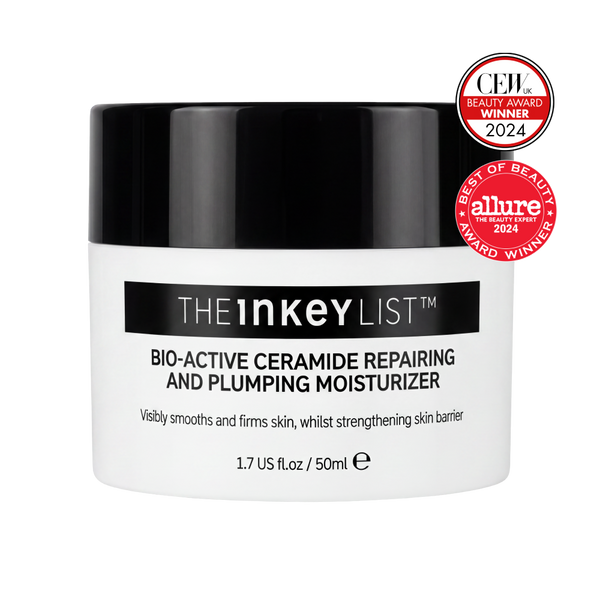
- Moisturiser. Bio-Active Ceramide Moisturiser at £20 to seal everything in, or Peptide Moisturiser at £16 if firmness is your priority.
- SPF. Every single morning, all year round. Dewy Sunscreen SPF 30 gives a hydrated finish rather than a matte one, which suits this routine.
Your evening routine
- Cleanse. Double cleanse if you have worn makeup or SPF, which you should have.
- PDRN Serum, £18, or Exosome Glow Serum. Either works here.
- Hydrating serum on damp skin.
- Eye cream, if you are using one.
- Moisturiser.
Retinol goes in on alternate nights once your skin tolerates it, in place of the other actives rather than piled on top of them, with hydration layered generously around it. Starter Retinol Serum at £13 is the gentle entry point, and Advanced 0.2% Retinal Serum at £18 is the step up. Do a patch test first. If you are using retinol and eye cream on the same night, apply the retinol first and follow with the eye cream, which helps buffer the delicate skin around the eyes.
One layering rule worth spelling out. If you use both PDRN and Exosome serums, apply PDRN first, because it is thinner and water based. Thinner before thicker, always.
And the rule that matters most. Humectant serums go on damp skin, then get sealed with moisturiser. If you only change one thing after reading this article, change that.
Exosome spotlight: clinic-worthy results without the clinic price tag
Exosome treatments have been a fixture in professional clinics for a while, usually at professional clinic prices. Putting that technology into a £20 serum is precisely the kind of thing this brand exists to do.
“Clinic worthy rejuvenated skin in 14 days” ¹
¹ 4-week clinical study of 26 people.
The Exosome Glow Serum is a 6-in-1 formula, and each part earns its place:
- 1% Cica Exosomes, the plant-derived delivery system at the heart of it
- 1% Kollaren Tripeptide-1 for firmness
- 1% multi-level Hyaluronic Acid for plumpness across different levels of the skin’s surface
- 1% Ectoin for hydration and barrier support
- Q10 for antioxidant support
- Prickly Pear for gentle resurfacing
The results, quoted exactly as tested: “100% saw more glowing skin, clinically proven” ¹. “6-in-1 skin rejuvenation: clinically proven to visibly improve radiance, hydration, tone, firmness, elasticity, and texture” ¹. “Proven to deliver up to 12-hours of hydration” ². “55% reduction in visible signs of skin stress (redness, puffiness, visible irritation)” ³ and a “63% increase in skin renewal activity in 8 hours” ³. It also helps support natural collagen production.
It is suitable for all skin types including sensitive, safe to use in pregnancy and while breastfeeding, vegan and fragrance free. Use it AM and PM as step two, straight after cleansing.
If you have reservations, that is fair enough with any newer ingredient, and 5 exosome skincare myths debunkedaddresses the common ones directly. For the wider story, read The Glow Revolution and what exosomes are.
¹ 4-week clinical study of 26 people.
² Clinical study of 31 people.
³ In-vitro testing of Cica Exosomes showed a 55% reduction in pro-inflammatory markers and a 63% increase in markers associated with skin renewal after 8 hours.
How long does it take to see plumper skin?
Different halves, different timelines. Here is the honest breakdown.
Immediately. Surface hydration looks and feels instant. Apply a hydrating serum to damp skin and seal it, and skin looks softer and fuller within minutes. This is real, but it is surface level and it needs maintaining daily. Around the eyes, 89% saw fine lines smoothed and blurred instantly ⁷ with the Bio-Active Ceramide Eye Cream.
Around 14 days. This is where the Exosome clinical result sits: “Clinic worthy rejuvenated skin in 14 days” ¹.
Around 28 days. Two products report here. The Bio-Active Ceramide Moisturiser is clinically proven to firm, plump and visibly lift in 28 days ⁴, and 100% saw a clinical improvement in 6 signs of ageing (fine lines, wrinkles, plumpness, firmness, lift, elasticity and barrier function) ⁴. It is also clinically proven to deliver 24-hour hydration ⁴ and clinically proven to strengthen the skin barrier from first use ⁴. Bio-Active Ceramides deliver up to 4X visible fine line and wrinkle reduction ⁵. Over a comparable window, the Bio-Active Ceramide Eye Cream is clinically proven to lift eyelids by 29% in 4 weeks ⁶ and clinically proven to improve skin firmness & elasticity ⁶.
8 to 12 weeks. Structural change from retinol and peptides is cumulative and gradual. This is the timeline for texture, fine lines and the look of firmness. There is no shortcut and anyone offering you one is not being straight with you.
¹ 4-week clinical study of 26 people.
⁴ 4-week clinical study of 20 people.
⁵ 12-week independent clinical study of 30 people, comparing the performance of the ingredient Ceramide NP at 0.2% vs a placebo formulation.
⁶ Clinically tested on 32 participants over 28 days.
⁷ Tested on 32 participants.
Consistency beats intensity, every time. A simple routine done every day for three months will outperform an elaborate one done sporadically.
If you would rather not assemble it piece by piece, the Exosome + Ceramide Glow Duo and the Intro Routine for Glowing Skin pair the key steps together.
Products do a great deal of the work. A handful of daily habits either protect that progress or quietly undo it.
Other ways to plump your skin, and the mistakes that flatten it
Plenty of people want to know how to plump skin naturally, without adding more products. The honest answer is that lifestyle habits genuinely support your results, but they work best alongside topical care rather than instead of it. Here is what actually helps.
Habits that support plumper skin
- Eat a varied diet with healthy fats. Skin is built from what you give it. Healthy fats support overall skin health, and a varied diet does more for you than any single so-called superfood.
- Drink enough water, with realistic expectations. Being properly hydrated supports your general health and therefore your skin. It is not a substitute for topical hydration and barrier care. Drinking three litres a day will not fix a compromised barrier.
- Try facial massage. A few minutes with clean hands or a tool supports circulation and gives skin a temporarily fresher, more awake look. It feels good, which counts for something.
- Protect your sleep. Overnight is when skin does its recovery work. Regular sleep is worth more than occasional long lie-ins.
- Wear SPF daily. The single most effective long-term protector of firmness and elasticity there is. Nothing else in this list comes close. What is SPF? covers the basics, and Dewy Sunscreen SPF 30 gives a hydrated finish. Do not forget the eye area, it is one of the first places to show sun damage.
- Cleanse gently. If your skin feels tight afterwards, the cleanser is stripping it.
- Exfoliate sensibly. Once or twice a week is plenty for most people. This is not a discipline that rewards enthusiasm.
When to see a professional. If you have persistent irritation, sudden unexplained changes, or a concern that skincare simply is not resolving, see a dermatologist or a qualified professional. Skincare is genuinely useful and it also has limits, and being straight with you about where those limits sit matters more to us than selling you another serum.
Common mistakes that flatten skin
None of these are things to feel bad about. All of them are easy fixes.
- Over-exfoliating. Damages the barrier, which makes skin look flatter, more irritated and less bouncy. Cut back and it recovers.
- Applying hyaluronic acid and skipping moisturiser. The water you just attracted simply evaporates. Always seal.
- Using a humectant on completely dry skin in a dry room. Damp skin, every time.
- Harsh, stripping cleansers, especially on oily skin. The shine-control instinct backfires and leaves skin dehydrated underneath. Dehydrated skin explained is written for exactly this reader.
- Skipping SPF, then wondering why firmness is declining. The connection is direct, and it is cumulative.
- Using your face moisturiser around your eyes and expecting the same result. It is not formulated for skin that thin. An eye product is a small change that makes a visible difference.
- Chasing too many actives at once. Nothing gets a fair trial and your barrier takes the hit. If you need to rebuild from scratch, the skincare routine guide will get you there.
Fix two or three of those and you have already worked out how to keep skin plump long term. Now, the questions people ask most.
The bottom line on plump skin
Get water into your skin, then keep it there, and support the structure underneath over the long term. That is the whole model, and once it clicks, every product decision gets easier.
Be realistic about the timeline. Hydration shows up fast, often the same day. Firmness and elasticity are a slower project measured in months, not mornings. A simple routine you actually follow will always beat an elaborate one you abandon in week three.
None of this needs to be expensive. Effective, science-backed formulas should not carry a premium price tag, and clinically tested ingredients should be available to everyone rather than reserved for people who can afford a clinic. Plump skin is not a luxury, it is the result of understanding what your skin needs and giving it that consistently.
Start tonight. Damp skin, hydrating serum, moisturiser. That is it.
Want help building it around your skin specifically? askINKEY gives you one-to-one guidance from real skincare experts, free. Prefer something built for you automatically? Take the skincare quiz and we will put a tailored routine together. Or if you would rather understand the structure yourself, the skincare routine guide walks you through the order and the logic. Because at INKEY, We Give A Care.
Footnotes
Exosome Glow Serum
¹ 4-week clinical study of 26 people.
² Clinical study of 31 people.
³ In-vitro testing of Cica Exosomes showed a 55% reduction in pro-inflammatory markers and a 63% increase in markers associated with skin renewal after 8 hours.
Bio-Active Ceramide Moisturiser
⁴ 4-week clinical study of 20 people.
⁵ 12-week independent clinical study of 30 people, comparing the performance of the ingredient Ceramide NP at 0.2% vs a placebo formulation.
Bio-Active Ceramide Eye Cream
⁵ 12-week independent clinical study of 30 people, comparing the performance of the ingredient Ceramide NP at 0.2% vs a placebo formulation.
⁶ Clinically tested on 32 participants over 28 days.
⁷ Tested on 32 participants.
Frequently Asked Questions
Got a question?
Our askINKEY team are a friendly bunch of skincare experts with deep product knowledge and zero judgement. Whether you're an ingredient obsessive or just starting out, we'll make it make sense. No question too big. No question too small. We Give A Care, Every Day.


