



Vitamin C and SPF: Why You Always Need Both
Vitamin C and SPF are your ultimate daytime skincare duo - discover how they work together to defend against UV damage, brighten skin and help prevent premature signs of ageing.
Author
askINKEY skincare advisor
Published
09 July, 2026
Time to read
13 minutes
If you use a Vitamin C serum in the morning but skip SPF, you are undermining almost everything the Vitamin C is trying to do. And if you wear SPF but skip Vitamin C, you are leaving a significant gap in your skin’s daytime defence - one that sunscreen simply cannot fill on its own.
This is the core problem: Vitamin C and SPF are not interchangeable. They do not do the same job. They do not cover the same ground. And the assumption that one cancels out the need for the other - whether that is “my SPF is enough” or “my Vitamin C serum protects me from UV” - is one of the most common and most costly misconceptions in everyday skincare.
SPF works by filtering UV rays before they penetrate the skin. Vitamin C works by neutralising the free radicals that UV rays generate even through SPF - the reactive molecules that drive pigmentation, collagen breakdown, and accelerated skin ageing. These are two entirely different mechanisms addressing two different stages of the same problem. Neither ingredient replaces the other. Both are needed.
This blog covers exactly why. You will learn what each ingredient actually does at a biological level, why the science firmly supports using them together, whether Vitamin C increases your sun sensitivity (the answer is more nuanced than you may think), what the visible skin benefits of this pairing are, and how to layer them correctly in your morning routine. For a deeper dive into each ingredient individually, the Vitamin C pillar page and the SPF pillar page are available - but this piece is specifically about why the two must work as a system.
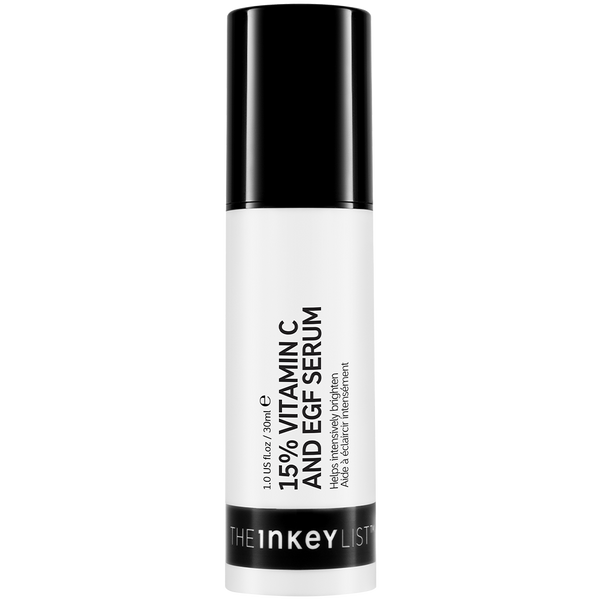
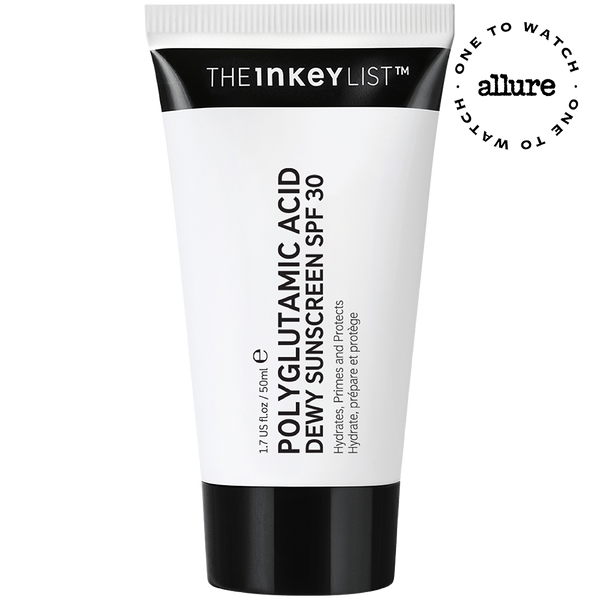
The two products that form this daytime defence are our 15% Vitamin C + EGF Serum at £16.00 and our Dewy Sunscreen SPF 30 at £15.00. Together, they cover both sides of UV-driven skin damage. That is the foundation this blog is built on.
What Topical Vitamin C Actually Does for Your Skin
Vitamin C is one of the most researched skincare ingredients in existence - but it is also one of the most misunderstood. Many people reach for a Vitamin C serum because they have heard it “brightens skin” or “helps with dark spots.” Both of those things are true. But understanding why they are true - and understanding the antioxidant mechanisms that sit behind those visible benefits - is what makes the case for pairing Vitamin C with SPF so clear.
At its most fundamental level, Vitamin C is a potent antioxidant. Its primary function in the skin is to neutralise free radicals - unstable, reactive molecules generated by UV radiation, pollution, environmental heat, and other stressors that the skin encounters every day. Free radicals cause oxidative stress, which is a state of cellular imbalance that drives collagen degradation, triggers uneven pigmentation, and accelerates the visible signs of ageing over time. When Vitamin C donates an electron to stabilise a free radical, it interrupts that cascade before the damage can take hold.
This antioxidant function is not cosmetic in the way that the word “brightening” might suggest. It is a biological process, and the peer-reviewed science published on PubMed supports it clearly: topical Vitamin C acts on the skin through multiple mechanisms including antioxidant defence, collagen support, and melanin inhibition. Each of these mechanisms has a direct, visible consequence for the skin when the ingredient is used consistently.
The second key mechanism is tyrosinase inhibition. Tyrosinase is the enzyme responsible for triggering melanin production - the process that causes dark spots, hyperpigmentation, and uneven skin tone to form in the first place. Vitamin C inhibits this enzyme, which means it works upstream to reduce new pigmentation forming rather than simply trying to fade existing marks after they appear. This is why Vitamin C is so effective for skin tone and clarity: it targets the root of the problem at an enzymatic level, not just the surface expression of it.
The third mechanism is collagen synthesis support. Vitamin C is an essential cofactor in the production of collagen, the structural protein that gives skin its firmness, elasticity, and resilience. As skin ages - and particularly as it accumulates UV damage - collagen production slows and existing collagen degrades. Vitamin C supports the enzymatic processes that build new collagen, helping to maintain skin’s structural integrity and reduce the visible development of fine lines and loss of firmness over time.
Our 15% Vitamin C + EGF Serum uses Ascorbyl Glucoside as its active Vitamin C form - a stable, gentle derivative that addresses one of the most well-known challenges with this ingredient. Pure Vitamin C in the form of L-Ascorbic Acid is highly effective, but it is also notoriously unstable: it degrades rapidly when exposed to light and air, turning orange or brown as it oxidises, and losing much of its potency before it even reaches the skin. Ascorbyl Glucoside does not have this instability problem. It remains effective for longer, is compatible with a wider range of skin types including sensitive skin, and delivers the core Vitamin C mechanisms without the irritation that high-concentration L-Ascorbic Acid can cause.
Alongside the Ascorbyl Glucoside, the formula contains 1% Epitensive EGF - Epidermal Growth Factor - which supports skin cell renewal independently of the Vitamin C brightening action. This dual mechanism means the serum is working on two fronts simultaneously: Vitamin C inhibiting melanin at the tyrosinase level while EGF supports the natural renewal process that brings fresher, healthier skin to the surface. In INKEY’s own clinical trial of 64 participants using the 15% Vitamin C + EGF Serum, 87% agreed that their skin looked brighter within 4 weeks of consistent use - and 88% saw a visible improvement in skin tone and texture over the same period.
Consistent is the operative word. Vitamin C’s benefits - the brightening, the pigmentation suppression, the collagen support - accumulate over time. A single application will not transform the skin. Daily use over weeks and months is what generates the results that clinical trials measure. And using Vitamin C in the morning, when the skin faces its highest UV and environmental stress load, is specifically when the antioxidant protection it provides is most relevant.
For more on timing, frequency, and how to incorporate Vitamin C into your routine most effectively, the dedicated guide on when to use Vitamin C serum covers that in full. What this section establishes is the mechanism - and it is that mechanism that explains exactly why Vitamin C must work alongside SPF, not instead of it.
SPF addresses a completely different stage of the same UV-related problem. Understanding how that works - and where it stops working - is the next piece of the picture.
What SPF Does - and Where Its Protection Ends
SPF is non-negotiable. This is not a conditional statement dependent on your skin type, your skin concern, the season, or how much time you plan to spend outdoors. Sunscreen is the single most evidence-backed skincare intervention for preventing photoageing, hyperpigmentation, and UV-related skin damage. If there is one step in a morning skincare routine that cannot be skipped, it is this one.
But understanding how SPF works - and critically, where its protection ends - is what makes the case for combining it with Vitamin C so compelling.
SPF stands for Sun Protection Factor, and it measures how effectively a sunscreen delays UVB-induced skin reddening compared to unprotected skin. A broad-spectrum SPF product - which is the only kind worth using - also protects against UVA rays. UVB rays are the primary cause of sunburn. UVA rays penetrate more deeply into the skin and are the principal driver of photoageing, collagen degradation, and UV-triggered pigmentation. Both require protection, which is why broad-spectrum formulas matter.
Sunscreens work by one of two mechanisms - or a combination of both. Physical (mineral) sunscreens, typically using zinc oxide or titanium dioxide, sit on the surface of the skin and reflect UV radiation away. Chemical sunscreens absorb UV radiation and convert it into heat energy, which is then released from the skin. Both are effective; the choice between them is largely a matter of skin type, formula preference, and how the sunscreen wears under makeup or additional skincare.
Now, the critical part that most SPF communication glosses over: no sunscreen provides 100% UV protection. SPF 30 filters approximately 97% of UVB rays. SPF 50 filters approximately 98%. These are not small numbers - they represent substantial protection. But they also mean that even with a well-applied, high-factor sunscreen, some UV radiation is still reaching the skin. It is a small percentage, but it is not zero. And when UV rays penetrate the skin - even at low levels - they trigger a cascade of reactive oxygen species (ROS), which are the free radicals at the centre of everything discussed in the previous section.
This is the gap that Vitamin C fills. The free radicals generated by that 2-3% of UV that penetrates even a correctly applied SPF 30 or SPF 50 are still capable of driving oxidative stress inside the skin - still capable of triggering tyrosinase, still capable of breaking down collagen, still capable of accelerating the ageing process. SPF reduces the UV reaching the skin; it does not neutralise the cellular damage from the UV that does get through.
There is another layer to this. Most people apply significantly less sunscreen than the amount used in SPF testing. SPF values are measured using 2mg of product per cm2 of skin - an amount that most people never apply in practice. In real-world use, a fraction of the recommended amount is typically applied, which means the effective protection is meaningfully lower than the SPF number on the bottle. This is not a reason to avoid sunscreen - it is a reason to apply it generously, and a reason why the additional antioxidant layer of Vitamin C is so valuable.
SPF also has a specific and important limitation that is rarely discussed: it does not neutralise free radicals from non-UV sources. Pollution, infrared radiation, blue light from screens and LED lighting - all of these generate free radicals in the skin, and none of them are addressed by SPF. Vitamin C’s broad antioxidant activity covers these stressors as well, providing a layer of environmental defence that sunscreen was never designed to offer.
Our Dewy Sunscreen SPF 30 is a broad-spectrum formula at £15.00, designed to sit comfortably as the final step in a morning routine - lightweight enough to wear under makeup and hydrating enough to work as a standalone moisturiser for many skin types. For the ongoing debate on SPF 30 versus SPF 50, our dedicated blog on SPF numbers covers that question in full. And for the argument that SPF is a year-round commitment rather than a summer-only habit, the SPF all year round guide addresses that directly - UV does not take the winter off, and neither should your sunscreen.
The picture that emerges from understanding both ingredients is clear: SPF and Vitamin C each handle something the other cannot. The next section pulls that picture together with the science that confirms exactly why this combination is so powerful.
The Science Behind the Vitamin C and SPF Dual Defence
Think of SPF as a shield. A very good shield - one that blocks the vast majority of the UV radiation trying to reach your skin every day. Now think of Vitamin C as the clean-up crew working directly behind that shield, neutralising anything that gets through before it can cause lasting damage. This is not a metaphor invented for convenience. It is an accurate description of what these two ingredients do, operating on different biological fronts to address different stages of the same UV-driven problem.
The scientific case for combining them is not theoretical. It is documented, peer-reviewed, and increasingly recognised as the most effective approach to daytime photoprotection currently available to consumers.
Here is how the mechanism works in practice. UV radiation - even the small percentage that penetrates a correctly applied SPF - triggers the formation of reactive oxygen species (ROS) inside the skin. These are highly unstable molecules that react rapidly with surrounding cellular structures: collagen fibres, cell membranes, DNA. When ROS interact with melanocytes (the skin cells responsible for producing pigment), they stimulate tyrosinase activity and accelerate melanin production - the biological process that creates dark spots, post-inflammatory hyperpigmentation, and uneven skin tone. When ROS interact with fibroblasts (the cells that produce collagen and elastin), they disrupt the structural proteins that keep skin firm and smooth. Over time, the cumulative effect of this oxidative stress is what we recognise as photoageing: fine lines, loss of elasticity, pigmentation, and dullness.
Vitamin C interrupts this cascade. As an antioxidant, it donates electrons to neutralise ROS before they can damage cellular structures. This is not simply additive protection - it is complementary protection that addresses what SPF, by its very design, cannot reach.
The research supports this directly. A study published in the Journal of the American Academy of Dermatology and available via ScienceDirect demonstrated that the combination of topical antioxidants - specifically Vitamin C and Vitamin E - with SPF provides superior UV protection compared to SPF used alone. The antioxidant combination was shown to reduce UV-induced erythema (redness), sunburn cell formation, and DNA damage to a significantly greater degree than sunscreen in isolation. This is not a marginal improvement. It is a meaningful, measurable enhancement of the protection that SPF provides.
Further research published on PubMed examined the photoprotective properties of Vitamins C and E when stabilised by ferulic acid, finding that this antioxidant combination provided documented UV protection amplification - reducing photoageing markers and oxidative stress indicators beyond what UV filters alone achieved. The mechanism here is the same: antioxidants and UV filters addressing two sequential stages of UV-driven damage, rather than competing for the same job.
What this means practically is this: pairing Vitamin C with SPF is not a skincare trend or a marketing convenience - it is a science-backed approach to the most comprehensive daytime skin protection currently achievable. Neither ingredient is redundant in the presence of the other. SPF reduces the UV load reaching the skin. Vitamin C neutralises the ROS generated by the UV that does reach it. Both are needed because the problem they are solving has two distinct phases.
This dual defence is particularly powerful for specific skin concerns. For hyperpigmentation - one of the most common and persistent skin concerns - the combination is especially effective: Vitamin C suppresses tyrosinase (blocking new melanin formation), while SPF prevents UV from continuing to stimulate melanin production. Without both working together, progress on pigmentation is consistently undermined. The dedicated blog on SPF for hyperpigmentationexplains this dynamic in further detail for anyone managing dark spots or uneven skin tone.
One thing that must be stated clearly: Vitamin C is not a sunscreen and should never be treated as one. It has no UV-filtering properties. It does not provide SPF protection in any measurable or meaningful sense. Its antioxidant activity is a complement to UV filtration, not a replacement for it. This distinction matters, because the question of whether Vitamin C increases photosensitivity - making SPF even more important - is one that comes up frequently. That question deserves its own honest, nuanced answer.
Does Vitamin C Make Your Skin More Sensitive to the Sun?
The short answer is: not in the way most people think - and not in a way that changes the SPF equation at all.
The concern about Vitamin C and photosensitivity is a real one, but it is largely associated with a specific form of the ingredient in specific conditions - not with well-formulated Vitamin C serums used correctly. Understanding the distinction is important, because it clears up a source of confusion that sometimes leads people to either avoid Vitamin C in the morning altogether, or to use it as a reason to be more anxious about their skincare choices than is necessary.
The form of Vitamin C most associated with photosensitivity concerns is L-Ascorbic Acid at high concentrations. L-Ascorbic Acid is the most biologically active form of Vitamin C, but it is also highly unstable - it oxidises readily when exposed to light and air. When L-Ascorbic Acid degrades (that familiar orange or brown colour in a serum bottle is the visual sign of oxidation), it can become pro-oxidant rather than antioxidant - meaning it may generate rather than neutralise free radicals. In this degraded state, it may contribute to skin irritation and potentially heightened sensitivity to UV exposure.
This is a real concern with poorly formulated, unstable Vitamin C products. It is not a meaningful concern with Ascorbyl Glucoside - the stable derivative used in our 15% Vitamin C + EGF Serum. Ascorbyl Glucoside does not degrade in the same way as L-Ascorbic Acid. It is a significantly more stable form of the molecule, which means it retains its antioxidant properties without the oxidation-driven instability that gives rise to photosensitivity concerns. The PubMed research on topical Vitamin C and its skin mechanisms supports the understanding that stable Vitamin C derivatives behave differently in terms of their skin interactions and stability profile.
That said, here is the honest framing: SPF is non-negotiable in any morning skincare routine, regardless of whether you use Vitamin C or not. The photosensitivity question does not change the SPF requirement - it simply adds one more reason to understand why the pairing is correct. Vitamin C used in the morning without SPF means the ingredient’s core benefits are actively working against UV exposure simultaneously stimulating the very processes Vitamin C is trying to suppress. Vitamin C inhibits tyrosinase; UV exposure activates it. Without SPF reducing that UV load, you are creating a situation where your Vitamin C is fighting an uphill battle every single morning.
This is not a fear-based argument. It is a practical one. Vitamin C and SPF are not in conflict. They are designed - whether by biological coincidence or the logic of good skincare formulation - to work together. Vitamin C’s antioxidant activity is most relevant and most valuable during daytime, when UV and environmental stressors are at their peak. SPF is always a morning-routine essential. The two are natural partners, and the question of photosensitivity - while worth understanding - does not complicate that partnership in any meaningful way.
For a deeper understanding of Vitamin C’s forms, their stability profiles, and their respective properties, the Vitamin C ingredient page provides a comprehensive overview. And for readers pairing this serum with a sunscreen, our Dewy Sunscreen SPF 30 at £15.00 is designed specifically to work as the final step over any morning serum routine, including Vitamin C.
The photosensitivity myth, now addressed, leads naturally to a more constructive question: what does consistent daily use of both Vitamin C and SPF actually deliver for the skin?
The Real Skin Benefits of Combining Vitamin C and SPF Every Day
Understanding the science is one thing. Knowing what that science translates into for your actual skin - for visible, measurable results you can see in the mirror - is what makes the habit worth building. When Vitamin C and SPF work together as a daily morning system, the benefits are cumulative, multi-dimensional, and address several of the most common skin concerns that people are actively trying to manage.
For hyperpigmentation and dark spots, this pairing is one of the most effective approaches available without a clinical prescription. Vitamin C inhibits tyrosinase - the enzyme that triggers melanin production - working upstream to prevent new dark spots from forming and to gradually reduce the appearance of existing ones. SPF prevents UV radiation from continuing to stimulate melanin, which is the primary external trigger for hyperpigmentation. Without SPF, UV exposure actively counteracts everything the Vitamin C is doing: new melanin is being produced at the same time the Vitamin C is trying to suppress it. Together, they close this loop - Vitamin C suppresses the enzyme; SPF removes the UV stimulus that activates it. For anyone managing existing hyperpigmentation, our hyperpigmentation guide and the dedicated blog on SPF for hyperpigmentation are essential reading alongside this piece.
For an evening complement to this morning routine, the Tranexamic Acid Serum at £17.00 addresses hyperpigmentation through a different biochemical pathway - targeting melanin transfer rather than melanin production - making it an effective partner to Vitamin C when used as the evening counterpart to the morning routine.
For anti-ageing and long-term collagen protection, the combination addresses the problem from both ends. Vitamin C is a required cofactor for collagen synthesis - it supports the enzymatic reactions that produce new collagen and helps maintain skin firmness and elasticity. SPF prevents the UV-driven collagen degradation that is the leading external cause of visible ageing: fine lines, loss of skin density, and the rough, uneven texture that accumulates over years of unprotected UV exposure. Without SPF, UV is actively breaking down the structural proteins that Vitamin C is working to protect and rebuild. This is not a subtle effect - photoageing driven by cumulative UV exposure accounts for the vast majority of visible skin ageing, well above the contribution of chronological age alone.
For skin brightness and overall radiance, the daily antioxidant activity of Vitamin C reduces the accumulation of oxidative stress that causes progressive skin dullness - the slow, barely-noticeable degradation in clarity and luminosity that happens as environmental damage builds up over time. SPF limits the daily UV load that drives this oxidative accumulation in the first place. Together, the result is skin that maintains its brightness more consistently, rather than constantly cycling through damage and partial recovery. In INKEY’s clinical trial of 64 participants on our 15% Vitamin C + EGF Serum, 87% agreed their skin looked brighter within four weeks of consistent daily use. These results require daily use - and they require SPF alongside the serum for the Vitamin C’s brightening work not to be actively undermined by UV-driven melanin stimulation happening in parallel.
For blemish-prone skin, the logic is equally relevant. Blemishes and breakouts often leave post-inflammatory marks - the flat, discoloured patches that remain after active spots clear. UV exposure slows the skin’s natural repair process and can cause these marks to deepen in pigmentation, making them harder to fade. Vitamin C’s brightening action accelerates the fading of these marks; SPF prevents UV from prolonging their visibility and intensity. For anyone managing blemishes alongside hyperpigmentation, this morning routine pairing is particularly valuable.
The Vitamin B, C and E Moisturiser at £12.00 is worth noting here as a supporting player in the Vitamin C routine. It contains Sodium Ascorbyl Phosphate - a lower-concentration, stable Vitamin C derivative that delivers ongoing antioxidant and brightening maintenance as a moisturiser step, sitting between the Vitamin C serum and the SPF in a morning routine. It is not a replacement for the higher-concentration 15% Vitamin C + EGF Serum, but it adds a complementary Vitamin C touchpoint to the routine that reinforces the brightening and antioxidant work happening across each step.
Knowing the benefits is the prerequisite for building the habit. Knowing exactly how to execute that habit - the right order, the right technique, the right timing - is what ensures those benefits actually materialise in practice.
How to Layer Vitamin C and SPF Correctly in Your Morning Routine
The layering rule for Vitamin C and SPF is not complicated, but it is non-negotiable: Vitamin C goes on first. SPF goes on last. Every time, without exception.
The reason the order matters is rooted in how each product functions. Vitamin C needs direct contact with the skin to absorb and deliver its antioxidant activity at the cellular level. SPF must be applied as the outermost layer of any skincare routine - it functions as a film on the skin’s surface that filters UV radiation, and anything applied over it disrupts that film, reducing its efficacy. Applying Vitamin C serum after SPF does not allow the serum to absorb properly and simultaneously compromises the integrity of the sunscreen layer. The sequence below is the correct one, and it is the sequence that the science of how these products function demands.
Here is the complete morning routine, step by step:
- Cleanse - Start with a clean canvas. Any morning cleanser suited to your skin type works here.
- Tone (optional) - If a toner is part of your routine, apply it here. A gentle exfoliating toner used on non-Vitamin C mornings is fine; on Vitamin C mornings, keep any additional actives minimal.
- Apply our 15% Vitamin C + EGF Serum - Apply to slightly damp (not wet) skin. Use a pea-sized amount - roughly three to four drops. Pat gently using fingertips, not palms; precision matters and less product is wasted. Do not rub. Allow approximately 60 seconds for the serum to absorb before moving to the next step.
- Additional serums (optional) - If you layer other serums, such as a Hyaluronic Acid Serum, apply them here, after the Vitamin C and before moisturiser. For more on combining these two ingredients, see our guide on using Hyaluronic Acid with Vitamin C.
- Eye cream (optional) - Apply gently around the orbital bone before moisturiser.
- Moisturiser - The Vitamin B, C and E Moisturiser at £12.00 is a natural fit here: it contains Sodium Ascorbyl Phosphate, which adds a complementary antioxidant layer that reinforces the Vitamin C serum’s brightening work as part of a unified morning system.
- SPF - always last. Our Dewy Sunscreen SPF 30 at £15.00 is the final step. Apply generously to face, neck, and any other exposed skin. Do not skip this step, even on cloudy days or days spent primarily indoors - UV penetrates glass and cloud cover alike.
A few application notes worth holding onto. Apply the Vitamin C serum to slightly damp skin - not wet, not dry. Slightly damp skin allows the active to absorb more evenly and reduces the risk of pilling over subsequent layers. Use fingertips rather than palms: the warmth of the hands can affect the serum’s absorption, and fingertips allow more targeted, precise application. Pat rather than rub - gentler on the skin and more effective at pressing the serum in without disturbing subsequent layers.
The 60-second wait between Vitamin C serum and the next step is worth respecting. It does not need to be timed precisely, but giving the serum time to absorb before applying moisturiser or SPF improves adhesion and prevents the pilling that can occur when wet or semi-wet layers are applied in quick succession. If you are pressed for time, 30 seconds of absorption is better than none.
For SPF, the most important habit to build is applying enough. The SPF values on the bottle are tested at 2mg per cm2 of skin - an amount that looks like roughly half a teaspoon for the face alone. Most people apply a quarter of this or less in practice, which means the effective protection is considerably lower than the number on the bottle suggests. Apply generously. If you are spending time in direct sunlight, reapply every two hours.
A common question: can you apply SPF directly over Vitamin C with no wait time at all? Yes - if you are in a hurry, applying SPF immediately after the serum is better than skipping SPF entirely. But giving the serum those 60 seconds to absorb does improve SPF adhesion and reduces the likelihood of the sunscreen pilling or sliding on the skin.
For readers building a morning skincare routine from the ground up, the how to build your skincare routine guide covers the broader structure in detail. And for readers who also use Retinol in their regimen, our guide on using Vitamin C and Retinol together addresses how those two ingredients fit into morning versus evening routines without conflict.
The routine is straightforward. The science behind it is substantial. What follows are the most commonly asked questions about this pairing - answered directly and without ambiguity.
The Takeaway: Two Ingredients, One Unified Defence
The argument of this blog is simple, even if the science behind it is layered: Vitamin C and SPF address different stages of the same UV-driven problem, and neither ingredient is capable of covering what the other does.
SPF blocks the UV rays that cause photoageing, pigmentation, and cellular damage. Vitamin C neutralises the free radicals that UV rays generate even through correctly applied SPF. Both mechanisms are necessary because UV-driven skin damage happens in two sequential phases: first the UV reaching the skin, then the reactive oxygen species that UV triggers inside it. A morning routine that only addresses one of those phases is a routine with a significant and very addressable gap in it.
The habit itself is not complicated. Apply our 15% Vitamin C + EGF Serum in the morning as part of your serum step. Apply our Dewy Sunscreen SPF 30 as the final step, every morning, regardless of the season or your plans for the day. For deeper reading on each ingredient individually, the What is Vitamin C? and What is SPF? pillar pages are the place to go. For the practical science of why they must be used together, you have just read it.
The most effective daytime skin protection available right now is not a single ingredient. It is a system. Start the routine today.
Complete Your Morning Duo
Shop our 15% Vitamin C + EGF Serum - £16.00 / 30ml
Shop our Dewy Sunscreen SPF 30 - £15.00
Not sure where to start? Build Your Morning Routine and save up to 20% - or take the INKEY Skincare Quiz for a personalised routine recommendation in two minutes.
Frequently Asked Questions
Got a question?
Our askINKEY team are a friendly bunch of skincare experts with deep product knowledge and zero judgement. Whether you're an ingredient obsessive or just starting out, we'll make it make sense. No question too big. No question too small. We Give A Care, Every Day.


