



Retinol vs Retinal: Which Vitamin A is Right for You?
Retinol and retinal are both vitamin A powerhouses — but retinal converts to retinoic acid in one step instead of two, making it work up to 11x faster: here's how to choose the right one for your skin.
Author
askINKEY skincare advisor
Published
01 December, 2025
Time to read
17 minutes
Both retinol and retinal are vitamin A derivatives - retinoids with decades of clinical evidence behind them, proven to accelerate skin cell turnover, support collagen production, and visibly reduce the signs of ageing. The difference between them is not a matter of one being a gimmick and the other being the real deal. They are both real. They both work. The question is how quickly, and for whom.
The core distinction comes down to chemistry: retinal converts to retinoic acid - the active form your skin actually uses - in a single step. Retinol requires two. That one extra conversion step is what makes retinal work up to 11x faster than standard retinol, according to research by G. Siegenthaler et al., published in the Biochemical Journal in 1990. But faster does not automatically mean better. The right vitamin A for your skin depends on your skin’s experience with retinoids, your tolerance level, and the concerns you are looking to address.
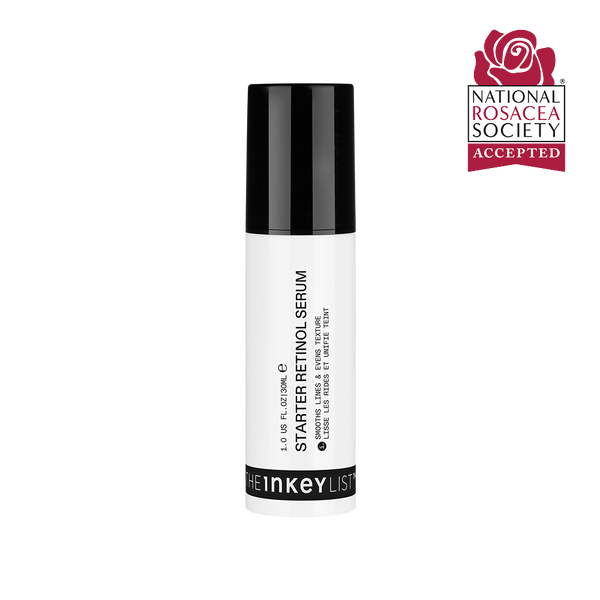
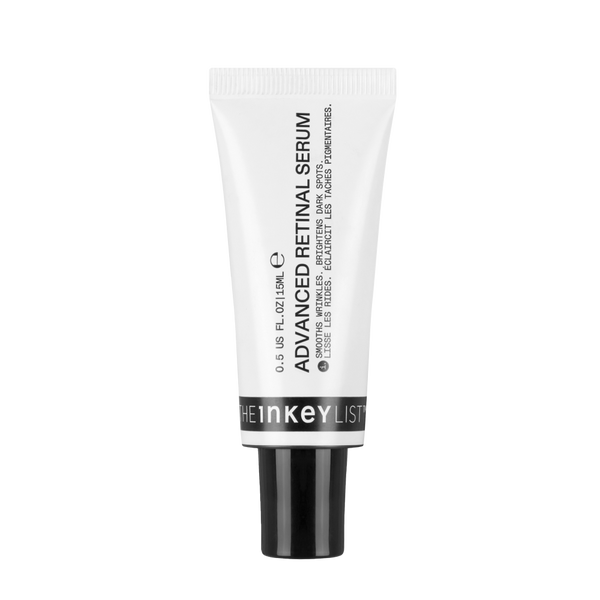
The INKEY List offers both: the Starter Retinol Serum (£13.00 / 30ml), designed for those new to vitamin A or with sensitivity concerns, and the Advanced 0.2% Retinal Serum (£18.00 / 15ml), formulated for experienced retinoid users ready to step up their results. This guide covers the science behind both, who each one is right for, how to start and layer them in a routine, what side effects to expect, and answers to the most common questions readers ask before making the switch.
The Vitamin A Family: What Retinol and Retinal Actually Are
Before comparing the two, it helps to understand where retinol and retinal sit within the broader vitamin A family - because context here changes everything.
Retinoids are the umbrella term for all vitamin A derivatives used in skincare. What unites them is their end goal: every retinoid, regardless of its form when applied to the skin, must eventually convert into retinoic acid to deliver its benefits. Retinoic acid is the biologically active form that directly communicates with skin cells. It binds to specific receptors, upregulates genes responsible for collagen production, accelerates the rate at which skin cells renew themselves, helps regulate sebum, and supports the fading of post-blemish marks and uneven pigmentation. Retinoic acid is the engine. Everything else is a pathway to it.
The retinoid spectrum - from the gentlest to the most direct - runs like this: retinol requires two conversion steps to reach retinoic acid. Retinal (also known as retinaldehyde) is one step closer, requiring only a single conversion. Retinoic acid itself, sold as tretinoin, is already in its active form and requires no conversion at all - but it is available by prescription only, from a doctor. If you are curious about how prescription-strength tretinoin compares to over-the-counter options, INKEY’s Tretinoin vs Retinol guide covers this in full.
For most people shopping for skincare, the relevant comparison is between retinol and retinal - the two over-the-counter options that represent different points on that spectrum.
Retinol is the most widely recognised over-the-counter retinoid. It has been studied extensively for decades and is the ingredient most people think of when they hear “vitamin A in skincare.” It is proven, familiar, and well-understood. For a deeper foundation on what retinol is and what it does, the What is Retinol? Complete Ingredient Guide is worth reading alongside this article.
Retinal, or retinaldehyde, is less familiar by name to many shoppers - but it is not new to dermatology. It has been the subject of clinical research for decades and sits one conversion step closer to retinoic acid than retinol does. That single step is significant, and the next section explains precisely why.
Both retinol and retinal work by accelerating cell turnover, stimulating collagen production, refining the appearance of pores, evening skin tone, and helping prevent and reduce blemishes over time. The mechanism of action is the same. What differs is the speed and efficiency of the journey to get there - and that difference is worth understanding in detail before you choose.
The vitamin A family is broader and more nuanced than most skincare content suggests. Understanding where retinol and retinal sit within it - and what retinoic acid actually does once it arrives - gives you the foundation to make an informed, confident decision about which is right for your skin right now.
The One Step That Changes Everything: How the Conversion Pathway Works
This is the science that makes the retinol versus retinal conversation meaningful. Once you understand how each ingredient converts in the skin, the difference in results timeline stops feeling like marketing and starts making biological sense.
When any retinoid is applied to the skin, it begins a conversion journey. That journey ends when the ingredient reaches retinoic acid, at which point it can bind to retinoic acid receptors (RARs) in skin cells and begin influencing gene transcription - switching on the processes responsible for collagen synthesis, accelerated cell renewal, and the normalisation of keratinisation. Until the ingredient reaches retinoic acid, it is biologically inactive in terms of these specific anti-ageing pathways. The skin is doing the work of converting it.
Here is how that works for each ingredient.
Retinol takes two enzymatic steps. When retinol is applied, the skin’s enzyme alcohol dehydrogenase converts it first into retinal (retinaldehyde). Then, a second enzyme - aldehyde dehydrogenase - converts that retinal into retinoic acid. Two reactions, two enzymes, two opportunities for inefficiency or delay. The rate at which these conversions happen is not uniform across all skin types, and the enzymatic activity involved can vary depending on age, skin condition, and the overall integrity of the skin barrier.
Retinal takes one. Because retinal is already retinaldehyde - it is already one step further along the pathway than retinol - it bypasses that first enzymatic conversion entirely. Only a single reaction is needed: aldehyde dehydrogenase converts it directly to retinoic acid. The result is that retinal reaches its active form significantly faster than retinol does.
The practical implication of this is substantial. Research by G. Siegenthaler et al., published in the Biochemical Journalin 1990, demonstrated that retinal works up to 11x faster than standard retinol in reaching biologically active form. Separate research has shown that retinal achieves approximately 25% higher skin penetration than retinol. INKEY’s own clinical data for the Advanced 0.2% Retinal Serum - drawn from an 8-week clinical study of 26 participants - shows the product is clinically proven to visibly reduce the look of deep wrinkles in just one week.
“Retinal works up to 11x faster than standard retinol.” -G. Siegenthaler et al., Biochemical Journal, 1990
Once retinoic acid is present in the skin, the process is the same regardless of which retinoid it came from. Retinoic acid binds to RAR receptors and begins upregulating gene transcription related to collagen production. It accelerates the cell cycle, meaning that newer, healthier skin cells surface faster. It normalises keratinisation - the process by which skin cells develop and shed - which is why retinoids are so effective for both ageing skin and congestion-prone skin. The ingredient is the same active. The route to get there is what changes.
An important nuance to hold onto here: faster conversion does not automatically mean better tolerated or right for everyone. A more direct pathway to retinoic acid is more potent - and potency needs to be matched to the skin’s current tolerance level. This is precisely why The INKEY List offers both a starter and an advanced formulation, and why the question is never simply “which one is stronger?” but rather “which one is right for where my skin is right now?”
Both retinol and retinal are available over-the-counter, unlike prescription-strength retinoic acid (tretinoin), which sits at the far end of the spectrum and requires a doctor’s prescription. For anyone weighing up the difference between OTC and prescription options, the Tretinoin vs Retinol guide is the right place to explore that comparison further.
With the science established, the next step is a direct, practical comparison of the two INKEY products - covering everything from results timelines and irritation risk to supporting ingredients and price.
Retinol vs Retinal: The Full Comparison
The science tells you how they work. This section tells you how they perform in practice - and which product is likely to be the right fit based on your skin profile and goals.
The Starter Retinol Serum - £13.00 / 30ml
The Starter Retinol Serum uses a dual-complex approach: Granactive Retinoid combined with 0.01% Retinal. It requires two conversion steps to reach retinoic acid and is specifically formulated to deliver gradual, barrier-supporting results. Clinical testing showed that 90% of participants saw a significant improvement in the appearance of wrinkles within four weeks, with smoother fine lines visible from seven days. Critically, 95% experienced zero irritation during that same clinical testing period - a remarkable result that speaks to how the formula has been engineered for tolerability. Key supporting ingredients include SymRelief (a calming complex), Amisol Trio (for barrier support), and squalane for hydration.
For those new to retinoids, or for anyone who has previously experienced irritation with vitamin A products and wants to try again with a better-formulated option, this is the place to start. If you would like a full beginner’s introduction to starting retinol without irritating your skin, the Retinol for Beginners guide covers the process step by step.
The Advanced 0.2% Retinal Serum - £18.00 / 15ml
The Advanced 0.2% Retinal Serum contains 0.2% encapsulated retinaldehyde - a single conversion step from retinoic acid. Encapsulation is key here: it controls the rate at which retinal is released into the skin, maximising potency while reducing the surface irritation that can come from more direct retinoid contact. Clinical data shows this serum is proven to visibly reduce deep wrinkles in one week, working up to 11x faster than standard retinol. Supporting ingredients include Sirtalice (a firming active - for more on how peptide-adjacent ingredients support collagen from a different angle, see What are Peptides?) and SymSitive 1609, a dedicated calming complex that helps manage any sensitivity that comes with a higher-potency formula.
It is worth noting that at 15ml, the Advanced Retinal Serum is a smaller volume than the Starter Retinol - but because a pea-sized amount is the correct dose for the whole face and neck, it goes further than you might expect.
When paired with the Exosome Hydro-Glow Complex (£20.00), the results are clinically amplified - the combination has been shown to reduce the appearance of fine lines by 82% in eight days. For a full explanation of that pairing and why it works, Boost Your Retinol Results with Exosome is the dedicated guide. For readers also considering how retinoids compare to other anti-ageing actives, Peptides vs Retinol: Which One Does Your Skin Actually Need? offers a useful broader perspective.
Three Key Comparison Points Worth Expanding
On the speed difference. “Up to 11x faster” is a meaningful clinical figure, not a headline exaggeration. In practical terms, it means that where retinol users typically begin to see meaningful anti-ageing results at 8 to 12 weeks of consistent use, retinal users can see initial visible improvements within one to two weeks. Full results with either ingredient still require months of consistent use - the skin’s collagen remodelling process is not something that happens overnight - but retinal compresses the timeline substantially.
On irritation and potency. A common misconception is that a stronger ingredient will inevitably cause more irritation. Formulation matters enormously. The encapsulation of the retinaldehyde in the Advanced Retinal Serum, combined with SymSitive 1609, is specifically engineered to reduce surface irritation while maintaining bioavailability. That said, it remains a more potent formula than the Starter Retinol - and the correct introduction protocol (gradual frequency build-up) applies regardless of how well-formulated the product is.
On price and value. Both products are priced to be accessible: £13.00 for 30ml of the Starter Retinol and £18.00 for 15ml of the Advanced Retinal. The volume difference reflects the difference in concentration and intended use frequency - beginners typically use their retinoid less frequently, and at a lower concentration, meaning the larger 30ml volume makes sense as a starting point. The Advanced Retinal’s smaller volume reflects the fact that a small amount is all that is needed, and at 0.2% retinaldehyde, a little genuinely goes a long way.
Neither product is better in an absolute sense. The right choice is simply the one that matches where your skin is right now. The next section makes that decision straightforward.
Retinol or Retinal: Finding the Right Match for Your Skin
The science and the comparison table tell you what these products are. This section helps you decide which one is actually for you - based on your skin’s history, its current condition, and the concerns you most want to address.
Choose the Starter Retinol Serum if:
- You have never used a retinoid before and are building vitamin A into your routine for the first time
- Your skin reacts easily to active ingredients - if you have sensitive, dry, or reactive skin, a gradual introduction is always the right approach
- You are dealing with early signs of ageing: fine lines beginning to form, mild changes in texture, or a slight loss of radiance
- You want to build retinoid tolerance gradually over a period of months before stepping up to something more potent
- You have had a negative experience with a retinol product in the past and want to try again with a formula specifically engineered for tolerability
The Starter Retinol Serum is not a stepping stone that you are meant to rush through. For many people with sensitive or dry skin types, it remains the right long-term choice.
Choose the Advanced 0.2% Retinal Serum if:
- You have used a retinoid product consistently for at least three to six months without significant irritation - meaning your skin has built a meaningful level of retinoid tolerance
- You are addressing more established signs of ageing: deeper wrinkles, noticeable firmness loss, or pronounced uneven skin tone
- You want faster, more visible results and your skin is in the right condition to handle a higher-potency formula
- You have resilient skin that tolerates active ingredients well
- You are ready to step up from your current retinol and want to do so with a clinically proven product
On Retinal and Sensitive Skin
This is one of the most common questions - and the answer is nuanced. Retinal can be used on sensitive skin, but it requires the same cautious introduction protocol as retinol: start at one to two nights per week and build up gradually over four to six weeks. The encapsulated formula in the Advanced 0.2% Retinal Serum is specifically designed to minimise irritation. However, for anyone with very sensitive or reactive skin, the recommended pathway is to build retinoid tolerance with the Starter Retinol first, then transition once the skin has adapted.
The Retinol and Sensitive Skin guide covers this journey in detail - including the moisture sandwich technique, which provides an additional layer of tolerance-building support and is explained fully in the next section. The condition of your skin barrier is also a critical factor here: a compromised barrier is more vulnerable to irritation from any active ingredient, so ensuring your barrier is in good health before starting or stepping up your retinoid is always worthwhile.
On Switching from Retinol to Retinal
If you have been using retinol consistently for several months and are considering the switch to retinal, the most important thing to understand is this: even with established retinoid tolerance, treat retinal as a new ingredient. Begin at one to two nights per week - even if you have been using your retinol every night. Build up frequency over four to six weeks, monitoring your skin’s response as you go.
A gentle transitional approach that works well for many people is to alternate between the Starter Retinol and the Advanced Retinal for the first few weeks - using retinol on some nights and retinal on others - before fully switching to retinal once your skin has adjusted to the higher potency. If you notice any increase in sensitivity during the transition, reduce frequency rather than pushing through.
Who Should Avoid Retinoids Entirely
- During pregnancy and breastfeeding: avoid all retinol and retinal products. Consult your GP before using any vitamin A derivative.
- Those currently using prescription retinoids: do not combine prescription-strength retinoids with over-the-counter retinol or retinal.
- Under 18s: retinoids are not recommended for this age group.
- Those with eczema, psoriasis, or rosacea: consult a dermatologist before introducing any retinoid.
If retinoids are not right for you right now - whether due to pregnancy, extreme sensitivity, or another medical reason - retinol vs bakuchiol is worth reading. Bakuchiol is a plant-derived ingredient with a growing body of evidence for its retinol-like benefits, without the same contraindications. The What is Bakuchiol? pillar page covers the ingredient in detail.
Once you have identified which product suits your skin, the next step is understanding exactly how to use it - frequency, application order, ingredient pairings, and the strategies that make a real difference to results and tolerance.
How to Use Retinol and Retinal: Routines, Layering and Smart Pairings
Getting the most from your retinoid - whether that is the Starter Retinol or the Advanced Retinal - comes down to how you use it, not just which one you choose. This section is a practical how-to guide you can take away and apply tonight.
How to Start: Frequency Guidance
For both the Starter Retinol and the Advanced Retinal, the introduction protocol is the same: begin at two to three nights per week and build up gradually over four to six weeks, increasing frequency as your skin adapts.
For retinal specifically - particularly if you are switching from retinol - begin at one to two nights per week, even if you have built good retinoid tolerance previously. Retinal is a meaningfully different step up from retinol, and the skin benefits from being introduced to it gradually regardless of prior experience.
A pea-sized amount is enough to cover the face and neck. More product does not mean faster results - it means a higher risk of unnecessary irritation.
Beginner PM Routine - With the Starter Retinol Serum
- Cleanser of choice
- Hyaluronic Acid Serum - applied to damp skin for maximum hydration
- Niacinamide Serum - apply before retinol to strengthen the barrier and buffer any sensitivity
- Starter Retinol Serum - pea-sized amount, face and neck
- Retinol Eye Cream - applied with a ring finger to the eye contour
- Bio-Active Ceramide Moisturiser - to seal and restore the skin barrier overnight
Advanced PM Routine - With the Advanced 0.2% Retinal Serum
- Cleanser of choice
- Exosome Hydro-Glow Complex - applied before the retinal serum; clinically proven to reduce the appearance of fine lines by 82% in eight days when paired with the Advanced Retinal
- Advanced 0.2% Retinal Serum - pea-sized amount, face and neck
- Retinol Eye Cream - eye contour
- Bio-Active Ceramide Moisturiser - to seal and support the skin barrier overnight
The Moisture Sandwich Method
The moisture sandwich is a buffering technique particularly useful when starting a retinoid, managing sensitivity, or introducing a more potent formula like the Advanced Retinal. It works like this: apply a thin layer of Bio-Active Ceramide Moisturiser to the skin first, then apply your retinoid on top, then seal with another thin layer of the same moisturiser.
This layering approach slows the rate at which the retinoid penetrates the skin, reducing the likelihood of surface irritation without eliminating the ingredient’s benefits. The ceramides in the moisturiser are particularly effective here - ceramides are a core component of the skin’s natural barrier and play a direct role in maintaining barrier integrity during the adjustment period that comes with retinoid use.
For a full walkthrough of the technique, including alternative buffering approaches, the dedicated Moisture Sandwich Method guide is the right resource.
Smart Ingredient Pairings
Niacinamide and retinoids - this is one of the most reliably beneficial pairings in skincare. Niacinamide strengthens the skin barrier, calms sensitivity, and reduces the likelihood of irritation from retinoids. Apply your niacinamide serum first in the PM routine, before your retinoid. The Can You Use Niacinamide With Retinol? guide covers the pairing in detail, including the science behind why it works so well.
Hyaluronic acid and retinoids - always. Apply your Hyaluronic Acid Serum to damp skin before your retinoid to create a hydration cushion. Retinoids accelerate cell turnover, which can temporarily increase transepidermal water loss - keeping the skin well-hydrated counteracts this and supports comfort during the adjustment period.
Vitamin C and retinoids - both are excellent actives, but they are better used at separate times of day. Use your 15% Vitamin C + EGF Serum in the morning routine and save your retinoid for the evening. This separation ensures each ingredient works at its most effective without potential interference.
AHAs/BHAs and retinoids - use on alternate nights, not on the same evening. Both AHAs, BHAs, and retinoids accelerate cell turnover in complementary ways, but combining them in the same session risks over-exfoliation and a compromised skin barrier. Keeping them on separate evenings allows you to benefit from both without the risk.
Peptides and retinoids - these two categories of ingredients are complementary and fully compatible in the same routine. Peptides support collagen production through a different biological pathway to retinoids, making them a genuinely additive combination rather than a redundant one. For a deeper look at how the two compare and complement each other, Peptides vs Retinol is worth reading.
Skin Cycling: A Strategy for Active Ingredient Management
Skin cycling is a routine approach where active ingredients are rotated across different evenings to allow the skin adequate recovery time between sessions. A typical skin cycling protocol for retinoid users looks like this:
- Night 1: An exfoliating acid (AHA or BHA)
- Night 2: Your retinoid (Starter Retinol or Advanced Retinal)
- Nights 3 and 4: Recovery - hydration and barrier support only, no actives
This approach is particularly useful when you are first introducing retinal, when you are combining retinoids with other active ingredients, or if your skin tends to need more recovery time. For a full skin cycling protocol, the Skin Cycling guide covers the strategy comprehensively.
AM Routine - Non-Negotiable Every Morning
Cleanser, Hyaluronic Acid Serum, Niacinamide Serum, moisturiser, and SPF - every single morning when using any retinoid. This is not optional, and the next section explains exactly why.
What to Expect: Side Effects, the Retinol Purge, and the SPF Rule
Starting a retinoid - or stepping up to a more potent one - comes with a predictable adjustment period. Understanding what is normal, what is not, and how to manage each scenario makes the difference between a successful retinoid routine and one that gets abandoned at the first sign of dryness.
The Adjustment Period - What Is Normal
In the first one to four weeks of starting a new retinoid - or switching to a more potent one - it is entirely normal to experience mild dryness, occasional flaking, or temporary sensitivity. This happens because the skin is adapting to a faster rate of cell turnover than it is used to. It is a sign that the ingredient is working, not that something has gone wrong.
If you are starting with the Advanced Retinal, these effects may appear more quickly than with the Starter Retinol, given its higher potency. This is expected, and manageable with the right approach: reduce your frequency of use if needed, apply the moisture sandwich technique, ensure your hyaluronic acid serum is applied before the retinoid for a hydration base, and seal with your ceramide moisturiser at the end of the routine. Most adjustment-period dryness and sensitivity resolves within four to six weeks.
If significant irritation persists beyond six weeks despite reduced frequency and additional hydration support, consider reducing frequency further and consulting a skincare professional. For anyone with sensitive skin navigating this adjustment, the Retinol and Sensitive Skin guide offers detailed strategies for managing the process with care.
What Is the Retinol Purge?
Some users notice a temporary increase in blemishes in the first two to four weeks of starting a retinoid. This is known as the retinol purge, and while it can be discouraging, it is not a cause for alarm - and it is not an allergic reaction.
What is actually happening is that the accelerated cell turnover caused by the retinoid is bringing congestion that already existed beneath the surface of the skin to the surface faster than it would otherwise have appeared. The retinoid is not creating new blemishes; it is speeding up the clearance of existing blockages.
The purge typically resolves within four to six weeks if the routine is maintained consistently. The key distinction to know is this: purging tends to occur in areas where you already experience breakouts. If you are noticing new redness in areas not prone to blemishes, persistent irritation that does not ease, or a rash-like reaction, this may indicate a different response - and in that case, stopping use and consulting a dermatologist is the right step.
For full, detailed guidance on what the retinol purge is, how to distinguish it from a reaction, and how to manage it, the dedicated Retinol Purge guide is the most comprehensive resource available.
SPF: Non-Negotiable With Any Retinoid
Retinoids - both retinol and retinal - increase the skin’s sensitivity to UV light. This is a well-understood property of the ingredient type: by accelerating cell turnover, retinoids bring fresher, more delicate skin cells to the surface more quickly, making the skin more susceptible to UV damage than it would otherwise be.
This is why retinoids are used exclusively in the evening routine, and why SPF the following morning is non-negotiable. In the UK, many people underestimate UV levels on overcast or cool days - but UV radiation reaches the skin even on cloudy days throughout the year, and particularly during the British summer when UV index levels are at their highest.
For daily use, INKEY’s Dewy Sunscreen SPF 30 is a lightweight option well-suited for use after a retinoid-inclusive PM routine. For those spending extended time outdoors in summer conditions, a higher SPF factor (such as SPF 50, available from pharmacies and broader skincare ranges) provides additional protection. If you are newer to SPF and want to understand how to select and apply sun protection effectively, What is SPF? is the right starting point.
Retinoids and Hyperpigmentation
Retinoids support the gradual fading of existing post-blemish marks and hyperpigmentation through the same accelerated cell turnover mechanism that drives their anti-ageing benefits. Newer, clearer skin cells surface more quickly, and the discolouration associated with past blemishes or sun damage fades faster as a result.
However, without consistent SPF protection, new UV damage can worsen existing hyperpigmentation - which is one more reason why the morning SPF step is inseparable from any retinoid routine. For readers dealing specifically with uneven pigmentation, What is Hyperpigmentation? provides a comprehensive overview of the condition and the most effective approaches to addressing it.
Making the Right Choice for Your Skin
Both retinol and retinal are clinically proven, effective vitamin A derivatives. They work through the same biological mechanism - converting to retinoic acid, accelerating cell turnover, stimulating collagen production, and supporting the long-term health and appearance of the skin. The difference between them is one of potency, speed, and fit: retinal works up to 11x faster than standard retinol because it requires one fewer conversion step. That is a meaningful difference. But it is only an advantage when your skin is ready for it.
If you are new to retinoids, the Starter Retinol Serum is where to begin. It is gentle, clinically proven, barrier-supporting, and designed precisely for first-time vitamin A users - or for anyone whose skin needs a measured, considered introduction to the ingredient. If you have built consistent retinoid tolerance and are ready to step up, the Advanced 0.2% Retinal Serum delivers results at a pace that retinol simply cannot match.
Whatever you choose, the principles are the same: start slowly, build gradually, support your skin with hydration and barrier care, and use SPF every morning without exception. Give your skin time. The results are real, they are evidence-backed, and they are worth the patience it takes to get there.
Start Your Retinoid Routine
New to retinoids? The Starter Retinol Serum is gentle, clinically proven, and designed for first-time vitamin A users.
Shop Starter Retinol - £13.00
Ready to step up? The Advanced 0.2% Retinal Serum delivers visible results up to 11x faster than standard retinol.
Shop Advanced Retinal - £18.00
Not sure which is right for you? Take the Skincare Quiz for a personalised routine recommendation in two minutes.
Take the Skincare Quiz
Want to build a full routine? Use the Routine Builder to create a personalised regimen and save up to 20%.
Build Your Routine
Browse all retinoid products in the Retinol Collection.
Frequently Asked Questions
Got a question?
Our askINKEY team are a friendly bunch of skincare experts with deep product knowledge and zero judgement. Whether you're an ingredient obsessive or just starting out, we'll make it make sense. No question too big. No question too small. We Give A Care, Every Day.


