



Crow’s Feet: What Causes Them and How to Soften Them
Crow's feet are the fine lines that fan out from the outer corners of the eyes. Here is what causes them, which ingredients are worth your time, and what results you can realistically expect.
Author
askINKEY skincare advisor
Published
25 August, 2026
Time to read
17 minutes
Crow’s feet are the fine lines that fan out from the outer corners of the eyes. They are one of the earliest visible signs of ageing, and they are also completely normal. This guide covers what they are, why they form, which ingredients have real published evidence behind them, what a sensible daily routine looks like, and what results you can realistically expect.
One thing is worth saying before anything else, because it shapes everything that follows. Skincare can soften how crows feet look. It cannot stop the muscle movement that creates them. Any product promising otherwise is describing something that is not happening.
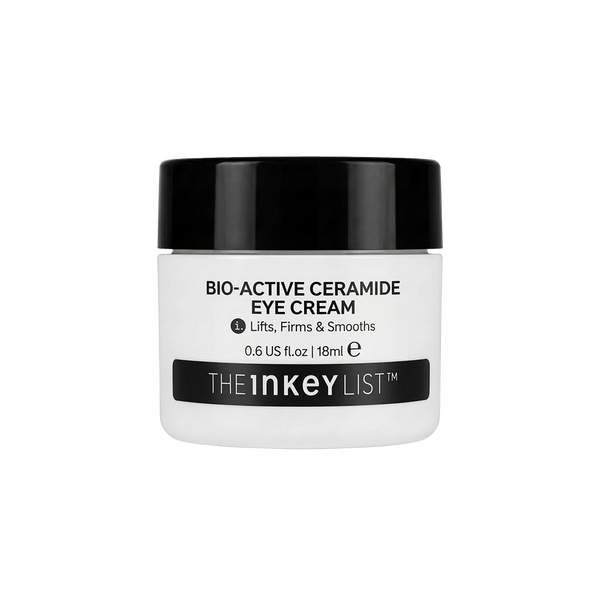
If you already know what you are looking for, our Bio-Active Ceramide Eye Cream was formulated for this area specifically, and you can browse the wider range of eye treatments alongside it.
What Are Crow’s Feet? The Lines at Your Outer Eye Corner
Crow’s feet are the fine lines that radiate outward from the outer corner of the eye, spreading toward the temple in a fan shape. You will hear them called laughter lines or character lines, which is a kinder framing and an accurate one. In clinical literature they are known as lateral canthal rhytids, which simply means wrinkles at the outer corner of the eye. Lateral means to the side, canthal refers to the corner where the eyelids meet, and rhytid is the medical word for a wrinkle.
They appear here first for reasons that are structural rather than mysterious.
The skin around the eye is the thinnest on the face. It has fewer oil glands than the cheeks or forehead, which means it holds onto moisture less effectively and loses water more readily across the day. Thinner skin with a less robust barrier shows change sooner, and it shows change more visibly, because there is less tissue to disguise what is happening underneath.
Sitting directly beneath that skin is the orbicularis oculi, a ring of muscle that encircles the eye. It is the muscle that closes your eyelid. Every blink contracts it. So does every smile, every laugh, every squint into bright light, every screen-induced narrowing of the eyes at the end of a long afternoon. The skin above it folds each time, in the same places, along the same lines.
The average person blinks somewhere in the region of fifteen to twenty times a minute. Add expression on top of that. Over years, this becomes an enormous number of repetitions in a very small area of very thin skin.
Dynamic versus static lines, at a glance
The distinction between these two matters more than almost anything else in this article, because it determines what skincare can realistically do for you.
- Dynamic lines appear only when you make an expression. Smile, and they are there. Relax your face, and they disappear. These are pure muscle movement folding skin that still has enough resilience to spring back.
- Static lines are visible when your face is completely at rest. The crease has become a semi-permanent feature of the skin rather than a temporary fold.
- The transition between the two happens gradually. Repeated folding, combined with declining collagen and elastin, means the skin eventually stops recovering fully from each fold. A dynamic line becomes a static one.
Here is the honest part, and it is worth setting your expectations against it now rather than being disappointed in six weeks. Dynamic lines respond noticeably better to good skincare than static lines do. If your lines only show up when you smile, well-formulated products applied consistently can make a genuine visible difference to how the surrounding skin looks and how those lines read. If your lines are etched in at rest, topical skincare can soften their appearance, improve the condition of the skin around them and reduce the shadow they cast. It will not erase them.
That is not a pessimistic position. It is simply the accurate one, and knowing it means you can judge a product on what it actually promises rather than what you hoped it might do. With the anatomy established, it is worth looking at the forces that turn a fold into a fixed line.
What Causes Crow’s Feet? The Four Main Drivers
Crow’s feet are not caused by one thing. They are the cumulative result of four forces working on the same small patch of skin over decades. It is worth noting early that only one of those four is substantially within your control, which is useful information rather than discouraging information, because it tells you exactly where to spend your effort.
Repeated muscle movement and everyday expression
This is the mechanical driver. Every contraction of the orbicularis oculi folds the skin at the outer corner of the eye. Tens of thousands of repetitions accumulate over a lifetime, and the skin creases along the same axis every single time.
Squinting deserves particular attention, because it is a harder and more sustained contraction than a blink or a smile. Bright sunlight, glare off wet pavement, driving into low winter sun, working without your glasses when you probably need them, all of it recruits the same muscle in a more forceful way.
A UK study of periorbital skin ageing examined this in a British cohort and found that squinting and smiling were associated with visible crow’s feet, and that high-SPF sunscreen use was protective. That the research was conducted in a UK population matters here, because it reflects the light conditions, latitude and sun-behaviour patterns that most readers of this article actually live in, rather than being extrapolated from somewhere considerably sunnier.
To be very clear about the implication, or rather the non-implication: nobody should smile less. Facial expression is normal function, not damage and not neglect. Lines that form because you have spent decades laughing are not a hygiene failure. The point of understanding the mechanism is that it directs you toward the parts you can reasonably influence, which is largely the squinting and largely the sun.
UV exposure and photoageing
This is the big one, and it is the modifiable one.
Ultraviolet radiation is the single largest external contributor to visible skin ageing. The mechanism is well documented. Ultraviolet light and premature skin ageing research established that UV exposure triggers the production of matrix metalloproteinases, usually shortened to MMPs. These are enzymes that break down collagen in the skin. Repeated UV exposure means repeated MMP activity, which means collagen is being degraded faster than the skin can replace it.
Over time this produces solar elastosis. In plain terms, the elastic fibres that give skin its snap-back become disorganised and clumped rather than neatly arranged. Skin loses resilience. It becomes less able to recover its shape after being folded, which is exactly the wrong property for skin that sits over a muscle contracting thousands of times a day. The wider picture of the science behind facial ageing sets out how collagen loss and elastin disorganisation combine to change the structure and surface of skin.
The compounding penalty at the outer eye. Bright light does two things at once, in the same place. It delivers UV to the thinnest skin on your face, and it makes you squint, which contracts the exact muscle that creates crow’s feet. Photoageing and mechanical folding stack on the same square centimetre, at the same moment. This is why the outer corner of the eye so often shows change before anywhere else, and why sun protection here is not an optional extra.
Collagen and elastin decline
Collagen provides structure, the scaffolding that keeps skin firm and full. Elastin provides recoil, the ability to return to shape after being stretched or folded. Both decline naturally with age, beginning far earlier than most people expect, and the decline is gradual rather than sudden.
Crucially, these two causes are not independent of each other. UV exposure accelerates the breakdown of both. Natural ageing and photoageing are not parallel processes running side by side, they are the same process with one of them being pushed along faster. That is why the sun protection point carries so much weight. You cannot pause chronological time, but you can substantially slow the accelerant.
If you want to go deeper on the structural side, our guide to collagen and your skin covers what collagen actually does and what topical products can and cannot influence.
It is also worth marking a boundary clearly. Skincare works on skin. The appearance of the eye area is also affected by bone structure and by deep fat pads that change position and volume over decades. No topical product addresses those. A cream that claims to restructure your face is not describing a cream.
Genetics, skin type and lifestyle
Genetics influence how thick your skin is, how strong its structural proteins are, how much natural pigment offers some baseline protection, and simply when in life visible change tends to begin. Two people with identical routines and identical sun habits can end up in quite different places, and that is not a reflection of effort.
A few lifestyle factors are worth stating factually, without any moralising attached.
- Smoking is associated with accelerated skin ageing, through reduced blood flow and increased breakdown of structural proteins.
- Sleep position contributes mechanical creasing. Sleeping face-down or heavily on one side presses and folds the same areas nightly.
- Hydration status affects how skin looks day to day. Dehydrated skin shows fine lines more readily, which is a temporary and reversible effect rather than a structural one.
None of these are moral failings and none of them are worth losing sleep over, which would be counterproductive in more ways than one. Understanding the four drivers naturally raises a more personal question, which is whether any of this is normal and when it is supposed to start.
Are Crow’s Feet Normal, and When Do They Start?
Yes. Genuinely, unambiguously normal.
Crow’s feet are typically among the first visible signs of ageing anyone notices, and the reason is entirely structural rather than anything to do with how well you have looked after yourself. The thinnest skin on the face happens to sit directly over one of the most frequently contracted muscles in the body. That combination produces visible change earlier here than almost anywhere else. Everyone who blinks, smiles and goes outside will develop them eventually.
On timing, the honest answer involves wide variation, but there are patterns.
Dynamic lines, the ones that appear only on expression, commonly become noticeable somewhere from the mid to late twenties. A great many people first spot them in a photograph rather than in a mirror, because you rarely watch your own face mid-laugh. Static lines, visible at rest, more commonly appear from the thirties onward. Both of those ranges shift considerably based on genetics and on cumulative UV exposure, which is why someone who spent their twenties working outdoors and someone who did not can look quite different at thirty-five.
Are crow’s feet reversible? Partly, and the distinction matters. Dynamic lines respond well to consistent, evidence-backed skincare, because the skin still has the resilience to look meaningfully better when it is well hydrated, well protected and supported by active ingredients. Static lines can be softened in appearance. They cannot be erased by a topical product. Anyone telling you otherwise is selling rather than informing.
This is also why prevention deserves more attention than correction. Protecting the collagen you currently have is considerably easier, cheaper and more effective than trying to improve lines that have already set. If you are in your twenties and reading this because you noticed something in a photo, you are in an excellent position. Our guide on when to start using anti-ageing products covers how to begin without overcomplicating things.
Which line is which: crow’s feet, under-eye lines and dehydration lines
Not every line around the eye is a crow’s foot, and they respond differently.
- Crow’s feet sit at the outer corner and fan toward the temple. Driven primarily by expression and UV.
- Under-eye lines sit beneath the eye itself, relating to thin skin and structural change rather than outward expression. Our guide to under-eye wrinkles covers that area properly.
- Dehydration lines are shallow, can appear surprisingly quickly and often improve within days once hydration is restored. The differences are set out in dehydration lines vs wrinkles.
If your concern is actually shadowing or swelling rather than lines, that is a separate topic covered in our guide to dark circles and puffiness.
The rest of this article stays with the outer corner. Now to the part that determines whether any of this effort is worthwhile, which is what actually has evidence behind it.
Which Ingredients Actually Help Soften Crow’s Feet
The eye care aisle is not short of confident claims. What follows is an attempt to rank ingredients by the strength of their published evidence rather than by how good they sound, including being open where the evidence is thinner than the marketing suggests.
Retinoids, the strongest published evidence
Retinoids are the most robustly evidenced topical category for the appearance of wrinkles, and it is not particularly close. Decades of published research support their effect on skin texture, tone and the appearance of fine lines. If you are building a routine on evidence alone, this category leads.
A few practical points for the eye area specifically.
- Use a formula appropriate for the eye area, or apply a facial retinol carefully to the orbital bone rather than the lid.
- Start low and slow. Two nights a week, building up gradually as your skin tolerates it.
- Night use only.
- Expect an adjustment period. Some dryness or flaking early on is common, which is one reason a ceramide-rich product alongside it is useful.
Our pillar guide on what is retinol covers the category in full, and if you are choosing between categories, peptides vs retinol sets out the trade-offs.
The significant exception: retinoids are not suitable during pregnancy or breastfeeding. If that applies to you, skip the category entirely and lead with peptides instead.
What the evidence says: the strongest published support of any topical category for the appearance of wrinkles, with a tolerance curve that requires patience.
Peptides, supportive evidence and well tolerated
Peptides are short chains of amino acids that act as signal molecules in the skin, supporting the appearance of firmness. They are considerably gentler than retinoids, usable morning and evening, and carry no pregnancy restriction.
The evidence base is smaller than for retinoids but genuinely relevant to this specific concern. A 3-D imaging trial on periorbital wrinkles assessed peptide treatment using a split-face design. Two terms worth translating: periorbital simply means around the eye, so this was measured in the exact region under discussion rather than extrapolated from the forehead. Split-face means each participant’s own untreated side served as the comparison, which is a rigorous design because it controls for the individual’s genetics, environment and habits.
This category matters here because our Bio-Active Ceramide Eye Cream is built around a Tetrapeptide Complex. For a fuller explanation see what are peptides, and for a deeper dive on one of the most studied peptide systems, Matrixyl 3000.
What the evidence says: supportive rather than overwhelming, measured in the right area, and by far the best-evidenced option for anyone who cannot use retinoids.
Ceramides, strong for barrier and hydration, weaker for wrinkle depth
Here is where honesty earns its place.
Ceramides have strong published evidence for supporting the skin barrier and improving hydration. Their published evidence for reducing wrinkle depth is weaker. A review of popular eye cream ingredients is useful reading on how the evidence for various eye care ingredients actually stacks up, and the honest summary is that ceramides are barrier ingredients first.
You should be sceptical of any brand presenting ceramides as a wrinkle-depth solution, and that includes reading our own claims carefully.
So why do they matter at the eye at all? Two reasons, both real.
- A stronger barrier holds water more effectively. Better-hydrated skin reflects light more evenly, so the same line reads as softer and less shadowed. That is an optical improvement, but a visible line is partly a crease and partly the shadow it casts, so improving the optics genuinely changes how prominent it looks.
- Barrier support makes stronger actives more tolerable in this delicate region. In practice, people who tolerate their retinol stick with it, and consistency is what produces results.
Further reading on the ingredient itself is in what are ceramides and what is Ceramide NP.
What the evidence says: excellent for barrier and hydration, supportive rather than starring for wrinkle appearance, and valuable as the foundation that lets everything else work.
Vitamin C
Vitamin C offers antioxidant support against daily environmental stress, which is relevant given that UV is the largest modifiable driver of crow’s feet. It also has a brightening effect that can change how a shadowed line reads on the skin.
Be clear about what that is. It is largely an optical improvement rather than a structural one, and it is a useful supporting player rather than the main event for lines at the outer corner.
What the evidence says: worthwhile antioxidant support with a visible brightening benefit, best used in the morning alongside SPF.
Hydration, hyaluronic acid and glycerin
Humectants such as hyaluronic acid and glycerin draw water into the upper layers of the skin, producing immediate plumping that softens the look of fine lines. The effect can be visible the same day.
The honest caveat is that this is a temporary appearance benefit that depends entirely on consistency. Stop, and it goes. It is not a structural change to the skin. That does not make it worthless, since much of how lines look day to day is down to hydration, but it should not be mistaken for a long-term correction.
What the evidence says: fast, real and genuinely useful for how skin looks, entirely dependent on continued use.
Two of these categories matter most for the outer corner, and one product was formulated around exactly that combination.
Bio-Active Ceramide Eye Cream: Built for This Area
Given everything above, the logic of this formula is worth explaining in the order the evidence supports rather than the order the name suggests.
The peptide leads. The Tetrapeptide Complex, built around Tetrapeptide-111, is the component most relevant to the appearance of lines and firmness in this area. This is a peptide product supported by ceramides, not a ceramide product with peptides added. Given what Section 4 said about the relative weight of published evidence, framing it any other way would be inconsistent.
The ceramide supports. Bio-Active Ceramide NP does the barrier and hydration work, which is precisely where ceramide evidence is strongest and precisely what the thinnest skin on your face needs. If you are curious about what distinguishes this form, Bio-Active Ceramides vs regular ceramides explains it.
Here are the tested claims for our Bio-Active Ceramide Eye Cream, stated exactly as tested.
- Up to 4x wrinkle reduction*
- Clinically proven to lift eyelids by 29% in 4 weeks**
- 89% saw fine lines smoothed and blurred instantly*
- Proven to lift eyelids by 51% (in 12 weeks)*
- 94% agreed eye area looked visibly firmer and more sculpted** (12 weeks)
12-week independent clinical study of 30 people, Ceramide NP at 0.2% vs placebo. Clinically tested on 32 participants over 28 days. 32 participants over 12 weeks. 32 participants over 12 weeks. *Tested on 32 participants.
An accuracy note on the lift figures
The 29% and 51% figures measure eyelid lift. They describe firming and lifting of the eye area. They are not measurements of crow’s feet reduction, and we are not going to present them as though they were.
This distinction is worth understanding beyond this one product. A lift measurement and a wrinkle-depth measurement are different things, assessed differently. When a brand converts a lift result into a wrinkle-reduction percentage, or lets the two blur together in a headline, that is a red flag, and it is a common one. Read the asterisk. Check what was actually measured, on how many people, over how long. It is the single most useful habit in skincare.
Suitability
- Fragrance-free
- Alcohol-free
- Ophthalmologist approved
- Suitable for sensitive eyes
- Free from retinol, so suitable during pregnancy and breastfeeding
That last point deserves more than a bullet. The strongest-evidenced category for wrinkle appearance, retinoids, is off the table for a great many people, whether through pregnancy, breastfeeding, sensitivity or simple intolerance. A peptide-led formula is a genuine evidence-backed route for those readers, not a consolation prize handed out because the real option was unavailable. The periorbital trial evidence discussed earlier applies to this category directly.
On price, once and then not again: £15.00 for 18ml in the UK, currently rated 4.9 stars across 277 reviews. The point of stating it is not a discount message. It is that clinically tested skincare formulated for the eye area should not require a considered financial decision, and consistency, which is the thing that actually produces results, is far easier to sustain when a product is genuinely affordable to repurchase.
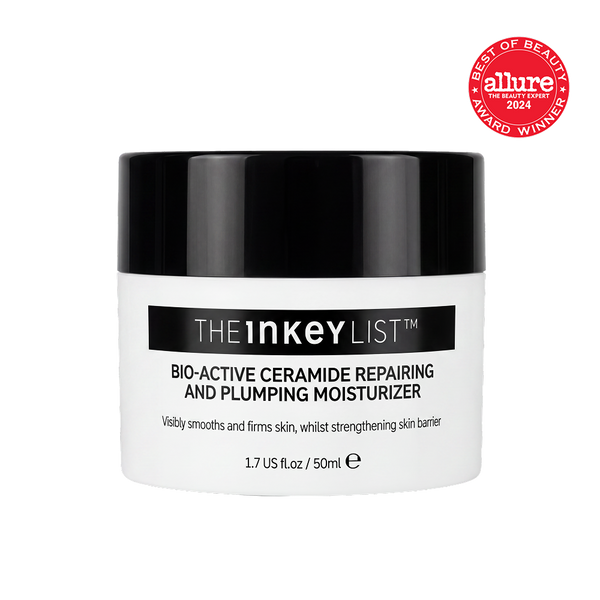
For the rest of the face, the same technology appears in our Bio-Active Ceramide Moisturiser, and the wider range of moisturisers covers other skin types and preferences.
A note on the other eye cream
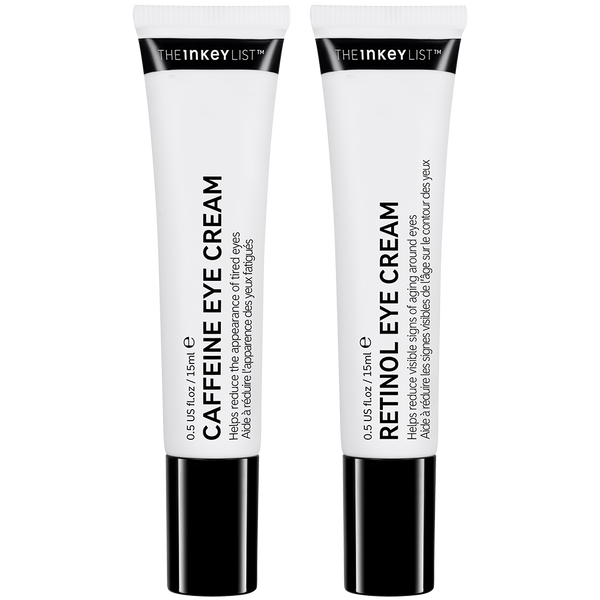
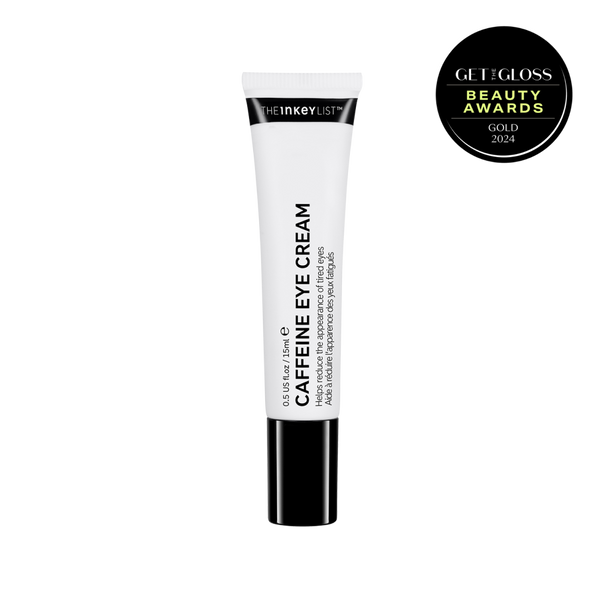
If your concerns include dark circles and puffiness as well as lines, that is a different job. Our Caffeine Eye Creamtargets the appearance of dark circles and puffiness, not crow’s feet. If you have both concerns, apply Caffeine Eye Cream first, then Bio-Active Ceramide Eye Cream on top.
Products only work if they are used properly and used consistently, so here is what that looks like across a day.
Your AM and PM Routine for Crow’s Feet
Before the steps, the most important sentence in this section: a good product applied inconsistently loses to an average product applied daily. Every timeline further down assumes daily use. Build something you will actually maintain on a Tuesday in February.
The morning routine
- Cleanse gently. Nothing stripping. If your skin feels tight afterwards, the cleanser is too harsh for this area.
- Apply a hydrating serum to damp skin. Humectants work better when there is water available to draw on, so do not dry your face completely first. Our Hyaluronic Acid Serum is a straightforward option here. If brightening is also a concern, 15% Vitamin C + EGF Serum is a reasonable morning addition.
- Eye cream. After serum, before moisturiser.
- Moisturise.
- Finish with SPF, every single day. Including cloudy ones, and including winter. Our Dewy Sunscreen SPF 30sits comfortably under makeup.
Application technique matters more at the eye than anywhere else on the face, because the skin is thin enough that how you apply a product genuinely affects the outcome.
- Use roughly a pea-sized amount for both eyes. More is not better, and excess product can migrate into the eye itself.
- Use your ring finger. It applies the least pressure of any finger, which is why the advice persists.
- Pat, do not rub. Never drag or pull the skin.
- Work along the orbital bone, moving from the inner corner outward toward the outer corner. That outward direction is deliberate, since it finishes precisely where crow’s feet form.
- Avoid the eyelid itself and stay well clear of the waterline.
For a fuller walkthrough, see how to apply eye cream the right way.
The evening routine
- Cleanse, removing sunscreen and makeup thoroughly.
- Treatment step, if you use one.
- Eye cream.
- Moisturise.
If you use retinol, apply it first and follow with your eye cream. The ceramides help buffer potential dryness, which in practice means better tolerance, and better tolerance means you keep going rather than abandoning it in week three. Start at two nights a week and build slowly. Our Starter Retinol Serum is formulated for exactly this kind of gradual introduction, and retinol for beginners covers the process without the guesswork.
During pregnancy and breastfeeding, skip retinol entirely and let peptides do the work. Our guide to pregnancy-safe skincare sets out what to keep and what to pause.
If you want the full picture beyond the eye area, see our best anti-ageing skincare routine, the complete skincare routine guide and the wider anti-ageing range.
How to soften crow’s feet without injectables
This is the question a lot of people are actually asking, so it deserves a straight answer rather than a marketing one.
Injectables and in-clinic treatments work by temporarily reducing muscle movement. That is a different mechanism entirely from anything a topical product does. Skincare does not relax the orbicularis oculi, cannot claim to, and any brand suggesting a cream is an alternative to an injectable is describing something that is not happening. We would rather say that plainly than imply otherwise and have you feel misled in eight weeks.
What consistent skincare genuinely does is worth taking seriously on its own terms.
- It supports hydration, so skin is plumper and lines read as shallower.
- It supports barrier function, so the skin holds water better and tolerates active ingredients.
- It supports the appearance of firmness, through peptides or retinoids.
- It protects against the largest modifiable driver, through daily SPF.
Remember that a visible line is a combination of two things: the crease itself and the shadow it casts. Improving skin condition and how evenly the surface reflects light genuinely changes how prominent that line looks, even when the crease itself is unchanged. That is a real effect, not a semantic dodge.
The realistic outcome is softer-looking, better-hydrated skin with less shadowing at the outer corner. Not erasure. What that approach does offer is worth weighing honestly: it is achievable, repeatable, affordable and carries no downtime, and it is something you control entirely.
With the daily routine settled, the longer game is prevention and knowing when to expect anything to change.
How to Prevent Crow’s Feet and When to Expect Results
Prevention is where the largest returns sit, and one habit dominates all the others.
Daily sun protection comes first
Not a serum. Not an eye cream. Sunscreen.
Daily broad-spectrum SPF is the single most effective preventive step available for crow’s feet, because UV is the largest modifiable driver of the collagen breakdown and elastin disorganisation that turn dynamic lines into static ones.
There is also evidence that photoprotection does more than simply hold the line. Research on daily photoprotection and photoageing across roughly 52 weeks found improvement in crow’s feet specifically. That is a notable finding, because it suggests consistent daily protection is not purely defensive. Given enough time without ongoing UV damage, skin has some capacity to improve. Broader analysis of sunscreens and photoageing supports the same direction of travel.
The operative word is daily. UVA passes through window glass, so a desk by a window counts. UVA is present on overcast days, which in the UK is a meaningful proportion of the year, and it does not take a summer holiday to accumulate exposure. Our guide to SPF all year round makes the winter case, mineral vs chemical sunscreen helps you choose a formula you will actually enjoy wearing, and what is SPF covers the fundamentals. If you want a straightforward daily option, our Dewy Sunscreen SPF 30 is designed for exactly that.
Sunglasses, framed honestly
Sunglasses do two useful things. UV400 or wraparound frames reduce UV exposure to the skin around the eye, and they reduce squinting, which is a hard contraction of the exact muscle that creates crow’s feet. WHO guidance on protecting against skin cancer recommends eye protection as part of sensible sun behaviour, and there are good reasons to wear them entirely separate from wrinkles.
The honest limitation, stated plainly: there is no trial proving that sunglasses prevent wrinkle formation. The reasoning is sound, both mechanisms are real, and it is a sensible habit. But a plausible inference is not a proven result, and we are not going to present it as one. Wear sunglasses. Do not expect them to function as a treatment.
Supporting habits
Stated factually, with no alarm attached.
- Not smoking, which is associated with slower visible skin ageing among many other benefits.
- Sleep position, since sleeping face-down or heavily on one side creates repeated mechanical creasing overnight.
- Keeping skin well hydrated, both through what you apply and general hydration, because dehydrated skin displays fine lines more readily.
What to expect and when
Unrealistic timelines are the main reason people abandon routines that were, in fact, working. Here is a realistic sequence.
- Immediately to within days. Hydration and light-diffusing effects. Skin looks smoother and lines read as softer because the surface is better hydrated and reflects light more evenly. Our eye cream’s 89% saw fine lines smoothed and blurred instantly* claim sits here, and it is honestly described as an optical benefit delivered fast rather than a structural change.
- Roughly two to four weeks. Improved barrier function and more consistently hydrated skin. Less tightness, better tolerance of actives, a generally healthier-looking eye area.
- Eight to twelve weeks. The appearance of firmness and improvement in how lines look, driven by peptides or retinoids. The 12-week clinical results referenced earlier sit in this window, which is a fair reflection of how long this category of ingredient takes.
*Tested on 32 participants.
Two caveats are worth repeating deliberately, because they are the ones most often forgotten by week six. Dynamic lines improve more visibly than static ones. And consistency beats any individual product decision you will ever make, by a wide margin. For more on why patience is the active ingredient, see how long does skincare take to work.
A few questions come up repeatedly, so here they are answered directly.
The Honest Bottom Line on Crow’s Feet
Crow’s feet are a normal result of expression, UV exposure and time. They appear at the outer corner of the eye because the thinnest skin on the face happens to sit over the most frequently used muscle, which makes them one of the earliest visible signs of ageing for almost everyone.
What genuinely helps is not complicated. Daily sun protection does the most work by a considerable margin. Evidence-backed actives come next, with retinoids leading and peptides close behind for anyone who cannot use them. Barrier support and hydration change how lines read by changing how skin reflects light. And consistency quietly outperforms every individual product decision you will ever agonise over.
The goal here is softer-looking, healthier, better-supported skin around the eyes. Not the removal of every line, and certainly not the end of your expressions.
If you would like a routine matched to your skin and your concerns rather than a guess, take our skin quiz. Or start with our Bio-Active Ceramide Eye Cream and explore our eye treatments.
Because at The INKEY List, We Give A Care.
Frequently Asked Questions
Got a question?
Our askINKEY team are a friendly bunch of skincare experts with deep product knowledge and zero judgement. Whether you're an ingredient obsessive or just starting out, we'll make it make sense. No question too big. No question too small. We Give A Care, Every Day.


