



Collagen for Skin: What It Does and How to Support It
Collagen keeps skin firm and plump — here's what really happens as it declines, and the simple steps that help support it.
Author
askINKEY skincare advisor
Published
31 August, 2026
Time to read
14 minutes
Collagen for skin is one of the most searched topics in skincare, and one of the most misunderstood. It appears on serum bottles, in supplement tubs, in powders stirred into morning coffee and in creams promising to put back what time takes away. Some of that is grounded in real science. A lot of it is marketing.
This article answers the questions people actually ask. What collagen does for skin. When it starts to decline and what speeds that up. Whether you can genuinely put collagen back by applying it to your face. What collagen serums and collagen supplements can and cannot do. And what actually helps, based on evidence rather than packaging.
We will be straight with you throughout. The INKEY List does not sell a collagen serum, and we are not going to pretend that applying collagen to the surface of your skin rebuilds the collagen underneath it. We would rather explain how this works than sell you a shortcut. If that means telling you that the most effective step is the least glamorous one, so be it.
Let’s start with what collagen actually is.
What does collagen do for skin?
Collagen is a structural protein, and it is the most abundant protein in the human body. It is found in bones, muscles, tendons and connective tissue, and it makes up a significant proportion of the skin’s dry weight. Wherever your body needs strength and structure, collagen is doing some of that work.
In skin specifically, collagen sits in the dermis, the layer beneath the surface you can see and touch. Down there it forms a dense, organised network of fibres that acts as a supportive framework. There are many types of collagen in the body, but Types I and III are the ones that matter most for skin. Type I provides the bulk of the tensile strength. Type III is more prevalent in younger skin and in the early stages of wound repair.
The easiest way to understand how it works is to stop thinking about collagen in isolation.
Think of collagen as the scaffolding that holds skin’s structure. Elastin is the springiness that lets skin bounce back when you smile or squint. And hyaluronic acid is the water content that keeps everything looking plump and cushioned. All three do different jobs, and they work as a system. Collagen alone is not the whole story.
That distinction matters, because it explains why skin can behave in ways that seem contradictory. Skin can be well hydrated and still show fine lines. It can be firm and still look dull. When one part of the system changes, you notice it in a specific way, and reaching for the wrong fix is easy if you assume everything comes down to collagen.
So what does collagen do for skin in practical, everyday terms? It supports firmness. It helps skin look plump and smooth rather than thin and crepey. It helps skin hold its shape, and it contributes to that quality we tend to describe as resilience, where skin settles back quickly rather than lingering in a crease.
It is worth being precise here, because this is where a lot of skincare copy overreaches. Collagen in the dermis supports the appearance of firmness. Skincare that supports collagen supports that appearance. Nothing you apply topically restructures the dermis, and any product suggesting otherwise is writing cheques the formula cannot cash.
One more piece of the picture, because it becomes important later. The cells responsible for producing collagen are called fibroblasts, and they live in the dermis, well beneath the surface. Fibroblasts build and maintain the collagen network throughout your life. Naming them is not showing off. It explains a problem we will come to shortly: if the factory is on the lower floor, anything you apply to the roof has a considerable distance to travel.
That scaffolding, unfortunately, does not stay at full strength forever.
When does collagen start to decline?
Collagen production begins to slow from the mid-twenties onwards. That is earlier than most people expect, and it tends to land badly when you first read it. It should not. This is a gradual, ordinary biological process, not a cliff edge, and understanding the timeline is far more useful than dreading it.
Let’s correct a common misconception straight away, because it circulates constantly. Skin does not “stop” producing collagen at twenty-five, or at any other birthday. Your fibroblasts keep working for your entire life. What changes is the balance. Production gradually slows, breakdown continues, and at a certain point breakdown begins to outpace replacement. Research into skin ageing has consistently found that we begin to lose collagen as we age, with the decline accumulating steadily over decades rather than arriving overnight.
The visible consequences show up slowly. Fine lines appear first, often in areas of repeated movement such as around the eyes and mouth. Skin gradually looks less plump. Firmness softens. Skin takes a little longer to bounce back than it used to. None of this happens in a week, which is precisely why it can feel like it happened suddenly when you finally notice it.
Why UV exposure matters more than anything else
Here is the part worth paying real attention to, because it is the part you can do something about.
Ultraviolet exposure is by far the most significant accelerator of collagen loss, and its effect is not subtle. UV works against your collagen in two directions at once. It triggers enzymes in the skin that actively break down existing collagen fibres, and at the same time it dampens the production of new collagen. Degrade the supply and suppress the replacement, and the balance tips considerably faster than chronological ageing alone would manage. This process is called photoageing, and it has been examined extensively in the dermatological literature, including a recent peer-reviewed review of photoageing pathogenesis, prevention and treatment.
The genuinely encouraging part is that photoageing is largely preventable. Not entirely, and not retroactively, but meaningfully. A substantial share of what people describe as ageing skin is sun-driven rather than time-driven, which means daily sun protection is not a bolt-on to a collagen routine. It is the foundation of one. If you take one thing from this article, take that. Our SPF guide covers how to make it work in practice, including on grey UK days when it feels unnecessary.
Other factors that speed collagen loss
UV leads by a distance, but it is not alone.
Smoking is strongly associated with accelerated skin ageing and reduced collagen. High sugar intake contributes through glycation, a process in which sugar molecules attach to proteins including collagen and leave the fibres stiffer and less functional. Chronic sleep deprivation interferes with the body’s overnight repair processes. General oxidative stress, from pollution and from ordinary daily life, adds to the load over time.
We want to be careful about how we frame all of this, because there is a version of this section that reads like a list of accusations. That is not the intention and it is not useful. You cannot pause ageing, and we are not going to pretend a moisturiser can. What you can do is protect what you already have, support your skin’s own processes, and be consistent about it. That is a genuinely optimistic position, not a resigned one.
Which brings us to the question everyone arrives at eventually. If collagen is declining, can you simply put it back with a cream?
Can collagen be absorbed through the skin?
Not in any meaningful way. Here is exactly why.
The outermost layer of your skin, the stratum corneum, is a barrier. That is its entire purpose. It is built from tightly packed cells embedded in lipids, and it exists to keep water in and keep foreign substances out. It is very good at its job, and it does not make exceptions for expensive ingredients.
Collagen molecules are extremely large. Native collagen is a big, tightly wound triple-helix protein, and its molecular weight is orders of magnitude greater than the size range that can realistically pass through an intact skin barrier. A 2024 peer-reviewed review on the use of collagen in cosmetic products sets this out clearly: native collagen is far too large to cross the stratum corneum and reach the living layers below.
Hydrolysed collagen, which is collagen broken down into smaller fragments, is a step in the right direction but not a solution. The same review notes that penetration falls away sharply once fragments exceed a very short chain length of only a few amino acids. Most of what is described as hydrolysed collagen in a cosmetic formula remains well above that threshold.
And remember where the collagen that governs firmness actually lives. It is in the dermis, produced by fibroblasts, sitting beneath the epidermis. A topical product would have to cross a barrier specifically designed to stop it, then travel through additional layers, then integrate itself into an existing fibrous network. That is not how skin works.
Applying collagen is not the same as making collagen.
So what does topical collagen actually do?
This is where we want to be fair rather than dismissive, because collagen in a topical formula is not doing nothing.
On the surface, collagen behaves as a humectant and a film-former. It binds water, which increases hydration in the upper layers of the skin. It forms a light film across the stratum corneum, which helps reduce water loss through the skin’s surface. The practical result is skin that feels softer, looks smoother, and appears temporarily plumper, because hydrated skin genuinely does look better than dehydrated skin.
That is a real benefit. It is just a different benefit from the one most people think they are buying. It is a surface hydration effect, it is temporary, and it recedes when you stop using the product. Nobody who has enjoyed a collagen cream has been foolish. The formula was probably pleasant and probably did hydrate their skin. The label simply implied a mechanism that was not occurring.
Once you understand that, the useful question changes shape. It stops being “how do I put collagen back onto my face” and becomes “how do I protect the collagen I have, and how do I support my skin’s own ability to produce it”. Those questions have much better answers.
There is also an ingredient class built around that second question, one that works on a completely different principle because of its size. We cover peptides properly further down.
This raises two immediate follow-ups: what about collagen serums, and what about collagen supplements? Both deserve straight answers.
Collagen serums and supplements: the evidence
These are the two most commonly asked commercial questions about collagen, and we sell neither product. That makes this the easiest section in the article to write honestly, so let’s use that.
What a collagen serum can and cannot do
A product marketed as a collagen serum typically contains hydrolysed collagen or marine collagen, sometimes alongside humectants and conditioning agents. Based on everything covered in the previous section, you can predict what it does. It hydrates the surface. It forms a light film. It makes skin feel comfortable and look smoother in the moment.
Set your expectations accordingly. A good collagen serum is a competent hydrating serum. Skin may well look better while you are using it. What it is not doing is delivering collagen into your dermis or altering your skin’s structure, and the effect does not persist once you stop, because there is nothing structural underpinning it.
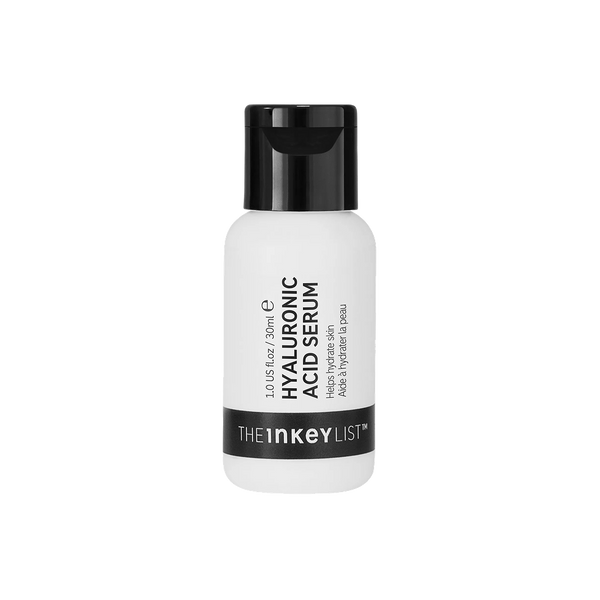
The INKEY List does not make a collagen serum. That is a deliberate choice, not an oversight. We would rather direct formulation effort towards ingredients with stronger evidence for the outcome people are actually after, which is skin that looks firmer and smoother over time rather than for an afternoon. If you want a hydrating serum, our Hyaluronic Acid Serum does that job directly and without the detour.
Do collagen supplements work for skin?
Here the picture is genuinely more interesting, and we would be doing you a disservice if we flattened it.
The evidence for oral collagen is stronger than the evidence for topical collagen. A systematic review and meta-analysis of oral collagen for skin ageing pooled data from a substantial number of randomised controlled trials and found statistically significant improvements in skin hydration and elasticity among people taking hydrolysed collagen peptides compared with placebo. The benefits tended to become clearer after around eight weeks or more of consistent use. That is a real finding from a real body of research, and dismissing it would be as dishonest as overselling it.
Now the caveats, which matter just as much.
The studies vary considerably. Doses differ, collagen sources differ across marine, bovine, porcine and other origins, and the instruments used to measure hydration and elasticity are not consistent between trials. Many products tested include additional ingredients such as vitamin C, other vitamins and antioxidants, which makes it difficult to attribute the result to collagen alone. Sample sizes in individual trials are often small. And the effect sizes, while statistically significant, are moderate rather than dramatic, so how visible they are in the mirror is a separate question from whether an instrument can detect them.
We do not sell supplements, we have no commercial stake in your answer, and we are not going to tell you what to do with your money. Our honest read is that a collagen supplement may offer a modest benefit for hydration and elasticity if you take it consistently for a couple of months, and that it is not a substitute for sun protection.
What your diet contributes
Before you buy anything, it is worth knowing that your body’s own collagen production has nutritional requirements you may already be meeting.
Adequate protein supplies the amino acids collagen is built from. Vitamin C is a genuine cofactor in collagen synthesis, meaning your body cannot properly form collagen without it. And eating food that is rich in antioxidants helps counter the oxidative stress that contributes to collagen breakdown. This is one of the rare instances where the nutritional advice and the skincare advice point in exactly the same direction. Vitamin C works topically too, and our vitamin Cguide explains how the two roles differ.
The bottom line: a supplement may give you a modest benefit, a balanced and varied diet does genuinely useful work, and neither of them replaces daily sun protection.
If topical collagen cannot do the job, the sensible question is what can. The answer is peptides.
Collagen peptides for skin: a different approach
The distinction between collagen and peptides is simple once you see it, and it is the reason peptides succeed where topical collagen does not.
Collagen is the large, finished protein. Peptides are short chains of amino acids, the building blocks that make up proteins. Because peptides are dramatically smaller than whole collagen, they can interact with the skin in ways an enormous protein molecule cannot. Size is not a technicality here. It is the entire difference, and it maps directly onto the penetration threshold discussed earlier. Our peptides guide goes into the detail properly.
The most useful mental model is this: peptides are less about adding collagen to your face and more about giving your skin a signal it recognises. Peptides help support natural collagen production, working with the processes your skin already runs rather than attempting to import a finished material from outside.
Not all peptides are the same, and it is worth knowing which one you are actually buying. Matrixyl 3000™ is one of the most extensively researched signal peptide complexes in skincare, and it appears in two INKEY formulas: our Hyaluronic Acid Serum and our Caffeine Eye Cream. Royal Epigen P5™ and a hydrating peptide solution sit in our Peptide Moisturiser. And a plant-derived Epitensive™ EGF peptide works alongside vitamin C in our 15% Vitamin C + EGF Serum. Different peptides, different jobs, and the useful question when you are shopping is never simply “does it contain peptides” but which ones and at what concentration.
What should you realistically expect? Peptides are well tolerated and suit most skin types, including sensitive skin. They layer easily with other ingredients, which makes them straightforward to fit into an existing routine without rearranging everything. They work gradually, so think consistent use across weeks and months rather than results by Friday.
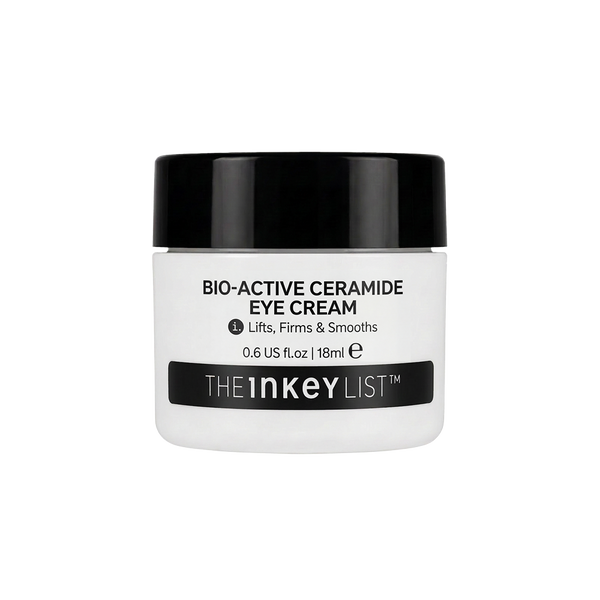
Peptides also turn up in formulas built for specific areas rather than the whole face. Our Bio-Active Ceramide Eye Cream pairs a Tetrapeptide Complex with bio-active ceramides, a deliberate combination for the eye area. We come back to why that area needs its own approach a little further down.
They are also a genuinely good starting point if you have tried retinol and found it too irritating, or if you have been putting it off because the adjustment period sounds unappealing. The two ingredients are not interchangeable and they work differently, which we unpack in peptides vs retinol if you are weighing them up. Our retinol guide covers that side in full.
That is the ingredient. Here is what it looks like day to day.
How to support your skin’s collagen day to day
Everything above leads to a fairly short practical list. You do not need all of it. Pick what fits your skin and your patience.
Sun protection comes first
If you do one thing, do this one. Daily sun protection is the single most effective step available for protecting the collagen you already have, and nothing else in this section comes close on evidence.
Frame it as maintenance rather than damage control. Every day you wear SPF is a day your existing scaffolding is not being broken down faster than necessary. That includes overcast UK days, which is where most people quietly opt out, and it includes time spent near windows, since UVA passes through glass.
Our Dewy Sunscreen SPF 30 is designed to make that habit easy to keep. The texture layers well over serums and sits comfortably under makeup, which removes two of the most common reasons people abandon daily SPF. For the wider picture on how sun protection fits into a routine, our SPF guide covers it.
A peptide moisturiser for daily support
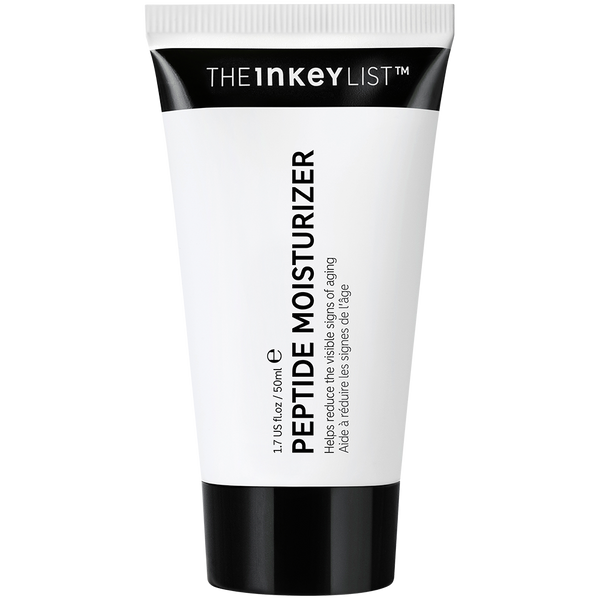
If sun protection defends what you have, peptides are how you support what your skin makes. Our Peptide Moisturiseris the recommendation this whole article has been building towards.
It helps support natural collagen production while hydrating, leaving skin looking brighter and more youthful over time. It is a moisturiser rather than an extra step, which matters more than it sounds, because the routine you keep is the one that fits into the routine you already have.
Use it morning and evening, after any serums and before your SPF in the morning. It suits most skin types. If you want to browse the wider range, our peptides collection has the full line-up.
Barrier support for firmness
If your main concern is dryness alongside early fine lines, consider our Bio-Active Ceramide Moisturiser instead.
The connection here is honest and worth understanding. As skin ages, its natural ceramide levels fall and the barrier weakens, which shows up as dryness, sensitivity and skin that looks less smooth. Bio-active ceramides help visibly firm and smooth while strengthening that barrier. The formula also contains Gransil Blur to instantly blur the look of fine lines, and shea butter to comfort skin.
This is an alternative to the Peptide Moisturiser for drier skin types, or a PM partner to it if your skin wants more at night. You do not need both. Choose based on whether hydration and barrier comfort or peptide support is your priority.
The eye area needs its own approach
The skin around your eyes is the thinnest on your face, and that one fact explains most of what happens there. Where skin is thinner, the collagen network beneath it is proportionally less substantial, so the gradual decline described earlier in this article becomes visible around the eyes long before it shows across the cheeks or forehead. Add the sheer amount of movement that area handles every day, from blinking to squinting to smiling, and you have the reason fine lines tend to arrive there first.
This is why a face moisturiser, however good, is not automatically the right answer for the eye contour. Formulas built for that area are designed around thinner, more reactive skin and tested accordingly.
Our Bio-Active Ceramide Eye Cream is the recommendation here, and it earns its place in a collagen article for a specific reason: it combines a Tetrapeptide Complex with bio-active ceramides. That pairing tackles both halves of what usually goes wrong around the eyes at once. The peptides work on the look of fine lines and the firmness of the eye contour, while the ceramides support the barrier in an area where dryness shows up fast and makes every line look deeper than it really is. It is dermatologist and ophthalmologist approved, which counts for more here than anywhere else on the face.
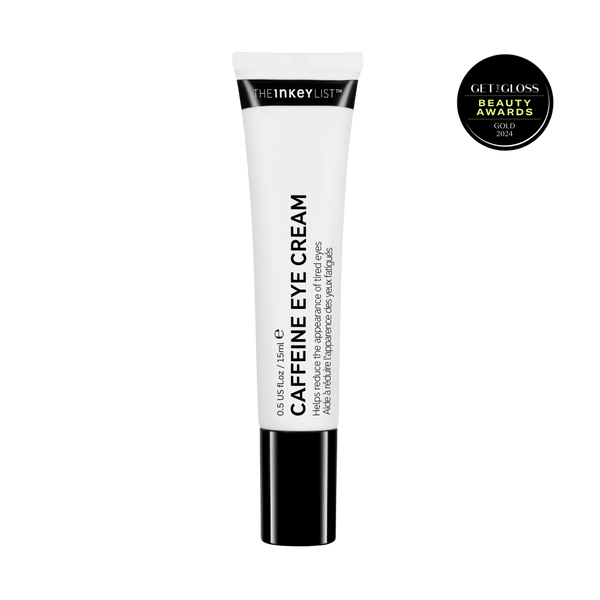
If puffiness and dark circles are your main concern rather than fine lines, our Caffeine Eye Cream is the other option worth knowing about, and it is relevant here because it carries Matrixyl 3000™ alongside 0.3% caffeine. That is the same signal peptide found in our Hyaluronic Acid Serum, working in the area where skin is thinnest, while the caffeine addresses the fluid retention behind under-eye puffiness. Choose between the two based on what you are actually seeing: ceramides and Tetrapeptide for barrier support and the look of lines, caffeine and Matrixyl 3000™ for puffiness and tired-looking eyes.
Apply either with your ring finger, patting rather than dragging, and give it the same eight to twelve weeks of consistency you would give anything else in this article. If you want to go deeper on this area, our guide to crow’s feetcovers what causes them and how to soften them, and how to get rid of dark circles under eyes handles the discolouration side of the conversation.
Antioxidants and vitamin C
Oxidative stress, from UV and pollution and ordinary daily life, contributes to collagen breakdown. Antioxidants help defend against it, which makes them a natural partner to sun protection rather than a replacement for it.
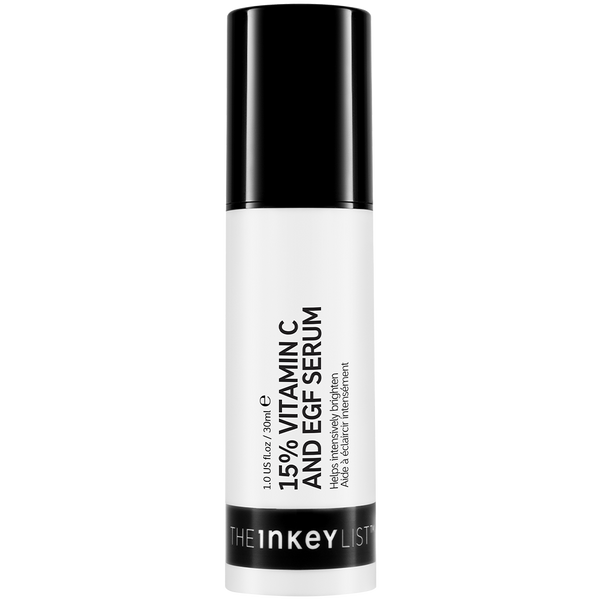
Vitamin C is the best known of the topical antioxidants, and it has a second relevance to this article: it is a genuine cofactor in your body’s own collagen synthesis, as covered in the diet section above. Our 15% Vitamin C + EGF Serumis worth knowing about here because it is also a peptide product. Alongside 15% Ascorbyl Glucoside for brightening, it contains 1% Epitensive™ EGF, a plant-derived peptide that supports the appearance of elasticity and firmness over time. Two mechanisms relevant to this article in a single step. Our vitamin C guide covers how to choose and use one.
For glow and visible rejuvenation
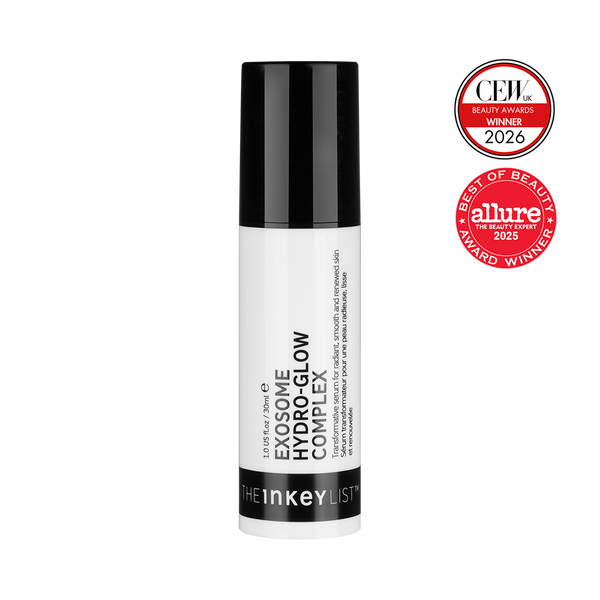
If radiance is what you are after alongside firmness, our Exosome Glow Serum is the glow boosting step in this routine.
It helps support natural collagen production, and it delivers 6-in-1 skin rejuvenation: clinically proven to visibly improve radiance, hydration, tone, firmness, elasticity, and texture*. Firmness and elasticity sitting inside that clinically proven claim is exactly why it earns a place in a collagen article.
In testing it delivered clinic-worthy rejuvenated skin in 14 days, and 100% saw more glowing skin, clinically proven. It is also proven to deliver up to 12-hours of hydration. In-vitro testing additionally showed a 55% reduction in visible signs of skin stress (redness, puffiness, visible irritation)* and a 63% increase in skin renewal activity in 8 hours*. If exosomes are new to you, our exosomes guide explains what they are and how they work.
*4-week clinical study of 26 people
**Clinical study of 31 people
*In-vitro testing of Cica Exosomes showed a 55% reduction in pro-inflammatory markers and a 63% increase in markers associated with skin renewal after 8 hours.
Where retinol fits
Retinol is well established for improving texture and the look of fine lines, and it has the longest track record of any topical anti-ageing active. It is strictly a PM ingredient, it needs building up slowly to allow skin to adjust, and it requires daily SPF alongside it.
It is not right for everyone, and gentler alternatives exist. If your skin is sensitive, read retinol vs bakuchiol or our guide to natural alternatives to retinol before committing. For the full picture, including how to introduce our Retinol Serumsensibly, start with the retinol guide.
Consistency beats intensity
The most common mistake is not choosing the wrong product. It is expecting the right one to work in a fortnight.
Hydration effects show up quickly. Anything relating to firmness and fine lines works on the timescale skin actually renews on, which means weeks to months of consistent use. A simple routine you follow every day will comfortably outperform an elaborate one you abandon by the third week.
If you are layering several actives and want a sensible structure, skin cycling is a straightforward way to rotate them without overwhelming your skin.
The honest summary on collagen for skin
Collagen genuinely matters. It is the scaffolding that supports firmness and plumpness, it begins to decline gradually from the mid-twenties, and that decline is accelerated substantially by sun exposure. All of that is true and worth understanding.
What is also true is that you cannot meaningfully replace it by applying collagen to the surface of your skin. The molecule is too large, the barrier is too effective, and the collagen that matters sits too far below. A collagen serum hydrates. It does not rebuild.
What actually helps, in order of impact:
- Daily sun protection, to defend the collagen you already have. Nothing else comes close.
- Peptides, to help support natural collagen production, used consistently over months. On the face, that is our Peptide Moisturiser. Around the eyes, where lines show first, it is our Bio-Active Ceramide Eye Cream or, if puffiness is your concern, our Caffeine Eye Cream.
- Consistent hydration and barrier support, so skin looks its best while the slower work happens.
- A balanced diet with adequate protein, vitamin C and antioxidants, supporting production from the inside.
None of that is exciting, and that is rather the point. We would rather explain what works than sell you a shortcut, even when the shortcut would be easier to market. Skin responds to consistency far more reliably than it responds to intensity, and small steps repeated daily genuinely do add up.
Ready to go further? Start with our peptides guide to understand the ingredient that actually supports natural collagen production. If you would prefer a routine built around your skin specifically, our skincare quiz takes a couple of minutes and gives you a personalised recommendation. Still unsure about something? Our askINKEY advisors are on live chat, and no question is too small. If you know what you are looking for, browse the anti-ageing collection. Free UK standard delivery on orders over £30.
Frequently Asked Questions
Got a question?
Our askINKEY team are a friendly bunch of skincare experts with deep product knowledge and zero judgement. Whether you're an ingredient obsessive or just starting out, we'll make it make sense. No question too big. No question too small. We Give A Care, Every Day.


