



Under-Eye Wrinkles: What Causes Them and How to Treat Them
The skin under your eyes is the thinnest on your face — here's what really causes wrinkles there, and the routine that visibly smooths them.
Author
askINKEY skincare advisor
Published
25 August, 2026
Time to read
14 minutes
The skin directly under your eyes is the thinnest on your entire face. At roughly 0.3 to 0.5mm thick, compared to roughly 2mm across the rest of your face, it has less structural support, fewer oil glands and almost no cushioning fat beneath it. It also moves constantly. You blink somewhere in the region of fifteen to twenty times a minute without ever thinking about it, and every one of those blinks folds skin that has very little in reserve.
That combination of thinness and constant movement is why under-eye wrinkles and fine lines tend to arrive before lines anywhere else on the face. It is also why the area needs a different approach to the rest of your skincare routine, rather than whatever your face cream happens to reach.
This guide explains what actually causes under-eye wrinkles, which ingredients have clinical evidence behind them, and how to build a simple AM and PM eye routine that works. We will also touch briefly on how to tell wrinkles apart from dark circles and dehydration lines, and point you towards the guides that cover those in full.
What Causes Under-Eye Wrinkles and Fine Lines
Under-eye wrinkles are not one thing with one cause. They are the visible result of several processes happening at once, some structural, some environmental, some mechanical. Understanding which is which matters, because each responds to something different. Knowing the mechanism is the difference between buying products at random and building a routine that targets what is actually happening in your skin.
Collagen and Elastin Loss Beneath the Surface
Collagen is the protein that gives skin its structure and thickness. Elastin is what allows it to stretch and snap back. Together they form the scaffolding of the dermis, the layer beneath the surface you can see.
Collagen production begins declining as early as your mid-twenties, and it keeps declining year on year. Elastin is arguably the bigger problem, because elastic fibres have very low turnover once you reach maturity. Damage accumulates faster than the skin can repair it, and unlike collagen, elastin is not meaningfully replenished.
Research into periorbital ageing has found that type I procollagen synthesis measurably decreases in eyelid skin with age, which is a fairly precise way of saying the skin around your eyes is losing its scaffolding earlier and faster than skin elsewhere. When the scaffolding thins, the surface above it has less to sit on. Lines that once appeared only when you smiled begin to linger when your face is at rest. Dermatologists call this the shift from dynamic wrinkles to static ones, and it is the single most common reason people start looking for an eye cream.
UV Damage and Photoageing
If collagen loss is the slow background process, ultraviolet exposure is what accelerates it. Sunlight generates reactive oxygen species in the skin, which in turn switch on enzymes called matrix metalloproteinases. These enzymes break down existing collagen and elastin faster than your body rebuilds them.
Over years, this produces a distinctive pattern of damage: fragmented elastic fibres, disorganised collagen and a loss of resilience that shows up first in the thinnest, most exposed areas. The eye contour is both. It is exposed all day and it has the least tissue to lose.
This is why sun protection is not a separate topic from wrinkle treatment. It is the same topic. If you want the full picture on how UV drives visible ageing and how to choose protection that you will actually wear every day, our SPF guide covers it properly.
Repeated Facial Movement
Every expression you make creases the skin. Smiling, squinting, laughing, frowning, and simply blinking all fold the same areas in the same directions thousands of times a day. When skin is young and elastic, it recovers instantly. As collagen and elastin decline, the folds start to set.
Because the under-eye area is thin and sits directly over the orbicularis oculi muscle with almost no fat between them, it feels this mechanical stress more intensely per square centimetre than anywhere else on the face. The result is fine horizontal lines directly beneath the lower lash line, which deepen gradually and eventually remain visible at rest.
Skin Thinning Over Time and Crepey Skin Under Eyes
As collagen and elastin decline, the skin does not just weaken, it physically thins. The dermal-epidermal junction, the interface holding the surface layer to the layer beneath, flattens and loses adhesion. Ground substance in the dermis, largely hyaluronic acid and other glycosaminoglycans, reduces with age, which means the skin holds less water and has less internal cushioning.
This is where crepey skin under eyes comes from. Crepiness is not the same as a wrinkle. A wrinkle is a defined line with a clear direction. Crepey skin is a diffuse change in surface texture, fine and slightly crinkled, closest in appearance to tissue paper or crepe fabric. It catches the light differently and can make the whole area look tired even when there are no deep lines present.
Two things are happening simultaneously to create it. The structural component is fragmented elastic fibres and thinner collagen in the upper dermis, which is genuinely difficult to reverse with topical skincare and which no honest brand should promise to undo. The second component is moisture loss, and that one is very much within reach. Skin with a compromised barrier loses water faster, and dehydrated skin crinkles more readily than well-hydrated skin does.
That is the useful news. Crepey skin under the eyes responds noticeably to consistent barrier support and hydration. Ceramides, which help rebuild the barrier’s lipid structure, and humectants like hyaluronic acid, which draw and hold water in the upper layers, both improve how the area looks and feels. The improvement is real and visible, even though the underlying fibre changes remain.
Lifestyle Factors That Speed Up Collagen Loss
Some of what determines how quickly the eye area changes has nothing to do with what you put on your skin.
- Sleep. Skin carries out much of its repair work overnight, and consistently short or disrupted sleep gives it less time to do that job. Poor sleep also tends to show around the eyes before anywhere else.
- Smoking. Tobacco smoke drives oxidative stress and constricts the small blood vessels supplying the skin, reducing the oxygen and nutrients reaching the tissue.
- Glycation. Sugars in the bloodstream can bind to collagen and elastin proteins, making them stiffer and more brittle. Less flexible fibres mean less recovery from folding.
- Chronic stress and cortisol. Sustained high cortisol interferes with collagen production and impairs barrier function, which shows up as both texture change and increased sensitivity.
None of this is a reason for guilt, and it is not a moral scorecard. It is simply useful context. If the structural side of ageing is largely out of your hands, the modifiable side is worth knowing about.
Dehydration: The Misunderstood Factor
A significant proportion of what people identify as under-eye wrinkles are not wrinkles at all. Dehydration lines are fine, shallow lines that appear when the upper layers of skin lack water. They tend to show up suddenly, look worse in the morning or in dry air, and soften considerably within days of proper hydration. True wrinkles form gradually over years and do not disappear overnight.
The distinction matters because the two need different things. Dehydration lines need water and a functioning barrier. True wrinkles need actives that work on the skin’s structure over months. We have written a full guide on how to tell dehydration lines and wrinkles apart, and if you want to understand the skin state itself, our dehydrated skin page explains what is happening and how to fix it.
With the causes mapped, the logical next question is what you can do to slow the process down before it accelerates.
How to Prevent Under-Eye Wrinkles Before They Set
Prevention is not glamorous and it does not produce dramatic before-and-after photographs. It is, however, the highest-leverage thing you can do for the eye area, because protecting the collagen you already have is considerably easier than trying to improve what has already been lost.
Daily SPF Is the Most Effective Step You Can Take
Daily SPF is the single most effective anti-ageing intervention available over the counter. That is not marketing language, it is the consistent finding across decades of photoageing research, and it applies more forcefully to the eye area than to anywhere else on the face because the eye area is thinner and shows damage sooner.
Most people apply sunscreen to their cheeks, forehead and nose and then stop short of the eyes, either from habit or from worry about stinging. That leaves the most vulnerable skin on the face unprotected. Bring your SPF right up to the orbital bone, which is the bony ridge you can feel circling the eye socket. You do not need to apply it to the lid margin or anywhere near the waterline.
One point that is easy to get wrong: eye products layer under SPF, not instead of it. An eye cream is a treatment step, not a protective one. Apply your eye cream, let it settle, then take your sunscreen over the top as part of the last step of your morning routine.
If you want a deeper explanation of filters, textures and how much to use, our SPF guide walks through it. In the UK, Dewy Sunscreen SPF 30 is a straightforward daily option with a finish that works under makeup, and it remains one of the most cost-effective anti-ageing purchases you can make.
Vitamin C as Antioxidant Defence
Sunscreen blocks and absorbs a large proportion of UV radiation, but no sunscreen stops all of it. Antioxidants handle what gets through.
Vitamin C neutralises free radicals generated by UV exposure and pollution before they can trigger the enzyme cascade that degrades collagen. Think of it as the second line of defence, working alongside SPF rather than replacing it. It has the useful side effect of supporting a brighter, more even-looking complexion over time.
Used in the morning underneath sunscreen, a well-formulated vitamin C serum meaningfully improves the protection your routine provides. Our vitamin C page explains the different forms and what to look for, and the 15% Vitamin C + EGF Serum is the formula we would point you to for daytime antioxidant defence.
Small Habits That Add Up
Three practical changes, none of which cost anything:
- Wear sunglasses in bright light. This is partly about UV and partly about mechanics. Squinting repeatedly creases the skin, and reducing how often you squint reduces the repetitive creasing that drives lines around and under the eyes.
- Watch your sleep position. Sleeping face-down or pressed into a pillow compresses the eye area for hours at a time. Back sleeping avoids it, though we recognise nobody rearranges their sleeping habits on the strength of a blog post.
- Use your ring finger. It is the weakest finger on your hand, which makes it almost impossible to apply too much pressure. Pat, do not rub or drag. The eye area does not respond well to friction.
That ring-finger point is worth taking seriously, because how you apply products around the eyes affects results as much as what you apply. We have a full guide on how to apply eye cream the right way that covers technique, quantity and placement in detail.
Sleep, Recovery and the Overnight Window
Your skin does a disproportionate amount of its repair work while you sleep. Barrier recovery, cell turnover and the processes that rebuild structural proteins all run more actively overnight. Consistently protecting that window supports everything else you are doing, and the eye area is usually where the difference is most visible.
Start Retinol Proactively
There is a persistent belief that retinol is something you begin once lines have already appeared. In practice, retinoids are more effective at maintaining collagen than at rebuilding it after significant loss, which makes early, consistent, gentle use more valuable than a late aggressive start.
Proactive does not mean intensive. For the eye area in particular, low and slow beats high and fast every time. If you are wondering when the right moment is, we answer that question properly in our guide on when to start using anti-ageing products.
Protection slows the losses. The next step is the actives that improve what is already there.
The Ingredients Clinically Proven to Smooth Lines
There is no shortage of ingredients marketed for the eye area. A much shorter list has meaningful clinical evidence behind it. A 2024 review published in the International Journal of Women’s Dermatology assessed the efficacy of popular eye cream ingredients and found that the evidence base is considerably stronger for some categories than others, which is a useful reminder that the ingredient list on the front of a package is not the same thing as proof.
Here is what genuinely earns its place, and why.
Retinoids: The Most Studied Option Available
Retinoids remain the most evidence-backed topical ingredient for fine lines and wrinkles, and they have held that position for decades.
The mechanism is worth understanding. Retinol is converted in the skin to retinoic acid, the active form. Retinoic acid binds to receptors in skin cells and signals fibroblasts, the cells responsible for producing collagen, to increase their activity. At the same time, it accelerates cell turnover, which improves surface texture and refines the look of fine lines.
“Topical retinoids remain the gold standard for the treatment of photoageing, with a depth of clinical evidence that no other topical category has matched.” Journal of Drugs in Dermatology, 2024
The eye area needs a gentler approach than the rest of the face. The skin is thinner, more reactive and closer to the eye itself, so irritation shows up faster and matters more.
Introduce it gradually: 1-2 nights per week initially, applied on the orbital bone rather than close to the lash line. Product migrates as it warms and settles, so applying it at the bone is sufficient to treat the area beneath the eye without putting active directly onto the most delicate skin. Build frequency only when your skin is comfortable, and never apply retinoids to the eyelid or waterline.
If you are new to retinoids, Starter Retinol is formulated for exactly that. If you have used them before and want a step up, Advanced Retinal works faster because retinal requires one fewer conversion step in the skin. Both are PM only, without exception, because retinoids degrade in sunlight and increase photosensitivity.
Two things worth reading before you start: our retinol pillar for the full explanation of types and strengths, and our guide to what not to mix with retinol, which will save you the classic beginner mistake of layering too many actives at once and blaming the retinoid for the resulting irritation.
Hyaluronic Acid for Immediate Plumping
Hyaluronic acid works differently to retinol. It is a humectant, which means it binds water and holds it in the skin. It does not restructure anything, but it visibly plumps the surface, and in an area where fine lines are partly a hydration story, that produces a genuine and immediate improvement.
The detail that matters is molecular weight. Different sizes of hyaluronic acid sit at different depths. Larger molecules stay at the surface and provide instant smoothing, while smaller ones penetrate further for hydration that lasts longer. A multi-molecular-weight formula gives you both, which is how our Hyaluronic Acid Serum is built.
One application note that people routinely get wrong: apply hyaluronic acid to damp skin. Humectants draw water from whatever is available, and on dry skin in dry air, that can mean drawing it from deeper in your own skin. Damp skin plus a moisturiser sealed over the top is how you get the benefit rather than the opposite. Our hyaluronic acid page explains the mechanism in more depth.
Peptides and Ceramides for Firmness and Barrier Strength
Peptides are short chains of amino acids that act as messengers in the skin. Different peptide sequences send different signals, and the ones used in firming formulas support the skin’s own processes for maintaining structure and elasticity. They are gentle, they layer well with almost everything, and they suit the eye area precisely because they do not rely on irritation to work. If you want the full breakdown of the different types and what each does, our peptides page covers it.
Ceramides are a different proposition entirely. They are lipids that occur naturally in the skin barrier, making up a substantial proportion of the material that holds skin cells together and keeps water in. When ceramide levels drop, water escapes faster, the barrier weakens, and skin becomes both drier and more reactive. Around the eyes, where the barrier is thinnest to begin with, that shows up quickly as tightness, sensitivity and crepey texture. Our ceramides page explains how they work and why they matter.
Our Bio-Active Ceramide Moisturiser is clinically proven to firm, plump and reduce six signs of ageing in 28 days, which makes it a strong choice as the final step of a routine focused on the eye area and the face around it.
Why Ceramide NP Behaves Differently
Not all ceramides are equivalent, and this is worth a moment because it underpins the eye cream we will come to shortly.
Ceramide NP is one of the specific ceramide subtypes found naturally in human skin, and it is among the most abundant. Because it matches what your barrier is already built from, it integrates into the existing lipid structure rather than simply sitting on top of it.
A bio-active ceramide goes a step further than a standard one. Rather than only replacing what has been lost, it supports the skin’s own barrier processes, which is why the results tend to be more durable than a straightforward occlusive effect. If you want the detail, we have written about what Ceramide NP is and about how bio-active ceramides differ from regular ceramides.
Caffeine: A Supporting Role, Not the Main One
Caffeine is frequently marketed as an eye-area cure-all, so it is worth being precise about what it actually does. Caffeine is a vasoconstrictor. It temporarily narrows blood vessels and helps reduce fluid retention in the tissue, which means the area looks less swollen and shadowed.
That is genuinely useful, and it can make lines appear less pronounced, because a puffy, shadowed under-eye reads as more textured than a flat, decongested one. But reducing shadow is not the same as improving skin structure. Caffeine is a strong answer to puffiness. It is a supporting player for wrinkles.
Which brings us to the product actually built for this concern.
The Best Eye Cream for Under-Eye Wrinkles and Fine Lines
A reasonable question: why does a dedicated eye cream need to exist at all? If a moisturiser hydrates and firms, why not simply carry it down to the eye area and be done with it?
Because the skin there is a different substrate. It is thinner, it has fewer oil glands, it moves several thousand times more per day than the skin on your cheek, and it sits immediately adjacent to the eye itself, which imposes real formulation constraints. A product built for the eye contour has to be lighter so it does not migrate into the eye, gentler so it does not sting, and targeted at the specific combination of thinness, movement and volume loss that defines the area. A face cream applied nearby is a compromise on all three counts.
What Is Inside Bio-Active Ceramide Eye Cream
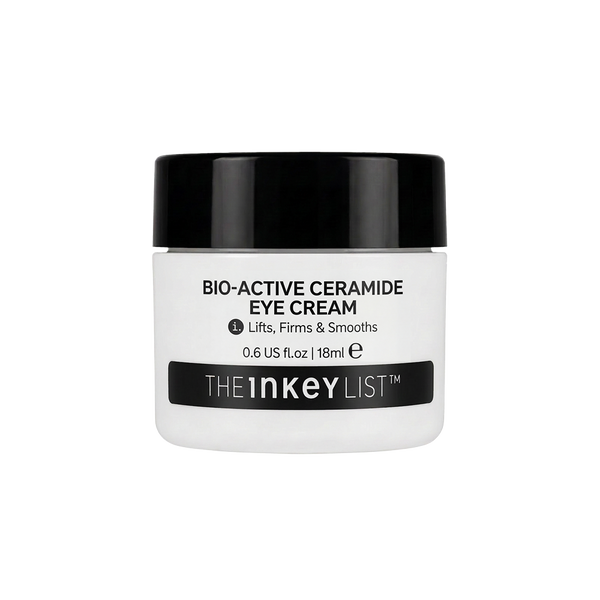
Our Bio-Active Ceramide Eye Cream is built around two actives that address different halves of the problem.
Bio-Active Ceramide NP strengthens the skin barrier and supports renewal in the most delicate area of the face. This is the foundational work. A stronger barrier holds water more effectively, which directly improves the crepey, fine-textured appearance we covered earlier, and it makes the area more resilient day to day.
A Tetrapeptide Complex visibly smooths the look of fine lines and lifts and firms the eye contour. This is the structural half, targeting the loss of firmness that makes the whole eye area look heavier and more lined over time.
Together they deliver the wrinkle result. Barrier support handles texture and hydration, the peptide complex handles firmness and lift, and neither works as well in isolation as they do combined.
The Clinical Results
- Up to 4x wrinkle reduction*
- Clinically proven to lift eyelids by 29% in 4 weeks**
- 89% saw fine lines smoothed and blurred instantly*
- Clinically proven to improve skin firmness and elasticity**
- Suitable for sensitive eyes. Fragrance-free and alcohol-free.
- Dermatologist and ophthalmologist approved
The ability to visibly lift eyelids is worth drawing out, because it addresses something most eye creams do not attempt. Loss of firmness in the upper eye contour changes the shape of the eye and can make the whole face read as tired regardless of how much sleep you have had. Being able to lift eyelids measurably, rather than only softening lines beneath the eye, treats the eye area as a whole rather than a single strip of skin.
The formula is fragrance-free and alcohol-free, and it is both dermatologist and ophthalmologist approved, which matters for anyone who has previously found eye products stinging or reactive. If you have sensitive eyes or a history of reactions, it is still worth doing a patch test first. Here is why patch testing matters and how to do it properly.
A Real Option During Pregnancy
Retinoids are off the table during pregnancy and breastfeeding, and for a lot of people that means pausing the one product that was visibly working. The usual advice is to simply wait it out, which is unsatisfying when it means eighteen months or more without an active step.
Bio-Active Ceramide Eye Cream is free from retinol and other pregnancy-restricted actives, which makes it a genuine option rather than a holding pattern. Ceramides and peptides are not restricted in the way retinoids are, and they work through entirely different mechanisms.
As always, check with your healthcare provider before adding any new product during pregnancy or breastfeeding. Our guide to pregnancy-safe skincare covers what to pause, what to keep and what to swap in.
How to Apply It
Use a pea-sized amount for both eyes. Pick it up with your ring finger, and pat it gently around the orbital bone, working from the inner corner outwards. Do not drag, do not rub, and do not apply it to the eyelid itself or anywhere near the waterline. The product will migrate slightly as it warms and settles, which is exactly what you want.
For the full technique, including how much to use and the mistakes that cost people results, read how to apply eye cream the right way.
Two Eye Creams, Two Different Jobs
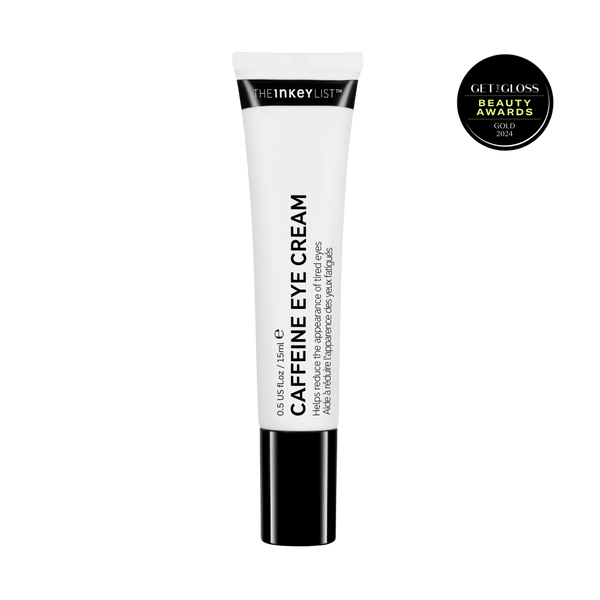
If you already own the Caffeine Eye Cream, you may be wondering whether you need both. Here is the honest division of labour.
- Bio-Active Ceramide Eye Cream is for fine lines, firmness and lifting. It is the wrinkle product.
- Caffeine Eye Cream is for puffiness and dark circles. It is the decongesting product.
- If you want both benefits, apply Caffeine Eye Cream first, then Bio-Active Ceramide Eye Cream on top.
One point of transparency: Caffeine Eye Cream does contain Matrixyl 3000, which offers peptide support for fine lines over time. So it is not doing nothing for texture. But it is not the primary wrinkle product, and recommending it as one would be overstating what it was built to do.
If your main concern is actually darkness rather than lines, the ingredients you need are different again. Our dark circles page is the right place to start.
With both eye creams doing their proper jobs, here is where everything sits in a daily routine.
Your AM and PM Under-Eye Routine, Step by Step
Consistency beats complexity. A four-step routine you follow every day will outperform an eight-step routine you manage twice a week. The structure below is built on one principle: protect and hydrate in the morning, repair and renew at night.
If you want the full-face context, our skincare routine guide covers how the eye steps fit into everything else.
The Morning Routine
- Cleanse with something gentle. Nothing stripping, particularly around the eyes.
- Hyaluronic Acid Serum on damp skin. Do not let your face dry fully after cleansing. Apply while there is still moisture on the surface.
- 15% Vitamin C + EGF Serum. Antioxidant defence for the day ahead.
- Caffeine Eye Cream, if you are targeting puffiness. Skip this step if puffiness is not your concern.
- Bio-Active Ceramide Eye Cream. Pea-sized amount, ring finger, patted around the orbital bone.
- Bio-Active Ceramide Moisturiser across the rest of the face.
- Dewy Sunscreen SPF 30, taken right up to the orbital bone.
The Evening Routine
- Cleanse thoroughly, removing SPF and any makeup. Be gentle around the eyes and avoid tugging at the lash line.
- Hyaluronic Acid Serum on damp skin, exactly as in the morning.
- Starter Retinol or Advanced Retinal, PM only. Start with 1-2 nights per week and build slowly from there. Apply on the orbital bone, never on the lid or waterline.
- Bio-Active Ceramide Eye Cream. Applied after your retinoid, the ceramides help buffer any dryness or tightness around the eye area.
- Bio-Active Ceramide Moisturiser to seal everything in.
Where Eye Cream Sits and Why
Eye cream goes on before moisturiser, not after. Treatment steps go on first so they reach the skin directly, and the moisturiser goes over the top to seal them in. Applying a heavier face cream first creates a barrier that your eye cream then has to work through.
It also bears repeating that a face moisturiser is not a substitute for a formula built for the eye contour. The textures, the concentrations and the tolerability requirements are all different, and the eye area is where using the wrong product is most obvious.
Application Technique for the Eye Area
- Ring finger only. Weakest finger, lightest pressure.
- Pat, never rub. Friction is the enemy of thin skin.
- Orbital bone, not the lash line. Product migrates upwards and inwards as it warms.
- A pea-sized amount for both eyes. More product does not mean more results, it means more migration and more chance of irritation.
When to Expect Results
Honest timelines, because unrealistic expectations are the main reason people abandon routines that were about to start working.
- Immediately: Bio-Active Ceramide Eye Cream leaves most people with smoother, more refreshed-looking eyes from the first application. 89% saw fine lines smoothed and blurred instantly*
- 2 to 4 weeks: visible firming and lifting from the eye cream, with consistent AM and PM use.
- 4 to 6 weeks: the point at which most people notice retinoid-driven improvement in fine lines and overall texture, with consistent use.
- 3 to 6 months: deeper structural change. Collagen remodelling is slow, and this is the realistic horizon for improvement in more established lines.
Nothing here works if you use it sporadically. The eye area rewards patience more than intensity, and the single most common mistake is escalating strength when what was needed was more time.
With the routine set, it is worth being clear about what this article does not cover.
Under-Eye Wrinkles vs Dark Circles and Other Lines
Three different concerns show up in the same small area and get confused constantly. Wrinkles are a texture and structure concern, driven by collagen loss, skin thinning, repeated movement and UV damage. Dark circles are a colour and tone concern, whether the cause is vascular, pigmentary or simple shadowing from the underlying anatomy. They frequently co-exist in the same face, which is why people treat one and wonder why the other has not budged.
Different causes need different ingredients, so here is where to go next.
- Dark circles, puffiness or eye bags: start with our dark circles guide, which covers the different types and what actually works on each.
- Fine lines that appeared suddenly and look worse in dry air: those are likely dehydration lines rather than wrinkles, and they resolve far faster.
- Lines at the outer corners of the eyes: a related but distinct concern with its own causes and treatments. We cover those in full in our dedicated crow’s feet guide.
Putting It All Together
Under-eye wrinkles are the predictable result of thin skin, declining collagen and elastin, constant movement and years of UV exposure. None of that is a personal failing and none of it is reversible in a fortnight. What is genuinely within your control is how quickly the process moves and how the area looks along the way.
The strategy is not complicated. Protect what you have with daily SPF and antioxidant defence, because preserving existing collagen is easier than rebuilding it. Support the barrier with ceramides and consistent hydration, which is what improves crepey texture and makes the whole area look less tired. Add a dedicated eye cream, because the eye contour needs a formula built for it rather than one borrowed from elsewhere. Introduce a retinoid slowly at night if it suits your skin and your circumstances. Then keep going for long enough to see whether it worked.
The three eye-area products each have a defined job, and clarity about that saves money. Caffeine Eye Cream is for puffiness and dark circles. Bio-Active Ceramide Eye Cream is for lines, firmness and lifting. A retinoid at night works on collagen over the longer term. Layer them in that order, use them consistently, and give the routine 4 to 6 weeks before you judge it.
If there is one thing worth taking from all of this, it is that the eye area rewards gentleness far more than intensity. The most common mistake we see is not using too little, it is using too much, too strong, too often, and then abandoning the routine when the skin reacts. Thin skin does not need force. It needs the right formula and enough time.
Not sure where to begin? Our skincare quiz builds a personalised routine around your skin and your concerns in a couple of minutes, and the bundle builder lets you put the routine together in one go.
Shop the Under-Eye Wrinkle Routine
- Bio-Active Ceramide Eye Cream, £15 / 18ml. The hero. Fine lines, firmness and lifting, AM and PM.
- Starter Retinol, PM retinoid for beginners.
- Advanced Retinal, PM retinoid for experienced users.
- Caffeine Eye Cream, £12 / 15ml. For puffiness and dark circles.
- Hyaluronic Acid Serum, £12 / 30ml. Multi-molecular-weight hydration, applied to damp skin.
- Bio-Active Ceramide Moisturiser, £20 / 50ml. Barrier support and firming.
- 15% Vitamin C + EGF Serum, £16 / 30ml. Morning antioxidant defence.
- Dewy Sunscreen SPF 30, £15 / 50ml. The most important anti-ageing step you will take.
You Might Also Find These Useful
If you want to go deeper on technique, read how to apply eye cream the right way. If you are still not certain what you are looking at in the mirror, dehydration lines vs wrinkles will settle it. For the science behind the eye cream, see bio-active ceramides vs regular ceramides. And for lines at the outer corners, our crow’s feet guide covers that concern in full.
*12-week independent clinical study of 30 people, comparing the performance of the ingredient Ceramide NP at 0.2% vs a placebo formulation.
**Clinically tested on 32 participants over 28 days.
*Tested on 32 participants.
Frequently Asked Questions
Got a question?
Our askINKEY team are a friendly bunch of skincare experts with deep product knowledge and zero judgement. Whether you're an ingredient obsessive or just starting out, we'll make it make sense. No question too big. No question too small. We Give A Care, Every Day.


