



What is Matrixyl 3000? The Science Behind INKEY’s Most-Used Peptide
Discover the science behind Matrixyl 3000, one of skincare's most researched peptide complexes, and learn how it helps support collagen, smooth fine lines and improve skin firmness - without the irritation often associated with retinoids.
Author
askINKEY skincare advisor
Published
13 July, 2026
Time to read
14 minutes
If you have ever turned over a skincare bottle and wondered what “Palmitoyl Tripeptide-1” and “Palmitoyl Tetrapeptide-7” actually mean, this is the blog for you. Matrixyl 3000 is one of the most clinically studied peptide complexes available in cosmetic science today - and it appears in two of the most-used products in the INKEY List range. This post covers exactly what Matrixyl 3000 is, how it works at the cellular level, what the clinical evidence shows, and how to use it effectively in a daily routine.
Before diving in, here are the products that contain Matrixyl 3000:
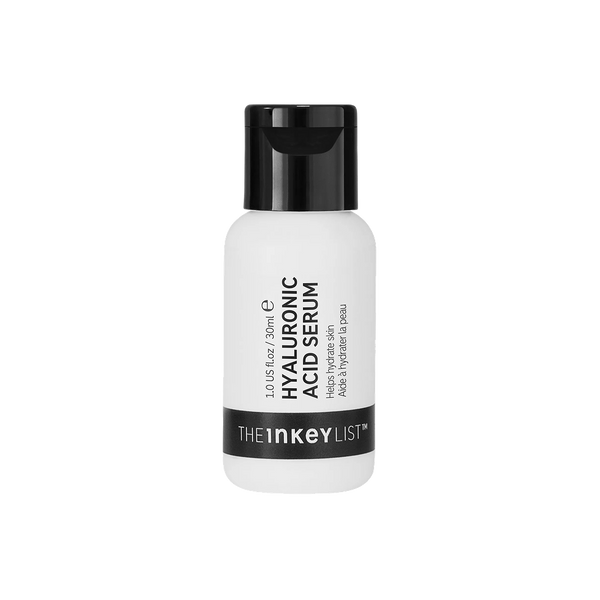
- Hyaluronic Acid Serum 30ml - from £12
- Hyaluronic Acid Serum 60ml - £21
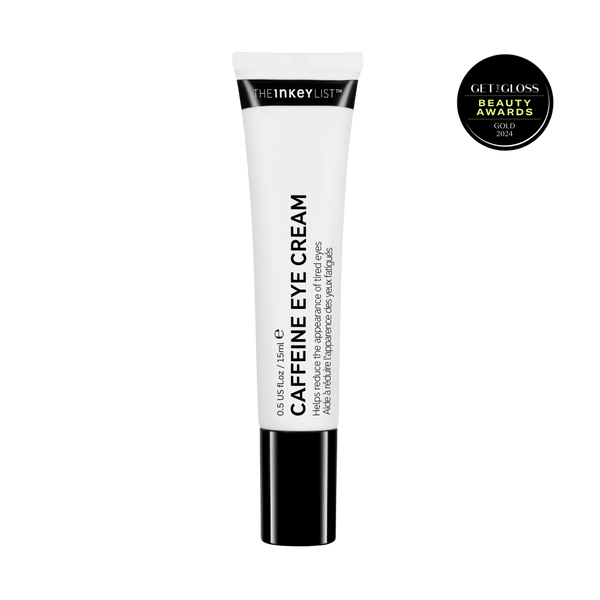
- Caffeine Eye Cream 15ml - £12
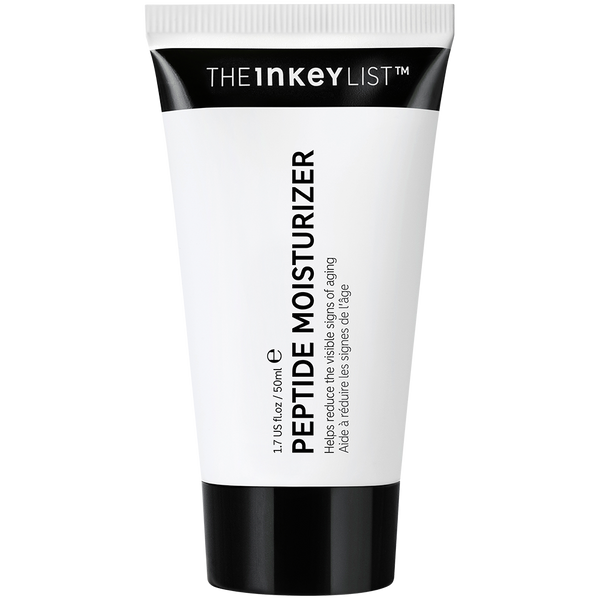
- Peptide Moisturiser - £16
Matrixyl 3000: What It Is and Where It Comes From
Matrixyl 3000 is a branded peptide complex - not a single ingredient, but a precise two-peptide system developed by Sederma, a cosmetic ingredient company operating under the Croda group. It contains two distinct peptides: Palmitoyl Tripeptide-1 (also written as Pal-GHK) and Palmitoyl Tetrapeptide-7 (Pal-GQPR). On any INCI-compliant ingredient label, those are the names you will see listed, not “Matrixyl 3000” itself.
Understanding the INCI system matters here. INCI stands for International Nomenclature of Cosmetic Ingredients - the globally standardised naming system that appears on every skincare product sold in regulated markets. When INKEY puts the ingredient names front and centre on labels and product pages, that is not a gimmick. It is a direct expression of the brand’s founding principle: that consumers deserve to know exactly what is in their products and why it is there. Matrixyl 3000 is one of the clearest examples of that principle in action - two specific, nameable, clinically studied peptides with a documented mechanism and a published body of research.
The name itself is worth decoding. “Matrixyl” is derived from the word “matrikine” - a naturally occurring class of short peptide fragments that are released by the skin when collagen fibres break down. When collagen degrades, the body recognises the resulting peptide fragments as a distress signal and responds by upregulating collagen synthesis. Matrixyl 3000 is engineered to mimic this signal - essentially telling the skin to produce more collagen even in the absence of actual collagen damage. The “3000” designation distinguishes it from earlier generations of the Matrixyl formulation. The third-generation version introduced Palmitoyl Tetrapeptide-7 alongside Palmitoyl Tripeptide-1, creating a two-part system where each peptide performs a complementary and distinct function. That dual-mechanism design is precisely what makes the 3000 generation so studied and so referenced in cosmetic science literature.
It is worth being clear about what Matrixyl 3000 is classified as: a signal peptide complex. Signal peptides are a category of peptide skincare ingredient that function as biological messengers, communicating with skin cells rather than simply sitting on the surface. They do not exfoliate, they do not form a physical barrier, and they do not neutralise environmental aggressors. What they do is instruct. They carry molecular information that skin cells - specifically fibroblasts - are primed to receive and act on. That mechanism is what places Matrixyl 3000 in a different category from many other anti-ageing ingredients, and it is why the clinical research around it is so consistent.
Sederma’s investment in in-vitro, ex-vivo, and clinical research on Matrixyl 3000 means this is not an ingredient supported only by theoretical biochemistry. There are published studies measuring real outcomes - wrinkle volume, collagen production, firmness - conducted on real subjects over real timeframes. That body of evidence is what this blog draws on throughout, and what makes Matrixyl 3000 one of the most credible peptide actives available to cosmetic formulators today.
Now that the foundation is in place - what Matrixyl 3000 is, where it comes from, and how it is classified - the next question is the one that matters most for understanding why it earns a place in a routine: how does it actually work inside the skin?
How Matrixyl 3000 Works: The Mechanism Behind the Results
The reason Matrixyl 3000 is described as a two-part system is because its two peptides work through two genuinely different pathways - one focused on stimulating collagen production, the other on protecting existing collagen from breakdown. Understanding each mechanism separately makes the synergy between them far clearer.
Palmitoyl Tripeptide-1 and the collagen production signal
Palmitoyl Tripeptide-1 (Pal-GHK) is the collagen-building half of the complex. Its mechanism is rooted in how the skin naturally regulates collagen synthesis. When collagen fibres in the dermis degrade - whether from ageing, UV exposure, or environmental stress - the breakdown produces small peptide fragments called matrikines. These fragments travel to fibroblasts, the cells in the dermal layer responsible for producing collagen, and signal them to begin synthesis. In healthy, younger skin, this feedback loop runs efficiently. With age, fibroblast activity slows, the feedback loop becomes less responsive, and collagen production declines faster than it can be replenished.
Palmitoyl Tripeptide-1 is designed to replicate the molecular structure of these naturally occurring matrikine signals. When it reaches fibroblasts, it triggers an upregulation of Collagen I, Collagen III, Collagen IV, and fibronectin - the structural proteins that give skin its firmness and density. It also stimulates the skin’s own hyaluronic acid production within the dermis, meaning its hydration benefit operates at a structural level rather than purely at the surface. This is distinct from topical hyaluronic acid, which works by drawing moisture to the skin’s surface. Pal-GHK supports the internal mechanisms that keep skin hydrated from within.
The “palmitoyl” prefix in the name is not decorative. Palmitoyl is a fatty acid chain - a lipophilic tail attached to the peptide that dramatically enhances its ability to penetrate the skin’s outer lipid barrier. Without this modification, the peptide would struggle to reach the dermis where fibroblasts reside. With it, the ingredient is able to travel through the stratum corneum and reach the target layer where it can actually perform its function. This is a key reason why Matrixyl 3000 is considered a well-designed, delivery-optimised peptide complex rather than a peptide that simply sits on the skin’s surface.
Palmitoyl Tetrapeptide-7 and the collagen protection pathway
Palmitoyl Tetrapeptide-7 (Pal-GQPR) approaches the collagen equation from the opposite direction. Rather than stimulating new production, its primary role is to reduce the rate at which existing collagen is degraded. It does this through two mechanisms. First, it inhibits interleukin-6 (IL-6), a pro-inflammatory cytokine associated with chronic low-grade skin inflammation. This type of inflammation - sometimes called “inflammaging” - is one of the major accelerators of collagen degradation in ageing skin. By modulating IL-6, Pal-GQPR reduces the inflammatory signal that drives collagen breakdown.
Second, Palmitoyl Tetrapeptide-7 reduces glycation of collagen fibres. Glycation is a process in which sugar molecules attach to collagen proteins, causing them to cross-link, stiffen, and become fragile. Glycated collagen loses its structural integrity, contributing directly to sagging, rough texture, and the appearance of deep lines. By reducing glycation, Pal-GQPR helps preserve the quality and pliability of collagen that already exists in the dermis.
The synergy - and why it matters
This is why independent research consistently finds Matrixyl 3000 outperforms either peptide used in isolation. Pal-GHK builds. Pal-GQPR protects. Together, they address the two-sided collagen problem simultaneously: increasing the rate of collagen synthesis while slowing the rate of its degradation. That dual action is relatively rare in a single ingredient system, and it is what accounts for the quality of the clinical data attached to the complex.
Published data from Sederma-commissioned clinical studies shows a 33% reduction in wrinkle volume after two months of use in a study of 23 women, alongside a 2.5x increase in procollagen I production measured in ex-vivo skin models. Significant improvements in skin firmness were measurable at four weeks. These are not marketing claims - they are the outputs of structured studies measuring quantifiable biological endpoints. For readers who want to understand how peptides work in skincare more broadly, the mechanisms above sit within a larger story about why peptide science has become central to modern cosmetic formulation.
With the mechanism established, the next step is translating that science into real-world outcomes - what does Matrixyl 3000 actually deliver for the skin you can see and feel?
Matrixyl 3000 Benefits: What the Clinical Evidence Shows
Clinical research is only useful when it can be translated into outcomes a person can actually observe. The mechanism behind Matrixyl 3000 is well-defined, but the question that matters most is: what changes in the skin, and how quickly does it happen?
Visible reduction in fine lines and wrinkles
The 33% reduction in wrinkle volume measured at the two-month mark is the headline clinical figure for Matrixyl 3000, drawn from a structured study of 23 women with a consistent twice-daily application protocol. What makes this number meaningful is what it measures: not a surface hydration effect or a temporary plumping from a film-forming ingredient, but an actual reduction in the volume of wrinkle indentations - a structural change in the dermis. That is a direct consequence of the collagen-building mechanism described above, and it explains why the improvement is gradual and cumulative rather than immediate.
Fine line reduction is not an overnight outcome with Matrixyl 3000. The ingredient works at the cellular level, and collagen synthesis takes time to express itself at the surface. Expecting significant wrinkle improvement in three days would be misunderstanding what the ingredient does. Expecting it at four to eight weeks, with consistent twice-daily use, is entirely aligned with the evidence.
Firmer-looking, denser skin
The 2.5x increase in procollagen I production measured in ex-vivo studies is the data point that supports visible firmness improvement. Procollagen I is the precursor form of Collagen I - the most abundant structural collagen in the dermis. When the skin has more procollagen I available, it has more raw material from which to build collagen fibres, which translates to denser, more structurally resilient skin at the surface level. The perception of firmness - that quality of skin that resists gentle pressure and springs back readily - is directly linked to dermal collagen density. Increasing procollagen production is one of the most direct routes to improving it.
In independent consumer studies of the Hyaluronic Acid Serum - the primary Matrixyl 3000 product in the range - 82% of participants agreed that skin felt firmer, smoother, and more elastic after four weeks, in a study of 22 people conducted under dermatological control. That figure aligns precisely with the expected timeline: four weeks is when the early structural changes from collagen synthesis begin to become perceptible at the surface.
Improved texture and smoothness
As collagen fibres are renewed and the inflammatory signals that degrade them are modulated, the surface of the skin becomes noticeably smoother and more refined in texture. This is partly a structural outcome - denser, better-organised collagen supports a more even skin surface - and partly a consequence of reduced glycation, which preserves collagen flexibility and prevents the stiffening that contributes to rough, uneven texture with age.
Hydration support from within
Because Palmitoyl Tripeptide-1 also stimulates the skin’s own hyaluronic acid production, consistent use of Matrixyl 3000 supports intrinsic hydration mechanisms rather than relying solely on topical moisture delivery. This is a meaningful distinction. Topical hydration ingredients work at the surface to attract and hold water. Matrixyl 3000’s hyaluronic acid-stimulating effect works at the dermal level to support the skin’s own water-binding infrastructure. The two approaches are complementary, which is one reason the Hyaluronic Acid Serum pairs both together in a single formula.
Safety, skin type compatibility, and timeline
Matrixyl 3000 has no established side effects at skincare concentrations. It does not cause irritation, purging, photosensitivity, or barrier disruption. It is suitable for all skin types - including sensitive and blemish-prone skin - and is considered safe during pregnancy and breastfeeding. There is no introduction period, no ramp-up protocol, and no reason to delay starting. The full picture on timeline: hydration improvement and a smoother feel typically within one to two weeks; meaningful firming and visible fine line reduction from four to eight weeks with consistent twice-daily use.
With the benefits and evidence now clearly framed, it is natural to ask how Matrixyl 3000 compares to the other active ingredients a person might already be using - and whether they can be used together.
Matrixyl 3000 vs Other Actives: Comparisons and Compatibility
One of the most common questions that follows learning about Matrixyl 3000 is where it sits relative to other well-known anti-ageing actives - particularly retinol and Vitamin C. The short answer is that Matrixyl 3000 is not in competition with either. It works through a different mechanism and fits naturally alongside both. Here is the full breakdown.
Matrixyl 3000 vs Retinol: Different Pathways, Complementary Outcomes
The question of whether Matrixyl 3000 is “better than” retinol is a false binary. They do not do the same thing. Retinol accelerates cellular turnover by binding to nuclear receptors in keratinocytes, prompting faster surface renewal, stimulating collagen indirectly through growth factor pathways, and improving overall skin texture over time. It is a powerful ingredient with a strong evidence base. It also carries a well-documented adjustment period for many people - initial dryness, flaking, and sensitivity before the skin adapts.
Matrixyl 3000 works at the signalling level, directly instructing fibroblasts to produce more collagen without any surface disruption. There is no purging phase, no sensitivity window, and no requirement to start slowly. It is, in practical terms, a much gentler route to collagen support - which makes it the better choice for sensitive skin, for anyone new to anti-ageing actives, or for anyone who has found retinol difficult to tolerate.
The optimal approach, however, is not to choose one over the other. It is to use both. Matrixyl 3000 in the morning supports collagen production and barrier integrity during the day. Retinol in the evening accelerates cellular turnover overnight. The two mechanisms are genuinely complementary - and together they address ageing from more angles than either can cover alone. For a full breakdown of how to incorporate retinol into a routine, the retinol guide covers introduction protocols and layering in detail.
Matrixyl 3000 and Vitamin C: A Well-Matched Pairing
Vitamin C and Matrixyl 3000 are an effective combination because they target different aspects of skin health simultaneously. Vitamin C is an antioxidant that neutralises free radicals from UV and pollution, inhibits melanin production for a brightening effect, and also plays a role in collagen synthesis as a cofactor. Matrixyl 3000 works at the structural level, directly signalling fibroblasts to produce more collagen and reducing inflammatory collagen degradation.
In practical terms: Vitamin C protects and brightens. Matrixyl 3000 builds and repairs. There is no interference between them, and no compatibility concern. If using both in the same step, apply Vitamin C first - it tends to have a thinner texture and slightly lower pH, making it the better candidate for direct skin contact before layering a serum over it.
Matrixyl 3000 and Hyaluronic Acid: The INKEY Signature Combination
This pairing is at the heart of the Hyaluronic Acid Serum formula. Topical hyaluronic acid draws water to the skin’s surface for immediate, measurable hydration. Matrixyl 3000’s Palmitoyl Tripeptide-1 stimulates the skin’s own hyaluronic acid synthesis at the dermal level for longer-term hydration support. The two mechanisms operate at different depths and on different timelines, which is precisely why they work well together rather than redundantly. There is zero compatibility concern - they are highly synergistic and do not interfere with each other in any formulation context.
Matrixyl 3000 and Retinol Together (AM/PM Split)
To address this directly: yes, Matrixyl 3000 and retinol can and should be used together. The recommended approach is a split routine - Matrixyl 3000-containing products in the morning to support the skin’s building and repair processes during the day, retinol in the evening to drive cellular turnover overnight. There is no antagonism between the two. They simply work on different schedules and through different pathways, making the split protocol both logical and effective.
Is Matrixyl 3000 Safe?
Unambiguously yes. Matrixyl 3000 is one of the most extensively studied peptide complexes in cosmetic science. No established irritation risk. No photosensitivity. No interaction concerns with any common skincare active. Suitable for all skin types, including sensitive and blemish-prone skin, and confirmed safe during pregnancy and breastfeeding. It is as close to a universally tolerated active as skincare offers.
Understanding what Matrixyl 3000 is compatible with makes it much easier to know which specific products to use - and how to get the most from them. That is the focus of the next section.
INKEY Products That Contain Matrixyl 3000 - and How to Choose
Matrixyl 3000 appears in two core INKEY products, each designed for a different area and concern - and each delivering the peptide complex in a formula built around it rather than simply including it as a trace addition.
Hyaluronic Acid Serum - from £12 (30ml) / £21 (60ml)
The Hyaluronic Acid Serum is the most-reviewed product in the INKEY range, with over 3,100 five-star reviews. It is also the most accessible entry point for Matrixyl 3000 in a daily routine. The formula combines 2% Multi-Molecular Hyaluronic Acid with Matrixyl 3000 (Palmitoyl Tetrapeptide-7 and Palmitoyl Tripeptide-1) to address both immediate surface hydration and longer-term structural support in a single, lightweight serum.
The multi-molecular HA component means the formula contains hyaluronic acid at multiple molecular weights - smaller molecules penetrate more deeply, larger molecules work at the surface - so hydration is delivered across different skin depths simultaneously. Matrixyl 3000 then adds the collagen-signalling layer that surface HA cannot provide. The result is a serum that works on two levels at once: fast hydration you can feel immediately, and structural collagen support that builds over weeks of consistent use.
In an independent four-week study of 22 participants under dermatological control, 82% agreed skin felt firmer, smoother, and more elastic after consistent use of this serum. It has also been recognised with an Allure Best of Beauty Award and a CEW 2023 Award - acknowledgement from two of the most rigorous independent beauty industry evaluation processes.
The 30ml size is the entry point at £12. The 60ml at £21 is the better value option for anyone making it a routine staple - which, given the twice-daily application guidance, most people do.
Caffeine Eye Cream - £12 (15ml)
The Caffeine Eye Cream is built for the periorbital area - the skin around the eyes - where skin is thinnest, most delicate, and where collagen density declines earliest and most visibly. The formula combines 0.3% Caffeine (for its well-documented depuffing and circulation-stimulating effects) with Matrixyl 3000 and Albizia Julibrissin Bark Extract.
The inclusion of Matrixyl 3000 in this eye cream is particularly well-reasoned. The periorbital area is where fine lines and loss of firmness tend to appear first, precisely because the skin there has less collagen to begin with. Matrixyl 3000’s collagen-stimulating mechanism is therefore directly relevant to this area. The signal peptide complex supports collagen production in skin that has a naturally lower baseline, helping to slow the rate at which fine lines and crepiness develop around the eyes over time.
Clinical data from the Caffeine Eye Cream’s own study shows 95% of users agreed skin felt instantly smoother and deeply hydrated, with clinically proven improvement in the appearance of puffiness and dark circles from first use. For readers interested in the science behind dark circles more broadly, or looking for a complete guide to how to get rid of dark circles under eyes, both resources cover the full picture.
Application note: store in the fridge for an enhanced cooling and depuffing effect on application.
Peptide Moisturiser - £16 (50ml)
The Peptide Moisturiser is a complementary product for anyone building a full peptide-led routine. It is worth being clear: this product does not contain Matrixyl 3000. It is formulated around a different peptide system - Royal Epigen P5 and Diffuporine - focused on barrier support and epigenetic anti-ageing mechanisms. It is not a Matrixyl 3000 product, but it is an excellent layer over the Hyaluronic Acid Serum for anyone who wants a full-routine approach built around peptide actives. Applied after the serum, it completes a morning and evening routine that targets skin ageing from multiple peptide-driven angles simultaneously.
With the products identified and their roles clear, the next practical step is understanding exactly how to layer them in a daily routine.
How to Build a Matrixyl 3000 Routine: Step-by-Step
The good news about incorporating Matrixyl 3000 into a daily routine is that it requires no special planning, no ramp-up period, and no complicated compatibility management. Peptides are among the most routine-friendly active ingredients in skincare - they slot in naturally, work around the clock, and do not impose the scheduling demands of exfoliating acids or the sensitivity considerations of retinol.
Here is how to build a complete Matrixyl 3000 routine, morning and evening:
Step 1 - Cleanse
Start with a clean face. This is non-negotiable for any active ingredient routine - a clean surface allows serums to absorb effectively rather than sitting on top of residual product, sunscreen, or pollution from the day.
Step 2 - Hyaluronic Acid Serum (Matrixyl 3000)
Apply our Hyaluronic Acid Serum to slightly damp skin immediately after cleansing. Damp skin enhances both the absorption of the serum and the hydrating effect of the hyaluronic acid, which works by drawing moisture into the skin from the immediate environment. Use a pea-sized amount - a small amount goes a long way with a concentrated serum - and press or pat it gently into the skin rather than rubbing. AM and PM.
Step 3 - Treatment Serums
This is the step for additional actives. In the morning, a Vitamin C serum fits here - applied directly over the Hyaluronic Acid Serum, it layers cleanly with the Matrixyl 3000 and contributes antioxidant protection for the day ahead. In the evening, retinol fits at this step for those who use it. Apply thinner-textured treatment serums before thicker ones, working in order of consistency.
Step 4 - Caffeine Eye Cream (Matrixyl 3000)
Apply our Caffeine Eye Cream at this step - after serums, before moisturiser. Use a pea-sized amount for both eyes combined. Apply with the ring finger, using gentle tapping motions along the orbital bone rather than dragging or pressing directly onto the eyelid. The ring finger is the correct choice here because it naturally applies the least pressure - the periorbital area is delicate and benefits from minimal mechanical stress.
Step 5 - Moisturiser
Apply the Peptide Moisturiser as the final sealing layer. It locks in the preceding actives, delivers its own peptide complex for barrier and anti-ageing support, and completes the routine. AM and PM.
Step 6 - SPF (Morning Only)
In the morning, apply an SPF as the final step after moisturiser. UV exposure is one of the primary drivers of collagen degradation, so protecting the collagen that Matrixyl 3000 is supporting is a non-negotiable part of any anti-ageing routine.
AM vs PM - Does Timing Matter for Matrixyl 3000?
Matrixyl 3000 is not time-of-day dependent. It works continuously, regardless of when it is applied. Using it in both AM and PM simply ensures consistent exposure for the fibroblast signalling process. In the morning, it pairs naturally with Vitamin C - peptides build structural collagen while Vitamin C protects it from oxidative damage during the day. In the evening, it pairs with retinol - retinol drives overnight cell turnover while Matrixyl 3000 supports the collagen-production processes that are naturally more active during the skin’s nighttime repair cycle. No waiting time is needed between Matrixyl 3000 and any other product in the routine.
How Long Before Results Are Visible?
- Immediately: Noticeable hydration and a smoother, more cushioned feel from the Hyaluronic Acid Serum. Mild cooling and depuffing around the eye area from the Caffeine Eye Cream.
- 1-2 weeks: Improved skin texture. Skin feels consistently softer and more supple. Makeup sits more evenly.
- 4-8 weeks: Visible improvement in the appearance of fine lines and measurable improvement in firmness. This is the timeframe that aligns with the clinical data - both the consumer study (82% firmness agreement at four weeks) and the published Sederma clinical data (33% wrinkle volume reduction at two months).
Consistency is the single most important variable. Twice-daily use, every day, compounds over time. Skipping days extends the timeline.
For anyone who wants to understand the full family of peptides available in skincare beyond Matrixyl 3000, the complete peptide guide covers signal peptides, carrier peptides, enzyme-inhibiting peptides, and more.
Matrixyl 3000: The Bottom Line
Matrixyl 3000 earns its place in the skincare conversation not because of marketing, but because of mechanism. A well-designed, two-peptide signal complex with a clear biological rationale, a meaningful delivery system via palmitoyl modification, and a published body of clinical evidence measuring real structural outcomes - it is, by any objective standard, one of the most credible peptide actives available in modern cosmetic science.
It works from two directions simultaneously: Palmitoyl Tripeptide-1 builds collagen by signalling fibroblasts to increase synthesis, while Palmitoyl Tetrapeptide-7 protects what is already there by reducing inflammatory collagen degradation and glycation. That dual mechanism is what makes it effective, and what makes the clinical data - 33% wrinkle volume reduction, 2.5x procollagen I increase - both logical and reproducible.
It is compatible with every major skincare active. It requires no complicated introduction. It suits all skin types, including sensitive skin, and is safe throughout pregnancy and breastfeeding. There is no reason to delay starting, and every reason to be consistent once you do. INKEY includes it in the Hyaluronic Acid Serum from £12 and our Caffeine Eye Cream at £12, making it one of the most affordable ways to access a clinically validated peptide complex in a complete daily routine. The evidence is there. The routine is simple. The rest is consistency.
Shop the Matrixyl 3000 Range
- Shop Hyaluronic Acid Serum 30ml - from £12
- Shop Hyaluronic Acid Serum 60ml - £21
- Shop Caffeine Eye Cream - £12
- Shop Peptide Moisturiser - £16
Build Your Routine
- Take our Skincare Quiz - personalised routine recommendation
- Build Your Own Routine - save up to 20%
- Chat to askINKEY - expert skincare advice, available 24/7
You Might Also Find Helpful
Frequently Asked Questions
Got a question?
Our askINKEY team are a friendly bunch of skincare experts with deep product knowledge and zero judgement. Whether you're an ingredient obsessive or just starting out, we'll make it make sense. No question too big. No question too small. We Give A Care, Every Day.


