



Retinol for Beginners: How to Start Without Irritating Your Skin
New to retinol? Learn how to start your retinol journey with confidence, avoid common mistakes and irritation, and build a beginner-friendly routine for smoother, brighter, healthier-looking skin.
Author
askINKEY skincare advisor
Published
18 July, 2026
Time to read
15 minutes
Retinol is one of the most clinically validated ingredients in modern skincare. Decades of peer-reviewed research support its ability to smooth fine lines, refine skin texture, even out skin tone, and accelerate the skin’s natural renewal process. If you have been thinking about adding it to your routine, the science is firmly on your side.
The reputation for irritation, however, is also real - and it is the single biggest reason people either avoid retinol entirely or abandon it too early. The good news is that irritation is largely avoidable. With the right formula, the right starting point, and the right approach, most people can introduce retinol without significant discomfort and start seeing meaningful results within weeks.
This guide covers everything a retinol beginner needs to know: what retinol actually does in the skin, which products to start with, what strength to choose, how to build a step-by-step routine, what to realistically expect week by week, the most common mistakes to avoid, and answers to the questions beginners ask most. For a deeper reference on the ingredient itself, see our Complete Retinol Guide.
Wondering what age is the right time to start retinol? That is a separate but equally important question - read our guide on When to Start Using Anti-Ageing Products for a full breakdown.
What Retinol Actually Does - and Why Beginners Should Care
There is a reason retinol has remained at the top of dermatologists’ ingredient lists for decades. It is not trend-driven. It is not marketing language. The evidence base for retinol is extensive, rigorous, and remarkably consistent - which makes it one of the few skincare ingredients that genuinely earns the word “proven.”
The Key Benefits of Retinol
Retinol is a derivative of Vitamin A, and it works at a cellular level rather than simply sitting on the surface of the skin. When applied topically, retinol is absorbed and converted to retinoic acid - the biologically active form that triggers real change. This conversion process takes two steps inside the skin, which is part of why retinol is gentler than prescription-strength retinoic acid, while still being meaningfully effective.
The primary mechanism is cell turnover. Retinol accelerates the rate at which skin cells shed and regenerate, meaning older, dull cells are replaced more quickly by fresher ones. This is what drives the improvements in texture and tone that retinol users consistently report. Alongside this, retinol stimulates collagen production - the structural protein that gives skin its firmness and plumpness - and inhibits the enzymes responsible for breaking it down.
A 2023 review published on PubMed confirmed retinol’s role in stimulating collagen synthesis and inhibiting matrix metalloproteinases - the enzymes that degrade skin structure over time. This is the clinical basis for retinol’s impact on fine lines, skin firmness, and long-term skin quality.
In practical terms, consistent retinol use delivers:
- Smoother fine lines and wrinkles - through collagen stimulation and accelerated cell renewal
- Refined skin texture - as surface irregularities are shed and replaced more quickly
- More even skin tone - post-blemish marks fade faster with accelerated turnover
- Firmer-looking skin - through collagen support over time
- Clearer, less congested skin - retinol helps prevent the build-up that leads to blemishes
These are not promises - they are outcomes supported by clinical testing and decades of dermatological research. The Cleveland Clinic describes retinol as one of the most widely studied and effective topical ingredients available without a prescription.
Understanding the Retinoid Family
Retinol does not exist in isolation. It belongs to a broader family of ingredients called retinoids, all of which are derived from Vitamin A and all of which ultimately work by converting to retinoic acid in the skin. The key difference between them is how many steps that conversion takes - and therefore how quickly and intensely they act.
- Retinol - two conversion steps to retinoic acid. Widely available without a prescription. The standard starting point for beginners.
- Retinal (retinaldehyde) - one conversion step. Works faster than retinol and is more potent, but still available over the counter. A logical next step for experienced users.
- Retinoic acid (tretinoin) - zero conversion steps. Prescription only. Maximum strength, maximum potential for irritation.
For a beginner, the takeaway is clear: start at the gentler end of this spectrum. Not because the stronger options are not effective - they are - but because the skin needs time to adapt, and starting gently gives you the best chance of building a sustainable, irritation-free routine. For a full breakdown of how retinol and retinal compare, see our Retinol vs Retinal guide.
This adaptation period - often called “retinisation” - is the skin’s natural response to a new active ingredient. It is temporary, manageable, and largely avoidable with the right formula and the right frequency. Because retinol also increases the skin’s sensitivity to UV radiation, it should always be used in the evening, and SPF every morning is non-negotiable when you are using it consistently.
Now that the science is clear, the natural next question is: which product should a beginner actually start with?
The Best Retinol Products for Beginners - Where to Start
Knowing that retinol works is one thing. Knowing which formula to choose is another. The market is full of retinol products at wildly different strengths, formats, and price points - and for a beginner, that choice can feel overwhelming. The right starting point is not necessarily the strongest formula, or the most expensive one. It is the formula specifically engineered to deliver real results while protecting the skin through the adjustment period.
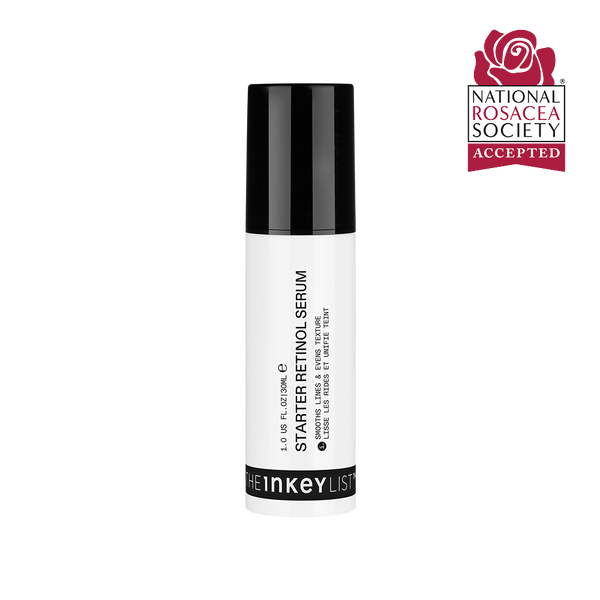
Our Starter Retinol Serum - The Ideal Starting Point (£13.00)
Our Starter Retinol Serum is the recommended starting point for anyone new to retinol - and the hero product of this guide. It was formulated specifically to solve the problem that causes most beginners to quit: the fear of irritation.
At the core of the formula is a slow-release Dual-Retinoid Complex: 1% Granactive Pro+ (a next-generation encapsulated retinoid) combined with 0.01% Retinal. This combination is clinically proven to be 2x more effective than standard retinol - delivering superior results while the encapsulation technology controls the release rate and significantly reduces irritation risk.
The formula is also built around two targeted supporting ingredients: 0.5% Amisol Trio, a lipid complex that actively supports the skin barrier, and 0.2% SymRelief, a plant-derived calming active that reduces redness and sensitivity. These are not passive filler ingredients - they are there specifically to protect the skin during the adjustment period.
The clinical data is compelling:
- Smooths fine lines from 7 days (4-week clinical study, 30 participants)
- 95% of users experienced zero irritation (4-week in vitro study)
- 90% saw significant clinical improvement in the appearance of wrinkles in 4 weeks (12-week consumer study, 130 participants)
- 86% agreed skin tone looked more even
- 92% said skin felt noticeably smoother
Suitable for all skin types - including sensitive skin and rosacea-prone skin. Use in the PM only, starting at 2-3 nights per week.
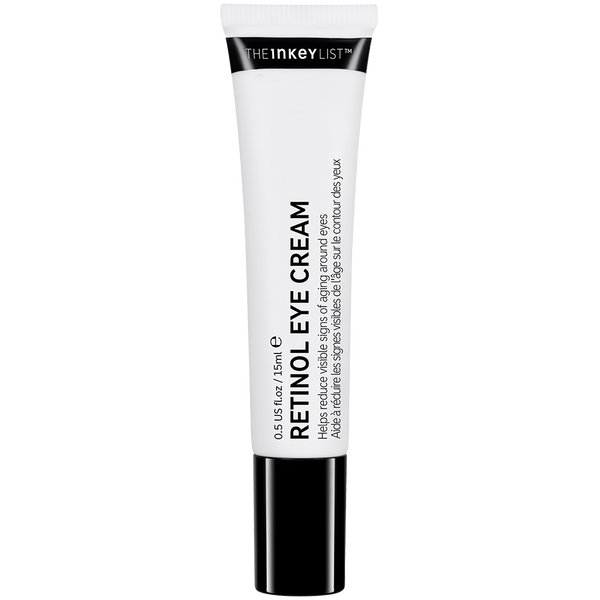
Our Retinol Eye Cream - For the Delicate Eye Area (£13.00)
The skin around the eye contour is significantly thinner and more delicate than the rest of the face. Standard retinol serums are not formulated for this area - they can be too strong, and applying them near the eyes risks irritation, dryness, and sensitivity in some of the skin’s most fragile zones.
Our Retinol Eye Cream is specifically designed for this purpose. Its active ingredient is 3% Vitalease - a stabilised, slow-release retinoid compound formulated specifically for the eye contour. It delivers the line-smoothing benefits of retinol around the eyes without the irritation risk that comes with using a facial serum in that area. The formula also contains Glycerin and Shea Butter to maintain hydration and comfort.
It can also be used on fine lines around the mouth - just avoid applying it directly on the lips. Apply with the ring finger using a gentle patting motion rather than rubbing.
Build Your Beginner Retinol Routine with These Supporting Products
Our Starter Retinol Serum is the centrepiece, but two supporting products make a meaningful difference to how well beginners tolerate retinol - especially in the first few weeks.
Our Hyaluronic Acid Serum (£12.00) applied to damp skin immediately after cleansing, before retinol, creates a moisture buffer that helps reduce the dryness and tightness some people notice during the adjustment period. Formulated with 2% Multi-Molecular Hyaluronic Acid at multiple molecular weights, it hydrates at multiple depths of the skin. Lightweight, non-sticky, and suitable for all skin types - it is a daily essential regardless of whether it is a retinol night or not. For more on how these two ingredients work together, see Hyaluronic Acid and Retinol: Can You Use Them Together?
Our Bio-Active Ceramide Moisturiser (£20.00) applied as the final step after retinol locks in hydration and actively supports barrier recovery overnight. Formulated with Bioactive Ceramide NP, it is clinically proven to firm, plump, and reduce 6 signs of ageing in 28 days. This product is also central to the moisture sandwich method covered in Section 4 - a technique that makes a real difference for anyone with drier or more reactive skin.
When You Are Ready to Step Up - Advanced 0.2% Retinal Serum (£18.00)
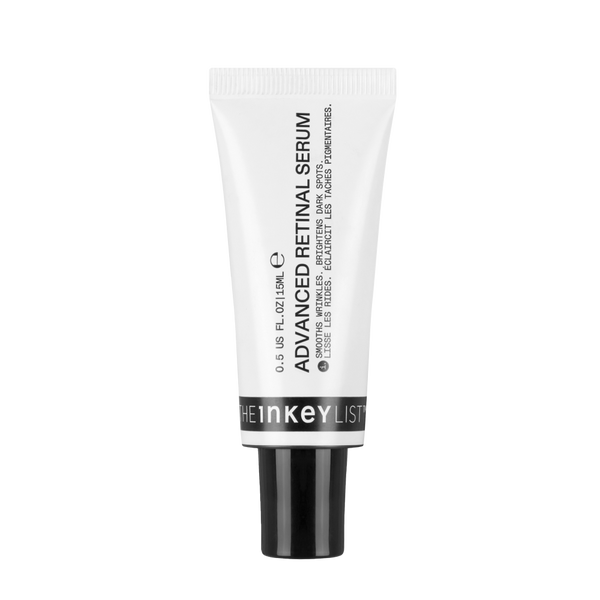
For those who have built retinol tolerance over several months and are ready for a more potent formula, our Advanced 0.2% Retinal Serum is the logical next step. Clinically proven to work up to 11x faster than standard retinol, it is not intended for beginners - but it is where a consistent retinol routine can progress to once the skin is ready. More on this in the FAQ section.
Shop the full retinol range to see all options in one place.
What Retinol Strength Should a Beginner Use?
One of the most persistent myths in skincare is that higher percentage equals better results. In the world of retinol, this is not just incorrect - it is the thinking that causes most beginners to over-irritate their skin, write off the ingredient entirely, and miss out on years of genuine benefit.
Why Percentage Is Not the Whole Story
A 1% retinol product in a basic, non-encapsulated formula will behave very differently from a 0.5% retinol in a sophisticated delivery system with barrier-supporting and calming ingredients. The percentage tells you how much retinol is in the formula. It says nothing about how that retinol is delivered, how stable it is, how well the surrounding formula protects the skin, or how effectively it actually penetrates.
This is the fundamental problem with using percentage as a shopping shortcut. It leads beginners toward strong, potentially irritating products when what they actually need is a formula that delivers results intelligently - with the skin’s tolerance in mind.
What Actually Matters in a Beginner Retinol Formula
When choosing a retinol product as a beginner, there are three things that matter far more than the number on the label:
-
The form of retinoid - Retinol is the appropriate starting point. Prescription tretinoin and high-percentage retinal formulas are not designed for first-time users. A gentle retinoid complex that combines multiple forms at lower concentrations can outperform a single high-percentage retinol.
-
Delivery technology - Encapsulation is the most important advancement in retinol formulation. An encapsulated retinoid is protected inside a carrier that keeps it stable until it reaches the skin, then releases it gradually. This controlled release reduces the spike of activity that causes irritation while actually improving efficacy - because more of the active ingredient reaches the right depth of skin intact.
-
Supporting ingredients - A beginner retinol formula should not just contain retinol. It should be built around ingredients that protect the skin while the retinol works: lipid complexes to support the barrier, calming actives to reduce redness, and hydrating ingredients to counteract any dryness. This is the difference between a formula designed for first-time users and one designed for experienced users who can tolerate more.
Understanding Encapsulated Retinol
Encapsulation deserves a closer look because it is the technology that makes our Starter Retinol Serum work the way it does. Standard retinol, when applied to the skin, is active from the moment it makes contact. This can cause a rapid response in less-experienced skin - leading to the redness, peeling, and sensitivity that gives retinol its reputation.
Encapsulated retinol, by contrast, is wrapped in a protective carrier - typically a lipid or polymer shell. This carrier keeps the retinoid stable during storage (retinol degrades quickly when exposed to light and air), and then releases it gradually once it penetrates the skin. The result is a more controlled, more consistent delivery that achieves better penetration with significantly less surface irritation.
This is why the 1% Granactive Pro+ in our Starter Retinol Serum is clinically proven to be 2x more effective than standard retinol - not despite being gentler, but because the delivery system is smarter. For a full look at the retinoid spectrum and how different formulas compare, see the Retinol vs Retinal guide or explore the Complete Retinol Guidefor deeper reading.
With the right product chosen, the next step is understanding exactly how to build it into a routine.
How to Build Your Beginner Retinol Routine - Step by Step
Having the right product is only half the equation. How you use it - the order of application, the frequency, the supporting routine around it - determines whether your skin tolerates retinol smoothly or rebels against it. This section gives you a complete, actionable routine from day one.
For those who are brand new to skincare routines altogether, our Skincare Routine for Beginners guide is a useful starting point before introducing an active like retinol.
The Golden Rules Before You Start
Before applying retinol for the first time, there are five rules that every beginner should know:
-
Retinol is PM only. Retinoids increase the skin’s sensitivity to UV radiation. Applying them in the morning and then going into sunlight is counterproductive and potentially damaging. Always use retinol in your evening routine.
-
SPF every morning is non-negotiable. When using retinol, your skin is more vulnerable to UV damage. A broad-spectrum SPF applied every morning - regardless of weather or plans - is not optional. It is the single most important thing you can do to protect the results you are building. Our Dewy Sunscreen SPF 30 is an ideal daily option.
-
A pea-sized amount is enough. More product does not mean more results. A pea-sized amount is sufficient to cover the face and neck. Applying more increases irritation risk without increasing efficacy.
-
Patch test first. Before applying retinol to your full face, apply a small amount to your inner arm or behind the ear and wait 24-48 hours. This is especially important for anyone with reactive or sensitive skin.
-
Do not apply to broken or actively irritated skin. If your skin barrier is already compromised - from a reaction, a sunburn, or active inflammation - wait until it has recovered before introducing retinol.
Your Step-by-Step PM Retinol Routine
Follow this routine on your retinol nights (2-3 nights per week to start):
-
Cleanse - Begin with a gentle cleanser to remove SPF, makeup, and the day’s build-up. Pat skin dry and allow it to fully dry before the next step. This matters: applying retinol to damp skin increases penetration and irritation risk.
-
Our Hyaluronic Acid Serum - Apply to skin that is still slightly damp immediately after cleansing. Hyaluronic acid draws moisture in and creates a hydration buffer that helps the skin tolerate retinol better. Pat gently and allow it to absorb.
-
Our Starter Retinol Serum - Wait until the skin is fully dry. Apply a pea-sized amount and smooth gently over the face and neck. Do not rub or press aggressively - let the formula do the work.
-
Our Retinol Eye Cream - Using the ring finger (the lightest pressure finger), gently pat the eye cream around the eye contour. Do not drag or rub. Can also be used on fine lines around the mouth.
-
Our Bio-Active Ceramide Moisturiser - Apply as the final step to seal in hydration and support barrier recovery overnight. This is where the skin does most of its repair work - the ceramides actively reinforce the barrier while you sleep.
The Moisture Sandwich Method - for Extra Sensitive Skin
If your skin is particularly reactive, or if you experience dryness and tightness in the first few weeks, the moisture sandwich method is worth trying. It involves applying a thin layer of our Bio-Active Ceramide Moisturiser to dry skin before retinol, then applying retinol on top, then finishing with another layer of moisturiser.
This approach buffers the retinol delivery - the moisture layer between the skin and the retinol slows penetration slightly, reducing the risk of irritation while still allowing the active to work. It is particularly useful in the first two to four weeks. As the skin builds tolerance, you can transition to the standard routine.
Your Morning Routine When Using Retinol
On mornings after using retinol, keep the routine simple and protective:
- Gentle cleanser - do not use an exfoliating cleanser on retinol mornings
- Our Hyaluronic Acid Serum - replenish hydration after overnight retinol use
- Our Bio-Active Ceramide Moisturiser - support and protect the barrier through the day
- Our Dewy Sunscreen SPF 30 - non-negotiable; this is what protects the progress you are making with retinol
On non-retinol nights, keep it simple. Cleanser, Hyaluronic Acid Serum, and Moisturiser. Give the skin space to recover between retinol applications - this is not wasted time, it is part of the process.
For those who want a broader skincare framework to sit their retinol routine within, our Best Anti-Ageing Skincare Routine guide covers a full multi-ingredient approach across all skin concerns.
With the routine in place, the most practical question becomes: how often, and what should you actually expect?
How Often to Use Retinol as a Beginner - and What to Expect Week by Week
Frequency is one of the most searched questions about retinol - and one of the most misunderstood. The answer is not simply “start low and build up.” The more useful answer is about learning to read your skin at each stage and understanding what it is telling you. That skill is what separates people who build a lasting retinol habit from those who quit in week two.
Your Frequency Guide
- Weeks 1 to 6: 2-3 nights per week. Not every night. This is not a limitation - it is the strategy that gets results without burning out the barrier.
- Weeks 6 to 12: If the skin has tolerated the initial frequency well, increase to every other night.
- Week 12 onwards: If comfortable, move to nightly use - though there is no requirement to use retinol every night. Every other night, consistently, still delivers excellent results.
Never use retinol in the morning. And every morning after a retinol night: SPF without exception.
Reading Your Skin - What It Is Telling You Each Week
Frequency is a framework. Your skin’s response is the real guide. Here is how to interpret what you are experiencing at each stage:
Weeks 1-2: The quiet phase. Some people feel absolutely nothing in the first two weeks. Others notice mild dryness, a slight tightness, or a barely perceptible flakiness around the nose or forehead. Both experiences are normal. The skin is beginning to adapt to an accelerated cell turnover rate - this is expected, not alarming. The moisture sandwich method can help if dryness is noticeable. Keep going.
Weeks 2-4: The adjustment phase. This is the stage where some beginners panic - and where most people who abandon retinol do so. A light increase in blemishes, mild flaking, or temporary redness can occur during this period. This is not a reaction to retinol. This is purging (more on this below) and adjustment - two very different things from an allergic or sensitivity reaction. The key signal to watch: does the skin feel raw or sting when you apply other products? If not, what you are experiencing is normal. Stay the course.
Weeks 4-6: The turning point. For most people, this is where the adjustment period ends and results begin. Texture starts to refine. Skin tone looks more even. Dryness and tightness, if present, ease off. If you are still experiencing redness or sensitivity at this stage, pull frequency back to once a week and rebuild more slowly. That is not failure - it is intelligent skin management.
Week 6 and beyond: Building tolerance. The skin has adapted. This is the point to consider increasing frequency to every other night if you wish to do so. Watch for how the skin responds to the increase and give it 2-3 weeks at the new frequency before assessing further.
Signals to stop immediately: Persistent burning sensation, significant swelling, or a compromised barrier - the skin stings when you apply any product, feels raw, looks visibly inflamed. If this occurs, stop retinol use, switch to a simple routine of Hyaluronic Acid Serum and Ceramide Moisturiser, allow the barrier to recover fully, and reintroduce retinol more slowly once the skin is calm.
Understanding Skin Purging
Purging is one of the most misunderstood phenomena in skincare - and one of the most common reasons people stop using retinol. A temporary increase in blemishes in the first few weeks of retinol use is not a sign that retinol is bad for your skin. It is a sign that retinol is working.
Because retinol accelerates cell turnover, it also accelerates the rate at which congestion that was already forming beneath the skin surface comes through. Think of it as retinol fast-forwarding a process that would have happened anyway - just more slowly and at random. Purging typically resolves within 4-6 weeks. The rule for managing it: do not introduce any other new active ingredients at the same time. Isolate retinol as the only variable so you can properly assess what your skin is doing.
For anyone concerned about how their skin type specifically responds to retinol, our Retinol and Sensitive Skin guidecovers this in much more depth.
A Realistic Retinol Results Timeline
One of the kindest things anyone can tell a retinol beginner is the truth about timelines. Retinol is not a one-week fix. It is a long-term investment in the skin’s structure.
- Week 1: Skin may feel smoother to the touch even before visible changes appear
- Weeks 2-4: Texture begins to refine. Skin tone starts to look more even. In clinical testing of our Starter Retinol Serum, 90% of users saw significant improvement in the appearance of wrinkles by week 4
- Weeks 4-8: Visible reduction in fine lines. Firmer-looking skin. 86% of users agreed skin tone looked more even
- Weeks 8-12: Full results - smoother, more even-toned, more youthful-looking skin with consistent use
Patience is not optional with retinol. It is part of the formula. The Complete Retinol Guide covers the science of why this timeline exists for anyone who wants to understand it at a deeper level.
Common Beginner Mistakes - and What Not to Mix with Retinol
Knowing how to use retinol well means knowing what not to do just as much as what to do. The majority of negative retinol experiences come from a handful of entirely avoidable mistakes. Here is what most beginners get wrong - and the straightforward fix for each.
The Most Common Retinol Beginner Mistakes
Mistake 1: Starting too strong, too fast. Using retinol every night from day one is the most common cause of the irritation that gives retinol its bad reputation. The skin needs time to adapt. Two to three nights per week is not a compromise - it is the approach that actually delivers better long-term results by allowing the barrier to remain strong throughout the process.
Mistake 2: Applying to damp skin. Unlike Hyaluronic Acid, which should be applied to damp skin, retinol should only be applied after the skin has fully dried following cleansing. Damp skin increases the rate of penetration - and with retinol, faster penetration means higher irritation risk, not better results.
Mistake 3: Using too much product. A pea-sized amount covers the entire face and neck. More product does not accelerate results. It increases the concentration on the skin, raises irritation risk, and wastes product.
Mistake 4: Skipping SPF in the morning. Using retinol without applying SPF the following morning is counterproductive. Retinol accelerates cell turnover, which means the newer, fresher skin it reveals is more vulnerable to UV damage. Our Dewy Sunscreen SPF 30 applied every morning protects what retinol is building.
Mistake 5: Giving up too early. Most people who abandon retinol do so in weeks two to three - exactly when the adjustment period peaks and before results appear. Full results take 8-12 weeks. The discomfort of week two is not the final outcome. It is the adjustment phase before the reward.
Mistake 6: Adding too many new products at once. Introducing retinol alongside several other new active ingredients makes it impossible to understand what the skin is responding to. Isolate retinol as the only new addition when starting, and give it at least six weeks before introducing anything else.
Ingredients to Avoid Using with Retinol
Not every ingredient is a safe combination with retinol - particularly for beginners. For a full guide to ingredient layering, see What Not to Mix with Retinol. The key rules:
- AHAs (glycolic acid, lactic acid) and BHAs (salicylic acid): Do not use on the same night as retinol. Alternate nights instead - exfoliating acids on some nights, retinol on others.
- Vitamin C: Use in your morning routine. Retinol stays in the PM routine. Used together in the same routine, they can increase sensitivity without adding benefit.
- Other retinoids: Do not layer additional retinoid products on top of a retinol formula. More is not more.
- Prescription retinoids: Do not combine over-the-counter retinol with prescription retinoid treatments without guidance from a GP or dermatologist.
Safe Combinations - What Works Well with Retinol
Several ingredients work very well alongside retinol and actively support the skin through the adjustment period:
- Hyaluronic Acid - apply to damp skin before retinol. Hydrates and creates a protective moisture buffer.
- Niacinamide - apply before retinol in the PM routine. Helps buffer sensitivity and supports the barrier.
- Ceramides - apply after retinol in the form of a ceramide-rich moisturiser to seal in hydration and support recovery.
- Peptides - best used in the morning routine or on non-retinol nights. They work well alongside retinol over time, just not necessarily in the same application. See our Peptides vs Retinol guide for more on how these two powerful ingredients compare.
Who Should Avoid Retinol
Retinol is not suitable for everyone:
- Those who are pregnant or breastfeeding - all retinoid products should be avoided during pregnancy and while breastfeeding. Consult a GP for alternative options.
- Children under 18 - retinol is not appropriate for younger skin.
- Those currently using prescription retinoids - do not combine over-the-counter retinol with prescription retinoid treatment. If in doubt, speak to your GP or dermatologist.
If you have sensitive skin and are concerned about whether retinol is right for you, our Retinol and Sensitive Skin guide covers this specifically. And if you are unsure where to start altogether, take our Skin Quiz for a personalised routine recommendation.
Starting Retinol Does Not Have to Be Complicated
Retinol is one of the most clinically supported ingredients in skincare, with decades of evidence behind its ability to smooth fine lines, refine texture, even skin tone, and support firmer-looking skin over time. The adjustment period is real - but for the vast majority of beginners, it is mild, manageable, and temporary when approached correctly.
The formula for starting well is straightforward: choose a gentle, encapsulated retinoid complex designed for first-time users, apply it two to three nights per week on dry skin sandwiched between a hydrating serum and a barrier-supporting moisturiser, and give it a full 8-12 weeks to deliver its results. Apply SPF every morning without exception.
Our Starter Retinol Serum was built precisely for this starting point. Gentle enough for sensitive and rosacea-prone skin, effective enough to smooth fine lines from seven days, and backed by clinical data that shows 95% of users experience zero irritation. At £13.00, it is the right product, at the right strength, with the right formula - for anyone who has decided that now is the time to start.
When the skin is ready for more, our Advanced 0.2% Retinal Serum is the natural next chapter. But that is a decision for months down the line. For now, the only step that matters is the first one.
Shop our Starter Retinol Serum - £13.00
Not sure which product is the right fit for your skin? Take our Skin Quiz for a personalised routine recommendation
Frequently Asked Questions
Got a question?
Our askINKEY team are a friendly bunch of skincare experts with deep product knowledge and zero judgement. Whether you're an ingredient obsessive or just starting out, we'll make it make sense. No question too big. No question too small. We Give A Care, Every Day.


