



Why Are My Eyes Puffy in the Morning? Causes & Fixes
Waking up with puffy, swollen eyes is down to overnight fluid build-up, here is why it happens and how to fix it fast.
Author
askINKEY skincare advisor
Published
16 June, 2026
Time to read
15 minutes
Your eyes are puffy in the morning because fluid collects in the tissue around them whilst you sleep. Lying flat for seven or eight hours removes the help gravity normally gives you during the day, so instead of draining downwards and away, fluid settles evenly across your face. It gathers most visibly in the thinnest, loosest skin on your body, which happens to sit directly around your eyes.
If you have ever wondered why your eyes are swollen when you wake up, that is the answer, and it is completely normal. For most people, the puffiness reduces within 20 to 60 minutes of getting upright and moving around.
This article covers what happens to the eye area overnight, why the morning is the worst point in the day for it, what makes it worse, how to depuff quickly, how to reduce how often it happens, and when swelling is worth getting checked.
The reason it shows up so obviously around your eyes, rather than anywhere else, comes down to how that skin is built.
What Actually Happens to Your Skin Overnight
The skin around your eyes is roughly 0.5mm thick. Across the rest of your face it is closer to 2mm. That makes the eye area the thinnest skin on your entire body, and it explains almost everything about why this area behaves the way it does. When skin is that fine, anything happening underneath it shows through quickly and clearly.
The skin around your eyes is roughly 0.5mm thick. The rest of your face is around 2mm. That single difference explains why a small amount of fluid is invisible on your cheek and obvious under your eye.
It is not just thin, it is also loosely supported. The eye area sits on loose connective tissue with very little fat or muscle underneath to hold it firm. Loose tissue holds fluid easily, in the same way a soft sponge takes on water faster than a dense one. A small volume of fluid that would go completely unnoticed on your cheek or forehead creates a visible change here, because there is nothing structural to stop it spreading and nothing thick enough to hide it.
There is a proper medical term for this. It is called periorbital oedema, which simply means fluid build-up in the tissue around the eyes. That is worth saying once properly, because it helps to know that what you are looking at in the mirror is a recognised, understood and entirely ordinary process. For the rest of this article, everyday language does the job better, so puffiness and swelling it is.
Your Lymphatic System Has No Engine
The other piece of the picture is drainage. Your lymphatic system is the network responsible for clearing excess fluid and waste out of your tissues, and it runs in parallel with your circulatory system. There is one important difference between the two. Your circulatory system has a pump, your heart, working constantly whether you are awake, asleep, running or sitting still. Your lymphatic system has no pump at all.
Instead, it relies almost entirely on movement. Muscle contraction, walking, stretching, even the small adjustments you make sitting at a desk, all of it squeezes the lymph vessels and pushes fluid along. When you move, drainage works. When you stop moving for hours at a time, drainage slows right down. Hold that thought, because it is the key to the next section.
Where Genetics Come Into It
It is worth being straight about this rather than pretending skincare is the whole story. Some people simply get puffier eyes than others, and always will. Genetics influence the structure of the eye area in ways that no cream can override.
Some people inherit a more prominent fat pad beneath the eye. Others have a naturally deeper tear trough, the small hollow that runs from the inner corner of the eye downwards. Both mean that when fluid gathers, it gathers more visibly. The Mayo Clinic’s guidance on what causes bags under the eyes names genetics directly as a contributing factor, alongside fluid retention and the natural weakening of supporting tissue over time.
If what you are seeing is more of a structural hollow or shadow than a soft, fluid-filled swelling that changes through the day, that is a different concern with different answers, and our guide to under eye hollows and tear troughs covers it properly.
The same thin skin is also the reason this area shows discolouration around the eye area so readily. Blood vessels and underlying tissue are closer to the surface here, so shadowing and colour changes show through just as easily as swelling does. If your main concern is colour rather than puffiness, that is where to head next.
So that is the anatomy. Thin skin, loose tissue, a drainage system that needs movement to function, and a structure you partly inherit. All of which comes to a head at one specific point in the day.
Why Morning Is the Worst Time for Puffy and Swollen Eyes
You do not notice puffy eyes at four in the afternoon. You notice them the moment you wake up. There is a straightforward reason for that, and it is really four reasons stacking on top of each other over the course of a night.
Gravity stops helping you. For every hour you spend upright during the day, gravity is quietly working in your favour, drawing fluid downwards and away from your face. Lie flat for seven or eight hours and that assistance disappears entirely. Fluid distributes evenly across your body instead of being pulled towards your feet, and some of it settles in your face. Because the eye area is the thinnest and loosest tissue available, that is where it shows first and shows most.
Your lymphatic drainage effectively pauses. As covered above, the lymphatic system needs muscle movement to shift fluid along. During sleep, you barely move. Drainage slows to a crawl and fluid simply sits wherever it has settled, accumulating gradually over the course of the night. By morning it has had eight uninterrupted hours to gather.
Fluid moves back up from your lower body. Over a day spent standing and sitting, a certain amount of fluid pools in your legs, ankles and feet. When you lie down, that fluid is released back into general circulation and redistributes around the body. Some of it makes its way to your face. The Mayo Clinic’s page on fluid retention explains this positional shifting, and it is why swelling in one part of the body so often relates to what the rest of the body has been doing.
Cortisol is at its lowest point. Cortisol follows a daily rhythm, peaking in the morning and dipping overnight. It has an anti-inflammatory effect, so during the small hours there is less of it working against fluid retention and mild inflammation. It is a smaller factor than gravity, but it contributes.
There is also a change in blood flow. Circulation through the small vessels around the eyes shifts when you lie flat, and that can add to both the swelling and the shadowing you see first thing.
How Long Should It Take to Settle?
Here is the reassuring part. For most people, morning puffiness reduces noticeably within 20 to 60 minutes of being upright and moving around. You stand up, gravity resumes its work, your muscles start contracting, lymphatic drainage restarts, and the fluid clears. By the time you have showered, made coffee and got out of the door, it has largely resolved itself.
That timeline is worth remembering, because it is your benchmark. Swelling that follows this pattern is normal biology doing exactly what it does. Swelling that does not follow this pattern, that lingers all day or arrives suddenly, is a different matter, and we cover exactly when to get it looked at later in this article.
None of this means anything is wrong with your skin. Waking up with swollen eyes in the morning is what happens when a body lies horizontally for a third of every day. Whilst it affects everyone to some degree, there are things that reliably make it more pronounced.
What Makes Morning Puffiness Worse
If your morning puffiness varies, some days barely noticeable and other days considerably more obvious, something is driving that difference. Here are the usual culprits. Read this as a list of patterns to notice in yourself, not a set of rules you have failed to follow.
Sodium. A salty evening meal makes your body hold onto extra water to balance things out, and some of that retained water shows up around your eyes by morning. The timing matters more than the total amount. A salty dinner has considerably more effect on how you look at 7am than the same amount of salt at lunchtime, simply because it is closer to the hours you spend lying down.
Alcohol. It works against you twice. Alcohol is a diuretic, so it dehydrates you, and dehydration prompts your body to hold onto whatever water it has left. It also dilates blood vessels, which means the eye area can look both puffier and slightly more flushed than usual.
Poor sleep quality. Short or broken sleep affects circulation and fluid balance, and the eye area tends to register that faster than anywhere else. A disrupted night often shows up as a combination of more swelling and more shadowing.
Sleep position. This one is easy to overlook and easy to test. Sleeping face-down, or heavily on one side, lets fluid gather on the side you sleep on. If one eye is consistently puffier than the other, sleep position is almost always the explanation.
Crying before bed. Tears are salty, and that salt draws additional fluid into the surrounding tissue. Combine that with lying flat immediately afterwards and you have a reliable recipe for a swollen morning.
Seasonal allergies. Histamine, the compound your body releases during an allergic response, increases capillary permeability. In plain terms, it makes the walls of your small blood vessels leakier, so more fluid escapes into the surrounding tissue. This is why hay fever season produces such pronounced morning puffiness. It also tends to come with itching, and rubbing your eyes makes the swelling worse again.
Hormonal fluctuations. Water retention shifts across the menstrual cycle and at other life stages. If your morning puffiness seems to follow a monthly pattern, that is probably not a coincidence.
The dehydration paradox. This one surprises people. Not drinking enough water does not reduce puffiness, it increases it. When your body senses it is short on water, it holds onto what it has. Consistent hydration through the day generally means less retention, not more. If your skin also feels tight, looks dull or shows fine lines that appear and disappear, our guide to dehydrated skin explains what is actually going on, and the difference between dehydration lines and wrinkles is worth understanding if you are noticing both at once around your eyes.
One more note on sleep position and genetics. If what you are dealing with is persistent bags that are there morning, noon and night rather than swelling that clears as the day goes on, that is a broader question than this article covers, and our guide on how to get rid of bags under your eyes is the better read.
Why Are My Eyelids Puffy in the Morning?
Puffy eyelids in the morning come from the same overnight fluid build-up as the rest of the eye area. They just show it first, because the eyelid is the single thinnest patch of skin anywhere on the body. Where the under eye area is around 0.5mm, the lid is finer still. Any fluid gathering there becomes visible almost immediately.
Allergies are a particularly common eyelid trigger. That histamine-driven leakiness in the small blood vessels affects the lid area strongly, and because itching usually comes with it, rubbing compounds the swelling considerably.
Dust mites in bedding are a genuine and frequently missed factor. Your face is pressed against a pillowcase for hours every single night, so any allergens sitting in the fabric get prolonged, direct contact with the eyelid area. Washing pillowcases weekly in a hot wash is the practical fix, and it comes up again in the prevention section below.
One important thing to get right. Eye creams are designed for the eye contour, meaning the orbital bone that circles the eye socket. They are not for the eyelids and not for anywhere near the waterline. Product naturally migrates upwards and inwards with the warmth of your skin and the movement of blinking, so applying it too close to the lash line or directly on the lid risks irritation exactly where you least want it. Apply along the bone and let it travel. Our full guide on how to apply eye cream the right way shows the placement properly.
How to Depuff Your Eyes in the Morning
Understanding the biology is useful. Doing something about it before a nine o’clock meeting is more useful. Here is what actually works in the morning, in the order you would realistically do it.
Start With Caffeine, and Know Why It Works
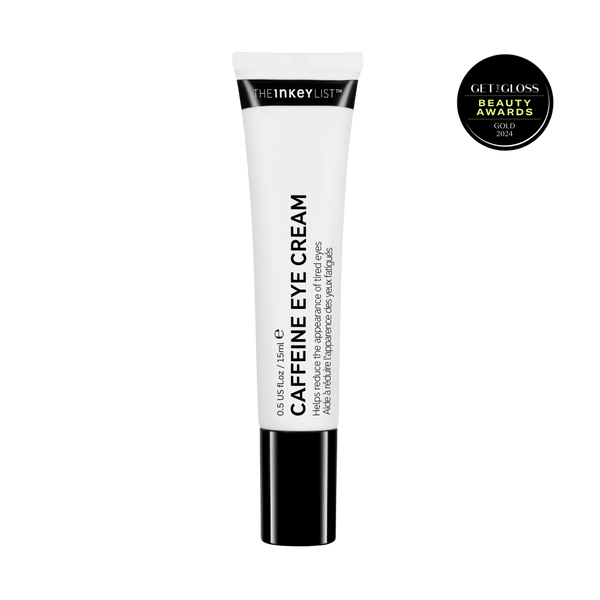
Caffeine Eye Cream is the core step, and the mechanism is genuinely worth understanding rather than taking on faith. Caffeine is an antioxidant from coffee that tackles water retention, which is the main cause of under eye puffiness. That is why it works on the appearance of puffiness quickly rather than gradually, and why it earns its place as a morning step specifically. Our formula contains 0.3% caffeine.
It is clinically proven to improve the appearance of puffiness and dark circles from 1st use. Alongside that, *95% agree skin feels instantly smoother and deeply hydrated. It is currently rated 4.1 from 954 reviews, which for a product this widely used tells you something honest about how it performs day to day. If dark circles rather than swelling are your main concern, we have a dedicated guide for that.
The formula also includes Matrixyl 3000, a peptide complex that helps support natural collagen production, and Albizia Julibrissin bark extract, which helps reduce the appearance of under eye fatigue. Peptides are worth knowing about generally, and if you want to understand what they do and where they fit in a routine, our peptides collection is a good starting point.
Get the Technique Right, Because It Is Part of the Result
How you apply eye cream matters more here than almost anywhere else on your face, and it is not fussiness. It is because the tissue is so delicate.
- Use your ring finger. It is the weakest finger on your hand, so it naturally applies the least pressure. This is not an old wives’ tale, it is simple mechanics.
- Tap, do not drag. Work from the inner corner outwards along the orbital bone in small, light tapping motions. Never pull or rub the skin.
- Stay on the bone. Apply along the orbital bone rather than close to the lash line, and let warmth carry the product where it needs to go.
- Let the tapping do double duty. That gentle tapping motion encourages fluid movement in the area, so the technique itself contributes to the depuffing effect, not just the product.
The Fridge Trick, Briefly
Cold constricts blood vessels, so a chilled eye cream can add to the depuffing effect on top of what the caffeine is already doing. It is a small, free upgrade to a step you are doing anyway. We have written a whole piece on whether you should keep your Caffeine Eye Cream in the fridge if you want the detail.
The Step-Up Morning Routine
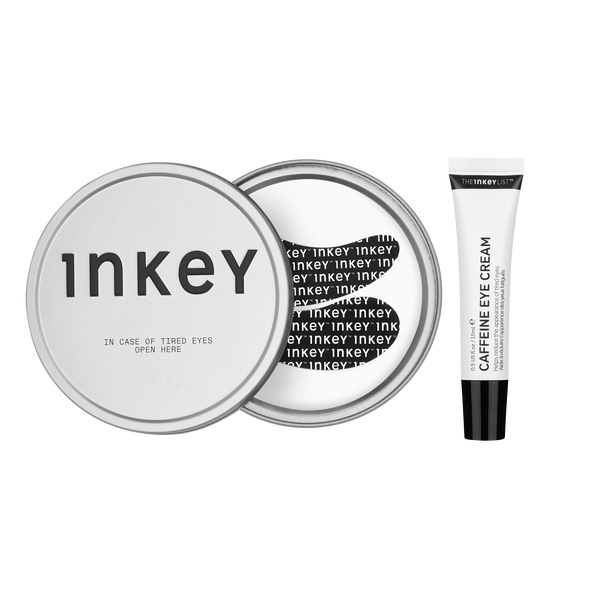
On mornings when you need more, the Reusable Eye Patches & Caffeine Eye Cream Duo is the version of this routine with the volume turned up. Apply Caffeine Eye Cream first, then press the silicone patches on top and leave them in place for 10 to 20 minutes whilst you get ready.
The patches work by occlusion, which means they form a physical seal over the skin. That seal stops the product evaporating off the surface before it has had time to absorb, so more of what you applied actually goes where you want it. The patches are 100% silicone and fully reusable. You rinse them, dry them, and store them in the tin. If you want the evidence on patches before committing, we have looked at whether under eye patches actually work in detail.
The Fixes That Cost Nothing
Product is one part of a morning routine. These are the rest, and they are genuinely effective.
- A cold compress. A few minutes is enough. Cold constricts vessels and reduces the appearance of swelling quickly. A clean flannel run under cold water works perfectly well.
- Gentle lymphatic drainage massage. Using light pressure, sweep from the inner corner of the eye outwards, then down towards your ears, following the natural drainage route. Light is the operative word. This is not a deep tissue massage, and the skin here does not need force.
- Get upright and move. This is the most underrated fix on the list. Your lymphatic system has been idle for eight hours and needs muscle movement to restart. Walking around, stretching or simply getting on with your morning does more than anything else.
- Drink water first thing. You have gone all night without any. Rehydrating early tells your body it does not need to hold onto fluid.
A realistic note to close on. These steps reduce the appearance of puffiness in the morning, and they do it well. They do not permanently eliminate a process driven by gravity, anatomy and sleep. That is fine, because reducing how often it happens in the first place is a separate job, and it is the next one.
How to Prevent Morning Eye Puffiness Long-Term
Everything above handles the morning you are currently having. This section is about having fewer of them. Most of it is unglamorous and free, which is usually a sign that it works.
Move your salt earlier in the day. You do not need to give up salt. You need to notice that a salty dinner affects your morning face considerably more than a salty lunch does, because it lands right before the hours you spend horizontal. Shifting the saltiest meal of your day earlier is a smaller change than cutting it out, and it targets the actual mechanism.
Reduce evening alcohol, particularly close to bedtime. Again, reducing rather than eliminating. The closer a drink is to the point you lie down, the more of its dehydrating and vessel-dilating effect is still active whilst fluid is settling in your face.
Hydrate consistently rather than heavily. Steady water intake spread across the day beats a large glass right before bed, which can itself contribute to overnight retention. Consistency is what stops your body holding onto fluid defensively. If this is a recurring theme for your skin generally, our dehydrated skin guide goes deeper.
Change how you sleep. This is the single highest-impact free change most people can make. Sleeping on your back, or propping your head slightly higher with an extra pillow, lets gravity assist drainage overnight instead of sitting the night out. It takes a week or two to adjust if you are a committed side-sleeper, and it is worth persevering with. If one eye is always worse, this alone may resolve it.
Manage the allergens in your bedroom. Wash pillowcases weekly in a hot wash to reduce dust mite exposure. During high pollen periods, keep bedroom windows shut, especially overnight and first thing. Given your face spends eight hours in direct contact with your bedding, this has more impact on morning eyelid swelling than most people expect.
Be consistent with your eye cream. Twice daily, morning and evening, over four to six weeks. Being straight with you about what to expect: the immediate effect of Caffeine Eye Cream is depuffing, and you get that from the first use. The longer-term benefit is different. It is a smoother, better-hydrated eye area that copes better with everything described in this article.
Choosing Between the Two Eye Creams
These two products do different jobs, and you are not choosing between them so much as choosing which problem you are solving.
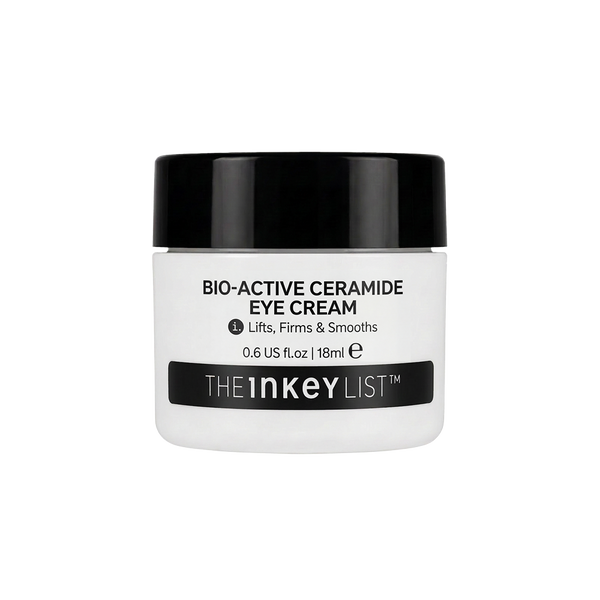
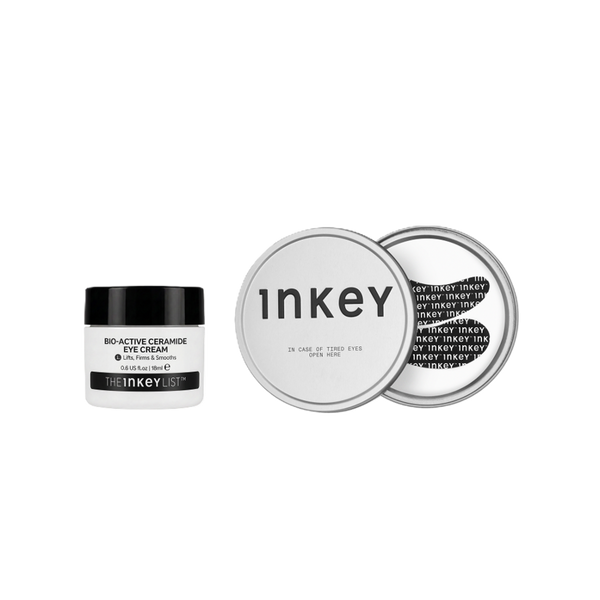
Caffeine Eye Cream is the instant morning depuff. Bio-Active Ceramide Eye Cream is the four-week option, formulated for a firmer-looking eye contour and heavier-looking lids. It smooths the look of fine lines, firms the eye contour and visibly refreshes tired-looking eyes over time. It is rated 4.9 from 280 reviews.
The ceramide element matters more around the eyes than most people realise. Ceramides are lipids that occur naturally in your skin and help hold the barrier together. A functioning barrier keeps water in and irritants out. Around the eyes, where the skin is thinnest and most easily compromised, that barrier is under more strain than anywhere else on your face. Supporting it is genuinely useful maintenance rather than a nice-to-have, and our ceramides collection explains the ingredient properly if you want the background.
Do Not Skip SPF Around the Eyes
UV exposure breaks down collagen and elastin, the proteins that keep the eye area supported and springy. As that support weakens over time, the tissue holds fluid more visibly. This is a slow, gradual factor rather than an overnight one, which is exactly why it gets ignored.
Daily SPF applied around the eye area, carefully and along the orbital bone, protects that supporting structure. Something like Dewy Sunscreen SPF 30 sits comfortably under makeup and makes the step easy to keep up with. Sunglasses do two useful things at once, cutting UV exposure and reducing how much you squint, which spares the area some mechanical stress.
Most morning puffiness responds well to the changes in this section, given a few weeks. Occasionally though, swelling around the eyes is pointing at something that skincare cannot address.
When to See Your GP or a Dermatologist
The benchmark from earlier in this article is the useful thing to hold onto. Normal morning puffiness reduces within 20 to 60 minutes of being upright and moving. When swelling behaves differently to that, it is worth having someone look at it.
Speak to your GP or a dermatologist if you notice any of the following:
- Swelling that does not reduce as the day goes on
- Swelling that comes on suddenly, or that is severe
- Swelling elsewhere in your body, for example in your ankles, feet, hands or legs
- Other symptoms alongside it, such as ongoing fatigue, changes in urination, or any difficulty breathing
- Swelling that started after beginning a new medication or a new product
There are several reasons persistent or widespread swelling warrants a professional opinion. Thyroid dysfunction, kidney dysfunction, iron-deficiency anaemia and allergic reactions can all present with fluid retention around the eyes. That list is not a diagnostic checklist and it is not meant to worry anyone. It is simply the reason a qualified person should be the one assessing it rather than a search engine. The Mayo Clinic’s overview of fluid retention and its causessets out the range of underlying factors.
One thing needs stating separately and clearly. Sudden swelling around the face or mouth, particularly alongside any difficulty breathing, is not a routine appointment. That needs urgent medical attention immediately.
Skincare has a real and useful role in the morning puffiness described throughout this article. It has no role at all in the situations listed above, and we would rather say so plainly.
The Takeaway
Morning puffiness is fluid, gravity and a lymphatic system that pauses whilst you sleep. It is not a flaw in your skin and it is not something you have done wrong.
There are two timeframes worth thinking about. In the morning itself, cold, caffeine and gentle movement reduce the appearance of swelling within minutes. Over the longer term, sleep position, evening salt and alcohol, consistent hydration, allergen management and a steady eye care routine reduce how often you wake up puffy at all.
Some of this is genetic, and some of it is simply what bodies do when they spend a third of the day lying down. The realistic goal is reducing the appearance of puffiness and supporting the eye area over time, not eliminating something that is fundamentally normal.
And if swelling does not settle as the day goes on, or arrives with other symptoms, speak to your GP or a dermatologist rather than reaching for another cream.
Shop the Routine
Caffeine Eye Cream. The instant morning depuff. Clinically proven to improve the appearance of puffiness and dark circles from 1st use.* Rated 4.1 from 954 reviews.
Reusable Eye Patches & Caffeine Eye Cream Duo. The step-up morning routine. The silicone patches create an occlusive seal over the cream to maximise absorption, and they are reusable, easy to rinse and simple to store.
Bio-Active Ceramide Eye Cream. The four-week option for a firmer-looking eye contour and smoother-looking fine lines. Rated 4.9 from 280 reviews.
*4-week independent clinical study of 22 people under dermatological and ophthalmological control
Because at The INKEY List, We Give A Care.
Keep Reading
Frequently Asked Questions
Got a question?
Our askINKEY team are a friendly bunch of skincare experts with deep product knowledge and zero judgement. Whether you're an ingredient obsessive or just starting out, we'll make it make sense. No question too big. No question too small. We Give A Care, Every Day.


