



When Should I Start Using Anti-Ageing Products? Your Complete Guide to Ageless Skin
Collagen falls 1% a year from your mid-twenties. Here's what to actually use in each decade — face, eyes and neck included.
Author
askINKEY skincare advisor
Published
25 January, 2024
Time to read
20 minutes
There is a moment, usually somewhere in your twenties, when you catch your reflection in a shop window or a phone camera at an unflattering angle, and you notice something that was not there before. A faint line at the outer corner of your eye. A crease across your forehead that used to disappear the moment you stopped frowning, and now lingers a second too long. It is not dramatic. It is not a crisis. But it is new, and it prompts the question that brought you here: should I be doing something about this yet?
Here is the honest answer, and it is more useful than the panic the internet usually sells you. Collagen, the protein that gives skin its structure and bounce, begins to decline at a rate of roughly 1% per year from the mid-twenties. That decline is silent at first. You will not see it in the mirror for years. But it is happening, quietly, in the background, which means the most valuable thing you can do for your future skin is not to wait until you can see the damage before you start protecting against it.
This is not about fear of ageing. Ageing is not a flaw, a failure, or a problem to be solved. It is a privilege, and anybody selling you eternal youth in a jar is selling you something that does not exist. What this guide is about is something far more practical: understanding what actually happens to skin over time, and making informed choices about what is worth doing, when it is worth doing it, and what you can comfortably ignore. Prevention is genuinely easier, cheaper and more effective than correction. A daily sunscreen that costs £15.00 and takes fifteen seconds to apply will do more for your skin over thirty years than almost anything you could buy after the fact.
In this guide, we will walk through the biology of how skin ages, the difference between preventing and correcting, a decade-by-decade timeline of what to actually use and when across your face, your eye area and your neck, when and how to start retinol, how to build a routine that survives contact with real life, and honest answers to the questions people actually ask. But to know when to start, you first need to understand what you are actually starting against: the biology of how skin ages.
Understanding How Your Skin Ages: The Science Behind the Timeline
Skin ageing is not one process. It is several, running simultaneously, at different speeds, driven by different causes. Some of them you inherited and cannot change. Some of them you are doing to yourself right now without noticing. Understanding which is which is the entire foundation of a sensible routine, because it tells you where your effort actually pays off.
Intrinsic vs Extrinsic Ageing: What You Can and Cannot Control
Intrinsic ageing is the clock you were born with. It is genetic, hormonal and chronological, and it proceeds regardless of what you do. It causes gradual thinning of the skin, slower cell turnover, reduced oil production and the steady structural loss that comes from declining collagen and elastin. If you kept your skin in a sealed box away from all light and pollution for eighty years, intrinsic ageing would still happen. It is simply biology doing what biology does.
Extrinsic ageing is everything else. It is the environment, your habits and your exposures, and it accounts for the overwhelming majority of what people actually mean when they talk about looking older. Photoageing alone, the damage caused by ultraviolet radiation, is estimated to be responsible for up to 80% of visible facial ageing. Pollution, smoking, poor sleep, chronic stress, a diet low in antioxidants and repeated mechanical stress on the skin all contribute alongside it.
That 80% figure deserves a moment of your attention, because it reframes the entire conversation. It means most of what we call ageing is not ageing at all. It is accumulated, largely preventable damage. It also means that the single highest-return action available to you is not a serum. It is sun protection, applied daily, for decades.
One modern extrinsic factor deserves naming because it barely existed a generation ago. Tech neck is the premature lining, creasing and loss of firmness caused by repeatedly tilting your head down to look at a phone or laptop. Every downward tilt folds the skin of the neck along the same lines, dozens of times a day, on tissue that was already thinner and less supported than the skin on your face. Repeated mechanical folding is a genuine extrinsic stressor, and it is why neck lines are now showing up decades earlier than they used to.
Collagen and Elastin: The Structural Proteins That Fade
Collagen is the scaffolding. It is the most abundant protein in the body and it gives skin its firmness, density and structural resilience. Elastin is the recoil, the protein that lets skin snap back after you smile, squint or pinch it. Together they form the supporting architecture of the dermis, and together they decline.
The 1% annual loss from the mid-twenties is the headline number, but the curve is not smooth. It steepens with hormonal change, accelerates sharply under UV exposure, and is worsened by smoking and chronic inflammation. UV radiation in particular triggers enzymes called matrix metalloproteinases, which actively break down existing collagen faster than the body can rebuild it. Sun exposure is not just failing to help. It is actively demolishing what you already have.
This is why collagen-supporting peptides have become such a fixture in well-formulated anti-ageing products. Peptides are short chains of amino acids that can signal to skin cells to behave as though repair is needed, supporting the skin’s own collagen-producing machinery rather than attempting to deposit collagen from the outside, which is not how skin works.
Cell Turnover: Why Skin Looks Duller Over Time
In your twenties, the skin renews itself roughly every twenty-eight days. Fresh cells rise to the surface, dead ones shed, and the result is that particular light-reflecting clarity that young skin has and nobody appreciates until it starts to fade. By your forties, that cycle can stretch closer to forty-five days. By your sixties, longer still.
Slower turnover means dead cells linger at the surface. Light scatters instead of reflecting cleanly, and the effect reads as dullness, roughness and uneven tone. It also means that pigmentation from old sun exposure or post-inflammatory marks takes considerably longer to fade, which is why dark spots that would have cleared in weeks at twenty-five can persist for months at fifty.
This is precisely the mechanism that retinoids address. By encouraging faster, more organised cell turnover, they restore some of the clarity that time takes away, which is why they remain the most evidence-backed topical category in the entire anti-ageing conversation.
Hydration and Barrier Function: The Overlooked Fundamentals
Skin holds water using a combination of natural moisturising factors, humectants such as hyaluronic acid, and an intact lipid barrier that stops that water evaporating away. All three components diminish with age. Natural hyaluronic acid production falls. Sebum production drops, particularly sharply after menopause. The barrier becomes less efficient.
The practical consequence is that older skin is drier, and dry skin looks older than it is. Dehydration exaggerates the appearance of every existing line, because skin that lacks water creases more readily and holds those creases longer. A significant proportion of what people identify as new wrinkles are actually dehydration lines, which is genuinely good news, because those respond quickly to proper hydration in a way that true structural wrinkles do not.
Hormones: The Acceleration Nobody Warns You About
Oestrogen is quietly one of the most important skin hormones there is. It supports collagen density, skin thickness, sebum production and wound healing. When oestrogen falls, all of those fall with it, and the timeline is not gentle.
Research consistently indicates that women can lose a substantial proportion of skin collagen in the first five years following menopause, with the decline continuing more gradually afterwards. Perimenopause, which can begin in the early forties or even the late thirties, is often when people notice their skin changing faster than it ever has before. Skin that was reliably oily becomes dry. Products that worked for a decade suddenly sting. Lines that were fine become established.
This is not a personal failing and it is not something you did wrong. It is a hormonal shift with direct dermatological consequences, and it deserves to be talked about far more openly than it is.
Ceramides: The Barrier Lipids That Quietly Disappear
If collagen is the scaffolding of the dermis, ceramides are the mortar of the surface. Picture your skin cells as bricks in a wall. Ceramides, along with cholesterol and fatty acids, are the mortar filling the gaps between them, holding the whole structure together and sealing it. That mortar does two jobs at once: it keeps water inside the skin, and it keeps irritants, allergens and pollution outside.
Ceramides make up a substantial share of the lipids in the outermost layer of skin, and their levels fall naturally with age as the skin’s capacity to produce them slows. But age is only part of the story. Over-exfoliation strips them. Harsh, high-foaming cleansers dissolve them. Cold weather reduces their production, and indoor central heating dehydrates the skin from the other direction. Most people accelerate their own ceramide loss without ever realising it.
As ceramide levels fall, the mortar thins and gaps open in the wall. Transepidermal water loss rises, which simply means water escapes from the skin faster than it can be replaced. The consequences follow in sequence: skin becomes drier, then tighter, then more reactive to products that never previously caused a problem. Stinging, redness and unpredictable sensitivity are all classic signs of a compromised barrier rather than a new allergy.
There is a visual consequence too, and it is the reason this matters in an ageing conversation rather than just a sensitivity one. Dehydrated skin creases more readily and holds those creases longer. Lines look deeper than they structurally are. Restore the barrier and a meaningful proportion of that apparent depth softens, because you were partly looking at a hydration problem wearing a wrinkle costume.
Not all ceramides behave identically once they are in a formula, and the difference between conventional ceramides and bio-active ones is a genuinely interesting piece of formulation science. It is also a whole article in itself, so if you want the detail, read what Ceramide NP actually is and how bio-active ceramides differ from regular ceramides. For our purposes here, the point is simply this: ceramides deplete with age, and replacing them is one of the least glamorous and most consistently worthwhile things you can do for ageing skin.
Those five mechanisms are the whole picture: structural loss, slowing renewal, falling hydration, hormonal acceleration and barrier depletion. Knowing them tells you something important before you spend a single pound, which is what a product can realistically change and what it cannot.
Prevention vs Correction: Two Approaches to Ageing
Every anti-ageing product on the market sits somewhere on a spectrum between two very different jobs. Preventing damage that has not happened yet is one job. Improving the appearance of damage that has already occurred is a completely different one. They require different ingredients, different timelines and, most importantly, different expectations.
Prevention is the better deal by an enormous margin, and it is not close. Sunscreen prevents the photoageing that accounts for up to 80% of visible facial ageing. Antioxidants such as vitamin C neutralise free radicals before they damage collagen. A well-maintained barrier keeps skin hydrated and resilient. None of these produce a dramatic before-and-after photograph, which is exactly why they are undersold. Prevention’s success looks like nothing happening, and nothing happening does not go viral.
Correction is harder, slower and more limited. Retinoids can genuinely improve fine lines, texture and tone over months of consistent use. Vitamin C can fade pigmentation. Peptides can support firmness. Exfoliating acids can improve surface smoothness and clarity. These are real, measurable effects backed by real evidence, and they are worth pursuing.
But here is the part most brands will not say plainly, and we are going to say it because you deserve to make decisions with accurate information: no over-the-counter product fully reverses deep-set wrinkles. Not ours, not anybody’s. A topical product can improve the appearance of a deep static line, soften it, hydrate the skin around it and make it less noticeable. It cannot rebuild the structural collagen loss underneath it to the state it was in twenty years ago. Anything claiming otherwise is either describing a prescription treatment, a clinical procedure, or making a claim it cannot support.
The most valuable thing a skincare brand can give you is not a miracle. It is an accurate expectation, so you can tell the difference between a product that is not working and a product that is working exactly as well as it ever could.
Adding more products does not change that equation. It is worth stating clearly at the outset of a guide that is about to recommend targeted care for your eye area and your neck: those recommendations are additions of coverage, not escalations of promise. The honest ceiling stays exactly where it was.
What this means practically is that the earlier you weight your routine towards prevention, the less you will ever need to ask correction to do. Which brings us to the question of timing.
Your Anti-Ageing Timeline: What to Use When
There is no universal starting age, because skin does not read birth certificates. Genetics, sun exposure history, ethnicity, climate and lifestyle all shift the timeline. What follows is a sensible framework rather than a prescription, and the guiding principle is consistency over intensity at every single stage.
Before the decades, one piece of sequencing that applies across all of them. Where eye and neck care appear below, they sit in the same place every time: after your water-based serums, before your moisturiser. Eye cream first, neck treatment second, then moisturiser, then sunscreen in the morning. Both eye and neck care are used morning and evening. Getting this consistent across every decade means you never have to relearn the order as your routine evolves.
In Your 20s: Foundation and Prevention
This is the decade where the smallest effort produces the largest lifetime return, and almost nobody believes it at the time.
Your priority is sunscreen. Not a serum, not an acid, not a retinoid. A broad-spectrum SPF 30 or higher, applied every morning, every day, regardless of season, weather or whether you plan to go outside. UVA radiation, the wavelength most responsible for ageing, penetrates cloud and glass. It reaches you on a grey Tuesday in February through an office window. Daily sunscreen is the single highest-value anti-ageing behaviour available to any human being, and it is genuinely more important than every other item in this guide combined. If you take one thing from this article, take that.
Beyond SPF, your twenties routine should be short and unglamorous. A gentle cleanser that does not strip. A hydrating serum. A moisturiser that supports the barrier. An antioxidant in the morning if you want one. That is a complete, genuinely effective routine, and there is no prize for making it longer.
There is one addition worth understanding early, and it is about geography rather than ambition. The skin around your eyes is the thinnest on your entire face, in places a fraction of the thickness of your cheek. It has fewer oil glands, less structural support, and it is in near-constant motion. You blink somewhere in the region of fifteen to twenty thousand times a day. Every squint, smile and expression folds that tissue along the same lines. It is not surprising that it shows change first. It would be surprising if it did not.
The neck has a parallel problem for different reasons. Neck skin has up to 40% less thickness than facial skin, fewer oil glands to keep it lubricated, and lower collagen density to hold it firm. Less structure, less natural moisture, faster visible change. Add the modern habit of looking down at a phone for hours a day, and tech neck stops being a middle-age concern and becomes a twenties one. This is genuinely a change from a generation ago, and it is why we now talk about the neck this early.
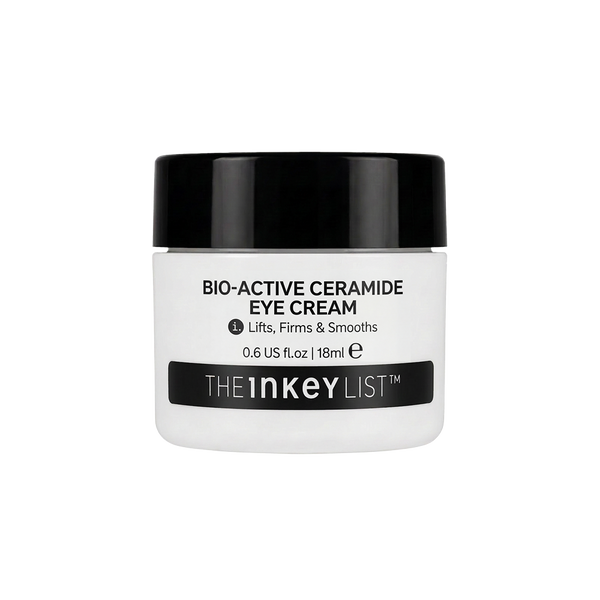
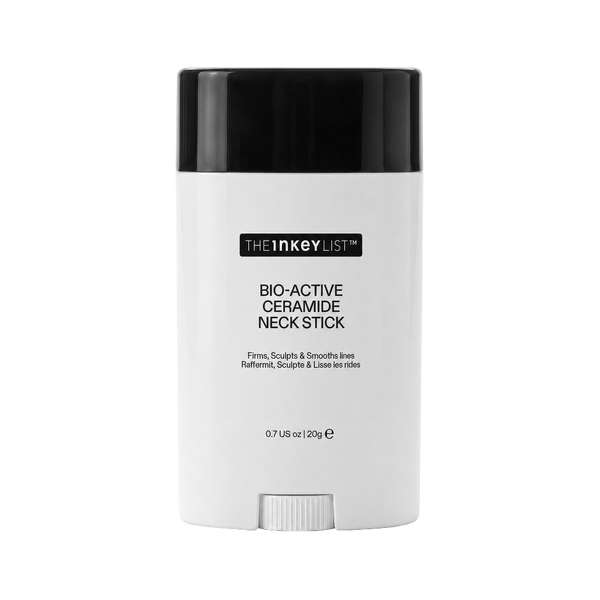
In prevention terms, that means two optional but sensible additions. The Bio-Active Ceramide Eye Cream, £15.00 for 18ml, supports the barrier in the most fragile area of the face. The Bio-Active Ceramide Neck Stick, £15.00 for 20g, extends the same care below the jawline where most routines simply stop. In your twenties both are prevention, not correction. You are not fixing anything. You are maintaining tissue that is currently in good condition and is under more daily mechanical stress than it has been for any previous generation.
Both are also pregnancy and breastfeeding safe, which is a genuine practical differentiator in a category where the most effective active, the retinoid, is off the table entirely during those periods. If you are planning, pregnant or feeding, ceramides and peptides remain fully available to you.
Technique matters more than people expect around the eyes, and it is easy to do more harm than good by dragging delicate skin. Our guide to applying eye cream the right way covers it in under two minutes of reading.
Your 20s AM routine:
- Gentle cleanser, or just water if your skin is comfortable
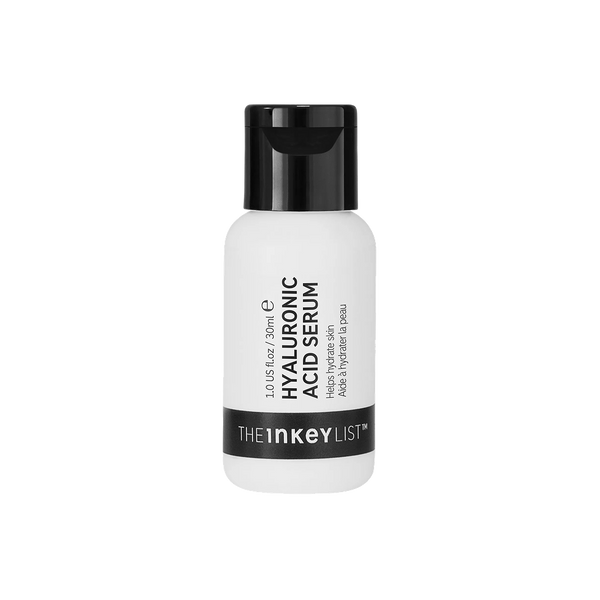
- Hyaluronic Acid Serum, £12.00 for 30ml, on damp skin
- Eye cream, if you use one
- Neck treatment, gliding upward
- Bio-Active Ceramide Moisturiser, £20.00 for 50ml
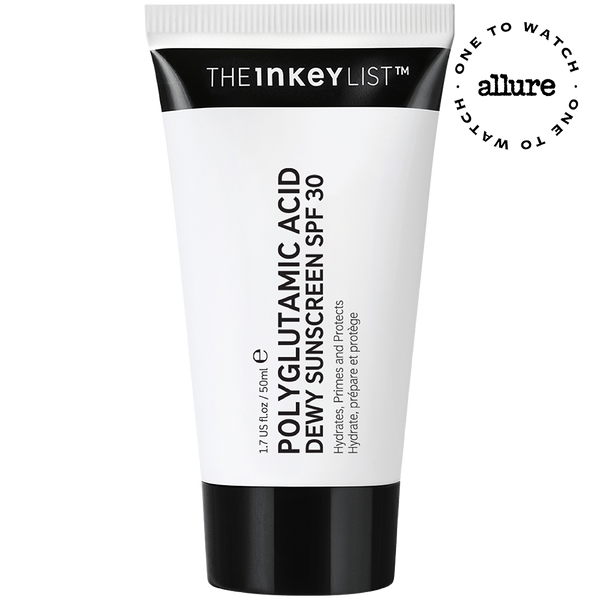
- Dewy Sunscreen SPF 30, £15.00 for 50ml, and do not skip this
Your 20s PM routine:
- Oat Cleansing Balm, £15.00 for 150ml, to remove sunscreen and makeup properly
- Hydrating serum
- Eye cream
- Neck treatment
- Moisturiser
That is it. Five steps, no actives beyond the basics, and it will serve you better over thirty years than any amount of experimentation.
In Your 30s: Introduce Starter Retinol
Somewhere in this decade, most people cross a threshold. Expression lines that used to vanish start leaving a faint trace. Skin takes a little longer to recover from a bad night. Tone becomes fractionally less even. This is the natural moment to introduce your first genuine corrective active.
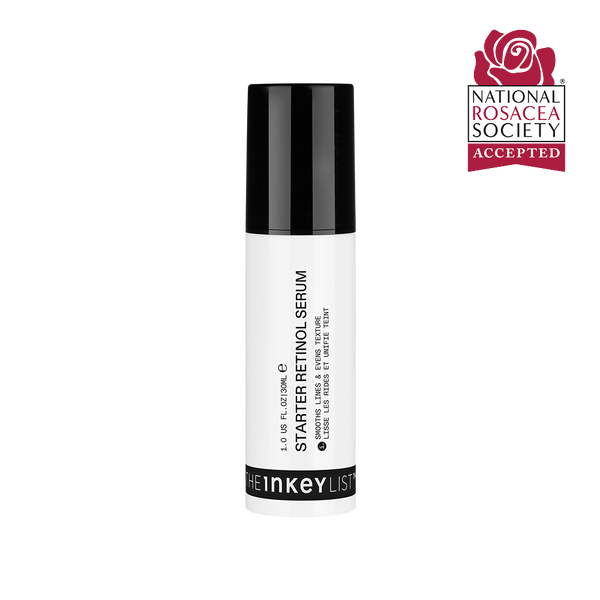
Retinol is the headline change of your thirties, and nothing else in this decade matters as much. It remains the most thoroughly evidenced over-the-counter ingredient for fine lines, texture and tone, with decades of published research behind it. Starter Retinol Serum, £13.00 for 30ml, is formulated as an entry point specifically because the most common reason people abandon retinol is starting too strong and irritating their skin into quitting within a fortnight.
If retinol is not for you, whether because you are pregnant, breastfeeding, or simply have skin that will not tolerate it, bakuchiol is the most credible gentler alternative, and we have compared them honestly in retinol vs bakuchiol as well as covering the wider field of natural alternatives to retinol.
Your thirties are also when the eye area starts to reward attention rather than just prevention, and this is where people get confused between two products that sound similar and do genuinely different jobs. Let us be plain about it.
The Retinol Eye Cream, £12.00 for 15ml, is a retinoid treatment. It is formulated for the eye area specifically, but it is doing retinoid work: turnover, texture, fine lines. The Bio-Active Ceramide Eye Cream, £15.00 for 18ml, is not a retinoid at all. It is a ceramide and peptide formula targeting lines, firmness and lift, and it is the gentler option. Different jobs, different mechanisms.
They also work well together, which is the genuinely useful part. The eye area is where retinoid irritation shows up first and most visibly, and it is the most common reason people give up on retinol entirely. Applying your retinoid first and following with the ceramide eye cream on top gives you the active you want with a buffer that makes it survivable. That is not a compromise. That is the technique that keeps people consistent long enough to see results.
Your neck treatment continues morning and evening throughout this decade. It is anhydrous, meaning water-free, so there is no pH to worry about when layering, and it is compatible with retinol, vitamin C and AHAs or BHAs. There is no retinoid night on which you need to skip your neck.
Your 30s AM routine:
- Gentle cleanser
- 15% Vitamin C + EGF Serum, £16.00 for 30ml, for antioxidant protection and tone
- Eye cream
- Neck treatment
- Moisturiser
- Sunscreen
Your 30s PM routine:
- Oat Cleansing Balm
- Starter Retinol, two or three nights a week to begin
- Eye cream
- Neck treatment
- Bio-Active Ceramide Moisturiser
In Your 40s: Upgrade to Advanced Retinal
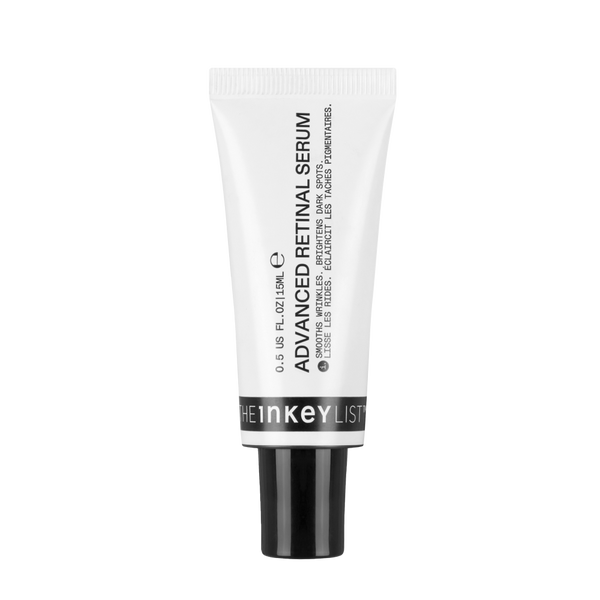
If your skin has tolerated retinol comfortably for a year or more, this is the decade to consider stepping up. Advanced 0.2% Retinal Serum, £18.00 for 15ml, uses retinaldehyde, which sits one conversion step closer to active retinoic acid than retinol does and is therefore generally faster-acting. Our comparison of peptides vs retinol, the breakdown of tretinoin vs retinol and the look at PDRN vs retinol will help you place it in context.
This is also the decade where the ceramide story stops being theoretical and becomes the thing you actually feel. Perimenopause commonly begins in the early forties, and declining oestrogen does not just affect collagen. It directly reduces the skin’s production of barrier lipids, including ceramides. This is the payoff of the mechanism we explained earlier: the mortar between the bricks thins faster than it ever has, transepidermal water loss climbs, and skin that was reliably normal or oily for twenty years turns dry, tight and reactive seemingly overnight.
This is exactly why ceramides move from optional to essential in this decade. It is not a marketing escalation. It is a direct response to a documented hormonal change in lipid production. If you have been wondering why your long-trusted moisturiser suddenly seems to do nothing, this is very often the answer. For a fuller look at gentler actives during this transition, is bakuchiol good for menopausal skin? is worth ten minutes.
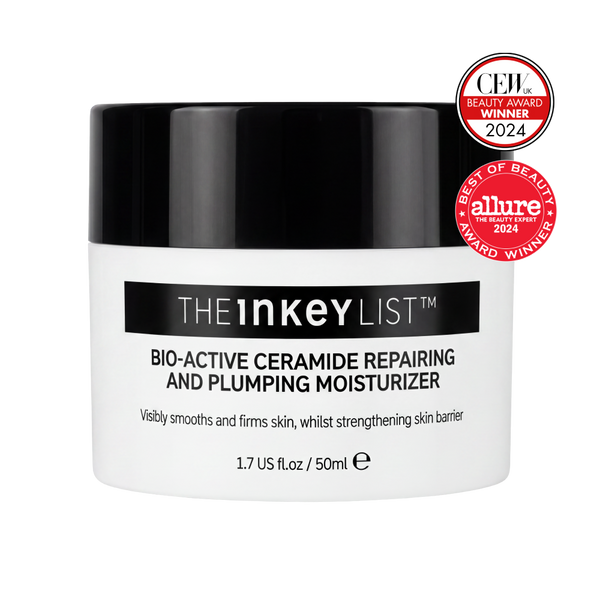
The Bio-Active Ceramide Moisturiser, £20.00 for 50ml, is built for exactly this scenario, supporting barrier recovery and delivering 24-hour hydration‡. It also contains Gransil Blur for an immediate soft-focus effect on the appearance of fine lines, which is honest cosmetic optics rather than a structural claim, and we would rather describe it accurately than dress it up.
The targeted areas have evidence behind them in this decade too. The Bio-Active Ceramide Eye Cream is clinically proven to lift the appearance of eyelids by 29% in four weeks§. The Bio-Active Ceramide Neck Stick is clinically proven to lift, tighten and firm the appearance of the neck and chest area in only 14 days#, and to improve the tightness of the jawline by 32% in 56 days#.
Your 40s AM routine:
- Gentle cleanser
- Vitamin C serum
- Eye cream
- Neck treatment
- Bio-Active Ceramide Moisturiser
- Sunscreen
Your 40s PM routine:
- Oat Cleansing Balm
- Advanced 0.2% Retinal Serum, on your established nights
- Eye cream
- Neck treatment
- Bio-Active Ceramide Moisturiser
In Your 50s and Beyond: Comfort-Focused Intensive Care
The framing shifts in this decade, and it shifts towards comfort. Post-menopausal skin is drier, thinner and slower to repair. Barrier support stops being a supporting act and becomes the main event, because a comfortable, well-hydrated, non-reactive barrier is what makes every other active tolerable.
That does not mean giving up actives. It means using them intelligently. Many people find that reducing retinoid frequency while increasing barrier support delivers better results than pushing through irritation, because irritated skin is inflamed skin, and chronic inflammation actively accelerates ageing. Less, applied consistently and comfortably, genuinely outperforms more, applied in painful bursts.
Two concerns come up in this decade more than any others, and they are routinely ignored by anti-ageing guides that stop at the jawline. Crepey texture on the neck and décolletage is the first. That thin, finely wrinkled, tissue-paper quality is caused by a combination of collagen and elastin loss, cumulative sun exposure on an area that rarely gets sunscreen, and the low oil content of skin in that region. If you want the full mechanism, what causes crepey skincovers it properly. The second is loss of definition along the jawline and neck, which is partly skin and partly deeper structural change.
Neither is a reason for despair, and here is the evidence for that. Over 12 weeks, the Bio-Active Ceramide Eye Cream was clinically shown to lift the appearance of eyelids by 51%||, with 94% of participants agreeing the eye area looked visibly firmer and more sculpted||. That is a longer study on the same product that delivered 29% at four weeks§, which tells you something genuinely useful: results compound with time. The people who see the most are simply the people who kept going.
It is never too late to start. Skin retains the capacity to respond to good care at any age. Improvements may be more gradual and the ceiling is lower than it would have been at thirty, but “slower and more modest” is a very different thing from “pointless”, and anyone implying otherwise is not being straight with you.
Your 50s+ AM routine:
- Cream or balm cleanser, nothing stripping
- Hyaluronic Acid Serum on damp skin
- Eye cream
- Neck treatment
- Bio-Active Ceramide Moisturiser
- Sunscreen
Your 50s+ PM routine:
- Oat Cleansing Balm
- Retinoid or gentler alternative, at whatever frequency your skin comfortably tolerates
- Retinol Eye Cream or Bio-Active Ceramide Eye Cream
- Neck treatment
- Bio-Active Ceramide Moisturiser
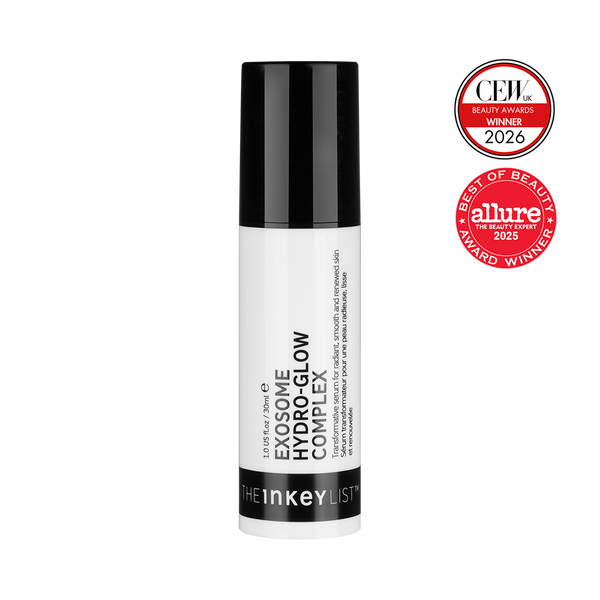
- Exosome Hydro-Glow Complex, £20.00 for 30ml, if you want an additional recovery step
Note the order there, because the live version of this article previously had it wrong and we have corrected it. Eye cream goes before moisturiser, not after. It follows the same lightest-to-heaviest logic as everything else in the routine.
Notice how often the timeline above pointed below the jawline. That raises a question this guide has never properly answered until now.
The Neck and Décolletage: The Zone Every Anti-Ageing Routine Forgets
Most people stop at the jawline. They will spend twenty minutes researching a serum, apply it with genuine care to every inch of their face, and then set the bottle down without a single thought for the six inches of skin directly below it. It is the most common gap in an otherwise excellent routine, and unlike most skincare mistakes, this one is visible from across a room.
The mechanism is straightforward once you know it. Neck skin has up to 40% less thickness than facial skin. It has fewer oil glands, which means less natural lubrication and a weaker built-in defence against water loss. It has lower collagen density, so less structural support holding it firm. Thinner, drier, less supported tissue exposed to the same sun, the same pollution and the same passage of time will change faster and more visibly than the face. It is not mysterious. It is arithmetic.
Neck skin has up to 40% less thickness than facial skin, fewer oil glands and lower collagen density. It is doing the same job with a fraction of the resources.
Then there is tech neck, which is the genuinely modern part of this problem. Tech neck describes the premature lines, crepey texture and loss of firmness that come from repeatedly looking down at phones, tablets and laptops. Every time you tilt your head forward, the skin of your neck compresses and folds along the same horizontal lines. Do that for hours a day, every day, for years, on tissue that is already thinner than the rest of you, and you create mechanical stress that skin was never designed to absorb at that volume.
The consequence is that neck ageing now shows up decades earlier than it once did. Practitioners increasingly report seeing established horizontal neck lines on people in their late twenties and early thirties, a presentation that was once uncommon before the mid-forties. This is not a moral failing and nobody is suggesting you stop using your phone. It is simply a new mechanical stressor that our routines have not caught up with. We have covered the full picture in our guide to how to get rid of neck lines and in our deeper look at neck cream for tech neck and crepey skin.
The signs worth recognising are specific rather than vague. Horizontal lines running across the front of the neck, sometimes called necklace lines. Crepey, finely creased texture, particularly across the décolletage. Reduced elasticity, where the skin takes noticeably longer to spring back when gently pinched. And loss of definition along the jawline, where the crisp boundary between face and neck softens.
How to Actually Treat the Neck and Décolletage
The good news is that treating this area is genuinely simple, and it takes about fifteen seconds.
The Bio-Active Ceramide Neck Stick, £15.00 for 20g, is a solid anhydrous stick with a gua sha-inspired sculpting shape, designed to be glided upward along the neck, jawline and chest. Use it morning and evening, after your serums and before your moisturiser, with sunscreen following in the morning. A few gentle upward glides across the neck, along the jawline and out across the décolletage is genuinely enough. You are not trying to massage vigorously or drag the skin. One stick lasts approximately two to three months with twice-daily use.
Several practical properties make it unusually easy to slot into an existing routine. Because it is anhydrous, there is no pH to consider when layering, which removes the most common source of layering anxiety. It is compatible with retinol, vitamin C and AHAs or BHAs, so there is no night on which you need to leave your neck out. It is pregnancy and breastfeeding safe, vegan, and suitable for sensitive skin.
The clinical evidence is specific, and we would rather give you the exact figures than a vague gesture at “proven results”. It is clinically proven to lift, tighten and firm the appearance of the neck and chest area in only 14 days#. It is clinically proven to reduce the appearance of tech neck by 30% in 8 weeks#. It is clinically proven to improve the tightness of the jawline by 32% in 56 days#. And it is clinically proven to improve the lifted appearance of the neck and jawline by 26% in 8 weeks#.
Now the honest part, because the neck category is more prone to overclaiming than almost any other corner of skincare and we are not going to join in.
This product firms and smooths the appearance of the neck. That word is doing real work and it is there deliberately. It improves texture, supports the barrier, hydrates skin that is chronically under-moisturised, and delivers measurable improvements in how lifted and firm the area looks. What it does not do is replace a clinical procedure. It will not reverse significant skin laxity, it will not address the deeper structural and muscular changes that contribute to neck sagging, and it will not produce a surgical result. This is the same principle we applied to deep-set wrinkles earlier in this article, and it applies just as firmly here. A topical product operates on the skin. It does not operate on the architecture beneath it.
Within that honest boundary, the improvements are real, measurable and worth having. Just buy it knowing what it is.
Extend Your Sunscreen Below the Jawline
There is one more neck point, and it might matter more than the treatment itself.
Remember that up to 80% of visible facial ageing is attributable to photoageing. That figure does not politely stop at the jawline. The neck and décolletage receive substantial UV exposure, arguably more than many parts of the face given that they are rarely shaded by hats, sunglasses or hair, and they are the single most commonly missed area when people apply sunscreen. Decades of daily sun exposure on the thinnest, least oil-supported skin on the upper body, with no protection whatsoever, is a genuinely significant contributor to how that area ages.
The fix costs nothing. When you apply your Dewy Sunscreen SPF 30, £15.00 for 50ml, carry it down over your jaw, across your neck, and out across your chest. If you can see the skin, protect the skin. That single habit change will likely do more for your neck over twenty years than any treatment product, ours included.
With the face, eyes and neck all accounted for, the practical question becomes how to hold all of this together without waking up to a twelve-step routine you will abandon by October.
When to Start Retinol: The Complete Guide
Retinol generates more questions than any other ingredient we make, which is understandable. It has the strongest evidence base and the highest irritation potential in the same bottle. Here is how to get the first without the second.
The general guidance is to consider starting a retinoid in your late twenties to early thirties, though this genuinely varies. If you are dealing with acne, your dermatologist may recommend one considerably earlier. If your skin is very sensitive or you live with rosacea or eczema, later or never may be the right answer, and there is no failure in that.
The Week-by-Week Starting Schedule
Start low and slow. This is not a cautious suggestion, it is the difference between still using retinol in six months and giving up in three weeks.
- Weeks 1 and 2: Apply once a week, at night, to clean dry skin. Pea-sized amount for the entire face. Moisturiser after.
- Weeks 3 and 4: Increase to twice a week if there has been no persistent irritation.
- Weeks 5 to 8: Increase to three times a week, still watching how skin responds.
- Weeks 9 to 12: If tolerated, move to alternate nights.
- Beyond 12 weeks: Some people reach nightly use. Many never do, and do perfectly well on three or four nights a week indefinitely.
Visible results typically begin around the twelve-week mark, with continued improvement over six to twelve months. Anyone promising transformation in a fortnight is describing irritation, not results.
The Non-Negotiable Retinoid Rules
- Night only. Retinoids degrade in sunlight and increase photosensitivity.
- Sunscreen every single morning. Non-negotiable, and more important on a retinoid than off one.
- Never during pregnancy or breastfeeding. Use bakuchiol, peptides or ceramides instead.
- Introduce one active at a time. Adding a retinoid and an acid in the same week means you learn nothing about which caused the reaction.
- Buffer when needed. Apply moisturiser before your retinoid, or mix them, if pure application is too much. Buffering reduces irritation with only a modest reduction in efficacy, and a buffered retinoid you keep using beats an unbuffered one you quit.
On that last rule, two specifics are worth adding. Both the Bio-Active Ceramide Moisturiser and the Bio-Active Ceramide Eye Cream are effective buffers for retinoid dryness, because they are directly replacing the barrier lipids that retinoids temporarily deplete. Around the eyes, where irritation shows up first and stings most, applying your retinoid first and following with the ceramide eye cream on top is the single most practical way to keep going. And because the neck stick is compatible with retinol, you never need to skip your neck on a retinoid night.
Consistency beats intensity, always. Buffering is not weakness or dilution. It is the mechanism by which people actually reach the twelve-week mark where results begin.
- Stop if skin is compromised. Persistent stinging, redness or peeling means pause and repair. See our guide to a damaged skin barrier.
Building Your Routine: Putting It All Together
Knowing which ingredients matter is only half of it. The other half is assembling them in an order that works and a routine you will still be doing in three years.
The Universal Layering Order
Apply lightest to heaviest. This is not arbitrary tradition, it is physics: a thin watery serum cannot penetrate a layer of occlusive cream, but a cream applies perfectly well over a serum.
- Cleanse. Oat Cleansing Balm in the evening to remove sunscreen and makeup thoroughly.
- Water-based serums. Hyaluronic acid on damp skin, vitamin C in the morning, retinoids at night.
- Eye cream, if you use one. Ring finger, gentle tapping, along the orbital bone rather than right up to the lash line.
- Neck treatment. Upward glides across neck, jawline and décolletage.
- Moisturiser. Seals everything in and supports the barrier.
- SPF, morning only. Always the final skincare step, always generous, always down onto the neck.
The Universal Foundation Four
Regardless of age, four products do the heavy lifting:
- A gentle cleanser that removes the day without stripping the barrier.
- A hydrating serum, because dehydrated skin shows every line more clearly than it needs to.
- A barrier-supporting moisturiser, ideally with ceramides, and increasingly essential from the forties.
- A daily broad-spectrum sunscreen, the highest-return product in existence.
Once those four are genuinely consistent, targeted eye and neck care is the natural next step. Not a replacement for the foundation and not an upgrade to it, but a way of extending the same principles to two areas that age faster than the face and are usually left out. If your foundation is not yet consistent, fix that first. Targeted care added on top of an unreliable base is effort in the wrong place.
Simplicity Beats Complexity, Every Time
Let us be blunt, because this article has just spent several thousand words describing additions and that carries a risk.
Four to six well-chosen products used consistently will outperform a twelve-step routine used sporadically, every single time, without exception. More products means more cost, more time, more decisions and more opportunities for irritation, and irritation is itself pro-ageing. The eye cream and the neck stick are targeted additions for two specific areas with specific vulnerabilities. They are not padding, and they are not obligatory.
If the Foundation Four is all you can realistically manage, that is not a compromised routine. That is a complete routine, and it will serve your skin extremely well for the rest of your life. Add the targeted layer if the eye area or neck is a specific concern for you and you will genuinely use it. Otherwise, ignore it entirely with our blessing. We would rather you did four things every day than six things for a fortnight. For a fuller walkthrough, see our best anti-ageing skincare routine guide.
The Mistakes That Undo Good Routines
- Over-exfoliating. More is not better. Twice a week is plenty for most skin.
- Product hopping. Give anything twelve weeks before judging it.
- Skipping sunscreen on cloudy days or indoors. UVA does not care about weather or windows.
- Neglecting the neck, chest and hands. They give away more than the face does.
- Chasing actives while ignoring the barrier. A compromised barrier makes everything worse.
How to Tell You Have Overdone It
Tightness after cleansing. Stinging from products that were previously fine. Unusual redness. Flaking. Sudden breakouts in unusual places. Skin that feels rough despite heavy moisturising. If you see these, strip back to cleanser, moisturiser and sunscreen for two weeks and let the barrier rebuild. Every active will still be there afterwards. Also add niacinamide once you are stable, as it is one of the best-tolerated supporting ingredients there is.
A routine also has to survive the climate it is actually used in, which in this country is its own particular challenge.
British Weather, Hard Water and Why Ceramides Matter More in Winter
Most skincare advice is written as though everyone lives in a temperate, moderately humid, moderately sunny place. Britain is not that place, and our specific conditions change what your routine needs to do.
The Grey Sky Myth
The single most damaging skincare belief in this country is that sunscreen is a holiday product. Up to 80% of UVA radiation penetrates cloud cover. UVA is the wavelength most responsible for ageing, it is present at relatively consistent levels throughout daylight hours across the entire year, and it passes through window glass. A commute, a desk by a window, a walk to the shops in November: all of it counts.
The NHS provides clear guidance on sunscreen and sun safety, and the British Association of Dermatologists is the authoritative source for evidence-based skin health information in the UK. Both are worth reading directly rather than through the filter of a brand.
A genuinely useful habit is checking the UV index rather than the temperature. It appears in most weather apps. Anything at 3 or above warrants sunscreen, and in the UK that threshold is regularly crossed from roughly March through to October, including on days that feel entirely unremarkable.
Central Heating, Hard Water and the Winter Barrier
British winter attacks the skin barrier from two directions at once. Cold outdoor air holds very little moisture. Indoor central heating produces warm, extremely dry air. Moving between them repeatedly all day drives transepidermal water loss upward and strips the skin of the lipids that hold water in.
This is where the ceramide mechanism from earlier becomes seasonally urgent rather than academic. Heated indoor air accelerates barrier lipid loss, and hard water strips further on top of it. Both are attacking the same mortar between the same bricks. In winter, replacing ceramides is often the entire difference between a comfortable barrier and a reactive one, which is why skin that behaved perfectly all summer turns tight, flaky and sensitive by December.
Then there is the water itself. Much of England, particularly the south and east, has hard water with high mineral content. Hard water is more difficult to rinse cleanly, leaves mineral residue on the skin, and disrupts the barrier over time. If your skin feels tight after washing and you have already switched to a gentle cleanser and it still happens, it is probably your postcode.
Worth noting: hard water hits the neck and chest just as hard as the face, and those areas have fewer oil glands to compensate for what it strips.
Practical winter adjustments are simple. Lean more heavily on the Bio-Active Ceramide Moisturiser and layer Hyaluronic Acid Serum underneath it on damp skin. Switch to the Oat Cleansing Balm if a foaming cleanser is leaving you tight. And keep applying Dewy Sunscreen SPF 30 through the winter, because UVA has not gone anywhere.
One genuinely useful piece of timing: autumn and winter are the ideal seasons to introduce a retinoid. Lower UV levels, less time outdoors and shorter days all reduce the photosensitivity risk during the adjustment period. If you have been thinking about starting, October is a better month than May.
That covers what to do and when. Now for what it actually costs and the questions people genuinely ask.
Making the Decision: Your Anti-Ageing Journey Starts Now
If you have read this far, the honest summary is shorter than you might expect. Wear sunscreen every day. Keep your barrier intact. Add a retinoid when your skin is ready and build up slowly. Be consistent for years rather than intense for weeks. Everything else is refinement.
The best time to start was yesterday. The second best time is this morning.
The Foundation: Four Products
- Oat Cleansing Balm, £15.00 for 150ml
- Hyaluronic Acid Serum, £12.00 for 30ml
- Bio-Active Ceramide Moisturiser, £20.00 for 50ml
- Dewy Sunscreen SPF 30, £15.00 for 50ml
The Targeted Layer: Two Optional Additions
These are separate from the foundation and entirely optional. Add them if the eye area or the neck is a specific concern for you.
- Bio-Active Ceramide Eye Cream, £15.00 for 18ml
- Bio-Active Ceramide Neck Stick, £15.00 for 20g
That foundation of four products costs less than many single premium moisturisers, and it is a genuinely complete anti-ageing routine. That is not an accident or a loss leader. Effective skincare should not be a luxury purchase, and pricing that keeps people consistent is worth more than pricing that signals prestige. Consistency is the thing that works, and nobody is consistent with a product they cannot comfortably repurchase.
The best anti-ageing routine is the one you will actually do, every day, for years. Not the most expensive one, not the most advanced one, not the one with the most steps. The one that survives busy weeks, bad moods and holidays.
The Real Conclusion: Consistency Is the Active Ingredient
Ageing is not a problem to be solved. It is what living looks like from the outside, and there is nothing wrong with any of it. Lines are evidence of expression. Every one of them was earned doing something.
What this guide offers is not a way to stop time. It is a way to make informed choices with accurate expectations, so you are spending your money and attention on the things that genuinely work rather than the things that market well. Sunscreen works. Retinoids work. Barrier care works. Consistency works better than all of them combined.
The face, the eye area and the neck age at different speeds and for different reasons, so a complete routine does account for all three. But it still only needs to be a routine you will actually keep.
Start where you are, with what you have, and keep going. That is the whole secret, and no laboratory has ever managed to bottle it.
Where to Go From Here
Explore the full anti-ageing collection to build the routine that fits your decade.
Not sure where to start? Take the skincare quiz for a personalised recommendation.
Still have questions about retinol, ceramides, your neck or anything in between? Reach out to askINKEY for free one-to-one advice from our team of skincare experts.
No hard sell, no hype, just the answers your skin actually needs. Because at The INKEY List, we give a care.
† 12-week independent clinical study of 30 people, comparing the performance of the ingredient Ceramide NP at 0.2% against a placebo formulation.
‡ 4-week clinical study of 20 people.
§ Clinically tested on 32 participants over 28 days.
|| Clinically tested on 32 participants over 12 weeks.
¶ Tested on 32 participants.
# Clinically tested on 28 participants over 8 weeks.
Frequently Asked Questions
Got a question?
Our askINKEY team are a friendly bunch of skincare experts with deep product knowledge and zero judgement. Whether you're an ingredient obsessive or just starting out, we'll make it make sense. No question too big. No question too small. We Give A Care, Every Day.


