



Should You Wear SPF in Winter? Your Year-Round SPF Guide
UVA reaches your skin every day of the year — through cloud, through windows, through your car — which is why SPF is a daily habit, not a summer one.
Author
askINKEY skincare advisor
Published
27 May, 2026
Time to read
20 minutes
Yes, you should wear SPF in winter. The reason is UVA, a type of ultraviolet light that reaches your skin throughout the year, including on cold, grey, unremarkable January mornings.
Here is the part that causes most of the confusion. The SPF number printed on a bottle measures protection against UVB, and UVB is the seasonal one. It climbs through spring, peaks in midsummer and falls away sharply once autumn arrives. UVA behaves differently. It is far more consistent across the year, it does not cause sunburn, and it is the reason the habit does not pause in October.
This guide covers what UVA actually does to skin, whether UV passes through glass, whether cloud makes any real difference, what UV genuinely looks like across a UK year, and a simple routine that works in every season. We have also answered the questions people most often ask about SPF in winter at the end.
We will not re-explain how SPF ratings, broad-spectrum labelling and UVA star ratings work here. That is all covered in our complete SPF guide if you want the full detail.
The whole thing rests on understanding two types of UV that behave very differently.
UVA vs UVB: Why SPF Cannot Be a Summer-Only Habit
If you understand the difference between UVA and UVB, every other answer in this article becomes obvious. It is one piece of science, and it does a lot of work.
Ultraviolet light from the sun reaches us in two forms that matter for skin. They sit at different wavelengths, they behave differently in the atmosphere, and they do different things once they land.
UVB has the shorter wavelength. It acts largely on the outer layer of the skin, the epidermis, and it is the one responsible for sunburn. UVB is strongly seasonal in the UK. It depends heavily on how high the sun sits in the sky, which is why it fades so noticeably between October and March. It is also the type the SPF number on your bottle is measuring.
UVA has the longer wavelength. According to Cancer Research UK , UVA penetrates more deeply into the skin than UVB does. It reaches the dermis, the layer where collagen and elastin sit, and where the structural quality of skin is determined. Over years of accumulated exposure, UVA is the main driver of what dermatologists call photoageing: loss of firmness, fine lines, roughened texture and uneven pigmentation.
Here is the crucial detail. UVA does not cause a burn. There is no sting, no redness the next morning, no visible signal that anything has happened at all.
That matters more than it sounds, because sunburn is the signal almost everyone uses to judge whether they have had too much sun. It is an intuitive, immediate feedback mechanism, and it is entirely a UVB signal. When you do not burn, your skin is telling you something accurate about UVB and nothing at all about UVA.
No burn does not mean no UV. It means no UVB.
This is the crux of the whole article. UVA levels do fall in winter, and we are not going to pretend otherwise. But they do not fall anything like as steeply as UVB does. UVB in a British December is, for practical purposes, negligible. UVA is not. It is diminished, but it is still arriving, still reaching the dermis, and still accumulating in the slow, quiet, unglamorous way that skin ageing actually happens.
What the label is actually telling you
This is where UK product labelling earns its keep, and where a lot of people misread their own bottle.
The SPF number is a UVB measurement. A product labelled SPF 30 has been tested for how much longer it takes UVB to cause visible redness on protected skin compared with unprotected skin. That number tells you nothing on its own about UVA.
UVA protection is indicated separately. In the UK you will see it as a UVA star rating, or as the letters UVA printed inside a circle, or described as broad-spectrum. Those markings are what tell you the product is handling the year-round part of the equation, which is precisely the part that matters most in winter.
The practical upshot is simple. For winter wear, broad-spectrum is the thing to look for, because UVA is the wavelength that is still showing up. There is a fuller explanation of how the ratings and star systems work in our complete SPF guide , including what the star numbers actually correspond to.
It is also worth stating once, plainly, because it is true and because you deserve accurate information rather than a curated version of it: both UVA and UVB contribute to skin cancer risk. We are not going to dwell on that or use it to frighten you into buying anything. It is simply a fact that belongs in an honest article about UV, stated once and left there.
Why depth of penetration changes the whole argument
The depth point deserves a moment longer, because it reframes what SPF is for.
Most people file sunscreen mentally under “stops me burning”. Under that definition, winter SPF looks genuinely pointless. You are not going to burn in Manchester in January, and no amount of skincare marketing should convince you otherwise.
But if you reframe SPF as “the thing that limits cumulative damage to the deeper structures of my skin”, winter SPF becomes reasonable rather than excessive. The NHS sunscreen fact sheet notes that UVA reaches deeper into the skin than UVB and is associated with skin ageing, and it also makes a point we are going to pick up in a moment, which is that UVA penetrates window glass.
Photoageing does not happen on the day of exposure. It happens across decades, in increments too small to notice individually. A single February afternoon contributes almost nothing. Twenty Februaries contribute something measurable. That is the entire case for consistency, and it is a much more honest case than pretending a winter walk to the shops is a high-risk event.
Think of it the way you might think of anything else cumulative. One missed night of sleep is irrelevant. A decade of poor sleep is not. The individual instance is trivial, the pattern is not.
So if UVA is present all year and penetrates more than most people assume, the obvious next question is what happens when there is a pane of glass in the way.
Does UV Go Through Glass?
Partly, and the distinction matters enormously.
UVB is effectively blocked by ordinary window glass. UVA is not.
That single sentence resolves most of the confusion about indoor exposure. The British Photodermatology Group handbook states that UVB is effectively absorbed by window glass, while UVA and visible light pass through it easily. Standard architectural glass, the kind in homes, offices, shops and cafes across the country, is very good at stopping the wavelength that burns you and considerably less good at stopping the wavelength that ages you.
Experimental work published in Photodermatology, Photoimmunology and Photomedicine measured this directly across different glass types and found ordinary window glass transmitted a substantial proportion of UVA while blocking UVB almost completely. The exact percentage varies with thickness, tint and the type of glazing, but the pattern is consistent: UVB stops, a significant share of UVA continues.
Now apply that to an ordinary week.
- A desk positioned beside a window, which is where most people would choose to sit given the option.
- An open-plan office with floor-to-ceiling glazing, which is the default in most buildings constructed in the last thirty years.
- A window seat on a train, for the length of a commute, twice a day.
- A conservatory or a garden room, which is essentially a glass box.
- A kitchen with a sunny aspect, where you happen to spend a good chunk of every morning.
None of these are dramatic exposures. Nobody is getting sunburnt at their desk. That is exactly the point. This is low-level, repeated, entirely unnoticed exposure, and low-level repeated exposure is precisely the mechanism by which photoageing works.
Do you need sunscreen indoors?
Honestly? It depends on your windows, and anyone who tells you otherwise is selling something.
If you spend regular daylight hours near glazing, working beside a window, sitting in a bright room, driving as part of your job, then yes, applying SPF in the morning is worth doing. You are receiving genuine UVA exposure on a repeated basis, and the cost of addressing it is roughly fifteen seconds a day.
If you work in a windowless room, or an interior office with no natural light, or you are simply at home on a dark winter day with the curtains half drawn, the case is much weaker. We are not going to pretend that UV is reaching you through three internal walls. It is not.
Most people fall somewhere between the two, and the sensible approach is to look at where you actually spend your daylight hours rather than applying a blanket rule. We would rather give you an accurate answer you can reason with than an absolute instruction that quietly overstates things.
One practical note. For indoor and near-window wear, any broad-spectrum formula will do the job perfectly well, which means the choice really comes down to texture, finish and what you enjoy wearing. If you are curious about how the different filter types compare, we have covered mineral and chemical SPF formulas separately.
What about driving?
Car glass is a special case, and a slightly counterintuitive one.
Windscreens are laminated, which means a plastic interlayer is bonded between two sheets of glass. That laminate blocks UVA very effectively. The British Photodermatology Group handbook notes specifically that laminated front windscreen glass does not allow UVA through, although UVA does pass through the window glass of car doors. Side and rear windows are typically tempered rather than laminated, and they transmit considerably more UVA, a finding supported by the experimental glass research cited above.
For UK drivers, that has a small but real consequence. Sitting on the right-hand side of the vehicle, the right side of your face, your right ear, the side of your neck and your hands on the wheel take more exposure than the rest of you on a regular commute. It is not an emergency. It is just a quirk of geometry worth knowing about if you drive a great deal.
While we are on the subject of easily missed areas: ears, the back of the hands and the sides of the neck are the three places SPF most reliably gets skipped. They are also, not coincidentally, three of the places where cumulative sun exposure tends to show up first.
One last thing on this. SPF that has been on your skin all day needs removing properly at the end of it, and that is a slightly different job from removing ordinary makeup. Rather than explain the whole method here, we have written it up in full: how to remove sunscreen properly .
Glass is one of the two things people assume blocks UV. The other one is cloud.
Do You Need SPF on Cloudy Days? And What UK UV Actually Does Across the Year
Do you need SPF on cloudy days?
Yes, and this is probably the single most useful thing to understand about British weather and skin.
Cloud changes how warm it feels and how bright it looks. It does not reduce UV in anything like the same proportion. Your subjective sense of “it is a grey day, there is no sun” is a reasonable read on temperature and light, and a poor read on ultraviolet radiation.
The Met Office states that up to 80% of the sun’s UV rays penetrate light cloud. Eighty percent. Through cloud that has, from your perspective at street level, comprehensively removed the sun from the sky.
Cancer Research UK makes the same point from a different angle, noting that you can still burn and still damage your skin when it is cloudy. Two respected UK sources, two separate framings, one consistent conclusion: a grey day is not a UV-free day.
This is worth sitting with for a second, because it exposes how unreliable our instincts are here. We judge sun exposure by heat and glare. UV is neither hot nor visible. The correlation between “feels sunny” and “is delivering UV” is loose at best, and on an overcast summer afternoon it breaks down almost entirely.
UK seasonal UV, season by season
To talk sensibly about this, it helps to know what the UV Index is actually measuring.
The UV Index is a standardised scale describing the strength of ultraviolet radiation reaching the ground. Critically, it is weighted towards UVB and sunburn risk. That weighting is the reason it reads so low through a British winter, and it is also the reason a low reading can be slightly misleading if you interpret it as “no UV at all”. A UV Index of 1 means burning is very unlikely. It does not mean UVA has gone away.
The recognised threshold is UV Index 3. The British Association of Dermatologists advises sun protection at a UV Index of 3 or above, a level generally reached in the UK between April and September. Cancer Research UK frames the same period slightly more broadly, describing the window when UK sun is often strong enough to cause skin damage as running from roughly mid-March to mid-October.
Here is how that plays out across a UK year:
-
Winter, December to February. UV Index typically very low, around 0 to 2. Burn risk is minimal and we are not going to suggest otherwise. UVA is still reaching your skin, still passing through windows, and still contributing in small increments. SPF here is worth keeping on as a habit rather than as urgent protection, and it earns its place most clearly if you sit near windows or drive regularly.
-
Spring, March to May. The UV Index climbs, crossing the 3 threshold somewhere from mid-March into April depending on where you are and what the weather is doing. This is where most UK guidance says protection becomes genuinely necessary, and it is also where people are most often caught out. The air is still cold, the light still feels wintry, and UV has quietly moved into territory that can burn. According to Met Office data on UV levels , spring readings rise faster than most people expect.
-
Summer, June to August. The UV Index reaches its UK maximum, typically around 6 to 7 and occasionally higher on the clearest midsummer days in the south. This is full protection territory, with reapplication when you are outdoors for extended stretches. Nobody needs persuading in July.
-
Autumn, September through October and into November. The UV Index falls back through 3 and drops below it by late October. UVB tails off quickly. UVA continues, and the habit that was easy to maintain in August tends to quietly dissolve somewhere around the clocks going back.
Notice what that list does not say. It does not claim that winter UV is dangerous, or high, or secretly as strong as summer. It is not. Winter UV in the UK is low, and any brand telling you a December afternoon in Glasgow poses a serious burn risk is not being straight with you.
The argument for SPF in winter is a different argument entirely. It is not about intensity, it is about continuity. UVA never fully stops, exposure accumulates, and consistency is the mechanism by which any of this delivers a result. Wearing sunscreen in winter is not about surviving a threat. It is about not abandoning a habit for five months of every year, then wondering why the cumulative benefit never quite materialises.
There is a neat parallel with the spring problem. The people who get caught out in March are usually the people who stopped wearing SPF in November. If it never came off, there is nothing to remember to restart.
Winter does bring a second challenge for skin, though, and this one you will notice immediately.
Winter Skin: Barrier Support and Hydration Alongside SPF
Cold air outside. Central heating inside. Low humidity in both. Wind on the walk between them.
That combination is genuinely hard on skin, and it is why so many people find their routine stops working somewhere in November. Cold air holds less moisture than warm air. Central heating strips humidity from indoor environments with impressive efficiency. Wind accelerates water loss from the skin’s surface. The net effect is that water leaves your skin considerably faster than it does in June, and the products that felt perfectly adequate in summer suddenly feel like they are not doing anything.
Dry skin and dehydrated skin are not the same thing
This distinction sounds pedantic and is actually quite useful.
Dry skin lacks oil. It is a skin type, it tends to be a long-term characteristic, and it usually responds to richer, more occlusive textures.
Dehydrated skin lacks water. It is a condition rather than a type, it comes and goes, and crucially any skin type can experience it. Oily skin can be dehydrated. Combination skin can be dehydrated. If your skin feels tight but still looks shiny by lunchtime, dehydration rather than dryness is the likely explanation, and reaching for heavier creams will not fully solve it.
Winter tends to produce both at once, which is part of why it feels so confusing.
What your barrier is doing under all this
Your skin barrier is the outermost layer, and its job is to keep water in and irritants out. It is often described as a brick wall: skin cells are the bricks, and a mixture of lipids fills the space between them as mortar.
Ceramides make up a large share of those lipids. They are what holds the structure together and keeps it sealed. When ceramide levels drop, the mortar thins, water escapes more easily and irritants find it easier to get in. You feel that as tightness, flaking, rough patches, and the distinctly unwelcome experience of products that have been fine for months suddenly stinging on application.
Cold weather depletes ceramides. So does over-cleansing, long hot showers and the very reasonable instinct to exfoliate away the flakiness, which almost always makes it worse.
Here is where this loops back to SPF, and it is a connection worth making explicitly.
A damaged skin barrier is a more reactive barrier. Everything you apply has an easier route in and a greater capacity to irritate. What happens next is predictable: someone applies their usual sunscreen on a cold January morning, their skin stings or flushes, and they conclude the SPF does not agree with them. Often the SPF is not the problem. The barrier underneath it is compromised, and it would be reacting to a good many things right now.
Supporting the barrier is therefore not a separate winter project running alongside your SPF habit. It is what makes the SPF habit sustainable. Comfortable skin wears sunscreen. Irritated skin finds reasons not to.
Practical winter adjustments
None of this requires rebuilding your routine. A few adjustments cover most of it:
- Cleanse gently rather than thoroughly stripping. If your skin feels squeaky and tight afterwards, the cleanser is working against you. That feeling is lipid loss, not cleanliness.
- Apply hydrating layers to damp skin. Humectants such as hyaluronic acid draw in water, and giving them water to work with makes a noticeable difference. Applying them to bone-dry skin in a centrally heated flat is asking a lot.
- Seal with a ceramide moisturiser. Hydration without something to hold it in place is a short-lived arrangement in winter. This is the step that keeps the water where you put it.
- Do not abandon SPF because your skin feels dry. Fix the dryness, keep the SPF. Dropping the protective step to solve a hydration problem trades a long-term benefit for a short-term comfort gain.
On texture: if your winter skin finds typical sunscreen formulas uncomfortable, the answer is usually a more hydrating, dewier finish rather than giving up on the step entirely. We have covered the specifics in SPF for dry skin , and if your skin runs reactive or easily irritated, SPF for sensitive skin goes into what to look for.
There is one more long-term reason the winter habit matters, and it shows up as uneven tone rather than dryness.
SPF and Pigmentation: Why the Winter Gap Undoes Your Progress
If you are actively working on dark spots or uneven tone, this section is the one that matters most to you personally.
The mechanism is straightforward. UV exposure prompts melanocytes to produce melanin, which is your skin’s own protective response. Where pigment is already concentrated, whether in a post-blemish mark, a sun spot or a patch of uneven tone, that response is amplified. Existing marks darken. Marks that had begun to fade come back. And because UVA drives a great deal of this, and UVA is the year-round wavelength, the process does not politely pause for winter.
This creates a genuinely frustrating pattern that plays out every year. Someone starts using brightening products in September, applies them diligently through autumn and winter, skips SPF because it is cold and grey and sunscreen feels like a summer product, and then cannot understand why progress has stalled by February.
They are working against themselves, and the ingredients are not at fault. Treating hyperpigmentation while leaving skin unprotected is a bit like bailing out a boat without patching the hole. There is activity, there is effort, and the water level does not change much.
SPF is the step that protects the progress. It is not the active that fades the mark, it is the thing that stops new exposure undoing what the active has achieved. For anyone who wants the deeper treatment of how the two work together, we have written SPF for hyperpigmentation as a dedicated guide.
Two honest caveats, because pigmentation is a category where overpromising is rife.
Results here are slow. Pigmentation responds over months, not weeks, and the pace depends on how deep the pigment sits and what caused it in the first place. Anyone quoting you a fortnight is not being realistic.
And consistency is genuinely the mechanism, not a motivational slogan. The reason SPF matters so much in this context is not that any single application accomplishes much. It is that unprotected days keep resetting the work. Five months of winter is a long time to spend resetting.
If you have invested effort in treating uneven tone, winter SPF is simply how you keep that investment intact.
That covers the why. Here is the what.
A Simple Year-Round SPF Routine
Your routine does not need to change dramatically between seasons. What changes is the texture of what you use and how much support your barrier needs. The structure stays the same.
Five steps, morning:
-
Cleanse with the Oat Cleansing Balm , £15. Now reformulated with 5% Oat Kernel Oil , it melts makeup and SPF in 30 seconds without stripping, and also contains Sea Buckthorn Oil. Gentle enough for daily use on winter-sensitised skin, which matters when your barrier is already under pressure.
-
Brighten with the 15% Vitamin C + EGF Serum , £16. It uses 15% Ascorbyl Glucoside, a stable form of vitamin C , alongside 1% EGF. Use it in the morning, because antioxidants and SPF work as a pair rather than as alternatives. We have explained exactly why in Vitamin C and SPF, why you always need both .
-
Hydrate with the 2% Hyaluronic Acid Serum , £12. It instantly hydrates, plumps and firms. Apply it to damp skin so the hyaluronic acid has water available to draw on, which makes a real difference in a centrally heated room.
-
Moisturise with the Bio-Active Ceramide Moisturiser , £20. Clinically proven to repair and strengthen the skin barrier from first use, with 24-hour hydration and 4X visible wrinkle reduction. This is the step that seals everything beneath it and keeps winter skin comfortable enough to stay consistent.
-
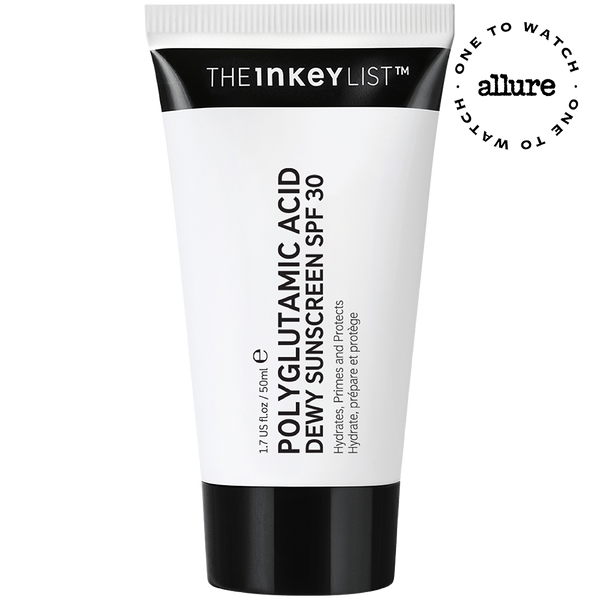
Protect with the Dewy Sunscreen SPF 30 , £15. Broad-spectrum, hydrating, with a dewy finish, oil-free and fragrance-free. 97% said it was invisible on skin tone. Always the final step of your morning.
That last point is worth underlining. SPF goes last in the morning, after your moisturiser and before any makeup. It needs to sit on top, not get diluted underneath, and it is the step most likely to get skipped when you are running late. If you build it in as the fixed endpoint of your morning, it stops being a decision you have to make each day.
For anyone whose winter concern is dullness rather than dryness, there is one optional addition worth knowing about.
An Optional Glow Step
This one is genuinely optional, and we would rather position it that way than pretend everyone needs a sixth step.
If your particular winter complaint is that your skin looks dull and tired through the darker months, rather than dry or irritated, the Exosome Glow Serum , £20, is worth considering as a glow boosting addition to the routine above. Exosomes are tiny messenger vesicles, and we have explained how they work on our dedicated ingredient page rather than going into the detail here.
In testing, 100% saw more glowing skin, clinically proven. It is described as delivering clinic worthy rejuvenated skin in 14 days, and is proven to deliver up to 12-hours of hydration. Separate in-vitro laboratory testing showed a 55% reduction in visible signs of skin stress (redness, puffiness, visible irritation)* and a 63% increase in skin renewal activity in 8 hours*.
Add it after your hydrating serum and before moisturiser. Skip it entirely if dullness is not your concern, and nothing about the five-step routine above is weakened by its absence.
*4-week clinical study of 26 people
**Clinical study of 31 people
*In-vitro testing of Cica Exosomes showed a 55% reduction in pro-inflammatory markers and a 63% increase in markers associated with skin renewal after 8 hours.
The Winter SPF Habit, Summed Up
SPF is a year-round habit because UVA is a year-round presence. That is the whole argument, and everything else in this guide is detail supporting it.
Four things tend to surprise people. UVA does not switch off when the weather turns. Cloud does not block UV in anything like the proportion it blocks warmth and brightness. Ordinary window glass lets a substantial amount of UVA through while stopping UVB almost entirely. And in a car, the side windows let considerably more through than the laminated windscreen does.
We will be honest about proportion, because you should expect that from us. Winter UV in the UK is low. A single January afternoon is not a meaningful risk, and we are not going to pretend it is in order to sell you sunscreen. The case for winter SPF rests on consistency and cumulative exposure across years, not on urgency in any given week. If that argument seems less exciting than a warning, it is also considerably more accurate.
So the practical takeaway is simple enough to act on tomorrow morning. SPF is the last step of your morning routine, every morning, all year. Not a seasonal product. Just the thing you finish with.
If you want somewhere to start, the Dewy Sunscreen SPF 30 is £15, broad-spectrum with a hydrating dewy finish, and 97% said it was invisible on skin tone. Anyone who wants to understand SPF ratings, broad-spectrum labelling and UVA star ratings properly will find the full explanation in our complete SPF guide . And if you would rather have a routine matched to your skin instead of assembling one yourself, you can take our skincare quiz . UK standard delivery is free on orders over £30.
Frequently Asked Questions
Got a question?
Our askINKEY team are a friendly bunch of skincare experts with deep product knowledge and zero judgement. Whether you're an ingredient obsessive or just starting out, we'll make it make sense. No question too big. No question too small. We Give A Care, Every Day.


