



Best Anti-Ageing Skincare Routine: Complete Step-by-Step Guide
A clear, step-by-step anti ageing skincare routine built on proven ingredients. Learn what to use morning and night, and why your eyes and neck need their own care.
Author
askINKEY skincare advisor
Published
10 December, 2025
Time to read
20 minutes
An effective anti ageing skincare routine does not require a bathroom cabinet full of products. It requires a small number of proven ingredients, used in the right order, consistently, over a realistic period of time. That is the whole thing. Most of what makes a routine work is not what you buy, it is whether you still use it in twelve weeks.
This guide covers what is actually happening in skin as it ages, which anti ageing skincare ingredients have genuine evidence behind them, a morning routine focused on protection, an evening routine focused on repair, an advanced booster step for when your basics are established, and the areas most people skip entirely: the eyes, the neck and the décolletage. It closes with the mistakes that quietly stall progress, how to adapt everything to your own skin, and answers to the questions we get asked most. You can build your routine step by step as you read.
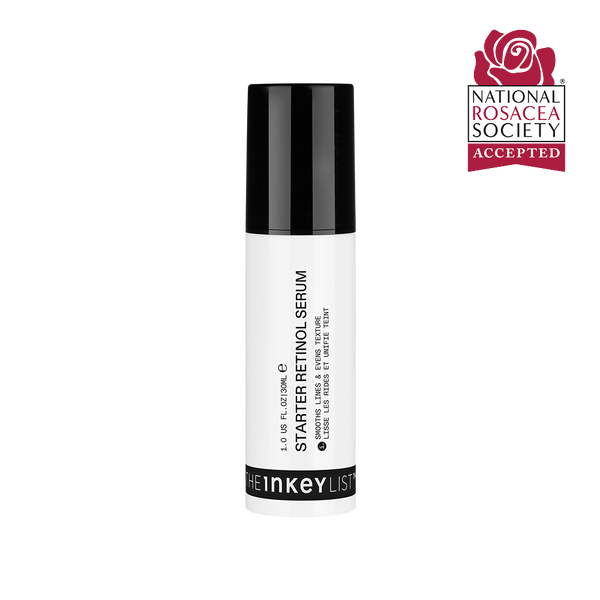
This works whether you are in your twenties and thinking about prevention, or in your forties and targeting lines that are already there. The products differ slightly. The principles do not. If you already know you want to start, Starter Retinol and the 15% Vitamin C + EGF Serum are the two most common entry points into our anti-ageing skincarerange, and we will explain exactly where each one sits in a routine below. First, the science, because understanding what is happening in your skin is what makes every product choice that follows make sense.
Understanding Skin Ageing: The Science Made Simple
Skin ageing is not one process. It is several, running at once, on different timelines, and that is precisely why no single product solves all of it. Once you can see the separate mechanisms, the logic of a routine stops feeling like marketing and starts feeling like maintenance.
Intrinsic and extrinsic ageing, explained plainly
Intrinsic ageing is the biological process that happens regardless of what you do. It is written into your genetics and it begins earlier than most people expect, generally from the mid-twenties. Cell turnover, the rate at which skin sheds old cells and produces new ones, gradually slows. Oil production declines. The skin becomes thinner and more delicate over time. This is normal, universal and not a problem to be solved. It is simply the baseline.
Extrinsic ageing is everything else. Ultraviolet exposure, pollution, smoking, sleep, stress and diet all leave marks on skin over years and decades. The widely accepted position across dermatology is that the large majority of what we recognise as visible skin ageing, the deep lines, the uneven pigmentation, the loss of firmness, comes from these external factors rather than from the passage of time alone.
That distinction is the most empowering thing in this entire article. It means the visible part of ageing is substantially influenced by things within your control. Harvard Health’s guidance on caring for ageing skin makes the point directly: sun protection is one of the single most important steps for slowing skin ageing, because ultraviolet exposure accelerates the breakdown of the proteins that keep skin firm. Lifestyle choices, including protecting skin from the sun and following a consistent routine, genuinely change the trajectory.
Collagen, elastin and what loss of skin firmness actually looks like
Two proteins do most of the structural work in skin. Collagen provides density and support, the scaffolding. Elastinprovides the snap-back, the ability to stretch and return. Harvard Health describes both as breaking down over time, which leads to wrinkles and sagging.
In practice, declining skin firmness shows up in a fairly predictable sequence. First, fine lines appear in the areas that move most, around the eyes and mouth. Then the skin’s surface starts to feel less springy, less immediately responsive. Later, the overall contour softens, particularly along the jawline and neck. Because skin also thins and produces less oil with age, texture changes too. It can feel rougher, drier and less resilient than it used to.
None of this happens overnight, and none of it reverses overnight either. That symmetry matters for your expectations, and we will come back to it repeatedly.
Oxidative stress, free radicals and why antioxidants belong in the morning
Free radicals are unstable molecules generated by UV exposure, pollution and normal metabolism. Harvard Health describes them plainly as unstable molecules that break down skin cells. Over years, that accumulated damage degrades collagen and elastin and contributes to uneven pigmentation.
Antioxidants work by neutralising those unstable molecules before they cause damage. This is why an antioxidant belongs in your morning routine specifically. You are applying protection ahead of the exposure, not trying to repair it afterwards.
How to prevent wrinkles, honestly
If you want the short version of how to prevent wrinkles, it is not complicated and it is not expensive:
- Wear SPF every single day, including in British winter and on overcast days. This is the highest-value habit in skincare, and nothing else comes close.
- Use a daily antioxidant in the morning to reduce free radical damage before it accumulates.
- Support your barrier consistently, because compromised skin ages worse and tolerates active ingredients poorly.
- Do not over-treat. More actives, used more aggressively, is one of the most reliable ways to make skin look worse.
That fourth point catches people out constantly. Irritated, inflamed skin looks older, not younger.
Dehydration lines are not wrinkles
This is worth checking before you buy anything. Dehydration lines and true wrinkles can look similar, particularly in unforgiving bathroom lighting, but they behave completely differently. Dehydration lines are fine, often criss-crossed, and they respond fast, sometimes within days, to proper hydration. True wrinkles are set into the skin’s structure and take months of consistent treatment to soften.
If you are not sure which you are dealing with, our guide to dehydration lines vs wrinkles will help you self-diagnose, and what is dehydrated skin explains the underlying condition. Plenty of people spend money on wrinkle treatments when what their skin actually needed was water and a decent moisturiser.
The barrier connection
Your skin barrier is the outermost layer, the part that holds moisture in and keeps irritants out. When it is compromised, skin loses water faster, looks duller and flatter, reacts to products it previously tolerated, and shows lines more prominently. A weakened barrier makes skin look older than it is, and it makes every active ingredient in your routine harder to use. What is a damaged skin barrier covers the signs and the recovery route in full.
This thread runs through the rest of this guide. Barrier first, actives second. Get that order wrong and you spend months going backwards.
Because skin faces several of these processes simultaneously, there is no single miracle ingredient. There is, however, a short list that has genuine evidence behind it.
The Essential Anti-Ageing Ingredients That Actually Work
You do not need to know everything about formulation chemistry. You do need to know roughly what six ingredients do, who they suit and how long they take, because that knowledge is what protects you from buying things you do not need.
Retinol and retinoids
Retinoids are the most researched over-the-counter option for visible signs of ageing, and Harvard Health names them as one of the most effective options for wrinkles. They work on skin cell turnover, which over time improves texture, tone and the appearance of fine lines.
They also demand patience and a gradual introduction. Starting two or three nights a week and building up slowly is not excessive caution, it is the approach that gets people to the twelve-week mark without abandoning the product because their skin flaked. Expect early changes in texture within six to eight weeks, and changes in fine lines over three to six months of consistent use.
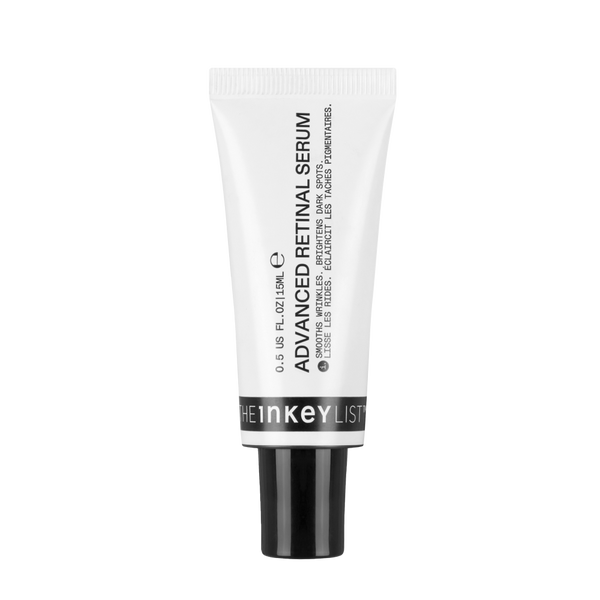
Starter Retinol (£13.00, 30ml) is formulated as an entry point for anyone new to retinoids. Advanced 0.2% Retinal Serum (£18.00, 15ml) is the step up for people whose skin is already comfortable with a retinoid. Retinal and retinol are related but not identical, and rather than compressing that comparison here, our full breakdown of retinol vs retinalcovers the differences properly. If you want the foundational explainer, start with our retinol ingredient guide.
Vitamin C
Vitamin C is your daytime antioxidant. It helps defend against the free radical damage described above, and it supports a brighter, more even-looking tone over time. Harvard Health specifically notes that vitamin C protects skin from free radical damage and helps brighten skin, even out tone and reduce the appearance of dark spots.
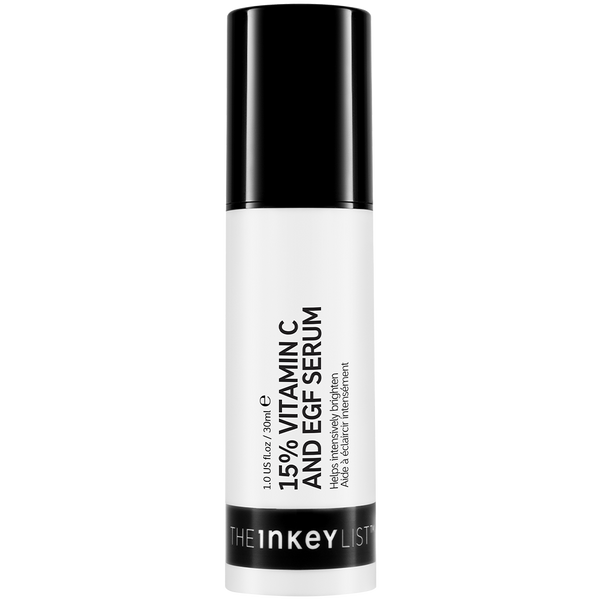
Our 15% Vitamin C + EGF Serum (£16.00, 30ml) uses ascorbyl glucoside, a stable derivative of vitamin C. Stability matters more than people realise. Pure L-ascorbic acid is potent but notoriously unstable and can be irritating, particularly for sensitive skin. A stable derivative is gentler and holds its performance in the bottle, which is what you want in a product you are meant to use every morning for months.
If uneven tone or dark spots are among your main concerns, our guide to what is hyperpigmentation goes deeper on causes and treatment, and what is vitamin C covers the ingredient itself.
Peptides
Peptides are short chains of amino acids, which are the building blocks of proteins like collagen. Think of them as messengers. Applied topically, they signal to skin in ways that support firmness and smoothness over time. Harvard Health notes that peptides work through several different mechanisms, with some supporting collagen and elastin and others blocking the enzymes that break down skin structure.
For peptides for wrinkles, the honest framing is this: peptides are a supporting act, not a headline. They are gentle, they suit almost everyone including sensitive skin, and they work well alongside retinoids rather than competing with them. They will not deliver the dramatic resurfacing a retinoid can, but they are one of the most tolerable ways to work on firmness.
You will find them across our range. Our Bio-Active Ceramide Eye Cream contains a 4% Tetrapeptide Complex, and Matrixyl 3000 appears in other INKEY formulas. Our peptides ingredient guide explains the different types and what each is best at.
Hyaluronic acid
Hyaluronic acid is a humectant, meaning it draws water and holds it in the skin. The immediate effect is plumping: skin looks fuller and fine lines look softer within minutes. This is not a structural change, it is a hydration effect, and it needs to be maintained. That is not a criticism. Hydrated skin genuinely looks better, and comfortable skin tolerates actives far more readily.
One technique note that makes a real difference: apply Hyaluronic Acid Serum to damp skin, then follow with moisturiser to seal it. On completely dry skin in a dry environment, a humectant has less to work with. Our hyaluronic acid ingredient guide explains the mechanism in more detail.
Niacinamide
Niacinamide is the quiet multitasker. A form of vitamin B3, it supports the skin barrier, helps regulate oil production, improves the look of visible pores and contributes to a smoother, more even texture. It is well tolerated by most skin types and it plays nicely with almost everything else in a routine.
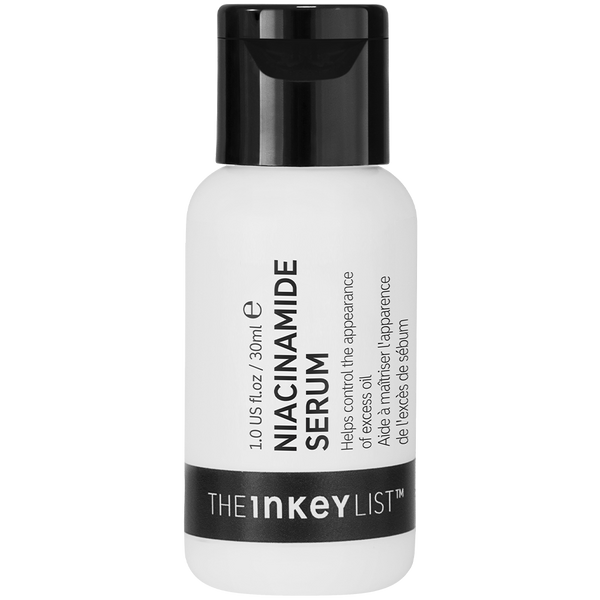
For anyone with combination or oily skin building an anti ageing routine, niacinamide is often the most useful addition after SPF, because it addresses texture and barrier support without adding heaviness. 10% Niacinamide Serum (£12.00, 30ml) is our formulation, and what is niacinamide covers the ingredient in full.
Ceramides
Ceramides are lipids that occur naturally in your skin barrier. They are, quite literally, part of the mortar holding your skin’s outermost cells together. Ceramide levels decline with age, which is one reason mature skin tends to be drier, more reactive and less able to retain moisture.
Replenishing them topically supports a stronger barrier, better hydration retention and, importantly, better tolerance of the active ingredients you want to use. This is why a good ceramide moisturiser is not the boring part of an anti ageing routine, it is the part that makes the rest of the routine possible.
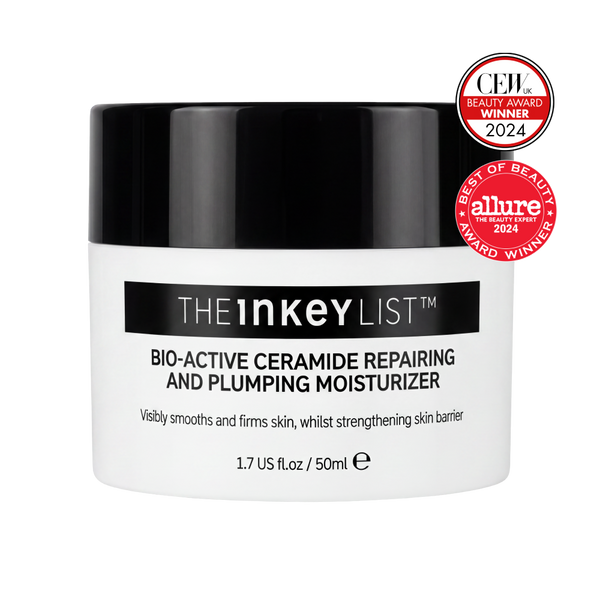
Our Bio-Active Ceramide Moisturiser (£20.00, 50ml) is clinically proven to repair and strengthen the skin barrier from first use, delivers 24-hour hydration for dry and sensitive skin, and provides 4X visible wrinkle reduction. What are ceramides explains the ingredient family, and what is Ceramide NP covers the specific form we use.
How these ingredients work together
The temptation, once you know what six ingredients do, is to buy all six on Friday and use all six on Saturday. Please do not.
Introduce one active at a time, and give each one roughly four to six weeks before adding the next. There are two reasons. First, tolerance: your barrier needs time to adapt, and stacking new actives is the fastest route to irritation. Second, diagnosis: if you introduce three products at once and your skin reacts, you have no idea which one caused it.
Patch testing takes minutes and saves weeks, and our guide on why you need to patch test explains how to do it properly.
Knowing the ingredients is only half the work. The other half is using them at the right time of day, which is where the morning routine comes in.
Your Morning Anti-Ageing Routine: Protection and Prevention
Your morning routine has one job, and it is not treatment. It is protection. You are preparing your skin for a day of UV exposure, pollution, temperature changes and whatever else it encounters, then getting out of the door. Treatment happens at night.
The whole thing takes under ten minutes, including short pauses between layers.
Step 1: Cleanse gently
Morning cleansing should be noticeably gentler than evening cleansing. Overnight, your skin has been producing oil and shedding cells, but it has not accumulated SPF, makeup or a day of city air. It needs refreshing, not stripping.
Oat Cleansing Balm (£15.00, 150ml) works well here because it removes what needs removing without compromising the barrier. The practical cue to look for: afterwards, skin should feel clean and comfortable. If it feels tight or squeaky, that is not a sign of cleanliness, it is a sign you have stripped your barrier and your other products now have to work harder.
Step 2: Hydrate on damp skin
Apply Hyaluronic Acid Serum while your skin is still slightly damp from cleansing. This is the single easiest technique improvement most people can make. A humectant needs available water, and damp skin provides it.
Step 3: Antioxidant protection
This is the step doing the preventative heavy lifting alongside SPF. Apply 15% Vitamin C + EGF Serum (£16.00, 30ml) to help defend against free radical damage through the day and support a brighter, more even tone over time.
Give it a moment to settle before the next layer. You are not timing it with a stopwatch, thirty seconds is fine.
Step 4: Multi-benefit support, optional
If your skin is combination or oily, or if visible pores and texture are among your concerns, 10% Niacinamide Serum(£12.00, 30ml) earns its place here. If your routine already feels full, this is the step to skip. A routine you complete beats a routine you admire.
Step 5: Eye care
Eye cream in the morning is a genuine change from how many people run their routine, and it is deliberate. Bio-Active Ceramide Eye Cream (£15.00, 18ml) is suitable for both AM and PM use, and the eye area benefits from hydration and support during the day just as much as overnight.
Apply after your serums and before moisturiser. Use a pea-sized amount for both eyes, pat gently with your ring finger, and work along the orbital bone rather than right up against the lash line. Our guide on how to apply eye cream the right way covers the technique in more detail, because application genuinely affects results in this area.
Step 6: Moisturise
Bio-Active Ceramide Moisturiser (£20.00, 50ml) seals everything underneath and supports your barrier through the day. Clinically proven to repair and strengthen the skin barrier from first use, with 24-hour hydration for dry and sensitive skin.
Step 7: SPF, the step that matters most
If you take one thing from this entire guide, take this. Daily SPF is the highest-value anti-ageing step in any routine.No serum, no treatment, no booster outperforms it. Harvard Health recommends applying a broad-spectrum sunscreen of at least SPF 30 every morning, including on cloudy days and in winter.
Dewy Sunscreen SPF 30 is formulated to sit comfortably as a final step without a heavy finish. Apply generously, and do not stop at your jawline. Extend it down your neck and across your décolletage every single morning. These areas get comparable sun exposure to your face and receive a fraction of the protection, which is exactly why they often show age first.
If SPF is new territory, what is SPF covers how protection factors work and how much product you actually need.
Your morning order, at a glance
- Oat Cleansing Balm
- Hyaluronic Acid Serum, on damp skin
- 15% Vitamin C + EGF Serum
- 10% Niacinamide Serum, optional
- Bio-Active Ceramide Eye Cream
- Bio-Active Ceramide Moisturiser
- Dewy Sunscreen SPF 30, including neck and décolletage
If you want the full theory behind layering and why order matters, the complete skincare routine guide covers it properly.
Morning is about defence. Evening is when your skin does its repair work, and when the stronger ingredients finally get their turn.
Your Evening Anti-Ageing Routine: Repair and Renewal
Overnight, skin shifts into recovery. There is no UV exposure to defend against, no pollution, no makeup sitting on top of everything. This is when treatment ingredients belong, and it is also the practical reason retinoids are night-time products: they can increase sun sensitivity, so using them in the evening and following with SPF the next morning is simply the sensible sequence.
Step 1: Cleanse thoroughly
Evening cleansing has more work to do. SPF in particular is designed to stay on your skin, which means it needs proper removal rather than a splash of water.
Oat Cleansing Balm (£15.00, 150ml) breaks down SPF, makeup and the day’s accumulation without stripping. On heavy days, full makeup or a generous SPF reapplication, double cleanse: one pass to dissolve everything, a second to actually clean the skin underneath.
Step 2: Hydrate
Hyaluronic Acid Serum on damp skin, as in the morning. Well-hydrated skin tolerates retinoids considerably better, so this step is doing more than it appears to.
One important exception follows in step three.
Step 3: Your treatment step
This is where the routine does its real anti-ageing work, and there are two clear paths.
If you are new to retinoids: start with Starter Retinol (£13.00, 30ml). Begin twice weekly. Stay there for two to three weeks. If your skin is comfortable, move to every other night. Build from there. Most people can reach nightly use eventually, but there is no prize for getting there quickly, and plenty of downside to rushing.
If your skin is already retinoid-adapted: Advanced 0.2% Retinal Serum (£18.00, 15ml) is the step up.
Choosing between them deserves more than a paragraph, so we have written it up separately in retinol vs retinal. Before you start layering, it is also worth reading what not to mix with retinol, because some very common combinations are best kept to alternate nights.
One technique point that prevents a lot of unnecessary irritation: apply retinoids to completely dry skin. Damp skin increases penetration in a way that sounds beneficial and is usually just irritating. Wait a few minutes after cleansing.
Step 4: Non-retinoid nights
On the nights you are not using a retinoid, and in the early weeks that will be most of them, 10% Niacinamide Serum(£12.00, 30ml) is a productive alternative. It supports the barrier and works on texture without adding to your skin’s adjustment load.
Step 5: Eye care
Bio-Active Ceramide Eye Cream (£15.00, 18ml) is your everyday option, morning and night, and for most people it is the right choice full stop. It is free from retinol, which makes it suitable for sensitive eyes and for anyone who is pregnant or breastfeeding.
Retinol Eye Cream is the PM retinoid option, and it is for experienced users only. If you are still building tolerance on your face, the eye area is not where you want to experiment.
Step 6: Seal
Finish with Bio-Active Ceramide Moisturiser (£20.00, 50ml). On retinoid nights this layer is doing meaningful work, supporting the barrier while the active does its job.
The adjustment period, honestly
Nobody enjoys this part, and pretending it does not happen helps no one.
- Mild dryness or light flaking in the first few weeks is common when starting a retinoid. It typically settles.
- If your skin is genuinely irritated, stinging, red, uncomfortable, reduce frequency rather than pushing through. Drop back a step and hold.
- Add hydration rather than removing everything. An extra layer of hyaluronic acid and moisturiser often solves the problem.
- Buffer if you need to. Applying moisturiser before your retinoid reduces intensity while your skin adapts.
- Never apply retinoids to wet skin.
If irritation has already tipped into something more persistent, tightness, stinging on application, sudden reactivity to products you used happily last month, that is barrier damage rather than normal adjustment. What is a damaged skin barrier explains how to recover, and the answer is usually to pause actives entirely for a fortnight and rebuild.
What to realistically expect, and when
- Weeks 1 to 2: hydration and comfort improve. Skin feels better before it looks different.
- Weeks 4 to 6: texture starts to change. Skin feels smoother, makeup sits better.
- Weeks 8 to 12: tone becomes more even, fine lines begin to soften.
- Months 3 to 6: the changes in fine lines and firmness that most people are actually after.
- Beyond 6 months: continued gradual improvement, provided you keep going.
The people who get results are almost never the ones with the most products. They are the ones still doing it in month four.
Your evening order, at a glance
- Oat Cleansing Balm, double cleanse if needed
- Hyaluronic Acid Serum, on damp skin
- Starter Retinol or Advanced 0.2% Retinal Serum, on dry skin
- 10% Niacinamide Serum on non-retinoid nights
- Bio-Active Ceramide Eye Cream, or Retinol Eye Cream for experienced users
- Bio-Active Ceramide Moisturiser
Once these basics have been consistent for six to eight weeks, some people want to add something more. That is where a booster comes in.
Advanced Boosters: Adding an Exosome Serum to Your Routine
Interest in exosomes skincare has grown quickly, and an exosome serum is now one of the most searched-for additions to an advanced routine. It is worth being clear about where this step sits: it is an addition to an established routine, not a replacement for one.
What an exosome serum is for
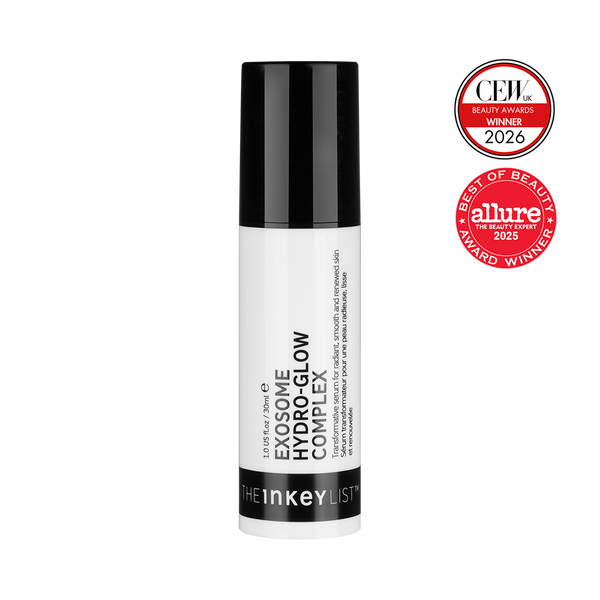
Exosome Glow Serum (£20.00, 30ml) is a glow-boosting, hydrating serum. It suits people whose skin looks tired, dull or dehydrated, and who want visible radiance alongside a core routine that is already working.
The approved clinical results are as follows:
- 100% saw more glowing skin, clinically proven*
- Clinic worthy rejuvenated skin in 14 days*
- 55% reduction in visible signs of skin stress (redness, puffiness, visible irritation)*
- 63% increase in skin renewal activity in 8 hours*
- 6-in-1 skin rejuvenation: clinically proven to visibly improve radiance, hydration, tone, firmness, elasticity, and texture*
- Proven to deliver up to 12-hours of hydration**
- Helps support natural collagen production
If you want to understand what exosomes actually are before adding one to your routine, our ingredient guide covers the background properly, and we would rather you read that than take a product claim at face value.
How to use an exosome serum
- Apply after cleansing, onto damp skin.
- Follow with your moisturiser.
- It works alongside a retinoid routine rather than replacing it. On retinoid nights, apply the Exosome Glow Serum first, then your retinoid on dry skin, then moisturiser.
- Morning use suits anyone chasing radiance under makeup. Evening use suits anyone whose skin looks tired by the end of the day.
If dullness is combined with tightness and fine dehydration lines, it is worth reading what is dehydrated skin first, because dehydration is a condition any skin type can experience, and it responds quickly once addressed.
Realistic expectations
A booster enhances a consistent routine. It does not rescue an inconsistent one. If you are using SPF three times a week and your retinoid whenever you remember, adding a fourth serum will not fix that, and the money is better spent on the basics.
The right time to add a booster is when your core routine has been genuinely consistent for six to eight weeks and your skin is comfortable with it. At that point, a booster has something to build on.
Adjusting through the seasons
British weather makes a real difference to what your skin needs, and adjusting is sensible rather than fussy.
- Summer: lighter textures, potentially skipping heavier layers, and more diligent SPF reapplication.
- Winter: more hydration and more barrier support. Central heating and cold air are a drying combination, and this is when a ceramide moisturiser earns its place most obviously.
- Transitional months: watch how your skin responds and adjust one thing at a time rather than overhauling everything.
*4-week clinical study of 26 people
**Clinical study of 31 people
***In-vitro testing of Cica Exosomes showed a 55% reduction in pro-inflammatory markers and a 63% increase in markers associated with skin renewal after 8 hours.
Even a perfectly executed facial routine misses the areas that often show age first, which brings us to the part of this guide most people need most.
Don’t Stop at Your Jawline: Eyes, Neck and Décolletage
Here is the pattern we see constantly. Someone builds a genuinely good facial routine, sticks with it for months, gets real results, and then wonders why they still look tired. The answer is usually that the routine stops at the jawline, while the eyes, neck and décolletage have been left to fend for themselves.
These areas are not simply extensions of your face. The skin is structurally different, it ages on a different timeline, and it needs products designed for it.
Why the eye area ages first
The skin around your eyes is considerably thinner than the skin on the rest of your face. It has fewer oil glands. And it moves constantly: every blink, squint, smile and frown. Harvard Health notes directly that because the skin around the eyes is thin, it is often one of the first areas to show signs of ageing.
That combination means the eye area shows dehydration, sun exposure and expression lines earlier and more visibly than anywhere else. It is why so many people searching for the best eye cream for fine lines are in their early thirties.
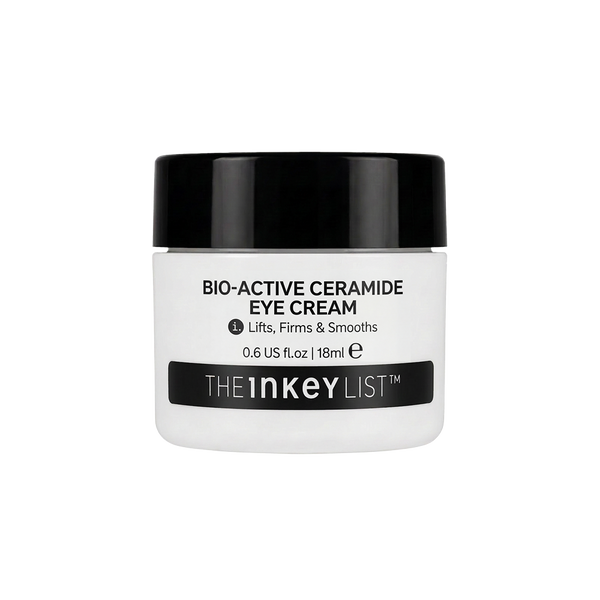
Bio-Active Ceramide Eye Cream (£15.00, 18ml) is our primary recommendation as an eye cream for wrinkles, for AM and PM use. It is suitable for sensitive eyes, dermatologist and ophthalmologist approved, fragrance-free and alcohol-free. It is also free from retinol, which makes it suitable during pregnancy and breastfeeding.
The clinical results:
- Up to 4x wrinkle reduction*
- Clinically proven to lift eyelids by 29% in 4 weeks**
- 89% saw fine lines smoothed and blurred instantly*
- Proven to lift eyelids by 51% in 12 weeks*
- 94% agreed eye area looked visibly firmer and more sculpted** (12 weeks)
The formula combines Bio-Active Ceramide NP with a 4% Tetrapeptide Complex and 0.5% LIFTILIENCE®. The ceramide supports the barrier in an area where the barrier is naturally thinner, and the peptide complex works on firmness and smoothness over time. If you want more on how that ingredient class works, what are peptides covers it.
How to apply it properly:
- Use a pea-sized amount for both eyes. More is not better here, it just migrates.
- Use your ring finger, which applies the least pressure naturally.
- Pat, do not rub or drag.
- Work along the orbital bone, from the inner corner outwards.
- Never apply to the eyelid itself or near the waterline.
- Always follow with SPF in the morning.
Our full guide to how to apply eye cream the right way goes further, and technique genuinely matters in this area.
Be clear about what this product is and is not. Bio-Active Ceramide Eye Cream is a fine lines, firmness and lifting product. It is not a puffiness and dark circles product. Those are different concerns with different causes, including sleep, genetics and fluid retention, and our guide to dark circles and under-eye puffiness explains why.
If puffiness and dark circles are your priority, Caffeine Eye Cream (£12.00) is the targeted option. Harvard Health specifically notes that topical caffeine can help with under-eye puffiness and discolouration. The two can be layered: Caffeine Eye Cream first, Bio-Active Ceramide Eye Cream on top.
Retinol Eye Cream remains the PM retinoid alternative for experienced users who want to push further on lines. It is not a starting point.
*12-week independent clinical study of 30 people, comparing Ceramide NP at 0.2% vs placebo.
**Clinically tested on 32 participants over 28 days.
***Clinically tested on 32 participants over 12 weeks.
****Tested on 32 participants over 12 weeks.
*****Tested on 32 participants.
Neck lines, crepey neck and the tech neck problem
The skin below your jawline is a genuinely different proposition. It is thinner than facial skin, it has fewer oil glands, and it has lower collagen density. It also moves constantly, every time you turn your head, look down or speak.
That is why neck lines, crepey neck texture and visible loss of firmness can appear surprisingly early, sometimes in the twenties, and why the neck often gives away more than the face does.
Then there is tech neck, which is simply the lines and loss of firmness that build from repeatedly looking down at phones and laptops. It is a modern, mechanical problem, caused by a posture most of us hold for hours daily without noticing.
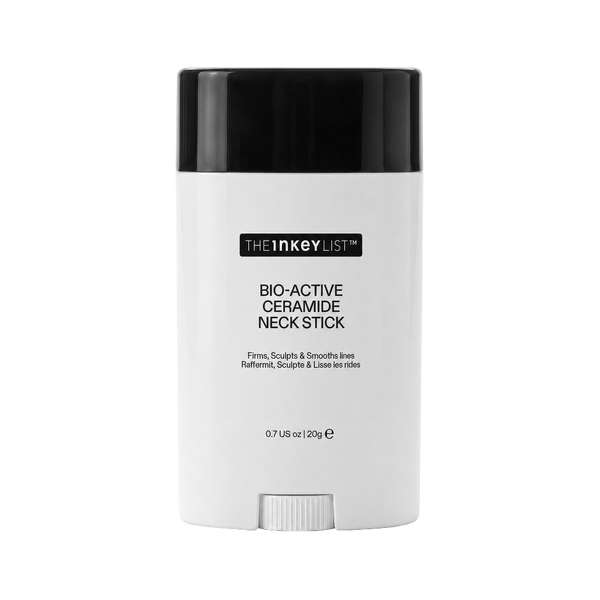
Bio-Active Ceramide Neck Stick (£15.00, 20g) is our neck firming cream in solid stick format, and for many people it is the most practical answer to the question of the best neck cream, because the format makes the habit easy to keep. It is a gua sha-inspired solid stick designed for the neck, jawline and décolletage.
The clinical results:
- Clinically proven to lift, tighten and firm the neck and chest area in only 14 days*
- Clinically proven to reduce tech neck in 8 weeks (by 30%)*
- Clinically proven to improve tightness of the jawline (by 32% in 56 days)*
- Clinically proven to improve the lifted appearance of the neck and jawline (by 26% in 8 weeks)*
Plus the immediate effect: a visibly lifted, smoother neck from the very first glide.
The formula contains 0.2% Bio-Active Ceramide NP, 1% Gatuline® In-Tense MB and 2% CO₂llageneer®. It is suitable for all skin types including sensitive skin, and suitable during pregnancy and breastfeeding.
How to use it: apply AM and PM, after your serums and before your moisturiser. Glide upwards, from the base of the neck towards the jawline, using sculpting motions. Extend across the décolletage. Good decolletage skincare is simply an extension of what you already do for your face, applied with the same consistency.
And the reminder that bears repeating: extend your SPF to your neck and décolletage every morning. Sun exposure is the primary driver of visible ageing in these areas, and they are protected far less often than the face.
*Clinically tested on 28 participants over 8 weeksThe complete Bio-Active routine, face, eyes and neck
The three Bio-Active products are designed to work as a system, each formulated for the skin it is applied to:
- Bio-Active Ceramide Moisturiser (£20.00, 50ml) for the face
- Bio-Active Ceramide Eye Cream (£15.00, 18ml) for the eye contour
- Bio-Active Ceramide Neck Stick (£15.00, 20g) for below the jawline
A ceramide moisturiser works because ceramides are already part of your barrier, so you are replenishing something your skin recognises rather than introducing something foreign. Bio-active ceramides are formulated to be more readily usable by the skin than standard ceramides, which is a meaningful difference in a barrier product. We have written up the detail in bio-active ceramides vs regular ceramides, and what are ceramides covers the fundamentals.
If you want all three together, The Bio-Active Ceramide Trio is £45.00.
Knowing what to add is one half of the picture. Knowing what tends to go wrong is the other.
Common Anti-Ageing Mistakes
Most stalled routines are not stalled because of product choice. They are stalled because of one of the five patterns below.
Mistake 1: Using too many actives at once
Enthusiasm is the most common cause of irritation in skincare. Retinol on Monday, an acid on Tuesday, vitamin C every morning, a new serum because it looked good online, and within three weeks the skin is red, tight and reactive.
Over-treating triggers irritation and compromises the barrier, and compromised skin looks older, not younger. It also stops progress entirely, because you end up pausing everything to recover.
Introduce one active at a time, roughly four to six weeks apart. It feels slow. It is dramatically faster than the alternative of repeatedly starting over.
Mistake 2: Inconsistency
Three products used consistently will beat ten products used sporadically every time. This is not motivational language, it is how the biology works: cell turnover, collagen support and barrier repair all operate on timescales of weeks and months.
Harvard Health’s guidance frames a consistent routine as one of the lifestyle factors that genuinely influences how skin ages. Give any routine at least twelve weeks before judging it, and build one you can realistically maintain on a bad Tuesday rather than an idealised Sunday.
Mistake 3: Wrong order and technique
Order affects outcomes. A few reliable rules:
- Thinnest to thickest. Watery serums first, creams and oils last.
- Hyaluronic acid on damp skin. It needs water to hold.
- Retinoids on dry skin. Damp skin increases irritation without improving results.
- Use appropriate amounts. Too little SPF is the most common and most costly version of this error.
Some ingredient combinations are better separated across different times of day, and our guide to skincare ingredients you should not mix covers which. For the full theory, the complete skincare routine guide is the place to go.
Mistake 4: Stopping at the jawline
Your face ends at your jawline. Your visible skin does not.
Using facial products on the neck is better than nothing, but it is not the right answer, because the skin below the jawline is thinner, has fewer oil glands and lower collagen density. It needs products formulated for it.
- For the neck, jawline and décolletage: Bio-Active Ceramide Neck Stick (£15.00), AM and PM.
- For the eye contour: Bio-Active Ceramide Eye Cream (£15.00), AM and PM.
- And extend your SPF to your neck and décolletage every morning, without exception.
Mistake 5: Expecting overnight results
Anti-ageing skincare works, but it works on skin’s timeline, not yours. Here is the honest sequence:
- Weeks 1 to 2: improved hydration and comfort.
- Weeks 4 to 6: smoother texture, better makeup application.
- Weeks 8 to 12: more even tone, fine lines beginning to soften.
- Months 3 to 6: visible improvement in fine lines and firmness.
- Ongoing: continued gradual change with continued use.
The routines that fail are usually abandoned at week four, which is precisely the point where things are starting to work but not yet visible.
Personalising your routine
There is no universal routine, and anyone claiming otherwise is selling something.
By skin type:
- Oily and combination skin does well leaning on niacinamide and lighter textures. You still need moisturiser, and skipping it typically increases oil production rather than reducing it.
- Dry and sensitive skin should lead with ceramides, introduce retinoids more slowly, and add hydration layers generously. Buffering a retinoid with moisturiser underneath is a legitimate long-term approach, not a compromise.
- Normal and balanced skin has the most flexibility, which makes it easier to accidentally over-treat.
By life stage:
- Twenties and thirties: weight the routine towards prevention. Daily SPF, a daily antioxidant, a gentle retinoid, consistent barrier support. This is the highest-return period in skincare and the least appreciated.
- Forties and beyond: weight towards correction plus continued prevention. A stronger retinoid if tolerated, dedicated ceramide support as natural levels decline, and targeted eye and neck care.
If you have sensitive skin, an anti-ageing routine is absolutely possible. It simply moves more slowly and leads with barrier support. Establish a strong, comfortable barrier first, then introduce actives at half the pace you think you need. Patch test everything, and read why you need to patch test before you start. Sensitive skin is not a barrier to results, it just changes the sequencing. If you have already tipped into reactivity, what is a damaged skin barrier is the recovery route.
Building your routine on a budget
You do not need everything at once. The most useful way to think about this is by job to be done, adding as your routine and your budget allow.
Start here. A gentle cleanser, one treatment serum, one moisturiser. For example, Oat Cleansing Balm at £15.00, Starter Retinol at £13.00 and Bio-Active Ceramide Moisturiser at £20.00, which comes to £48.00 for a complete, functional anti ageing routine.
Build on. Add daytime protection: 15% Vitamin C + EGF Serum at £16.00 and Dewy Sunscreen SPF 30. If your budget only stretches to one of these, choose the SPF.
Target specifics. Add Bio-Active Ceramide Eye Cream at £15.00 and Bio-Active Ceramide Neck Stick at £15.00 once your core routine is established.
There is free UK standard delivery on orders over £30..
Conclusion
An effective anti ageing skincare routine is not built on the number of products in your cabinet. It is built on a small set of proven ingredients, applied consistently, over a period long enough for skin to actually respond.
The arc is straightforward. Understand how skin ages, so your choices are informed rather than reactive. Choose ingredients with real evidence behind them: retinoids, vitamin C, peptides, hyaluronic acid, niacinamide and ceramides. Protect in the morning with antioxidants and SPF. Repair at night with your treatment step. And do not stop at your jawline, because the eyes, neck and décolletage frequently show age first and are the most commonly neglected areas in anti ageing skincare.
The genuinely encouraging part is how much of visible ageing is influenced by factors within your control. Daily SPF and consistency are not the exciting steps, but they are the highest-value habits available to you, and they cost less than almost anything else you could add.
Hold your expectations steady. Comfort and hydration arrive first, texture follows, and fine lines and firmness change over months rather than weeks. Nobody should abandon a working routine at week four. If you can keep three products going for twelve weeks, you will be ahead of most people who own twelve.
Clear guidance, proven ingredients, real results. That is what we are here for, and you can find everything mentioned in this guide in our anti-ageing skincare range.
Where to Start, Depending on Where You Are
If you are new to anti-ageing skincare, keep it to three products: Starter Retinol at £13.00, Hyaluronic Acid Serumand Bio-Active Ceramide Moisturiser at £20.00. Or take the ready-made route with the Intro Routine for Anti-Ageingat £42.70.
If you are ready to go further and your skin is already comfortable with a retinoid, look at Advanced 0.2% Retinal Serum at £18.00, 15% Vitamin C + EGF Serum at £16.00 and Exosome Glow Serum at £20.00.
If you are targeting eyes and neck, The Bio-Active Ceramide Trio at £45.00 covers face, eyes and neck in one go.
There is free UK standard delivery on orders over £30.
Not sure which route is yours? Take the skincare quiz for a personalised recommendation, or ask us directly through askINKEY if you have a question about your routine or a specific ingredient. No question is too basic, and we would always rather you asked before you bought.
Because at The INKEY List, we give a care.
Frequently Asked Questions
Got a question?
Our askINKEY team are a friendly bunch of skincare experts with deep product knowledge and zero judgement. Whether you're an ingredient obsessive or just starting out, we'll make it make sense. No question too big. No question too small. We Give A Care, Every Day.


