



PDRN vs Retinol: Two Approaches to Skin Regeneration
PDRN gives you glow and barrier repair in days, retinol delivers deep anti-ageing over months - here's how to choose, or use both.
Author
askINKEY skincare advisor
Published
16 January, 2026
Time to read
6 minutes
Two ingredients dominate the conversation around skin renewal, and they work in completely different ways. Retinol is the long-established anti-ageing standard. PDRN is the newer arrival that's moved from clinics into everyday routines.
They're often framed as rivals. They aren't. Understanding what each actually does makes it much easier to work out which you need — or whether the answer is both.
What is PDRN? The regenerative newcomer
Polydeoxyribonucleotide, or PDRN, is a biomolecule made of DNA fragments typically 50–2,000 base pairs long. It began in medicine, in wound healing and tissue regeneration, before moving into skincare.
According to research published in Molecules, PDRN works as an agonist of the adenosine A2A receptor. Binding to that receptor triggers phosphorylation of focal adhesion kinase (FAK), AKT and MAPK — a signalling cascade that increases proliferation of keratinocytes and fibroblasts, and raises expression of fibronectin, filaggrin, Ki-67, Bcl-2, inhibin beta A and Cyclin D1.
In plain terms: PDRN doesn't force your skin to change. It speaks to your cells in their own language and asks them to repair.
That filaggrin increase is why PDRN helps a damaged skin barrier — filaggrin is central to retaining moisture and keeping irritants out.
What PDRN does: supports natural repair · strengthens the barrier · boosts hydration and radiance · calms visible redness · gentle enough for twice-daily use with no adjustment period.
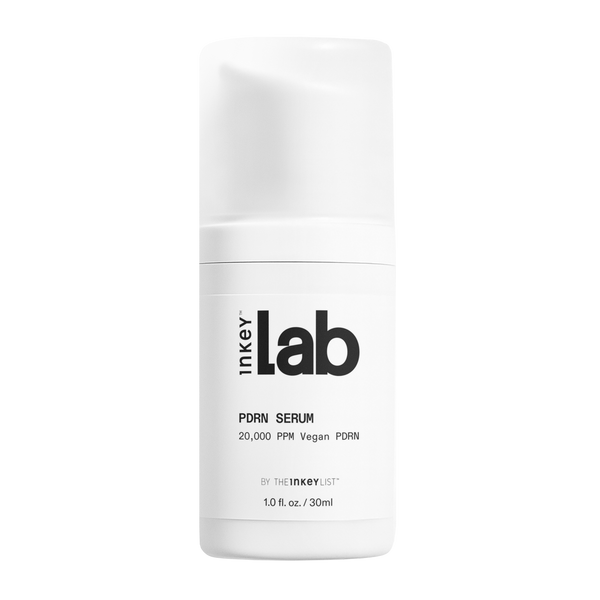
You may have seen PDRN called "salmon sperm serum" — PDRN was originally isolated from salmon DNA and the nickname stuck. Our PDRN Serum uses a vegan, plant-derived form instead, delivering the same cellular signalling without animal-derived ingredients.
What is retinol? The gold standard
Retinol is a vitamin A derivative and the most rigorously researched ingredient in dermatology, dating to the 1970s when researchers found vitamin A normalised cell turnover and stimulated collagen.
Applied to skin, retinol converts twice — first to retinaldehyde, then to retinoic acid, the form cells actually use. Retinoic acid binds nuclear receptors (RARs and RXRs), influencing gene expression: faster turnover, more collagen, better texture, more even pigment. The two-step conversion is exactly why results build gradually.
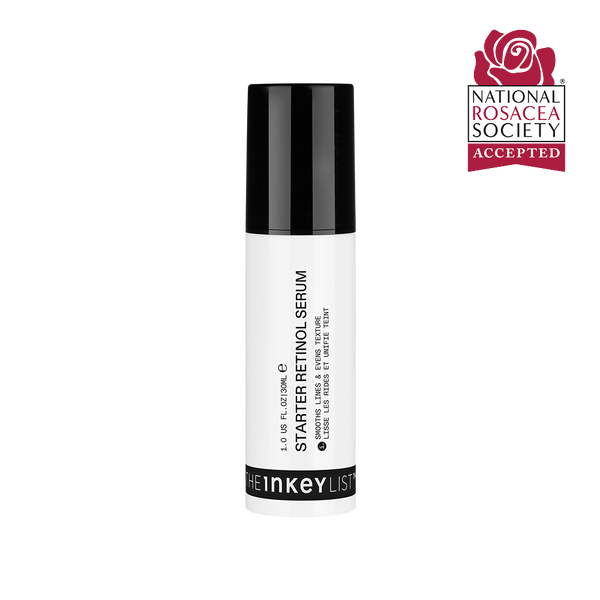
Starter Retinol Serum — £13, 30ml. A slow-release Dual-Retinoid complex: 1% Granactive Pro+ and 0.01% Retinal, plus 0.5% Amisol Trio and 0.2% SymRelief® to keep the barrier comfortable. Clinically proven to smooth fine lines from 7 days without irritation.* Suitable for sensitive and rosacea-prone skin.
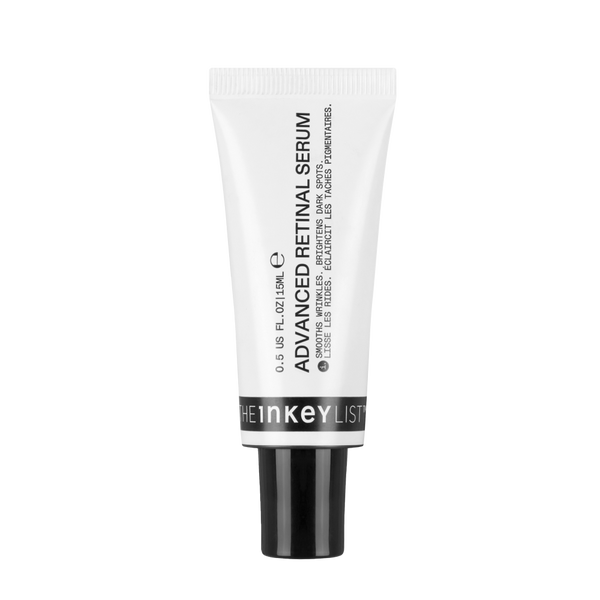
Advanced 0.2% Retinal Serum — £18, 15ml. Retinal sits one conversion step from retinoic acid, so it works up to 11x faster than retinol,*** with visible results in one week.* For those already confident with retinoids. Full comparison in retinol vs retinal, and which retinol product is right for you.
Retinol also regulates oil production and exfoliates, which is why it helps hyperpigmentation, blemish scars and excess oil.
The core difference
Retinol changes how quickly your skin renews. PDRN supports your skin's ability to repair.
Retinol is a directive — it tells skin to speed up, and that instruction can bring irritation, dryness or flaking during retinisation. PDRN is supportive: it reinforces what your skin already does, which is why it rarely provokes a reaction. That's also precisely why they pair well.
Timeline. PDRN shows up fast — radiance and hydration within days. Retinol asks for patience: 7 days for the first smoothing,* significant improvement by 4 weeks,*** optimal at 12 weeks.***
Tolerance. PDRN: no adjustment period, twice daily from day one. Retinol: redness, peeling around nose, mouth and eyes, dryness, sun sensitivity — temporary, but real. New to it? Start with retinol for beginners, and if you break out, the retinol purge explains what's happening.
Which one do you need?
PDRN if: your barrier is compromised, your skin is reactive, you're dealing with dullness and dehydration, you're pregnant or breastfeeding, or you want visible improvement quickly. Genuinely suitable for rosacea and eczema-prone skin.
Retinol if: your priority is fine lines, wrinkles, hyperpigmentation, texture or breakouts — and your barrier is healthy enough.
Both if: you want retinol's long-term results with PDRN supporting your barrier along the way. For most people this is the strongest routine — PDRN's barrier support can make retinol easier to tolerate.
How to use them together
Morning — cleanse, PDRN Serum, moisturiser, SPF. Non-negotiable: retinoids increase sun sensitivity.
Evening — cleanse, hydrator, retinol (pea-sized, face and neck), moisturiser.
Sensitive? Alternate: retinol every third night, PDRN in between. Or try the moisture sandwich — thin layer of moisturiser, then retinol, then moisturiser again. It slightly reduces potency and substantially reduces irritation.
Bio-Active Ceramide Moisturiser (£20) is the barrier partner we recommend alongside retinol. For the eye area, Retinol Eye Cream (£13) is formulated for thinner skin.
Layering. PDRN is compatible with niacinamide, vitamin C and acids. Retinol is fussier — avoid exfoliating acids and other retinoids the same night. See what not to mix with retinol, hyaluronic acid and retinol, glycolic acid with retinoland ingredients you shouldn't mix. Always patch test.
How often should you use retinol alongside PDRN?
Every third night to start. After 2–4 weeks, if comfortable, every other night. Some people reach nightly; plenty never do and still get excellent results. Slower is better — irritation costs you more time than a cautious start.
PDRN is different: twice daily from day one, no ramp-up.
Pregnancy
Retinol and other vitamin A derivatives are avoided during pregnancy and breastfeeding — we advise not using any retinol, retinal or vitamin A product without consulting your doctor first. PDRN is generally considered suitable, which is why it's become a popular alternative. Always check with your doctor or midwife.
Building the rest of the routine
If you're constructing an anti-ageing routine around these two, the best anti-ageing skincare routine covers the full sequence.
The verdict
One only: PDRN for repair, hydration and sensitivity. Retinol for lines, texture and pigmentation.
Best results: both. PDRN morning, retinol night, SPF every day.
* 4-week clinical study, 30 participants. ** 4-week in vitro study. *** 12-week consumer study, 130 participants.
Frequently Asked Questions
Got a question?
Our askINKEY team are a friendly bunch of skincare experts with deep product knowledge and zero judgement. Whether you're an ingredient obsessive or just starting out, we'll make it make sense. No question too big. No question too small. We Give A Care, Every Day.


