



Is Bakuchiol Good for Menopausal Skin? What to Use Instead
Bakuchiol is gentle and genuinely effective — but for menopausal skin losing collagen fast, here's what the clinical evidence says really works best.
Author
askINKEY skincare advisor
Published
17 June, 2026
Time to read
13 minutes
Bakuchiol has spent the last few years building a reputation as the “gentle retinol alternative” - the plant-derived ingredient that promises anti-ageing results without the redness, flaking or stinging that retinoids can bring. For skin going through menopause, where tolerance for irritation often drops just as collagen and oestrogen are declining fast, that pitch is understandably appealing.
But does the evidence actually support bakuchiol as a serious solution for menopausal skin specifically, or is it simply a well-tolerated ingredient being stretched to cover a job it was never clinically built for? This article is here to answer that plainly. We’ll walk through what menopause actually does to skin, what bakuchiol can and cannot do in response, and which INKEY alternatives the clinical evidence supports for faster, more targeted results. No hype, no fear tactics - just what the data says about is bakuchiol good for menopausal skin, and what to use instead if it isn’t enough on its own.
Before we can fairly judge any ingredient, we need to understand the biological problem it’s being asked to solve. So let’s start there: what is actually happening to your skin during menopause, and why does it change the rules for what your routine needs to do?
What Happens to Your Skin During Menopause?
Menopause is, biologically speaking, an oestrogen story. Oestrogen receptors are present throughout the skin, and when oestrogen production drops sharply around menopause, the skin feels it almost immediately. This is the mechanism behind what is menopausal skin in practical terms: skin that has lost a significant hormonal input that previously kept it thick, hydrated, elastic and resilient, and is now adjusting - often abruptly - to functioning without it.
The headline change is collagen loss, and the scale of it is worth sitting with. Research reviewed in a 2022 clinical analysis published in Climacteric found that postmenopausal women lose collagen at a rate of around 2.1% per year, alongside a 1.1% annual reduction in skin thickness. Other estimates are more dramatic still: some studies suggest that as much as 30% of the skin’s total collagen can be lost within the first five years after menopause, a figure echoed in a 2025 narrative review of menopausal skin changes. Compare that with the roughly 1% annual collagen decline associated with ordinary chronological ageing in your twenties and thirties, and the scale of what menopausal skin is contending with becomes clear. This isn’t gradual ageing on the usual timeline - it’s an acceleration, and it’s why generic “anti-ageing” advice often falls short for this specific life stage.
Collagen loss alone would be enough to explain thinner, less bouncy-looking skin, but oestrogen decline triggers a cascade of other changes too. Sebum production slows, which means less natural oil to keep the skin’s barrier supple. Hyaluronic acid synthesis drops, reducing the skin’s capacity to hold onto water. Cell turnover - the rate at which your skin sheds old cells and produces new ones - also slows with age, meaning dull, rough texture can build up more visibly than it once did. Put together, these changes explain why so many women ask does menopause cause dry skin, and the honest answer is yes, very commonly. Reduced oil production combined with a compromised moisture barrier is a near-inevitable pairing during this transition, which is why is dry skin a sign of menopause is one of the most searched questions on the topic - and a fair one to ask.
Dryness is rarely the only complaint, either. A weakened barrier doesn’t just let moisture out - it also lets irritants and environmental aggressors in more easily, which is why many women notice their skin becoming reactive seemingly out of nowhere during this period. This is the direct answer to can menopause cause itchy skin: yes, because a thinner, drier, less lipid-rich barrier is structurally less able to protect nerve endings and maintain comfortable hydration, often resulting in that persistent, hard-to-soothe itchiness known clinically as pruritus. If your skin has started reacting to products it previously tolerated without issue, that is a textbook sign the barrier itself has changed, not that your skin has become “difficult” for no reason.
Taken together, this is what menopausal skin actually is: skin undergoing a rapid, hormonally driven loss of structural collagen, natural oils and water-retention capacity, resulting in a barrier that is simultaneously drier, thinner, slower to renew and more easily irritated. It is a distinct physiological state, not simply “getting older skin,” which is exactly why ingredient choice matters so much here. A product that works beautifully for standard chronological ageing may not move the needle quickly enough for skin losing ground at this accelerated rate. For a deeper dive into the full hormonal mechanism at play, our guide on menopause and your skin covers it in more depth, and it’s worth noting that for many women, these shifts don’t begin the day periods stop - our piece on perimenopause and your skin explains why the groundwork is often laid years earlier.
It’s also worth separating two terms that often get used interchangeably but aren’t quite the same thing. If your skin feels tight, flaky or rough to the touch, you may be dealing with simple dryness - a lack of oil - which you can read more about on our dry skin page. If your skin instead feels uncomfortable, dull and “thirsty” despite feeling smooth, that’s more likely dehydration - a lack of water - and the two often occur together during menopause, which is partly why routines need to address both oil and water retention simultaneously. And if what you’re noticing is more about reactivity, stinging or that persistent itch, our sensitive skin page breaks down what’s driving that and how to calm it without over-stripping an already compromised barrier. For a fuller picture of how mature skin behaves structurally once these changes set in, our mature skin page is a useful companion resource.
Understanding this biology is essential context, because it’s precisely why an ingredient like bakuchiol has become such a popular talking point for menopausal skin in the first place. If your barrier is thinner and more reactive, “gentle” sounds like exactly what you need. Let’s look at why that appeal makes genuine sense - before we examine whether it holds up against the scale of what menopausal skin is actually losing.
Why Bakuchiol Appeals to Menopausal Skin (and When It Makes Sense)
Bakuchiol’s popularity didn’t happen by accident, and it would be dishonest to pretend otherwise. It is a plant-derived compound, extracted from the seeds of the Psoralea corylifolia plant, that has been shown to interact with some of the same skin pathways as retinoids - encouraging smoother texture and more even tone - without triggering the same degree of irritation. For skin that has become more reactive, as menopausal skin so often does, that tolerability profile is a genuinely attractive proposition, not a marketing gimmick.
The clinical appeal centres on one key finding. In a widely cited 2019 study published in the British Journal of Dermatology, researchers compared bakuchiol directly against retinol over a 12-week period and found that both ingredients produced statistically similar improvements in photoageing - including reductions in fine lines, wrinkles and hyperpigmentation - but bakuchiol was associated with significantly less scaling and stinging than retinol. That tolerability difference is precisely why dermatologists began recommending it for anyone whose skin struggles with traditional retinoids, and menopausal skin, with its thinner and more barrier-compromised state, fits that description for many women.
This matters because menopausal skin genuinely has a reduced margin for irritation compared with skin earlier in life. When the barrier itself is weaker - producing less natural oil, holding less water, and renewing more slowly - introducing a highly active ingredient that causes visible redness, peeling or sensitivity can do more harm than good in the short term, even if the long-term anti-ageing payoff would eventually be worthwhile. Bakuchiol sidesteps much of that initial adjustment period. It doesn’t require the same “purging” or retinisation phase that retinoids are known for, which makes it a sensible, low-risk entry point for someone who has never used an active ingredient before, or whose skin has become newly reactive during the menopausal transition. You can find the full ingredient profile on our bakuchiol page, including how it’s formulated to maximise tolerability for exactly this kind of reactive, thinning skin.
There’s also a practical, real-world reason bakuchiol resonates with this audience beyond the clinical data: timing and routine compatibility. Retinoids are typically recommended for evening use only, require gradual introduction, and come with sun sensitivity warnings that necessitate strict SPF discipline the following morning. Bakuchiol has more flexibility - some formulations are stable enough for daytime use - which appeals to anyone managing an already complex routine alongside other menopausal symptoms like hot flushes, sleep disruption or mood changes that can make rigid skincare regimens feel like one more thing to manage. When your bandwidth for complexity is lower, “gentle and flexible” has real value, independent of raw efficacy.
It’s also fair to acknowledge that bakuchiol isn’t just “retinol-lite” with nothing else going for it. As a naturally derived antioxidant compound, it brings additional benefits beyond its retinoid-like activity, including some protective action against environmental stressors that can compound the visible effects of oestrogen decline. For someone newly navigating an unfamiliar set of skin changes, an ingredient that offers a broad, low-risk starting point while they figure out what their skin needs next is not an unreasonable choice - and for perimenopausal or early menopausal skin that is only just beginning to show sensitivity, bakuchiol may genuinely be sufficient for a period of time.
So the appeal is real, and it is evidence-based. Bakuchiol is not snake oil, and it is not undeserving of its reputation as a legitimately effective, well-tolerated active. Where the conversation needs to get more nuanced is in understanding exactly what “comparable to retinol” means in the original research, what populations that research was actually tested on, and whether those findings translate cleanly to skin that is losing collagen at the accelerated rate menopause demands. That’s the conversation worth having honestly, and it’s the one we turn to next.
What the Science Actually Says About Bakuchiol for Menopausal Skin
Here is where we need to slow down and look carefully at what the clinical evidence actually demonstrates, rather than what marketing shorthand has implied. The foundational study behind bakuchiol’s “as good as retinol” reputation is the same 2019 trial referenced above, and it’s worth examining its specifics rather than its headline.
In that study, 44 participants with signs of photoageing used either 0.5% bakuchiol cream twice daily or 0.5% retinol cream once daily (gradually increasing to twice daily) over 12 weeks. The published results showed that both groups experienced statistically significant and broadly comparable improvements in wrinkle surface area and hyperpigmentation, with no statistically significant difference between the two groups in overall efficacy. Critically, however, participants using retinol reported significantly more facial skin scaling and stinging than those using bakuchiol - the tolerability difference, not necessarily an efficacy advantage, is the headline that study actually supports.
This distinction matters enormously for how we interpret bakuchiol’s suitability for menopausal skin specifically. The study population was not selected for menopausal status, hormone levels, or the specific collagen depletion rate associated with oestrogen decline - it was a general photoageing cohort. Retinoids work primarily by binding to retinoic acid receptors in skin cells, directly accelerating cell turnover and stimulating fibroblast activity to produce new collagen at a cellular level - a well-documented, receptor-specific mechanism with decades of research behind it. Bakuchiol’s mechanism of action is less precisely mapped; while it appears to influence some of the same downstream gene expression pathways as retinoids, it does not bind to retinoic acid receptors in the same direct way, and researchers are still working to fully characterise exactly how its effects are produced at a molecular level.
What this means practically is that bakuchiol’s documented benefits - improved texture, reduced fine lines, more even tone, better tolerability - are real and supported by legitimate clinical data. But the specific claim that it matches retinol’s collagen-stimulating capacity, at the rate menopausal skin requires given the accelerated loss outlined earlier, is not something the existing evidence base actually proves. One well-designed 12-week study on general photoageing, however well-conducted, is a different proposition from decades of peer-reviewed research across multiple retinoid formulations, used therapeutically to treat structural collagen loss in diverse populations including postmenopausal women specifically.
This is the honest, evidence-first distinction we think matters: bakuchiol is a genuinely effective, well-tolerated ingredient for general signs of ageing and for those who cannot tolerate retinoids - but it has not been clinically proven to match retinoids on the specific metric that matters most for menopausal skin, which is the rate and reliability of collagen stimulation against an accelerated loss of around 2% per year. “Comparable in a 12-week general study” and “sufficient for skin losing collagen at menopausal speed” are not necessarily the same claim, even though they’re often conflated in marketing language. For a full side-by-side breakdown of how these two ingredients actually compare, mechanism by mechanism, our detailed guide on retinol vs bakuchiol walks through the complete picture.
None of this is a criticism of bakuchiol as an ingredient - it’s a criticism of asking any single ingredient to do a job it wasn’t specifically tested for. The evidence shows bakuchiol works. It does not yet show that it works fast enough or strongly enough for the specific demands of menopausal skin on its own. That distinction is the whole reason this article exists, and it’s the point at which we need to be transparent about where the current evidence base runs out.
The Limitations of Bakuchiol for Menopausal Skin
Let’s be direct about where bakuchiol’s evidence gaps show up in practice, because “gentle” does not automatically mean “sufficient,” and menopausal skin deserves a routine built around what it actually needs, not around which ingredient feels the least intimidating.
The first limitation is speed. Retinoids have a well-established, dose-dependent relationship with results: higher concentrations and more consistent use produce faster, more pronounced improvements in collagen density and texture, because the receptor-binding mechanism driving those results is well understood and reliably reproducible. Bakuchiol’s results in available studies have generally taken a comparable 12-week timeframe to become visible, but because its mechanism is less precisely characterised and typically used at lower, less standardised concentrations across different product formulations, results can be slower and less predictable from one bakuchiol product to the next. For skin that is losing roughly 2% of its collagen every single year, a slower or less predictable rate of improvement isn’t a minor inconvenience - it’s a meaningful gap between what the skin is losing and what the product is realistically replacing.
The second limitation is the sheer volume and depth of the evidence base. Retinoids have been studied in dermatology for well over fifty years, across thousands of participants, multiple concentrations, and specific populations including postmenopausal women experiencing accelerated collagen decline. Bakuchiol’s clinical research, while growing, remains comparatively limited - the 2019 Dhaliwal study remains one of the most frequently cited head-to-head comparisons, and while more recent reviews such as a 2024 comprehensive review of topical bakuchiol have expanded the picture, the body of high-quality, large-scale human trials still falls meaningfully short of what exists for retinoids. Fewer large-scale, long-term human trials means less certainty about optimal concentration, frequency and expected outcomes specifically for menopausal skin - and less certainty is not something we think skin losing collagen this quickly can afford to work around.
The third limitation concerns the breadth of concerns menopausal skin typically presents with. Collagen loss and fine lines are rarely the only complaint. Many women navigating menopause also deal with uneven tone, sun damage accumulated over decades, and new patches of hyperpigmentation that can become more stubborn as cell turnover slows. While bakuchiol has shown some benefit for pigmentation in the original comparative study, retinoids remain the more extensively validated option for treating diverse and stubborn pigmentation concerns at depth, with a far larger evidence base specifically targeting tone correction. If pigmentation is a significant part of what you’re trying to address, leaning solely on bakuchiol may leave that particular concern under-treated.
There’s also a structural limitation worth naming plainly: bakuchiol alone does not address the full picture of what menopausal skin is losing. Collagen stimulation is only one piece of the puzzle - menopausal skin is also losing elasticity-supporting proteins and signalling molecules that help maintain firmness and bounce. This is where peptidesoften come into the conversation as a complementary category, since they work through a different mechanism - supplying the skin with specific amino acid chains that signal fibroblasts to produce more collagen and elastin - and can meaningfully round out a routine that bakuchiol alone cannot fully cover.
None of this means bakuchiol has no place in a menopausal skincare routine. It means that for skin losing structural integrity at this rate, “gentle” needs to be paired with “sufficiently potent,” and right now, the evidence suggests bakuchiol alone doesn’t consistently clear that bar as reliably or as quickly as retinoid-based alternatives can. The honest, non-alarmist takeaway is simple: bakuchiol is a reasonable starting point or a useful complement, but for many menopausal skin concerns, it shouldn’t be asked to do the whole job by itself. With that evidence gap identified, the natural next question becomes practical - if bakuchiol alone isn’t quite enough, what exactly should you be looking for instead?
What to Look for in a Serum for Menopausal Skin
Rather than simply pointing you toward products, it’s worth equipping you with the criteria to evaluate any serum for yourself - because understanding why an ingredient is included matters more long-term than memorising a single recommendation.
The first non-negotiable is proven activity. Look for actives with a substantial, peer-reviewed evidence base specifically tied to collagen stimulation and cell turnover - retinoids remain the most extensively researched category here, with decades of data behind their ability to meaningfully improve fine lines, texture and firmness at a cellular level. If an ingredient’s efficacy claims rest on a single small study or anecdotal enthusiasm rather than a substantial research base, treat that as a yellow flag rather than a deal-breaker, but factor it into how much you rely on that ingredient alone.
The second criterion is barrier support. Given everything we’ve established about menopausal skin’s weakened barrier function - reduced oil production, lower water retention, slower renewal - any serum or routine needs ingredients that actively replenish and reinforce that barrier alongside anything more “active” or potentially irritating. This is where ceramides become essential rather than optional. Ceramides are lipid molecules that occur naturally in skin and make up a significant portion of its protective barrier; replenishing them topically helps lock in moisture and shield against the external irritants that a thinning barrier otherwise struggles to keep out. For menopausal skin specifically, barrier support isn’t a “nice to have” add-on - it’s foundational to making any active ingredient tolerable in the first place.
The third criterion is genuine hydration, addressed from more than one angle. As established earlier, menopausal skin often deals with both dryness (lack of oil) and dehydration (lack of water) simultaneously, so an effective routine needs humectants to draw in moisture alongside emollients and occlusives to seal it in. This dual approach matters more here than almost any other life stage, because the skin’s own machinery for producing and retaining both oil and water has slowed considerably.
The fourth criterion is tolerability calibrated to a thinner, more reactive barrier. This doesn’t mean avoiding potent actives altogether - as the evidence shows, this is precisely the skin state that benefits most from proven actives - but it does mean prioritising formulations and concentrations designed for gradual introduction, buffering with barrier-supportive ingredients, and avoiding unnecessary irritants like high concentrations of fragrance or alcohol that offer no functional benefit and simply add risk to already-compromised skin.
A fifth, frequently overlooked criterion is elasticity and firmness support beyond collagen stimulation alone. As mentioned previously, peptides can play a valuable complementary role here, working through signalling mechanisms distinct from retinoids to support the skin’s structural proteins from another angle.
And finally - a criterion so fundamental it’s easy to forget amid a conversation about active ingredients - sun protection is completely non-negotiable. Menopausal skin, already contending with slower repair mechanisms and reduced collagen reserves, is more vulnerable to UV-induced damage than it once was, and any retinoid or active-ingredient routine specifically increases photosensitivity, making consistent SPF use each morning an essential, not optional, companion step.
To summarise these criteria clearly, an effective serum or routine for menopausal skin should include:
- A clinically substantiated active ingredient, with a strong, reproducible evidence base for collagen stimulation
- Ceramides or equivalent lipids to reinforce a weakened, more permeable barrier
- Both humectants and emollients to address dryness and dehydration simultaneously
- A tolerability profile suited to thinner, more reactive skin, with room for gradual introduction
- Peptides or similar complementary actives to support elasticity and firmness beyond collagen alone
- Daily broad-spectrum SPF as a fixed, non-negotiable companion step
With these criteria clearly laid out, you’re now equipped to evaluate any product on the market - including the ones we’re about to introduce. Let’s look at exactly which INKEY formulations meet this standard, and why.
The INKEY Alternatives to Bakuchiol for Menopausal Skin
Based on everything outlined above, here are the three INKEY products that most directly answer the criteria menopausal skin needs - each chosen for a different starting point, so you can find the one that matches where your skin actually is right now, not where a generic routine assumes it should be.
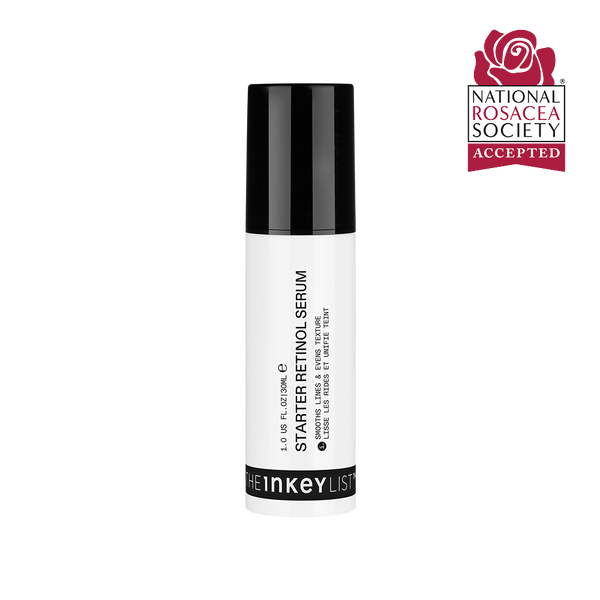
For those new to retinoids or transitioning away from bakuchiol, the Starter Retinol Serum (£13) is designed specifically for this entry point. It delivers a lower, carefully calibrated concentration of retinol that allows skin previously reliant on gentler actives like bakuchiol to begin building tolerance gradually, without the shock of jumping straight to a high-strength formula. This matters particularly for menopausal skin, where the barrier is already more reactive than it once was - a slow, structured introduction reduces the risk of the scaling and stinging that can occur when retinoids are introduced too aggressively. At £13, it’s also an accessible way to test whether your skin is ready to move beyond bakuchiol’s gentler ceiling without a significant financial commitment.
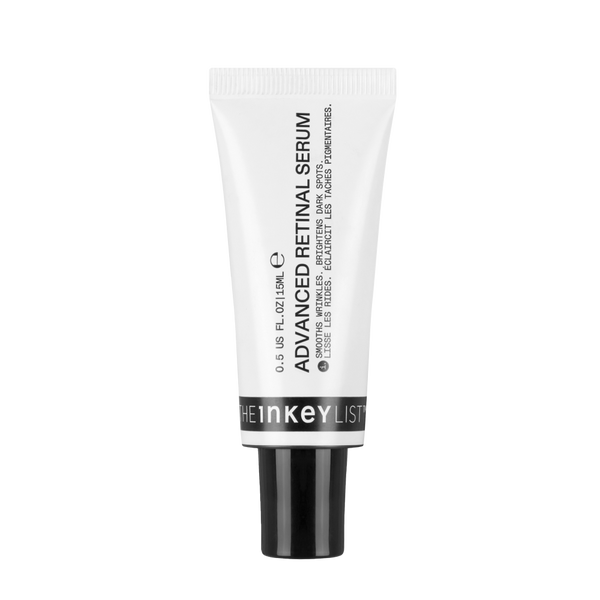
For those with an established tolerance who are ready for a more potent formula, the Advanced 0.2% Retinal Serum (£18) steps things up considerably. Retinal (retinaldehyde) converts to retinoic acid in fewer steps than retinol does, meaning it tends to work faster and more efficiently at the cellular level while still being gentler than prescription-strength retinoids. For menopausal skin that has already built some tolerance - whether through prior bakuchiol use or a completed Starter Retinol routine - this formula offers a meaningfully stronger collagen-stimulating signal, directly addressing the accelerated collagen loss we outlined earlier, without requiring a leap to prescription treatments.
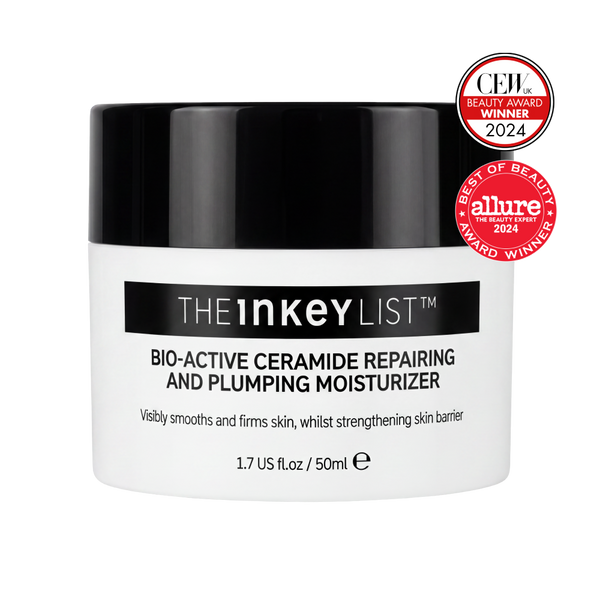
For barrier support that works alongside either retinoid step, or as a cornerstone for those avoiding retinoids entirely, the Bio-Active Ceramide Moisturiser (£20) directly addresses the weakened barrier function that defines so much of the menopausal skin experience. Formulated with a blend of ceramides designed to replenish the skin’s natural lipid matrix, it helps lock in moisture, reduce transepidermal water loss, and buffer the skin against the dryness and reactivity discussed throughout this article. Used alongside either retinol formula, it also helps offset the dryness retinoids can sometimes cause during the adjustment period - making the entire routine more comfortable and more sustainable long-term.
For those looking to add an extra layer of radiance support to this routine, the Exosome HydroGlow Complex can be considered as a supplementary addition rather than a replacement for the core three. In a 4-week clinical study of 26 people, 100% saw more glowing skin, clinically proven, with participants reporting clinic-worthy rejuvenated skin in as little as 14 days. Separate in-vitro testing of Cica Exosomes showed a 55% reduction in pro-inflammatory markers and a 63% increase in markers associated with skin renewal after 8 hours. It offers 6-in-1 skin rejuvenation, clinically proven to visibly improve radiance, hydration, tone, firmness, elasticity and texture, and is proven to deliver up to 12 hours of hydration in a separate clinical study of 31 people. It also helps support natural collagen production, making it a reasonable complement to a retinoid-led routine rather than a substitute for one.
The ingredients with the strongest evidence base aren’t always the ones with the loudest marketing - they’re the ones that have been tested, retested, and proven to work the way they claim to. - a principle at the heart of how we evaluate every formula we recommend.
What ties these three core recommendations together is that each one is chosen to meet a specific criterion from the list established in the previous section: proven collagen-stimulating activity (both retinol formulas), ceramide-based barrier support (the moisturiser), and a calibrated entry point that respects where your skin’s tolerance currently sits. None of them ask you to gamble on an under-researched mechanism when your skin is already losing ground quickly - they’re built around the evidence base that exists today.
Knowing which products to use is only half the equation, though. The other half is knowing how to combine them correctly, in what order, and at what pace - which is exactly what we’ll walk through next.
How to Build a Menopausal Skincare Routine
Choosing the right products only pays off if they’re used correctly, in the right sequence, and at a pace your skin can actually tolerate. Here are three complete routines, depending on where you’re starting from.
Routine 1: New to retinoids
If you’ve never used a retinoid before, patience is the most important ingredient in this routine. Start by introducing the Starter Retinol Serum (£13) just two to three evenings per week, applying it to clean, dry skin after cleansing. Follow it with the Bio-Active Ceramide Moisturiser (£20) to buffer any initial dryness and support your barrier through the adjustment period. In the morning, cleanse, apply a hydrating serum if needed, and finish with a broad-spectrum SPF - this is non-negotiable, since retinol increases photosensitivity and menopausal skin is already more vulnerable to UV damage. After two to three weeks, if your skin shows no signs of excessive dryness or irritation, you can gradually increase to every other evening, then nightly, always listening to how your skin responds rather than following a fixed timeline.
Routine 2: Stepping up from bakuchiol
If you’ve been using bakuchiol and want to move toward a more potent, evidence-backed option, your skin likely already has some tolerance built up, which means you can progress a little more confidently - though still gradually. Begin with the Advanced 0.2% Retinal Serum (£18) two to three evenings per week, applied the same way: on clean, dry skin, followed by the Bio-Active Ceramide Moisturiser (£20) to support your barrier through the transition. It’s worth noting that even with prior bakuchiol use, retinal is a meaningfully more active ingredient, so don’t skip the gradual build-up simply because your skin tolerated bakuchiol well - these are different mechanisms, and the adjustment period still matters. As with Routine 1, daily morning SPF is essential throughout, and avoid layering strong exfoliating acids on the same evenings you use retinal, since combining multiple potent actives increases the risk of irritation on a barrier that’s already more delicate than it once was.
Routine 3: Retinoid-free
If you’ve decided retinoids aren’t right for your skin right now, whether due to sensitivity, a medical reason, or simply personal preference, a strong routine is still absolutely achievable. Here, the Bio-Active Ceramide Moisturiser (£20) becomes the cornerstone of your routine both morning and evening, working to continuously reinforce a barrier that’s already working harder than it used to. Pair it with ceramide-supportive cleansing and hydrating steps throughout your routine, and consider incorporating peptide-based formulas to support elasticity and firmness through a different mechanism than collagen stimulation alone. Bakuchiol can still play a sensible role here as a gentler, lower-risk active for texture and tone, used consistently alongside your barrier-support routine - just go in with realistic expectations about pace, informed by everything the evidence shows us in the sections above.
Across all three routines, a few principles hold constant regardless of where you start: patch test any new active before applying it to your full face, introduce new ingredients one at a time so you can identify what’s working (or not), and never combine retinoids with strong exfoliating acids on the same night, since the compounded irritation risk simply isn’t worth it for skin that’s already managing enough change. Consistency matters more than intensity - a routine followed faithfully for twelve weeks will outperform an aggressive routine abandoned after ten days of irritation, every single time.
With a clear, workable routine in hand regardless of your starting point, it’s worth stepping back to close the loop on why this entire conversation matters in the first place - and why menopausal skin deserves more consideration than any single trending ingredient can offer.
Menopausal Skin Deserves More Than a Trend
Trends move fast. Hormonal biology does not. That mismatch is at the heart of why this article exists: bakuchiol trended hard as the “gentle retinol alternative” at exactly the moment a huge number of women were searching for answers about their changing skin, and the two things got conflated in a way the evidence doesn’t fully support.
To be clear, this isn’t an argument against bakuchiol as an ingredient - it’s an argument against treating any ingredient as a complete answer to a biological process as significant as menopause. Bakuchiol has a legitimate, evidence-backed place in skincare, particularly for those who genuinely cannot tolerate retinoids or who are taking their first step toward using an active ingredient at all. But menopausal skin, losing collagen at a rate of roughly 2% a year on top of a weakening barrier and declining hydration, needs a routine built around the full weight of available evidence, not around whichever ingredient has the gentlest reputation on social media.
What menopausal skin actually deserves is clear guidance: proven actives like retinol and retinal, chosen at the right concentration for your current tolerance; genuine barrier support through ceramides, so those actives are sustainable rather than punishing; and realistic expectations about what each ingredient can and cannot deliver, so you’re never left wondering why a trending product isn’t producing the results its marketing implied. That’s the entire philosophy behind how we approach mature skin at INKEY - clear information first, so the products that follow make sense rather than requiring blind trust.
If you’re still unsure exactly where your skin sits or which routine from this article fits you best, our skincare quiz can help narrow that down in a couple of minutes, based on your specific concerns rather than general assumptions about what menopausal skin “should” need.
Related Reading
If this article has helped clarify where bakuchiol fits and where it doesn’t, these related pieces go further into the surrounding science and life stages:
- Menopause and Your Skin: How to Support a Stronger Barrier
- Perimenopause and Your Skin: What Actually Changes
- Is Bakuchiol Safe During Pregnancy? The Facts, the Caveats, and More
- Retinol vs Bakuchiol: Which Anti-Ageing Ingredient Is Right for Your Skin
A Final Word - and Where to Go From Here
Menopausal skin doesn’t need a trending ingredient - it needs an honest, evidence-led plan that respects both how fast it’s changing and how much more reactive it’s become. That’s what we’ve tried to give you here: a clear look at what bakuchiol can genuinely do, where the evidence runs out, and which proven alternatives can pick up where it leaves off.
We Give A Care about getting this right, because skincare decisions made during menopause deserve better than guesswork. If you’re still unsure which routine fits your skin, our team is on hand through Ask an INKEY Advisor for tailored, one-to-one guidance, or you can start with our skincare quiz to get a personalised recommendation in minutes. Either way, the next step is yours - and it’s one backed by evidence, not trend.
Frequently Asked Questions
Got a question?
Our askINKEY team are a friendly bunch of skincare experts with deep product knowledge and zero judgement. Whether you're an ingredient obsessive or just starting out, we'll make it make sense. No question too big. No question too small. We Give A Care, Every Day.


