



Retinol vs Bakuchiol: Which Anti-Ageing Ingredient Is Right for Your Skin?
A clear, science-backed comparison of bakuchiol and retinol - what each ingredient does, how they differ, and which one suits your skin.
Author
askINKEY skincare advisor
Published
13 December, 2025
Time to read
16 minutes
If you have spent any time researching anti-ageing skincare, you have almost certainly come across the bakuchiol vs retinol debate. These two ingredients are frequently positioned as opposites - retinol as the gold standard, bakuchiol as the gentler plant-based alternative - but the reality is more nuanced, and more interesting, than that framing suggests. Both are legitimate, evidence-backed anti-ageing actives. Neither is universally superior. The right choice depends on your skin type, your tolerance for an adjustment period, your lifestyle, and what you are specifically trying to address.
This guide cuts through the noise. We cover what each ingredient actually is, how they work inside the skin, what the clinical evidence shows, and how to decide which one suits your skin right now. If you are at the very beginning of your anti-ageing skincare thinking, it is worth reading our guide on when to start using anti-ageing products before diving in here - it provides helpful context for anyone who is not yet sure whether these ingredients are relevant for them.
For those ready to go deeper: here is everything you need to make a confident, informed decision.
What Bakuchiol and Retinol Actually Are
Before comparing these two ingredients, it helps to understand what each one is on its own terms. Bakuchiol in particular is frequently mischaracterised - either as a trendy marketing buzzword or as a simple swap for retinol. Neither description is accurate. Understanding both ingredients clearly is the foundation for everything that follows.
Bakuchiol: A Genuine Plant-Derived Active
Bakuchiol is a meroterpene compound derived from the seeds and leaves of the Psoralea corylifolia plant - commonly known as babchi. The plant has been used in traditional Chinese medicine and Ayurvedic practice for centuries, though its application in modern skincare formulation is relatively recent. What makes bakuchiol significant is not its botanical origin alone, but what it does inside the skin.
Bakuchiol is accurately described as a functional retinol analogue - an ingredient that influences many of the same biological processes as retinol, but through entirely different molecular pathways. This distinction matters. Bakuchiol does not convert to retinoic acid inside the skin. It does not bind to retinoid receptors. It arrives at comparable visible outcomes via a different biological route, which is precisely why its tolerability profile is so different from retinol’s.
Beyond its retinol-like activity, bakuchiol carries additional properties that retinol does not: meaningful antioxidant activity and anti-inflammatory action. This makes it a genuinely different tool, not simply a weaker or diluted version of retinol. In practical terms, these properties mean bakuchiol is doing more than one job simultaneously - addressing signs of ageing while also calming the skin and neutralising environmental damage.
One question that comes up consistently is: is bakuchiol a retinol? The direct answer is no. Bakuchiol is plant-derived, structurally unrelated to vitamin A (retinol’s parent compound), and works through different biological mechanisms. The “functional analogue” description means it produces similar visible results for many skin concerns - not that it is chemically the same thing. You can read the full picture on our complete guide to bakuchiol.
Practically speaking, one of bakuchiol’s most useful qualities is its flexibility: it can be used in your morning routine, your evening routine, or both. It does not increase UV sensitivity, so there is no photosensitivity concern associated with daytime use.
Retinol: The Gold Standard With Decades Behind It
Retinol is a vitamin A derivative and, by some margin, the most extensively studied anti-ageing ingredient in modern skincare. It has over 30 years of peer-reviewed clinical evidence supporting its efficacy - a depth of research that no other topical anti-ageing ingredient currently matches.
Inside the skin, retinol undergoes a two-step conversion process: retinol converts to retinaldehyde (retinal), which then converts to retinoic acid. Retinoic acid is the biologically active form - the molecule that binds to nuclear retinoic acid receptors (RARs) and retinoid X receptors (RXRs) and drives the cellular changes that produce retinol’s results. These results include accelerated cellular turnover and upregulated collagen production - the two primary mechanisms behind its anti-ageing efficacy. You can explore the full ingredient breakdown in our complete guide to retinol.
Retinal (retinaldehyde) sits one step closer to retinoic acid than retinol does, which is why it is considered more potent. We explain the full distinction in our retinol vs retinal guide for anyone who wants to understand the vitamin A family in more depth.
The key practical considerations with retinol: it is PM-use only, it increases photosensitivity (making daily SPF non-negotiable), and it comes with an adjustment period for most users. These are not reasons to avoid it - they are simply facts that need to be planned for.
If you are specifically exploring plant-derived and botanical alternatives to retinol more broadly, our guide to natural alternatives to retinol covers the full landscape beyond bakuchiol alone.
Now that both ingredients are clearly defined, it is time to look at how they actually work inside the skin - and what the clinical evidence says about the results each one produces.
The Science: How Bakuchiol and Retinol Work on Your Skin
Understanding the mechanisms behind these ingredients is not just academic - it explains why they behave so differently in terms of tolerability, timing, and the kind of results you can expect. The science here is genuinely interesting, and it is worth understanding at least the broad strokes before choosing your approach.
How Retinol Works at a Cellular Level
Retinol’s mechanism is well-mapped. After topical application, retinol undergoes its two-step conversion to retinoic acid, which then binds to nuclear receptors inside skin cells. This receptor binding directly regulates gene expression, producing two key downstream outcomes.
First: accelerated cellular turnover. Skin cells are renewed at a faster rate, pushing newer, healthier cells to the surface more quickly. This is why retinol improves skin texture, refines the appearance of pores, and helps fade post-blemish marks and uneven pigmentation over time.
Second: upregulation of collagen production. Retinol specifically stimulates the production of collagen types I, III, and IV - the structural proteins responsible for skin firmness and elasticity. Collagen production declines by approximately 1% per year after the age of 25. Retinol actively works against this decline by signalling the skin to produce more.
The intensity of retinol’s receptor binding is precisely why it works as powerfully as it does - and equally why it can cause the redness, peeling, and sensitivity characteristic of its adjustment period. For many users, that adjustment period represents a temporary damaged skin barrier response as the skin adapts to the increased rate of cellular activity. Most skin tolerates retinol well once past the initial weeks, but the adjustment process needs to be managed thoughtfully.
How Bakuchiol Works - And Why It Tolerates Better
Bakuchiol’s mechanism is meaningfully different. It does not convert to retinoic acid, and it does not bind to retinoid receptors. Instead, it influences many of the same downstream genes through alternative molecular pathways - stimulating collagen production and cellular renewal without the receptor binding that drives retinol’s irritation potential.
Additionally, bakuchiol’s antioxidant activity neutralises free radicals generated by UV exposure and environmental pollutants - a protective role that retinol does not play. This dual action (retinol-like gene regulation plus antioxidant protection) is what makes bakuchiol a genuinely distinct ingredient rather than a simple imitation.
What the Clinical Evidence Actually Shows
The landmark study on bakuchiol efficacy is the Dhaliwal et al. 2019 trial, published in the British Journal of Dermatology. This was a 12-week, prospective, randomised, double-blind trial comparing 0.5% bakuchiol applied twice daily with 0.5% retinol applied once nightly. Both produced statistically significant and comparable improvements in wrinkle surface area and hyperpigmentation. Bakuchiol was significantly better tolerated throughout - with notably less facial scaling, stinging, and dryness reported by participants. You can read the full study at PubMed.
It is worth contextualising that evidence honestly. Twelve weeks is a relatively short trial window. Retinol has a much broader, longer-term body of evidence behind it - decades of clinical research across diverse populations and skin concerns. Bakuchiol’s research base is growing, but it is smaller in volume. That does not diminish the quality of the Dhaliwal findings - they are robust and peer-reviewed - but it is an important distinction for anyone making a fully informed choice.
For bakuchiol vs retinol for wrinkles specifically: both reduce wrinkle surface area in clinical studies. For faster-onset and more extensively evidenced results, retinol has the edge. For gentler, more tolerable improvement over a consistent timeline, bakuchiol is a genuine contender backed by solid evidence.
Realistic Timeline Expectations
- Retinol: Initial texture improvements from weeks 2-4; visible fine line reduction from 6-8 weeks; deeper structural improvement from 12-16 weeks and beyond.
- Bakuchiol: Gradual, steady improvement building from 8-12 weeks; continued progress over 4-6 months of consistent daily use.
For both ingredients, consistency is the single most important variable. Neither will produce results from sporadic use. The ingredient you will actually use regularly - morning and evening, without interruption - is the one that will serve your skin best in the long run.
With the mechanisms and evidence clearly established, it is time to translate that science into practical, side-by-side differences that affect how you use each ingredient and what you can realistically expect.
Bakuchiol vs Retinol: The Key Differences That Matter in Practice
This is the core comparison most readers come to this article for. The differences between bakuchiol and retinol are real and meaningful - but they are not a reason to declare one ingredient superior to the other. They are a reason to choose thoughtfully based on your skin’s specific needs.
Tolerability: The Single Biggest Practical Difference
Retinol’s adjustment period is real and expected. During the first 4-8 weeks of use, many people experience some degree of redness, peeling, dryness, and increased sensitivity - particularly if they start too frequently or at too high a concentration. This is not a sign that retinol is damaging your skin; it is a sign that your skin is responding to increased cellular activity. But it does require patience, the right supporting routine, and a gradual introduction protocol. Our guide on 5 things to know before using retinol is essential reading before you start.
Bakuchiol, by contrast, produces minimal to no irritation - even with twice-daily use. Its anti-inflammatory properties mean it is actively soothing alongside its anti-ageing activity. For skin that struggles with most actives, or for anyone who wants effective anti-ageing without the management, this is a significant practical advantage.
Photosensitivity and Use Timing
Retinol increases UV sensitivity, which means daily broad-spectrum SPF is not optional - it is a fundamental requirement of retinol use. UV exposure will directly counteract the cellular renewal retinol is working to achieve. Retinol is PM-use only: apply it to clean, fully dry skin as part of your evening routine.
Bakuchiol does not increase UV sensitivity. It can be used AM, PM, or both - a flexibility that makes it considerably easier to incorporate into varied routines. Daily SPF remains best practice regardless of which ingredient you use, but with bakuchiol it is about overall skin health rather than a specific photosensitivity risk.
Evidence Base and Speed of Results
Retinol carries the weight of over 30 years of clinical research. Its mechanisms are well understood, its results are well documented, and the dermatological community has significant confidence in its long-term efficacy. It also tends to produce visible results faster - particularly in the early weeks when cellular turnover begins to accelerate.
Bakuchiol’s evidence base is newer but credible. The Dhaliwal et al. 2019 study established comparable efficacy over a 12-week window. Additional research continues to build. Results are typically more gradual with bakuchiol - steady and cumulative rather than rapid.
Does Bakuchiol Cause Purging?
Purging - the temporary worsening of blemishes that some people experience at the start of an active ingredient - is driven by accelerated cellular turnover. Because bakuchiol does not drive cellular turnover at the same intensity as retinol, the classic purge response is far less likely. Some people may notice a brief skin adjustment during the first few weeks of introducing any new active, but this is distinct from the retinol-style purge. Bakuchiol-triggered purging is not characteristic of the ingredient.
Does Bakuchiol Work? Answering the Sceptics Directly
Yes - and the evidence confirms it. Bakuchiol is not a trend ingredient dressed up in clinical language, nor is it a marketing substitute for retinol. The Dhaliwal et al. 2019 study, cited over 245 times in subsequent research, confirmed real, measurable improvements in wrinkle surface area, skin texture, and hyperpigmentation. It is a scientifically validated active with a genuine mechanism of action. The honest caveat is that its long-term evidence base is still catching up with retinol’s decades of research - but what exists is solid.
A Clear Side-by-Side Summary
- Origin: Bakuchiol is plant-derived from Psoralea corylifolia; retinol is a vitamin A derivative.
- Mechanism: Bakuchiol influences gene expression via alternative molecular pathways; retinol works through retinoic acid receptor binding.
- Tolerability: Bakuchiol has a low irritation risk with minimal adjustment period; retinol has a moderate irritation risk with an expected adjustment period.
- Use timing: Bakuchiol can be used AM and/or PM; retinol is PM only.
- Photosensitivity: Bakuchiol causes none; retinol increases UV sensitivity, requiring daily SPF.
- Best suited to: Bakuchiol suits sensitive, reactive skin, beginners, and those who are pregnant; retinol suits resilient or experienced skin and those managing multiple concerns simultaneously.
- Evidence base: Bakuchiol has a growing evidence base anchored by the 2019 Dhaliwal study; retinol has 30+ years of clinical research.
- Speed of results: Bakuchiol works gradually over 8-12+ weeks; retinol produces visible results from 6-8+ weeks.
With the comparison clearly mapped, the next step is making it personal - matching the right ingredient to your specific skin type and life situation.
Choosing the Right Ingredient for Your Skin Type and Situation
The comparison above makes the differences clear. Now it is time to apply them. The following profiles cover the most common skin types and life situations - use whichever resonates most with where you are right now.
Sensitive or Reactive Skin: Choose Bakuchiol
If your skin reacts to most actives, flushes easily, or has a compromised skin barrier, bakuchiol is the more appropriate starting point. Its combination of anti-inflammatory properties, antioxidant activity, and retinol-like gene expression influence means you are getting effective anti-ageing activity without provoking the sensitivity responses that hold many people back from using actives altogether.
Pair bakuchiol with a ceramide-rich moisturiser to reinforce the barrier throughout treatment - the Bio-Active Ceramide Moisturiser (£20) works well here. This combination supports the skin structurally while the bakuchiol works on visible ageing.
If your skin is sensitive and you are still curious about whether retinol could eventually work for you, our guide on retinol and sensitive skin covers exactly how to approach that carefully and gradually.
Beginners to Anti-Ageing Skincare: Consider Bakuchiol First
If bakuchiol vs retinol is a question you are asking because you are just starting to think about anti-ageing ingredients, bakuchiol offers a gentler introduction with less routine management required. There is no adjustment period to navigate, no need to restrict your routine timing, and no photosensitivity to plan around. You can start using it consistently from day one.
For those who are ready to commit to retinol’s introduction protocol and want to go straight to the gold standard, the Retinol Serum at £13 is specifically formulated for a manageable, gradual introduction - more on that in the routine section below. Our retinol for beginners guide walks you through the process step by step. Not sure yet whether you are ready to start anti-ageing actives at all? Our guide on when to start using anti-ageing products will help you work that out.
Experienced Retinol Users: Stick With Retinol or Combine
If retinol is already a well-established part of your routine and your skin has fully adapted to it, there is no strong reason to switch to bakuchiol. Your skin is benefiting from the most extensively studied anti-ageing active available. Experienced users may, however, choose to explore combining both ingredients - which is covered below.
Pregnancy and Breastfeeding: Bakuchiol Is the Preferred Option
All retinoids - including over-the-counter retinol - are not recommended during pregnancy or breastfeeding. This is a well-established medical consensus. Bakuchiol is widely considered the safer option during this period. That said, formal pregnancy-specific safety studies on bakuchiol are still limited, so it is important to consult your healthcare provider before introducing any new skincare ingredient during pregnancy.
For a thorough, honest breakdown of bakuchiol’s safety profile during pregnancy, read our dedicated guide on bakuchiol during pregnancy. For a full overview of which skincare ingredients are considered safe during pregnancy more broadly, our pregnancy-safe skincare guide covers the complete picture.
Rosacea-Prone Skin: Bakuchiol With Caution on Retinol
Bakuchiol is generally better tolerated by rosacea-prone skin. Its anti-inflammatory properties and absence of an adjustment period make it a more appropriate starting point for skin that is prone to flushing and reactivity. Retinol can be used with rosacea-prone skin, but it requires a careful, considered approach. Our guide on using retinol with rosacea-prone skin provides specific guidance for this skin profile.
Menopausal Skin: Both Ingredients Have a Role
During and after menopause, collagen decline accelerates and skin often becomes simultaneously drier and more sensitive. Both bakuchiol and retinol can be genuinely beneficial during this period, though the right choice depends on your skin’s current tolerance and sensitivity level. For detail specific to this life stage, our guide on bakuchiol for menopausal skin covers the considerations in full.
Can You Use Bakuchiol and Retinol Together?
Yes - with care, and in the right sequence. Bakuchiol’s anti-inflammatory properties may even help buffer some of retinol’s irritation potential, making it a complementary pairing rather than a competing one. The practical approach most suits a gradual introduction: start with one ingredient, allow your skin to fully adapt, then introduce the second.
Once both are established, a common structure is: bakuchiol in the morning routine and retinol in the evening, or retinol on alternating evenings with bakuchiol used on off-nights. Always introduce ingredients individually before combining. For clarity on what retinol should not be paired with, our guide on what not to mix with retinol is essential reading.
Now that you know which ingredient suits your skin, here is exactly how to use it - from routine order and timing to the key ingredients to pair alongside it.
How to Build Your Routine: Timing, Pairings, and Product Recommendations
Getting the ingredient right is only half the equation. How you use it - when you apply it, what you layer it with, and how you support your skin barrier throughout - determines whether you actually see the results the science promises.
When to Use Bakuchiol in Your Routine
Bakuchiol can be used morning, evening, or both - this is one of its most practical advantages over retinol. The question “can bakuchiol be used during the day?” has a straightforward answer: yes, without restriction. This makes it easier to build into an established routine without restructuring your entire morning or evening regimen.
Application order: cleanse, then apply bakuchiol serum to skin that still has some moisture in it, followed by any additional serums, then moisturiser, then SPF in the morning. In the evening: cleanse, bakuchiol serum, moisturiser.
When to Use Retinol in Your Routine
Retinol is PM only, full stop. Apply it to clean skin that has been allowed to dry fully after cleansing - damp skin can increase the rate of absorption and, with it, the likelihood of irritation. Begin with 2-3 applications per week, allowing your skin to adapt before gradually increasing to nightly use.
The moisture sandwich method is particularly helpful during the retinol adjustment period: apply a hydrating serum first, then retinol, then moisturiser. This layering buffers potential irritation without compromising retinol’s efficacy.
Key Ingredient Pairings
Pairing ingredients with bakuchiol:
- Vitamin C (AM): An excellent daytime pairing. Both bakuchiol and vitamin C address hyperpigmentation and support even skin tone. Bakuchiol’s antioxidant properties complement vitamin C’s free-radical protection - they work in the same direction at the same time.
- Hyaluronic Acid (AM and PM): Apply to damp skin before bakuchiol for hydration layering. This keeps skin comfortable and supports the barrier throughout treatment.
- Ceramide moisturiser: Lock in hydration and reinforce the skin barrier after your treatment serum.
Pairing ingredients with retinol:
- Hyaluronic Acid (PM, before retinol): Apply the Hyaluronic Acid Serum to damp skin before retinol to keep skin hydrated and comfortable throughout the night.
- Niacinamide (PM as a buffer, or AM): One of the most practical retinol companions available. Niacinamide regulates sebum production, reduces the visible appearance of pores, and supports barrier integrity - without interfering with retinol’s action. It can be layered directly in the same PM routine.
- SPF (AM, always): Non-negotiable with retinol. UV exposure directly counteracts the cellular renewal retinol is working to achieve - no SPF means reduced results, full stop.
- Do not combine retinol with: vitamin C on the same evening, AHAs or BHAs on the same night, or other high-strength actives simultaneously. Our full guide on what not to mix with retinol is the clearest resource on this.
Suggested Routine Structures
Bakuchiol Morning Routine:
- Cleanser
- Hyaluronic Acid Serum (on damp skin)
- Bakuchiol serum
- Vitamin C serum
- Moisturiser
- SPF
Bakuchiol Evening Routine:
- Cleanser
- Hyaluronic Acid Serum (on damp skin)
- Bakuchiol serum
- Moisturiser
Retinol Evening Routine:
- Cleanser (allow skin to dry fully)
- Hyaluronic Acid Serum (on damp skin)
- Niacinamide Serum
- Retinol Serum
- Bio-Active Ceramide Moisturiser
Next Morning After Retinol:
- Cleanser
- Hyaluronic Acid Serum
- Niacinamide Serum
- Moisturiser
- Dewy Sunscreen SPF 30
INKEY Product Recommendations
Retinol Serum - £13
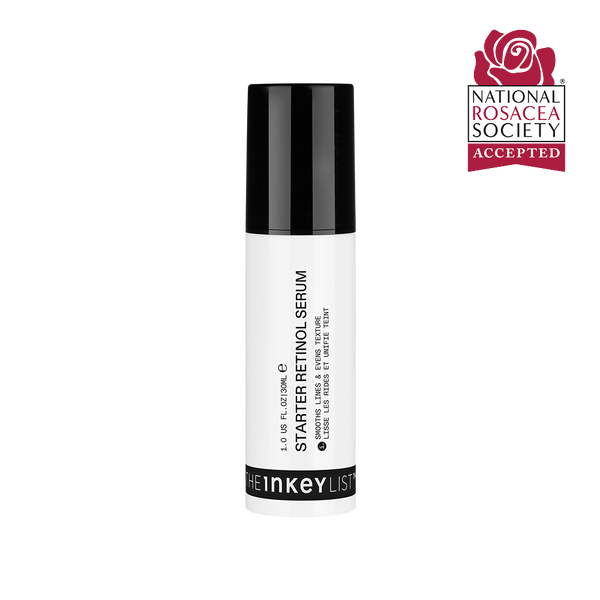
The beginner-friendly retinol. Formulated with 1% Retinyl Acetate (a slow-release retinol) and 0.5% Granactive Retinoid for collagen-boosting skin renewal, with squalane to hydrate and soothe throughout. PM only.
Retinol Eye Cream - £13
Targets fine lines and wrinkles in the delicate eye area using Vitalease Retinol - a stabilised, slow-release retinoid compound designed to deliver results without irritating thin, sensitive skin around the eyes. PM use.
Bio-Active Ceramide Moisturiser - £20
A clinically proven anti-ageing moisturiser that works for both retinol users (as a barrier-supporting PM moisturiser) and those seeking a retinoid-free anti-ageing option. Bioactive Ceramide NP firms, Gransil Blur instantly softens the appearance of fine lines, and shea butter soothes. Learn more about ceramides.
Peptide Moisturiser - £16
A gentle, retinoid-free anti-ageing option. Ideal for those not yet ready for bakuchiol or retinol but wanting to address early signs of ageing through peptides. A practical bridge between basic moisturisation and active anti-ageing.
Hyaluronic Acid Serum - £12
Essential hydration support for both retinol and bakuchiol routines. Apply to damp skin before your treatment serum morning and evening. Learn more: hyaluronic acid.
Niacinamide Serum - £12
A practical retinol companion. 10% Niacinamide helps regulate oil, reduce visible pores, and calm redness - and pairs comfortably with retinol in the same PM routine, or can be used separately in the morning. Learn more: niacinamide.
Dewy Sunscreen SPF 30 - £15
Non-negotiable if you are using retinol. Lightweight, non-greasy, and comfortable for daily year-round use. Learn more: SPF.
For readers interested in understanding where other anti-ageing ingredients fit into this picture, our peptides vs retinol guide and PDRN vs retinol guide cover next-generation comparisons worth exploring. For the complete anti-ageing routine picture, the best anti-ageing skincare routine guide is the natural next stop.
The Bottom Line: Choosing With Confidence
Bakuchiol and retinol are both credible, evidence-backed anti-ageing ingredients. The Dhaliwal et al. 2019 studyconfirmed comparable efficacy for key concerns over a 12-week period. Retinol offers the most extensively studied results, a faster onset of visible change, and the broadest range of evidence across skin concerns. Bakuchiol offers comparable outcomes with superior tolerability, greater routine flexibility, and suitability for skin types and life situations where retinol is either too irritating or not recommended.
The ingredient that serves your skin best is not necessarily the one with the most research behind it - it is the one that suits your skin well enough to use consistently, every day, over the months that real anti-ageing results require.
If retinol fits your skin, your tolerance, and your routine: commit to it properly, support your skin barrier through the adjustment period, and protect your skin with SPF every morning. If bakuchiol is the better fit - because your skin is sensitive, because you are pregnant, because you want a more flexible routine, or simply because a gentler introduction appeals to you - use it consistently and give it the time the evidence shows it needs.
Both choices are the right choice for the right person. What matters now is applying what you have learned and starting. For a complete picture of how these ingredients fit into a broader anti-ageing regimen, the best anti-ageing skincare routine guide is the clearest next step.
Start Your Anti-Ageing Routine
Retinol Serum - £13
The beginner-friendly retinol serum. 1% Retinyl Acetate with slow-release delivery - proven results, reduced irritation. PM use.
Retinol Eye Cream - £13
Targets fine lines around the delicate eye area with stabilised slow-release retinol. Use at night after your retinol serum.
Bio-Active Ceramide Moisturiser - £20
Clinically proven to firm and plump. Works as an anti-ageing moisturiser standalone or as a barrier-supporting partner to retinol. For all skin types.
Hyaluronic Acid Serum - £12
Essential hydration for any anti-ageing routine. Apply to damp skin before your treatment serum - morning and evening.
Dewy Sunscreen SPF 30 - £15
If you are using retinol, this is not optional. Lightweight, non-greasy broad-spectrum SPF for daily use.
Not sure which routine is right for your skin? Take our 2-minute Skincare Quiz for a personalised recommendation.
Frequently Asked Questions
Got a question?
Our askINKEY team are a friendly bunch of skincare experts with deep product knowledge and zero judgement. Whether you're an ingredient obsessive or just starting out, we'll make it make sense. No question too big. No question too small. We Give A Care, Every Day.


