



How Often Should You Use Glycolic Acid?
How often you should use glycolic acid depends on your skin, the format and where you're using it. Here's how to find your frequency.
Author
askINKEY skincare advisor
Published
05 August, 2026
Time to read
12 minutes
How often to use glycolic acid depends on three things: the strength of the product you are holding, where on your body you are applying it, and what else is already in your routine. There is no single universal number, and anyone who gives you one without asking those questions is guessing.
This guide covers the short answer, the variables that shift it, a week by week build-up schedule for your face, whether to use it morning or night, where it sits in your routine, how the cadence changes for your body and your scalp, adjustments by skin type, how pairing with other actives affects your frequency, the signs you are overdoing it, and how long results realistically take. Face, body and scalp each need a different frequency, so this guide treats them separately. If you want the fundamentals of the ingredient itself, start with what is glycolic acid and come back. Otherwise, the short answer is directly below.
The Short Answer: How Often To Use Glycolic Acid
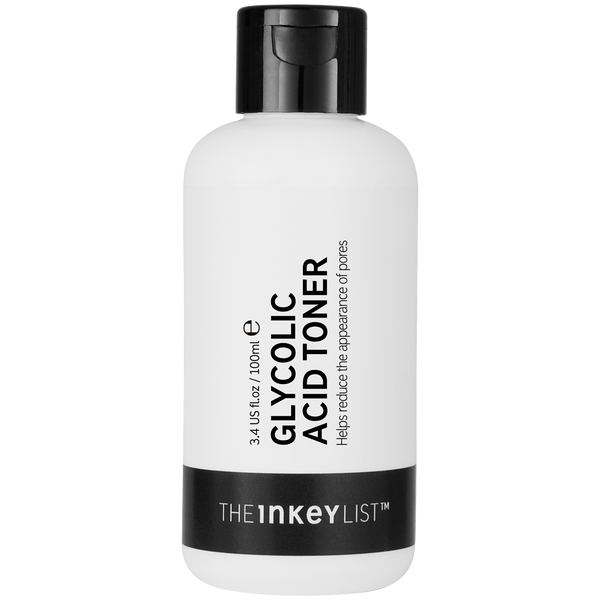
For a leave-on glycolic acid toner on your face, start at two to three nights per week, always at night, and build slowly from there. Most skin settles at three to four nights weekly.
At a glance, across the three formats:
- Face (toner): two to three nights weekly to start, three to four nights weekly for maintenance.
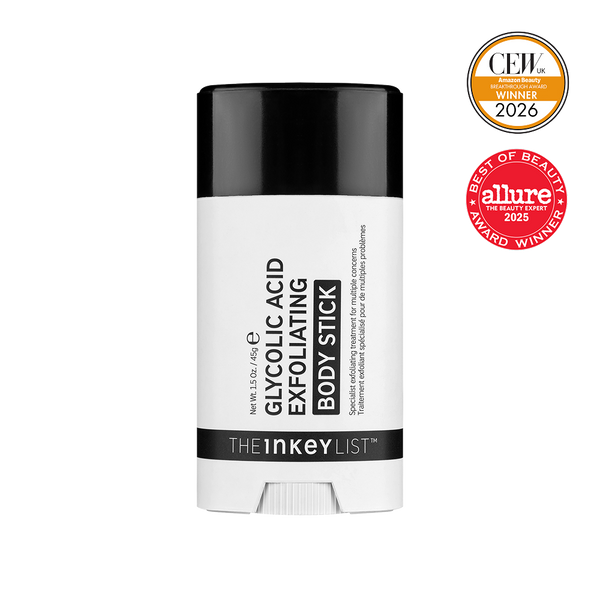
- Body (body stick): three times weekly to start, building toward daily use if your skin stays comfortable.
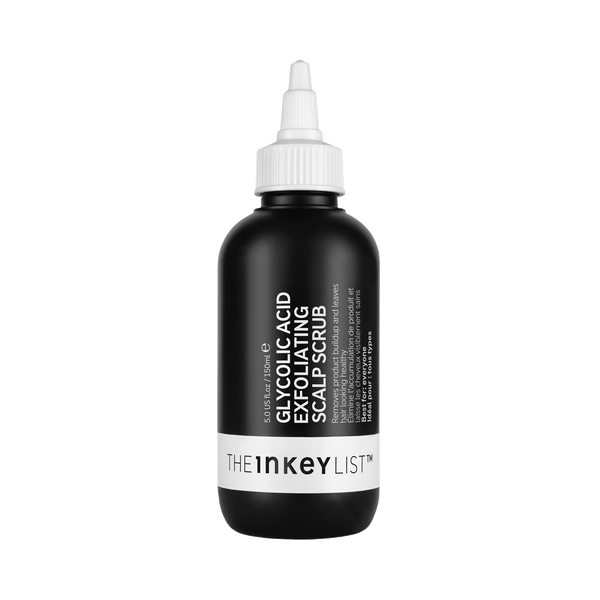
- Scalp (scalp scrub): once to twice weekly, on wash day.
Those three numbers differ for a reason, and the reason is exposure. Our Glycolic Acid Toner (£14) is swept across the entire face and left on. The body stick targets thicker, more resilient skin. The scalp scrub is massaged in and rinsed away within minutes. Same active ingredient, three genuinely different propositions. You can see all three side by side in the glycolic acid collection.
The governing principle behind all of this comes from the American Academy of Dermatology, and it is worth committing to memory: the more potent the exfoliant, the less often you should use it. Frequency and strength are two dials on the same machine. Turn one up and you almost always need to turn the other down.
Can you use glycolic acid every day?
Some people can, at lower strengths, without any trouble at all. But daily use is not the goal, and it is not required for results. The question “can I use glycolic acid everyday” usually comes from a reasonable place, the assumption that more frequent equals more effective. With exfoliating acids that logic breaks down quickly. Your skin needs the nights in between to do the repair work that makes the exfoliation worthwhile in the first place. Consistency at three or four nights a week will take you further over three months than an enthusiastic fortnight of nightly use followed by a fortnight of recovery.
It also helps to know where a well-formulated at-home product sits on the spectrum. The Cosmetic Ingredient Review panel considers glycolic acid safe in consumer products at concentrations of 10% or less with a pH of 3.5 or above, which is precisely why a home toner is a different proposition from a professional peel. A peel is an event. A toner is a habit. They are not scaled versions of the same thing, and they should not be scheduled the same way.
Those headline numbers are a starting point. Four variables will move them for you personally.
What Decides How Often You Can Use Glycolic Acid
Strength and formulation
Percentage is the number everyone looks at, but it is only part of the picture. The pH of a formula determines how much of the acid is active on your skin, and two products at identical percentages can behave very differently because of it. Contact time matters just as much. A rinse-off product at a given percentage is generally gentler than a leave-on at the same percentage, simply because it spends less time on your skin.
Format
This is the organising logic of the whole article, so it is worth being precise about it. A toner is swept across the entire face and left in place. A body stick is swiped onto specific, thicker-skinned areas. A scalp scrub is worked in and rinsed out. Three exposure profiles:
- Full-face, leave-on, thin skin. Lowest frequency ceiling.
- Targeted, leave-on, thick skin. Highest frequency ceiling.
- Targeted, rinse-off, sensitive-but-tough skin. Sits in between.
Our Glycolic Acid Exfoliating Body Stick (£15) and Glycolic Acid Exfoliating Scalp Scrub (£14) are built around those different profiles rather than being one formula in three packages.
Body area
Facial skin is thinner and more reactive than the skin on your legs, upper arms or back. The difference is not marginal. An area that shrugs off daily exfoliation on your thigh can be genuinely uncomfortable on your cheek. Your scalp is a case of its own, with its own tolerance and its own concerns.
Skin type and current barrier condition
Your skin type on paper matters less than the condition your barrier is in this week. Someone with naturally resilient, oily skin who has spent a fortnight over-exfoliating starts slower than the label suggests. Someone with dry skin whose barrier is in excellent shape may tolerate more than expected. If you are not sure where you sit, what’s your skin type is a useful five-minute detour before the skin type section further down.
The rest of your routine
Every additional active competes for the same tolerance budget. Retinol, vitamin C, salicylic acid and glycolic acid all draw from one account, and the balance is finite. This gets its own section later, because it is the variable people most consistently underestimate. For a wider view of how acids fit together generally, our guide to using acids in your skincare routine covers the landscape.
Before any new active goes near your face, patch test. The AAD has straightforward guidance on how to test skin care products, and if you want the practical version, we have written up why you need to do a patch test.
With the variables established, here is the case most people are actually here for.
How Often To Use A Glycolic Acid Toner On Your Face
Starting cadence: your first two weeks
Two nights per week, non-consecutive. Tuesday and Saturday, or Monday and Thursday. The gap is not arbitrary, it gives you a clear read on how your skin responded before you ask it to respond again.
Apply to clean, dry skin. Damp skin can increase penetration in ways that are hard to predict, so dry is the safer default while you are still learning your tolerance. Follow with hydration and moisturiser. Every single time.
Building up: a week by week schedule
- Weeks 1 to 2: two nights per week, non-consecutive.
- Weeks 3 to 4: if you have had no stinging, no tightness and no redness that lingers into the following morning, move to three nights per week.
- Week 5 onward: three to four nights weekly. This is where most people should stay.
If at any point you get stinging or tightness, drop back a step and hold there for another fortnight. Moving backward is not failure, it is the schedule working as intended.
Your maintenance frequency
Three to four nights a week is the maintenance sweet spot for most people. Going beyond it rarely improves results and reliably raises your irritation risk.
That is the honest answer to “how many times a week should you use glycolic acid” and to “how often should I use glycolic acid on my face.” It is also the answer to “glycolic acid toner how often,” which is the same question wearing a different hat.
On “glycolic acid every night”: it is possible for some people at lower strengths, and the research supports the idea that regular use at moderate concentrations is tolerable. In Stiller et al. 1996, an 8% glycolic acid cream used twice daily across 22 weeks produced significant improvement with minimal irritation. Read that carefully, because it is easy to misread. It demonstrates that regular use at a moderate concentration can be well tolerated under study conditions. It is not an instruction for everyone to apply glycolic acid twice a day.
The more useful study for most readers is Thibault et al. 1998, where a daily 5% glycolic acid formulation over three months improved texture and discolouration. The lesson there is consistency at a sensible strength, not intensity. A modest concentration used reliably over months outperforms a strong one used erratically.
If you have tried glycolic acid and found it consistently too much, the answer may be a gentler acid rather than a lower frequency. Our comparison of PHA toner vs glycolic acid toner is the right next read. And if you prefer a structured weekly rotation to fit glycolic acid around your other actives, skin cycling is a well-established framework for exactly that. You can also browse our full range of options at best glycolic acid toner and treatments 2026.
How long to leave glycolic acid on your face
There is no timer. Our toner is a leave-on step, it is not rinsed off, and you do not need to watch the clock. Apply it, let it absorb for thirty seconds or so, then continue with the rest of your routine.
The reason this question comes up so often is that people conflate a toner with a peel or a mask. A mask has a stated dwell time because it is designed to be removed. A leave-on toner is formulated to stay put at a concentration appropriate for staying put. Do not rinse it off, and do not leave it as a standalone treatment layer for twenty minutes thinking you are getting more out of it. You are not.
Cadence sorted. Now the timing question that always follows.
Morning Or Night, And Where Glycolic Acid Sits In Your Routine
Glycolic acid morning or night?
Night. Consistently, deliberately, night.
The reason is not folklore. AHAs increase your skin’s sensitivity to the sun, and according to FDA labelling guidance for cosmetics containing alpha hydroxy acids, that heightened sensitivity persists both while you are using the product and for up to a week after you stop.
Sun sensitivity from AHA use does not end when you finish the bottle. It can continue for up to a week after you stop.
That single fact reframes the whole discussion. Using glycolic acid at night is not about avoiding sun exposure in the hour after application, it is about recognising that your skin is in a more photosensitive state throughout the period you are using it. Additional evidence comes from Tsai et al. 2000, which examined the effect of glycolic acid on light-induced skin pigmentation in Asian and Caucasian subjects. It points toward increased sensitivity to light-induced pigmentation, which is a specific finding rather than a blanket warning, and worth taking seriously precisely because it is specific.
Where glycolic acid sits in your routine
- Cleanse.
- Apply the glycolic acid toner to clean, dry skin.
- Follow with a hydrating serum, such as our Hyaluronic Acid Serum.
- Finish with moisturiser.
Thin to thick, water-based before oil-based. The toner goes on first because it is the lightest texture and needs direct contact with clean skin to work properly.
On the nights you are not using glycolic acid, do not think of them as empty. They are doing real work. Focus on hydration and barrier support, which is where our Bio-Active Ceramide Moisturiser (£20) or the Ectoin Hydro-Barrier Serum earn their place. The off nights are when your skin consolidates the gains from the on nights. Skipping them does not accelerate anything.
Why sunscreen is non-negotiable when you use glycolic acid
Wear a broad-spectrum sunscreen every morning, whether or not you used glycolic acid the night before. Given the week-long sensitivity window, “the morning after” is not the relevant timeframe. If glycolic acid is in your routine at all, daily SPF is part of the deal. Our Dewy Sunscreen SPF 30 makes it an easy final step.
There is a practical argument here too. Glycolic acid works partly on tone and discolouration. Unprotected sun exposure drives tone and discolouration in the opposite direction. Using one without the other is running a bath with the plug out.
Face routine settled. Below the neck, the rules change.
How Often To Use Glycolic Acid On Your Body And Scalp
How often to use glycolic acid on your body
Body skin is thicker and considerably more resilient than facial skin, so it tolerates a great deal more. Start at three times per week on your target areas and build toward daily use if your skin stays comfortable.
Target areas are wherever texture is the issue: upper arms, thighs, backs of legs, and anywhere with roughness, bumps or ingrown hairs. Our Glycolic Acid Exfoliating Body Stick (£15) is designed for exactly this kind of targeted swiping rather than whole-body coverage.
Apply to clean, dry skin and let it absorb properly before you get dressed. This is the step people skip, and it is why they end up with product on their clothes rather than on their skin.
Two use cases reward consistency more than any others. Keratosis pilaris, the rough bumpy texture most common on upper arms and thighs, responds to sustained regular use rather than occasional intensive sessions, and our complete guide to treating keratosis pilaris covers the full picture. Ingrown hairs are the other, where regular exfoliation helps keep follicles clear, and glycolic acid for ingrown hairs goes deeper. For smaller and more delicate areas, glycolic acid for armpits is worth a look, and how to exfoliate body skin gives the broader context.
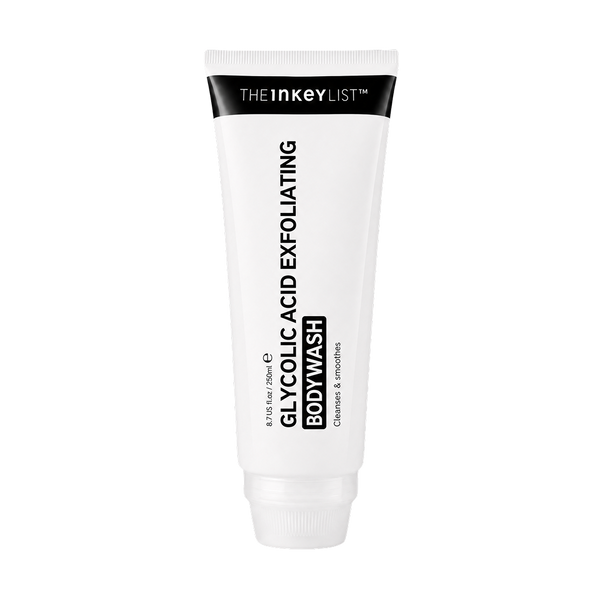
If you would rather keep contact time short, our Glycolic Acid Exfoliating Body Wash is the rinse-off route, and we wrote about why it exists in say goodbye to strawberry skin.
Body cadence at a glance:
- Start: three times weekly on target areas.
- Build: toward daily if comfortable.
- Apply to clean, dry skin and let it absorb before dressing.
How often to use glycolic acid on your scalp
Once to twice per week, worked into the scalp on wash day and rinsed thoroughly. That is the answer, and it sits deliberately between the face and body figures.
The logic is worth understanding, because scalp care confuses people. Our Glycolic Acid Exfoliating Scalp Scrub (£14) is a rinse-off product with limited contact time, which argues for a higher frequency. But the scalp can become sensitised with overuse, and an irritated scalp is genuinely uncomfortable in a way that an irritated forearm is not. Twice weekly captures the benefit without pushing your luck.
On how to use glycolic acid on scalp, the technique matters more than most people realise:
- Part your hair into sections.
- Apply directly to the scalp, not to the lengths of your hair.
- Massage in with your fingertips, not your nails.
- Rinse thoroughly, then continue with your usual routine.
The lengths of your hair do not need exfoliating. Applying product there wastes it and can leave hair feeling stripped. If you are choosing between scalp options, which scalp treatment should I use will narrow it down, and scalp health 101is the foundational read if scalp care is new to you.
Scalp cadence at a glance:
- Once to twice weekly, on wash day.
- Scalp only, not the lengths.
- Rinse thoroughly.
Format and body area covered. Now for personal variation.
How Often By Skin Type, And How Other Actives Change Your Frequency
Oily and combination skin
Generally the most tolerant, and often the quickest to build up. Three to four nights weekly, potentially more, with a lightweight follow-up such as our Omega Water Cream so hydration does not become the limiting factor.
Dry skin
Two to three nights weekly, always followed by something richer. With dry skin, hydration is the constraint rather than the acid itself. Our Bio-Active Ceramide Moisturiser (£20) is the sensible follow-up.
Sensitive skin
Start at once weekly and build only if you are genuinely comfortable, not merely tolerating it. Many people with sensitive skin do better on a gentler exfoliating acid altogether, and PHA toner vs glycolic acid toner explains the trade-off. Our Ectoin Hydro-Barrier Serum supports the barrier alongside, and best exfoliator for sensitive skin covers the alternatives.
Blemish-prone skin
Two to three nights weekly, and be careful about stacking. Blemish-prone routines often already contain several targeted actives, and glycolic acid needs to fit within that total rather than sit on top of it. Is glycolic acid good for blemishes has the detail, and the blemishes and breakouts collection shows what pairs sensibly.
How pairing with other actives changes your frequency
Each of these has its own dedicated article. Here is the frequency impact only:
- Retinol: do not use both on the same night when starting out, alternate nights instead. Both draw on the same tolerance budget, so expect your glycolic frequency to drop. Full detail in can you use glycolic acid with retinol.
- Vitamin C: typically morning, with glycolic acid at night. Separating them by time of day means you rarely need to reduce your glycolic frequency at all. See glycolic acid and vitamin C.
- Niacinamide: generally compatible with minimal frequency impact, which makes it one of the easier additions. More in niacinamide and glycolic acid.
- Salicylic acid: both exfoliate, so running both at full cadence is double-counting. Reduce the frequency of each rather than treating them as separate. Glycolic acid vs salicylic acid clarifies where each earns its place.
If you are juggling three or more actives, a structured weekly rotation is easier to sustain than trying to remember what you used when. Skin cycling is the framework most people find workable, and the exfoliants collection lets you browse by format.
Which leads to the question of how you know when you have gone too far.
Signs You Are Using It Too Often, And How Long Results Take
Signs you are using glycolic acid too often
- Tightness, particularly after cleansing.
- Stinging on application, when it did not sting before.
- Redness that persists rather than fading within an hour.
- Flaking or rough patches.
- Products that were previously fine now causing a reaction.
- Noticeably increased sensitivity to sun.
That last one is the most commonly missed. If your skin has started burning more easily than it used to, over-exfoliation is a likely contributor.
What to do if you have overdone it
Stop using glycolic acid entirely. Drop back to hydration and barrier support only, which is where the Ectoin Hydro-Barrier Serum does its best work, and reintroduce at a lower frequency once your skin is genuinely comfortable again. If you have gone significantly too far, what to do if you have over-exfoliated is the full recovery guide.
How long does glycolic acid take to work?
- First 2 weeks: skin often feels smoother, with some early brightness.
- 4 to 6 weeks: visible improvement in texture and tone for most people.
- 12 weeks and beyond: where the research shows meaningful change. Thibault et al. 1998 ran over three months, and Stiller et al. 1996 over 22 weeks.
Here is the behavioural point that matters most, and it is the reason this section exists at all: if your results feel slow, the answer is almost always more time, not more frequency. The instinct to escalate when progress stalls at week three is understandable and almost always counterproductive. For context across other ingredients, how long does skincare actually take to work is worth reading.
The Right Frequency Is The One Your Skin Can Sustain
Three cadences, three formats. Your face wants two to four nights weekly. Your body will happily take three times weekly building toward daily. Your scalp is comfortable at once to twice weekly. Start at the lower end of each, build slowly, and let your skin set the pace rather than the calendar.
The right frequency is not the highest one you can tolerate, it is the one you can maintain comfortably for months. That is where the results actually live. If you want the deeper science behind the ingredient itself, what is glycolic acidcovers it properly.
Ready to start? Pick by where you are using it: our Glycolic Acid Toner (£14) for your face, our Glycolic Acid Exfoliating Body Stick (£15) for your body, and our Glycolic Acid Exfoliating Scalp Scrub (£14) for your scalp. You can compare the range at best glycolic acid toner and treatments 2026. If you would rather have the whole routine mapped out around your glycolic step, take our skincare quiz
Frequently Asked Questions
Got a question?
Our askINKEY team are a friendly bunch of skincare experts with deep product knowledge and zero judgement. Whether you're an ingredient obsessive or just starting out, we'll make it make sense. No question too big. No question too small. We Give A Care, Every Day.


