



Best Exfoliator for Sensitive Skin: How to Choose the Right One
Sensitive skin can still be exfoliated safely — here's why PHA is the gold standard, and how to introduce it into your routine without irritation.
Author
askINKEY skincare advisor
Published
16 June, 2026
Time to read
8 minutes
If you have sensitive skin, there’s a good chance you’ve already been burned by the wrong exfoliator. Maybe it was a scrub that left your cheeks blotchy for two days, or an acid toner that stung the moment it touched your skin. That experience tends to leave people with one of two conclusions: either exfoliation isn’t for them, or every acid is a gamble. Neither is true.
This guide isn’t here to explain what PHA is on a molecular level, that detail lives in our PHA ingredient guide. What it is here to do is help you decide. Specifically, it will walk you through which type of exfoliant actually makes sense for reactive, easily irritated skin, which ingredients are worth approaching with caution, and how often you should realistically be exfoliating if you want results without the redness.
Sensitive skin does not need to avoid exfoliation altogether. It needs the right exfoliant, in the right format, used at the right frequency. That distinction is the entire point of this article, and it’s one that gets lost in a lot of generic skincare advice. We’ll also cover something that trips up a surprising number of people: the difference between skin that is simply sensitive by nature, and skin that is temporarily compromised because its barrier has been damaged. Confusing the two often leads to either over-caution or, worse, continuing to exfoliate skin that actually needs a break.
By the end, you should have a clear answer to the question that brought you here, which is the best exfoliator for sensitive skin, along with a realistic plan for introducing it. Let’s start with the question most people skip past too quickly: should sensitive skin be exfoliating at all?
Should Sensitive Skin Avoid Exfoliation Altogether?
The short answer is no. Sensitive skin does not need to avoid exfoliation, but it does need a meaningfully different approach than skin that’s oily, combination, or simply more tolerant of actives. Treating all skin types the same when it comes to exfoliation is precisely how so many people end up believing their skin “can’t handle” acids, when in reality, it just couldn’t handle the wrong one.
It helps to be precise about what “sensitive” actually means here. Sensitive skin is typically characterised by a heightened reactivity to products, environmental factors, or even temperature changes, often showing up as redness, stinging, tightness, or visible flushing. This is different from skin that is simply unaccustomed to active ingredients and reacts the first few times out of unfamiliarity rather than a genuine sensitivity. If you want the fuller picture of what defines this skin type, our page on what is sensitive skin breaks it down in more depth.
So why do so many exfoliants cause problems specifically for sensitive skin? It largely comes down to penetration depth, not the act of exfoliation itself. Some acids are small enough to move quickly and deeply into the skin, which is fantastic for cell turnover but can easily overwhelm a reactive barrier. Others work at the surface, in gentler, more gradual ways. The issue was never exfoliation as a concept, it’s the category of exfoliant being used and how aggressively it works.
This is where the real opportunity lies: instead of writing off exfoliation entirely, the smarter move is choosing the exfoliant category built for a lower tolerance threshold. That’s the comparison we’ll walk through in the next section, and it’s the single most important decision this guide will help you make.
One more distinction worth making early, because it changes the advice completely: sensitive skin as a skin type is different from a damaged skin barrier as a temporary condition. Sensitive skin is a baseline characteristic, something that’s generally consistent for a person over time. A damaged barrier, on the other hand, is usually the result of something specific, over-exfoliation, harsh weather, certain medications, or stripping cleansers, and it tends to resolve once the underlying cause is addressed. Our guide on what is a damaged skin barrier goes into this in more detail, and it’s worth a read if you suspect your reactivity is new rather than lifelong.
Why does this distinction matter so much here? Because the advice differs depending on which one you’re dealing with:
- If you have naturally sensitive skin, the goal is choosing a gentle, well-tolerated exfoliant category from the outset and building up frequency slowly.
- If you have a genuinely damaged barrier, the goal is pausing exfoliation entirely until the barrier has recovered, then reintroducing gently once skin has calmed.
Mixing these two up is one of the most common mistakes people make. Someone with a damaged barrier who reaches for “the gentlest acid on the market” too soon is still asking an already-compromised barrier to do more than it’s ready for. Someone with naturally sensitive skin who avoids exfoliation permanently, meanwhile, is often missing out on smoother texture, more even tone, and better product absorption for no good reason.
With that groundwork in place, you’re ready for the real decision this article is built around: not whether to exfoliate, but which category of exfoliant actually deserves a place in a sensitive skin routine.
The Real Decision: Which Type of Exfoliant Should You Choose?
This is the core decision point of the entire article, and it’s worth slowing down here. Broadly speaking, exfoliants fall into three categories: chemical exfoliants (which include AHAs, BHAs and PHAs), physical exfoliants like scrubs, and enzyme-based options. For sensitive skin, two of these three categories can usually be set aside fairly quickly, and for good reason rather than blanket dismissal.
Physical scrubs rely on mechanical friction, rubbing granules or particles across the skin to manually slough off dead cells. The problem for reactive skin isn’t the concept, it’s the inconsistency. Particle size and shape vary wildly between products, and irregular or sharp particles can create microtears in skin that’s already prone to inflammation. High-strength at-home peel pads carry a similar issue from a different angle: they’re often formulated for skin with established acid tolerance, delivering a concentration that can overwhelm a barrier that hasn’t been gradually introduced to actives at all.
That leaves chemical exfoliation, and this is where the “chemical exfoliant for sensitive skin” question actually gets interesting. Despite sounding more intense, a well-chosen chemical exfoliant is often gentler and far more controllable than a physical one. Why? Because you can dial in concentration, frequency and contact time with precision. A scrub either removes dead skin cells through friction or it doesn’t; there’s no adjustable dose. An acid, by contrast, can be formulated and used at a strength appropriate to the skin in front of it.
Within chemical exfoliants, this is where molecular size becomes the deciding factor, and why PHA is the category sensitive skin should default to. PHA molecules are notably larger than those found in AHAs like glycolic acid, which means they work more gradually across the surface of the skin rather than penetrating quickly and deeply. This slower mechanism, combined with PHA’s naturally hydrating properties, is what makes it tolerable for skin that reacts poorly to faster-acting acids. We’ve covered the full molecular science in our complete PHA ingredient guide, so we won’t repeat that chemistry here, but the practical takeaway is simple: PHA exfoliates without demanding the same trade-off between results and comfort.
It’s also worth noting what sits alongside PHA in a well-formulated product, because the surrounding ingredients matter almost as much as the acid itself. Niacinamide is frequently formulated together with PHA, including in INKEY’s own PHA Toner, and it adds a calming, oil-balancing layer that’s particularly useful for skin that flares easily. If you’re unfamiliar with what it does, our page on what is niacinamide explains its role in more depth. The combination isn’t incidental, it reflects a formulation philosophy built specifically around supporting reactive skin rather than just delivering an acid in isolation.
To make this decision genuinely practical rather than theoretical, here’s how to think about where you fall:
- If your skin reacts to most new products, including fragranced moisturisers or certain cleansers, default to PHA. It’s the most broadly tolerated starting point.
- If you are introducing exfoliation of any kind for the first time, regardless of how “sensitive” you’d describe your skin, start with PHA. There’s no benefit to beginning with a stronger acid just because your skin hasn’t reacted badly to anything yet; you simply haven’t tested it.
- If you have tolerated AHAs, like glycolic acid, before without issue, you likely have more flexibility, and moderate AHA use may remain part of your routine. We’ll return to this nuance in the conclusion, because this has always been a decision-making guide, not a single mandate for every reader.
- If your main concern is oiliness or blemish-prone skin rather than general reactivity, it’s worth understanding how salicylic acid works before ruling it out entirely, covered in our guide on what is salicylic acid. It may still have a place, just not as a first step for broadly reactive skin.
- If you’re unsure which category you tolerated in the past, our guide on what is glycolic acid can help you identify whether a previous negative reaction was down to that specific acid or something else in the formula.
None of this is about declaring one ingredient universally “better.” It’s about matching the exfoliant’s mechanism to what your specific skin can actually tolerate, which is a very different question to “which acid is strongest” or “which acid is trending.” With the category decided, the next logical step is understanding exactly what to steer away from, and why those ingredients tend to cause friction for reactive skin specifically.
Exfoliants Sensitive Skin Should Approach With Caution
Knowing what to avoid is just as useful as knowing what to choose, particularly if you’re auditing a routine that’s currently causing irritation. None of the ingredients below are inherently flawed products, they’re simply miscategorised when applied to skin that reacts easily, and it’s worth understanding the mechanism rather than just the verdict.
Glycolic Acid
Glycolic acid is the smallest molecule among the common AHAs, which is exactly what makes it so effective at accelerating cell turnover, and exactly why it’s a frequent irritant for reactive skin. Its small size allows it to penetrate quickly and deeply, which can outpace what a sensitive barrier is able to comfortably process. This doesn’t make glycolic acid a “bad” ingredient; for skin that tolerates it, it remains one of the most effective exfoliants available. It’s simply not the right starting point for skin that flares easily. If your skin does tolerate glycolic acid but you’re unsure how often to use it safely, our guide on how often should you use glycolic acid is a better next step than avoidance altogether. Our full glycolic acid breakdown covers the chemistry in more depth for anyone comparing it directly against PHA.
Salicylic Acid
Salicylic acid works differently to AHAs. It’s oil-soluble, which allows it to travel into the pore itself and address build-up at a deeper level, making it genuinely useful for oily or blemish-prone skin. But that same oil-solubility and pore-level action tend to be more drying and potentially irritating for skin that’s already dry or reactive. This isn’t a claim about treating or curing anything, it’s a mechanism-based observation, and worth understanding properly in our salicylic acid guide if blemishes or breakouts are a genuine concern alongside sensitivity.
Physical Scrubs With Irregular Particles
As touched on earlier, mechanical exfoliation carries a different kind of risk entirely, friction-based micro-tearing rather than chemical over-penetration. Scrubs with uneven, jagged or inconsistently sized particles are the biggest offenders here, since there’s no way to control exactly how much mechanical stress is being applied across the skin’s surface in a single use.
High-Strength At-Home Peel Pads
Pre-soaked peel pads often combine multiple acids at concentrations designed for skin that already has established tolerance. For someone without that baseline, the result is often an immediate and visible reaction, stinging, redness, or flaking that takes days to settle. These products aren’t dangerous in the wrong hands so much as simply mistimed, best saved for later in a routine’s progression, if at all, rather than used as a starting point.
The goal isn’t to villainise any single ingredient. It’s to match the exfoliant’s intensity to where your skin’s tolerance currently sits, and build from there.
Each of these ingredients and formats has a legitimate place in skincare, just not necessarily in a first routine for reactive skin. Once you understand what’s been causing the irritation, the next step is just as important: knowing exactly what to replace it with. That’s where specific, shoppable products come in.
The INKEY List Exfoliators Built for Sensitive Skin
Understanding the right category is useful in theory, but most readers are here for a concrete answer: what should actually go on your shelf. Based on everything covered so far, here’s how INKEY’s formulations map onto that decision.
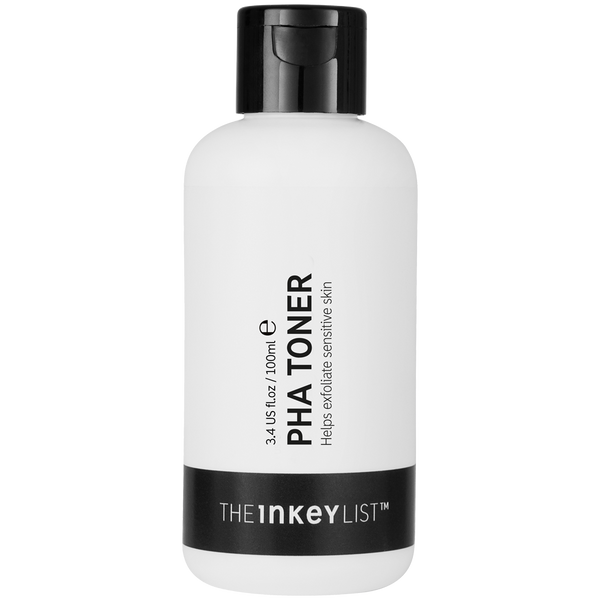
The PHA Toner (£14, 100ml) is the primary recommendation for sensitive skin, and it’s formulated specifically with that reactivity in mind. It contains 3% PHA in the form of gluconolactone, 3% niacinamide, and aloe vera, a combination designed to exfoliate gently while simultaneously calming and hydrating the skin rather than stripping it. It’s alcohol-free and fragrance-free, two details that matter enormously for sensitive skin, since both alcohol and added fragrance are common, avoidable triggers for reactivity. As a leave-on toner, it fits into a routine without requiring an additional step or rinse, which also makes it easier to use consistently.
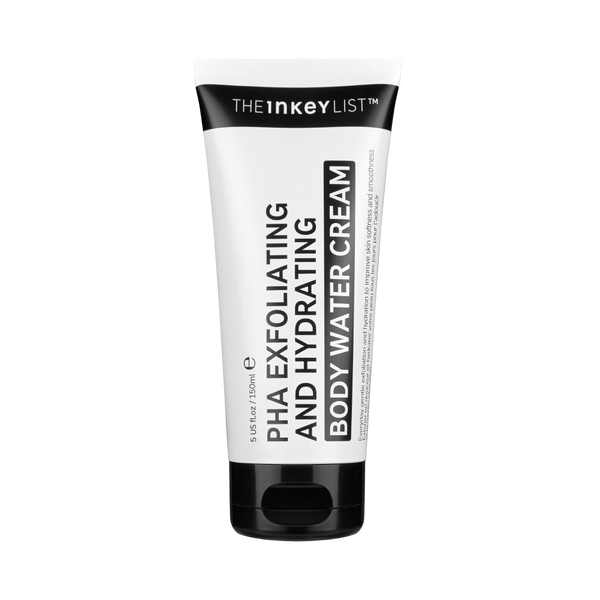
For the body, the PHA Body Water Cream serves a similar purpose in a different format. It’s a 2-in-1 exfoliating moisturiser, meaning it replaces the need for a separate moisturising step entirely. This matters more than it might initially seem, because body skin is frequently over-exfoliated with standard physical scrubs that are far harsher than most people realise, precisely because body skin doesn’t show irritation as visibly or as quickly as facial skin does.
Exfoliation on its own is only half of the equation; what follows matters just as much. The Hyaluronic Acid Serum, available in 30ml, 60ml and 100ml sizes, is the hydration step that should follow exfoliation in a well-built routine. This isn’t a separate, unrelated consideration, it’s part of the same decision logic: exfoliating sheds surface cells and can temporarily affect the skin’s moisture barrier, so replenishing hydration immediately afterwards helps the skin recover and stay comfortable.
Before any of this, though, sensitive skin needs the right starting point in the cleanse itself. The Oat Cleansing Balm (£15, 150ml) is worth mentioning here specifically because a non-stripping first cleanse sets the stage for everything that follows. Introducing an exfoliating acid onto skin that’s already been roughened by a harsh cleanser is a common, avoidable reason routines fail before they’ve even started.
Across all of these products, the common thread is deliberate: fragrance-free, alcohol-free formulations that don’t ask sensitive skin to tolerate anything beyond what’s actually necessary for the product to work. If you’d rather not piece a routine together product by product, the Build Your Own Routine tool lets you bundle these together and save, which is a reasonable shortcut once you know which category you’re working with.
Knowing which products to use solves one part of the equation. The other, equally important part, is knowing how to actually bring them into a routine without undoing all of this careful ingredient selection through overuse.
How to Introduce Exfoliation Safely (And How Often to Use It)
Even the gentlest exfoliant can cause problems if it’s introduced too aggressively, which is why frequency deserves just as much attention as ingredient choice. The good news is that the staging process is straightforward and doesn’t require guesswork.
Start at two to three times per week, used in the evening only. This gives skin enough time between applications to assess how it’s responding before adding more frequency, and evening use means any mild, temporary sensitivity has time to settle overnight rather than being compounded by sun exposure or makeup immediately after application. After several weeks, assuming skin has shown no signs of irritation, redness, or excessive dryness, frequency can be gradually increased.
This is where the frequently asked “can sensitive skin be exfoliated every day” question gets a direct answer: yes, but specifically with PHA, and only once skin has had time to adjust. This isn’t true across the board. Daily use of a stronger AHA or BHA would be an entirely different proposition, likely to overwhelm even well-tolerated skin over time. PHA’s gentler, larger-molecule mechanism is precisely what makes daily use realistic, something that generally isn’t advisable with faster-acting acids.
A few non-negotiables apply regardless of how gradually you build up:
- SPF every single morning after exfoliating. Freshly exfoliated skin has less of its natural protective surface layer, making sun protection more important, not less.
- Never layer multiple exfoliating acids in the same routine. Combining a PHA toner with a glycolic acid serum, for example, stacks penetration and irritation risk rather than stacking benefits.
- Pause entirely if skin is actively flaring, broken, or compromised. This connects directly back to the barrier-versus-sensitivity distinction covered earlier; active flare-ups call for recovery, not more exfoliation.
For readers who want to incorporate other actives like retinol alongside exfoliation, a structured approach can help avoid the guesswork of “which night do I use what.” This is where skin cycling becomes useful, a method of rotating specific actives across different nights rather than using everything at once. We won’t go into the mechanics of retinol interactions here, but our guide on skin cycling: rotate active ingredients like a pro lays out a practical framework for anyone wanting to combine exfoliation with other treatments without overwhelming their skin.
One more practical step shouldn’t be skipped regardless of how gentle a formula claims to be: patch testing. Apply a small amount to the inner arm and wait 24 hours before using it on the face. It takes a day, and it’s the single easiest way to catch a potential reaction before it happens somewhere more visible. For anyone navigating exfoliation during pregnancy specifically, a life stage with its own particular considerations, our guide on is PHA safe during pregnancycovers that question directly. And for the SPF guidance mentioned above, our page on what is SPF explains why that morning step matters so consistently.
With frequency and introduction sorted for the face, the same careful thinking extends naturally to the rest of a skincare routine, and to the body, which is often treated far more roughly than facial skin ever would be.
Building a Complete Gentle Routine Around Your Exfoliator
An exfoliator doesn’t work in isolation, it works as part of a sequence, and getting that sequence right matters almost as much as the product choice itself. Here’s how a simple, sensitive-skin-friendly routine comes together across morning, evening, and body care.
Morning:
- Gentle cleanse
- PHA Toner
- Hyaluronic Acid Serum
- Moisturiser
- SPF
Evening:
- Double cleanse, starting with the Oat Cleansing Balm
- PHA Toner
- Any treatment serum
- Moisturiser
This structure keeps exfoliation consistent without crowding the routine with conflicting actives. Notice that the PHA Toner appears in both routines, a reflection of how realistic daily use becomes once skin has adjusted, something that simply wouldn’t be advisable with a stronger acid in the same slot twice a day.
Body skin deserves its own brief mention here, mainly because it’s so often treated with far more force than facial skin ever would be. Rough physical scrubs in the shower are common, yet body skin can be just as prone to irritation as facial skin, it simply shows it less obviously. Rather than repeating that guidance in full here, our dedicated guides on how to exfoliate body skin and which body exfoliator is right for you go into the specifics of frequency, product choice, and problem areas like keratosis pilaris-prone skin in far more depth.
If redness or uneven tone, rather than texture, is your primary concern, that’s a slightly different conversation to exfoliation, and one worth having separately. Our guide on is azelaic acid an exfoliant? what it really does addresses that adjacent question directly, since azelaic acid tends to come up frequently for people with reactive, redness-prone skin. And for anyone with more tolerant body skin weighing up a wash-off exfoliating format rather than a leave-on one, glycolic acid body wash: what to look for before you buy is a useful comparison point.
The single rule that underpins this entire routine, worth repeating because it’s the most common mistake people make once they’re feeling confident: never layer two exfoliating acids in the same routine, and keep retinol or vitamin C on a separate step or a separate evening entirely. It’s an easy rule to forget once a routine starts feeling routine, which is exactly when accidental over-exfoliation tends to creep in.
For anyone who’d still rather not build this out product by product, a more guided approach is available through the brand’s routine-building tools, which can take some of the decision fatigue out of the process entirely.
With a full routine mapped out, it’s worth addressing the specific, recurring questions that tend to come up once people start putting this into practice.
The Bottom Line
Sensitive skin was never the real obstacle here, mismatched exfoliants were. Across this guide, the throughline has been consistent: the goal isn’t to avoid exfoliation, it’s to choose the right category, apply it at a sensible frequency, and support it with a routine that doesn’t undo the careful ingredient selection you’ve just made.
Based on everything covered, PHA, and specifically the PHA Toner, remains the clearest starting point for most sensitive skin types. Its larger molecular size, paired with niacinamide and aloe, allows it to exfoliate gradually rather than aggressively, which is precisely the mechanism reactive skin needs.
That said, this has been a decision-making guide rather than a single mandate for every reader. Some people with more tolerant skin may still choose to use AHAs or BHAs in moderation, and that’s a perfectly reasonable choice if your skin has demonstrated it can handle them. The point was never to declare one ingredient universally correct, it was to help you match the exfoliant to what your own skin can actually tolerate, rather than whatever happens to be trending.
Ready to Build Your Routine?
If you’re ready to put this into practice, the easiest next step is building a full gentle exfoliation routine using the Build Your Own Routine and Save tool, which bundles the PHA Toner, Hyaluronic Acid Serum, and Oat Cleansing Balm together at a better value than buying individually.
And if questions remain, whether about a specific skin concern, a product combination, or anything covered in this guide, askINKEY is there for a quick, personalised chat-based answer. No pressure, no guesswork, just clear guidance built around your skin.
Frequently Asked Questions
Got a question?
Our askINKEY team are a friendly bunch of skincare experts with deep product knowledge and zero judgement. Whether you're an ingredient obsessive or just starting out, we'll make it make sense. No question too big. No question too small. We Give A Care, Every Day.


