



Glycolic Acid and Vitamin C: How to Layer Them the Right Way
Yes, you can use glycolic acid and vitamin C together - here's exactly how to layer them, with three simple methods and step-by-step AM and PM routines to help you glow without irritation.
Author
askINKEY skincare advisor
Published
29 July, 2026
Time to read
13 minutes
Yes, you can use glycolic acid and vitamin C together. The key is not avoidance but timing and method: for most people, the simplest approach is vitamin C in the morning and glycolic acid at night, though there are safe ways to use both in the same routine too. If you have been searching for a straight answer to “can you use glycolic acid with vitamin C”, that is it.
The reason this question gets asked so often is understandable. Both glycolic acid and vitamin C are actives that work at a low pH, both target dullness and uneven skin tone, and the internet is full of conflicting advice about whether they clash, cancel each other out or overwhelm the skin. A simple pairing has been made to feel complicated, and that helps nobody.
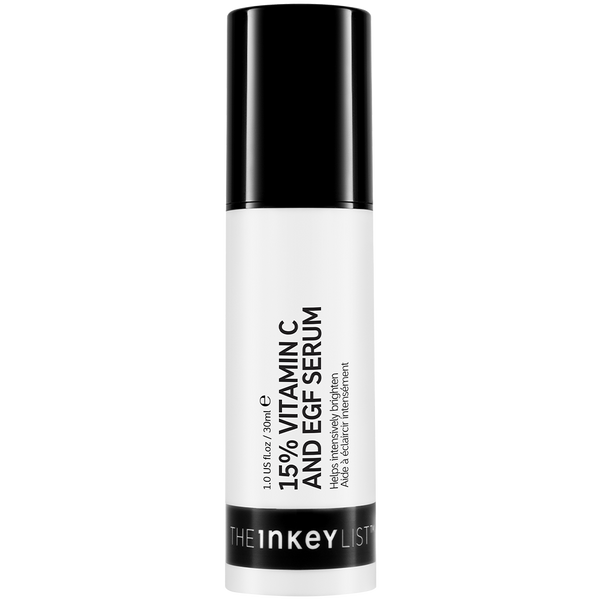
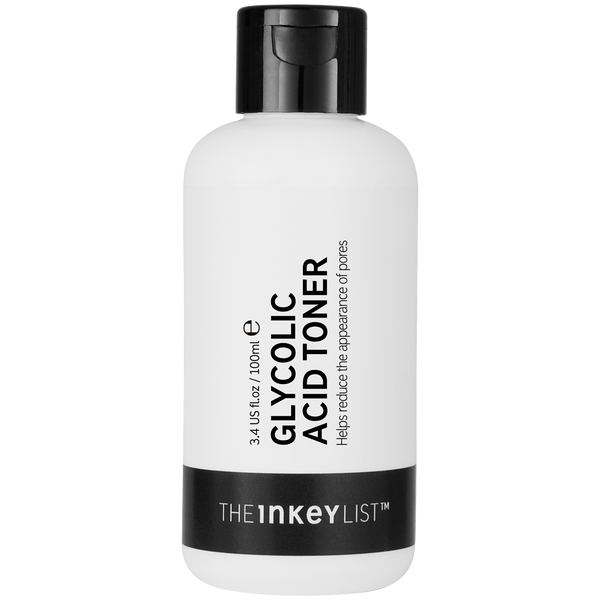
This guide sets out everything you need to know. You will learn what each ingredient actually does, why the pairing works, the honest facts about pH and irritation, three safe layering methods ranked from easiest to most advanced, complete morning and evening routines, who should approach the combination with care, and direct answers to the most searched questions. Where products help illustrate the guidance, we will reference our own, such as our Glycolic Acid Toner (£14) and our 15% Vitamin C + EGF Serum (£16), but the principles apply to any well-formulated versions of these ingredients.
Skincare has become too complicated. This guide is about giving you clarity you can trust, so let us start with what each ingredient actually does, because the layering advice only makes sense once the mechanisms are clear.
What Glycolic Acid and Vitamin C Each Do for Your Skin
Before you can layer two actives intelligently, you need to know what job each one is doing. Glycolic acid and vitamin C are often mentioned in the same breath because they chase similar visible results, but they get there by completely different routes. Understanding that difference is what makes the timing advice later in this guide click into place.
What Glycolic Acid Does for Your Skin
Glycolic acid is an alpha hydroxy acid, or AHA, and it holds a particular distinction within that family: it has the smallest molecule of any AHA. That small size matters. It means glycolic acid can move through the upper layers of the skin efficiently, where it gets to work dissolving the bonds that hold dead skin cells together on the surface. Once those bonds loosen, dull, tired cells shed away and the smoother, fresher skin underneath is revealed.
The visible payoff builds over consistent use: smoother texture, a gradual fading of dark spots and post-blemish marks, improved radiance and a more even overall tone. There is also a practical bonus that is directly relevant to this guide. By clearing away the layer of dead cells sitting on the surface, glycolic acid helps the products you apply afterwards absorb more effectively. Exfoliated skin is simply a better canvas.
That is the short version, and the short version is all you need for the purposes of layering. If you want the full picture of what this ingredient can do, our guide to the 5 benefits of glycolic acid goes deeper, and the glycolic acid pillar page covers the ingredient from every angle.
What Vitamin C Does for Your Skin
Vitamin C plays an entirely different position on the team. It is a powerhouse antioxidant, which means its primary job is defence. Throughout the day, your skin is exposed to UV light and pollution, both of which generate free radicals: unstable molecules that damage skin cells and accelerate visible ageing, dullness and uneven pigmentation. Vitamin C neutralises those free radicals before they can do their worst.
Alongside that protective role, vitamin C is one of skincare’s most reliable brighteners. It helps to visibly brighten the complexion, fade hyperpigmentation and dark spots over time, and support the skin’s natural collagen production for a firmer, healthier look.
One detail worth flagging now, because it becomes important in the pH discussion later: not all vitamin C is the same. Our 15% Vitamin C + EGF Serum uses ascorbyl glucoside, a stable vitamin C derivative that is gentler on the skin than pure L-ascorbic acid whilst still delivering effective brightening and antioxidant benefits. Stability and gentleness are exactly the qualities you want when pairing vitamin C with an exfoliating acid. For guidance on the broader question of when vitamin C fits into a routine generally, our guide on when to use vitamin C covers it fully, and the vitamin C pillar page holds the complete ingredient breakdown.
Why These Two Ingredients Keep Ending Up Together
Look at the two lists of benefits side by side and the pattern is obvious. Both ingredients target dullness. Both work on uneven tone. Both help fade dark spots. Both improve the look of texture over time. They approach those goals from opposite directions - one by removing what is dulling the surface, the other by protecting and brightening what is underneath - which is precisely why using glycolic acid and vitamin C together, correctly, is so effective. You are not doubling up on one mechanism; you are covering two.
With both mechanisms clear, we can now tackle the question that sits behind the question: do these two low-pH actives actually clash?
Why This Pairing Works - and the Truth About pH and Irritation
Type “can you mix glycolic acid and vitamin C” into a search engine and you will find a tangle of claims: that they cancel each other out, that one deactivates the other, that using both is a fast route to ruined skin. Some of this is outdated, some is oversimplified, and some is simply wrong. This section separates the chemistry facts from the internet folklore, because you deserve to know what is actually true.
Start with the fundamentals of why the pairing makes sense. Glycolic acid and vitamin C have complementary mechanisms. Glycolic acid is the exfoliant: it clears away the layer of dead surface cells that scatter light and make skin look dull. Vitamin C is the defender and brightener: it neutralises environmental damage and works on pigmentation from within the skin’s upper layers. Better still, freshly exfoliated skin allows brightening ingredients to work more evenly, because there is no patchy layer of dead cells blocking or diluting their path. The two actives do not compete. They set each other up.
The pH Question, Answered
The most persistent objection to this pairing is about pH, so let us deal with it directly. Both ingredients do prefer an acidic environment. L-ascorbic acid, the purest form of vitamin C, is most stable and bioavailable at a pH of around 3.5 or below, as detailed in the peer-reviewed paper Topical Vitamin C: Mechanisms of Action and Clinical Applications. Glycolic acid, for its part, has a pKa of around 3.8, which means it does its best work in a similarly acidic range.
Notice what that actually means: these two actives are chemically compatible neighbours, not enemies. They want the same conditions. The idea that layering them creates some kind of neutralising reaction that “deactivates” both is largely myth, and the dermatology literature says so explicitly. The peer-reviewed review Vitamin C in Dermatology, published in the Indian Dermatology Online Journal, addresses the combination directly:
Vitamin C “can safely be used in conjunction with alpha hydroxy acids such as glycolic acid.”
That is not a marketing claim. It is the published position of peer-reviewed dermatology research, and it is the line worth remembering the next time a social media video insists these ingredients must never meet.
There is one more factor working in your favour here, and we will state it transparently because it is genuinely relevant rather than a sales point. The ascorbyl glucoside in our 15% Vitamin C + EGF Serum is less pH-fussy and less irritating than pure L-ascorbic acid. Stable derivatives like this do not depend on sitting at a very low pH to remain effective, which removes much of the theoretical friction from the pairing in the first place. If you are using a stable vitamin C form, the pH debate becomes even less of a concern than the research already suggests.
The Real Concern: Cumulative Irritation
Here is the honest part, because myth-busting only earns trust if it comes with the full picture. The genuine risk of combining glycolic acid and vitamin C is not chemistry. It is cumulative irritation.
Layering two low-pH actives back to back, especially at high strengths or high frequency, can stress the skin barrier. The signs are familiar to anyone who has overdone it with actives: stinging on application, redness that lingers, dryness, flaking and a general increase in sensitivity. None of this means the ingredients are incompatible. It means the dose, frequency or timing was more than your skin could comfortably process. This is a dosage and timing issue, not a chemical one, and dosage and timing are entirely within your control.
Formulation matters enormously here too. Research published in a study on glycolic acid formulated at pH 4 found that it stimulated collagen production without triggering inflammation, demonstrating that a well-formulated acid can deliver results whilst staying kind to the skin. A review in the journal Cosmetics reinforces the same point: free acid content, pH and overall formulation design have as much influence on irritation as the ingredient name on the label. The lesson is simple. How an acid is formulated matters as much as the fact that it is an acid.
So where does this leave us? With a clear, honest framing. We tell you what products can and cannot do, and the truth here is that the answer is not “never combine glycolic acid and vitamin C”. The answer is “combine them intelligently”. Some ingredient pairings genuinely do need to be kept apart, and our guide to skincare ingredients you should not mix covers those. This pairing is not one of them - provided you follow a sensible method.
Which brings us to the practical heart of this guide: exactly how to layer them.
The Best Way to Layer Glycolic Acid and Vitamin C: Three Methods
If you take one thing from this article, make it this section. There are three reliable ways to use glycolic acid and vitamin C together, ranked here from safest and simplest to most advanced. Most people should start with Method 1 and may never need anything else. Here they are at a glance:
- Vitamin C in the morning, glycolic acid at night - the default for most people.
- Alternate nights or skin cycling - for those who prefer both actives in the evening.
- Layering both in the same routine - for resilient, experienced skin only.
Let us take each in turn.
Method 1: Vitamin C in the Morning, Glycolic Acid at Night
This is the method most dermatologists recommend, and it wins for a reason that is almost elegant in its simplicity: it gives each ingredient the time slot where it performs best, and the two never have to share the skin at the same moment.
Vitamin C belongs in the morning because its antioxidant defence is most valuable during the day, when your skin faces UV light and pollution. Applying it in the morning means it is on duty exactly when free radicals are being generated. Glycolic acid belongs at night because exfoliation is best done when there is no sun exposure to contend with, and because glycolic acid increases the skin’s sensitivity to the sun. Cleveland Clinic’s guidance on glycolic acidsupports night-time application precisely because of this photosensitivity, and dermatologists quoted in Allure’s guide to glycolic acid echo the same AM vitamin C, PM acid separation.
By splitting them across the day, you sidestep the cumulative irritation issue entirely. There is no overlap, no waiting between layers, no pH juggling. Each active gets a clear run at its job. If you are new to either ingredient, if your skin is anywhere on the sensitive spectrum, or if you simply want the least complicated path to results, this is your method. We will say it plainly: this is the right choice for most readers.
Method 2: Alternate Nights and Skin Cycling
Some people prefer to keep their morning routine minimal, or they find vitamin C sits better under their evening moisturiser. If both of your actives need to live in the PM, alternating nights is the answer: glycolic acid on your exfoliation night, vitamin C on the other nights, and rest nights preserved for barrier recovery.
This slots neatly into the skin cycling framework, where your week rotates through an exfoliation night, a treatment night and recovery nights. Glycolic acid takes the exfoliation slot; vitamin C can occupy other evenings or move to the morning on acid nights. We will not re-explain the whole structure here because our dedicated guide to skin cyclingcovers the full method, including how to build your rotation and adjust it as tolerance grows. The principle for our purposes is simple: the two actives still never share a routine, so irritation risk stays low, but both stay consistently in your week.
One scheduling note: if retinol is already part of your evenings, it occupies the treatment night in a cycling structure, and you should never stack it with glycolic acid on the same night. Our guide to whether you can use vitamin C and retinol together explains how to fit all three actives into one week without overloading your skin.
Method 3: Layering Both in the Same Routine
Now for the advanced option, offered with honest caveats attached. It is possible to apply glycolic acid and vitamin C in the same routine, and for resilient, experienced skin it can work well. The order and the wait are what make it safe.
If you are layering both in one sitting, glycolic acid goes first. It has the lower pH and the thinner, more watery texture, and thin, low-pH products should generally go on before richer ones. After applying it, wait 10 to 20 minutes. This pause allows your skin’s surface pH to begin normalising, so the vitamin C arrives on skin that has settled rather than skin that is still processing an acid. Then apply your vitamin C and continue with the rest of your routine.
To answer the long-tail question directly, because plenty of people search for exactly this: if you are using both in one routine, glycolic acid goes first, and applying vitamin C after glycolic acid is absolutely fine once the skin has settled.
The caveats, stated clearly and without drama. This method is not for beginners. It is not for sensitive or reactive skin. It is not for anyone whose barrier is currently compromised. And it comes with a standing instruction: if you experience stinging that does not fade quickly, or redness that persists, stop layering them in the same routine and fall back to Method 1. There is no prize for tolerating discomfort, and Method 1 delivers the same long-term results with none of the risk.
You now have the theory and the methods. The next step is turning them into an actual routine you can follow tomorrow morning.
Your Step-by-Step AM and PM Routine (Plus How Often to Use Each)
Knowing the method is one thing; knowing exactly what to apply, in what order, on which days, is what turns knowledge into results. Here is the complete routine built around Method 1, the morning-and-night split that suits most people. Every step earns its place, and none of it is complicated.
Morning Routine: Vitamin C’s Moment
Your morning routine has one strategic goal: protect and brighten for the day ahead. Five steps, in this order:
- Cleanse gently. A mild cleanser is all you need in the morning; you are refreshing the skin, not stripping it.
- Apply your vitamin C. Our 15% Vitamin C + EGF Serum (£16) goes onto clean, dry skin so the antioxidant protection is in place before you step outside.
- Hydrate. Apply our Hyaluronic Acid Serum (£12) to damp skin, where it can draw in and hold moisture most effectively.
- Moisturise. A layer of moisturiser seals in the hydration and keeps your barrier comfortable through the day.
- Finish with SPF. Our Dewy Sunscreen SPF 30 (£15) is the final step, every single morning.
That last step deserves emphasis. SPF is non-negotiable when glycolic acid is anywhere in your routine, even though you are applying the acid at night. Glycolic acid increases your skin’s sensitivity to the sun for days after use, so daily sun protection is what safeguards both your skin and your results. It also protects the brightening progress your vitamin C is making; there is little point fading dark spots by night if unprotected sun exposure is creating new ones by day. For the full explanation of why these two work as a team, our guide on vitamin C and sunscreen and why you need bothcovers it in depth.
Evening Routine: Glycolic Acid’s Moment
Evenings are for renewal. On your acid nights, the routine looks like this:
- Cleanse. Remove the day - SPF, pollution, makeup - so the acid works on skin, not residue.
- Apply glycolic acid. Sweep our Glycolic Acid Toner (£12) across the face, avoiding the immediate eye area, on 2 to 3 nights per week to start.
- Rehydrate. Follow with hyaluronic acid to replenish moisture after exfoliation.
- Support the barrier. Finish with our Bio-Active Ceramide Moisturiser (£20), whose ceramides help reinforce the skin barrier - exactly what freshly exfoliated skin appreciates most.
On non-acid nights, simply run the same routine without step 2. Those nights are not wasted; they are when your skin consolidates the benefits and keeps its barrier strong.
How Often Should You Use Each?
Frequency is where most people get this pairing wrong, so here are the numbers plainly.
Vitamin C: daily, every morning. Antioxidant protection is only useful if it is actually there when the free radicals arrive, and consistency is what drives the brightening results over time.
Glycolic acid: start at 2 to 3 nights per week. Build up gradually only if your skin remains comfortable after several weeks. And absorb this now, because it will save you weeks of setbacks: more is not better with exfoliating acids. Results come from consistent, tolerated use over months, not from aggressive daily use that leaves your barrier struggling.
Two more habits worth adopting. Patch test both actives before first use - a small amount on the inner forearm or behind the ear for a couple of days tells you a lot. And introduce one new active at a time, leaving a week or two between additions, so if your skin reacts you know exactly what caused it.
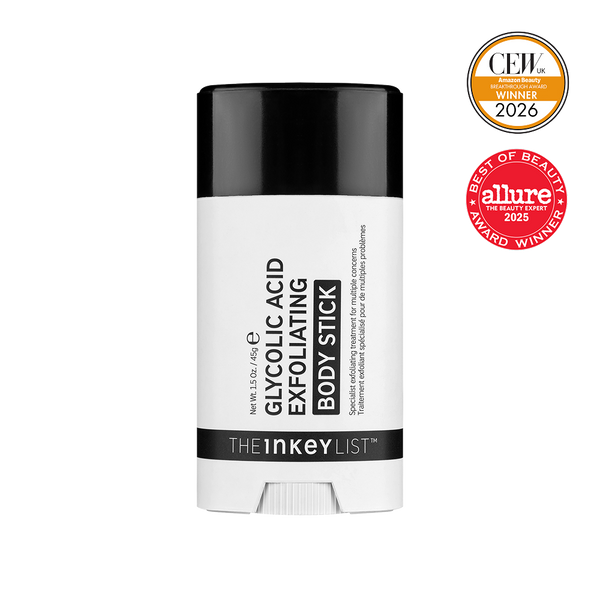
One final note before we move on: the same AM/PM logic applies from the neck down, and our Glycolic Acid Exfoliating Body Stick brings the same exfoliating benefits to areas like the arms and legs. And if you would like the complete framework for ordering every product in your routine, not just these two actives, our guide on how to build your skincare routine is the place to go.
A routine is only right if it is right for your skin, though. So before you copy any of the above, the next section covers who should modify or skip this pairing, and the mistakes that quietly undo results.
Who Should Be Careful - and the Common Mistakes to Avoid
Honesty time. Glycolic acid and vitamin C are a brilliant pairing for many people, but not for everyone, and pretending otherwise would do you a disservice. This section covers who should slow down, what the gentler path looks like, and the handful of mistakes responsible for most of the failures people blame on the ingredients themselves.
Who Should Approach This Pairing Cautiously
A few groups should take extra care before diving in. If you recognise yourself below, it does not mean this pairing is off the table forever; it means the entry route should be slower and gentler.
Sensitive or reactive skin. If your skin flushes easily, stings with new products or reacts to fragrance, two low-pH actives is a lot to ask. Start with one, at low frequency, and be patient.
Skincare beginners. If actives are new to you, introduce one at a time with weeks between them. Vitamin C first is often the gentler starting point, with glycolic acid added later once your skin has a settled baseline.
Anyone with a compromised barrier. Tightness, flaking, persistent redness or that raw feeling when applying even bland products are all signs your barrier needs repair, not exfoliation. Pause the acids, focus on hydration and barrier support, and return when your skin is calm.
Anyone using prescription actives. If you are on prescription treatments for your skin, check with a professional before adding either of these ingredients. Prescription actives change the equation, and personalised advice beats general guidance every time.
If glycolic acid feels like too much for your skin but you still want the exfoliation-plus-vitamin-C benefits, there is a genuinely good alternative: swap the glycolic acid for our PHA Toner. PHAs, or polyhydroxy acids, have much larger molecules than glycolic acid, which means they work more slowly and gently at the very surface of the skin. The result is meaningful exfoliation with far less irritation potential, which makes the vitamin C pairing considerably more forgiving. Our guide to using acids in your skincare routine explains the full AHA versus PHA picture if you want to understand the trade-offs.
Whatever your starting point, learn the warning signs of over-exfoliation: skin that looks shiny and feels tight at the same time, stinging when you apply plain moisturiser, a sudden rise in overall sensitivity, or breakouts of small rough bumps. If any of these appear, the response is straightforward: stop the acid, simplify your routine down to cleanser, hydration and moisturiser, let your barrier repair itself over a couple of weeks, and reintroduce the acid slowly at a lower frequency. Your skin communicates clearly; if it is telling you something is too much, listen.
Common Mistakes to Avoid
Most glycolic acid and vitamin C failures trace back to one of five errors. Each gets its own short entry, because each deserves to be remembered on its own.
Mixing the two products together in your palm. Cocktailing an acid toner with a vitamin C serum before applying gives you uncontrolled dilution, unpredictable pH and no idea what concentration actually reached your skin. Layer, never cocktail.
Running glycolic acid and retinol on the same night whilst also using vitamin C. That is three potent actives fighting for the same recovery capacity, and the skin barrier loses. Retinol and glycolic acid should live on separate nights; our guide to vitamin C and retinol together shows how to schedule everything without collisions.
Skipping SPF. This is the mistake that cancels out every brightening gain. Glycolic acid raises sun sensitivity, and unprotected exposure creates the very pigmentation you are trying to fade. No SPF, no point.
Going daily from day one. Daily glycolic acid from the first week is the fastest route to a damaged barrier and a month of repair work. Start at 2 to 3 nights weekly. Patience is the active ingredient nobody markets.
Stacking additional acids into the same routine. Adding a leave-on salicylic acid product on top of glycolic acid and vitamin C multiplies exfoliation beyond what most skin can handle. If you are weighing up the BHA route instead, our sister guide on salicylic acid and vitamin C covers that pairing properly.
Avoid those five and you have eliminated the vast majority of ways this pairing goes wrong. What remains are the specific questions people type into search, so let us answer those directly.
The Takeaway: Pair Glycolic Acid and Vitamin C With Confidence
Glycolic acid and vitamin C are a genuinely powerful pairing for brighter, smoother, more even skin, and the science supports using them together. The pH clash is a myth; the real consideration is simply managing irritation through sensible timing.
The winning formula for most people is straightforward: vitamin C every morning, glycolic acid 2 to 3 nights per week, SPF every single day, and patience whilst the results build. Nothing more complicated than that.
That is what clear guidance looks like: proven ingredients, used intelligently, delivering real results.
Want to go deeper on either ingredient? Explore our glycolic acid and vitamin C pillar pages. Ready to pair them? Start with our Glycolic Acid Toner (£14) and our 15% Vitamin C + EGF Serum (£16). And if you would like to rebuild your whole routine around these actives, our guide on how to build your skincare routine will walk you through it step by step.
Frequently Asked Questions
Got a question?
Our askINKEY team are a friendly bunch of skincare experts with deep product knowledge and zero judgement. Whether you're an ingredient obsessive or just starting out, we'll make it make sense. No question too big. No question too small. We Give A Care, Every Day.


