



Glycolic Acid vs Salicylic Acid: Which Is Right for Your Skin?
One works on the surface, the other works inside the pore — here's how to tell which acid your skin actually needs.
Author
askINKEY skincare advisor
Published
05 June, 2026
Time to read
10 minutes
Glycolic acid and salicylic acid are two of the most recommended ingredients in skincare, and two of the most frequently mixed up. Both are chemical exfoliants. Both have decades of research behind them. Both genuinely work. But they are not interchangeable, and choosing the wrong one for your skin usually means one of two outcomes: weeks of using something diligently and seeing very little, or irritation you didn't need to put your skin through.
The distinction comes down to a single property, and once you understand it the rest falls into place. Glycolic acid is an Alpha Hydroxy Acid — an AHA. It is water-soluble, and it works on the outermost surface of your skin. Salicylic acid is a Beta Hydroxy Acid — a BHA. It is oil-soluble, and it works inside the pore.
Surface versus pore. That's the whole thing. Everything below is a consequence of it.
AHA vs BHA: The Difference in One Minute
If you only read one section, read this one.
AHAs — alpha hydroxy acids — are water-soluble. Glycolic acid is the most widely used, alongside lactic and mandelic acid. Because they're water-soluble, they can't dissolve into oil, which means they stay at the surface of the skin. There they loosen the bonds holding dead skin cells together, so those cells shed more efficiently. The results you'd expect from that: brighter, smoother, more even-looking skin.
BHAs — beta hydroxy acids — are oil-soluble. Salicylic acid is the one you'll encounter. Because it's oil-soluble, it dissolves into sebum, and sebum is what fills the inside of a pore. That means salicylic acid can travel into the pore itself and exfoliate from within. The results: clearer pores, fewer blackheads, less congestion, less oil sitting on the surface.
So the difference between AHA and BHA is not strength, and it isn't a question of which is more advanced. It's location. An AHA works on top of the skin. A BHA works inside it. Ask what your skin needs — surface renewal or pore clearing — and the answer picks the acid for you.
There's a third category worth knowing about, and we'll come to it: PHAs, which exfoliate at the surface like AHAs but far more gradually.
Glycolic Acid: The Surface Exfoliant
Glycolic acid is the most studied AHA in skincare, derived from sugar cane. Its defining feature is molecular size — it has the smallest molecule of all the AHAs, which is why it works more efficiently on the outer layer than lactic or mandelic acid do.
Because it's water-soluble, it operates at the epidermis. It does not travel into the pore. What it does instead is target the bonds holding dead cells at the surface, speeding up the rate at which newer cells reach the top. Used consistently, that shows up as improved texture, more even tone, more brightness, and softer-looking surface fine lines.
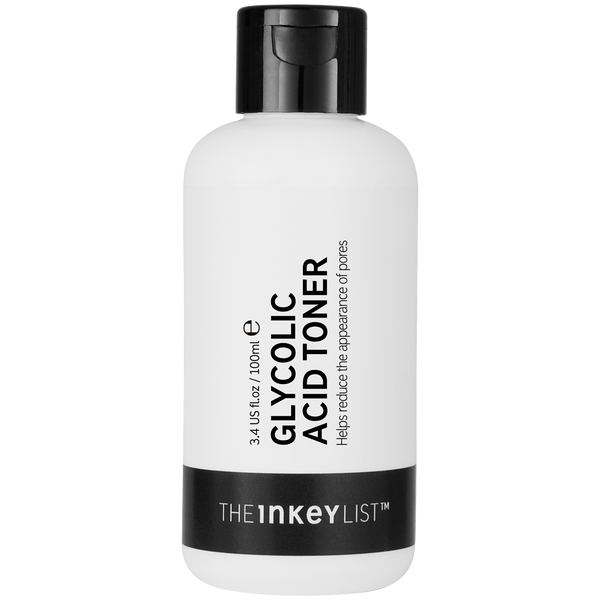
Our Glycolic Acid Toner uses 10% glycolic acid at pH 3.6–4.0 — strong enough to do real work, moderate enough that most skin types can build up to it. It also includes 5% Witch Hazel for light oil control and a soothing effect. At that strength a mild tingle on application is normal and expected.
Best for: dullness, uneven tone, rough or bumpy texture, and early surface fine lines. For hyperpigmentation and post-blemish marks sitting near the surface, glycolic acid supports a more even tone over time.
How to introduce it: one to two evenings a week to start, after cleansing, applied to dry skin with a cotton pad. Build toward three or four as your skin tolerates it. Always follow with moisturiser. Daily SPF is always recommended when you're using any exfoliating acid — see what SPF actually does.
Most people see meaningful change around the six-week mark. It rewards consistency more than intensity.
Where it isn't the right answer: if your skin is very sensitive, currently dry, or its barrier is compromised, a 10% AHA is not the place to begin. More on the gentler route below.
For the full single-ingredient breakdown, the glycolic acid guide goes deeper than we can here. New to this product format entirely? What Does a Toner Actually Do? is a useful five minutes.
Salicylic Acid: The Exfoliant That Works Inside the Pore
If glycolic acid works on the skin, salicylic acid works in it.
Salicylic acid is a BHA derived from willow bark, and its oil-solubility is the entire point. It dissolves into the sebum lining your pores, which is precisely where blemishes, blackheads and congestion begin. Once it's there it does several things at once: it breaks down the keratin binding dead skin cells, it dissolves the plug of oil and debris that becomes a blackhead, it soothes around existing blemishes, and it helps reduce blemish-causing bacteria.
That combination is why it consistently outperforms surface exfoliants on breakouts and congestion. It isn't clearing the top of the skin and hoping — it's changing conditions inside the pore.
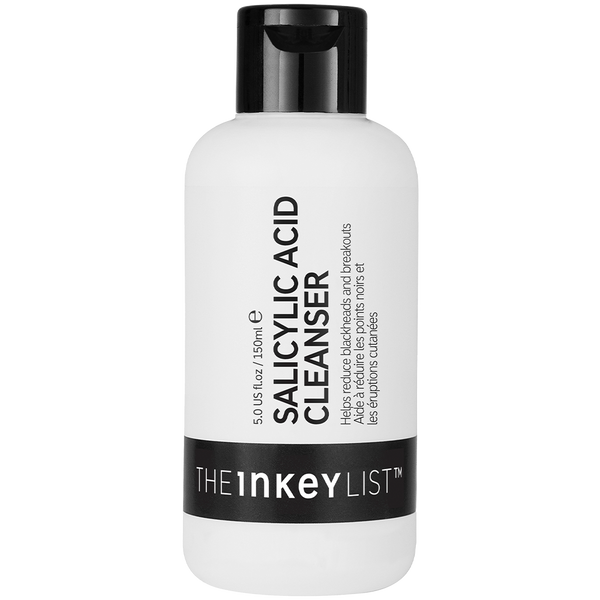
What the testing showed: in an independent four-week consumer trial of 66 people using our Salicylic Acid Cleanser, 90% agreed skin looked visibly clearer after three days, 93% agreed skin instantly looked less oily, and 92% agreed skin didn't feel tight or stripped. The formula is 2% salicylic acid with Zinc for oil control and Allantoin for comfort. Because it rinses off, it's suitable morning and evening from day one.
Not ready to commit to a full size? The Mini Salicylic Acid Cleanser is the lower-commitment way to try it.
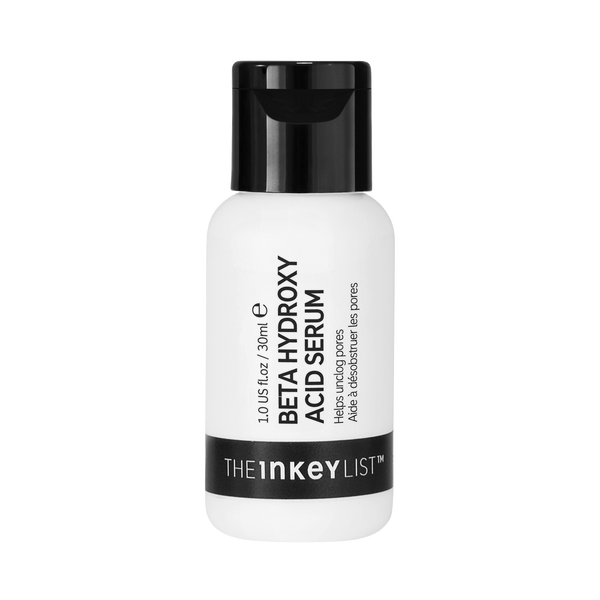
For a leave-on BHA step, the Beta Hydroxy Acid (BHA) Serum is the natural progression — two to three evenings a week, built up gradually. It contains 1% Hyaluronic Acid to offset the dryness a leave-on acid can cause.
Best for: blackheads, whiteheads, blemishes and breakouts, excess oil and general congestion.
The complete salicylic acid guide is the deepest resource we have on the ingredient by itself.
Why Solubility Decides Everything Else
It's worth sitting with this, because it explains every practical difference between the two.
A pore is lined with sebum. Sebum is oil. Water and oil don't mix — so a water-soluble acid physically cannot get inside a pore that's filled with oil. This isn't a matter of concentration or formulation quality. You could use a very high-strength glycolic acid and it would still stay at the surface, because that's what water-solubility means.
Salicylic acid has the opposite property. It dissolves into oil readily, so it moves into the pore without resistance.
This is why a blackhead responds to salicylic acid and doesn't really respond to glycolic acid. A blackhead is oxidised sebum compacted inside the pore — it is, by definition, an oil-based problem in an oil-filled space. Surface exfoliation can improve the look of the skin around it, but it can't reach the thing itself.
It also runs the other way. Dullness and rough texture are surface problems, caused by dead cells accumulating on top of the skin. Salicylic acid does help with texture, but glycolic acid addresses it more directly, because that's the layer it's built for.
So when people ask whether salicylic acid vs glycolic acid is a question of one being stronger, the honest answer is no. They're solving different problems in different places.
Choosing Between Them: AHA or BHA for Your Skin
Oily, congested or blemish-prone skin — salicylic acid, without hesitation. Start with the Salicylic Acid Cleanser. Rinse-off, twice daily, low risk.
Dull skin, uneven tone, rough texture — glycolic acid. The Glycolic Acid Toner, two to three evenings a week.
Blackheads specifically — salicylic acid, and only salicylic acid. For the reason described above, there's no substitute for oil-solubility here.
Surface fine lines — glycolic acid, working through epidermal renewal over six weeks or more.
Combination skin with both sets of concerns — both, but separately. Cleanser daily, Toner on two to three evenings. Never in the same step. Details in the next section.
Sensitive skin — neither a 10% AHA nor a leave-on BHA is the right entry point. The rinse-off Cleanser is the most controlled introduction to salicylic acid. For exfoliation, see the PHA option below.
Teenagers or anyone using actives for the first time — the Mini Salicylic Acid Cleanser. Rinse-off, fragrance-free, tolerable daily, and hard to overdo.
Normal skin, preventative — either. Brightness and texture, glycolic. Pore clarity and oil control, salicylic.
Genuinely unsure? The Skincare Quiz takes two minutes, and What's Your Skin Type? will narrow it down.
PHA: The Third Option, and When It Beats Both
If AHAs are too stimulating for your skin, the answer usually isn't to give up on exfoliation — it's to change the molecule.
Polyhydroxy acids work at the surface in the same way AHAs do, but their molecules are substantially larger. A larger molecule moves through the skin more slowly, which means the exfoliation happens more gradually and with far less stimulation. On PHA vs AHA specifically: same job, gentler pace.
Our PHA Toner is the option we'd point you toward if the Glycolic Acid Toner is more than your skin wants right now, if your barrier is recovering, or if you've reacted to acids before. It's a genuine alternative, not a downgrade — and for some skin it's the better long-term choice, not a stepping stone.
More on the ingredient in the PHA guide, and if breakouts and sensitivity coexist for you, Sensitive Skin and Breakoutscovers that combination directly.
Can You Use Glycolic Acid and Salicylic Acid Together?
Yes — with conditions. Not in the same step, not in the same evening as leave-on products, and not before you've introduced each one individually and confirmed your skin is fine with it.
Layering two exfoliating acids in a single application significantly raises the risk of over-exfoliation, barrier disruptionand redness. Your skin barrier tolerates a finite amount of exfoliating activity in a given period. Going past that doesn't produce faster results — it produces irritation, and irritation sets you back further than going slowly ever would.
Alternate rather than stack. The approach we'd recommend:
Use the Salicylic Acid Cleanser morning and evening as your consistent baseline. Because it rinses off, contact time is short and the risk of overload is low. Then on two to three evenings a week, add the Glycolic Acid Toner after cleansing. On those evenings, use no other leave-on exfoliant.
If you're also using the leave-on BHA Serum, schedule it for evenings when you're not using the Toner. Two leave-on acids on the same night is the specific thing to avoid.
INKEY Tip: the rinse-off format is what makes daily salicylic acid workable alongside another acid. Cleanser every day plus Toner on alternate evenings is the lowest-risk way to get the benefit of both.
Before you start either, patch test. Here's why it matters — 24 to 48 hours, and it saves a lot of trouble.
If you're layering these with other actives, What Not to Layer Together is worth reading first.
How to Tell If You're Over-Exfoliating
This is the most common way people get these ingredients wrong, and it's usually gradual enough that it's missed until it's well established.
Watch for redness that persists between applications rather than settling within an hour. Skin that feels tight, dry or papery when it didn't before. New sensitivity to products that were previously fine — a moisturiser that suddenly stings is a clear signal. Small red bumps appearing in areas you don't normally break out. A shiny, over-smooth look that reads as "glowing" but is actually a thinned surface.
If you recognise several of these, stop both acids. Not reduce — stop. Give your skin a week focused on barrier recovery: gentle cleansing, ceramides, hyaluronic acid, moisturiser, daily SPF. Then reintroduce one acid, at a lower frequency than before, and wait two weeks before adding the second back.
Purging is a different thing. A temporary increase in breakouts when you start an exfoliant can be normal — skin cell turnover accelerates and congestion that was already forming surfaces sooner. Purging appears in the areas you normally break out, and settles within two to four weeks. Breakouts in new areas, or large painful cystic spots, are more likely a reaction than a purge. That means reducing or stopping, and speaking to a dermatologist if it continues.
Building a Routine Around Either Acid
If you're starting with glycolic acid
- Cleanse
- Hyaluronic Acid Serum on damp skin
- Glycolic Acid Toner on dry skin — glycolic evenings only
- Moisturiser
- Next morning: SPF
Start at one to two evenings a week and build toward three or four. The Toner is not a daily product at any stage.
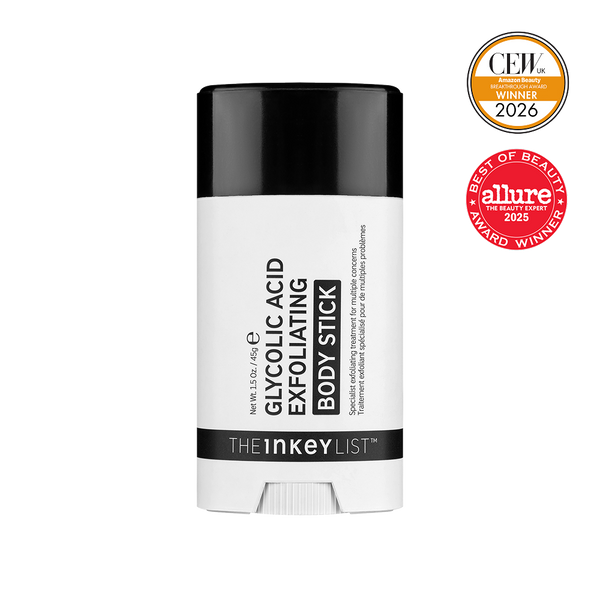
Beyond the face, the Glycolic Acid Exfoliating Body Stick is clinically proven to tackle keratosis pilaris bumps, ingrown hairs and rough texture in as little as seven days. Two to three times a week on dry areas.
If you're starting with salicylic acid
- Cleanse morning and evening with the Salicylic Acid Cleanser
- Hyaluronic Acid Serum on damp skin
- BHA Serum in the evening, two to three times weekly, building gradually
- Niacinamide Serum — pairs naturally with salicylic acid to regulate oil and calm post-blemish redness
- Omega Water Cream — oil-free hydration without heaviness
- Morning: SPF
For individual spots, Succinic Acid Treatment works as a targeted application, and Hydrocolloid Invisible Pimple Patches are clinically proven to visibly reduce blemishes in four hours.
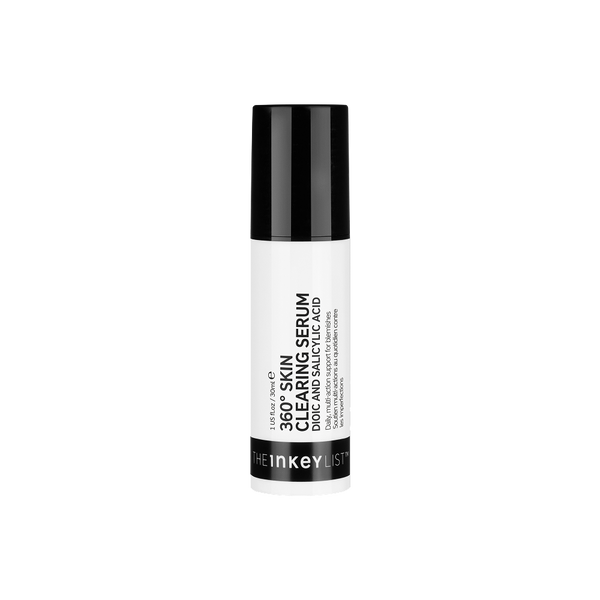
If you want one product covering the full blemish cycle rather than a multi-step routine, the 360° Skin Clearing Serumaddresses all three stages.
Further reading on specific pairings: Salicylic Acid and Niacinamide, Salicylic Acid and Vitamin C, and Salicylic Acid or Benzoyl Peroxide if you're weighing that comparison too. For acid cleansers in a two-step routine, the complete guide to double cleansing.
The Decision Is Simpler Than It Looks
These aren't rival ingredients, and you don't have to pick a side permanently.
Glycolic acid is an AHA. Water-soluble, works at the surface, best for dullness, texture, uneven tone and early fine lines. Salicylic acid is a BHA. Oil-soluble, works inside the pore, best for blemishes, blackheads, oil and congestion. Plenty of people benefit from both, alternated carefully rather than layered.
Your skin's most pressing concern tells you which to start with. Start there, give it six weeks, and add the second only once the first is comfortably established.
Still deciding? The Skincare Quiz takes two minutes, and the Breakout Analyser Pro gives you AI-powered analysis if your concerns are breakout-related.
Clinical data: independent four-week consumer trial of 66 participants. Individual results may vary.
Frequently Asked Questions
Got a question?
Our askINKEY team are a friendly bunch of skincare experts with deep product knowledge and zero judgement. Whether you're an ingredient obsessive or just starting out, we'll make it make sense. No question too big. No question too small. We Give A Care, Every Day.


