


The Complete Guide to Treating Keratosis Pilaris with Glycolic Acid Body Stick
Everything you need to know about treating keratosis pilaris (KP) - what causes those stubborn bumps, why scrubbing fails, and how glycolic acid smooths skin in as little as 7 days.
Author
askINKEY skincare advisor
Published
23 April, 2024
Time to read
15 minutes
Those small, rough bumps on the backs of your upper arms, your thighs or your bottom are almost certainly keratosis pilaris, usually shortened to KP and nicknamed chicken skin. If you have spent years scrubbing at them, covering them up, or quietly assuming they were your fault, this guide is the reset. Effective keratosis pilaris treatment is not about washing harder or buying grittier scrubs. It is about understanding what is actually happening inside your hair follicles, and then using the right ingredient to deal with it.
Here is the reassurance up front, because it matters. KP is genetic. It is one of the most common skin conditions there is. It is completely harmless, it is not infectious, and it has absolutely nothing to do with hygiene or how thoroughly you wash. You did not cause this, and you cannot scrub it away.
What you can do is manage it, and manage it well. This guide covers what causes keratosis pilaris, why physical scrubbing fails and often makes the bumps look worse, how glycolic acid dissolves the keratin plugs sitting inside your follicles, how to tell KP apart from body breakouts, and the exact routine to follow week by week.
One headline fact to hold onto as you read: glycolic acid body care is clinically proven to deliver visibly smoother skin in as little as 7 days. Not a cure, because KP does not have one, but a genuine, measurable, repeatable improvement. Let’s get into how it works.
What Is Keratosis Pilaris? Understanding Chicken Skin
Keratosis pilaris is a very common, entirely harmless skin condition in which small, rough bumps appear across the skin, most often in clusters. According to the NHS, it happens when hair follicles become blocked with a build-up of keratin, the protein found naturally in skin, hair and nails. Keratin is not the enemy here. It is a structural protein your body makes on purpose, and it is a large part of what gives your skin its resilience and your nails their hardness.
The problem is not the keratin itself but where it ends up. In skin with KP, keratin accumulates at the opening of the hair follicle instead of shedding away cleanly. It hardens into a small plug, that plug blocks the follicle, and the follicle responds by forming a raised bump around it. Multiply that by hundreds of follicles across the back of an upper arm and you get the distinctive texture that gives the condition its nickname.
Why It Is Called Chicken Skin
The nickname chicken skin comes from the look and feel of the affected area. The clustered bumps resemble permanent goosebumps, or the surface of plucked poultry skin, which is where the name originates. It is not a flattering description, but it is a useful one, because it is instantly recognisable. If you have ever run your hand over the back of your arm and thought it felt like fine sandpaper or the surface of a strawberry, you already know exactly what chicken skin is.
KP has favourite locations. The outer upper arms are by far the most common, followed by the fronts of the thighs and the bottom. Some people get it on their cheeks, particularly in childhood and adolescence, and it can occasionally show up on the forearms or upper back. It tends to appear symmetrically, so if you have it on one arm you almost certainly have it on the other.
What KP Looks and Feels Like
Recognising KP is usually straightforward once you know what to look for. The NHS describes the bumps as usually the colour of your skin, though they can appear red on white skin and darker on brown or black skin. Some people find their bumps look brownish or leave behind small dark marks once the texture settles.
How to recognise keratosis pilaris:
- Small, uniform bumps clustered closely together rather than scattered randomly
- A rough, dry, sandpapery texture when you run your hand over the area
- Bumps that are skin-coloured, red on white skin, or darker than surrounding skin on brown and black skin
- Most commonly found on the outer upper arms, thighs and bottom
- Generally painless, though the skin can sometimes feel itchy
- Often worse in winter and noticeably better in summer
- Symmetrical, appearing on both arms or both thighs rather than just one side
That seasonal pattern is one of the most reliable identifiers. The NHS specifically notes that the skin can sometimes feel itchy and may be better in summer and worse in winter. Cold air holds less moisture, central heating strips more of it away, and hot showers finish the job. Dry skin makes the plugs more prominent and the surrounding skin rougher, so the same amount of keratin build-up simply looks and feels worse in January than it does in July.
What Causes Keratosis Pilaris?
The honest answer is that nobody knows precisely why keratin builds up in some people’s follicles and not others. What is well established is the pattern. As the NHS puts it, the condition is thought to run in families, so if your parents have it, you may get it too. Genetics is the single biggest factor. This is not something you developed through a lifestyle choice or a skincare mistake. It is written into how your skin cells behave.
A few other factors influence how visible KP becomes:
- Dry skin. Dryness does not cause KP, but it amplifies it. Skin that lacks moisture is rougher, flakier and less efficient at shedding dead cells, so plugs become more pronounced.
- Age. KP is often most noticeable in children, teenagers and younger adults. Many people find it becomes less prominent over the years, though this varies enormously and there is no guaranteed timeline.
- Existing dry or eczema-prone skin. If your skin already runs dry or you are prone to eczema, you are more likely to experience KP alongside it.
- Season and climate. Cold, dry conditions make it worse. Warm, humid conditions tend to soften the appearance.
KP can affect people of any age. It is genuinely widespread, which is worth sitting with for a moment if you have spent years thinking you were unusual. Walk down any high street in summer and a substantial share of the bare arms you pass will have some degree of it.
The Hygiene Myth, Busted
Let’s deal with this directly, because it is the belief that causes the most unnecessary embarrassment. Keratosis pilaris has nothing to do with cleanliness. It is not caused by not washing, not washing properly, not washing often enough, or not washing hard enough. The NHS is explicit that KP is not infectious, so you cannot spread it or catch it.
The reason this myth persists is that the bumps look like something that should come off. They look like dirt trapped in pores, or debris sitting on the surface waiting to be lifted away. They are not. The keratin plug is inside the follicle, below the surface, formed from your own skin protein. No soap on earth reaches it, because soap works on the surface and the problem is not on the surface.
If you have been washing more aggressively in the hope of shifting your KP, you have almost certainly been making it look worse rather than better. Which brings us neatly to the mistake nearly everyone with KP makes at least once.
Why Scrubbing Doesn’t Work (and Can Make KP Worse)
The logic feels airtight. The skin feels rough, therefore the roughness needs to come off, therefore you need something abrasive. So out comes the loofah, the exfoliating mitt, the sugar scrub, the bristle brush. You scrub until the skin turns pink, step out of the shower, and the arm feels temporarily smoother because the surface has been buffed and the skin is flushed. By the next morning, the bumps are back and they look slightly angrier than before.
Everyone with KP has done this. It is the single most common approach and it is also the single most counterproductive. Understanding exactly why it fails is what unlocks the right approach.
You cannot scrub away KP. The plug is inside the follicle, not on top of it.
The Plug Is Below the Surface
Physical exfoliation works by mechanical abrasion. Grit, bristles or textured fabric drag across the outermost layer of skin and knock loose dead cells that were already on their way off. That is a legitimate function, and gentle physical exfoliation has a place in body care for general dullness and flakiness.
But keratosis pilaris is not a surface problem. The keratin plug is lodged inside the follicular opening, seated below the level of the surrounding skin surface. A scrub passing over the top can abrade the skin around the follicle, and it can flatten the bump momentarily by irritating and swelling the surrounding tissue, but it has no mechanism for reaching into the follicle and removing what is inside. You are sanding the doorframe and wondering why the door is still shut.
This is why the smoothness after scrubbing never lasts. Nothing structural has changed. The plug is exactly where it was, and once the temporary flush subsides, the texture returns.
Why It Actively Backfires
Failing to work would be one thing. Making the situation worse is another, and that is what aggressive scrubbing does over time.
Harsh friction creates micro-irritation across the skin surface. In KP-affected areas, where follicles are already inflamed and raised, that irritation compounds. The redness intensifies. Bumps that were skin-coloured start looking pink or purple. Areas that were merely textured start looking genuinely inflamed. In other words, the visual problem you were trying to solve gets more visible, not less.
More importantly, repeated abrasion compromises your skin barrier. That barrier is the outermost layer of skin whose job is to hold moisture in and keep irritants out. Scrub it repeatedly and it becomes less effective at both. Moisture escapes more easily, the skin becomes drier, and dry skin makes KP more prominent. You have now built yourself a loop:
- Bumps feel rough, so you scrub.
- Scrubbing irritates the skin and damages the barrier.
- The damaged barrier loses moisture and the skin becomes drier.
- Dry skin makes the KP bumps rougher and more visible.
- The bumps feel rough, so you scrub harder.
The NHS advice on managing KP is unambiguous on this point, listing “do not use harsh scrubs on your skin” as something to avoid because it can make the condition worse, alongside not scratching, picking or rubbing the skin. When national health guidance and skincare formulators agree, it is worth listening.
Should I Scrub Keratosis Pilaris Away?
No, and this deserves a clear answer because it is one of the most searched questions about the condition. Scrubbing cannot reach the keratin plug that causes the bump. What it can do is irritate the surrounding skin, increase redness, weaken the barrier and make the affected area look more inflamed. If your KP has ever looked worse after a dedicated smoothing session, that is why.
The instinct is not stupid. It is just aimed at the wrong target. What you actually need is not more force but a different mechanism entirely.
The Alternative: Dissolving Instead of Scraping
Chemical exfoliation is the answer, and the name makes it sound more dramatic than it is. Chemical exfoliants are acids, most of them derived from natural sources like sugar cane, milk and fruit, that work by loosening the bonds holding dead skin cells to one another and to the skin surface. Rather than physically dragging cells off, they encourage the skin to release cells it should have shed anyway.
The difference matters enormously for KP. Because these acids work at a molecular level rather than a mechanical one, they can penetrate into the follicular opening and act on the keratin plug itself. No friction, no abrasion, no barrier damage. Just the bonds holding the plug together being systematically loosened until the plug clears and the follicle can function normally again.
If acids are new territory for you, our guide to the different types of acids in skincare breaks down AHAs, BHAs and PHAs in plain English, including which does what and who each one suits. And for the wider picture on exfoliating below the neck, including how often to do it and which areas need a lighter touch, our complete guide to exfoliating body skin covers the full approach.
So if scrubbing cannot reach the keratin plug, what can? One ingredient has the strongest evidence behind it, and it happens to be the smallest molecule in its family.
The Science of Glycolic Acid: How It Dissolves Keratin Plugs
Glycolic acid is an alpha hydroxy acid, or AHA, traditionally derived from sugar cane. It is the most researched and most widely used member of the AHA family, and the reason it earns that position comes down to a single structural fact: glycolic acid has the smallest molecular size of any AHA.
That is not a trivia point. Molecular size determines how effectively an ingredient can move into and through the skin. A smaller molecule penetrates more readily, which means glycolic acid can travel into the follicular opening where the keratin plug sits, rather than simply sitting on the surface doing surface-level work. For a condition that is defined by a blockage inside the follicle, penetration is the whole ball game.
How Glycolic Acid Works on KP
Dead skin cells are held together by bonds, and they are held to the skin surface by the same kind of adhesion. In healthy skin turnover, those bonds break down naturally and cells shed off invisibly, continuously, without you ever noticing. In KP-affected follicles, that process stalls. Keratin accumulates faster than it clears, compacts, and forms the plug.
Glycolic acid intervenes by loosening those bonds. It helps break down the adhesion between compacted dead cells and helps dissolve the keratin plugs that are blocking the follicle. Rather than sanding the surface around a bump, it works on the material forming the bump. The follicle gradually clears, the raised texture softens, and the skin surface becomes measurably smoother.
There is a secondary benefit worth knowing about. As a humectant-adjacent ingredient, glycolic acid also supports better hydration in the upper layers of skin over time, and better-hydrated skin displays KP less obviously. So you get the direct effect of clearing plugs plus the indirect effect of reducing the dryness that makes plugs more visible.
Clinically proven results in as little as 7 days.
That is the headline, and it is worth stating on its own. With consistent use, glycolic acid body care delivers visibly smoother skin in as little as 7 days. Not a permanent cure, not a promise that KP will vanish forever, but a genuine, clinically proven improvement in smoothness within a single week of committed use.
The Targeted Step: Glycolic Acid Exfoliating Body Stick
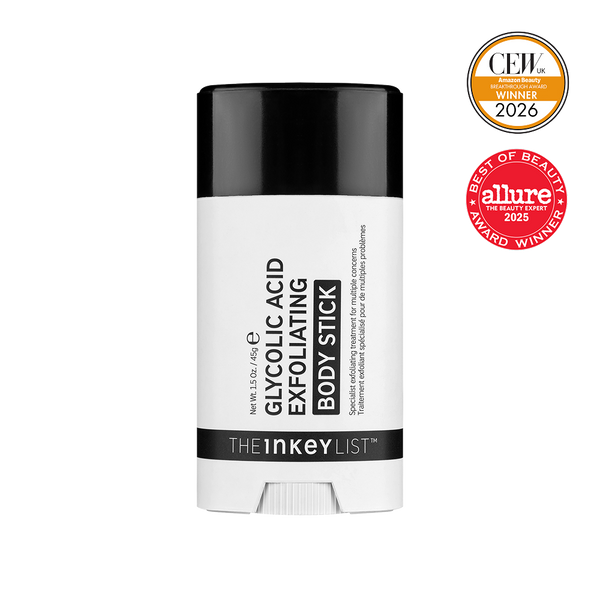
The Glycolic Acid Exfoliating Body Stick, £15, is the hero of any KP routine. It delivers 10% glycolic acid in a swipe-on stick format designed specifically for body use.
The format is doing real work here, not just looking neat on a shelf. Body skin is thicker and more resilient than facial skin, and KP-prone areas are typically awkward to treat: the backs of the upper arms, the fronts of the thighs, the bottom. Decanting a liquid acid onto a cotton pad and trying to reach the back of your own arm is messy and imprecise. A stick lets you apply directly, evenly and exactly where the bumps are, with no drips, no waste and no soaked cotton pads.
Use it 2 to 3 times weekly on clean, dry skin. At 10%, this is a meaningful concentration, so it is a targeted treatment step rather than a daily one. Apply it to bumpy areas, let it absorb, and follow with moisturiser.
The Daily Step: Glycolic Acid Exfoliating Body Wash
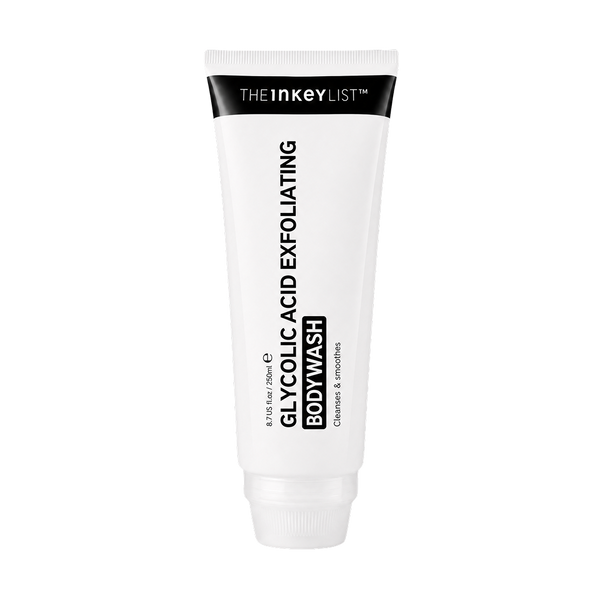
New and exclusive to the UK, the Glycolic Acid Exfoliating Body Wash, £12 for 250ml, is the everyday companion to the stick. It is a dual-acid in-shower formula combining 5% Glycolic Acid with 5% Lactic Acid.
Lactic acid is the second AHA in the pairing, and it brings a slightly different profile. It is a larger molecule than glycolic, so it works a little more gently and closer to the surface, and it has recognised hydrating properties alongside its exfoliating action. Pairing the two means you get glycolic’s penetration and plug-clearing power alongside lactic’s gentler surface smoothing and moisture support, in a format that rinses off after a short contact time.
That short contact time is exactly why a wash can be used daily where a leave-on 10% treatment cannot. It keeps cell turnover ticking over consistently, preventing the gradual rebuild of keratin between your Body Stick applications. You can read more about the formula and the thinking behind it in our Glycolic Acid Body Wash launch story, which also covers its effect on the strawberry-skin appearance of the legs.
Why Two Products Beat One
The two-tier logic is simple once you see it laid out:
- Daily gentle exfoliation in the shower with the Body Wash keeps the follicles from re-clogging and maintains steady turnover with minimal effort.
- Targeted higher-strength treatment 2 to 3 times weekly with the Body Stick does the heavier lifting on established plugs in the areas that need it most.
Neither alone is as effective as both together. Daily-only exfoliation is gentle but slow on stubborn established bumps. Treatment-only exfoliation makes strong progress twice a week but leaves four or five days for keratin to start rebuilding. Combined, you get consistent maintenance plus concentrated action. If you want both without thinking about it, The Exfoliating Body Duo pairs them together.
Pairing Glycolic Acid With the Rest of Your Routine
A question that comes up constantly: what else can you use alongside glycolic acid? The short version is that most modern formulations play together far better than internet wisdom suggests, but sequencing and frequency matter. Niacinamide in particular is a common pairing question, and we have covered it properly in our guide to using niacinamide and glycolic acid together.
The general principle for body care is straightforward. Do not layer multiple strong exfoliating acids on the same area on the same day, always follow exfoliation with hydration, and introduce one new acid product at a time so you can tell what your skin is responding to.
The Honest Bit: Expectations
Here is where we will be straight with you, because overpromising helps nobody.
Keratosis pilaris is a chronic, genetic condition. There is no product, prescription or procedure that permanently eliminates it. Glycolic acid does not rewrite your genetics or change how your follicles behave at a fundamental level. What it does is manage the visible result extremely effectively.
With consistent use you can expect visibly smoother skin in as little as 7 days, with continued improvement over the following weeks as more plugs clear and the skin’s turnover normalises. Many people reach a point where their KP is barely noticeable.
But if you stop, the plugs gradually rebuild. This is maintenance, not a one-time fix, in the same way that brushing your teeth is maintenance. That is not a failure of the ingredient. It is simply the nature of a genetic condition, and knowing it up front means you will not be disappointed at week six when you stop and the texture creeps back.
Understanding the ingredient is half the battle. Here is the practical, step-by-step version.
How to Get Rid of Keratosis Pilaris
Let’s answer the question directly. You cannot permanently get rid of keratosis pilaris, because it is a genetic condition with no known cure. What you can do is visibly smooth it, significantly and reliably, through consistent chemical exfoliation and daily hydration. Many people see noticeably smoother skin in as little as 7 days with glycolic acid, and continued improvement with ongoing use.
Here is the exact five-step approach.
1. Swap Harsh Scrubs for a Chemical Exfoliant
Before adding anything, remove the thing that is working against you. Retire the loofah, the exfoliating mitt, the gritty body scrub and the bristle brush from your KP-prone areas. If your skin has been regularly irritated, give it a few days of gentle washing and moisturising before introducing acids, so you are starting from a calm baseline rather than an inflamed one.
2. Cleanse Daily With a Glycolic Acid Body Wash
In the shower, use the Glycolic Acid Exfoliating Body Wash across your KP-prone and generally rough areas. Lather it over the skin, leave it for a moment to let the 5% glycolic and 5% lactic acid blend get to work, then rinse thoroughly. This is your daily exfoliation baseline and it takes no extra time, because you were going to shower anyway.
3. Apply the Body Stick 2 to 3 Times Weekly
After showering, on clean and completely dry skin, swipe the Glycolic Acid Exfoliating Body Stick directly over bump-prone areas. Two to three times a week is the sweet spot for most people. Let it absorb fully before dressing or applying moisturiser.
If you are new to acids, start with once a week and build up. Skin that has never encountered a 10% AHA benefits from a gradual introduction, and there is no prize for rushing.
4. Hydrate Daily With a Lightweight Body Moisturiser
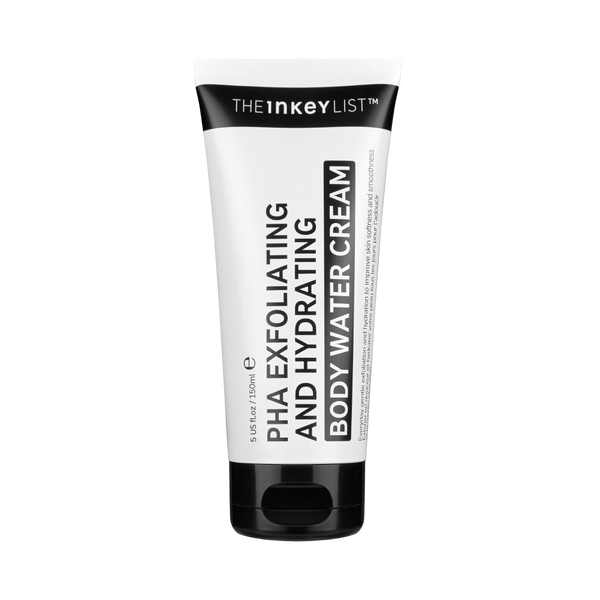
Exfoliation without hydration is only half a routine. Apply the PHA Body Water Cream, £15, daily to soften the skin, support the barrier and calm any itchiness.
5. Stay Consistent
This is the step people skip, and it is the one that determines whether the other four work. Results build week on week. The 7-day smoothing window depends on regular, uninterrupted use, and maintenance is what keeps the bumps from returning. Two weeks of dedication followed by a month of nothing will not get you there.
How to Get Rid of Keratosis Pilaris on Arms
The outer upper arms are KP’s home turf. They are the most commonly affected area by a wide margin, and they are also the area people are most self-conscious about, because arms are what T-shirt and vest weather exposes.
The good news is that arms are the easiest area to treat properly, precisely because the stick format was designed for exactly this kind of application. Reaching the back of your own upper arm with a liquid exfoliant and a cotton pad is an exercise in contortion. Swiping a stick across it takes about four seconds per arm.
The arm-specific approach:
- Shower as normal, using the glycolic body wash over both upper arms and rinsing well
- Dry your arms completely, because applying acids to damp skin can increase the chance of stinging
- Swipe the Body Stick over the full bumpy area, not just the worst patches, since treating the whole zone gives an even result
- Allow it to absorb for a minute or two
- Follow with the PHA Body Water Cream over the same area
- Repeat the stick step 2 to 3 times weekly and the wash and moisturiser daily
Do not restrict yourself to the visible patch. KP tends to fade out gradually at the edges rather than stopping abruptly, so treating slightly beyond where you can obviously see bumps avoids a hard line between smoothed and untreated skin.
Why PHA Deserves a Place in a KP Routine
Polyhydroxy acid, or PHA, is the gentlest member of the exfoliating acid family. PHAs are chemically related to AHAs, but their molecules are considerably larger, which means they penetrate more slowly and stay closer to the surface. That translates to meaningfully gentler exfoliation with a lower likelihood of irritation, which makes them an excellent choice for skin that is already being exfoliated with something stronger elsewhere in the routine.
PHAs also have a genuinely useful second property: they are humectants, meaning they attract and hold water in the skin. For KP, where dryness is a major aggravating factor, an ingredient that exfoliates gently and hydrates is close to ideal.
The PHA Body Water Cream is built around this. It is a lightweight body moisturiser that hydrates and supports the skin barrier while providing mild ongoing exfoliation, which makes it particularly well suited to KP-prone skin that also feels dry or itchy. It sinks in quickly rather than sitting greasily on the skin, which matters when you are applying it to arms and legs every day.
If you want to go deeper, our PHA ingredient hub covers the benefits, how to use it and who it suits. For the specific PHA used in this formula, our explainer on what gluconolactone is breaks down the chemistry, and the science behind the PHA Body Water Cream covers the formulation decisions in detail.
Practical Tips That Make a Real Difference
Small habits compound. These are the ones worth adopting:
- Moisturise within a few minutes of showering, while skin is still slightly damp, to lock in hydration most effectively.
- Turn the shower temperature down. Very hot water strips lipids from the skin barrier and leaves skin drier, which makes KP more prominent. The NHS specifically advises cool or lukewarm showers and baths for KP.
- Do not double up on exfoliants. Using the Body Stick and a separate harsh exfoliant on the same area is not twice as effective, it is just irritating.
- Do not pick at the bumps. It is tempting and it always makes things worse, risking marks and prolonged redness.
- Give it four weeks before judging. You may well see smoothing within 7 days, but the fuller picture emerges over a month.
- Keep going once it works. The most common reason people lose their results is stopping the moment they achieve them.
One complication before we build the full routine: not every bump on your body is keratosis pilaris, and getting the identification right changes which ingredient you should reach for.
Body Breakouts vs Keratosis Pilaris: Spot the Difference
This distinction matters more than most people realise, because KP and body blemishes are caused by completely different processes and respond to completely different ingredients. Treating breakouts with a glycolic body routine designed for keratin plugs, or trying to smooth KP with a product formulated for blemish-prone skin, is how people end up concluding that nothing works.
The two can look superficially similar at a glance. Both present as bumps. Both appear in clusters. Both turn up in places you cannot easily see, like your back and shoulders. But once you know what to look for, telling them apart takes about ten seconds.
How to Identify Keratosis Pilaris
KP bumps are characterised by:
- Uniformity. They are all roughly the same size, like a fine even texture across the area rather than a scattering of different-sized spots.
- Dry, rough feel. Running your hand across the area feels like fine sandpaper or the outside of a strawberry.
- No head, no fluid. They do not come to a white or yellow point, and there is nothing to express.
- Not tender. They do not hurt when pressed, though they can feel mildly itchy.
- Location. Outer upper arms, fronts of thighs, bottom, sometimes cheeks.
- Persistence. They stay broadly the same from week to week rather than appearing and clearing in cycles.
- Symmetry. Both arms, both thighs, usually to a similar degree.
How to Identify Body Breakouts
Body blemishes are characterised by:
- Variety. Different sizes and stages, some small and flat, some raised, some inflamed.
- Inflammation. They often look red or darker than surrounding skin and can feel warm.
- Tenderness. They frequently hurt or feel sore when touched or when clothing rubs them.
- Heads and blackheads. Some come to a visible head, and you may also see blackheads in the same area.
- Location. Back, chest and shoulders, where oil glands are more concentrated and more active.
- Cycles. Individual blemishes appear, develop and clear over days or weeks, while new ones form elsewhere.
- Asymmetry. They do not mirror neatly from one side to the other.
The quickest mental shortcut: KP feels like sandpaper, breakouts feel like spots. KP is a texture across an area. Breakouts are individual events on the skin.
Different Cause, Different Ingredient
The reason the distinction matters comes down to what is physically blocking the follicle or pore.
In KP, the blockage is keratin, a protein. The answer is glycolic acid, which works on protein bonds and dead cell adhesion, and which is water-soluble.
In body breakouts, the blockage is a mixture of excess oil, dead skin cells and bacteria inside the pore. Oil is the key word. Glycolic acid, being water-soluble, is not the ideal tool for a problem sitting in an oily environment. What you want instead is salicylic acid, a beta hydroxy acid that is oil-soluble, which means it can travel into the pore lining and clear congestion from within. That solubility difference is precisely why salicylic acid is the gold-standard ingredient for blemish-prone and oily skin.
Our salicylic acid ingredient hub covers the full picture on how it works and how to use it. And if you are weighing up which acid your skin actually needs, our direct comparison of glycolic acid vs salicylic acid is the ideal companion read to this section.
The Product for Breakout-Prone Zones
The Salicylic Acid Cleanser, £14 for 150ml, is a 2% salicylic acid cleanser that helps unclog pores and reduce breakouts and blackheads. It is designed as a daily face cleanser for oily and blemish-prone skin, but it works equally well on breakout-prone body areas, which is where it earns its place in a body care routine.
Use it in the shower on the back, chest and shoulders, in the same way you would use it on your face. Massage it over damp skin, give it a moment on the skin, then rinse. It is a genuinely versatile product and it means you do not need a separate body-specific formula for your breakout zones.
When Body Breakouts Are the Real Story
For some readers, what they have been calling KP on their back is not KP at all. Back breakouts are extremely common, frequently misidentified, and driven by their own set of factors including hormones, sweat, friction from clothing and gym kit, and simple inaccessibility. Our guide to what back acne is, its causes and types covers the full picture, and if hormonal patterns sound familiar, our piece on what causes back acne in females goes further into the underlying drivers.
For broader education on blemishes and how they form, our complete guide to acne, its causes and types is the place to start.
When You Have Both
Here is the reality for a large number of people: KP on the arms and blemishes on the back, at the same time. These are unrelated conditions that happen to be common enough that plenty of people draw both cards.
If that is you, you do not need to choose. You need glycolic acid for the arms and thighs, salicylic acid for the back and chest, and hydration across both. They are different zones with different needs, treated with different products, in the same shower. That is exactly how the routine below is built.
With the right diagnosis and the right ingredients identified, here is how it all fits together.
Your Complete Body Routine for Keratosis Pilaris
Four products. A few minutes a day. No ten-step complexity, no elaborate weekly schedule to memorise, no products that duplicate each other’s job. Skincare should be clear, not complicated, and a KP routine is a good example of how little you actually need when each product is doing something specific.
Here is the whole thing.
Daily, In the Shower: Glycolic Acid Exfoliating Body Wash
Your everyday exfoliation baseline. Lather the Glycolic Acid Exfoliating Body Wash, £12 for 250ml, over your KP-prone and rough areas: upper arms, thighs, bottom, anywhere the texture lives.
Leave it on the skin briefly rather than rinsing immediately, so the 5% glycolic and 5% lactic acid blend has a moment of contact time to work. Thirty seconds to a minute is plenty. Then rinse thoroughly.
Because this is a rinse-off format at a moderate concentration, it is gentle enough for daily use on most skin. If your skin is particularly sensitive, start every other day.
2 to 3 Times Weekly, After Showering: Glycolic Acid Exfoliating Body Stick
Your targeted treatment step. After your shower, once your skin is completely dry, swipe the Glycolic Acid Exfoliating Body Stick, £15, directly onto your upper arms, thighs and any other bumpy areas.
This is the 10% glycolic acid step, so precision beats enthusiasm. Apply an even layer over the affected zones and let it absorb before dressing or moisturising.
A few guardrails:
- Do not use it on broken, cut, sunburnt or actively irritated skin
- Build up frequency gradually if you are new to acids, starting once weekly
- Two to three times a week is the target, not a minimum to exceed
- Avoid using it on the same area as another strong exfoliant on the same day
Daily, After Washing: PHA Body Water Cream
Your hydration and comfort step, and the one that makes the exfoliation steps work better. Apply the PHA Body Water Cream, £13, daily after showering, ideally while skin is still slightly damp.
It is lightweight, absorbs quickly, supports the skin barrier and calms itchiness, with gentle PHA exfoliation as a bonus rather than as its main job. Well-hydrated skin displays KP far less obviously than dry skin does, so this step is doing visible work as well as protective work.
On Body Stick days, apply it after the stick has fully absorbed.
For Breakout-Prone Zones: Salicylic Acid Cleanser
If you also get blemishes on your back, chest or shoulders, add the Salicylic Acid Cleanser, £12 for 150ml, to your shower routine. Use it on those zones specifically, alongside its everyday job as a face cleanser for oily and blemish-prone skin.
You do not need this step if your only concern is KP. It is there for the substantial number of people dealing with both at once.
Morning or Evening?
Either works, and consistency matters more than timing. That said, there is a mild case for evening application of the Body Stick. Freshly exfoliated skin is temporarily more sensitive to UV, and evening application means the product has all night to work without immediate sun exposure afterwards. It is also simply easier to let a product absorb properly before bed than before getting dressed for work.
The body wash and moisturiser fit into whenever you shower. If that is the morning, that is fine.
Sensible Guardrails
A short list of principles that keep the routine effective and your skin comfortable:
- Introduce one new acid product at a time. Give each a week or two before adding the next, so you can identify what your skin is responding to.
- Always moisturise after exfoliating. Non-negotiable. Exfoliation without hydration leaves skin drier and undoes some of your progress.
- Be consistent. The clinically proven 7-day smoothing window depends on regular use, not sporadic bursts.
- Keep the water lukewarm. Hot showers dry the skin and dry skin makes KP more visible.
- Mind the sun on exfoliated skin. Any skin that has been chemically exfoliated is temporarily more vulnerable to UV. If your newly smoothed arms are going to see daylight, apply a broad-spectrum SPF as you would with any exfoliated skin.
- Listen to your skin. Mild tingling on application is normal with acids. Persistent stinging, burning or raw redness is not. Scale back frequency if that happens.
The Cost of the Whole Thing
Worth naming plainly, because body care has a reputation for being expensive. The complete KP routine, Body Wash at £12, Body Stick at £15 and PHA Body Water Cream at £15, comes to £42 total, and each product lasts for months of regular use. Add the Salicylic Acid Cleanser at £14 if you need the breakout step.
That is less than many single premium body products, for a full evidence-backed system rather than one item. If you want the two core exfoliation steps together, The Exfoliating Body Duo bundles the Body Wash and Body Stick as a ready-made two-step routine.
Routine sorted. Now for rapid-fire answers to the questions people ask most.
The Bottom Line on Treating Keratosis Pilaris
Keratosis pilaris is genetic, extremely common and completely harmless. It is not a hygiene problem, not a flaw and not something you caused. It is simply keratin gathering at the opening of your hair follicles and forming small plugs, and it is one of the most ordinary things a person’s skin can do.
You cannot scrub it away, and now you know why. The plug sits inside the follicle, below the surface, out of reach of anything abrasive. Every loofah, mitt and gritty scrub you have ever used was aimed at the wrong target, and the friction was quietly making the redness and dryness worse.
The answer that actually works is chemical, not mechanical. Glycolic acid, the smallest AHA molecule, penetrates where it needs to and helps dissolve the keratin plugs causing the bumps. PHA hydration softens the skin, supports the barrier and calms the itch that often comes with it. Salicylic acid handles any body blemishes alongside, because breakouts and KP are different problems that need different ingredients. Used together and used consistently, that is a complete system rather than a collection of products.
The promise is realistic and it is proven: visibly smoother skin in as little as 7 days, maintained through simple, sustainable consistency, for a total that costs less than many single premium body products. KP will not disappear forever, because genetic conditions do not. But it can stop being something you think about when you choose what to wear.
That is the whole philosophy, really. You do not need more skincare. You need clarity you can trust. Clear guidance. Proven ingredients. Real results.
Ready to Smooth Those Bumps?
Start with The Exfoliating Body Duo, the Glycolic Acid Exfoliating Body Wash and Glycolic Acid Exfoliating Body Stick together as your complete two-step KP routine.
Add the PHA Body Water Cream, £15, for the daily hydration step that completes it.
Free delivery on your first order.
Still not sure what your skin needs? The askINKEY team is on hand to help you build the right routine.
Frequently Asked Questions
Got a question?
Our askINKEY team are a friendly bunch of skincare experts with deep product knowledge and zero judgement. Whether you're an ingredient obsessive or just starting out, we'll make it make sense. No question too big. No question too small. We Give A Care, Every Day.


