



What Does a Toner Actually Do? (And Do You Really Need One?)
Toners have a confusing reputation, so here is the honest answer on what a toner actually does, who genuinely benefits from one and exactly where it belongs in your routine.
Author
askINKEY skincare advisor
Published
10 March, 2022
Time to read
6 minutes
A toner is a lightweight, water-thin liquid you apply after cleansing. It sweeps away any residue your cleanser left behind, adds a light layer of hydration or active ingredients, and preps your skin for whatever comes next.
Now the honest part, before anything else: a toner is optional. It is not an essential step, and nobody’s skin is going to fall apart without one. But the right toner, used properly, does a specific job well, and for some skin types it earns its place easily.
The confusion around toners is understandable. The category has a reputation problem it inherited decades ago, back when toners were harsh, alcohol-heavy astringents that stung on contact and left your face feeling tight. Modern formulas are a completely different kind of product. The name stayed the same. Almost everything else changed.
This guide covers what a toner actually does, whether you personally need one, which type suits your skin, exactly where it sits in your routine, and the mistakes worth avoiding. If you have a question that is specific to your skin, our askINKEY advisors are real people and they are available on 24/7 live chat, free, with no obligation to buy anything.
To understand what a toner is today, it helps to know what it used to be.
What is a toner? (And why it has such a bad reputation)
A toner is a water-light liquid used after cleansing and before your heavier products, so before serums and before moisturiser. That is genuinely all the category means. It is defined by its texture and its position in your routine rather than by any single ingredient, which is exactly why the word covers such wildly different products.
The bad reputation is earned, but it belongs to a version of the product most people under thirty have never actually used. Original toners were astringents. They were built around high levels of alcohol and designed to strip oil off the skin as aggressively as possible. The goal was that squeaky-clean feeling, the sense that your face had been scrubbed back to nothing.
Here is the thing nobody said at the time: squeaky clean was never a compliment. That tight, taut, slightly uncomfortable feeling after washing is not a sign of cleanliness. It is usually a sign that you have stripped your skin barrier.
Your skin barrier is the outermost layer of your skin, a mix of skin cells and lipids that works a bit like mortar between bricks. Its job is to hold water in and keep irritants out. When it is intact, skin feels comfortable and behaves predictably. When it is stripped, water escapes more easily, irritants get in more easily, and skin can become red, flaky, reactive or oddly oily as it overcompensates. That tight feeling people once chased is the feeling of a barrier under stress.
It also explains one of the most common mix-ups in skincare. Plenty of people with oily-feeling skin are actually dealing with dehydrated skin, where the skin has been stripped of water rather than oil and produces more oil in response. Stripping it further with an aggressive toner makes the cycle worse, not better.
Modern formulas took a different route entirely. Instead of alcohol, they are built around humectants, ingredients that attract and hold water in the skin. Glycerin is the classic example, a humectant so reliable it appears in a huge proportion of well-formulated skincare. Alongside humectants, many toners now use gentle exfoliating acids, soothing ingredients and barrier-supporting actives. Same category name, completely rebuilt contents.
Which brings us to the single most useful thing to know about toners:
A toner is not supposed to sting. If yours does, that is information, not effectiveness.
Discomfort is feedback. It tells you the formula is too strong for your skin, or that you are using it too often, or that your barrier needs a break. It does not tell you the product is working.
One more piece of vocabulary worth clearing up, because it is used very loosely across the whole category: balancing. You will see toners described as pH-balancing constantly. The honest version is more interesting than the marketing one.
Healthy skin sits at a mildly acidic pH, generally somewhere around 4.5 to 5.5, and that acidity matters for barrier function and for the enzymes that keep the outer layer of skin working properly. Cleansing, particularly with anything alkaline, nudges that pH upwards. But your skin is not helpless. Research reviewing skin pH and cleansing found that skin surface pH rises after washing and then recovers on its own over the following hours, with gentler, slightly acidic cleansers causing less disruption in the first place.
So a good toner supports that recovery. It does not perform it. If you are using a well-formulated, non-stripping cleanser, your skin was going to find its way back regardless. That is not a reason to skip toner, but it is a reason to be sceptical of any product sold to you as a rescue for a problem your skin largely solves by itself.
Now that we have covered what a toner is not, let us look at what a modern one genuinely does.
What does a toner actually do for your skin?
A modern toner does up to six things, depending on the formula: it removes leftover residue after cleansing, adds a light layer of hydration, preps the skin for the next step, delivers active ingredients across the whole face, helps manage excess oil and the look of pores, and gradually smooths texture. No single toner does all six. Which ones apply to you depends entirely on the type you choose.
Here is what each of those jobs actually involves, and how much credit each one really deserves.
It removes what your cleanser left behind
Cleansing is rarely perfectly complete. Depending on your water, your cleanser and your technique, a small amount of residue can remain on the skin: traces of cleanser itself, minerals from hard water, and remnants of makeup or SPF that survived the wash. A toner catches that last layer, particularly if you use one on a cotton pad and can literally see what comes off.
The honest caveat, and it is a significant one: if you are cleansing thoroughly, there is far less left behind to remove. Anyone following a proper double cleansing routine in the evening, with an oil or balm first to break down makeup and SPF followed by a water-based cleanser, is already dealing with most of this. The residue-removal argument for toner is real, but it is much weaker than it used to be, and it is a big part of why the category is genuinely optional.
It adds a light layer of hydration
This is, for most people, the single most useful thing a modern toner does.
A water-light texture sinks in almost immediately and delivers humectants to skin that is still slightly damp from cleansing, which is the ideal moment for hydration. Humectants work by drawing water in and holding it there, so applying them to damp skin gives them something to work with. Hyaluronic acid is the reference example, capable of binding many times its own weight in water, though glycerin and other humectants do similar work.
The practical result is skin that feels comfortable rather than tight in the minutes after cleansing. If your face has ever felt like it needed rescuing between washing and moisturising, this is the gap a hydrating toner fills. It is a small benefit, but it is immediate and you can feel it, which is more than can be said for a lot of skincare.
It preps your skin for what comes next
Applying a serum to slightly damp skin makes a noticeable difference to how it behaves. It spreads more easily, it distributes more evenly across the face, and it feels more comfortable going on. A few drops of serum travel much further over damp skin than over dry skin.
We want to be precise here, because this benefit is routinely overstated across the industry. A toner improves the experience and the evenness of application of your next step. It is not a mechanism for forcing more active ingredient into your skin. If you have read that toner “boosts absorption” of everything after it, treat that with some caution. Better spread and better comfort are real, worthwhile benefits. They are just smaller and less dramatic than the claim usually implies.
It can deliver active ingredients
A toner is an unusually efficient format for treating your whole face at once. A liquid swept or patted across the skin covers everything evenly, including the areas people skip when they are dotting a thicker treatment onto specific spots.
That is precisely why exfoliating acid toners became so popular. If your goal is gentle, even exfoliation across the full face rather than targeted treatment of one area, a liquid is arguably the best delivery format there is. It is quick, it is light, and it does not add heaviness to a routine that may already have several steps.
It can help manage excess oil and the look of pores
For oily skin and combination skin, regular gentle exfoliation makes a visible difference. Pores look larger when they are filled and stretched by a mix of oil and dead skin cells, which is also how blackheads form when that material sits at the surface and oxidises. Clearing that buildup regularly means pores are less distended, so they read as smaller.
Some toners also include oil-managing actives. Niacinamide is the most common, a well-studied form of vitamin B3 that supports the skin barrier and helps with the look of congestion and uneven tone.
Now the honest framing, because this is where the category oversells hardest. A toner changes how your pores look. It does not change their size. Research into facial pores consistently finds that pore size is driven by genetics, sebum output and age, and studies across different ethnic groups confirm pore size and density vary substantially between individuals for reasons no topical product can override. Anything promising to shrink your pores permanently is promising something skincare cannot do.
It smooths texture over time
With consistent use of an exfoliating toner, rough patches soften, dullness lifts and skin reflects light more evenly. This is the benefit people are usually chasing when they talk about glow.
It is also the benefit that requires the most patience. You are working with your skin’s natural renewal cycle, and that takes several weeks, not one night. Realistically, expect four to six weeks of consistent use before texture and tone changes are genuinely visible. Anyone promising overnight transformation is selling you a fantasy, and using the product more often to speed it up is the fastest route to irritation.
So that is what a toner does. Which raises the obvious question.
So do you actually need a toner?
No. You do not need a toner.
A cleanser, a moisturiser and a daily SPF do the heavy lifting in any routine. Those three cover cleansing, barrier support and protection, which is the vast majority of what skincare can realistically achieve. Everything beyond that, toner included, is optimisation. Useful optimisation for some people, unnecessary for others, but optimisation all the same.
That is worth saying plainly because the opposite message is everywhere. Our position has not changed: you do not need more skincare, you need clarity about what your skin actually needs. A shorter routine you understand and follow consistently will always outperform a longer one you resent. If you are still assembling the fundamentals, how to build your skincare routine covers the core structure properly, and skincare routine for beginners is the right starting point if you are early in your journey.
With that established, here is who genuinely gets something out of a toner and who can comfortably leave it out.
Who genuinely benefits from a toner
- Oily and combination skin looking for gentle all-over exfoliation. The lightweight format suits skin that does not want another heavy layer, and even coverage is exactly what oil-related congestion responds to.
- Anyone dealing with visible blackheads or congestion. Regular gentle exfoliation is one of the more effective routes to clearer-looking skin, and a toner delivers it across the whole face.
- Skin that feels tight immediately after cleansing. A hydrating layer closes that uncomfortable gap between washing and moisturising, and it is the fastest fix for it.
- Dull or uneven texture. Consistent surface exfoliation genuinely improves how light hits your skin, given enough weeks.
- Anyone who prefers acids in a light format. If a heavier treatment feels like too much on your skin, a liquid is a comfortable way to exfoliate without adding weight.
Not sure which of those describes you? What’s your skin type is a straightforward way to work it out before you buy anything.
Who can comfortably skip it
- Anyone with a compromised or irritated barrier. If your skin is stinging, flaking, red or reactive, the answer is not another product. It is fewer products and time. Our guide to a damaged skin barrier walks through recovery properly.
- Anyone already using several actives. If your routine already contains an exfoliant or another potent treatment, adding an acid toner is a genuine risk of overloading your skin rather than improving it.
- Anyone who knows they will not keep it up. This is not a failing, it is self-knowledge. A simple routine done every day beats an elaborate one done occasionally, every single time.
- Anyone whose skin is already comfortable. If your skin is behaving, hydrated and doing what you want, there is nothing here you urgently need. Adding products to skin that is already happy is how people create problems they did not have.
Skipping toner is a legitimate choice. It is not a shortcut, it is not laziness and it is not an incomplete routine. Some of the best routines we see on live chat are three products long.
If you have read all that and decided a toner does earn its place, the next question is which kind.
The different types of toner
Modern toners fall into three broad groups. The differences between them matter far more than the differences between individual products, so this is the decision to get right first.
Toners that hydrate and nourish
These are water-light formulas built around humectants such as glycerin and hyaluronic acid, designed to draw moisture into the skin and leave it feeling comfortable. There is no exfoliation happening. They are pure hydration and barrier support.
They suit anyone whose skin feels tight, dull or dehydrated. Because they are not exfoliating, they can be used morning and evening, every day, without building tolerance or increasing sun sensitivity. It is the most forgiving corner of the category by a wide margin.
Toners that exfoliate with AHAs
Alpha hydroxy acids work on the skin’s surface by loosening the bonds that hold dead cells together, so those cells shed more readily instead of sitting around dulling your complexion. Glycolic acid is the best known, and the most direct.
The results are stronger and they arrive faster, but the trade-off is real: more care required, more potential for irritation, and evening use only. AHAs also come with a sun sensitivity caveat we will cover properly in a moment. If your skin is oily, resilient and used to actives, this is your category. If it is not, read the next one first.
Toners that exfoliate gently with PHA
Polyhydroxy acids are the gentlest exfoliating acids available, and the reason is refreshingly simple physics. Gluconolactone, the most common PHA, has a molecular weight of roughly 178 daltons, while glycolic acid sits at about 76. The bigger molecule cannot travel as fast or as deep, so it works more gradually and more superficially, which is precisely why sensitive skin tolerates it so much better.
There is a bonus built into the chemistry. PHAs carry multiple hydroxyl groups that bind water, so they hydrate while they exfoliate. Reviews of this ingredient family have found they maintain barrier integrity and moisturise effectivelyrather than compromising the skin the way harsher acids can. Exfoliation without the trade-off is a genuinely useful thing, and it is why this is the category we would point most newcomers towards first. If you want the full science, our PHA page goes deeper.
One category note for context: there is a fourth option, BHAs. Salicylic acid is oil-soluble, which means it works inside the pore rather than only on the surface, making it particularly relevant if congestion is your main concern.
How to choose between them? Start gentler than you think you need. You can always build up, and building up is easy. Repairing over-exfoliated skin takes far longer and is considerably less pleasant. Nobody has ever regretted starting too gently.
If you would rather browse the whole range by concern, our toners collection lays out every option in one place.
Which INKEY toner is right for you?
Worth being straightforward about this: INKEY currently makes two toners, and both of them exfoliate. If you have read the section above and decided a purely hydrating toner is what your skin wants, we do not have one for you right now, and we would rather tell you that than talk you into an acid you did not come here for. There is a genuinely useful alternative further down.
Here is what each of the two does, who it suits and one honest caution for each.
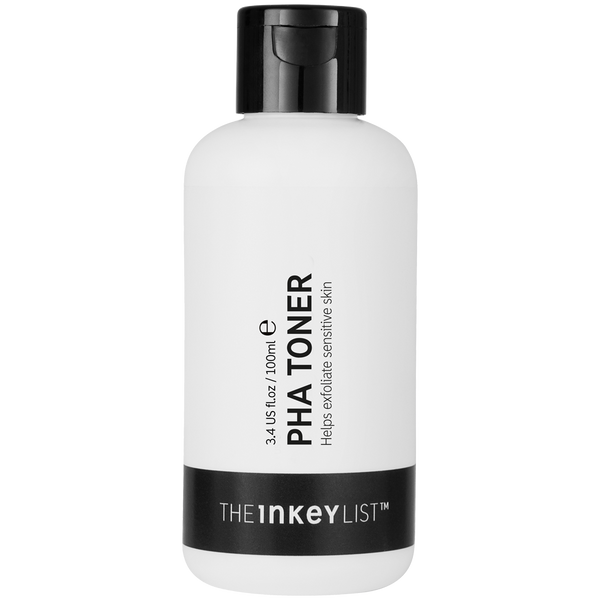
PHA Toner
PHA Toner is £14.00 (100ml), rated 4.4 stars, formulated with 3% gluconolactone and niacinamide. Gluconolactone is the gentlest exfoliating acid available, and niacinamide brings barrier support and helps with the look of uneven tone, which makes this a genuinely well-matched pairing rather than an ingredient list padded for the label.
This is the one we would suggest most people start with, and the reason is worth spelling out. Because PHAs hold onto water, this toner hydrates as it exfoliates. It is the closest thing to getting both jobs done in a single step, which makes it a real recommendation rather than a fallback. Skin that has historically found acids too much often gets on with this one perfectly well.
Best for: sensitive skin, anyone completely new to acids, anyone prone to redness, and anyone who tried a stronger acid and found it irritating. Also the sensible first step if you are curious about exfoliation but nervous about it.
When to use it: evening, starting two to three times a week and building only if your skin stays comfortable.
Honest caution: gentle means gradual. Results take longer to appear than with glycolic acid, and that is the deal you are making. It is usually the right deal.
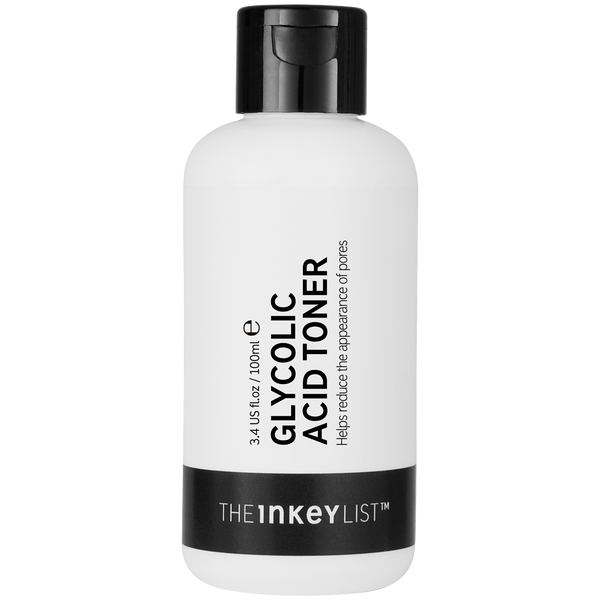
Glycolic Acid Toner
Glycolic Acid Toner is £14.00 (100ml), rated 4.4 stars, with 10% glycolic acid plus 5% witch hazel. It targets blackheads, the appearance of pores, fine lines and dullness.
This is the more active of the two, and the one that delivers the most visible change in texture and clarity when it suits your skin.
Best for: oily and combination skin that already tolerates actives well. If you have used exfoliating acids before without issue, this is your formula.
When to use it: evening only, without exception.
Honest caution: this is the stronger of the two and it deserves respect. Start at two to three times a week, not nightly. Never layer it with another exfoliating acid on the same night. And wear SPF the following morning, which brings us to a point worth reading twice, below.
If you want hydration without exfoliation
Some skin simply does not want an acid, and that is a completely reasonable position. If your goal is a light hydration layer after cleansing rather than any kind of exfoliation, the useful thing to know is that the format matters far less than the ingredients. A hydration step does not have to arrive in a toner bottle.
Hyaluronic Acid Serum does that job well. It is lightweight, it goes on after cleansing in exactly the same slot a hydrating toner would occupy, and it delivers humectants to damp skin at the moment they work best. Functionally, you are not missing out on much.
If you want to understand the ingredients rather than just the products, our hyaluronic acid and glycerin pages explain how humectants actually hold water in the skin, which makes it much easier to read any label and know what you are looking at. And our toners collection is always the current picture of what we offer.
Still deciding? Sensitive skin, new to acids, or want hydration and gentle exfoliation in one step, start with PHA. Oily, congested and experienced with actives, go glycolic. After hydration alone, a serum is the better route than a toner. If none of those quite describes you, take the skincare quiz and let it do the matching, or ask an advisor on live chat.
Where does toner go in your routine, and how to use it
You have picked a toner. Now the mechanics, which are simpler than the internet makes them sound.
Toner before or after serum?
Toner goes before serum, always.
The reason is the general layering rule that governs almost all of skincare: work from thinnest to thickest. Toner is the lightest product in your routine, so it goes on first after cleansing. A serum is thicker, a moisturiser is thicker still, and applying a light watery liquid on top of a cream means it has nothing to sink into.
The order worth memorising is five words long:
Cleanse, tone, treat, moisturise, protect.
That sequence works for essentially every routine, whatever your skin type and however many products you use. If you want the fuller breakdown, our skincare routine guide covers layering in detail.
Your morning routine order
- Cleanse. Something gentle. Hyaluronic Acid Cleanser is a good morning option because it cleanses without stripping.
- Toner. Hydrating formulas only in the morning. Worth noting that both INKEY toners are exfoliating, so both belong in your evening routine rather than here.
- Serum. Hyaluronic Acid Serum is the straightforward hydration choice here.
- Moisturise. Bio-Active Ceramide Moisturiser at £20.00 supports the barrier with ceramides, or browse all moisturisers to find your texture.
- SPF. Every single morning, no exceptions, whatever the weather.
Your evening routine order
- First cleanse. Oat Cleansing Balm at £15.00 breaks down makeup and SPF properly.
- Second cleanse. A water-based cleanser to clear everything the balm loosened. Our full range of cleansers has options for every skin type.
- Toner. This is where acid toners belong, and where both INKEY toners go.
- Serum or targeted treatment. Browse serums or exfoliants depending on your concern.
- Moisturise. Seal everything in.
How to apply a toner: hands or a cotton pad?
Both work. Genuinely. This is not a decision worth agonising over, but there are small differences.
Using your hands wastes less product, since a cotton pad absorbs a fair amount of what you dispense. It also creates no friction at all, which makes it the better option for sensitive or reactive skin. Pour two or three pumps, or a small pool, into your palm and press it in.
Using a cotton pad gives you light physical sweeping, which helps lift residue, and it lets you actually see what is coming off your face. That visual check suits oily or congested skin, and some people find it more satisfying.
Whichever you choose, the technique is the same: pat, do not drag. Pressing the product in with flat palms or gently sweeping with a pad is enough. Scrubbing at your face with a soaked cotton pad is friction you do not need.
One detail that makes a real difference: apply toner to clean skin and move on to your next step while your skin is still slightly damp. Do not apply it and then wander off. That damp window is when your serum spreads best.
How often should you use one?
Hydrating toners can be used twice daily, every day. There is no build-up of tolerance and no reason to restrict them.
Acid toners, which includes both of ours, should start at two to three times a week. Build up only if your skin stays completely comfortable, and understand that some people never need to go beyond three times a week to get what they want. More frequent is not better. More frequent is just more.
Signs to slow down: tightness, stinging, flaking, sudden shine that was not there before, or new sensitivity to products that never bothered you. Any of those means reduce frequency or pause entirely. If you have already gone too far, what to do if you have over-exfoliated is the recovery guide.
The SPF rule
Read this bit twice. Exfoliating acids increase your skin’s sensitivity to the sun. This is not brand caution, it is regulatory guidance: the FDA advises that AHAs increase sun sensitivity while you are using them and for up to a week after you stop. Daily broad-spectrum SPF is non-negotiable if there is an acid toner in your routine. Dewy Sunscreen SPF 30 is a light everyday option, and our SPF guide covers how much to apply and how often to reapply.
Skipping SPF while using an acid toner does not just cancel out the benefit. It actively works against the texture and tone you are trying to improve.
Knowing the right method naturally raises the question of what goes wrong when it is done badly.
Toner mistakes to avoid
Most people who conclude that toners do not work for them have actually run into one of these. Every one is easily avoided.
- Layering too many acids at once. An acid toner plus another exfoliant on the same night is the single most common route to a compromised barrier. Pick one exfoliating step per evening. Our guide to what products should I not layer together covers the combinations to watch.
- Using acid toners in the morning without SPF. Increased sun sensitivity plus no protection undoes the benefit entirely, and then some.
- Assuming stinging means it is working. It does not, it never has, and this is worth unlearning. Discomfort is a signal to stop, not evidence of efficacy.
- Going daily from day one. Tolerance is built gradually. Two to three times a week for the first few weeks tells you far more about how your skin responds than diving straight in.
- Mixing a strong acid toner with other potent actives. If you also use retinol, what not to mix with retinol and can you use glycolic acid with retinol answer the most common questions. For the other frequent pairing question, glycolic acid and vitamin C: how to layer them the right way has it covered.
- Applying toner and then waiting. Toner is designed to be followed while skin is still damp. Letting it dry completely before moving on wastes the best part of it.
- Expecting overnight results. Hydration is immediate. Texture, dullness and pore appearance take weeks. If you are blemish-prone and considering glycolic specifically, is glycolic acid good for acne sets realistic expectations.
If you have already overdone it, what to do if you have over-exfoliated is the fastest route back to comfortable skin. It happens to plenty of people and it is very fixable.
The honest verdict on toners
A toner is not essential. The right one does a genuinely useful job.
Both of those things are true at the same time, and holding both is the whole answer. The question was never whether toners work. It is whether one earns a place in your specific routine, alongside the products you already use, for the skin you actually have.
That is the thing worth taking away from all of this: you do not need more skincare, you need clarity about what your skin actually needs. Sometimes that means adding a toner. Often it means realising you were fine without one.
If you do add one, the advice fits in six words. Start gentle. Go slow. Wear SPF.
Still not sure? Ask us
Three genuinely useful next steps, depending on where you have landed.
- Unsure which toner suits your skin? Take the skincare quiz for a personalised recommendation based on your skin type and concerns.
- Ready to browse? Explore the full toner range.
- Building a routine from scratch? Build your own bundle and put the essentials together first.
And if you would rather just ask a person: askINKEY advisors are available on live chat. Real advisors, real answers, no obligation to buy anything. Asking questions is free and we would genuinely rather you asked than guessed.
Frequently Asked Questions
Got a question?
Our askINKEY team are a friendly bunch of skincare experts with deep product knowledge and zero judgement. Whether you're an ingredient obsessive or just starting out, we'll make it make sense. No question too big. No question too small. We Give A Care, Every Day.


