



Can You Use Salicylic Acid and Retinol Together? The Honest Answer
Yes, you can use salicylic acid and retinol together - here's the simple, skin-safe way to do it, step by step.
Author
askINKEY skincare advisor
Published
05 June, 2026
Time to read
15 minutes
Yes, you can use salicylic acid with retinol. The short answer is that these two ingredients are not enemies, but how you introduce them to your routine makes all the difference between glowing, clear skin and a flaky, irritated mess.
Most people get this wrong in one of two ways. Either they pile both ingredients into the same routine on the same night without easing in, and end up red, tight and flaking within a week. Or they hear horror stories, panic, and avoid both ingredients altogether, missing out on two of the most effective, well-studied ingredients in skincare.
This guide will walk you through exactly when to use each one, how to build a routine around both, whether a salicylic acid cleanser changes the rules, and what to do if your skin pushes back. No hype, no fear tactics, just clear guidance built on proven ingredients, because that is what actually gets you real results.
Now that you know the two can coexist, it is worth understanding exactly why they developed such a cautious reputation in the first place.
Why Salicylic Acid and Retinol Get a Bad Reputation Together
The internet loves a skincare villain, and for years, combining salicylic acid with retinol was treated like mixing bleach and ammonia. It is not. To understand why the caution exists, it helps to know what each ingredient is actually doing to your skin.
Salicylic acid is a beta hydroxy acid, or BHA. Unlike water-soluble acids that work on the surface, salicylic acid is oil-soluble, which means it can travel down into the pore lining itself. There, it helps dissolve the buildup of oil and dead skin cells that leads to blackheads and breakouts. It is a go-to for oily, congested and blemish-prone skin because it works where those issues actually start, inside the pore. You can read a full breakdown of how it works on our salicylic acid guide.
Retinol works on a completely different mechanism. As a derivative of vitamin A, it speeds up cell turnover, encouraging your skin to shed old surface cells and generate newer ones more efficiently. Over time, consistent use supports smoother texture, a more even tone and softer-looking fine lines. It is one of the most researched ingredients in skincare for a reason, and you can see the full picture on our retinol pillar page.
So why do people treat this combination with so much caution? It comes down to one overlapping effect: both ingredients increase cell turnover and can temporarily compromise your skin barrier if you introduce them too quickly. Salicylic acid exfoliates, retinol accelerates renewal, and when you stack both at full strength on the same night with no transition period, your skin can respond with dryness, flaking, redness or stinging.
This is a tolerance issue, not a toxicity issue. There is no dangerous chemical reaction happening on your skin when salicylic acid meets retinol. What is happening is simply more exfoliation and cell turnover than some skin types can comfortably handle in one sitting, especially early on. Skincare forums have a habit of turning “go slowly with this” into “never do this,” and that is where a lot of unnecessary fear comes from.
Some people do need to be more careful than others. If you have sensitive skin, if you are brand new to retinol, or if actives in general are new territory for you, your skin’s tolerance threshold will be lower, at least to start. The good news is that sensitivity is manageable with the right approach, and we cover tailored guidance for reactive skin types on our sensitive skin page.
If you are also wondering where salicylic acid technically sits in the world of exfoliating acids, it helps to understand its classification properly. Our deep dive into whether salicylic acid is a BHA answers that in full, and understanding the category helps explain why it behaves so differently from, say, an AHA like glycolic acid.
Here’s the practical upshot that sets up everything else in this guide: most people succeed with this combination not by using both every single night, but by alternating which active they use from one evening to the next. That single shift, giving your skin recovery time between actives, is the difference between a routine that works and one that backfires.
Understanding the “why” is only half the story. Next, let’s put these two ingredients side by side so you can see exactly how they differ and why neither one can replace the other.
Salicylic Acid vs Retinol: What’s the Difference?
If you are choosing between these two, or trying to understand why your dermatologist, facialist or favourite skincare account recommends both, here is the quick, no-fluff comparison.
Salicylic acid is an oil-soluble BHA. It works inside the pore lining rather than purely on the skin’s surface. It is best suited to:
- Blackheads and congestion, because it helps clear the buildup of oil and dead skin that causes them, more on that on our blackheads page
- Breakouts and blemish-prone skin
- Oily and combination skin types that deal with excess sebum
- Either morning or evening use, depending on the product format, since a cleanser behaves very differently to a leave-on serum
Retinol, on the other hand, supports overall skin renewal through increased cell turnover. It is best suited to:
- Fine lines and the early signs of ageing
- Uneven texture and rough patches
- Dullness, where skin looks tired or congested with old surface cells
- Evening use only, since retinol can increase your skin’s sensitivity to sunlight
The most important thing to understand is this: these two ingredients are not interchangeable, and one is not simply a “stronger” version of the other. They are built to solve different problems. Salicylic acid focuses on oil, congestion and the surface-level fallout of clogged pores. Retinol focuses on the deeper, slower process of cellular renewal and long-term texture improvement. For a full breakdown of what oily skin actually needs beyond just salicylic acid, our oily skin guide is worth a read, and for the fuller picture on retinol’s mechanism and benefits, the retinol pillar page covers it in depth.
This is precisely why so many skincare routines include both ingredients rather than choosing one over the other. They are not competing for the same job. They are two specialists handling two different tasks, and used correctly, they complement each other rather than cancel each other out.
With the differences clear, the natural next question is the one most people are actually here for: how do you put both of these ingredients into one routine without wrecking your skin barrier in the process?
How to Use Salicylic Acid and Retinol in the Same Routine
This is the part that matters most, so let’s get practical. There are two safe, proven approaches to combining salicylic acid and retinol, and which one suits you depends on how experienced your skin already is with actives.
Approach one: alternate nights. Use salicylic acid one evening, then retinol the next. This is the simplest, lowest-risk method and the one we recommend for most people, especially anyone newer to actives. Giving your skin a full night to recover between exfoliation and cell turnover reduces the risk of dryness, flaking or sensitivity building up. This is also the same logic behind skin cycling, a popular method for structuring multiple active ingredients across a week without overwhelming your skin. If you want a deeper framework for rotating actives like a pro, that guide is worth bookmarking.
Approach two: separate by time of day. If your skin is already fairly tolerant of actives, you can use a salicylic acid cleanser in the morning and a retinol serum in the evening. Because these two steps are separated by many hours and different routines entirely, the risk of cumulative irritation is much lower than layering both as leave-on products back to back.
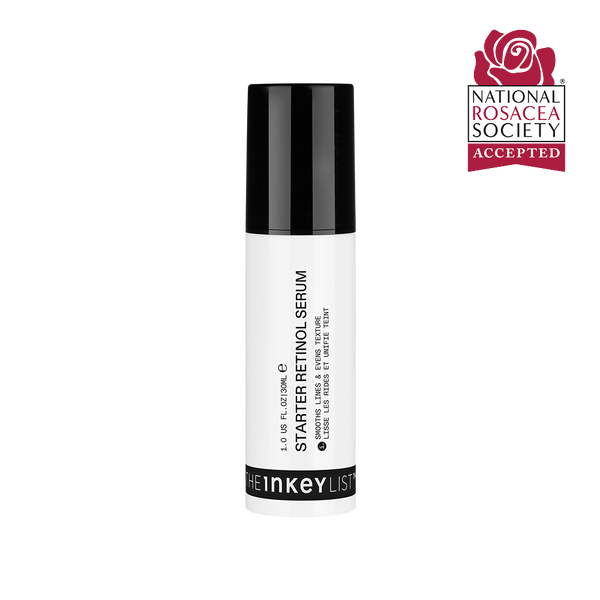
If you are starting from scratch or stepping up your routine, start gentle. The Starter Retinol Serum, £13.00 for 30ml, is built with a slow-release formula specifically designed to minimise irritation while still delivering results, which makes it a sensible entry point whether you are brand new to retinol or have tried it before and struggled with sensitivity.
Here is a simple way to structure the rest of your routine around your chosen active for the night:
- Cleanse to remove makeup, SPF and the day’s buildup.
- Apply your active of the evening, either salicylic acid or retinol, to clean, dry skin.
- Follow with a hydrating step to support your skin barrier while actives are doing their work. The Hyaluronic Acid Serum, £12 for 30ml, is designed for exactly this, replenishing moisture without interfering with your active ingredients.
- Lock it in with moisturiser.
One non-negotiable: any morning after a retinol night needs SPF. Retinol increases your skin’s sensitivity to UV exposure, so skipping sun protection undoes a lot of the good work your routine is doing. The Dewy Sunscreen SPF 30, £15.00, is a simple way to make this step feel less like a chore and more like a finishing touch. For the full picture on why daily SPF matters regardless of what actives you use, our SPF pillar page has everything you need.
The beauty of this approach is that it is not complicated. You are not juggling five steps or memorising a complex schedule. You are simply choosing one active per evening and building a consistent, repeatable rhythm around it, which is far more sustainable than an aggressive routine you abandon after two weeks of irritation.
Once you have the core alternating routine down, the next common question is about cleansers specifically, since a lot of people already use a salicylic acid face wash and wonder if that changes everything we have just covered.
Can I Use a Salicylic Acid Cleanser With Retinol?
Yes, and this one is actually more straightforward than the leave-on serum scenario we just walked through.
A rinse-off cleanser has a fundamentally different relationship with your skin than a leave-on serum. Contact time is the key factor here. A cleanser is on your skin for the time it takes to massage it in and rinse it off, typically under a minute, whereas a serum stays on your skin, continuing to work, for hours. That shorter contact time significantly reduces the chance of irritation when you then follow up with a separate active like retinol.
In practice, this means a salicylic acid cleanser used in the morning, or as the first step of a double cleanse in the evening, can typically sit in the same routine as a PM retinol step without needing to alternate nights. By the time your retinol serum goes on, the salicylic acid has already been rinsed away, so your skin is not managing both actives simultaneously the way it would with two leave-on products layered together.
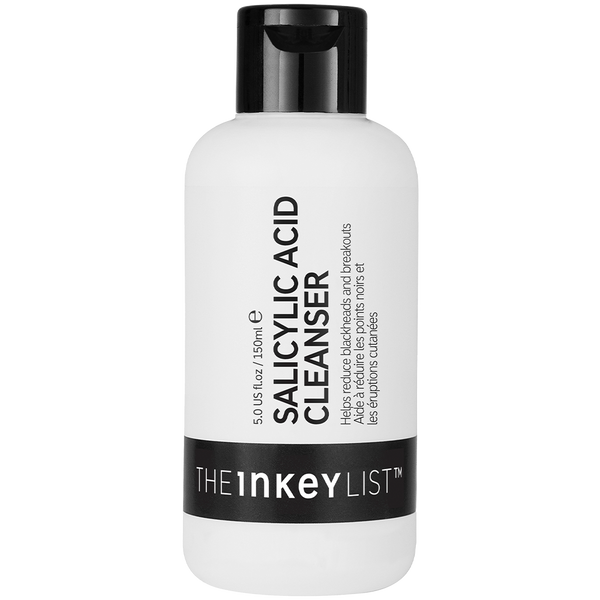
Our Salicylic Acid Cleanser, 150ml for £14.00, is formulated for blemish-prone, oily and combination skin, making it a natural fit for anyone dealing with breakouts or congestion who also wants the long-term benefits of retinol in their evening routine. You can read more about who this suits on our oily skin page, and if breakouts are your main concern, our blemishes guide covers the bigger picture of managing them day to day.
There is one caveat worth flagging. If you have sensitive or easily reactive skin, even rinse-off formulas can add up when combined with other actives over time. Your skin does not reset to zero the moment you rinse a product off, so if you notice any tightness, redness or sensitivity building, it is worth alternating nights even with a cleanser, at least until your skin builds more tolerance.
It is also worth being clear that this is a different scenario to using a leave-on salicylic acid serum, which, as covered in the previous section, does require more careful spacing from retinol because of its longer contact time on the skin.
Now that both cleanser-based and serum-based routines are covered, it is time to talk about something almost everyone experiences at some point when introducing new actives: the adjustment period, and how to tell the difference between normal skin behaviour and an actual problem.
What to Expect on Your Skin: Purging, Sensitivity and Signs to Slow Down
Starting salicylic acid and retinol together, even with a careful alternating approach, can bring a period of adjustment. Knowing what is normal and what is not will save you a lot of unnecessary worry.
Purging is a temporary increase in breakouts that happens as your skin’s cell turnover speeds up. Essentially, your skin is bringing congestion to the surface faster than it normally would, which can look like more frequent, smaller breakouts, usually in areas where you already tend to break out. It is uncomfortable, but it is a sign your routine is working, not failing. For a complete explanation of what is actually happening beneath the surface, our full guide to skin purging breaks it down in detail.
A true reaction looks different. Watch for redness, burning, stinging, breakouts appearing in entirely new areas you do not normally break out in, or irritation that does not settle. These are signs your skin is struggling with the pace or strength of what you have introduced, rather than simply working through normal renewal.
The biggest skincare mistake I see isn’t using the wrong ingredients, it’s introducing the right ones too fast, is a sentiment echoed across dermatology advice time and again, and it applies directly here.
As a realistic timeline, purging typically settles within 2 to 6 weeks as your skin adjusts to the increased turnover. If you are still seeing new breakouts well past that window, or if what you are experiencing feels more like irritation than congestion coming to the surface, that points toward a true reaction rather than purging.
If you have sensitive skin, a few adjustments make this process far smoother. Start with fewer active nights per week, perhaps just one or two to begin with, rather than diving straight into alternating every single night. Patch test any new product on a small area before applying it to your full face. And prioritise barrier-supporting hydration on the nights in between your active steps, giving your skin consistent support rather than asking it to recover from scratch each time.
If your skin is flaking, tight or stinging, the fix is simple: pause one of the two actives. Simplify your routine down to cleanser, a hydrating step and SPF during the day, and let your skin settle for a few days to a week. Once things feel calm again, reintroduce your actives slowly, perhaps once a week to start, building back up gradually rather than returning to full strength immediately.
Needing to slow down is not a sign these ingredients are wrong for you. It is simply your skin communicating its current tolerance, and listening to that is how you build a routine that actually lasts. Our sensitive skin guide has more tailored advice if this describes your skin type specifically, and if you want to understand what else to be cautious about alongside retinol, our guide on what not to mix with retinol rounds out the full picture.
Once your skin has found its rhythm with salicylic acid and retinol, some people want to take things one step further. Here is an optional addition worth knowing about.
Want to Go Further? Adding a Glow-Boosting Step
If your skin has adjusted well to salicylic acid and retinol and you are looking for an extra boost, there is an optional step worth knowing about. This is not a replacement for your core routine, and it is not something to rush into before your skin has settled. Think of it as a later addition for when the foundations are already working well.
The Exosome HydroGlow Complex is a glow-boosting serum step designed to slot into hydration-focused or recovery nights, the same nights you are already using for barrier support in your alternating routine. It is not meant to be layered directly with retinol on the same night. Instead, it fits naturally into the structure you have already built, taking the place of a recovery-night hydration step rather than adding complexity to an already active-heavy routine.
In clinical testing, 100% saw more glowing skin, clinically proven, and participants experienced clinic worthy rejuvenated skin in 14 days. The formula also helps support natural collagen production.
Functionally, this is simply a serum step that supports hydration and radiance as part of a wider routine, not a dramatic overhaul of what you are already doing. It is designed to complement the work your salicylic acid and retinol are already doing for texture and clarity, adding a visible glow on top of those foundational improvements.
As with everything in this guide, the principle holds: build slowly, let your skin adjust, and add new steps only once the basics feel comfortable and consistent.
4-week clinical study of 26 people. Clinical study of 31 people. In-vitro testing of Cica Exosomes showed a 55% reduction in pro-inflammatory markers and a 63% increase in markers associated with skin renewal after 8 hours.
With the full routine mapped out, core actives plus this optional extra, let’s run through the most common questions people still have before they start.
The Bottom Line
Yes, salicylic acid and retinol can absolutely work together, and for a lot of skin concerns, from oily and congested skin to fine lines and uneven texture, using both is genuinely the most effective approach. The key is introducing them thoughtfully rather than throwing caution to the wind.
The two safest paths forward are either alternating nights, salicylic acid one evening and retinol the next, or pairing a rinse-off salicylic acid cleanser with a PM retinol step, since the shorter contact time of a cleanser makes that combination lower risk. Both routes let you access the benefits of each ingredient without overwhelming your skin barrier.
Starting gentle matters more than starting fast. Something like the Starter Retinol Serum, built with a slow-release formula for exactly this purpose, paired with consistent hydration and daily SPF, is the simplest way to get real results without unnecessary irritation along the way.
Clear guidance, proven ingredients, real results. That is the whole philosophy behind this routine, and it is why patience with your skin pays off far more than rushing ever will.
Ready to Build Your Routine?
If you are ready to put this into practice, a gentle starter routine built around the Starter Retinol Serum and the Salicylic Acid Cleanser is the easiest place to begin. Alternate your nights, keep your skin hydrated in between, and never skip your morning SPF.
Still unsure how to structure your week once you start adding more actives into the mix? Our skin cycling guide walks through a simple, repeatable framework for rotating ingredients without the guesswork. Start slow, stay consistent, and let your skin tell you when it is ready for more.
Frequently Asked Questions
Got a question?
Our askINKEY team are a friendly bunch of skincare experts with deep product knowledge and zero judgement. Whether you're an ingredient obsessive or just starting out, we'll make it make sense. No question too big. No question too small. We Give A Care, Every Day.


