


Salicylic Acid vs Benzoyl Peroxide: Which Is Better?
Two of the most popular blemish-fighting ingredients work in completely different ways - here's how to tell which one your skin actually needs.
Author
askINKEY skincare advisor
Published
06 September, 2026
Time to read
15 minutes
Salicylic acid and benzoyl peroxide are two of the most widely used ingredients for blemish-prone skin, and they are also two of the most frequently confused. They sit next to each other on the shelf, they get recommended in the same breath, and a lot of people assume they are broadly interchangeable. They are not. They work in completely different ways, on completely different parts of the problem.
Before we go further, one thing worth stating plainly. INKEY does not make a benzoyl peroxide product. That means this comparison is not a sales pitch dressed up as a guide. Where benzoyl peroxide is the better answer, we will say so.
This article covers what each ingredient actually does inside the skin, which suits which skin type, which suits which kind of breakout, whether you can use them together, and what to do about body breakouts and post-blemish marks. If you want the wider picture first, start with our blemishes and breakouts hub.
The Short Answer for Anyone in a Hurry
Salicylic acid clears blockages. Benzoyl peroxide targets bacteria. One unclogs, the other disinfects. That single sentence explains almost every difference between them.
Neither is universally better, because they are not solving the same problem. If your skin is congested with blackheads, whiteheads and bumpy texture, salicylic acid is working on the actual cause. If your breakouts are red, raised and inflamed, benzoyl peroxide is aimed more directly at what is driving them.
Here is the practical headline. For everyday use, across most skin types, salicylic acid is the more versatile of the two. It suits more people, it is gentler, and it can sit in a routine long term without much drama. Benzoyl peroxide is more specialised and more demanding. The rest of this article explains why.
What Salicylic Acid Is and How It Works
Salicylic acid is a beta hydroxy acid, usually shortened to BHA. If you want the full terminology explainer, we have covered whether salicylic acid is a BHA separately, so we will keep it brief here.
The single most important fact about salicylic acid is that it is oil-soluble. Most exfoliating acids are water-soluble, which means they work on the surface of the skin and stop there. Salicylic acid can travel through the sebum sitting inside a pore, which means it reaches the blockage itself rather than just tidying up around it. That one property explains why it is the go-to for congestion.
Once it is in there, it works by loosening the bonds that hold dead skin cells together. That is what keratolytic means, and it sounds more dramatic than it is. Dead cells are supposed to shed on their own. When they do not, they clump together with oil and form the plug that becomes a blackhead or a whitehead. Salicylic acid encourages that shedding to happen properly, so the plug loosens and the pore clears.
It also has mild anti-inflammatory properties, which is not a coincidence. It is chemically related to aspirin. That helps take some of the angry edge off spots without being an anti-bacterial in any meaningful sense.
Over the counter, it works in a range of roughly 0.5% to 2%. Two percent is the maximum, and it is also the concentration most of the useful clinical evidence points to.
On that evidence. In a head-to-head study, a 2% salicylic acid cleanser was compared against a 10% benzoyl peroxide wash across four weeks in thirty patients. Only the salicylic acid cleanser produced a statistically significant reduction in comedones, the blackheads and whiteheads caused by blocked pores.
In a direct comparison, a 2% salicylic acid cleanser outperformed a 10% benzoyl peroxide wash on comedones, despite the benzoyl peroxide being five times the concentration.
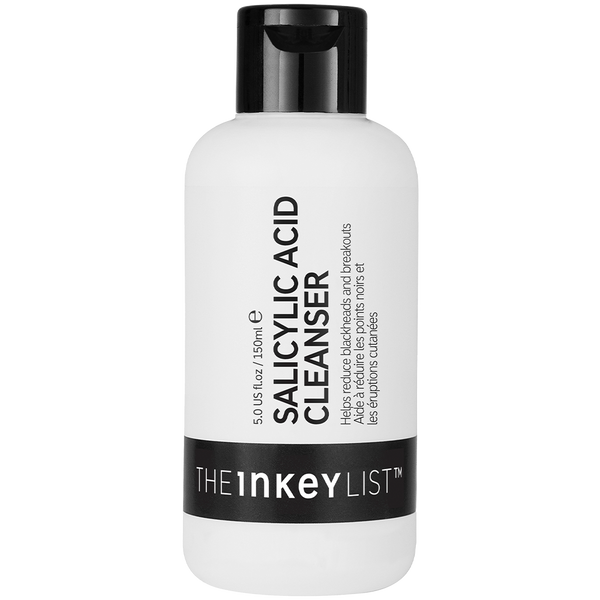
That finding comes from a head-to-head clinical study, and it is worth being straight about its limits. Thirty people over four weeks is small and short. It is not the final word on anything. But it is a genuine direct comparison, and the format it tested was a 2% salicylic acid cleanser, which is exactly the format of our Salicylic Acid Cleanser. That makes it unusually relevant rather than just conveniently favourable.
There was a nuance in the results that is worth including because it cuts both ways. Participants who started on benzoyl peroxide kept improving after they crossed over to salicylic acid. Those who moved in the opposite direction did worse during the switch.
Salicylic acid is best suited to blackheads, whiteheads, general congestion and oily skin. If you want the full ingredient deep dive rather than the comparison, our salicylic acid page covers it properly.
What Benzoyl Peroxide Is and How It Works
Benzoyl peroxide is an antiseptic and an antibacterial, and it earns a fair hearing here.
It works by releasing oxygen into the pore. The bacteria most associated with inflamed spots are anaerobic, meaning they do not thrive in oxygen-rich conditions. Flooding the environment with oxygen makes the pore a much less comfortable place for them to multiply. For red, raised, pus-filled spots, that is a real and well-established strength, and it is one salicylic acid does not match.
Unlike salicylic acid, benzoyl peroxide is not oil-soluble. It works more on the surface and the upper part of the pore rather than travelling down into a plug of sebum. It has some secondary keratolytic effect, so it is not useless on congestion, but that is not its main job and it is not what it is good at.
Over the counter you will find it at 2.5%, 5% and 10%. Worth knowing: higher is not automatically better. The research consensus has moved towards lower concentrations delivering comparable results with noticeably less irritation.
Now the honest part. Benzoyl peroxide carries a meaningfully higher irritation risk than salicylic acid. Dryness, peeling, tightness and redness are common, particularly in the first few weeks. For anyone with sensitive skin, that is a real consideration rather than a disclaimer.
The bigger issue is what that irritation does downstream. Persistent dryness and peeling can tip over into a damaged skin barrier, and a compromised barrier tends to make skin more reactive and more breakout-prone, not less. That is the counterproductive loop worth watching for. If any of that sounds familiar already, our guide on what to do if you have over-exfoliated is the practical route back.
There is also a 2024 study worth mentioning once, carefully. In a 2024 randomised study, a salicylic acid-based formulation performed comparably to benzoyl peroxide 5% for mild-to-moderate blemishes, with better tolerability. The important caveat is that the tested cream was a multi-ingredient formulation, combining salicylic acid with lipohydroxy acid, niacinamide and zinc. So it is not evidence that salicylic acid alone matches benzoyl peroxide. It is evidence that a well-built salicylic acid formulation can hold its own while being easier to live with. You can read the 2024 randomised study in full.
And then there is the thing nobody warns you about until it has already happened. Benzoyl peroxide bleaches fabric.Not might. Does. It will take the colour out of your towels, your pillowcases, your bedding and your gym kit, and it does not need to be wet to do it. Residue on your fingertips transfers to a dark t-shirt. A night cream migrates onto a navy pillowcase. This is the single most common regret people have with the ingredient, and it is entirely avoidable if you know about it in advance. White bedding and white towels, or accept the consequences.
The Core Difference in One Paragraph
One clears blockages, the other targets bacteria. Salicylic acid dissolves the mix of dead skin and oil plugging the pore, working from the inside out. Benzoyl peroxide creates an oxygen-rich environment that the bacteria linked to inflamed spots cannot tolerate. Everything else, the irritation profiles, the ideal skin types, the bleached pillowcases, follows from that one distinction.
Which One Suits Your Skin Type
Oily and combination skin. Salicylic acid, clearly. Oil-solubility is precisely the property oily skin needs, because there is more sebum in the pore for the acid to travel through. Pairing it with our Niacinamide Serum is a sensible move, since niacinamide helps manage oil production and the look of enlarged pores while salicylic acid handles the congestion. Our oily skin page goes deeper on the full picture.
Dry skin. You can absolutely use salicylic acid on dry skin, but format matters more than usual. A rinse-off cleanser gives you the active with limited contact time, which is far kinder than a leave-on product applied to already-parched skin. Then moisturise properly afterwards, without negotiating.
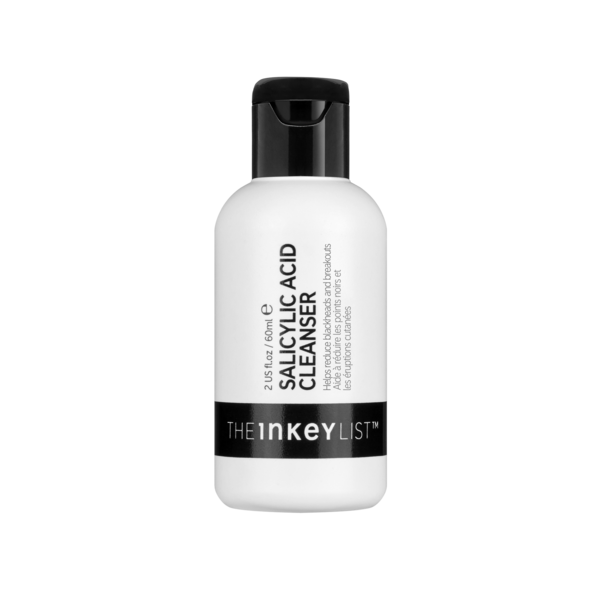
Sensitive and reactive skin. Salicylic acid is comfortably the gentler of the two, and a rinse-off cleanser is the lowest-risk entry point available. If you are nervous, the Mini Salicylic Acid Cleanser exists for exactly that reason. It is a low-commitment way to find out how your skin responds before you buy a full size. If your skin flushes easily, read our sensitive skin and redness guidance alongside this.
Combination skin. Target the congested zones rather than treating your whole face like it has one uniform problem. Salicylic acid where you are actually congested, usually the T-zone, and lightweight hydration everywhere. Our Omega Water Cream works well here because it is oil-free and water-based.
One point that needs stating directly, because it gets ignored constantly: oily and blemish-prone skin still needs moisturiser. Stripping your skin does not switch off oil production. It usually provokes more of it, and it damages the barrier while you wait.
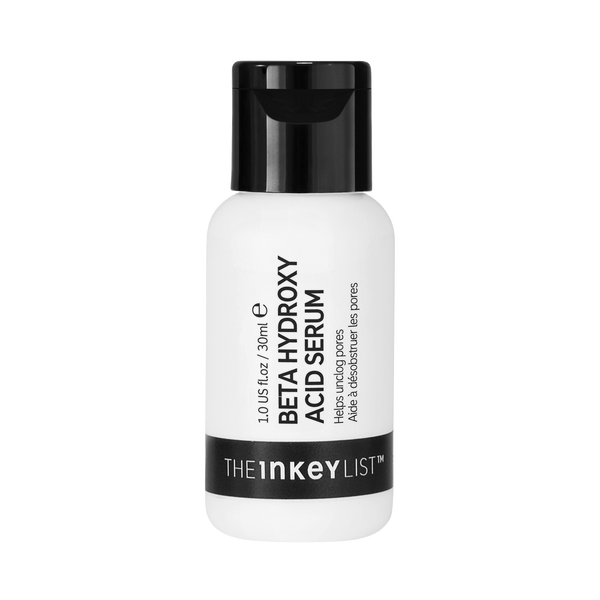
If you want a leave-on option rather than a cleanser, the Beta Hydroxy Acid (BHA) Serum is the step up once you know your skin tolerates the ingredient.
Which One Suits Your Breakout Type
Blackheads, whiteheads and general congestion. Salicylic acid, without much debate. The problem here is physical, a plug of oil and dead skin sitting in the pore, and salicylic acid is built to get inside it. Blackheads have their own blackheads pillar and our guide to what causes clogged pores covers the mechanism in more depth, so we will point you there rather than repeat it.
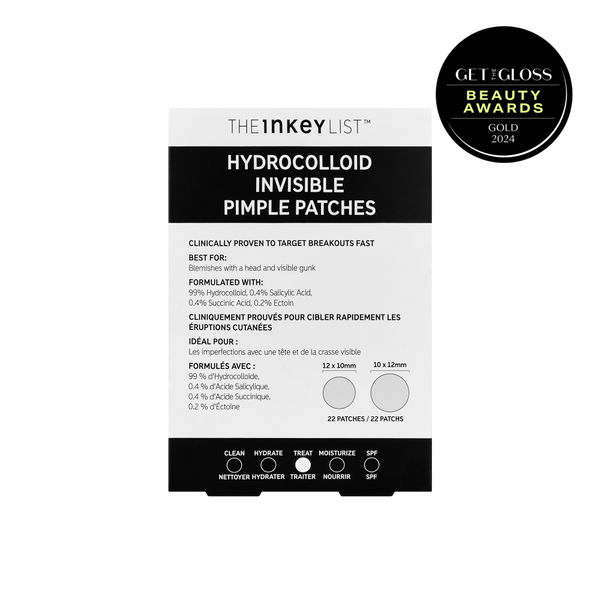
Inflamed, red, pus-filled spots. This is where benzoyl peroxide has genuine relevance, because the driver is bacterial rather than purely mechanical. If that is your dominant pattern, it is a legitimate option and we are not going to pretend otherwise. Within our own range, the alternatives for that pattern are the Succinic Acid Treatment for individual spots and Hydrocolloid Invisible Pimple Patches for surface spots and whiteheads, which work by absorbing fluid and stopping you picking.
Cystic breakouts. Neither ingredient is the answer, and we would rather be direct than hedge. Cystic breakouts form deep in the skin, well below where a topical BHA or antibacterial can meaningfully reach. This is a conversation to have with a professional, not a shelf to browse. Our cystic breakouts guide explains what is actually happening.
Most people have a mix, and that is normal. If you want to understand the classifications properly, what breakouts actually are breaks it down.
Hormonal Versus Bacterial Breakouts
Most comparison articles skip this entirely, which is odd, because it changes the answer.
Hormonal spots have a recognisable signature. They cluster along the jawline, the chin and the lower cheeks. They tend to be deeper and more tender than surface spots, they often come up in the same places repeatedly, and for many people they follow a cycle you could set a calendar by.
Here is why it matters for this comparison. Hormonal breakouts are driven primarily by fluctuating hormones increasing oil production, which then leads to blocked pores. The problem starts with excess sebum, not bacterial overgrowth. So salicylic acid, which is oil-soluble and works on the blockage, is addressing something closer to the actual cause. Benzoyl peroxide’s antibacterial action is largely beside the point when bacteria were not the instigator.
Bacterial-driven breakouts look different. They tend to arrive as clusters of red, pustular spots across the T-zone and forehead rather than tracking the jawline, and they are less tied to a monthly pattern. That is the presentation where benzoyl peroxide’s mechanism is genuinely well matched.
Hormones are not the only non-bacterial driver either. Stress is a real factor, and we have covered does stress cause breakouts separately. Breakouts also behave differently after your mid-twenties, which our adult breakouts guide gets into, and the hormonal breakouts guide is the proper deep dive.
If you are genuinely unsure which pattern you are dealing with, the Breakout Analyser Pro will give you a more specific read than guessing from an article. And for the wider context, the what causes breakouts hub is the parent page for all of this.
Can You Use Salicylic Acid and Benzoyl Peroxide Together?
Generally, no. Not on the same area at the same time.
The reasoning is straightforward. Both ingredients can disrupt the skin barrier independently. Layering them compounds that risk, and what you usually get is dryness, flaking, tightness and irritation rather than faster progress. More actives is not more progress. It is just more actives.
There is also no strong evidence that the combination outperforms either ingredient used properly on its own, which makes the irritation a cost with no return.
If you are set on using both, the two workarounds are separating them by time of day, one morning and one evening, or separating them by area, one on the congested zones and one on the inflamed ones. Both are workable. Both are also an unnecessary complication for most people. If your skin starts complaining, stop rather than pushing through.
The better answer is usually a different pairing entirely. Salicylic acid and niacinamide work together well. Salicylic acid handles the congestion inside the pore. Niacinamide works on oil production, the appearance of pores and surface redness. They address different parts of the same problem without compounding irritation, which is exactly what layering should do. Our Niacinamide Serum slots in easily, and Omega Water Cream keeps the barrier supported underneath it all.
We have written about the salicylic acid and niacinamide duo in detail, and does niacinamide help with breakoutscovers the evidence behind it. If layering in general is what worries you, our guide to using acids in your routine is the useful next read, and what not to mix with retinol covers the other active people most often mishandle.
Body Breakouts on the Back, Chest and Shoulders
For body breakouts, the practical argument settles this before the clinical one gets a look in.
Benzoyl peroxide bleaches fabric. On your back, chest and shoulders, your skin is in near-constant contact with bedding, towels, t-shirts and gym kit. That makes it genuinely impractical rather than just inconvenient. People do use it on their bodies, and people do end up with a wardrobe of patchy dark clothing and orange-tinged towels.
The Glycolic Acid Exfoliating Body Stick is our primary recommendation for body breakouts. The stick format makes awkward areas like the middle of your back manageable, which matters more than people expect, because the best formula in the world does nothing if you cannot reach it. The Salicylic Acid Cleanser can also be used on the chest, back and decollete if you are already using it on your face.
The triggers are worth knowing too, because they are fixable. Sweat left on the skin, friction from tight straps and heavy bags, and sitting around in damp gym kit after training. Showering promptly after exercise does more for body breakouts than most products.
Our body breakouts guide is the full resource, with the back breakouts guide and what causes body breakouts going deeper on causes and management.
Does Salicylic Acid Help With Post-Blemish Marks?
First, a distinction most articles are lazy about. A flat brown, red or purple patch left behind after a spot heals is a mark, which is pigmentation. An indent or a raised bump in the skin’s surface is a scar, which is textural damage. They are different problems with different solutions, and conflating them leads to a lot of wasted money.
Now the honest answer on marks. Salicylic acid does not directly fade pigmentation. It is not a brightening ingredient and it does not act on melanin. What it does is support cell turnover, so as the skin renews itself, marks fade gradually as part of that process. Real, but indirect, and slower than most people want.
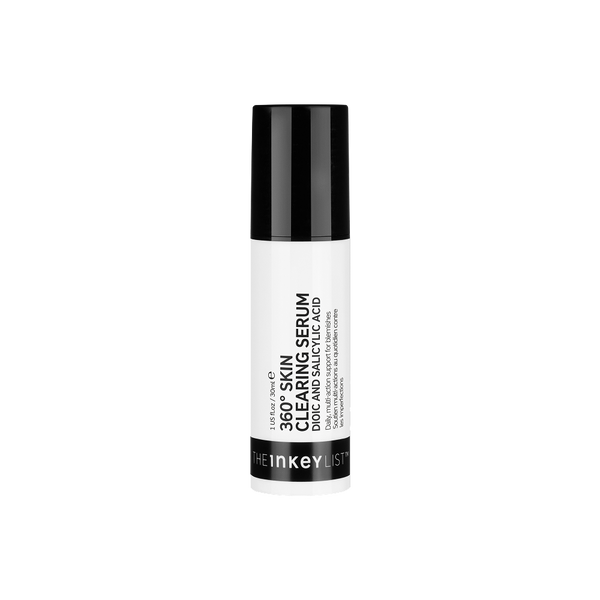
For targeted work on post-blemish marks, dioic acid is the ingredient to look for. It sits in our 360 Skin Clearing Serumalongside 2% salicylic acid and 0.4% Dendriclear, which is why that product covers both congestion and marks in one step.
Our post-blemish marks guide and hyperpigmentation pages cover the wider picture, and salicylic acid and post-blemish marks is the dedicated deep dive.
Once breakouts have settled and marks are fading, some people find their focus shifts to overall radiance rather than clarity. If that is you, the Exosome Hydro-Glow Complex is a glow step rather than a blemish one, with 100% saw more glowing skin, clinically proven*.
A Simple Four-Step Routine
Four steps. Cleanse, treat, hydrate, protect.
Cleanse. Use the Salicylic Acid Cleanser and massage it in for around sixty seconds before rinsing. That contact time matters. Ten seconds and a rinse gives the active almost no chance to do anything, which is the most common reason people conclude a cleanser “did nothing”.
Treat. Either the Beta Hydroxy Acid (BHA) Serum if congestion is your only concern, or the 360 Skin Clearing Serumif you are dealing with congestion plus marks. As needed, the Succinic Acid Treatment on individual spots and Hydrocolloid Invisible Pimple Patches on surface spots and whiteheads.
Hydrate. Omega Water Cream is oil-free and water-based, so it covers the oily skin slot and the barrier support slot at once.
Protect. SPF every morning, no exceptions. Salicylic acid increases photosensitivity, so this is not optional housekeeping. Our Dewy Sunscreen SPF 30 works over the top of the routine, and our SPF page explains what the numbers mean.
On timelines, be realistic. Skin cell turnover takes weeks, so meaningful change is measured in four to eight weeks of consistent use, not days. If you are still choosing your first step, our guide to the best cleanser for blemish-prone skin is a good place to start.
The Honest Verdict
Salicylic acid suits more people, more of the time. It handles congestion at the source, it works well on oily skin, it is better matched to hormonal patterns along the jawline, and it is far more practical for body breakouts. It is also the gentler ingredient, which means it can stay in a routine for the long term rather than being something you endure in cycles.
Benzoyl peroxide has a real role. For inflamed, bacterial spots it does something salicylic acid genuinely cannot, and dismissing it would be dishonest. Its limitations are as much practical as clinical. The irritation risk is higher, the barrier disruption is real, and the fabric bleaching makes daily use a genuine inconvenience rather than a minor footnote.
We said at the start that INKEY does not sell a benzoyl peroxide product. We are closing on the same point, because it matters: the answer would have been exactly the same either way. Where the other ingredient wins, we have said so.
Whatever you choose, patch test first and start slowly. Two or three times a week beats every day and burning out in a fortnight. If your breakouts are persistent, painful or severe, that deserves a conversation with a professional rather than another product. Consistency beats intensity, every time.
Where to Go Next
Know what you need? Browse the blemishes and breakouts collection.
Still unsure? The Breakout Analyser Pro is AI-powered and dermatologist-backed, and it will read your skin more precisely than an article can.
Want to keep reading? All our breakout content is in one place.
Shop the Routine
- Salicylic Acid Cleanser 150ml - £14
- Mini Salicylic Acid Cleanser 60ml - £8
- Beta Hydroxy Acid (BHA) Serum - £12
- 360 Skin Clearing Serum - £16
- Niacinamide Serum - £12
- Omega Water Cream 50ml - £14
- Succinic Acid Treatment - £13
- Hydrocolloid Invisible Pimple Patches Pack of 22 - £9
- Glycolic Acid Exfoliating Body Stick - £15
- Exosome Hydro-Glow Complex - £20
*4-week clinical study of 26 people
Frequently Asked Questions
Got a question?
Our askINKEY team are a friendly bunch of skincare experts with deep product knowledge and zero judgement. Whether you're an ingredient obsessive or just starting out, we'll make it make sense. No question too big. No question too small. We Give A Care, Every Day.


