



Sensitive Skin and Breakouts: How to Treat Without Stripping
Sensitive skin and breakouts don't have to be a trade-off—discover what causes acne in sensitive skin, how to calm irritation while treating blemishes, and the best routine to support a clearer, healthier skin barrier.
Author
askINKEY skincare advisor
Published
07 June, 2026
Time to read
14 minutes
If you have sensitive skin and persistent breakouts, you already know the problem: most blemish-focused products are formulated to be aggressive - and aggressive is precisely what sensitive skin cannot handle. The result is a cycle of treating one issue and worsening the other. This blog is for anyone stuck in that loop.
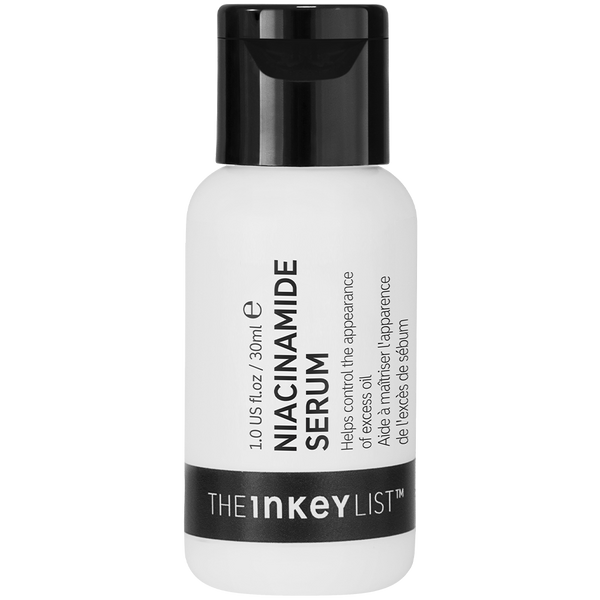
What follows covers the science behind why sensitive skin and blemishes so often appear together, the ingredients that actually work for this skin type, what to actively avoid, how to cleanse without stripping, and a complete step-by-step morning and evening routine. Our Niacinamide Serum (£10.00) and our Salicylic Acid Cleanser (£12.00) are two of the barrier-friendly blemish ingredients this guide covers in depth - but they are far from the only tools available to you. For those who want to explore the broader topic of breakout-prone skin, our guide to blemish-prone skin is a useful companion resource alongside this article.
Why Sensitive Skin and Breakouts Often Go Hand in Hand
There is a reason sensitive skin and breakouts tend to show up together - and understanding it changes how you approach treating both.
The skin barrier, known clinically as the stratum corneum, is the outermost protective layer of your skin. Its primary jobs are simple but critical: keep moisture in, and keep irritants and bacteria out. When the barrier is healthy and intact, it does both of those things well. When it is compromised - weakened by harsh products, environmental stress, or a genetic tendency toward reactivity - it does the opposite. Moisture escapes more easily, and the things that should stay out get in.
Sensitive skin is not really a standalone condition. In most cases, it is a signal that the barrier is already functioning below its best - reactive to products that most people tolerate without issue, prone to redness, tightness, or flushing in response to ingredients or temperature changes. The sensitivity itself is a symptom of barrier compromise, not a separate skin type category. If you are unsure whether your skin is genuinely sensitive or presenting another concern, our skin type guide is a practical place to start.
Here is where it connects to breakouts. A compromised barrier allows bacteria and irritants to penetrate more easily into the skin - and one of the consequences of that is an increased likelihood of inflammatory blemishes. This is why sensitive skin and blemishes are not as contradictory as they might seem. They share an underlying root cause: a barrier that is not performing as it should.
Understanding the blemish cycle itself is useful here. Breakouts form when excess sebum combines with dead skin cells inside a follicle, creating a blockage. Bacteria thrive in that environment, and the immune system responds with inflammation - which is the redness, swelling, and discomfort associated with active blemishes. In people with sensitive or reactive skin, each stage of this cycle triggers a stronger inflammatory response. That means blemishes tend to be more inflamed, slower to heal, and more likely to leave post-blemish marks behind once they clear. According to the NHS overview of acne, blemish formation is a multifactorial condition - and inflammation plays a central role throughout.
There is another mechanism worth understanding: TEWL, or transepidermal water loss. When the skin barrier is compromised, water evaporates from the skin at a faster rate than it should. This leads to dehydration at the skin level - not necessarily dryness you can see on the surface, but a functional dryness that makes the skin more reactive. In response to dehydration, the skin can over-produce sebum as a compensatory mechanism. More sebum means more material for pore blockages. Which means more breakouts. All from a compromised barrier.
This is why understanding and repairing the skin barrier is not a secondary consideration for blemish-prone skin - it is the primary one. Treating breakouts without addressing the barrier is like trying to fill a leaking bucket. You can keep pouring in treatment, but if the barrier is being stripped and damaged in the process, the underlying problem only worsens over time.
The key insight this whole blog is built on: blemish treatment for sensitive skin is not about using the least effective version of everything. It is about choosing the right ingredients, at the right concentrations, in the right formats - so that the skin is treated and supported simultaneously, not treated at the expense of being supported.
For a fuller understanding of how blemishes form and what is happening at each stage of the breakout cycle, our guide to blemish-prone skin covers the complete picture. But before moving to what works, it is worth naming what most people with sensitive blemish-prone skin are already doing - because those habits are often making things significantly worse.
The Biggest Mistakes People Make with Sensitive Blemish-Prone Skin
The instinct when dealing with persistent breakouts is to escalate. To go harder, use stronger products, and treat more aggressively. For sensitive skin, that instinct is almost always counterproductive - and in many cases, it is the reason the breakouts are not clearing.
Reaching for the strongest actives available
The assumption that stronger equals more effective is one of the most persistent myths in skincare. High-concentration AHAs used daily, aggressive chemical peels, or harsh physical scrubs do not clear breakouts faster on sensitive skin - they strip the barrier, heighten reactivity, and worsen the very inflammation that drives blemishes. The skin responds to that level of stress by becoming more sensitive and more prone to flare-ups, not less. For more on how to use acids correctly without tipping into over-exfoliation, our guide to using acids in your skincare routine is worth reading alongside this blog.
Using sulphate-heavy cleansers
Foam and gel cleansers formulated with sulphate surfactants (SLS and SLES in particular) are deeply stripping. They lift not just impurities and excess oil but also the natural lipids that form part of the barrier itself. The skin’s response to that over-stripping is, predictably, to over-produce sebum to compensate - which feeds directly back into the blemish cycle. Cleansing feels thorough, but the aftermath actively worsens what you are trying to treat.
Layering multiple actives without barrier support
Salicylic acid, benzoyl peroxide, and retinol are all legitimate blemish-fighting ingredients. Used simultaneously, without any barrier-supportive steps between them, they are too much for sensitive skin to handle. The combination approach causes cumulative irritation that looks a lot like a skin reaction - redness, sensitivity spikes, increased breakouts - and many people mistake that irritation for a sign that the products are working. It is not. It is a sign the barrier is being overwhelmed.
Skipping moisturiser
This is one of the most common errors among people with blemish-prone skin, and one of the most damaging. The logic makes surface-level sense: if skin is oily and congested, adding more product feels counterintuitive. But skipping moisturiser leaves the barrier dehydrated, drives sebum overproduction, and makes the skin more reactive to every active ingredient in the rest of the routine. Moisturising is not optional for blemish-prone skin - it is essential to making every other step work. Our guide to hydrating sensitive skin without causing irritation addresses this in more detail for those who want a fuller breakdown.
Aggressive spot treatment and picking
Pressing a high-strength spot treatment repeatedly onto an active blemish, or picking and touching blemishes, causes localised barrier damage and increases the risk of post-blemish pigmentation. Sensitive skin does not recover as quickly from that kind of mechanical and chemical stress, meaning marks linger longer than they would on a more resilient skin type.
Ingredients to actively avoid
Beyond habits, there are specific ingredients that tend to worsen sensitive blemish-prone skin rather than improve it:
- Harsh sulphate surfactants (SLS, SLES) in cleansers - stripping, drying, and disruptive to the lipid layer.
- High-strength AHAs (glycolic acid at 10% or above, used daily) - too exfoliating for a reactive barrier; can cause irritation, redness, and sensitisation.
- Alcohol-based toners - these strip the lipid layer of the barrier, increase sensitivity, and leave skin more reactive to everything that follows.
- High-percentage benzoyl peroxide (5% and above) - effective against the bacteria that drive breakouts, but frequently too drying and irritating for sensitive skin; causes peeling, redness, and increased barrier compromise.
- Fragrance in skincare (listed as “parfum” or in the form of essential oils) - one of the most common hidden sensitisers. Fragrance molecules penetrate more easily through a compromised barrier, triggering reactive responses in skin that would otherwise tolerate them.
- Physical scrubs used on active breakouts - mechanically damaging, capable of spreading bacteria, and likely to worsen redness and inflammation.
For readers who want a broader view of which ingredients work best for sensitive skin in general, our guide to the best ingredients for sensitive skin is a useful companion read.
With a clear picture of what to avoid, the next step is the positive counterpart: the ingredients that do work for sensitive blemish-prone skin - clearing breakouts without compromising the barrier in the process.
The Best Ingredients for Sensitive Blemish-Prone Skin
Not all blemish-fighting ingredients are aggressive. Several work by targeting the mechanisms of breakouts - excess oil, blocked pores, inflammation, post-blemish marks - without stripping or sensitising the skin. The following are the most effective and appropriate options for sensitive blemish-prone skin, with guidance on what each does and how to use it.
Salicylic Acid (BHA)
Salicylic acid is a beta hydroxy acid - and its most important property for blemish-prone skin is that it is oil-soluble. Unlike water-soluble acids that work only on the skin surface, salicylic acid can penetrate inside the pore, where it dissolves the mixture of dead skin cells and sebum responsible for blockages. It also has mild anti-inflammatory properties, which help calm the redness associated with active blemishes.
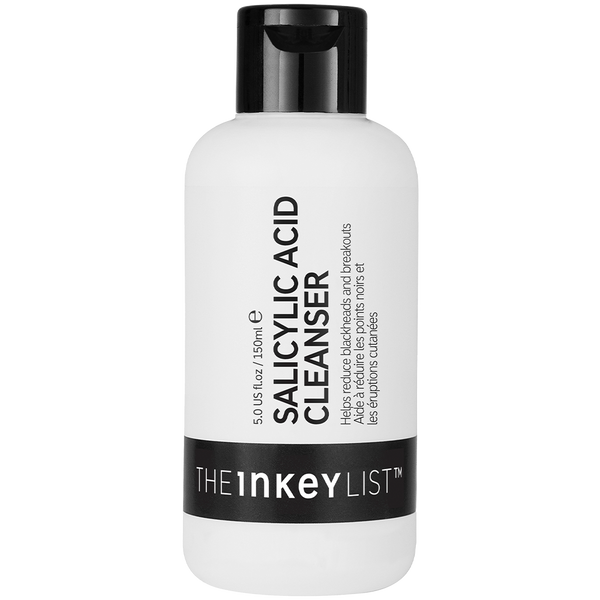
For sensitive skin, the key is format. A cleanser-based salicylic acid - where the active is rinsed off after around 60 seconds - delivers the benefit with significantly lower irritation potential than a leave-on formula, because contact time is controlled and brief. Our Salicylic Acid Cleanser (£12.00) contains 2% salicylic acid alongside 1% zinc compound for oil control and 0.5% allantoin to soothe the skin during cleansing. It is designed as a daily blemish cleanser that decongests pores and addresses blackheads without the irritation risk of a leave-on BHA.
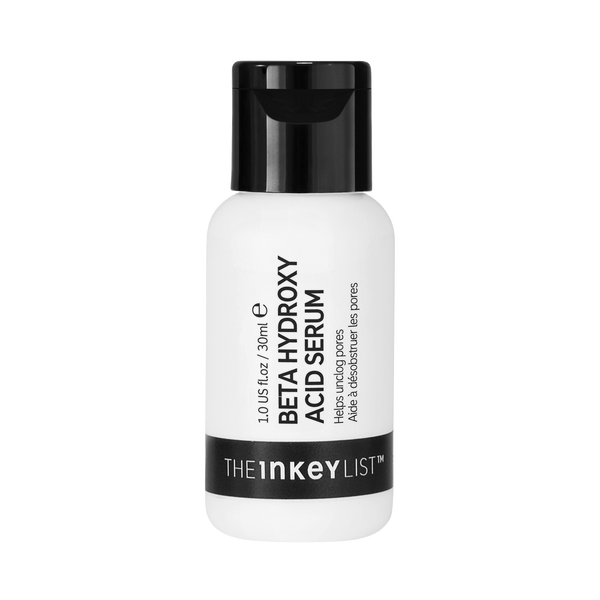
For those who want to step up to a leave-on BHA, our BHA Serum (£10.00) is the more potent option - but on sensitive skin, it should be introduced gradually (starting once or twice per week, not daily) to establish tolerance before increasing frequency. You can explore the full salicylic acid range here.
Niacinamide (Vitamin B3)
If there is one ingredient that belongs in nearly every sensitive blemish-prone routine, it is niacinamide. This is a multitasking ingredient that works across several of the mechanisms that drive breakouts - regulating sebum production, reducing redness and inflammation, visibly minimising the appearance of pores, and strengthening the skin barrier by supporting ceramide synthesis. It does all of this without causing purging, without drying the skin, and without sensitising a reactive barrier.
That last point matters enormously. Most blemish actives work against breakouts at some cost to the barrier. Niacinamide is one of the rare exceptions - it treats blemishes while simultaneously supporting the barrier you are trying to protect. For a complete breakdown of the science behind niacinamide and blemishes, our blog on whether niacinamide helps with breakouts covers the evidence in detail. The niacinamide ingredient guide is also a useful reference.
Our Niacinamide Serum (£10.00) delivers 10% niacinamide alongside 1% hyaluronic acid - a hydrating pairing that makes it suitable for daily use morning and evening on even reactive skin.
Succinic Acid
Succinic acid is one of the gentler spot-targeting ingredients available - and for sensitive skin, that matters. It works by targeting active blemishes directly, calming redness, and reducing excess oil at the source, without the dryness and irritation associated with higher-percentage alternatives. It is a particularly effective option for sensitive skin types that cannot tolerate more aggressive spot treatments.
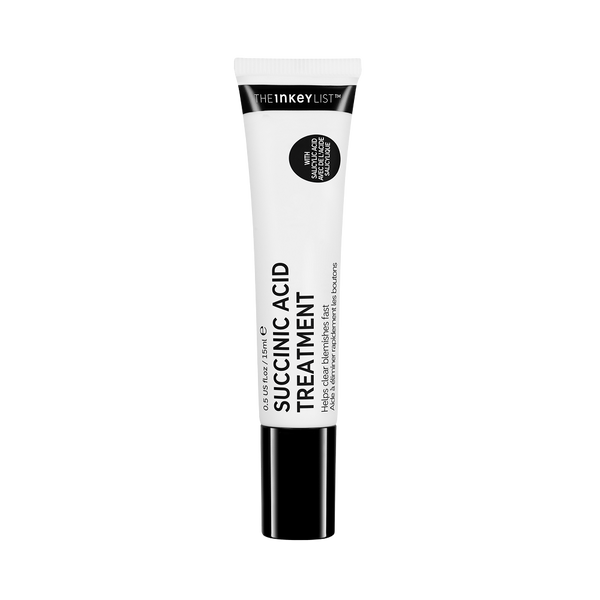
Our Succinic Acid Treatment (£11.00) is designed to be applied directly to active blemishes as a targeted treatment. It addresses the blemish without affecting the surrounding skin barrier - which makes it a reliable choice for reactive skin on an uncertain day.
360° Skin Clearing Serum
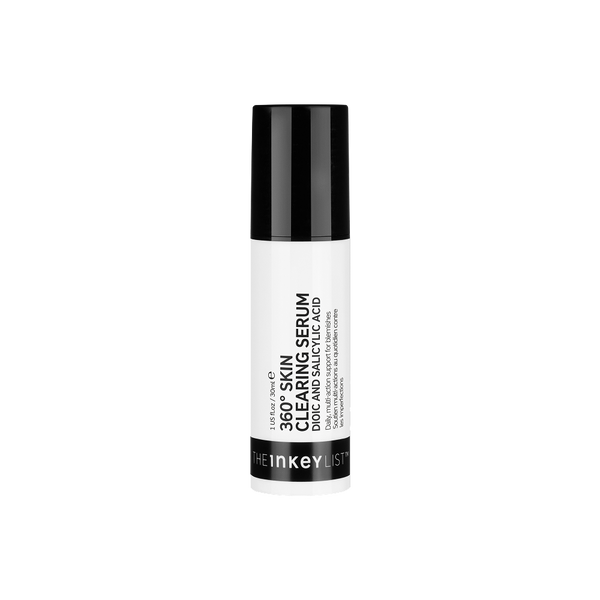
For those managing persistent blemishes rather than the occasional reactive spot, a daily leave-on treatment serum designed to work across all three stages of the blemish cycle is a more comprehensive approach. Our 360° Skin Clearing Serum (£16.00) combines 1% Dioic Acid (which targets post-blemish marks and oil), 2% Salicylic Acid (pore decongestion), and 0.4% Dendriclear (which works against the bacteria involved in active breakouts). It addresses excess oil, active blemishes, and the marks they leave behind - in a single daily serum.
On sensitive skin, introduce this serum gradually - starting on alternate evenings and building toward daily use once the skin has established tolerance.
Azelaic Acid
Azelaic acid is quietly one of the most versatile ingredients for sensitive blemish-prone skin. It is anti-inflammatory, gently antibacterial, and particularly effective at addressing post-blemish redness and marks. Crucially, it is non-drying and non-photosensitising - which means it does not leave the skin more vulnerable to UV damage, unlike some other actives. It is exceptionally well-tolerated by sensitive and reactive skin types, making it a strong option for those whose skin struggles with stronger alternatives. For a full look at what azelaic acid does and how it works, our azelaic acid ingredient guide covers the detail.
Retinol (PM Only)
Retinol is one of the most well-evidenced ingredients in skincare - and yes, it has a genuine role in managing blemish-prone skin. It helps clear pores by increasing cell turnover, reduces sebum production over time, and is one of the most effective ingredients available for fading post-blemish marks. The concern for sensitive skin is not whether retinol works - it is how it is introduced.
The answer is: slowly, infrequently, and always buffered. Starting at two to three evenings per week - not nightly - and always applying a hydrating serum beneath it and a moisturiser over the top significantly reduces the irritation potential. The retinol ingredient page explains how retinol works at a molecular level, and our dedicated guide to retinol and sensitive skin covers the practical introduction process step by step.
Our Retinol Serum (£12.00) contains 1% Retinyl Acetate (a slow-release retinoid form that is gentler than pure retinol), 0.5% Granactive Retinoid, and squalane - a formulation specifically designed to deliver retinoid benefits with a lower irritation profile, which makes it more accessible for sensitive skin than many alternatives.
Hydrocolloid Pimple Patches
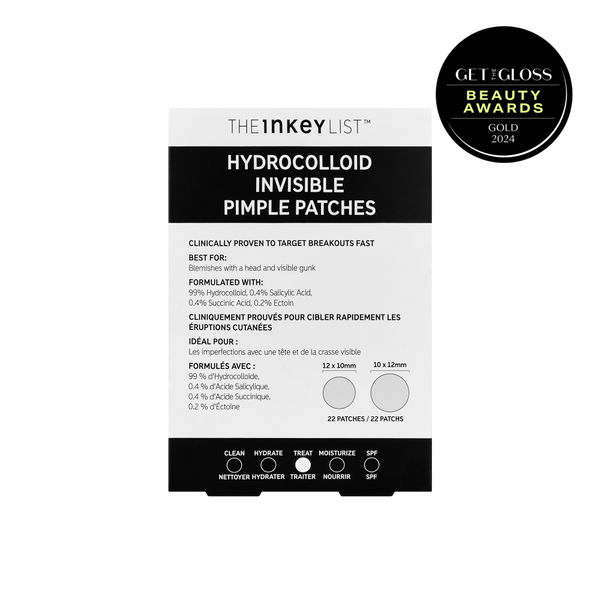
Not every spot treatment needs a chemical active. Hydrocolloid patches work on a purely physical basis: they create an occlusive layer over an active blemish, absorb fluid and impurities from the spot overnight, and protect it from being touched or exposed to bacteria. There is no irritation risk because no chemical is touching the wider skin. They are also invisible under makeup.
Our Hydrocolloid Invisible Pimple Patches (Pack of 22) (£9.00) are a reliable option for sensitive skin on active-blemish days when the skin is already reactive and adding chemical treatments feels like too much.
With the ingredient toolkit established, the most important step to get right is the one that precedes everything else: cleansing.
How to Cleanse Sensitive Blemish-Prone Skin Without Stripping
The cleanser is the single most influential product choice for sensitive blemish-prone skin. It is the first thing that touches your skin and the step that sets the condition of the barrier for everything that follows. A stripping cleanser can undo every benefit of every subsequent product in the routine - no matter how well-chosen those products are.
The good news is that cleansing correctly for this skin concern is less about using the most powerful cleanser available and more about technique, sequence, and product choice working together.
The 60-Second Rule
One of the most effective and underrated adjustments to a cleansing routine is simply taking more time. Cleansing for at least 60 seconds - massaging gently across the full face with fingertips - gives the cleanser enough time to actually lift impurities, excess oil, and surface debris without requiring harsh surfactants to do the heavy lifting. Most people cleanse for 10 to 15 seconds and rinse. That is not enough contact time for most cleansers to function as intended.
This matters for sensitive blemish-prone skin specifically because it means you can get thorough cleansing from a gentler formula, rather than compensating for speed with a stronger one.
The Double Cleanse Method for Sensitive Blemish-Prone Skin
Double cleansing - using two cleansers in sequence, each with a different function - is a particularly effective approach for blemish-prone skin worn under makeup or SPF, because it separates the removal of surface layers (makeup, SPF, environmental residue) from the active pore-targeted cleanse. It sounds like more work. Done correctly, it is actually gentler on the barrier than a single aggressive cleanse. Our complete guide to double cleansing covers the method in full.
Step 1 - The First Cleanse: Gentle, Non-Stripping Removal
The first cleanse has one job: to remove makeup, SPF, and surface impurities quickly, gently, and without stripping the skin. It should not be an active cleanse. It should leave the skin calm and prepped - not squeaky clean.
Two products are well-suited to this step for sensitive blemish-prone skin, and the choice between them comes down to texture preference:
Our Oat Cleansing Balm 150ml (£15.00) is a cream-to-balm formula containing 1% colloidal oatmeal and 3% oat kernel oil. It melts makeup and SPF in around 30 seconds, transforms to a milky rinse with water, and leaves the skin visibly calm. For those whose skin is particularly reactive on a given day, it can also be used as a 10-minute calming mask. The texture is rich and emollient - well-suited to those who prefer a more nourishing first cleanse.
Our Hydrating Cream-to-Milk Cleanser 240ml (£13.00) is a lighter alternative - a cream-to-milk formula powered by 5% Rice Milk and Hyaluronic Acid that removes impurities and makeup while delivering clinically proven 24-hour hydration. It is the better fit for those who find the Oat Cleansing Balm too rich in texture, or who prefer a more fluid, less emollient first cleanse. Both are equally valid choices for the first cleanse step - neither is superior to the other.
Step 2 - The Second Cleanse: Targeted Active Cleanse
Our Salicylic Acid Cleanser (£12.00) follows the first cleanse to decongest pores and address excess oil. On skin that has already had surface layers removed, the BHA in this cleanser can do its job more effectively - and the 60-second window gives it enough time to work without prolonged exposure. Rinse with lukewarm water. Not hot - hot water strips the lipid layer of the barrier.
For a deeper look at cleanser choice for blemish-prone skin, our guide to the best cleanser for blemish-prone skin is a useful companion read.
When to Double Cleanse (and When Not To)
Not every cleanse needs to be a double cleanse. The double cleanse method is most relevant in the evening, when makeup, SPF, and a full day’s worth of environmental residue need to be properly removed before active treatment steps.
In the morning, the priority is different. Overnight, the skin produces sebum and sheds dead cells - but there is no makeup or SPF to remove. A single, gentle cleanse with either the Oat Cleansing Balm or the Hydrating Cream-to-Milk Cleanser, used briefly, is the right morning approach. It removes what has accumulated overnight without stripping the skin before the day’s routine begins.
On evenings where the skin is particularly reactive - where it feels tight, irritated, or already sensitised - it is perfectly valid to skip the second cleanse entirely and use only the gentle first cleanse. Listening to what the skin needs on a given day is part of building a routine that works for sensitive skin long-term.
Technique Matters
Regardless of which cleansers you use, technique has a significant impact on how the barrier is affected:
- Fingertips only. No face cloths, no silicone scrubbers, no rough mitts.
- Gentle circular motions. No rubbing or pressing.
- Lukewarm water only. Hot water is actively damaging to the lipid barrier.
- Pat dry with a soft towel. Never drag.
With cleansing covered, the next step is how to treat active blemishes and moisturise - and why these two steps, for sensitive blemish-prone skin, need to be thought about together.
How to Treat Breakouts and Moisturise Without Compromising Your Barrier
Treating breakouts and moisturising properly are not opposing forces in a routine - they are interdependent steps. For sensitive blemish-prone skin specifically, how you treat and how you moisturise will determine whether your skin improves steadily or stays stuck in a cycle of breakouts, sensitivity, and barrier damage.
Treating Active Blemishes: Choosing the Right Approach
For sensitive skin, targeted spot treatment options need to be chosen with the same care as the rest of the routine. The goal is to address active blemishes without causing localised barrier damage, redness flares, or peeling in the surrounding skin.
Two approaches suit sensitive blemish-prone skin well:
Our Succinic Acid Treatment (£11.00) is the right choice when you want a targeted chemical approach - one that calms the blemish, reduces redness, and addresses excess oil without the drying effect of stronger alternatives. Apply directly to active spots after serum and before moisturiser.
Our Hydrocolloid Invisible Pimple Patches (£9.00 for a pack of 22) are the right choice when skin is particularly reactive, when the blemish is actively weeping or at its most inflamed, or simply when you want to protect a spot overnight without adding any chemical active. They absorb fluid from the blemish, reduce its size and visibility, and physically prevent touching - which is one of the most common ways sensitive skin is worsened around active breakouts.
For ongoing, persistent blemishes rather than occasional reactive spots, our 360° Skin Clearing Serum (£16.00) is the more comprehensive daily treatment option. It targets all three stages of the blemish cycle - excess oil, active breakouts, and the post-blemish marks they leave - in a single leave-on serum that is used as part of the evening routine. For a full explanation of how to approach blemish treatment at every stage of the cycle, our guide to blemish-prone skin covers the complete picture.
The answer to “should I use the strongest treatment I can find?” is clearly no - particularly on sensitive skin. Aggressive spot treatments can cause post-treatment sensitivity flares, worsen post-blemish marks on reactive skin, and damage the barrier in the exact areas where it is already most compromised.
Why Moisturising Is Non-Negotiable
Let us deal with the myth directly: moisturisers do not cause breakouts. The right moisturiser - one that is non-comedogenic, oil-free or very lightweight, and barrier-supportive - does not block pores or feed the blemish cycle. What does feed the blemish cycle is skipping moisturiser and leaving the barrier dehydrated, which drives the sebum overproduction that actually causes blockages.
This is not a nuanced point. For sensitive blemish-prone skin, moisturising is as important as treating. Without it, the barrier cannot repair, actives are more likely to cause irritation, and the skin is more reactive to everything.
Choosing the right moisturiser for this skin type means prioritising three things: non-comedogenic, lightweight or oil-free, and barrier-supportive.
Our Omega Water Cream 50ml (£11.00) is the right fit for most sensitive blemish-prone skin types. It is oil-free, lightweight, and contains 5% Niacinamide, a 0.2% Ceramide Complex (omegas 3, 6, and 9), and 5% Glycerin. Clinically proven to balance oil while deeply hydrating, it delivers barrier support and blemish-relevant benefits without any heaviness or comedogenic risk.
Our Biome Balancing Moisturiser (£12.00) is another oil-free, lightweight option suited to blemish-prone and sensitive skin - a solid alternative for those who want to vary between the two depending on how the skin feels on a given day.
For skin that sits on the drier end of the sensitive-blemish spectrum - or for skin where the barrier is significantly compromised - our Bio-Active Ceramide Moisturiser (£19.00) provides richer ceramide support and is particularly well-suited to recovery nights, when the skin needs more intensive barrier repair.
The Barrier-First Treatment Principle
The order in which you apply treatment steps matters - particularly for sensitive skin. Treatment actives should never sit on a stripped, dry, or completely bare barrier. Applying them in sequence with hydrating and barrier-supportive steps reduces irritation potential significantly.
The “buffer” method is worth understanding here: when introducing a new active - particularly a BHA serum or retinol - apply a hydrating serum beneath it and a moisturiser over the top. The hydrating layer cushions the active from direct contact with a compromised barrier. The moisturiser on top seals in the treatment and reduces irritation potential overnight.
Relatedly, skin cycling - the practice of alternating active treatment nights with recovery nights - is a well-suited approach for sensitive blemish-prone skin. Rather than applying all actives every night (which creates cumulative irritation), cycling between an active evening and a recovery evening gives the barrier time to repair between treatments. Our guide to skin cycling explains the approach in detail and is worth reading alongside this routine.
Now that the individual steps are clear, the next section brings everything together into a complete morning and evening routine.
Your Full AM and PM Routine for Sensitive Blemish-Prone Skin
Everything covered in this blog - the barrier science, the ingredient choices, the cleansing method - comes together here. What follows is a practical, step-by-step morning and evening routine for sensitive blemish-prone skin. Use it as a framework, adapt it to how your skin feels on any given day, and build it gradually - introducing one new product at a time, with a week or two between additions.
Morning Routine
Step 1 - Cleanse
Choose either our Oat Cleansing Balm (£15.00) or our Hydrating Cream-to-Milk Cleanser (£13.00), used briefly to remove overnight sebum and prep the skin. Both are gentle, non-stripping, and barrier-supportive in the morning - choose based on which texture you prefer. No second cleanse needed in the morning.
Step 2 - Treat
Our Niacinamide Serum (£10.00). Apply to the face and neck and allow to absorb fully before the next step. This is the daily anchor of the blemish-prone sensitive skin routine - addressing oil, redness, pore appearance, and barrier function simultaneously, without any irritation risk.
Step 3 - Moisturise
Our Omega Water Cream (£11.00) or our Biome Balancing Moisturiser (£12.00). Both are oil-free and non-comedogenic. Apply to face and neck. Do not skip this step.
Step 4 - Protect
Our Dewy Sunscreen SPF 30 as the final morning step. SPF is not optional for blemish-prone skin. UV exposure directly worsens post-blemish marks and significantly slows the skin’s ability to repair itself after a breakout. An SPF 30 minimum, applied every morning, is one of the most evidence-backed steps you can take to prevent blemish marks from persisting long after the active spot has cleared.
Evening Routine
Step 1 - First Cleanse
Our Oat Cleansing Balm 150ml (£15.00) or our Hydrating Cream-to-Milk Cleanser 240ml (£13.00). Apply to dry skin. Massage gently for 60 seconds to remove makeup, SPF, and the day’s impurities. Rinse with lukewarm water. The Oat Cleansing Balm suits those who prefer a richer, more emollient first cleanse. The Milk Cleanser suits those who prefer something lighter and more fluid. Both deliver the same result: a clean, calm canvas for the second cleanse.
Step 2 - Second Cleanse
Our Salicylic Acid Cleanser (£12.00). Apply to damp skin, massage for 60 seconds, and rinse. This is the active pore-clearing step - brief contact, consistent benefit. If the skin is particularly reactive or sensitised on a given evening, it is entirely appropriate to skip this step and use only the gentle first cleanse. Listening to the skin matters.
Step 3 - Treat (Active Evenings)
On active treatment evenings, apply our 360° Skin Clearing Serum (£16.00) to address all three stages of the blemish cycle. On evenings when the skin needs a break from targeted actives, our Niacinamide Serum (£10.00) is the ideal alternative - supportive, non-irritating, and beneficial every evening.
Step 4 - Treat (Retinol Evenings - 2 to 3 Nights Per Week Only)
On retinol evenings, apply our Retinol Serum (£12.00) after the Niacinamide Serum has fully absorbed. The niacinamide layer acts as a buffer - it reduces irritation potential and makes the retinol more comfortable on sensitive skin. Do not use retinol on the same evening as a BHA serum. Do not use retinol nightly in the first month of introducing it. Build gradually, and let the skin lead.
Step 5 - Spot Treat
Apply our Hydrocolloid Invisible Pimple Patches (£9.00) directly to any active blemishes before the final moisturiser step. Alternatively, a small, precise application of our Succinic Acid Treatment (£11.00) directly on targeted spots. Not both simultaneously - choose one approach per spot.
Step 6 - Moisturise
Our Omega Water Cream (£11.00) for regular evenings. Our Bio-Active Ceramide Moisturiser (£19.00) for recovery nights - when the skin has been through more active treatment and needs deeper barrier support overnight.
A Note on Building This Routine
Do not introduce all of these products at once. Add one product at a time, wait one to two weeks before adding the next, and pay attention to how the skin responds. This is the only reliable way to identify which products are helping - and to identify quickly if anything is causing a reaction, so you can remove it and narrow down the cause.
On skin cycling: for sensitive blemish-prone skin specifically, the most effective approach is to alternate between active treatment evenings (360° Serum, or Retinol Serum) and recovery evenings (Niacinamide Serum only, richer moisturiser, no additional actives). This reduces cumulative irritation and gives the barrier the recovery time it needs to function well. Our full guide to skin cycling explains how to structure this within a weekly routine.
On results: blemish reduction typically becomes visible between 6 and 12 weeks of consistent routine use. That timeline can feel frustrating. But consistency and patience will outperform intensity and aggression every time on sensitive skin - and a routine the skin can actually tolerate is the only one that will work long-term. For a deeper understanding of how each of these steps targets the blemish cycle, our guide to blemish-prone skin covers the full picture alongside the science of what is happening at each stage. For broader skincare guidance beyond blemishes, The Complete Skincare Guide and the 10 Most Common Skin Concerns guide are both useful resources.
Clear Skin and Sensitive Skin Are Not Mutually Exclusive
The core message of this blog is a simple one: you do not have to choose between treating your breakouts and protecting your skin. The two are not in conflict - they require the same thing. A barrier that is intact and well-supported allows your treatments to work more effectively, reduces the inflammatory response that makes blemishes worse, and gives your skin the resilience it needs to recover between active treatment steps.
The approach is not complicated: cleanse gently, anchor with niacinamide, introduce targeted treatments gradually and infrequently, moisturise every single day, and protect with SPF every morning. Resist the urge to escalate. Consistency and the right ingredients at the right concentrations will always outperform intensity on sensitive skin.
Results take time - typically 6 to 12 weeks of consistent routine use before significant blemish reduction becomes visible. That is not a flaw in the approach; it is how skin works. Patience, in this case, is not passive. It is the strategy.
For everything else you need to know about managing blemish-prone skin - from causes to treatment stages to ingredient science - our guide to blemish-prone skin is the place to continue.
Ready to take the next step?
Shop our Salicylic Acid Cleanser - £12.00 - the barrier-friendly BHA cleanser designed for daily blemish care.
Shop our Niacinamide Serum - £10.00 - the daily serum that works on oil, redness, barrier function, and post-blemish marks simultaneously.
Take the Breakout Analyser Pro - AI-powered, dermatologist-backed breakout analysis to identify what is driving your specific skin concerns.
Take the Skincare Quiz - get a personalised routine built around your skin in two minutes.
Frequently Asked Questions
Got a question?
Our askINKEY team are a friendly bunch of skincare experts with deep product knowledge and zero judgement. Whether you're an ingredient obsessive or just starting out, we'll make it make sense. No question too big. No question too small. We Give A Care, Every Day.


