



Dry, Flaky Skin Under Your Eyes? Why the Eye Area Needs Ceramides Most
The skin under your eyes dries out faster than the rest of your face because of how it's built, not because you're doing something wrong.
Author
askINKEY skincare advisor
Published
25 August, 2026
Time to read
13 minutes
Dry skin under eyes is one of the most common complaints people bring to a skincare routine, and one of the least well explained. It shows up as tightness after cleansing, flaky skin under eyes that catches the light, a papery texture that was not there last month, and concealer that clings and creases no matter how carefully you apply it. Here is the short version: the eye area dries out faster than the rest of your face because of how it is built, not because you are doing something wrong.
This article covers what under-eye dryness actually is, why this specific patch of skin is uniquely prone to it, what ceramides do about it, what else might be causing it, and how to build a routine that holds. It is common, it is manageable, and it usually responds to a barrier-focused routine rather than to buying more products.
One thing worth knowing before we start: under-eye dryness does not always announce itself as obvious flaking.
What Dry Skin Under Your Eyes Actually Looks and Feels Like
Most people expect dryness to look like visible flakes. Sometimes it does. Often it does not, and that is why so many people spend months blaming their concealer, their foundation or their sleep when the actual issue is a thirsty skin barrier.
Here is what dry skin under eyes tends to look and feel like in real life.
- Tightness, especially after cleansing. That drawn, slightly stretched feeling in the ten minutes after you wash your face is one of the earliest signals. If the sensation eases the moment you apply product, that is dryness talking.
- Visible flaking or a rough, papery texture. Sometimes you only notice it in harsh light, or when you run a fingertip across the area and it does not feel smooth.
- Makeup clinging, patching or creasing. Concealer that sits in a fine line by 11am, or gathers into a slightly grainy patch, is usually sitting on dry, uneven skin rather than failing on its own merits.
- A dull or crepey look. Skin that has lost water reflects light unevenly, so the area can read as tired even when you are not.
- Stinging or tingling from products that never used to sting. This is the one people most often misread. A serum you have used happily for a year suddenly nipping around the eyes is usually a sign the barrier is depleted, not that the formula changed.
The reason all of this shows up here first is movement. The under-eye area creases constantly, all day, in a way a cheek simply does not. Dryness on a cheek can sit there quietly for weeks. Dryness under an eye gets folded, unfolded and folded again thousands of times, so it announces itself as visible texture far sooner. You are not imagining that it looks worse here. It genuinely does show more.
Under-eye dryness can also be seasonal, situational or stubbornly year-round. Some people only notice it from October onwards, when the heating goes on. Others get it after a long flight, a week of late nights, or a change in cleanser. And it rarely arrives alone: it tends to turn up alongside other eye-area concerns rather than as a tidy standalone problem.
Worth flagging briefly, because it causes a lot of confusion: dryness can make the under-eye area look darker or more shadowed, simply because rough, dry skin scatters light poorly rather than bouncing it back evenly. If pigmentation and shadowing are your main concern rather than texture, the more useful read is how to get rid of dark circles under eyes. Similarly, if what is really bothering you is morning swelling rather than roughness, why are my eyes puffy in the morning will serve you better than this piece will.
If you recognised yourself in three or more of those signs, the next question is the obvious one, and it is the one this article was written to answer properly: why does this keep happening here specifically, when the rest of my face is perfectly comfortable?
Why the Eye Area Dries Out Faster Than the Rest of Your Face
Almost every article on this subject says the same four words and then stops: the skin is thinner. It is true, but on its own it is not much of an explanation, and it does not tell you why a barrier-focused approach works. There are actually four things going on around your eyes at once, and it is the combination that matters.
The skin really is thinner, and by a meaningful margin
Eyelid and periorbital skin measures somewhere in the region of 0.4 to 0.6 mm, while skin on other parts of the face generally sits between roughly 1.0 and 1.9 mm. Exact figures vary depending on how and where researchers measure, so treat that as a range rather than a single fixed number. NHS patient guidance puts it in plainer terms: eyelid skin is around four times thinner than the skin on the rest of your face.
Which means, practically, that there is simply less material here. Less tissue to hold water, less depth to buffer a change in temperature or humidity, and less structure to hide the effects of dehydration when it happens.
The eye area produces very little oil of its own
This is the fact that reframes the whole problem, and it is the one almost nobody mentions.
Research mapping surface lipids across the face found the upper eyelid sitting at roughly 10 µg/cm². For comparison, the nose came in at around 130 µg/cm², and the cheek somewhere around 50 to 70 µg/cm².
The skin around your eyes has a fraction of the surface oil the rest of your face produces. Roughly a tenth of what your cheek makes, and a tiny fraction of your nose. That surface oil is a protective layer, and here there is barely any of it.
To be precise, because this gets misreported constantly: the eye area is not devoid of glands. The eyelid contains specialised meibomian and Zeis glands, but those serve the tear film and the lash line rather than lubricating the skin surface. The accurate framing is that there are far fewer oil glands in the skin itself, and much less surface oil as a result.
Why does that matter so much? Because surface oil is one of the ways skin slows down water loss. It is a physical seal. Where there is plenty of it, skin can lose a bit of barrier function and still hold on to moisture reasonably well. Where there is almost none, there is no back-up system. The barrier is doing the job alone.
It never stops moving
The average adult blinks around 15 to 20 times a minute. Run that across a waking day and it adds up to tens of thousands of blinks, every single day, before you factor in squinting, smiling, reading, or laughing.
No other area of facial skin is asked to flex that often. Every blink folds and releases the skin under and around the eye. When that skin is well hydrated and well supported, it flexes comfortably and springs back. When it is dry, it folds like paper rather than fabric, and each fold becomes momentarily visible as texture.
Which means dryness here is not just felt, it is performed. The constant motion turns an invisible moisture problem into a visible one.
It takes more handling than anywhere else on your face
Think through an ordinary day. Eye makeup comes off, often with more pressure and more product than anywhere else on the face. Mascara needs working at. Eyes get rubbed when you are tired, when you have hay fever, when you have been staring at a screen since nine. Then there is cleansing, and towel drying, and reapplying, and rubbing again.
More friction, on thinner skin, with less oil to protect it. If you want the proper technique breakdown for reducing that daily mechanical stress, how to apply eye cream the right way covers it in full.
Put the four together and the picture is clear
Individually, none of these facts is dramatic. Stacked, they explain everything.
The eye area starts with a smaller reserve. It loses water faster because it has less surface oil to slow that loss. It gets physically disturbed tens of thousands of times a day by normal blinking. And it absorbs more handling than any other part of your face.
That is why the same conditions that leave your cheeks perfectly comfortable can leave your under-eyes tight by lunchtime. Same weather, same routine, same cleanser, completely different outcome, because it is a completely different piece of skin.
None of this is a problem you caused, and none of it is permanent. But it does tell you what the fix has to do: replace the protection this area does not generate much of on its own. Which brings us to ceramides.
What Ceramides Do, In Plain English
The most useful way to picture your skin barrier is as a brick wall. Skin cells are the bricks. The lipids between them are the mortar holding everything together. Ceramides make up a major part of that mortar.
When the mortar is well supplied, the wall does its job: water stays where it should, and irritants have a much harder time getting in. When the mortar thins out, the wall gets porous. Water escapes more easily, and things that would normally bounce off start getting through. That is when skin feels tight, looks rough and reacts to products it used to tolerate.
A well-supplied barrier holds water better, feels more comfortable and looks smoother. That is the whole proposition, and it is genuinely that simple.
Ceramide levels do decline naturally over time, and they dip further with over-cleansing, cold weather and long stretches of indoor heating. Nothing to be alarmed about, it just means the supply is worth topping up.
That is the short version, deliberately. If you want the ingredient-level detail on the specific ceramide INKEY uses, what is Ceramide NP covers it properly, and if you want the science of how bio-active ceramides differ from standard ones, that argument lives in full in bio-active ceramides vs regular ceramides.
So if ceramides matter everywhere on the face, why do they matter more here?
Why Ceramide Loss Shows Up Around the Eyes First
Here is the thesis of this entire article, and it follows directly from the anatomy.
The eye area begins with a smaller lipid reserve and far less surface oil than anywhere else on your face. So any given amount of barrier depletion represents a much larger proportion of what was there to begin with. Lose a little from a cheek, which has thicker skin and five to seven times the surface oil, and the cheek absorbs it without complaint. Lose the same amount from the under-eye area and you have taken a meaningful share of a small reserve.
The loss is not bigger here. It is just proportionally more significant, so it shows sooner and more visibly.
Then the amplifier kicks in. Thinner skin, over constant movement, means barrier disruption gets translated into something you can actually see almost immediately. On a cheek, a slightly compromised barrier might read as mild tightness for a week before anything is visible. Around the eye, it reads as texture, creasing and flaking within days, because there is nothing buffering the effect and the skin is being folded thousands of times while it happens.
This also explains the reactivity, which is the part that catches most people off guard. When the barrier is depleted, it stops functioning as an even, regulated gate. Actives penetrate less predictably, water evaporates faster, and the nerve endings in thin skin are closer to the surface to begin with. That is why a vitamin C serum you have used for months can suddenly sting around the eyes. Nothing has gone wrong with the product. The gate is just less selective than it was.
Which leads to the practical takeaway. The eye area often needs dedicated barrier support rather than simply more of whatever you use on the rest of your face. Not because face products are bad, but because they are formulated for skin with a different thickness, a different lipid profile and a different tolerance for movement and friction. A ceramide eye cream is designed around the specific shortfall this area has: not enough of its own lipids, not enough of its own oil, and a lot of daily mechanical stress.
That is the argument for supporting this area deliberately, and it is why INKEY built the Bio-Active Ceramide Eye Cream around exactly that shortfall. More on how it works, and how to use it, shortly.
Before we get to the routine, though, it is worth ruling a few things in or out. Dryness is not the only thing that creates texture around the eyes.
Dryness, Dehydration and What Else Could Be Causing It
Quick distinction that saves a lot of wasted effort: dryness is a lack of oil and lipids, dehydration is a lack of water, and fine lines are a separate conversation again. They can overlap, and they often do, but they respond to different things. If the lines you are seeing appear and disappear depending on how hydrated you are, dehydration lines vs wrinkles is the piece you want. If they are settled and permanent, how to treat under-eye wrinkles will be more use than this one.
Assuming dryness is genuinely the issue, here are the everyday culprits, each with the low-effort fix attached.
Over-cleansing and stripping foaming formulas
Hot water plus aggressive surfactants strips surface lipids efficiently. On a cheek, that gets replaced reasonably quickly. Around the eyes, where there is very little surface oil to begin with, it takes far longer, and if you cleanse that way twice daily it may never fully recover.
The fix: switch to something that cleanses without stripping. The Milk Cleanser is a gentler option that removes the day without taking the barrier with it. Lukewarm water, not hot.
Actives migrating into the orbital area
Retinol, exfoliating acids and vitamin C are excellent ingredients that were mostly not designed for eyelid skin. The issue is that products creep. You apply a retinol to your cheekbone, keeping a respectful distance, and over the next few hours facial movement and natural spreading walk it upward and outward into the orbital area.
The fix: apply actives further from the eye than feels necessary, and apply your eye cream first so there is something occupying the space.
Air conditioning and central heating
Both lower ambient humidity, and low humidity increases water loss from skin. In the UK the bigger offender is usually central heating running from October to April, which can dry indoor air out considerably over a long winter.
The fix: you are not going to turn the heating off. A humidifier in the bedroom helps, and so does making sure the barrier itself is well supported so it copes better with dry air.
Hot showers and long baths
Genuinely one of life’s pleasures, and genuinely not kind to a low-lipid area. Heat and prolonged water exposure both strip lipids.
The fix: keep the water below scalding, and apply your skincare while skin is still slightly damp rather than after it has fully dried out.
Makeup removal friction
Repeated rubbing is the most underestimated cause on this list, particularly with waterproof formulas and dry cotton pads. Waterproof mascara is designed to resist water, so removing it with a water-based product means the difference gets made up with pressure.
The fix: use something that dissolves makeup rather than something you have to work at. The Oat Cleansing Balm melts product away, which means the makeup does the moving rather than your skin. Let it sit for a few seconds before you do anything else.
Weather and seasonality
Cold air holds less moisture, wind accelerates water loss, and moving between a damp cold street and a heated interior gives skin a lot of adjusting to do. British winters are a particular combination: not extreme cold, but persistent damp chill outside and dry heated air indoors.
The fix: treat it as a seasonal adjustment rather than a permanent problem. Most people need more barrier support between October and March than they do in July.
Screen time and reduced blinking
Here is a neat loop back to the anatomy. Concentrated screen work reduces blink rate, which affects the tear film and can leave the whole eye area feeling drier and more irritated, which in turn makes people rub their eyes more.
The fix: the standard advice about looking away periodically genuinely helps, and it costs nothing.
None of these are things to feel bad about. Hot showers, mascara, central heating and screens are just modern life. The point of identifying your trigger is that it tells you which small adjustment will do the most work, and adjustments are usually cheaper and more effective than new products. Speaking of which, here is the routine.
How to Build a Routine for Dry Under-Eye Skin
The goal of a routine for dry under-eye skin is not complexity. It is to do two things reliably: get water into the area, and give the barrier what it needs to hold that water there. Everything below serves one of those two jobs.
The eye cream doing the heavy lifting
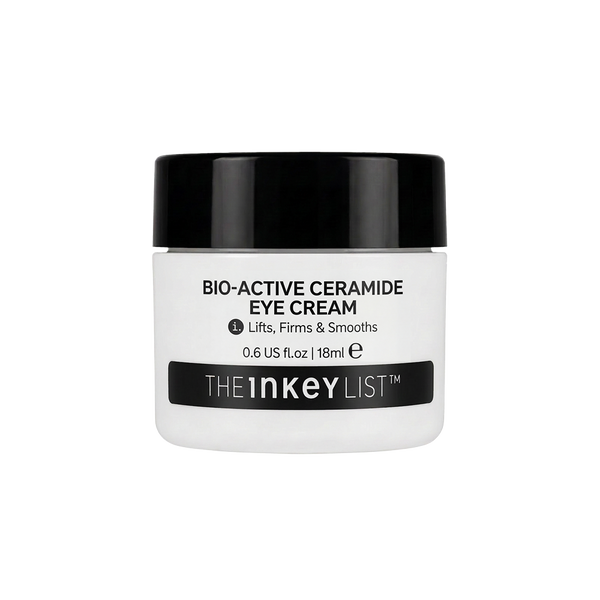
The Bio-Active Ceramide Eye Cream is £15.00 for 18ml and currently rated 4.9 from 277 reviews. It was formulated specifically for the shortfall we have spent this article describing.
The Bio-Active Ceramides actively strengthen the skin barrier and support moisture retention, making it particularly effective for dry or crepey skin around the eye area.
The logic is straightforward and worth stating plainly, because it is the whole mechanism: ceramides restore the barrier, a restored barrier holds water, and better-hydrated skin looks smoother and feels more comfortable. That is the chain.
Two ingredients are doing the work. Bio-Active Ceramide NP is a clinically active ceramide that goes beyond the skin’s surface, strengthening the barrier and supporting deeper skin renewal to visibly firm, smooth and protect the delicate eye area. Tetrapeptide Complex smooths the look of fine lines and visibly lifts and firms the eye contour.
On the clinical side, two figures are most relevant if dryness and texture are your concern. 89% saw fine lines smoothed and blurred instantly [1], and 94% agreed the eye area looked visibly firmer and more sculpted [2].
[1] Tested on 32 participants
[2] 32 participants over 12 weeks
For a sensitive, low-lipid area, the suitability credentials matter as much as the actives. It is fragrance-free, alcohol-free, ophthalmologist approved, dermatologically tested, suitable for sensitive eyes, suitable during pregnancy and breastfeeding, vegan and Leaping Bunny approved.
How to apply it
Use it AM and PM, after serum and before moisturiser. A pea-sized amount is enough for both eyes. Use your ring finger, because it naturally applies the least pressure, and pat gently around the orbital bone working from the inner corner outward. Never rub or drag. Do not apply it to the eyelid or anywhere near the waterline. Give it 30 to 60 seconds to settle before concealer goes on, which is the single easiest way to stop makeup patching.
The full routine, in order
- Cleanse gently. Lukewarm water and a non-stripping formula. If you wear eye makeup, remove it with a balm first so you are dissolving rather than scrubbing.
- Hydrating serum. This is the “draw water in” step. Hyaluronic Acid Serum delivers 2% pure hyaluronic acid at three molecular weights, and works best applied to damp skin so there is water available to bind. If your barrier is the bigger issue, Ectoin Hydro-Barrier Serum is the stronger pick, combining 2% Ectoin, 2.5% Hyaluronic Acid and a 1% Barrier Blend of three ceramides.
- Eye cream. The Bio-Active Ceramide Eye Cream, patted in as described above. For the full technique breakdown, how to apply eye cream the right way goes deeper.
- Moisturiser to seal. Bio-Active Ceramide Moisturiser, £20.00, rated 4.7 from 1,937 reviews, keeps the whole face on the same barrier-focused logic as the eye step.
- Broad-spectrum sunscreen every morning. Dewy Sunscreen SPF 30 finishes the routine without a flat, tight finish around the eyes.
Why the order matters
The simplest way to think about layering is “draws in, then seals in”. The hydrating serum pulls water into the skin. The ceramide steps help hold it there. Do them in that order and each one makes the other work harder. Do them in reverse and you are sealing a surface before you have given it anything to hold.
If you are dry around the eyes but oilier everywhere else
This is a genuinely common combination, and it makes sense given everything above: your T-zone can be producing 130 µg/cm² of surface oil while your eye area produces around 10. Same face, completely different needs.
In that case, keep the ceramide eye cream where it is needed and go lighter across the rest of the face. Omega Water Cream contains a 0.2% Ceramide Complex, so you still get barrier support without a heavy finish on the areas that do not want one.
If you would rather pick up the face and eye steps together, the Face & Eye Ceramide Duo is £33.25 and covers both.
An eye cream for dry skin is not a complicated product to slot in. It is one pea-sized step, twice a day, in a routine you are mostly doing already. That said, INKEY makes more than one eye cream, and the right choice depends on what is actually bothering you.
Which INKEY Eye Cream Is Right for You, Plus the Mistakes to Avoid
Buying the wrong eye cream is an easy mistake, because they all look broadly similar and the labels all sound reassuring. Here is the honest guide.
Bio-Active Ceramide Eye Cream, for dryness and barrier support
£15.00, 18ml, rated 4.9 from 277 reviews. AM and PM.
This is the pick for the reader this article was written for: dryness, tightness, flaking, crepiness, fine lines and loss of firmness. It works on the barrier itself, which is the root of the problem rather than the symptom. If you only add one thing, add this.
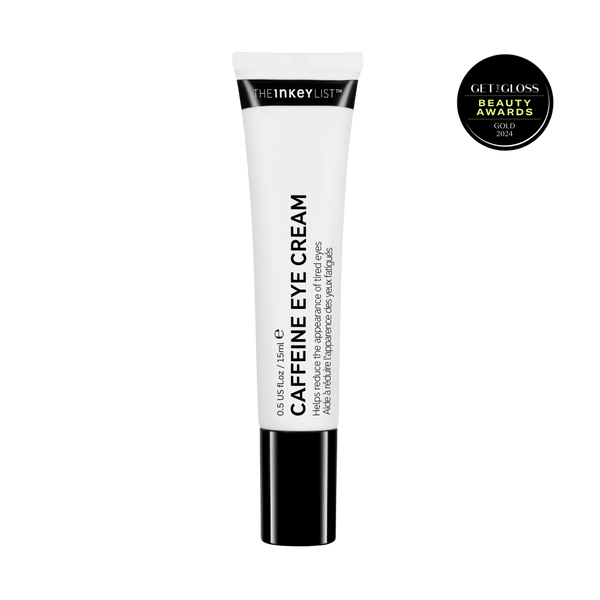
Caffeine Eye Cream, for puffiness and dark circles
£12.00.
If your actual concern is morning puffiness or shadowing rather than rough, tight, flaky texture, this is the more appropriate and less expensive choice, and we would rather you bought the right one. It is a different job entirely. If you want both, layer the Caffeine Eye Cream first, then the Bio-Active Ceramide Eye Cream on top. It also happens to be the one people most often ask about storing cold, which is answered in should you keep your caffeine eye cream in the fridge.
Retinol Eye Cream, for wrinkles and texture
PM only.
Excellent for established lines and texture, but worth being straight with you: retinol can be drying, particularly in an area that already has very little surface oil. If you are currently dealing with flaking and tightness, get the barrier comfortable first and introduce retinol afterwards. Starting a retinol on an already compromised eye area tends to end with people abandoning both.
If your concerns are more structural than surface level, those are different conversations again: how to get rid of bags under eyes and under eye hollows and tear troughs cover them properly. And if you want an occasional extra hydration boost on top of your routine, do under eye patches actually work gives you the honest answer.
Six things that keep under-eye dryness going
- Dragging and rubbing instead of patting. Thin skin plus repeated friction is the fastest way to undo the work your products are doing. Pat with your ring finger, always.
- Applying too close to the waterline or onto the eyelid. Eye creams are formulated to be used around the orbital bone, and product placed too close tends to migrate into the eye and cause irritation. Stay on the bone and let natural spreading do the rest.
- Over-exfoliating, or letting acids and retinol migrate. Exfoliating acids on skin that is already flaking makes the flaking worse, because the problem is a depleted barrier rather than dead surface cells. Pause exfoliation until comfort returns.
- Skipping the area entirely because everything irritates it. Understandable, but it leaves the barrier completely unsupported, and an unsupported barrier stays reactive indefinitely. A fragrance-free formula designed for sensitive eyes is a much better answer than avoidance.
- Using foaming or stripping cleansers around the eyes. If your skin feels squeaky after cleansing, that is lipids you will have to replace. Switch the cleanser, not the moisturiser.
- Expecting overnight results and giving up after four days. Barrier repair is a process, not an event. Comfort tends to improve quickly, but visible texture change takes consistent weeks. Four days is not a fair trial of anything.
Most under-eye dryness responds well to the adjustments above. Occasionally, though, it is signalling something a skincare routine is not equipped to fix.
When Under-Eye Dryness Needs More Than Skincare
Some things are worth a professional opinion rather than another product. Book in with a GP, pharmacist or dermatologist if you have flaking that persists despite a gentle, barrier-focused routine, persistent itching, redness or swelling, skin that is cracked or weeping, or a reaction that appeared suddenly after introducing something new.
The likely explanations are common and very manageable: eyelid eczema, atopic dermatitis or contact dermatitis. The eyelids are one of the most frequent sites for contact dermatitis, precisely because the skin there is so thin, which ties directly back to the anatomy earlier in this article. The NHS has clear, non-commercial guidance on both contact dermatitis and atopic eczema.
To be clear about what skincare does: it supports the barrier. It does not diagnose or treat a medical skin condition, and a good routine works alongside proper treatment rather than instead of it.
Conclusion
The skin around your eyes is thinner than the rest of your face, produces a fraction of the surface oil, and moves tens of thousands of times a day. It loses moisture faster and shows it sooner. That is anatomy, not a personal failing, and no amount of technique was ever going to change the underlying build.
What does change things is supporting the barrier, reducing friction and staying consistent. Ceramides are the most direct way to give this area more of what it does not produce much of on its own, which is why a ceramide eye cream tends to outperform simply using more of whatever is already on your face.
Set your expectations honestly. Comfort improves before appearance does, and consistency will always beat adding another product to the shelf. You do not need more skincare. You need clarity you can trust, and then a routine you will actually keep doing.
Ready to Give Your Eye Area What It Needs?
Shop the Bio-Active Ceramide Eye Cream, £15.00 for 18ml, fragrance-free, ophthalmologist approved and suitable for sensitive eyes. If you want the face and eye steps together, the Face & Eye Ceramide Duo is £33.25.
Because at The INKEY List, We Give A Care.
Clear guidance. Proven ingredients. Real results.
Frequently Asked Questions
Got a question?
Our askINKEY team are a friendly bunch of skincare experts with deep product knowledge and zero judgement. Whether you're an ingredient obsessive or just starting out, we'll make it make sense. No question too big. No question too small. We Give A Care, Every Day.


