



Can You Use Ceramides With Every Active?
Yes - ceramides work alongside retinol, vitamin C, niacinamide, acids and peptides, because they are not another active competing for space, they are what your skin barrier is made of.
Author
askINKEY skincare advisor
Published
25 August, 2026
Time to read
15 minutes
Yes. Ceramides can be used alongside virtually every active in your routine, including retinol, vitamin C, niacinamide, exfoliating acids, peptides and hyaluronic acid.
This guide answers three things: whether ceramides can be combined with each of the major actives you are likely to be using, what order to apply them in, and the small handful of situations that need a little care. The short version is that ceramides are one of the easiest ingredients in skincare to fit into an existing routine, and the reason is structural rather than lucky. Ceramides are not another active competing for space in your routine, they are what your skin barrier is largely made of. If you want the full ingredient explainer, here is what ceramide NP actually is. Below we go active by active: retinol, vitamin C, niacinamide, exfoliating acids, peptides, hyaluronic acid and azelaic acid. If you are shopping rather than researching, start with our full guide to the best ceramide products or go straight to our Bio-Active Ceramide Moisturiser (£20). The same barrier logic applies wherever you use ceramides, which is why our ceramide range comes in three formats built for three genuinely different areas of skin: a moisturiser for the face, an eye cream for the eye contour and a neck stick for below the jawline.
Having given you the short answer, the rest of this guide proves it.
The Short Answer, And Why Ceramides Are Not Really An “Active”
Ceramides can be used with virtually every active in your routine, including retinol, vitamin C, niacinamide, exfoliating acids, peptides and hyaluronic acid.
There is a good reason this question gets asked so often, and it is not that anyone is being overly cautious. Almost all of the layering advice on the internet is built around a single premise: that two strong actives used together can irritate skin, so you should be careful about what you combine. That premise is sound. Retinol and a high-strength exfoliating acid in the same evening routine is genuinely a lot for most skin to take. Vitamin C at a low pH next to something that prefers a higher one is a real formulation consideration. Once you have read enough of that advice, it is entirely reasonable to assume that every ingredient pairing carries some hidden risk, and to start treating your routine like a chemistry exam you might fail.
Ceramides sit outside that logic almost entirely. To understand why, it helps to be precise about what they actually are.
Are ceramides an active ingredient?
Not in the way most people mean by “active”. Ceramides are lipids, which is to say fats, and they already exist in your skin. They are not introducing a new biological process. They are replenishing something your skin makes on its own.
The detail that makes this concrete is how much of your skin barrier is ceramide. Research on ceramides in skin health and disease describes ceramides as making up roughly half of the lipids in the stratum corneum, the outermost layer of skin. That layer is often described as a brick wall, with skin cells as the bricks and a lipid matrix as the mortar holding everything together. Ceramides are a substantial share of the mortar. Work on the chemistry and function of stratum corneum barrier ceramides goes further into how those lipids organise themselves into the ordered structures that let skin hold onto water and keep external irritants out. For readers who want a genuinely readable route into the science, the skin barrier and its lipid organisation is open access and worth the time.
Ceramides are not competing for space in your routine. They are what your skin barrier is made of.
That single fact reframes the entire compatibility question. A conventional active works by driving a change. Retinol influences skin cell turnover. Vitamin C acts as an antioxidant and supports a brighter, more even-looking tone. Exfoliating acids loosen the bonds between surface skin cells. Each of those is doing something to your skin, and when you stack two of them, you are asking your skin to absorb two simultaneous demands.
Ceramides are doing something different. They are topping up a building material. Because you are replacing something your skin already produces rather than instructing it to behave differently, ceramides behave far more like a construction supply than a conventional active ingredient. Nobody worries about whether the mortar is compatible with the bricks.
This is precisely why the compatibility answer comes back as “yes” so consistently across every pairing in this article. You are not stacking two actives on top of each other and hoping your skin copes. You are supporting the surface that every other active in your routine has to work through. A well-supported barrier is the environment in which your other actives are most likely to be comfortable, which is the practical version of the phrase “ceramides for skin barrier” that you will see attached to almost every ceramide product on the market. The broader ceramides benefits conversation, hydration, comfort, resilience and a smoother-looking surface over time, all flows from that same structural role.
Here is what this guide covers, in order, so you can skip to whichever pairing brought you here:
- Ceramides and retinol, including the eye area
- Ceramides and vitamin C
- Ceramides and niacinamide, including whether they are the same thing
- Ceramides and exfoliating acids, including salicylic acid
- Ceramides and azelaic acid
- Ceramides and peptides, including whether ceramides are peptides
- Ceramides and hyaluronic acid
- What not to mix with ceramides, and where they sit in your routine
- Ceramides on the neck
One note on ceramide types before we move on, because it comes up constantly. Not all ceramides in skincare are structured the same way, and if you want the detail on how bio-active ceramides compare with regular ceramides, that comparison has a page of its own. For product recommendations across the category, our best ceramide products guidecovers the range.
Now to the pairing people ask about most, and the one with the strongest evidence behind it.
Ceramides And Retinol - The Strongest Pairing
Yes, you can use ceramides with retinol, and this is arguably the pairing that benefits you most.
If there is one combination in this entire article that deserves to be recommended rather than merely permitted, this is it. The relationship between ceramides and retinol is not a case of two ingredients tolerating each other in the same routine. It is a case of one ingredient supporting the conditions in which the other is easiest to keep using.
The mechanism is straightforward once you strip out the jargon. Retinol speeds up the rate at which skin cells turn over. That accelerated turnover is the source of the benefits people want from retinol, a smoother-looking surface, a more even tone, softer-looking fine lines over time. It is also, during the adjustment period, the source of everything people dislike about starting retinol. Dryness. Flaking. A tight, papery feeling. Patches of sensitivity that were not there the week before. Skin that suddenly reacts to a moisturiser it has used happily for years.
That adjustment phase is where most people give up on retinol. Not because it stopped working, but because the fortnight of discomfort felt like a warning sign rather than a transition. Ceramides support the barrier while that adjustment is happening, which changes the experience of the adjustment rather than the retinol itself.
There is real evidence behind this principle. A randomised split-face study on ceramide-containing moisturiser and topical tretinoin found that using a facial moisturiser containing a ceramide precursor alongside topical tretinoin 0.05% improved how well the retinoid was tolerated. Split-face designs are useful precisely because each participant acts as their own comparison, with one side of the face receiving the moisturiser and the other not.
A note on how far that evidence stretches, because it matters. That study used prescription tretinoin, which is a considerably stronger retinoid than the cosmetic retinol you buy over the counter. It supports the underlying principle, that barrier support alongside a retinoid improves tolerability, and it is the strongest single piece of evidence on this page. It is not proof about any specific cosmetic formula, including ours, and we are not going to present it as though it were. Ceramides do not eliminate retinol irritation. They support your skin while it adjusts.
So, can I use ceramide moisturiser with retinol? Yes, and here is the practical sequence:
- Apply your retinol at night, to clean, dry skin
- Follow with your ceramide moisturiser as the final step
- Keep the ceramide step going every night, including nights you skip retinol
That last point is the one people miss. The ceramide step is not a rescue measure for bad nights. It is the consistent part of the routine, and the retinol is the variable you adjust.
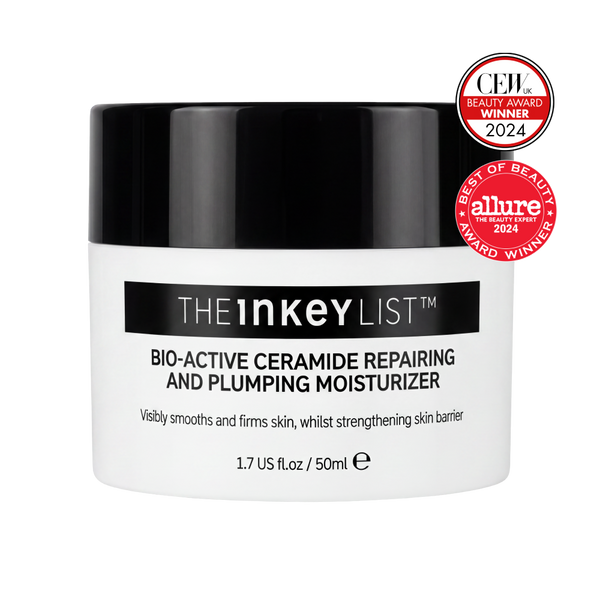
Where we fit into this: our Starter Retinol Serum (£13) is a gentle entry point built for people new to retinol, and it sits within our retinol range if you want to compare strengths. Paired with it, our Bio-Active Ceramide Moisturiser (£20) is clinically proven to repair and strengthen the skin barrier from first use, based on a 4-week clinical study of 20 people. If you want to see how that plays out over time rather than take our word for it, we have collected real results from our Bio-Active Ceramide Moisturiser.
One boundary on this section. What ceramides pair well with and what retinol should be kept away from are two genuinely different questions, and we are only answering the first one here. For the full picture on retinol incompatibilities, read what not to mix with retinol. If your specific question is about the other pairing everyone asks about, we have covered whether you can use niacinamide with retinol separately.
What about the eye area?
Yes, and the eye area is where this pairing matters most.
Eyelid skin is the thinnest skin on the body. That is not a marketing line, it is anatomy, and it has a direct practical consequence: the eye contour is usually the first place retinol dryness or sensitivity becomes noticeable. People often conclude their retinol is too strong when what has actually happened is that the most delicate zone on their face reacted first.
The order is exactly the same as it is everywhere else. Retinol first in your evening routine, then your ceramide step. The ceramides help buffer the dryness retinol can bring around the eye contour, which is the same barrier logic applied to more fragile skin.
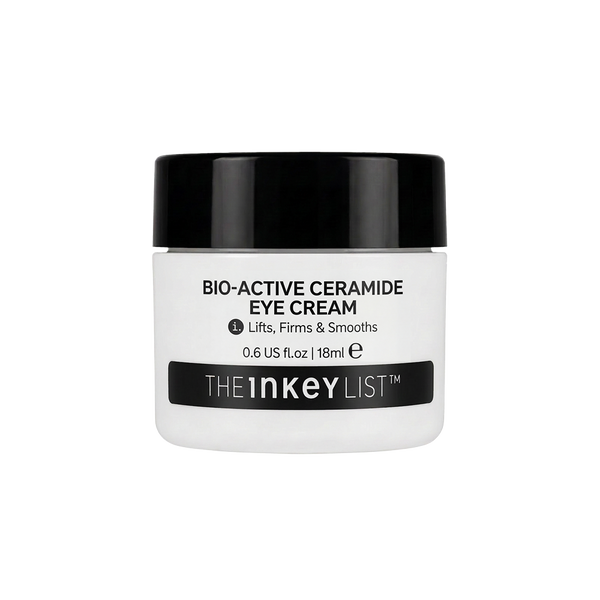
Our Bio-Active Ceramide Eye Cream (£15) is the format built for that area, pairing Bio-Active Ceramide NP with a Tetrapeptide Complex. It is clinically proven to lift eyelids by 29% in 4 weeks, clinically tested on 32 participants over 28 days. It is also ophthalmologist approved and suitable for sensitive eyes, which matters if the idea of using anything active near your eyes makes you hesitate.
For the how rather than the when, read how to apply eye cream the right way.
Retinol is a night-time step, so next we look at the morning routine and the actives that live there.
Ceramides With Vitamin C And Niacinamide
Yes to both, and they are two of the most straightforward pairings in this entire guide.
The morning routine is where most people run their brightening and protective actives, and it is also where the ceramide question gets asked in a slightly different form. Not “will this irritate me” but “will this cancel each other out”. The answer is no on both counts.
Ceramides and vitamin C
Yes, you can use ceramides with vitamin C, and they belong together in your morning routine.
Vitamin C is an antioxidant. Its role in a morning routine is to help brighten the look of skin and to help defend against the daily environmental stress your skin encounters between leaving the house and getting home. Ceramides are doing something entirely separate: supporting the barrier that holds onto hydration across the course of that same day.
These are not overlapping jobs, and there is no mechanism by which one undermines the other. If anything the sequencing is intuitive, because vitamin C is typically a thin, water-based serum and a ceramide moisturiser is not. Thinner textures first, richer textures after. That is most of what routine order comes down to.
The morning sequence, kept to four steps:
- Cleanse
- Vitamin C serum
- Ceramide moisturiser
- Sunscreen
Our 15% Vitamin C + EGF Serum (£16) is a gentle, stable form of vitamin C that suits skin that has found other vitamin C serums too much, and our Dewy Sunscreen SPF 30 completes the sequence if you need a final step. Whatever sunscreen you use, it goes last.
Ceramides and niacinamide
Yes, and this is one of the most complementary pairings in skincare.
Before the compatibility answer, there is a definitional one to clear up, because the search data suggests a very large number of people are quietly unsure about this.
Is niacinamide a ceramide?
No. Niacinamide is a form of vitamin B3, a water-soluble vitamin. Ceramides are lipids, which are fats. They are completely different categories of ingredient that happen to appear together in a lot of the same products, which is almost certainly where the confusion comes from.
That is the whole of the difference between niacinamide and ceramide, and it is a perfectly reasonable thing to have wondered. Barrier-supporting products very often contain both, they are frequently mentioned in the same sentence in product copy, and neither name tells you anything intuitive about what it is. Nothing about the word “niacinamide” announces “vitamin”.
So does ceramide and niacinamide work together? Yes, genuinely well, and the reason is that they are solving adjacent problems from different directions. Niacinamide helps with the look of excess oil, visible redness and uneven texture. Ceramides support the barrier itself. Different jobs, no conflict, and a fair amount of overlap in who benefits from each.
This pairing also has something rarer than most: direct clinical support for the specific combination. A 2024 split-face randomised trial on a ceramide and niacinamide moisturiser looked at a moisturiser containing both ingredients used alongside topical blemish products. Combination evidence like this is unusual in skincare, where most research examines single ingredients in isolation, so it is worth noting when it exists.
That study points at something useful for anyone with blemish-prone skin who has been avoiding moisturiser on the theory that congestion and hydration are opposites. They are not. Barrier support and blemish products are not in competition, and skin that is sensitised by a strong routine is not usually skin that needs less moisture.
If you have oily or combination skin and find a ceramide cream too rich for the morning, our Omega Water Cream (£15) is the lighter route. It contains a ceramide complex plus 5% niacinamide, so you are not choosing between the two ingredients, just changing the texture they arrive in. For a dedicated niacinamide step, our Niacinamide Serum sits earlier in the routine, with your other water-based serums.
Next, the pairing that needs the most nuance, and the one where honesty matters more than a confident answer.
Ceramides With Exfoliating Acids And Azelaic Acid
Yes, and pairing them is a sensible way to support your skin while you exfoliate.
This section comes with a caveat we would rather state at the top than bury, and it is a caveat about evidence rather than about safety.
Ceramides and exfoliating acids
Yes, ceramides and exfoliating acids work in the same routine, and ceramides go on after the acid step.
That covers all three of the exfoliating acid families you are likely to be using. AHAs, including glycolic acid, which work on the surface and are generally the most active of the three. BHAs, including salicylic acid, which are oil-soluble and can therefore work into congested pores, making the ceramides and salicylic acid question one of the most common in this whole category. And PHAs, which are larger molecules that tend to be the gentlest option.
The reasoning behind the pairing is structural. Exfoliating acids work on the surface layers of skin, which is precisely where ceramides live. Regular exfoliation is, by design, a process that acts on the outermost layer, and that outermost layer is the one built substantially from barrier lipids. It follows that replenishing those lipids alongside a regular exfoliation habit is a reasonable way to keep skin feeling comfortable while you exfoliate.
An honest note on the evidence here. There is no solid clinical trial evidence specifically testing exfoliating acids combined with ceramides. What we have described above is reasoning from barrier science, not a trial result, and we are not going to dress it up as more than that. The general principle of barrier support is well established, and the National Eczema Association’s guidance on moisturising and barrier care is a good independent overview of why keeping the barrier supported matters, though it speaks to barrier care generally rather than to this particular pairing. For UK readers who want clinically governed guidance on skin conditions more broadly, the British Association of Dermatologists clinical guidelines are the appropriate reference point.
We would rather tell you where the evidence runs out than imply a certainty we do not have. That is more useful to you and, frankly, it is the only version of this we are comfortable publishing.
Practically, then. Using an exfoliating acid and a ceramide moisturiser in the same routine is fine, with the ceramides applied after the acid step. This is why it makes sense to keep the ceramide step consistent even on the nights you exfoliate, rather than treating it as an alternative to exfoliating.
If your skin starts feeling sensitised, the useful adjustment is almost always to reduce how often you exfoliate rather than to drop the ceramide step. Exfoliation frequency is the variable. Barrier support is the constant. Skin that feels tight, stings on application or looks flushed after a routine is usually telling you about total exfoliation load, not about the moisturiser that went on afterwards.
Across our own range, our Salicylic Acid Cleanser is a low-commitment way to work a BHA into a routine because it rinses off, our Glycolic Acid Toner covers the AHA side, and our PHA Toner is the gentlest of the three if your skin has historically not enjoyed exfoliating acids. In every case, ceramides come afterwards.
For general layering rules that go beyond ceramides, which products you should not layer together covers the wider question properly.
Ceramides and azelaic acid
Yes, no conflict.
Azelaic acid is a slightly different proposition to the exfoliating acids above, despite the shared name. It is most often used for the look of visible redness and uneven tone, and it tends to suit skin that is easily irritated and has not got on well with stronger options.
That last characteristic is exactly why barrier support pairs naturally with it. If you have reached for azelaic acid because your skin is reactive, then a ceramide step is a logical companion rather than an additional risk. The sequencing follows the same rule as everything else in this guide: azelaic acid first, ceramides after.
Our 10% Azelaic Acid Serum for Redness Relief is our version, and it slots in before your ceramide moisturiser without any special handling.
From ingredients that work on the skin’s surface, we move to the ingredients people most often confuse with ceramides themselves.
Ceramides With Peptides, Hyaluronic Acid And Other Hydrators
Yes to all of them, and the confusion in this section is definitional rather than practical.
There is a cluster of ingredients that get mentioned in the same breath as ceramides so often that people reasonably assume they are variations on a theme. Peptides especially. They are not, and understanding why makes the layering obvious.
Ceramides and peptides
Yes, and they do genuinely different jobs, which is exactly why they work together.
Are ceramides peptides?
No. Ceramides are lipids, which are fats. Peptides are short chains of amino acids, which are the building blocks of proteins. They are different categories of molecule entirely, and the only thing they really have in common is that both are found naturally in skin and both get described as “building blocks” in product copy, which is probably how the confusion started.
The distinction is worth holding onto because it explains the pairing. Peptides are signalling ingredients. Their role is communicative, supporting the processes associated with firmer, smoother-looking skin over time. Ceramides are structural. Their role is to build and reinforce the surface itself.
One signals, one builds. A peptide’s messaging arrives in skin whose surface is intact and comfortable, which is the environment ceramides help maintain. You are not asking two ingredients to share a job. You are pairing a message with a structure.
This also explains why the two turn up together in formulation so often. Our Bio-Active Ceramide Eye Cream is a working example of the pairing in a single formula, combining Bio-Active Ceramide NP with a Tetrapeptide Complex, which is a deliberate choice for an area where both structural support and firmness matter.
If you want a dedicated peptide step rather than a combined formula, our peptides range is the place to start, and our guide to peptides covers what they are and what to expect from them in more depth than we can here.
Ceramides and hyaluronic acid
Yes, and they are a natural pair precisely because they work differently.
Hyaluronic acid is a humectant. It draws water in. Ceramides help hold that water where it has been drawn to. One attracts, one retains, and neither does the other’s job.
Order matters slightly more here than elsewhere. Apply hyaluronic acid to damp skin first, then your ceramide moisturiser over the top to seal it in. Our Hyaluronic Acid Serum goes in that first position.
That is deliberately the short version. If your actual question is how the two compare rather than how to combine them, how hyaluronic acid and ceramides compare answers it properly.
One more hydrator worth naming: ectoin is another barrier-supportive hydrator that layers happily with ceramides, and our Ectoin Hydro-Barrier Serum (£16) fits into the same serum position. For the full compatibility picture there, read how to use ectoin with retinol and other actives.
Having gone through the actives one by one, we can address the question this whole guide has been building towards.
What Not To Mix With Ceramides, And Where They Sit In Your Routine
Essentially nothing. There is no active in a standard skincare routine that ceramides conflict with.
That is the honest answer, and it is worth stating without qualification before adding any nuance. If you came here looking for a list of ingredients to keep away from your ceramide moisturiser, there is not one. Everything covered above, retinol, vitamin C, niacinamide, exfoliating acids, azelaic acid, peptides and hyaluronic acid, works alongside ceramides.
There are, however, three practical considerations that are worth knowing. None of them is a compatibility problem, and we want to be clear about that framing, because “things to be aware of” gets misread as “warnings” alarmingly easily.
Texture and personal preference. A rich ceramide cream can feel heavy on oily skin, particularly under makeup or in warm weather. That is a comfort question, not a compatibility one, and the answer is a lighter format rather than skipping the ingredient. Our Omega Water Cream exists for exactly this reason.
Total routine load. If your skin feels sensitised, the usual cause is too many strong actives running at once, not the ceramides. This is worth internalising because the instinct when skin is unhappy is often to strip everything back including the moisturiser, which is the opposite of helpful.
If your skin feels sensitised, ceramides are the step to keep, not the one to cut.
Patch testing. Whenever you introduce anything new, patch testing first remains sensible. That applies to any product, ceramide or otherwise, and it is a habit rather than a caution specific to this ingredient.
Where ceramides sit in your routine
The general principle is simple: ceramides go towards the end of your routine, after your thinner serums, and either as or immediately before your final moisturising step.
Morning:
- Cleanse
- Any water-based serum, such as vitamin C or niacinamide
- Ceramide moisturiser
- Sunscreen
Evening:
- Cleanse
- Your targeted step, such as retinol or an exfoliating acid
- Ceramide moisturiser, last
That is order and sequence. For the application technique side, including how to layer hydrating steps for maximum effect, the moisture sandwich method covers it in detail.
So when should you use ceramide serum, or a ceramide moisturiser? Both morning and night, every day. There is no cycling schedule, no rest days and no build-up period to work through. Unlike actives that ask your skin to adjust, ceramides are replenishing something your skin is already making and using continuously. Our Bio-Active Ceramide Moisturiser (£20) is designed to sit in that final step twice a day, and our moisturiser range has the alternatives if you want a different texture for morning and evening.
What about your neck?
Yes, and the neck is the step most people skip.
Neck skin is genuinely different skin. It is thinner than facial skin, with fewer oil glands and lower collagen density, which is a large part of why it often shows change earlier than the face does. The same barrier reasoning applies below the jawline for the same reasons it applies above it.
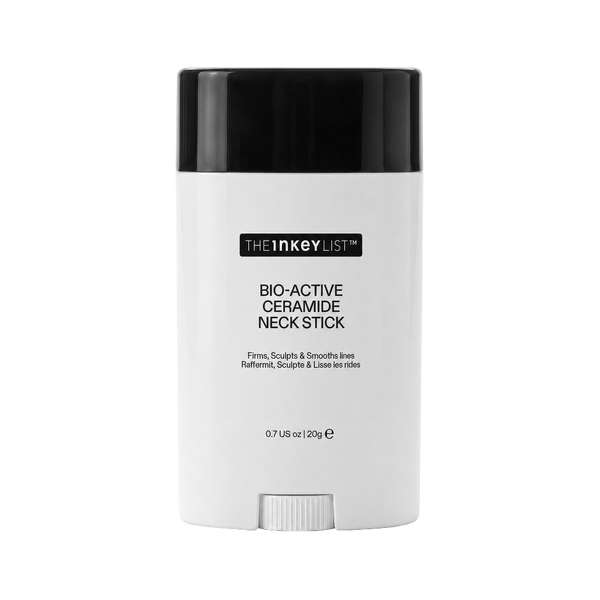
On compatibility, which is the point of this article: our Bio-Active Ceramide Neck Stick (£15) sits comfortably alongside your existing actives, including retinol, vitamin C and exfoliating acids. Apply it after your serums and before your final moisturiser. It is clinically proven to lift, firm and visibly smooth the neck and chest area in 14 days, clinically tested on 28 participants over 8 weeks.
Neck concerns themselves are a bigger topic than we can do justice to here, so for that read how to get rid of neck linesor our guide to tech neck.
For product comparisons across all three formats, our best ceramide products guide is the fuller picture.
If you want the ingredient explained from first principles, what ceramide NP actually is is the place to start, and for differences between ceramide types, read bio-active ceramides compared with regular ceramides.
The Takeaway: Ceramides Fit Around Everything Else
Ceramides are not another active you need to find room for. They are what your skin barrier is largely made of, which is why they work alongside almost everything.
Retinol, vitamin C, niacinamide, exfoliating acids, azelaic acid, peptides and hyaluronic acid all sit comfortably with ceramides in the same routine. The sequencing rule is consistent across all of them: thinner serums first, ceramides towards the end. You can use them morning and night, every day, without cycling or resting them, and without rebuilding the routine you already have.
The same logic holds wherever you use them, on your face, around your eyes and on your neck. Those three areas are genuinely different skin, which is why they benefit from formats built for them, but the underlying reasoning does not change from one zone to the next.
If you take one thing from this guide, make it this: when in doubt, ceramides are the step to keep.
Our three Bio-Active Ceramide formats are built around the same Bio-Active Ceramide NP for three different areas: our Bio-Active Ceramide Moisturiser (£20) for the face, our Bio-Active Ceramide Eye Cream (£15) for the eye contour and our Bio-Active Ceramide Neck Stick (£15) for below the jawline. All three are fragrance-free, suitable for sensitive skin and safe to use during pregnancy and while breastfeeding. To compare them properly, browse our ceramide rangeor read our full guide to the best ceramide products.
Frequently Asked Questions
Got a question?
Our askINKEY team are a friendly bunch of skincare experts with deep product knowledge and zero judgement. Whether you're an ingredient obsessive or just starting out, we'll make it make sense. No question too big. No question too small. We Give A Care, Every Day.


