



How to Get Rid of Bags Under the Eyes: Causes, Treatments and What Actually Works
Looking to reduce under-eye bags? Discover what causes puffiness, the lifestyle factors that can make it worse, and the best skincare ingredients and techniques to help refresh and brighten tired-looking eyes.
Author
askINKEY skincare advisor
Published
16 June, 2026
Time to read
16 minutes
If you have bags under the eyes, you already know the feeling: you get a full night of sleep, you drink your water, you do what you are supposed to do - and you still look like you have not slept in three days. The swelling is real, it is frustrating, and the internet is full of conflicting advice that mostly does not help.
This guide exists to cut through all of it.
Bags under the eyes - the puffiness and swelling that sits beneath the eye - are a specific, distinct concern. They are not the same as dark circles (discolouration), and they are not the same as fine lines or wrinkles (texture changes). Each of those concerns has a different mechanism, which means each requires a different treatment approach. This blog deals specifically with fluid-driven puffiness and swelling. If you also have dark circles, or want a comprehensive look at all three under-eye concerns together, the complete guide to dark circles and under-eye puffiness covers all of that in full.
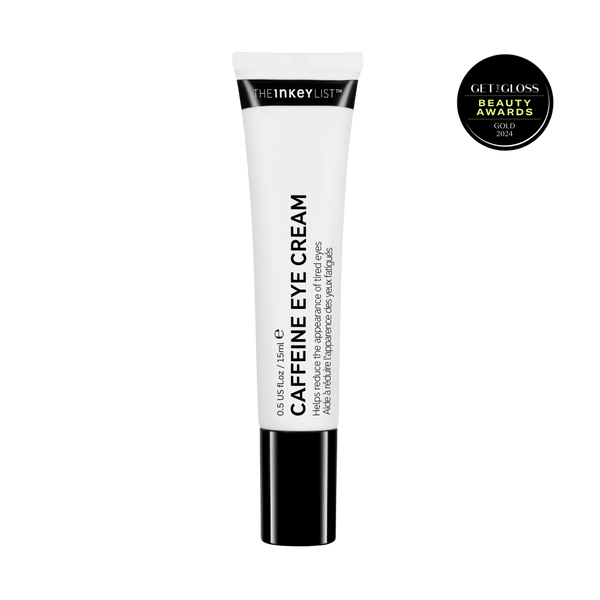
Here, you will find a complete breakdown of what actually causes bags under the eyes, which ingredients the science genuinely supports, what works and what does not (including the myths), a step-by-step AM and PM routine, and the lifestyle changes that compound your results. Our Caffeine Eye Cream (£10) is clinically proven to minimise puffiness from first use - but before we get to solutions, we need to understand the problem.
Eye Bags, Dark Circles and Wrinkles: Why the Difference Matters
Walk into any pharmacy or scroll through any skincare retailer and you will find hundreds of “under-eye” products making overlapping claims. Brightening. Depuffing. Firming. Anti-ageing. The problem? These are not synonyms. They target entirely different biological mechanisms - and using the wrong one for your concern is one of the most common reasons people give up on eye care and conclude that “nothing works.”
Let us set the record straight.
Bags under the eyes and puffiness are caused by fluid accumulation and swelling in the loose connective tissue beneath the eye. The mechanism is vascular and lymphatic - fluid pools in the tissue, creating a visible bump or swelling. This is what we are addressing in this guide.
Dark circles are a discolouration concern. They can be caused by blood vessel visibility through thin skin (vascular), excess melanin production (pigmentary), or hollowing from volume loss that creates a shadow (structural). A brightening ingredient like niacinamide or vitamin C targets pigmentation - it will do very little for swelling. If dark circles are your primary concern, or if you are dealing with both simultaneously, the complete dark circles and under-eye puffiness guide is where you want to start.
Fine lines and wrinkles are a texture and structure concern. They result from collagen loss, repeated muscle movement, and reduced skin elasticity over time. Retinol, peptides, and targeted anti-ageing actives are what address these. For a detailed breakdown of this specific concern, how to treat under-eye wrinkles goes into full depth.
Why does this distinction matter so much? Because the periorbital skin - the skin around and beneath the eye - is approximately 0.5mm thick, making it the thinnest skin on the entire body. The connective tissue beneath it has very little structural support compared to other areas of the face. That is why it is so vulnerable to fluid pooling, and why standard face products, formulated for thicker facial skin, simply are not built for this zone. A product designed to brighten pigmentation will not reduce fluid retention. A product targeting fine lines will not address swelling. Getting the right tool for the right job is the entire foundation of an effective approach.
Some people experience all three concerns simultaneously - bags, dark circles, and fine lines. That is completely common, and there is no judgement in acknowledging it. The Caffeine Eye Cream specifically targets the puffiness mechanism, while other products in a fuller routine can be layered to address additional concerns.
Now that we have established exactly what we are dealing with, let us go deep on the specific causes that drive fluid to pool beneath the eye in the first place.
What Actually Causes Bags Under the Eyes
Understanding your specific triggers is the most empowering thing you can do before investing in any treatment. Not all bags under the eyes have the same origin - and the cause determines both the treatment and the realistic outcome. Here is a comprehensive breakdown, grounded in biology.
Sleep Position and the Lymphatic System
This is the primary mechanism behind why bags under the eyes are almost always at their worst first thing in the morning. When you are upright during the day, gravity assists your lymphatic system in draining fluid downward and away from the face. When you lie flat overnight, that gravitational assist disappears - and the lymphatic system, which slows significantly during sleep, can no longer efficiently clear fluid from the periorbital tissue. Fluid accumulates. You wake up puffy.
Poor sleep quality compounds this significantly. Disrupted or insufficient sleep increases systemic inflammation, including in the delicate tissue beneath the eye. It is not just the hours of sleep that matter - it is the quality of those hours.
Sodium Intake and Fluid Retention
High sodium intake causes cells to retain water. The under-eye area, with its loose and poorly-supported connective tissue, is one of the first places this excess fluid retention becomes visible. Salt-heavy evening meals are a particularly reliable trigger for pronounced morning puffiness - the timing between consumption and when you are lying flat overnight is the key factor.
Alcohol Consumption
Alcohol affects bags under the eyes through two compounding mechanisms. First, it disrupts sleep architecture - even when you technically log adequate hours, alcohol-disrupted sleep is lower quality, meaning the lymphatic system does not recover as effectively. Second, alcohol causes dehydration, which paradoxically triggers the body to retain water as a compensatory response. The result is puffier eyes the morning after, even if you went to bed feeling fine.
Allergies
Allergies are one of the most significant and most frequently overlooked causes of bags under the eyes. When your immune system encounters an allergen - seasonal pollen, dust mites, pet dander, or even certain cosmetic ingredients - it releases histamine. Histamine causes capillary dilation and increases vessel permeability, meaning the walls of tiny blood vessels become more porous, allowing plasma to leak from the capillaries into the surrounding connective tissue. The result is visible swelling.
According to the American Academy of Ophthalmology, allergic reactions are a well-established driver of periorbital puffiness and swelling. If your eye bags are seasonal, or are accompanied by itching, redness, or watering of the eyes, an allergic mechanism is almost certainly involved. This is important because topical caffeine can help manage the vascular component - but the root allergic response also needs to be addressed directly.
Hormonal Fluctuations
Oestrogen directly influences the body’s fluid retention dynamics. Puffiness that intensifies at predictable points in the menstrual cycle - particularly in the days before menstruation - has a hormonal origin. This is one of the reasons bags under the eyes can seem inconsistent and confusing: the same routine can produce different results depending on where you are in your cycle.
Dehydration
This is counterintuitive but well-established: when the body is dehydrated, it compensates by retaining water in the tissues. The under-eye area is particularly prone to this compensatory retention. Drinking more water - consistently, throughout the day - often reduces morning puffiness in people who are chronically mildly dehydrated. For a broader look at how dehydration shows up across the skin, the dehydrated skin guide is worth reading.
Genetics
Genetics may be the most significant and least acknowledged factor in persistent bags under the eyes. The depth of the orbital socket, the thickness of periorbital skin, the composition of under-eye connective tissue - these are largely inherited. If bags under the eyes run in your family, that is anatomy, not a skincare failure. Topical treatment can still make a meaningful, visible difference - and consistent use of the right ingredients absolutely does - but managing expectations honestly from the start is part of good skincare education.
Ageing and Fat Pad Displacement
According to the Mayo Clinic, as we age, the muscles and connective tissue supporting the eye naturally weaken. The orbital fat pad that cushions the eye can shift forward and downward over time, creating a structural puffiness that is distinct from acute fluid retention. This type of puffiness is more persistent than lifestyle-triggered swelling - it does not resolve through the day in the same way - and it requires a different lens when setting treatment expectations.
Screen Time and Eye Strain
Prolonged screen use reduces blink rate and increases blood flow to the periorbital area. Over time, this vascular congestion can contribute to visible puffiness, particularly by end of day. This is less dramatic than the other causes but worth acknowledging as a compounding factor for those spending long hours in front of screens.
The under-eye area is the most anatomically vulnerable part of the face to fluid accumulation - the tissue is the thinnest, the least supported, and the most exposed to every trigger from gravity to inflammation.
With the causes clearly mapped, we can now look at the ingredient the science most strongly supports for actually treating the swelling - and understand exactly why it works.
The Ingredient Science: Why Caffeine Works for Eye Bags and Puffiness
Caffeine has become the gold standard ingredient for bags under the eyes - and it has earned that position through a genuinely compelling mechanism, not just marketing. Understanding how caffeine works at a biological level makes it easy to see why it is the logical first-line treatment for fluid-driven puffiness.
Vasoconstriction: The Primary Mechanism
When applied topically to the under-eye area, caffeine causes the temporary narrowing - or constriction - of blood vessels. This vasoconstriction does two things simultaneously. First, it reduces the volume of blood pooling in the fragile capillaries beneath the thin periorbital skin. Second, and more importantly for bags under the eyes specifically, it reduces capillary permeability - the degree to which vessel walls allow plasma to leak into the surrounding connective tissue.
Less permeability means less fluid escaping the capillaries. Less fluid in the connective tissue means less visible swelling. The logic is direct and the mechanism is measurable.
This maps precisely back to the causes outlined in the previous section. Allergy-triggered puffiness is driven by histamine causing vessel dilation and increased permeability - caffeine counters both. Sleep-related puffiness results from overnight fluid accumulation - caffeine applied in the morning helps clear it. General fluid retention is addressed through the same vasoconstrictive pathway.
Caffeine as an Antioxidant
Beyond its primary vasoconstriction mechanism, caffeine also functions as an antioxidant, neutralising free radicals generated by UV exposure and environmental stressors. The periorbital skin, being the thinnest and most delicate on the face, is particularly vulnerable to oxidative damage. This secondary benefit provides meaningful additional protection for the under-eye zone.
What the Science Says
Research published in the Journal of Cosmetic Dermatology supports the use of topical caffeine for improving periorbital puffiness, with measurable vasoconstrictive effects in the treated area. Studies on topical caffeine deliveryvia ScienceDirect further confirm that caffeine penetrates the skin effectively when formulated correctly - a critical point, since many actives fail not because of poor mechanism but because they are delivered in formulations that do not allow meaningful skin penetration.
Internally, our Caffeine Eye Cream has been assessed in an independent 4-week clinical study under dermatological and ophthalmological control. The results: clinically proven to improve the appearance of puffiness from first use. 95% of users agreed their skin felt instantly smoother and deeply hydrated.
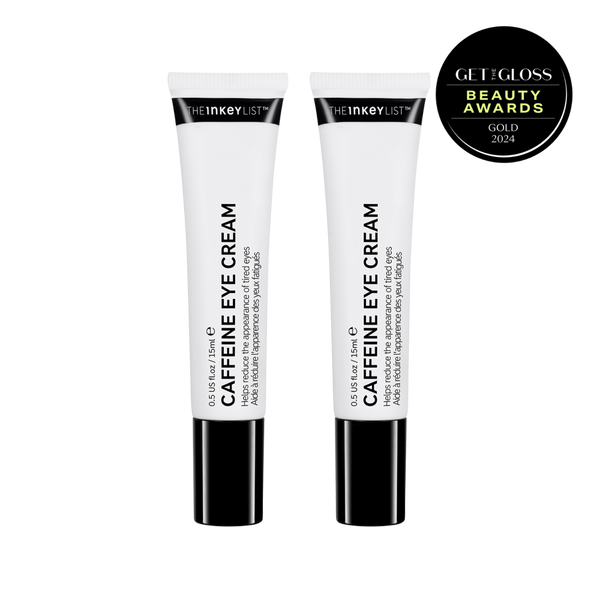
Our Caffeine Eye Cream (£10)
Our Caffeine Eye Cream delivers 0.3% caffeine directly targeting fluid retention - the primary mechanism driving bags under the eyes. The formula also includes Matrixyl 3000, a peptide complex that boosts collagen production for firmer, smoother skin over time, and Albizia Julibrissin Bark Extract, which reduces the visible appearance of under-eye fatigue.
It is lightweight, fast-absorbing, and formulated to be suitable for all skin types - including sensitive skin, and safe during pregnancy and breastfeeding. Application is simple: AM and PM, after cleansing and serums, before moisturiser. Pro tip: store it in the fridge. Cold temperature adds a mild vasoconstrictive effect that compounds caffeine’s own mechanism - particularly effective for tackling morning puffiness.
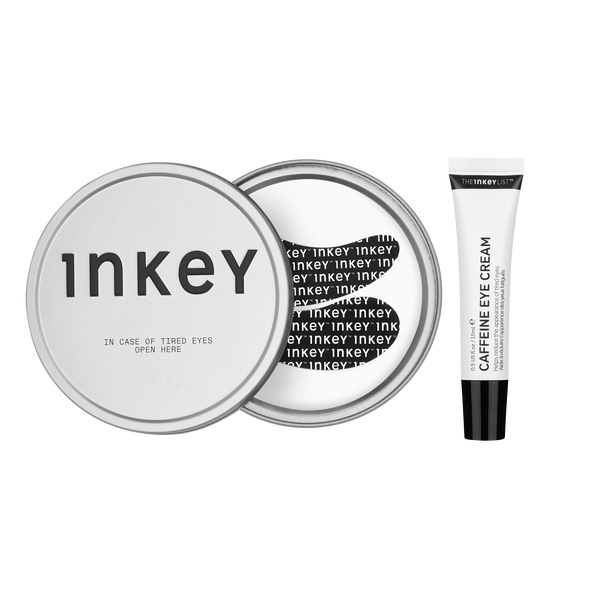
The Reusable Eye Patches & Caffeine Eye Cream Duo (£17.10, save 5%)
For those who want to push results further, the Reusable Eye Patches & Caffeine Eye Cream Duo takes the treatment to another level. The silicone patches create an occlusive seal over the applied Caffeine Eye Cream, preventing evaporation and pressing the active ingredients directly against the skin. This drives deeper ingredient absorption and produces stronger, faster depuffing results than cream alone. The patches are reusable - no single-use waste.
For real-world evidence of results, Caffeine Eye Cream before and after photos show what consistent use looks like across different skin types and starting points.
The science makes the case clearly. But the internet is still full of myths and home remedies. The next section is about what the evidence actually supports - and what it does not.
What Actually Works for Eye Bags - and What Doesn’t
There is a lot of noise out there about how to get rid of bags under the eyes. Some of it is grounded. Most of it is recycled anecdote. Here is an honest breakdown - what the science supports, and what it simply does not, based on the mechanisms we have already established.
What Works
Topical caffeine, applied consistently. The evidence is clear and the mechanism is direct. Applied twice daily in a formula designed for the periorbital area - like our Caffeine Eye Cream - caffeine makes a measurable and visible difference to puffiness. Single applications provide temporary improvement. Sustained twice-daily use is what delivers lasting, cumulative change. This is not a one-and-done product.
Cold application. Cold temperature does genuinely constrict blood vessels and reduce swelling temporarily - the vasoconstriction mechanism is real and measurable. A chilled Caffeine Eye Cream or chilled Reusable Eye Patches & Caffeine Eye Cream Duo worn over the cream gives you the temperature benefit and the sustained active ingredient benefit simultaneously. This is the most effective morning quick-fix available.
Elevated sleep position. Sleeping with the head slightly elevated reduces overnight fluid pooling by working with gravity rather than against it. This is one of the simplest and most consistently effective lifestyle adjustments for people with fluid-driven bags under the eyes.
Reducing sodium intake in the evening. Directly addressing one of the primary causes. The timing matters: high-sodium meals in the hours before sleep are the most likely to show up as visible morning puffiness. Small changes here can produce noticeable differences within days.
Proper hydration. Counterintuitive but consistent with the science - consistent water intake reduces the body’s compensatory water retention response. More water in means less water hoarded in tissues.
Allergy management. For allergy-triggered puffiness - seasonal, or linked to a specific trigger like pet dander or dust - managing the allergic response at source is the highest-value intervention. Antihistamines, reduced allergen exposure, and eye drops for allergic conjunctivitis can significantly reduce puffiness that no topical product alone can fully address.
Eye patches with active ingredients. The occlusive mechanism of silicone patches applied over a caffeine eye cream drives meaningfully stronger ingredient penetration and results than cream alone. For a full breakdown of the science behind why patches work the way they do, do under-eye patches actually work? is worth reading in full.
What Doesn’t (or Doesn’t Do Much)
Cucumber slices. The mild cooling effect provides a very brief, temporary vasoconstrictive response. This is real - but extremely short-lived, with no active ingredient benefit whatsoever. Not harmful. Not a treatment.
Cold teaspoons and ice packs directly on the skin. Same rationale as cucumber - brief temperature-driven vasoconstriction with no sustained effect. A chilled Caffeine Eye Cream achieves the same temperature response with the added benefit of an evidence-based active ingredient working simultaneously.
Regular face moisturiser. Standard facial moisturisers are formulated for the thicker, better-supported skin of the broader face. Applied around the eyes, they will not deliver the targeted actives needed to address puffiness, and they can cause congestion - including milia - in the delicate periorbital area when used incorrectly.
Haemorrhoid cream. This is a widely circulated tip that has no business being near your eye area. While some formulations do contain vasoconstrictors, these products are emphatically not formulated for periorbital skin, and they carry a real risk of irritation, sensitisation, and damage to some of the most delicate tissue on your face. Do not use it.
One-week product tests. This is not about a specific myth - it is about a common behaviour pattern that undermines real results. Significant cumulative improvement from caffeine eye cream requires consistent twice-daily use for a minimum of 4-6 weeks. Assessing a product after a few days is not a reliable test of its efficacy. The clinical study behind our Caffeine Eye Cream ran for four weeks for this exact reason.
The most common reason people conclude that ‘nothing works’ for their bags under the eyes is not because nothing works - it is because they have not identified the right ingredient for the right concern, or have not given it the time it needs to deliver.
Now that we have covered what the science supports, let us translate it into a clear, practical routine - morning and evening - so you know exactly what to do and in what order.
The INKEY Routine for Eye Bags: AM and PM, Step by Step
Knowing which ingredient works is only part of the equation. Application timing, technique, product order, and consistency are what separate visible results from no results. Here is the complete INKEY routine for bags under the eyes - morning and evening - with an optional boosted treatment for those who want to go further.
Morning Routine (AM)
Step 1 - Cleanse.
Start with a gentle, non-stripping cleanser. The goal is to clear any overnight product residue and prepare skin without compromising the delicate barrier around the eye area. Harsh cleansers that disrupt the skin barrier will undermine everything that follows.
Step 2 - Serum.
Apply a lightweight serum to prep and hydrate the skin before targeted treatment. This primes the skin for better ingredient absorption in the steps that follow.
Step 3 - Caffeine Eye Cream (£10).
This is the core of the routine. Apply our Caffeine Eye Cream after your serum, before your moisturiser. Use your ring finger - the weakest finger on your hand, which means the least pressure on skin that does not want to be dragged or pulled. Gently tap a small amount around the orbital bone, working from the inner corner outward beneath the eye and from the outer corner inward above the eye. Never rub. Never drag.
Fridge tip: Store your Caffeine Eye Cream in the fridge. Taking it out 10-15 minutes before application adds a temperature-driven vasoconstrictive effect that compounds the caffeine’s own mechanism - particularly valuable for morning puffiness reduction.
Step 4 - Moisturiser.
Seal hydration with a facial moisturiser to support the skin barrier and lock in the treatment you have applied.
Step 5 - SPF.
Sun protection is essential for overall eye-area skin health, particularly for preventing pigmentary dark circles from deepening over time. Our Dewy Sunscreen SPF 30 applies cleanly as the final step of your morning routine - be careful around the eye area and avoid applying too close to the waterline.
Evening Routine (PM)
Step 1 - Cleanse (double cleanse if wearing SPF or makeup).
Remove the day - SPF residue, any makeup, environmental pollutants. A thorough but gentle evening cleanse is the foundation of effective overnight skin recovery.
Step 2 - Caffeine Eye Cream (£10).
Apply our Caffeine Eye Cream again using the same ring-finger tapping technique. PM application builds on the AM vasoconstriction with overnight hydration support. Caffeine works topically regardless of time of day and will not affect your sleep.
Step 3 - Moisturiser.
A barrier-supporting moisturiser applied overnight helps skin recovery while you sleep.
Boosted Treatment: The Reusable Eye Patches + Caffeine Eye Cream Duo
For stronger results - before an important morning, during a particularly puffy period, or simply as a regular step for those who want maximum impact - the Reusable Eye Patches & Caffeine Eye Cream Duo (£17.10, save 5%) is the upgraded approach.
- Apply the Caffeine Eye Cream as normal.
- Press the silicone patches gently over the cream with the narrow end positioned at the inner corner beneath the eye.
- Leave for 10-20 minutes.
- Remove the patches and gently tap in any remaining product.
The silicone creates an occlusive seal that prevents the cream from evaporating into the air - instead, it presses the caffeine and other actives directly against the skin, driving deeper absorption and faster, stronger depuffing results. Store the patches in the fridge beforehand for a combined temperature-plus-ingredient effect that delivers the most immediate visible reduction available without a clinical treatment.
For a full explanation of why the patch mechanism works the way it does, do under-eye patches actually work? breaks down the occlusion science in detail.
What to Expect and When
- From first use with cold application: Visible temporary puffiness reduction.
- 2-4 weeks of consistent twice-daily use: Cumulative, sustained improvement in bags under the eyes.
- 4-6 weeks: Full assessment point for real results.
For a personalised routine recommendation based on your specific concerns, take the Skincare Quiz, chat with askINKEY, or build your own bundle and save up to 20%.
The routine covers topical treatment - but lifestyle is the other half of the equation. The next section maps specific habits to specific causes so you can tackle the problem from both sides.
Lifestyle Changes That Actually Help Reduce Eye Bags
Topical caffeine and the right routine deliver real results. But pairing that routine with targeted lifestyle adjustments - ones that directly address the causes mapped earlier - is how you compound and accelerate those results. This is not generic wellness advice. Each of the following recommendations is tied directly to a biological mechanism.
Sleep Position and Quality (Lymphatic Drainage)
Elevating your head slightly during sleep assists gravity in draining lymphatic fluid overnight, rather than allowing it to pool freely in the under-eye area. An extra pillow, or a wedge pillow, is the practical application. But elevation alone is not enough if sleep quality is poor. Disrupted or low-quality sleep - even at adequate hours - increases systemic inflammation and reduces the lymphatic system’s overnight recovery efficiency. The habits that improve sleep architecture - reducing alcohol and screen time before bed, a consistent wind-down routine, a cooler sleeping environment - have a direct, measurable impact on morning eye bag severity.
Reduce Evening Sodium (Fluid Retention)
The timing of sodium intake matters as much as the quantity. High-sodium meals consumed in the hours before bed are the most likely to translate into visible morning puffiness, because the fluid retention effect coincides directly with the period when you are lying flat and gravity is no longer assisting lymphatic drainage. Practical swaps: choose lower-sodium condiments, reduce processed snack consumption in the evenings, and be aware of hidden sodium in restaurant meals and takeaways.
Consistent Hydration (Dehydration-Triggered Retention)
Drink water consistently throughout the day, not just when you are thirsty. A useful tactic for bags under the eyes specifically: prioritise hydration earlier in the day rather than loading heavily in the evening, which reduces overnight fluid loading without compromising your overall hydration. For a deeper look at how dehydration affects skin appearance beyond the eye area, the dehydrated skin guide and the comparison of dehydration lines vs wrinkles are both worthwhile reads.
Reduce Alcohol Consumption (Sleep Architecture + Dehydration)
Alcohol’s double mechanism - disrupting sleep architecture whilst simultaneously driving dehydration and compensatory water retention - makes it one of the most reliable triggers for next-morning bags under the eyes. Even moderate reduction, particularly in the days before an important morning, often produces noticeable results. This does not require complete abstinence; it is about being strategic with timing.
Manage Allergies at Source (Histamine-Driven Puffiness)
If your puffiness is seasonal, or clearly associated with specific triggers like pet dander, dust mites, or certain cosmetic ingredients, topical caffeine helps manage the vascular response - but the root allergic mechanism needs addressing directly. Antihistamines, reducing known allergen exposure, and using eye drops formulated for allergic conjunctivitis can significantly reduce puffiness that no amount of eye cream alone will fully resolve.
Screen Time and Eye Rest (Vascular Congestion)
Regular breaks from screen time reduce the vascular congestion that builds up with sustained periorbital blood flow during prolonged viewing. The 20-20-20 rule is a practical starting point: every 20 minutes, look at something 20 feet away for 20 seconds. Simple, low-friction, and well-supported for reducing eye strain and its downstream effects.
The Cold Compress Habit (Quick-Fix Vasoconstrictive Boost)
Storing your Caffeine Eye Cream or Reusable Eye Patches in the fridge and using them cold in the morning is the most effective quick-fix lifestyle habit in this list. The temperature adds a real vasoconstrictive effect that works synergistically with caffeine’s own mechanism - producing the fastest and most immediately visible depuffing available through non-clinical means.
One honest note on genetics: Some degree of bags under the eyes is structural or inherited and will not be fully resolved by lifestyle changes or topical treatment. The right approach is to address what is addressable - and there is real, meaningful improvement available through the right routine and lifestyle habits - while being honest about what is anatomy. That combination of realistic expectations and consistent action is what knowledge-powered skincare actually looks like.
Temporary vs Persistent Eye Bags: What to Expect From Treatment
One of the most important things any skincare brand can do is tell you the truth about what its products can and cannot achieve. This section exists to do exactly that - because managing expectations honestly is the difference between a customer who feels genuinely helped and one who feels misled.
Fluid-Driven, Lifestyle-Triggered Bags
These are the most responsive to treatment. Bags under the eyes driven primarily by sleep position, sodium intake, alcohol consumption, dehydration, or allergies will show real, measurable improvement with:
- Consistent twice-daily application of our Caffeine Eye Cream
- Cold application, especially in the morning
- Targeted lifestyle adjustments addressing the specific triggers involved
The timeline: visible improvement from first use with cold application; cumulative, sustained results within 2-4 weeks of consistent twice-daily use; a reliable full assessment point at 4-6 weeks.
Persistent Bags with a Genetic Component
Many people with persistent bags under the eyes have a combination of lifestyle triggers and an inherited tendency towards puffiness in the under-eye area. The orbital anatomy you are born with sets your baseline - the depth of the orbital socket, the thickness of the periorbital skin, the laxity of the connective tissue. Consistent twice-daily use of our Caffeine Eye Cream still makes a meaningful, clinically supported difference - but the improvement is relative to your starting point. The goal is the best version of your own under-eye area, not someone else’s anatomy.
Structural Bags from Fat Pad Displacement and Ageing
As the orbital fat pad shifts forward with age, it creates a physical protrusion beneath the eye that is distinct from fluid accumulation. Topical caffeine and Matrixyl 3000 peptides support hydration, firmness, and visible smoothness - and consistent use does reduce the visible severity of structural puffiness. But no topical product can reverse the structural change itself. This is where having accurate expectations matters most. For a detailed look at how the eye area changes with ageing and which ingredients support it over time, how to treat under-eye wrinkles provides full context.
Bags under the eyes are as common in men as in any other group - for a full skincare routine context, the men’s skincare routine guide covers a complete approach from the ground up.
The Bottom Line on Bags Under the Eyes
Bags under the eyes are a specific, biological concern - not a skincare mystery, and not something you should be guessing your way through. Fluid accumulates in the poorly-supported connective tissue beneath the thinnest skin on your face, driven by sleep position, sodium, alcohol, allergies, hormones, genetics, and the structural changes of ageing. The solution is not generic - it is targeted.
Caffeine is the most clinically well-positioned ingredient for puffiness because it works at the direct biological level: vasoconstriction and reduced capillary permeability. Applied twice daily in a formulation designed for the periorbital area, with cold application to compound the effect, it makes a visible and measurable difference. Consistent use over 4-6 weeks is where cumulative results are built.
Pair the right topical routine with the lifestyle adjustments that directly counter your specific triggers - sleep elevation, reduced evening sodium, consistent hydration, allergy management - and you address the problem from both sides simultaneously.
Be honest with yourself about what is fluid-driven and what is structural or genetic. The right routine gives you the best possible version of your own under-eye area. That is not a consolation prize - it is the actual, achievable goal of knowledge-powered skincare.
No BS. Just better skin.
Start Here
Shop our Caffeine Eye Cream - £10
The clinically proven starting point. Apply twice daily, store in the fridge, and give it four weeks.
Shop the Reusable Eye Patches + Caffeine Eye Cream Duo - £17.10 (Save 5%)
For stronger, faster results through occlusive ingredient delivery.
Take the Skincare Quiz for a Personalised Routine
Get a routine built around your specific concerns.
Build Your Own Bundle and Save Up to 20%
Customise your routine and save.
Chat with askINKEY for Personalised Skincare Advice
One-to-one guidance from our skincare experts.
Read the Complete Dark Circles and Under-Eye Puffiness Guide
For the broader picture on all three under-eye concerns together.
Frequently Asked Questions
Got a question?
Our askINKEY team are a friendly bunch of skincare experts with deep product knowledge and zero judgement. Whether you're an ingredient obsessive or just starting out, we'll make it make sense. No question too big. No question too small. We Give A Care, Every Day.


