
Do Under Eye Patches Actually Work? Here’s What the Science Says
If you have ever stood in a pharmacy aisle or scrolled through a skincare feed wondering whether under eye patches do anything beyond look good on camera, you are not alone. “Do under eye patches work” is one of the most searched skincare questions in the UK right now, and the scepticism is entirely reasonable. The eye patch market is saturated with marketing language, wildly varying formats, and price points that range from pocket change to genuinely alarming. So this blog cuts straight to it: yes, under eye patches can work, but how well they work depends entirely on the science behind the format and what you put underneath them. This is not a product pitch. It is an explanation of the mechanism, the research, and the real-world logic behind a format that, when used correctly, makes a meaningful difference to what your skincare actually delivers.
The Under-Eye Area: Why This Skin Is Different
Before any conversation about patches can make sense, it helps to understand what makes the under-eye area so uniquely challenging in the first place. The skin beneath your eyes is approximately 0.5mm thick, compared to around 2mm on the rest of your face. That is not a small difference. It means this is the thinnest, most delicate, and most permeable skin on your entire body, and it is also the skin most exposed to environmental stress throughout the day.
Because of that thinness, everything that happens beneath the surface, from fluid retention to reduced collagen production to sluggish microcirculation, shows up here first and most visibly. There is almost no subcutaneous fat acting as a buffer. The orbicularis muscle sits just beneath the skin’s surface with minimal tissue in between, which is why tiredness, dehydration, and the natural effects of ageing all register so immediately and so prominently in this zone.
That same thinness creates a significant delivery problem for topical skincare. When you apply an eye cream or serum to the under-eye area and leave it exposed to air, a portion of that product evaporates from the skin surface before it has had adequate time to absorb. This is especially true in dryer environments, air-conditioned rooms, or during the day when the skin is constantly moving and exposed. The result is that a meaningful fraction of the active ingredients you are paying for never fully reach the skin layers where they are needed.
This is the foundational problem that under eye patches, as a format, are designed to solve. Regardless of whether the patch is a single-use hydrogel or a reusable silicone design, the core function is the same: to create a physical barrier over the skin that reduces evaporation and extends the contact time between your skin and whatever active ingredients are beneath the patch.
For readers who want a broader understanding of eye area skincare and how it differs from the rest of your routine, that context is covered in more depth separately. What matters for this blog is the mechanism: patches work through a principle called occlusion, and understanding occlusion is the key to understanding why the format works at all.
The Science of Occlusion: Why Covering Your Skin Changes Everything
Occlusion is one of those words that sounds more complicated than it is. It simply means physically covering the skin to prevent water vapour from escaping. When the skin is occluded, transepidermal water loss (TEWL) drops significantly, and the skin’s hydration level rises as a direct result. This is the core mechanism behind every eye patch on the market, and it is backed by a substantial body of dermatological research.
Think of it this way. When you cook pasta, you put a lid on the pot. The water that would otherwise evaporate into the air is retained, the temperature stabilises more efficiently, and the food benefits from that sustained, concentrated environment. Occlusion does something structurally similar for skin. The moisture that would normally escape through the surface is held against the epidermis, creating a microenvironment of elevated humidity directly where it is needed.
What happens next is where the science gets particularly interesting. When water cannot escape through the skin surface, it causes the upper layers of the epidermis to swell slightly. This swelling temporarily opens intercellular channels between the skin cells, making it significantly easier for active molecules to penetrate deeper into the skin layers where they can do their most meaningful work. The skin, in other words, becomes more receptive to absorption precisely because it is occluded.
Research published in the British Journal of Dermatology found that artificially reducing transepidermal water loss through occlusion measurably improved skin barrier function. This is not a theoretical benefit. It is a documented physiological response to the simple act of covering the skin.
The principle is also well-established in clinical medicine beyond cosmetics. Silicone gel sheets have been used in scar management for decades, with peer-reviewed literature consistently demonstrating that prolonged occlusion through silicone improves skin hydration, texture, and barrier integrity. The mechanism in scar treatment and in eye patch use is the same: sustained contact, reduced water loss, improved ingredient environment.
There is an additional benefit worth noting, particularly for reusable silicone patches stored in the fridge. The cooling effect of a cold silicone surface on the delicate under-eye skin causes local vasoconstriction. Blood vessels narrow temporarily. This provides an immediate, physically visible reduction in puffiness, not through a chemical reaction, but through a direct vascular response to temperature. It is the same reason a cold compress feels effective on a swollen area, applied with more precision and more consistently.
Importantly, occlusion alone does produce a real but limited benefit. Covered skin retains moisture better, feels more hydrated, and appears temporarily smoother. Where the results become genuinely cumulative and visible is when occlusion is paired with the right active ingredients held beneath that barrier. That is where the patch moves from being a simple moisturising tool to being an active amplifier of your skincare routine.
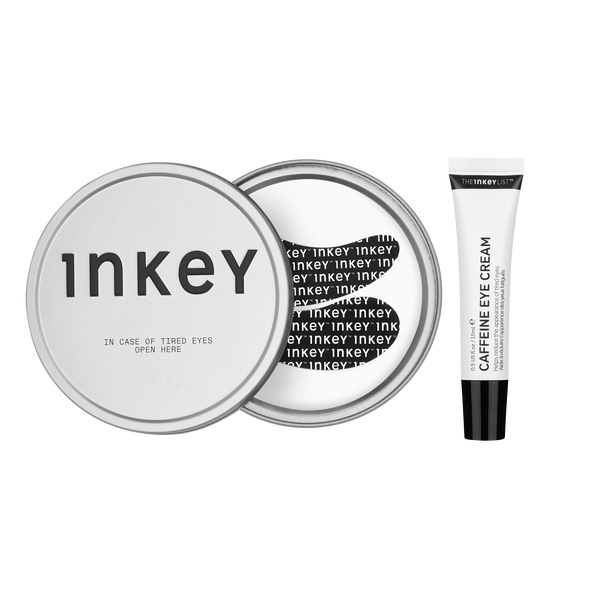
The Reusable Eye Patches and Caffeine Eye Cream Duo is built specifically around this principle: a silicone occlusive device paired with a clinically formulated eye cream, so that the patch is doing what patches do best, which is maximising the absorption of the ingredients working beneath it.
Hydrogel vs. Reusable Silicone Patches: What the Research Actually Shows
Not all under eye patches are the same, and the format you choose matters more than the marketing around it. The two dominant categories are single-use hydrogel patches and reusable silicone patches. Both provide occlusion. But how they provide it, how long the effect lasts, and what they actually deliver to your skin are meaningfully different.
Single-use hydrogel patches are made from a three-dimensional polymer network that is capable of absorbing and retaining significant amounts of water, often up to 90% of their own weight. They work by delivering the active ingredients they are pre-infused with directly to the skin surface during wear. A hydrogel patch acts as a reservoir that sits against your skin, slowly releasing its contents while simultaneously creating a semi-occlusive barrier that slows TEWL.
The experience of wearing a hydrogel patch is typically cooling and hydrating, and the results in the immediate aftermath can feel impressive. However, there are practical limitations worth understanding. First, the occlusive effect of a hydrogel patch is temporary and ends the moment the patch is removed, which is usually after 15 to 30 minutes. Second, the results you get are determined entirely by what the manufacturer has infused into the patch itself. You have no control over the concentration of actives, the formulation quality, or the ingredient pairing. You are using a pre-loaded device and accepting whatever is in it.
Third, and this matters increasingly to UK consumers: single-use hydrogel patches generate consistent, ongoing waste. Hydrogel patches are not recyclable through standard household recycling in the UK, which means every pair used goes to landfill. If used daily, a single person can go through 30 to 60 single-use patches in a month. Over the course of a year, that volume is considerable.
Reusable silicone patches function differently at a fundamental level. They do not deliver their own active ingredients. Instead, they act as a pure occlusive device, designed to hold whatever active you apply to your skin more firmly and for longer against the surface. The occlusive effect of silicone is more complete and more sustained than hydrogel because silicone is a non-porous, impermeable material. There is no gradual drying out, no degradation of the barrier during wear.
The critical implication of this is that reusable silicone patches work in combination with your chosen eye cream or treatment. The results you get are therefore determined by the quality of the ingredients in that treatment, not by the patch itself. This gives you full control over what your skin receives. You choose the active. The patch makes it work harder.
Here is what that looks like in practical terms:
- Mechanism: Silicone provides complete, sustained occlusion. Hydrogel provides semi-occlusion that ends at removal.
- Active delivery: Silicone relies on the eye cream beneath it. Hydrogel delivers pre-loaded actives from the patch itself.
- Wear time: Silicone is effective for 10 to 20 minutes and can be worn longer. Hydrogel is typically 15 to 30 minutes maximum before drying out.
- Reusability: Silicone patches are used again and again with proper care. Hydrogel patches are single-use.
- Environmental impact: Silicone patches produce minimal waste over time. Single-use hydrogel patches contribute significantly to landfill.
- Cost per use: The upfront cost of a silicone patch set is higher, but the effective cost per application over weeks and months is substantially lower.
The conclusion the evidence points to is straightforward. For sustained occlusion, ingredient control, environmental consideration, and long-term cost-effectiveness, reusable silicone patches are the more considered choice. INKEY is B Corp certified, meaning its environmental commitments are independently verified, and the design of the Reusable Eye Patches reflects that commitment: a compact travel tin, reusable silicone material, and a format built for longevity rather than disposal.
Having established that silicone patches outperform single-use alternatives on the key metrics, the next logical question is: what should actually go beneath them?
Why the Ingredients Underneath Matter More Than the Patch Itself
A silicone patch is a tool, not a treatment. This distinction is important and it is exactly the kind of clarity that gets lost in the noise of skincare marketing. On bare skin, a silicone patch will hydrate and temporarily smooth the under-eye area through moisture retention alone. That is real, and it is not nothing. But it is limited.
The patch’s value multiplies significantly when it is used over a clinically formulated eye cream, because the occlusive environment it creates increases how effectively those actives are absorbed into the skin. The question is therefore not simply “should I use patches” but “what am I putting underneath them, and does it target what I actually want to address?”
For the under-eye area, there are three categories of concern that most people are trying to address: puffiness and fluid retention, dark circles and pigmentation, and the loss of firmness and plumpness over time. Each requires a specific type of ingredient. Here is what the evidence says about the key actives:
Caffeine (0.3%): Caffeine is one of the most research-backed ingredients in the under-eye category. When applied topically, it works primarily through vasoconstriction, the narrowing of blood vessels beneath the skin surface. This directly reduces fluid retention, which is the primary cause of puffiness. Research published in the Journal of Cutaneous and Aesthetic Surgery confirms that a caffeine-based gel can penetrate the lower eyelid skin and measurably diminish lower eyelid oedema and pigmentation through this vasoconstrictive action. Separately, a further review of caffeine’s mechanisms in cosmetic use published in Skin Pharmacology and Physiology confirms caffeine’s antioxidant properties and its ability to increase microcirculation in the skin. When absorbed beneath a silicone patch, caffeine has more time in contact with the skin and a more receptive surface through which to penetrate. The patch is amplifying what the caffeine can do.
Matrixyl 3000 Peptide: Matrixyl 3000 is a combination of two signal peptides: Palmitoyl Tripeptide-1 and Palmitoyl Tetrapeptide-7. Signal peptides work by communicating with fibroblasts in the dermis, essentially sending the signal to produce more collagen and elastin. This is the longer-game ingredient. It does not produce an immediate visual result in the way that caffeine’s vasoconstrictive effect does, but used consistently over time, it supports firmness, plumping, and the structural integrity of the skin beneath the eye. Under a silicone patch, peptide molecules are held against the skin surface for longer and have more opportunity to penetrate through the temporarily opened intercellular channels that occlusion creates.
Albizia Julibrissin Bark Extract: This ingredient specifically targets the appearance of under-eye fatigue. The hollowed, shadowed, slightly sunken look that appears after poor sleep or prolonged stress is a concern that pure caffeine and peptides do not fully address on their own. Albizia Julibrissin Bark Extract works on the appearance of tiredness in the under-eye zone, complementing the broader formulation by addressing a dimension of the concern that the other actives do not directly target.
When these three ingredients are used beneath an occlusive silicone patch, the patch is not simply keeping them warm against your skin. It is actively creating the conditions in which they work more effectively: sustained contact time, a more hydrated and receptive skin surface, and a barrier that reduces the evaporation of the formula before it has had time to absorb.
This is the formulation logic behind INKEY’s Caffeine Eye Cream, and it is why the Reusable Eye Patches and Caffeine Eye Cream are designed to be used together. The patch is not an optional add-on. It is the delivery mechanism that makes the ingredients in the cream more effective.
For readers who want to see what consistent use of this combination looks like in practice, before and after results from real users are available here. This blog deliberately does not reproduce clinical timelines or results data, because that evidence belongs on its own dedicated page where it can be reviewed in full context. What matters here is the mechanism, and the mechanism is clear.
Reusable Under Eye Patches and Sustainability: The Smarter Long-Term Choice
The case for reusable silicone patches is not only scientific. For a growing number of UK consumers, the environmental argument is equally persuasive, and it deserves to be addressed honestly rather than glossed over with vague sustainability claims.
The mathematics of single-use patches are straightforward and a little uncomfortable. If you use a pair of single-use hydrogel eye patches daily, you go through 365 pairs in a year. At twice daily use, that number doubles. Hydrogel patches are not recyclable through standard UK household recycling. Every pair you use ends up in landfill. Multiply that across the number of people using the category, and the volume of material waste is significant.
Reusable silicone patches are a direct answer to this. They are designed to be used repeatedly, cared for simply, and kept for as long as possible. The care routine is minimal: rinse under warm water with a small amount of hand soap, pat dry gently with a clean towel, and store flat on the plastic insert inside the included tin. That is it. There are no elaborate cleaning protocols, no special solutions required, no complicated storage conditions.
One tin. Infinite mornings. No waste.
There is an honest caveat here, because INKEY’s approach is to give you the full picture rather than an edited one. Silicone patches do wear out over time. The adhesive quality of the silicone surface, which is what allows the patch to sit gently against the skin without slipping, diminishes with repeated use and especially with exposure to harsh cleansers or scrubbing. Taking care of the patches extends their lifespan meaningfully. Avoiding anything abrasive during cleaning and storing them correctly means they last considerably longer than they would with rough handling.
Even accounting for eventual replacement, the cost-per-use calculation over the life of a reusable silicone patch set is substantially lower than the cumulative spend on single-use formats. The upfront cost of a reusable set may be higher than a single pack of hydrogel patches. But a single pack of hydrogel patches runs out. A silicone set keeps going.
For readers interested in the broader picture of how to recycle and reduce waste in a skincare routine, INKEY’s guide to recycling the right way is a useful companion read.
The sustainability case is made. The science case is made. What remains is the practical question: how do you actually use reusable silicone patches to get the most from them?
How to Use Reusable Under Eye Patches Properly
The routine is simpler than you might expect. The most important thing to understand is that the patch is the last step in your eye care preparation, not a standalone treatment. It goes on over your eye cream, not instead of it. Here is the process from start to finish:
Step 1: Cleanse thoroughly.
The under-eye area should be clean and free of makeup, SPF, and any previous skincare before the patch goes on. Any residue between the patch and the skin reduces contact and, in the case of SPF or heavier occlusive balms, can interfere with how your eye cream absorbs.
Step 2: Apply a generous layer of Caffeine Eye Cream.
The patch amplifies whatever is beneath it, so this is not the moment to be conservative. Apply the Caffeine Eye Cream to the under-eye area, covering the full zone from the inner corner to the outer edge and down towards the cheekbone.
Step 3: Place the silicone patch over the cream.
Position the patch with the narrower, more pointed end facing towards the nose, at the inner corner of the eye. Press gently to secure it against the skin. There is no need to drag or stretch the skin to get it to sit flat. A gentle press is enough.
Step 4: Leave in place for 10 to 20 minutes.
The longer the contact time, the more sustained the occlusive environment. For a morning routine when time is short, 10 minutes is effective. In an evening routine when there is no rush, leaving the patches on for longer maximises the absorption window.
Step 5: Remove and gently tap in any remaining cream.
When you remove the patches, there may be a small amount of cream residue left on the skin. Do not rinse it off. Simply tap it gently into the skin with your fingertip using light patting motions. This ensures nothing is wasted.
INKEY Tip: Store the patches in the fridge before use. The cooling effect of a cold silicone patch on the under-eye area causes immediate local vasoconstriction, which means you get the benefit of caffeine’s vasoconstrictive mechanism from the ingredient and a physical cooling boost from the patch temperature simultaneously. This is particularly effective for morning puffiness, especially after poor sleep or a salty meal the night before.
For patch care:
Rinse under warm water with a small amount of hand soap after each use. Pat dry gently with a clean towel. Do not scrub, do not use exfoliating cleansers, and do not wring or twist the patches. Store them flat on the plastic insert inside the tin, which is designed specifically to keep them in the right shape between uses.
Frequency and routine placement:
Morning and evening use gives the best results, because consistency with active ingredients like Matrixyl 3000 peptide is what drives cumulative improvement over time. In your routine, patches go on after cleansing and serums, before moisturiser. The patches and Caffeine Eye Cream work for all skin types, including sensitive skin, and are suitable for those who are pregnant or breastfeeding.
Whether you are building an eye care routine from scratch or adding structure to an existing one, the Reusable Eye Patches and Caffeine Eye Cream Duo gives you both elements in one place. And if you want to explore the broader range of eye treatments available from INKEY, the full collection is available to browse by concern.
The Verdict: Do Under Eye Patches Actually Work?
Here is the direct answer: yes, under eye patches work. But the degree to which they work depends on two factors, and only two: the material and mechanism of the patch, and the active ingredients used beneath it.
A patch on bare skin will hydrate and temporarily smooth the under-eye area through moisture retention. That effect is genuine. Your skin will feel softer, look more hydrated, and the surface will appear temporarily plumped. But that benefit is limited and does not build over time. It is a comfort measure, not a treatment.
A reusable silicone patch used consistently over a clinically formulated eye cream is something meaningfully different. The occlusive environment created by the silicone reduces evaporation, increases the contact time between the active ingredients and your skin, and temporarily opens the intercellular channels through which those ingredients can penetrate more effectively. The Caffeine Eye Cream beneath the patch is delivering vasoconstriction, antioxidant protection, collagen-stimulating peptide signals, and targeted fatigue-reduction actives. The patch is ensuring that delivery is as efficient as possible.
Reusable silicone patches specifically outperform single-use hydrogel formats on the metrics that matter: occlusion duration, environmental impact, ingredient control, and long-term cost-effectiveness. These are not opinions. They follow directly from the physics of the materials involved and the documented science of transepidermal water loss.
The results from consistent use are not permanent in isolation, and no responsible brand should tell you otherwise. Your skin does not change overnight. Cumulative improvement, the kind that shows up visibly over weeks rather than days, comes from consistent application of the right actives, delivered under the right conditions. That is what this combination is designed to produce.
See before and after results from real users here if you want to see what consistent use looks like in practice, without any editorial framing from us.
If your primary concern is under-eye wrinkles rather than puffiness or fatigue, the mechanisms and ingredient recommendations differ slightly, and that is covered in detail in the guide to treating under-eye wrinkles here. If dark circles and pigmentation are your main concern, that is a separate topic with its own dedicated treatment approach, covered in the guide to treating dark circles here.
No gimmicks. No inflated promises. Just the science, the ingredients, and a patch that makes both work harder.
The Science Is Clear: Start With the Right Format
Understanding how your skincare works is not a luxury. It is the difference between spending money on something that delivers and spending money on something that sits on the surface and evaporates. Under eye patches work because occlusion works. Silicone patches work better than single-use hydrogel formats because their occlusion is more complete and more sustained. And the Caffeine Eye Cream works harder under a silicone patch because the patch creates the exact conditions in which active ingredients are most effectively absorbed.
For UK readers comparing formats and weighing up the investment, the conclusion the evidence points to is consistent: a reusable silicone patch used over a clinically formulated eye cream is the considered, science-backed, and sustainable choice. The format reduces waste, reduces long-term cost, and maximises the performance of the active ingredients you have chosen to put on your skin.
Ready to put the science to work? The Reusable Eye Patches and Caffeine Eye Cream Duo gives you the tool and the treatment in one, without the waste, without the inflated price tag, and with the ingredient transparency you deserve.
Not sure yet? See real results from real users and decide for yourself.