



Sunscreen for Sensitive Skin: How to Find an SPF That Won’t React
If sunscreen leaves your skin red, stinging or breaking out, the problem is usually the formula and not the SPF - here’s how to find one your skin can actually live with.
Author
askINKEY skincare advisor
Published
15 April, 2026
Time to read
13 minutes
If sunscreen has left your skin stinging, flushed or congested, the problem is almost never the sun protection itself. It is what else is in the bottle. Finding a sunscreen for sensitive skin that you can wear every day without incident is far more about formulation than it is about the SPF number printed on the front.
The reactions are consistent enough that most people reading this will recognise at least one. A sharp sting the moment it goes on. Visible redness across the cheeks and nose that takes an hour to settle. A tight, papery feeling by mid-morning. Or small breakouts that appear a day or two later, seemingly out of nowhere. Any of these will put you off a product permanently, and understandably so.
The unhelpful conclusion to draw is that your skin cannot wear SPF. It can. What it cannot wear is a particular formula, and the difference between those two statements matters enormously, because UV exposure in the UK is a year round reality rather than a summer holiday concern. It reaches you through cloud cover and through window glass. If you would like the full picture on how sun protection actually works before going further, our complete SPF guide covers the fundamentals in detail.
This article is the practical version. We will look at why sensitive skin reacts the way it does, which ingredients are most often responsible, what a genuinely gentle formula should contain instead, how to handle specific situations like rosacea, eczema prone and blemish prone skin, and how to build a daily routine that supports your barrier rather than testing it. We will also cover patch testing properly, because it is the single step that saves the most trouble.
Before any of that is useful, though, there is an underlying question worth answering: why does reactive skin respond so strongly to some sunscreens in the first place?
Why Sensitive Skin Reacts to Sunscreen
Sensitive skin is best understood as a tendency rather than a fixed diagnosis. It is not a skin type in the way that oily or dry are skin types. It describes a threshold: how much contact with a given ingredient, temperature, fabric or friction your skin will tolerate before it responds with redness, stinging, tightness or general discomfort. Two people can use the identical product and only one of them will notice anything at all. That is not imagination, and it is not fragility. It is a lower reaction threshold.
Most of what determines that threshold sits in the outermost layer of the skin. The skin barrier is the thin, protective top layer made up of skin cells held together by lipids, and it does two jobs simultaneously. It keeps water in, and it keeps irritants out. When it is intact and well supplied with lipids, most cosmetic ingredients simply sit on the surface, do their job and cause no drama. When it is disrupted, the picture changes. Water escapes more easily, which is why compromised skin often feels tight and looks dull. And irritating ingredients penetrate further and faster than they were ever meant to, which is why the response is so much more visible.
This is the mechanism behind almost every sunscreen reaction people describe. It is rarely the UV filters acting alone. It is usually a formula containing something irritating meeting a barrier that is not currently in a position to keep it out. If you suspect that description fits your skin at the moment, our guide to a damaged skin barrier explains what causes disruption and how to support recovery.
Stinging is information, not a verdict
Here is the reframe that changes how you shop. When a sunscreen stings, your skin is telling you something specific: it is reacting to something in that formula. It is not telling you that your skin cannot wear sun protection as a category. The distinction sounds academic until you notice how many people quietly abandon SPF entirely after two or three bad experiences, on the reasonable-seeming basis that they have tried it and it does not work for them.
What they have actually established is a much narrower fact. Three particular formulas, each of which may well have contained fragrance, a high level of drying alcohol, or a scented botanical extract, did not suit them. That is genuinely useful information. It is just not the conclusion they drew from it.
So the working question shifts. Not “can I wear sunscreen?” but “which sunscreen is built for skin that reacts?” That is a solvable problem, and the rest of this article is about solving it.
The usual suspects behind redness and irritation
Reactivity rarely has a single cause. In practice it is usually the accumulation of several small aggravators, and identifying yours is much easier once you know what to look for. The most common contributors to redness and irritation are:
- Fragrance. Whether synthetic or from essential oils, added scent is one of the most frequent triggers of contact reactions in skincare. It exists purely to make the product pleasant to use and contributes nothing to how well it performs.
- Heat. Hot showers, hot weather, hot rooms and exercise all dilate the blood vessels near the surface of the skin. If you flush easily, heat is often doing more work than any product you own.
- Friction. How you apply a product matters as much as what is in it. Vigorous rubbing to work a formula in creates mechanical irritation that can leave skin flushed before the ingredients have had any say in the matter.
- Over-cleansing. Cleansing twice a day with something too strong, or too often with hot water, strips the lipids the barrier depends on. This is one of the most common self-inflicted causes of sensitivity.
- Layering too many actives at once. Introducing several new products in the same week makes it impossible to identify what caused a reaction, and increases the odds that something will.
Why UV protection matters more for reactive skin, not less
There is a factual point worth making calmly here. UV exposure contributes to redness and to barrier stress over time. Skin that is already prone to flushing and already working with a compromised barrier is not well served by unprotected sun exposure, which is why the NHS guidance on sunscreen and sun safety recommends daily sun protection as a general habit rather than something reserved for particular skin types or particular weather.
That guidance holds throughout the year in the UK, not just during the handful of genuinely warm weeks. UVA levels remain reasonably consistent across the seasons and pass through cloud and glass, which is the reason a sensible SPF habit is a twelve month one. Our article on SPF all year round covers the seasonal detail if that is the part you are unsure about.
None of this is a reason for alarm. It is simply the case that for reactive skin, the goal is not to avoid sunscreen but to find one that supports the barrier while it protects. A compromised barrier is very often the underlying picture, so supporting it is part of the solution rather than a separate project.
Which brings us to the specifics. If formulation is the problem, what exactly is in these formulas?
Sunscreen Ingredients to Avoid if Your Skin Is Sensitive
The most useful skill any skincare shopper can develop is reading an ingredient list. It takes about five minutes to learn and it will save you money, time and a considerable amount of irritation.
Every cosmetic product sold in the UK is legally required to carry an INCI list. INCI stands for International Nomenclature of Cosmetic Ingredients, and it is the standardised naming system that means glycerin is called glycerin on every product from every brand in every market. Ingredients are listed in descending order of concentration down to one percent, after which they can appear in any order. That ordering detail is genuinely useful: something appearing second on a list is present in a meaningfully different quantity to something appearing twenty-eighth.
Transparency about what goes into a formula is the entire reason we put the ingredient in the product name. The label is where the real information lives, so here is what to look for when you are screening a sunscreen for sensitive skin.
Fragrance and parfum
If you make only one change, make it this one. Fragrance appears on an INCI list as parfum or fragrance, and it is among the most common causes of contact reactions in skincare. A single fragrance listing can represent a blend of dozens of individual aromatic compounds, which is why identifying precisely what upset your skin is often impossible.
It also contributes nothing to performance. Fragrance makes a product more pleasant to apply. That is its complete job description. On a product you are applying to your face every single morning, that is a poor trade for reactive skin.
One important caveat: unscented is not the same as fragrance free. Some products described as unscented contain masking fragrance, added specifically to neutralise the natural smell of the base ingredients. The product does not smell of anything, but the fragrance is still in there. A genuine fragrance free sunscreen will have no parfum or fragrance entry on the INCI list at all, and that is the only reliable way to confirm it.
Essential oils and scented botanical extracts
Natural does not mean gentle, and this is one of the more persistent misconceptions in skincare. Essential oils are highly concentrated plant extracts, and several of the most popular ones are well documented irritants for reactive skin. Lavender, citrus oils including bergamot and lemon, peppermint and rose are all frequently used for scent rather than for any functional benefit.
The distinction that matters is purpose. Some botanical extracts are included because they have a genuine role in the formula. Others are there to make the product smell like a spa. If a plant extract sits near the bottom of an ingredient list alongside other aromatic components, it is usually doing the second job.
High levels of drying alcohols
Alcohol on an ingredient list causes more confusion than any other category, so this needs unpacking carefully.
Drying alcohols include ethanol, alcohol denat, denatured alcohol and SD alcohol. They are used as solvents and to give formulas a fast-drying, weightless finish, which is why they turn up so often in lightweight sunscreens. Used at a low level they are unremarkable. Appearing high on an ingredient list, they can strip the skin’s natural lipids and increase water loss through the barrier, which is precisely the outcome reactive skin does not need.
Fatty alcohols behave completely differently, and they are not a red flag. Cetearyl alcohol, cetyl alcohol and stearyl alcohol are waxy, lipid-derived ingredients that function as emollients and emulsion stabilisers. They help condition the skin, give a formula its texture, and stop the oil and water phases separating in the tube. They are the opposite of drying. You will find cetearyl alcohol in our own Dewy Sunscreen SPF 30 for exactly these reasons, and its presence there is a formulation asset rather than a compromise.
The rule of thumb: if the word alcohol is preceded by cetearyl, cetyl, stearyl, behenyl or myristyl, it is a fatty alcohol and you can move on. If it says alcohol denat or ethanol and it appears in the first few entries, that one is worth noting.
Oxybenzone
If you are specifically looking for a sunscreen without oxybenzone, there is good news: in the UK you will rarely have to look hard.
Oxybenzone, which also appears on labels as benzophenone-3, is a chemical UV filter that has been associated with sensitisation in some individuals. It is subject to tight concentration restrictions under EU cosmetic regulation, which UK regulation mirrors, and as a result it has largely fallen out of use in sunscreens formulated for this market. Most UK shoppers will simply not encounter it in current formulas.
It remains worth knowing the name, particularly if you buy sunscreen while travelling, where formulation norms differ. But this is a check to make rather than a concern to carry around.
Synthetic dyes and colourants
Look for CI followed by a number, such as CI 19140 or CI 42090. These are colour index numbers, and they identify added colourants.
Their function is entirely cosmetic. They make the product in the tube look a particular colour, which has no bearing whatsoever on how well it protects your skin. In a product you apply daily to a face that reacts easily, that is avoidable risk for no return. Colourants are a small factor rather than a major one, but on a list of things to screen out, they are an easy inclusion.
The honest caveat
Sensitivities are individual. That is not a hedge, it is the central fact of this entire subject. An ingredient that reliably triggers one person can suit another perfectly well for years. The lists above describe common triggers based on how frequently they are implicated, not universal rules.
Your own skin remains the only authority on your own skin, and the only way to consult it reliably is to test before committing. This is exactly why patch testing exists, and if you have never done one properly, why do I need to do a patch test walks through the reasoning and the method.
Sun protection is a habit worth building, and organisations including Cancer Research UK set out clearly why regular sun safety measures are worthwhile. The point of learning to read a label is not to make that habit harder. It is to make it comfortable enough that you actually keep it up.
So much for the red flags. What does a formula built properly for reactive skin actually look like?
What to Look for in a Sunscreen for Sensitive Skin
Screening out problem ingredients is half the job. The other half is knowing what you positively want to see, because the goal is not simply a sunscreen that fails to irritate you. It is a sunscreen that leaves your skin better supported than it found it.
Here is the checklist worth shopping against.
Fragrance free
The single most useful filter, and worth stating once more precisely because it is so effective. Check the INCI list for parfum or fragrance rather than relying on front-of-pack language. If neither word appears, you have removed the most common variable in one move.
Non comedogenic
This term is used loosely enough that it is worth being precise about what it means. A non comedogenic sunscreen is one that has been assessed so that it should not block pores. Formulators select ingredients with a lower likelihood of causing congestion, and the finished product is evaluated on that basis.
It matters more than people expect for sensitive skin, because sensitivity and congestion frequently travel together. There is a widespread assumption that reactive skin is always dry skin, and it simply is not true. A great many people have skin that flushes easily, stings at the slightest provocation, and also produces enough oil to develop black heads and blemishes around the nose and chin. For that combination, a rich, occlusive sunscreen solves one problem while creating another.
What non comedogenic does not mean is a guarantee. It is an assessment of the formula, not a promise about every individual using it. Breakouts are influenced by hormones, stress, how thoroughly you cleanse in the evening, and what else is in your routine. A non comedogenic formula meaningfully improves the odds. It does not remove every other variable, and any brand telling you otherwise is overselling.
Dermatologically tested
Worth understanding honestly. Dermatologically tested means the product has been assessed for skin safety by qualified professionals under controlled conditions. It is a genuine quality marker and it indicates a brand has invested in verifying tolerance rather than assuming it.
It is not a guarantee that nobody will ever react. No such guarantee exists for any cosmetic product. Treat it as strong supporting evidence rather than a final answer, and patch test regardless.
Broad spectrum UVA and UVB protection
The SPF number on the front of a sunscreen refers only to UVB protection, the wavelength primarily responsible for burning. UVA penetrates more deeply, contributes to long term changes in the skin, and passes readily through glass.
In the UK, look for the UVA logo, the letters UVA printed inside a circle. It confirms the product meets the EU and UK standard for UVA protection relative to its SPF rating, and it is the quickest way to verify broad spectrum coverage without deciphering the back of the pack. The British Association of Dermatologists provides useful, non-commercial guidance on what sunscreen labelling means in practice, and it reinforces a point worth holding onto: the quality of the formulation deserves at least as much of your attention as the number on the front. On which number to choose, SPF 30 vs SPF 50: which should you actually use settles that question in one place.
Soothing and barrier supporting ingredients
This is where a sunscreen stops merely avoiding harm and starts contributing something. Several well established ingredients do genuine work here:
- Glycerin is a humectant, which means it draws water into the upper layers of the skin and helps hold it there. It is one of the most extensively studied hydrating ingredients in skincare, it is inexpensive, and it suits practically everyone. Its presence high on an ingredient list is a good sign.
- Ceramides are lipids that occur naturally in the skin barrier, where they function as part of the mortar holding skin cells together. Including them in a formula supports the structure that keeps irritants out and moisture in, which is directly relevant when that structure is already under strain.
- Squalane is a lightweight emollient that closely mimics lipids the skin produces itself. It softens and smooths without the heaviness of a traditional facial oil, which makes it suitable for skin that needs comfort but not occlusion.
- Hyaluronic acid holds water and, when formulated across different molecular weights, hydrates at multiple levels of the skin rather than sitting entirely on the surface.
A sunscreen containing these is performing two useful jobs in a single step: protecting against UV while actively supporting hydration. For anyone trying to keep a routine short because every additional product is another variable, that efficiency is worth a great deal.
A texture you will genuinely wear
The most underrated criterion on this list, and the one most often left out of ingredient-focused advice.
Sun protection only works if it is applied. A sunscreen that feels heavy, greasy or tacky, that pills under makeup, or that leaves a grey cast on your skin will be skipped on the mornings you are in a hurry, and then on the mornings you are not. Over a year, a formula you enjoy applying and use daily protects you considerably better than a technically excellent one you use twice a month.
Wearability is not a vanity concern. It is the mechanism by which consistency happens.
Mineral or chemical: the short answer
Mineral filters sit on the skin’s surface and scatter UV. Chemical filters absorb it. Neither type is automatically gentler, because the full formulation decides whether reactive skin tolerates a product. The complete comparison is in mineral vs chemical sunscreen.
Two other common questions have their own homes: for skin that runs dry and tight, see sunscreen for dry skin, and for dark marks and uneven tone, SPF for hyperpigmentation covers why daily protection is the foundation of any approach.
Those are the general principles. Now for the specific situations readers most often arrive with.
Sunscreen for Rosacea, Eczema Prone and Blemish Prone Skin
General guidance only goes so far. Most people searching for a gentle SPF have something particular in mind, so here are the three most common scenarios, kept short and practical.
Sunscreen for rosacea
If your skin flushes easily, three factors tend to matter more than anything on the ingredient list: heat, friction and fragrance.
Heat is often the largest and the least considered. Warm rooms, hot drinks, exercise and hot water all dilate surface blood vessels, and applying anything to already-flushed skin will feel worse than applying it to calm skin. Where you can, apply your sunscreen before the bathroom has steamed up rather than immediately after a hot shower.
Friction is the one most easily fixed. Rubbing a product vigorously into the skin creates mechanical irritation entirely independent of the formula. Pat rather than rub. Take a generous amount, dot it across the face, and press it in gently with your fingertips. It takes marginally longer and is considerably more comfortable.
Fragrance free is non-negotiable for a sunscreen for rosacea, and a lightweight texture generally feels better on skin that flushes than a heavy cream does. Avoid introducing several new products at once, and let each layer settle properly before applying the next. As a formula, a well built gentle sunscreen is suitable for skin that experiences rosacea, but always patch test first.
Sunscreen for eczema prone skin
Where rosacea is largely about reactivity to heat and friction, the priority for a sunscreen for eczema prone skin is barrier support.
Look for fragrance free, and for a formula containing both humectants, which draw in water, and lipids, which help hold it there. That combination tends to sit more comfortably on skin that struggles to retain moisture. A formula that hydrates while protecting is generally the more comfortable choice.
Patch testing matters more here than anywhere else in this article, and it is worth doing over several days rather than one. Skin prone to eczema can react on a delay, so a single 24 hour test may not tell the whole story. From a formula perspective a gentle, fragrance free sunscreen is suitable for eczema prone skin, but always patch test first, and if your skin is currently in an active flare, speak to a healthcare professional before introducing anything new.
Blemish prone and oily sensitive skin
The worry here is specific and extremely common: does sunscreen cause breakouts?
Sunscreen as a category does not. Particular formulas can, and the ones most likely to are heavy, occlusive textures that sit on the surface and block pores. This is exactly what the non comedogenic assessment exists to address, and a lightweight, oil free formula is a considerably better starting point than a rich cream if your skin produces plenty of oil on its own.
There is a second factor that gets less attention than it deserves: removal. Sunscreen is designed to be resilient. It is meant to stay on your skin through a day of heat, movement and light perspiration, which means a quick splash of water at bedtime will not shift it. Residue left overnight, mixed with the day’s oil and sweat, contributes to congestion, black heads and blemishes, and the formula then takes the blame. Our guide to how to remove sunscreen properlycovers the method.
For readers whose sensitivity and breakouts overlap, sensitive skin and breakouts goes deeper into managing both without aggravating either, and sunscreen for oily and blemish prone skin has the full product guidance for oilier skin.
Sunscreen that doesn’t sting eyes
A small complaint with an outsized effect on whether people wear SPF at all, and one that deserves a direct answer.
Sunscreen stings eyes when it migrates into them, which happens for three main reasons: it was applied too close to the lash line, it was thinned by sweat or facial oil and travelled, or it was not given time to settle before the day began.
Practical fixes. Keep application slightly below the orbital bone, the ridge of bone you can feel beneath your eye socket, and work around the eye rather than right up to the lash line. Let the product settle fully before you go out or apply makeup, rather than rushing out the door two minutes after application. Fragrance free formulas with a skin-neutral pH tend to be more comfortable near the eye area, since fragrance is a common source of the sharp stinging sensation specifically.
Honest caveat: any product applied too close to the eye can migrate into it, particularly in heat or during exercise. Looking for a sunscreen that doesn’t sting eyes is reasonable, and formula choice genuinely helps, but application technique does at least as much work.
With the specific situations covered, here is the routine that holds it all together.
A Gentle Daily Routine for Sensitive Skin
Understanding ingredients is one thing. Building a routine you can maintain on a Tuesday morning when you are already running late is another. This is the practical version, kept deliberately short, because more steps mean more variables and more variables mean more opportunities to react.
The morning order is straightforward: cleanse, hydrate, moisturise, protect.
Step one: cleanse gently
Morning cleansing should remove overnight oil and whatever remains of last night’s products without stripping anything the barrier needs. If your skin feels tight and squeaky afterwards, the cleanser is too strong for you.
Different skin types want different things here, so choose the one that matches yours:
- The Oat Cleansing Balm, £15.00 for 150ml, suits dry, sensitive or easily irritated skin. It is formulated with 1% colloidal oatmeal to help soothe skin and help reduce the look of redness, and it melts away product without any of the hard rubbing that aggravates reactive skin.
- The Hydrating Cream to Milk Cleanser contains 5% rice milk and transforms from a cream to a milk as you work it in. A soft, comfortable cleanse for dry to normal skin that wants something gentler than a foaming wash.
- The Glycerin Gentle Purifying Cleanser is the option for oily or combination sensitive skin. It cleanses thoroughly enough to handle excess oil while glycerin works to keep the process from being stripping, which is the balance oily sensitive skin usually struggles to find.
Whichever you choose, use lukewarm water rather than hot, and press your face dry with a towel instead of rubbing.
Step two: hydrate
A hydrating serum on slightly damp skin gives everything that follows a better surface to sit on, and it addresses the tightness that sensitive skin so often carries.
The Hyaluronic Acid Serum, £12.00, uses 2% pure hyaluronic acid across three molecular weights, so hydration is delivered at multiple levels of the skin rather than sitting entirely on top. Apply it to skin that is still slightly damp from cleansing, which gives the humectants water to work with.
If your skin is particularly reactive, or feels persistently uncomfortable rather than occasionally so, the Ectoin Hydro-Barrier Serum is the more targeted option. It combines 2% Ectoin with 2.5% hyaluronic acid and a 1% barrier blend of three ceramides, working to help strengthen and protect the skin barrier. When the barrier is the underlying issue, supporting it directly is more productive than continuing to manage symptoms.
Step three: moisturise
This step is not optional, and its position matters.
Moisturiser goes before SPF. This is the most common ordering error in morning routines, and it is worth stating plainly. Applying sunscreen first and moisturiser over the top disturbs the even, continuous film the sunscreen needs to form in order to protect properly. Moisturise, let it absorb for a minute, then apply your SPF.
Two options depending on your skin:
- The Bio-Active Ceramide Moisturiser, £20.00, for dry or sensitive skin that needs barrier support and hydration that lasts through the day. Ceramides here are doing structural work, replenishing lipids the barrier depends on.
- The Omega Water Cream, £14.00, as the lighter, oil free alternative. Suited to sensitive skin that also runs oily or is prone to breakouts, it hydrates without the weight that leads to congestion.
Step four: protect
Your final morning step, applied after moisturiser has settled.
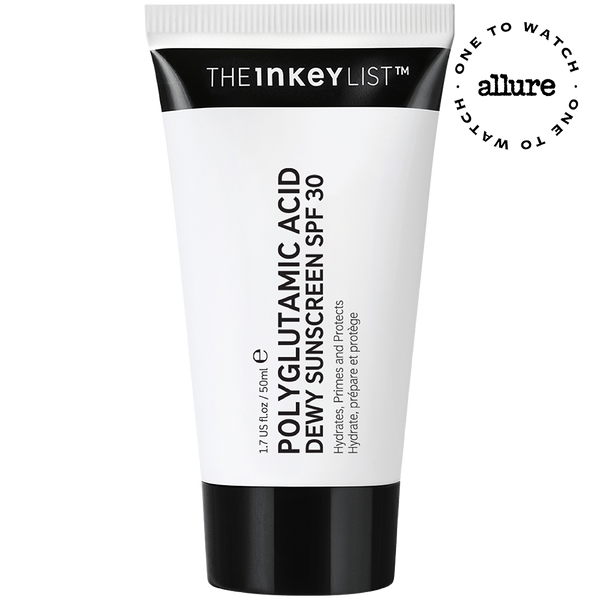
The Dewy Sunscreen SPF 30, £15.00 for 50ml, is formulated to be worn daily and to sit comfortably under makeup. Two things determine whether any sunscreen delivers the protection on its label, and both are about application rather than formulation.
Use enough. Most people apply substantially less than the amount sunscreens are tested at. For the face and neck, aim for roughly three quarters of a teaspoon. It will look like more than you expect. It is the correct amount.
Apply it early. Around fifteen minutes before you go outside gives the formula time to settle into an even layer. Applying as you walk out of the door means the first part of your journey is less protected than you think.
Extend it down the neck, and do not forget the ears and the back of the neck if your hair is up. These are consistently the most missed areas.
Optional through the day
The HydroSurge Dewy Face Mist is a useful mid-afternoon refresh, particularly in air conditioned offices or dry winter heating. It adds hydration over the top of everything without disturbing the layers underneath.
Reapplication is a genuine subject in its own right, and the practicalities differ depending on whether you wear makeup and how much time you spend outdoors. Rather than compress it here, how to reapply sunscreen covers the methods properly.
Evening: remove it properly
Whatever you put on in the morning needs to come off at night, and sunscreen in particular is built to resist casual removal.
A balm cleanser is the most comfortable way to handle this for reactive skin. Balms dissolve sunscreen and makeup on contact, which means the product does the work and your hands do not have to. That matters, because scrubbing at your face with a flannel to shift a stubborn SPF causes exactly the friction irritation discussed earlier.
The Oat Cleansing Balm doubles as a ten minute soothing mask, which is a useful option on evenings when your skin feels particularly reactive. Apply, leave it, remove it, and you have combined two steps.
Two rules that apply to everything
Introduce one new product at a time, and give it at least a week. Changing three things at once and then reacting tells you nothing about what caused it, and you will end up discarding products that were never the problem. Patience here is not a nice-to-have, it is the only way to gather usable information about your own skin.
Consistency beats perfection. A sunscreen applied slightly unevenly every single morning protects you far more than a meticulous application once a fortnight. Do not let the pursuit of a perfect routine become the reason you skip it. The habit is the point.
How to patch test a new sunscreen
Apply a small amount to a discreet area of skin, such as the inner forearm or just behind the ear. Leave it in place for 24 hours and avoid washing the area during that time. Check for redness, itching, stinging or any bumps before applying the product to your face.
If your skin is very reactive, repeat this for two or three consecutive days rather than relying on a single test, since some reactions appear on a delay. It is a small amount of patience that saves a considerable amount of discomfort. For the full method, see our full guide to patch testing.
With the routine established, it is worth putting a specific formula through the checklist this article has built.
How the Dewy Sunscreen SPF 30 Measures Up
Everything above amounts to a set of criteria. The fair test of any sunscreen, including our own, is to hold it against that checklist and report the result honestly, including the parts that do not flatter it.
Against the checklist
Fragrance free. Yes. No parfum, no fragrance, no masking scent.
Non comedogenic. Yes, assessed so that it should not block pores.
Dermatologically tested. Yes, and clinically tested in addition.
Barrier supporting ingredients. Yes, covered in detail below.
The full set of verified credentials is worth listing plainly:
- Fragrance free
- Paraben free
- Dermatologically tested
- Clinically tested
- Non comedogenic
- Gluten free
- Safe to use during pregnancy and breastfeeding
- Vegan certified and cruelty free
It is listed as suitable for all skin types including sensitive skin, and suitable for under 12s and teenagers, which is a reasonable indicator of how the formula was built.
On rosacea and eczema prone skin, our position is the same one stated on the product page and we will not stretch it further: it is suitable from a formula perspective, but always patch test first.
The 8% hydration trio
The part of this formula most relevant to sensitive skin is the 8% hydration blend, made up of three ingredients that each work differently:
- Polyglutamic acid is a humectant that draws in moisture and helps hold it in the upper layers of the skin. If you want the deeper science on how it produces the dewy finish, how polyglutamic SPF makes your skin so dewygoes into detail.
- Glycerin, the well established humectant discussed earlier, drawing water into the skin and helping to keep it there.
- Squalane, a lightweight emollient that mimics the skin’s own lipids, softening without heaviness.
Together, they mean the sunscreen is contributing to hydration rather than simply avoiding harm. When the barrier is already vulnerable, a step that supports it while protecting against UV is doing more useful work than one that merely does no damage.
The results, with their footnotes
In consumer testing, 97% said it looked invisible on their skin tone and 90% said their skin felt primed for makeup.*
It is also clinically proven to deliver instant hydration.**
\Based on a 2-week independent consumer trial of 66 people.*
\*Based on an independent clinical study of 10 people.*
Those footnotes are part of the claim, not fine print to be buried. Sixty-six people and ten people are the actual sample sizes, and you are entitled to weigh the numbers accordingly.
What it is not
Transparency means stating the limitations as clearly as the strengths, so here they are.
It uses chemical filters, not mineral. If you have decided you want a mineral formula specifically, this is not it. We would also gently point out that chemical filters are not inherently harsher on sensitive skin. The full formulation determines tolerance, which is the entire argument of this article.
It is not water resistant. For daily wear in the UK it performs perfectly well. For swimming, or for a day of sustained heavy perspiration, a water resistant formula is the correct choice and we would rather say so than have you find out at the pool.
It contains silicones, specifically dimethicone and dimethiconol. These give the formula its smooth slip, help it sit evenly on the skin and significantly reduce pilling under makeup. Some people prefer to avoid silicones, and if that is you, this information belongs on the front of the decision rather than the back of the label.
On price and reviews
The Dewy Sunscreen SPF 30 is £15.00 for 50ml, and it is rated 4.5 stars from over 1,300 reviews.
Accessibility is not incidental to this. A sunscreen only protects you if you use it generously and daily, and people ration products they consider expensive. Pricing a well formulated daily SPF at a level where you will happily apply three quarters of a teaspoon every morning is part of how the product actually works.
Conclusion: Sensitive Skin and Sun Protection Are Not Incompatible
Sensitive skin and sunscreen were never fundamentally at odds. What creates the impression that they are is a run of bad experiences with formulas built around fragrance, high levels of drying alcohol and additions that serve the product rather than the person using it. Change the formula and the problem very often changes with it.
Three things are worth carrying away. Learn the ingredients that commonly cause trouble, so you can screen a product in thirty seconds rather than discovering the issue on your face. Look positively for fragrance free, non comedogenic, barrier supporting formulas rather than only screening things out. And patch test anything new, particularly if your skin has reacted before.
It is also worth letting go of the mineral versus chemical debate as a shortcut. The filter type tells you far less about whether your skin will tolerate a product than the full ingredient list does. A thoughtfully formulated chemical sunscreen will suit reactive skin better than a poorly formulated mineral one, and the reverse is equally true.
Finding a sunscreen for sensitive skin that works is less about persistence than about knowing what to look for. Once you do, it stops being a recurring problem and becomes a settled part of the morning. If you want the complete picture on sun protection, from how filters work to how much to apply, our complete SPF guide is the natural next step.
Clear guidance, proven ingredients, real results. That is what We Give A Care means in practice.
Where to Go Next
Shop the Dewy Sunscreen SPF 30, £15.00 for 50ml. Fragrance free, non comedogenic, dermatologically tested and suitable for sensitive skin. Patch test first.
Not sure where to start? Take the skincare quiz for a routine built around your skin type and concerns.
Keep reading: mineral vs chemical sunscreen and how to remove sunscreen properly.
Frequently Asked Questions
Got a question?
Our askINKEY team are a friendly bunch of skincare experts with deep product knowledge and zero judgement. Whether you're an ingredient obsessive or just starting out, we'll make it make sense. No question too big. No question too small. We Give A Care, Every Day.


