



The Best Sunscreen for Oily & Blemish-Prone Skin: What to Look For and Why It Matters
Oily or blemish-prone skin does not make SPF optional, it makes the right formula essential. Here is exactly what to look for.
Author
askINKEY skincare advisors
Published
15 April, 2026
Time to read
13 minutes
If you have oily or blemish-prone skin and you have quietly given up on sunscreen, you are not alone, and you are not being careless. Most people in this position have tried SPF, more than once, and stopped because of what happened afterwards: a heavy film sitting on top of the skin, a shine that arrived by late morning, makeup that slid or pilled, and the nagging suspicion that congestion got worse in the weeks that followed. Those experiences are real. The conclusion drawn from them is usually the wrong one.
The issue has rarely been sunscreen itself. It has been formula choice. A thick, oil-rich SPF on skin that already produces plenty of its own oil is a mismatch, and no amount of willpower fixes a mismatch. Finding a sunscreen for oily skin that you will genuinely reach for every morning is a formulation question first and a habit question second.
This guide covers what non-comedogenic actually means and where the term stops being useful, six specific things to look for on a label, a four-step morning routine for oily skin with SPF as the final step, how to remove sunscreen properly at night, and straight answers to the questions people actually ask. Before choosing a formula, though, it helps to understand why this skin type needs daily protection at all.
Why Oily and Blemish-Prone Skin Still Needs Daily SPF
There is a persistent, comfortable belief that oily skin is somehow tougher. That the oil forms a layer, that thicker skin weathers things better, that the sun is a problem for dry or fair or sensitive skin and less of one here. It is worth putting down clearly: oil on the surface of the skin is not sun protection. Sebum production and UV defence are entirely unrelated processes. Your skin does not produce a protective filter as a by-product of producing oil, and a shiny T-zone at 3pm tells you nothing about how much ultraviolet light has reached the skin underneath it.
That is the myth dealt with. The more useful question is what daily protection is actually doing for this skin type specifically, because the answer is different from the generic one, and it comes down to two things that matter enormously if your routine involves active ingredients.
UV exposure puts pressure on the skin barrier
Your skin barrier is the outermost layer, and its job is to hold water in and keep irritants out. When it is working well, you barely think about it. When it is under pressure, you notice immediately: skin feels tight, stings when you apply things it used to tolerate, looks flushed in patches, and generally behaves unpredictably.
UV exposure is one of the things that can compromise the barrier over time. This matters more for oily and blemish-prone routines than almost any other, because these routines tend to lean on ingredients that ask something of the skin. Salicylic acid. Higher-strength niacinamide. Regular exfoliation. Those ingredients work well on a barrier that is in good condition and far less comfortably on one that is not. A compromised skin barrier turns a routine you have used happily for months into one that suddenly stings, and the usual response is to blame the newest product rather than the conditions it is being applied to.
Daily SPF is not a dramatic intervention here. It is a maintenance step that keeps the surface you are working on stable, so that everything else in the routine has a fair chance of performing.
Oily skin can be dehydrated skin, and dehydrated skin can produce more oil
This is the counter-intuitive point, and it is the one worth slowing down for, because it reframes how a lot of people understand their own skin.
Oiliness and dehydration are not opposites. They measure different things. Oiliness is about sebum, which is oil. Dehydration is about water content. Skin can be producing plenty of oil and still be short of water at the same time, and when it is, it does not feel the way people expect dehydrated skin to feel. It feels tight and greasy. It looks shiny but sits dull. Fine lines around the eyes and forehead look more etched than they did a month ago. Foundation clings in some places and slides in others.
What happens next is the important part. When skin lacks water, it can compensate by producing more oil. The logic, from the skin’s point of view, is reasonable: if water is escaping, produce something to slow the escape. The result from your point of view is less reasonable, because you now have more shine, more congestion and a strong instinct to strip the skin further with stronger cleansers and lighter, less hydrating products. That instinct deepens the problem. Dehydrated skin that is treated as simply “oily” tends to get oilier.
This is precisely why the best SPF for oily skin is a hydrating one rather than a purely mattifying one. A sunscreen that delivers water alongside protection is doing two useful jobs at once. A sunscreen that only absorbs oil and leaves the skin parched is solving the visible symptom while feeding the underlying cause.
UV is a year-round consideration, not a summer one
Sunscreen gets categorised in most people’s minds as holiday equipment, filed alongside sandals and airport queues. UVA is present across the year, including through cloud and through window glass, which makes daily protection a twelve-month habit rather than a seasonal one. What changes between seasons is not whether you wear SPF but what the rest of your routine looks like around it, and our seasonal skincare routine guide walks through how to adjust the layers underneath as the weather turns.
If you want the fundamentals of how sun protection works, what the rating means and how to read the label, that lives in full on our SPF hub. This article stays focused on one specific question: which formulas suit oily and blemish-prone skin, and how to build a routine around them.
The marks left behind
There is one more reason, and it is the one that tends to land hardest with people who have spent years managing breakouts. A blemish is temporary. What it leaves behind often is not, at least not on the same timescale. Those flat marks can look more noticeable and can linger longer with unprotected sun exposure. We will come back to this properly later on, because it deserves more than a passing mention.
One thing worth stating plainly before moving on: sunscreen does not prevent or clear breakouts, and nobody should sell it to you as though it does. It protects skin from UV. That is the job, and it is a job worth doing consistently. The real question becomes which formula suits this skin type, and that starts with a label term everyone sees but very few people can actually define.
What “Non-Comedogenic Sunscreen” Actually Means
You have seen the phrase on packaging a hundred times. It appears on moisturisers, on foundations, on cleansers and on almost every sunscreen marketed to anyone under thirty-five. Most people read it as a general reassurance, something in the neighbourhood of “gentle” or “suitable for problem skin”, and move on. It is worth knowing what it actually says, and equally worth knowing what it does not.
A non-comedogenic sunscreen is one designed and tested not to block pores. The word comes from “comedone”, which is the technical term for a blocked pore. When a pore becomes blocked with oil and dead skin cells and stays open to the air, the surface oxidises and darkens, and you get a blackhead. When the same blockage sits under a thin layer of skin, you get a whitehead. Those are the two visible forms of the same underlying thing, and if you want to go deeper on the first of them, our guide to blackheads covers what causes them and how to approach them.
So far, so straightforward. Here is the part that gets left out of most product copy.
Non-comedogenic tells you how a formula was designed and tested. It is a strong signal, not a guarantee.
What the term does not promise
Unlike an SPF rating, which is measured against a defined standard and expressed as a number, “non-comedogenic” is not a standardised or independently certified claim. There is no single universal test that every brand must pass and no regulator issuing certificates. Different companies substantiate it in different ways, using different methods and different panel sizes.
What it genuinely signals is intent and testing. A brand using the term has typically formulated to avoid ingredients associated with pore blockage and has tested the finished product with that outcome in mind. That is meaningful, and it is a great deal better than nothing. It is not a promise that your particular skin, with its particular history and its particular other twelve products, will never break out while using it.
We would rather tell you that than let you believe a label is doing more work than it can. If a formula does not agree with your skin, that is information about the match between you and that formula. It is not a failure of understanding on your part.
What to look for beyond the label
If the phrase alone will not settle it, these are the things that will tell you more:
- Texture, honestly assessed. Lightweight, fluid and gel-textured formulas tend to sit better on oily skin than thick creams and rich balms. You can usually tell within thirty seconds of application.
- Oil-free formulation. Hydration that comes from humectants and light emollients rather than heavier plant oils and butters generally suits skin that produces plenty of oil already.
- Fragrance-free, where sensitivity is a factor. Fragrance contributes nothing to how well a sunscreen protects you. If your skin is reactive or you use active ingredients regularly, removing a variable costs you nothing.
- Where the heavier ingredients sit. Ingredients are listed in descending order of concentration. A heavy oil or wax near the top of the list tells you considerably more about how a formula will behave than any phrase on the front of the pack.
- How it feels after six hours, not six seconds. Almost everything feels acceptable on first application. The test is midday. Does it still feel comfortable, or has it turned into a layer you are aware of?
Judge it over weeks, not days
One final and genuinely important point about assessing any non-comedogenic sunscreen. Congestion does not appear overnight. The process from a pore becoming blocked to a visible blemish takes time, which means a product you started on Monday is not responsible for what appeared on Wednesday. That was already in motion.
Give a new formula two to four weeks of consistent use before drawing conclusions. Introduce it on its own rather than alongside three other new products, so that if something does change you know what changed it. This is unglamorous advice and it is the advice that actually works.
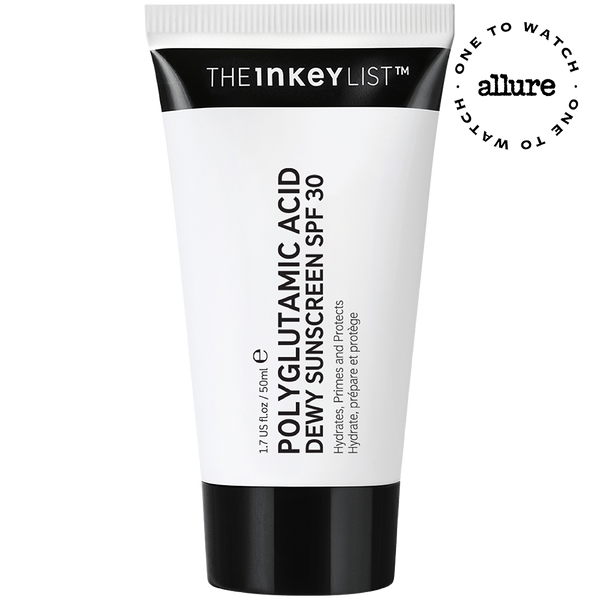
For the record, and without dressing it up: Dewy Sunscreen SPF 30 is non-comedogenic, fragrance-free and dermatologically tested. With the definition and its limits established, here is the practical checklist you can take shopping.
Six Things to Look For in a Sunscreen for Oily, Blemish-Prone Skin
This is the section to screenshot. Each point stands on its own, and together they form a filter you can run any sunscreen through in about a minute, whether you are reading a product page or standing in an aisle holding a bottle.
-
Non-comedogenic and oil-free. These two are related but not identical, and you want both. Non-comedogenic speaks to formulation intent and testing around pore blockage. An oil free sunscreen tells you something more specific about where the hydration is coming from: humectants such as glycerin and polyglutamic acid, which draw water into the skin, and lightweight emollients, rather than heavier plant oils and butters. For skin already producing a generous amount of its own oil, that distinction is the difference between a formula that sits comfortably and one that feels like an extra layer all day. Check the ingredients list rather than the front of the pack, and note where any oils appear in the order.
-
A lightweight or gel-like texture. Texture is not a luxury consideration, it is the single biggest predictor of whether you will actually wear sunscreen every day. A non greasy sunscreen that absorbs in under a minute and leaves skin feeling like skin will get used. A thick, tacky one will sit in a drawer regardless of how good the formula is on paper. Be careful, though, about equating lightweight with stripping. The goal is a formula that feels weightless and delivers hydration, not one that feels weightless because it delivers nothing. Fluid lotions, gel-creams and serum-textured sunscreens all tend to perform well here.
-
Fragrance-free. Fragrance does nothing for sun protection. It is there entirely for the sensory experience, and on skin that is reactive, using active ingredients, or currently dealing with breakouts, it is an unnecessary variable. If you have sensitive skin alongside oiliness, which is far more common than the neat skin-type categories suggest, fragrance-free should be close to non-negotiable. Even if your skin tolerates fragrance without complaint, removing it costs you nothing in performance. It is one of the easier decisions on this list.
-
Barrier-supporting hydrators. This is where people with oily skin instinctively flinch, because hydration sounds like heaviness. It is not the same thing. Glycerin is a humectant, which means it draws water into the upper layers of the skin without contributing any oil, and it is exceptionally well tolerated by oily skin. Ceramides are lipids that occur naturally in the skin barrier and help support its structure. Supporting the barrier is not the same as adding grease, and a well-supported barrier copes considerably better with the active ingredients these routines depend on.
-
Niacinamide, somewhere in the routine. Niacinamide is one of the most useful ingredients available for this skin type. It helps control excess oil, supports the barrier and helps calm the look of redness, which is often what makes a healing blemish stand out more than the blemish itself does. It does not have to be in your sunscreen. If your serum or moisturiser is already delivering it at a meaningful percentage, that is doing the work. Think of it as something to account for across the whole routine rather than a box to tick on a single product, which is exactly how the morning routine in the next section is built.
-
Whether it plays well under makeup. If you wear makeup, this determines whether a sunscreen survives in your routine past week two. Look for formulas that sit smoothly, do not pill under a foundation brush and do not turn tacky as they dry down. A practical tip that solves most pilling problems: give sunscreen a full two minutes to absorb before anything goes on top of it. Most pilling is a timing issue rather than a formula issue. Apply, brush your teeth, then start on makeup.
How Dewy Sunscreen SPF 30 measures up
Run Dewy Sunscreen SPF 30 through that same six-point filter and it holds. It is broad-spectrum across UVA and UVB, oil-free, fragrance-free, dermatologically tested and non-comedogenic, with a lightweight silky texture that absorbs without leaving a greasy film. Hydration comes from an 8% Hydration Trio of Polyglutamic Acid, Glycerin and Squalane, which is the humectant-led approach described in point one rather than an oil-led one. The finish is dewy rather than shiny, which is a distinction worth understanding and one we come back to in the questions at the end.
A good sunscreen does its best work as part of a routine rather than as a single heroic step, so here is what that routine looks like from the first minute of the morning.
The Complete Morning Routine for Oily, Blemish-Prone Skin
Four steps. That is the whole thing. Not ten, not a shelf of bottles arranged by height, four steps that each do a distinct job and finish with protection. Routines fail when they are too long to sustain on a Tuesday morning when you are already late, so this one is built to be done properly in under five minutes.
-
Cleanse with Salicylic Acid Cleanser - 150ml. Overnight your skin has been producing oil, shedding cells and sitting against a pillowcase, so the morning cleanse is not optional even if you cleansed thoroughly the night before. This one uses 2% salicylic acid, which is oil-soluble and therefore able to work inside the pore rather than only on the surface, helping with breakouts and blackheads. It also contains a 1% zinc compound to help manage oil and 0.5% allantoin to soothe. The point worth emphasising is that it cleanses without stripping. Over-stripping is the most common self-inflicted problem in oily skin routines, because skin that has been scrubbed bare responds by producing more oil, and every subsequent step then has to work harder. Massage for a full 60 seconds. Most people cleanse for around fifteen and wonder why results are inconsistent.
-
Target with Niacinamide Serum. This is where the routine does its most specific work for oily skin. The serum delivers 10% niacinamide, which helps reduce excess oil, helps with blemishes and helps calm the look of redness, alongside 1% hyaluronic acid for hydration that adds no weight. Apply to damp skin, two or three drops, pressed in rather than rubbed. If congestion rather than shine is your main concern, swap this step for Beta Hydroxy Acid (BHA) Serum, which goes deeper into the pore to address build-up. To be completely clear: this is an either-or choice, not both. Stacking two targeted serums in the same step is how comfortable routines become uncomfortable ones. Pick the one that matches the concern in front of you and stay with it for a few weeks.
-
Moisturise with Omega Water Cream - 50ml. Here is the objection, met head on: yes, oily skin still needs moisturiser. Skipping it does not reduce oil, and it can make the situation worse, because skin that is short of water compensates by producing more of it. What oily skin does not need is a heavy, occlusive cream. This one is oil-free and water-based, with a 0.2% ceramide complex rich in omegas 3, 6 and 9 to support the barrier, 5% niacinamide to continue the oil-control and redness work from step two, and 3% betaine as a humectant. It absorbs quickly and leaves no film. Think of it as putting water back rather than adding richness. If you have been skipping moisturiser for years and cannot understand why your skin is shinier than ever, this is the step to reinstate first.
-
Protect with Dewy Sunscreen SPF 30. Sunscreen is the final step of the morning, applied after moisturiser and before any makeup. This formula is broad-spectrum, oil-free, fragrance-free and non-comedogenic, hydrated by an 8% Hydration Trio of Polyglutamic Acid, Glycerin and Squalane so that protection and hydration arrive together rather than competing. Use roughly three quarters of a teaspoon for face and neck, which is about three finger-lengths of product. Apply around 15 minutes before going outside, and reapply every two hours during sustained exposure. For the fundamentals of how sun protection ratings work and how to choose between them, our SPF hub covers it properly.
A note on order and timing
The sequence above follows the standard principle of thinnest to thickest, which is not arbitrary. A lightweight serum applied over a cream has very little chance of reaching the skin. Leave roughly a minute between steps, or however long it takes to do something else in the bathroom, so each layer has absorbed before the next one lands. This is the fix for the majority of pilling complaints.
If you are building a routine from scratch and want the underlying logic rather than one worked example, start with our guide to building your skincare routine. If you are wondering which of your existing products can share a morning, our piece on what products not to layer together will save you some trial and error. And if you are introducing exfoliating acids alongside this routine, whether that is salicylic acid in the morning or something gentler in the evening, our guide to using acids explains how to phase them in without overwhelming the barrier.
A morning routine is only half the picture, though, because sunscreen that has been engineered to stay put all day needs removing properly at the end of it.
How to Remove SPF Properly at the End of the Day
Sunscreen is designed to resist. It is built to stay on your skin through heat, humidity, sweat, movement and the general friction of a day, because a sunscreen that slid off after an hour would not be doing its job. That durability is a feature, and it has a direct consequence that a lot of people never quite connect: a quick splash of water and a pump of foaming cleanser will not fully shift it.
This matters, because “sunscreen makes me break out” and “sunscreen I did not fully remove makes me break out” are two different statements that feel identical from the inside. Residue left on the skin overnight, mixed with the oil your skin produces while you sleep, is a plausible contributor to congestion. The answer is not to abandon SPF. The answer is to remove it properly.
Start with a balm
The most reliable method is to lead with an oil-based or balm cleanser. The principle is simple chemistry: oil-based cleansers dissolve oil-based and water-resistant products far more effectively than water-based ones do. A balm breaks down sunscreen, makeup and the day’s build-up, and a second, water-based cleanse then handles what is underneath.
Oat Cleansing Balm - 150ml is built for exactly this. It contains 1% colloidal oatmeal to help visibly reduce redness and soothe dryness and sensitivity, alongside 5% oat kernel oil to help lift away impurities while supporting the skin’s moisture levels. That oat kernel oil percentage is worth noting if you have used this product before, because the formula has been updated and now contains 5%, increased from the previous 3%. We wrote about what changed in the new Oat Cleansing Balm and why if you want the detail behind the reformulation.
“A balm, on oily skin? Really?”
This is the single biggest hesitation readers have at this point, and it deserves a direct answer rather than a polite sidestep. The instinct is understandable. If your skin produces plenty of oil, deliberately massaging an oil-rich balm into it feels like the opposite of sensible. Years of being told to use foaming, stripping, squeaky-clean products have trained that reaction in.
Here is the thing. A cleansing balm is not a moisturiser, and it is not staying on your face. It is formulated to emulsify when it meets water and rinse away, carrying the sunscreen and grime with it rather than depositing a layer behind. The oil in the balm is the solvent, not the payload. It does its work in the ninety seconds it is on your skin and then it leaves.
What actually causes problems for oily skin is the opposite approach: harsh cleansing that strips the barrier, followed by a rebound in oil production and a more reactive complexion. A balm removes more thoroughly with less aggression. That combination is why it suits oily skin better than the intuition suggests, and once people try it for a fortnight the scepticism usually resolves itself.
The method, in practice
Apply the balm to dry skin with dry hands. This is the step people get wrong most often, and applying it to wet skin significantly reduces how well it breaks down sunscreen. Massage for around 30 seconds, giving the oils time to actually dissolve what is on the surface rather than just moving it around. Then add a little warm water and keep massaging, at which point the balm will turn milky as it emulsifies, and rinse thoroughly.
Do not neglect the edges. The hairline, the sides of the nose, the jawline and the neck are where sunscreen residue quietly accumulates, largely because they are where we apply product most carelessly and remove it least thoroughly. If you get congestion specifically along your jaw or hairline, this is the first thing to examine.
Follow with your second cleanse
Once the balm is rinsed, follow with a water-based cleanser to address what is underneath. If you are already using Salicylic Acid Cleanser in the morning, it is the natural second step in the evening too, taking the 2% salicylic acid into freshly cleared pores where it can work rather than spending its effort on a layer of sunscreen.
That is the entire double cleanse: one cleanser to remove what you put on, one to clean the skin itself. It takes about two minutes and it resolves a surprising proportion of the congestion people attribute to their sunscreen.
Even with a solid routine in both directions, breakouts still happen. What they leave behind is often what bothers people most, and it is where daily SPF earns its place most convincingly.
Marks Left Behind After a Breakout, and Where Glow Fits In
Ask most people with blemish-prone skin what frustrates them, and it is rarely the blemish itself. A spot arrives, it has its moment, it goes. The mark it leaves can hang around for months, visible in photographs and under certain lighting long after the thing that caused it has healed, and that is the part that wears people down.
It helps to separate two different outcomes, in plain terms.
The first is flat discolouration. Once a blemish has healed, the skin where it sat can be left darker, pink, red or brown depending on your skin tone, but level with the skin around it. If you ran a finger over it you would feel nothing. This is a colour change rather than a structural one, and it sits under the broader heading of uneven skin tone and hyperpigmentation. Over time, these marks generally fade.
The second is a textural change, where the skin’s surface itself has been altered and is no longer smooth. You can feel these as well as see them. They behave differently from flat marks and they respond differently, and we cover the marks left behind after a breakout in more depth separately.
This is where daily SPF makes its strongest case
Here is the connection that changes how people think about sunscreen, and it is worth stating without qualification: unprotected sun exposure can make existing marks look more noticeable and can cause them to linger considerably longer.
The reason is straightforward. Those marks are areas where pigment has been deposited in response to the inflammatory process of a healing blemish. Pigment-producing cells in skin that has recently been through that process are more easily triggered, and UV exposure is one of the most reliable triggers there is. Sunlight falling on a fading mark can deepen it. The mark that was quietly resolving over six weeks becomes one that resolves over six months, or does not fully resolve at all.
Think about what that means in practice. You can do everything else correctly. You can be consistent with your cleanser, patient with your serum, disciplined about not picking. And without daily sun protection, the marks left behind can be actively maintained by every walk to the shops and every lunch eaten outside.
This is the argument for daily SPF on blemish-prone skin, more than any other. Not that it prevents breakouts, because it does not. That it protects the recovery.
Be realistic about time
Marks fade gradually, over weeks and months rather than days. Anyone promising otherwise is selling something. What consistency buys you is a better trajectory: protected skin fading on its own timeline rather than being reset by UV exposure every time you step outside. Photograph your skin in the same light once a month rather than examining it daily, because daily inspection is genuinely bad at detecting slow change and very good at generating discouragement.
For individual surface blemishes
When a single blemish does appear, Hydrocolloid Invisible Pimple Patches are a useful option to have in the drawer. They absorb from the surface of the blemish and cover it while it settles, and they sit near-invisibly on the skin, including under makeup. Their most practical benefit is arguably the simplest one: they form a physical barrier between the blemish and your fingers, and not picking is one of the most effective things you can do for what gets left behind.
Post-Blemish Radiance: An Optional Glow Step
Once your SPF and treatment steps are in place, Exosome Glow Serum is an optional glow boosting addition. It offers 6-in-1 skin rejuvenation: clinically proven to visibly improve radiance, hydration, tone, firmness, elasticity, and texture.* It is proven to deliver up to 12-hours of hydration,** and delivers clinic worthy rejuvenated skin in 14 days.*
This is an addition rather than a replacement. The four morning steps and thorough evening removal are the foundation, and a glow step is something to consider once that foundation is consistent. If radiance is your wider goal, our complete guide to getting glowing skin covers the full picture.
\4-week clinical study of 26 people.*
\*Clinical study of 31 people.*
The Bottom Line on Sunscreen for Oily, Blemish-Prone Skin
Oily and blemish-prone skin does not make SPF optional, it makes the right formula essential. The framework is not complicated: look for something non-comedogenic and oil-free, with a lightweight texture you will not resent at midday, fragrance-free where sensitivity is in play, hydrated by barrier-supporting ingredients rather than heavy oils, with niacinamide somewhere in the routine and a finish that behaves under makeup.
Beyond the checklist, one thing matters more than any individual ingredient: the best sunscreen is the one you will genuinely use every single day. A perfect formula applied twice a week protects less than a good one applied every morning. And when you do find one worth committing to, give it two to four weeks before you judge it, because skin works on its own timeline rather than yours.
Ready to make it the last step of your morning? Dewy Sunscreen SPF 30 is oil-free, fragrance-free and built to sit comfortably on skin that already produces plenty of its own shine. If you would rather work out the whole routine first, our skin quiz will build one around your skin specifically.
Frequently Asked Questions
Got a question?
Our askINKEY team are a friendly bunch of skincare experts with deep product knowledge and zero judgement. Whether you're an ingredient obsessive or just starting out, we'll make it make sense. No question too big. No question too small. We Give A Care, Every Day.


