



The Retinol Purge: Is It Real, How Long Does It Last and What to Do
Experiencing breakouts after starting retinol? Learn the difference between a temporary retinol purge and irritation, how long purging lasts, and the best ways to support your skin through the adjustment period.
Author
askINKEY skincare advisor
Published
18 July, 2026
Time to read
8 minutes
If your skin has broken out after starting retinol, there is a name for it: retinol purging. It is a recognised, temporary skin response - not an allergy, not a sign that retinol is wrong for your skin, and not a reason to stop. It is, however, one of the most searched and most misunderstood aspects of retinol use, and understanding exactly what is happening beneath the surface makes it considerably easier to manage.
This blog covers everything you need to know: what the retinol purge is, why it happens specifically with retinol, what it looks like (including the so-called “retinol uglies”), how long it lasts, how to distinguish a genuine purge from a skin reaction, and precisely what to do - and what not to do - while it runs its course. For a broader introduction to retinol and how it works, visit our retinol guide. If you are looking for a product specifically formulated to reduce the intensity of the adjustment period, our Starter Retinol Serum (£13) is designed with that in mind.
If you are using other actives alongside retinol - such as AHAs, BHAs, or Vitamin C - and want to understand purging from those ingredients specifically, our complete skin purging guide covers that in full.
What the Retinol Purge Is and Why It Happens
The retinol purge is real. That is the first and most important thing to establish. It is not a myth, not a marketing disclaimer, and not something that only happens to a small, unlucky subset of users. It is a documented, physiological response to retinol’s primary mechanism of action - and understanding that mechanism makes everything else about the purge far easier to interpret.
Retinol works by accelerating skin cell turnover. Under normal circumstances, your skin sheds and renews its cells on a cycle of roughly 28 days in younger adults, extending to 40-60 days or longer as we age. Retinol speeds that cycle up considerably, encouraging the skin to produce new cells faster and shed old ones more efficiently. This is ultimately what delivers retinol’s well-established long-term benefits: smoother texture, reduced fine lines, more even tone, and clearer skin.
But that acceleration does not happen in a vacuum. Beneath the surface of even apparently clear skin, there exists a population of microcomedones - tiny, blocked pores that are not yet visible but are in the process of forming. They have not broken through to the surface yet. Under a normal cell turnover cycle, they would surface gradually over weeks. When retinol is introduced, that process is dramatically accelerated. All of that subsurface congestion rushes to the surface in a compressed timeframe - and the result, temporarily, is more visible blemishes and breakouts than were there before you started.
This is the retinol purge. It is not new blemishes being created. It is existing blemishes being fast-tracked to the surface, a process that is ultimately in your skin’s favour. Once that backlog of microcomedones has cleared, the purge is over - and the skin is then positioned to genuinely improve.
The Retinoid Spectrum: Why Formulation Affects Purge Intensity
Not all retinoids are created equal, and not all purges are the same intensity. This is directly connected to where a particular retinoid sits on the conversion pathway.
Over-the-counter retinol - the kind found in the vast majority of consumer skincare products - requires two conversion steps before it becomes biologically active in the skin. Retinol is first converted to retinaldehyde, and retinaldehyde is then converted to retinoic acid, which is the form the skin can actually use. This two-step conversion process naturally moderates the speed and intensity of the skin’s response. The result is that over-the-counter retinol tends to produce a milder, more gradual purge compared to prescription retinoids.
Prescription tretinoin, by contrast, is already in the form of retinoic acid. It requires no conversion - it is immediately active upon application. This is why tretinoin produces results more quickly, and also why it is considerably more likely to trigger an intense purge, particularly in the early weeks. If you are using tretinoin rather than an over-the-counter retinol, the purge mechanism is identical, but the intensity and duration may be greater. For more on how retinol and its next-generation alternatives compare, our Retinol vs Retinal guide covers the distinctions in detail.
Encapsulated retinol introduces an additional layer of moderation. Rather than delivering retinol directly to the skin all at once upon application, encapsulation technology surrounds the retinol molecules in a protective shell that releases the ingredient slowly over time. This controlled, graduated delivery means that cell turnover is accelerated at a more measured pace - which translates directly to a milder purging response. It does not eliminate the purge entirely, but it meaningfully reduces its intensity, which is why encapsulated formulations are particularly well-suited to those new to retinol.
The clinical evidence supports retinoid-induced flaring as a genuine, documented phenomenon. Research published in the Journal of Clinical and Aesthetic Dermatology (Del Rosso, 2008) examined retinoid-induced flaring in patients using topical retinoids, confirming the mechanism by which retinoids can accelerate the surfacing of existing congestion - while also noting that the response is temporary and resolves with continued use. A 2009 study published in PubMed further clarified that whilst some patients experience worsening of blemishes in the early weeks, this does not reflect retinoid-induced damage - rather, it reflects the convergence of pre-existing microcomedones surfacing simultaneously.
One Event, Not a Recurring Pattern
It is worth being explicit about this: the retinol purge is a one-time event. It is not a cycle that repeats every time you increase frequency or try a new product in the same category. Once the backlog of subsurface microcomedones has cleared, the purge is over. From that point, if retinol is continued consistently, the skin produces fewer blocked pores over time - not more. Any blemishes that appear beyond the purge window are worth examining through a different lens, which Section 4 of this guide covers in full.
If you are considering retinol for the first time or have had a difficult experience with it previously, our complete retinol guide is a useful starting point, and for those concerned about sensitivity, our guide to retinol and sensitive skinaddresses that directly.
What the Retinol Purge Looks Like - Including the Retinol Uglies
Knowing that a purge is happening is one thing. Recognising what it looks like - and distinguishing it from something else - is another. The visual characteristics of a retinol purge are fairly consistent, and understanding them helps avoid unnecessary alarm and, equally importantly, helps identify when something is not a purge at all.
The Visual Characteristics of a Retinol Purge
A retinol purge most commonly presents as small whiteheads or blackheads appearing in clusters, often in areas that are already prone to congestion. Papules - raised, red blemishes without a visible head - are also common. The skin may feel more textured or bumpy than usual. There will often be mild dryness, some surface flaking, and a temporary sense of tightness. These are all normal responses to accelerated cell turnover and the accompanying adjustment of the skin’s surface layer.
Crucially, purging blemishes tend to appear in the areas that already have a history of congestion: the forehead, the chin, the nose, and the jawline. These are the zones where microcomedones are most likely to exist beneath the surface. If blemishes are emerging in those familiar areas during the first few weeks of retinol use, that is consistent with a genuine purge.
What the retinol purge does not look like is equally important to understand. It does not produce widespread burning redness that persists beyond the first hour of application. It does not cause hives, welts, or swelling. It does not involve raw or broken skin across large areas of the face. And it does not trigger breakouts exclusively in areas that have always been clear - new blemishes appearing on the cheeks of someone who has never had congestion there, for example, is more likely to indicate a reaction than a purge.
Week-by-Week: The Stages of a Retinol Purge
Understanding how a purge typically progresses week by week is one of the most useful things a new retinol user can have. It transforms an experience that might otherwise feel alarming into something that can be anticipated and tracked.
Weeks 1-2: The initial phase. Skin begins to show an increase in surface blemishes as the acceleration of cell turnover gets underway. Dryness and mild flaking may appear, particularly around the nose and mouth. This phase can feel discouraging - the skin may look worse than it did before starting.
Weeks 2-4: The peak purging phase. This is typically when the most visible congestion surfaces. Blemishes may be at their most concentrated, skin texture may feel uneven, and dryness may be more pronounced. This is the window where most people consider stopping - but if the symptoms match those described above and remain within the congestion-prone zones, continuing (at a gentle pace) is the right call.
Weeks 4-6: The visible clearing phase. New blemishes begin to reduce in frequency. Existing purge blemishes begin to resolve. Skin texture starts to feel smoother. This is the phase where the effort of weeks prior begins to pay off.
Week 6 onwards: Skin settles. Cell turnover has normalised at its new, faster rate. The benefits of consistent retinol use - clearer pores, more even texture, refined skin surface - become more apparent. This is the phase most people were hoping for when they started.
The Retinol Uglies: What They Are and Why the Term Exists
The phrase “retinol uglies” emerged from skincare communities on platforms like TikTok and Reddit, where users began documenting their early retinol experiences with a candour that the beauty industry had not always been willing to provide. It is not a clinical term, but it describes a real and very common experience: the combination of purging blemishes, surface dryness, temporary flaking, and mild sensitivity that characterises the first few weeks of retinol use.
The retinol uglies are not a single symptom - they are the full package of the adjustment period. They include everything from the cluster of whiteheads on the chin to the dry patch beside the nose to the skin that looks dull and feels tight in the morning. They are temporary. They are not a sign of damage. And they are considerably easier to tolerate when you know they have a name, a recognised duration, and a predictable resolution.
The initial response to retinol is temporary, and the skin’s adjustment period is well-documented in clinical literature. Patience and a well-supported barrier are the two most important factors.
If your experience matches the retinol uglies - a cluster of surface blemishes, some dryness, mild sensitivity, all within the first four to six weeks and concentrated in familiar areas - you are almost certainly in the normal adjustment window. The following sections cover both how long this lasts and exactly what you can do to support your skin through it.
When the Retinol Purge Starts and How Long It Lasts
The timeline of a retinol purge is one of the most searched questions surrounding retinol use - and for good reason. When you know roughly when to expect the purge to start, when it should peak, and when it should resolve, the experience becomes far more manageable.
When Does the Retinol Purge Begin?
For most people, the retinol purge does not begin immediately. Retinol requires time to convert to its active form and begin meaningfully accelerating cell turnover - which means the first visible effects of purging typically appear between two and four weeks after starting use. During the first one to two weeks, some users notice dryness or mild sensitivity, but significant breakouts in this very early window are more likely to indicate irritation or a reaction to another ingredient than a true purge.
If you are using a slow-release, encapsulated retinol formulation, the onset of purging may be slightly later - weeks three to four rather than weeks one to two. This is because encapsulation moderates the delivery speed, meaning cell turnover accelerates more gradually. This is one of the practical benefits of encapsulated formulations for those who want to manage the adjustment period carefully.
Immediate reactions - burning, stinging, redness, or blistering within the first day or two of use - are not purging. They are signs of irritation or sensitivity, and should be taken seriously. Section 4 of this blog addresses how to distinguish a purge from a genuine reaction in detail.
How Long Does the Retinol Purge Last?
For most people using an over-the-counter retinol product, the purge lasts between four and six weeks. This reflects the time required for the backlog of subsurface microcomedones to surface, resolve, and for the skin’s cell turnover cycle to normalise at its new, faster rate.
For those with oilier, more congestion-prone skin - where there is a greater quantity of subsurface microcomedones to clear - the purge may extend to eight to twelve weeks. This does not indicate that something is wrong. It reflects a larger initial backlog. As long as the skin is showing progressive improvement over that period, continued use is appropriate.
A useful rule of thumb: if your skin is visibly improving by week six, you are on track. If, by weeks six to eight, your skin is showing no improvement - or is actively worsening - that warrants reassessment. This may mean reducing frequency, adjusting your supporting routine, or seeking guidance from your GP if you are concerned.
Does Everyone Purge From Retinol?
No. Not everyone who uses retinol will experience a noticeable purge. The likelihood of purging is higher in those with oily or combination skin, those who are using retinol for the first time, those who begin at a higher frequency or concentration, and those who have a significant quantity of subsurface congestion to clear.
Those with drier skin types, those who introduce retinol very gradually (one night per week, increasing slowly), and those using a low-concentration, encapsulated formulation from the outset are less likely to experience an intense purge - or may not notice one at all. The absence of a purge does not mean retinol is not working. It simply means the subsurface congestion backlog was smaller, or the introduction was gradual enough to allow surfacing to happen at a pace that was not visually significant.
Does the Purge Mean Retinol Is Working?
In a sense, yes - but the relationship is not that simple. A purge indicates that retinol is accelerating cell turnover, which is its mechanism of action. So in that regard, a purge is evidence that the product is active and doing something. However, the absence of a purge does not mean retinol is inactive or ineffective. Many people see genuine long-term improvements from retinol without ever experiencing a notable purge.
Our Starter Retinol Serum (£13) is specifically formulated with a slow-release encapsulated retinoid system, which delivers results while keeping the purging response as mild as possible. For those with sensitive skin types, our guide to retinol and sensitive skin is recommended reading before starting.
Retinol Purge vs Skin Reaction: How to Tell the Difference
This is perhaps the most practically important distinction in this entire guide. Continuing through a genuine purge is the right call. Continuing through a true skin reaction is not. Getting this distinction right matters.
The Three Signals to Assess
1. Location
A purge is geographically specific. It surfaces in areas that already have a history of congestion - typically the forehead, chin, nose, and jawline. If your blemishes during the suspected purge are concentrated in these familiar zones, that is consistent with purging. If blemishes are appearing across previously clear areas - the cheeks, temples, or neck - that is a signal worth pausing on.
2. Progression
A purge improves progressively, week by week. It may worsen slightly in weeks two to three before beginning to clear in weeks four to six, but the overall trajectory across the full six-to-eight-week window is one of improvement. A genuine skin reaction does not follow this pattern. It either stays static, worsens consistently, or fluctuates in ways that are not tied to a clearing trajectory.
3. Sensation
A purge is not usually painful. The blemishes may be mildly uncomfortable, and the dryness may cause tightness - but a retinol purge does not produce persistent burning, stinging, or raw discomfort. If your skin feels genuinely painful after applying retinol, or if redness and burning persist beyond 15 to 20 minutes post-application, that is a sign of irritation rather than purging.
Red Flags: When to Stop Using Retinol
The following are clear indicators that retinol use should be paused, and where appropriate, that you should consult your GP:
- Persistent burning or stinging that does not settle within 20 to 30 minutes of application
- Worsening inflammation spreading across the full face, rather than isolated to congestion-prone zones
- No improvement whatsoever after eight to ten weeks of consistent use
- Rash, hives, or swelling anywhere on the face
- Skin reactions that are interfering with daily comfort or sleep
- If you are pregnant or breastfeeding - consult your GP before using any retinol product
If you are on the borderline - not sure whether what you are experiencing is a purge or a reaction - the most sensible step is to reduce frequency to once per week rather than stopping entirely. This slows the delivery of retinol to the skin, allowing you to observe whether symptoms improve with a reduced dose. If symptoms continue even at once per week, pause use and reassess.
For further guidance on ingredients that should not be combined with retinol - as some combinations can increase irritation and make it harder to distinguish a purge from a reaction - our guide on what not to mix with retinol is essential reading. And if you are using other actives such as AHAs or BHAs alongside retinol and want to understand how those ingredients affect purging, our complete skin purging guide covers that in full.
What to Do During a Retinol Purge - and How to Minimise It
The most important principle when navigating a retinol purge is this: do not abandon the process if what you are experiencing is a genuine purge rather than a reaction. Stopping and restarting retinol resets the adjustment clock entirely. You go back to week one, the subsurface microcomedones begin accumulating again, and the purge restarts when you reintroduce it. The discomfort of the adjustment period does not carry forward as credit.
That said, there is a significant difference between stopping entirely and adjusting your approach. The right move, if purging feels intense, is to adjust frequency - not to strip out your entire routine or add multiple new products in an attempt to counteract what is happening.
Adjust Frequency, Not Your Entire Approach
If purging feels intense or your skin is noticeably uncomfortable, reduce retinol use to one to two nights per week. Allow the skin some recovery nights in between. Then, over the following weeks, build back up gradually - adding one additional night per fortnight if the skin is tolerating it well. The recommended starting point for most people new to retinol is two to three nights per week, not every night. Starting too frequently is one of the most common reasons for an unnecessarily intense purging response.
Support the Skin Barrier Throughout
The single most effective thing you can do during a retinol purge - beyond managing frequency - is to actively support your skin barrier. A compromised barrier makes every aspect of the purge worse: more dryness, more sensitivity, more reactive skin. A well-supported barrier keeps the adjustment period as mild as possible.
Cleanser: Use a gentle, non-stripping cleanser on retinol nights and recovery nights. Avoid anything foaming or drying. Hot water on the face is best avoided entirely during this period.
Hyaluronic Acid before retinol: Applying our Hyaluronic Acid Serum (£12) to damp skin before retinol helps maintain hydration in the skin during cell turnover acceleration. Hyaluronic acid draws moisture into the skin and holds it there, creating a more resilient surface for retinol to work on. For more on how this ingredient works, visit the hyaluronic acid guide.
Niacinamide before retinol (PM): Our Niacinamide Serum (£12) applied before retinol in the evening is one of the most effective supporting steps during a purge. Niacinamide strengthens the skin barrier, regulates oil production, and actively calms surface sensitivity - all of which directly address the most uncomfortable aspects of the adjustment period. Find out more at the niacinamide guide.
Ceramide moisturiser after retinol: Immediately after applying retinol, seal everything in with our Bio-Active Ceramide Moisturiser (£20). Ceramides are the structural lipids that hold the skin barrier together. Applying a ceramide-rich moisturiser directly after retinol actively repairs and reinforces the barrier at the moment it needs it most.
The Moisture Sandwich Method
For those with sensitive or drier skin types, or for anyone finding the adjustment period particularly difficult, the moisture sandwich method is worth adopting. Apply a layer of moisturiser first, then apply retinol on top of it, then seal with another layer of moisturiser. Buffering retinol between two layers of moisturiser moderates the speed of absorption and reduces the intensity of the immediate skin response. Results may come slightly more gradually using this method, but the adjustment period is considerably more comfortable.
SPF Every Morning - Non-Negotiable
Retinol increases the skin’s sensitivity to UV exposure, making daily SPF use not just advisable but genuinely important. This applies every morning, regardless of weather or season. Our Dewy Sunscreen SPF 30 (£15) provides broad-spectrum UV protection in a hydrating, non-greasy formulation - a practical daily option that layers comfortably with the rest of your morning routine.
Keep the Routine Simple
The purge period is not the time to introduce additional active ingredients. On retinol nights, do not layer AHAs, BHAs, or Vitamin C. Avoid physical exfoliants and scrubs entirely. Do not add new, unfamiliar products while the skin is in adjustment - if something causes a reaction, you will have no way of identifying the source. The simpler the routine, the easier it is to support the skin effectively and to interpret what is happening.
For a full reference on which ingredients to avoid combining with retinol, our guide on what not to mix with retinolcovers this in depth.
How to Minimise the Purge From the Start
If you have not started retinol yet, the best approach to minimising the purge is built into how you begin:
- Choose a slow-release, encapsulated retinol formulation from the outset
- Start at two to three nights per week - not every night
- Apply hyaluronic acid before retinol and a ceramide moisturiser immediately after, every time
- Do not layer other actives on retinol nights
- Use SPF every morning without exception
These five steps will not eliminate purging entirely for everyone - but they meaningfully reduce its intensity and duration.
Choosing the Right Retinol to Minimise Purging
The formulation of retinol you choose has a direct bearing on how the purging period feels. This is not a minor variable. Encapsulated, slow-release retinol delivers a fundamentally different experience to standard, non-encapsulated retinol - and understanding the range of options available helps you make the right choice for your skin and your current level of retinol experience.
Why Encapsulation Makes a Difference
Encapsulated retinol is surrounded in a protective delivery shell that controls how quickly the ingredient is released onto the skin. Rather than being absorbed immediately and triggering a rapid acceleration of cell turnover, it releases gradually over time. This measured release means that the skin adapts at a sustainable pace, the purging response is spread over a longer, less intense window, and the risk of irritation is significantly reduced. For retinol newcomers in particular, the difference between an encapsulated and a standard formulation can be the difference between a manageable adjustment period and an overwhelming one.
The INKEY List Retinol Range
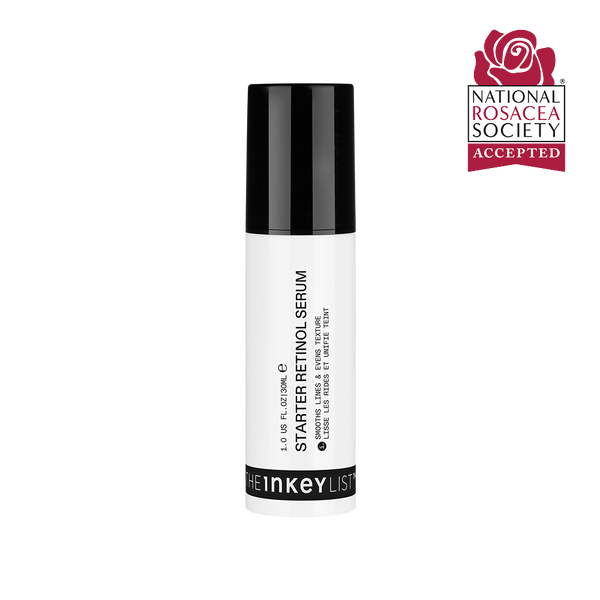
Our Starter Retinol Serum (£13) is the recommended starting point for anyone new to retinol, anyone returning after a break, or anyone who has had a difficult experience with retinoids previously. It uses a dual-retinoid system combining encapsulated Granactive Retinoid with a low concentration of Retinal - both of which require conversion before reaching retinoic acid, allowing the skin to adapt at a comfortable pace. The formulation also contains 0.2% SymRelief, an active calming complex that actively works to reduce sensitivity during the adjustment period, and 0.5% Amisol Trio, a barrier-supportive lipid complex. In clinical testing, 95% of users experienced zero irritation. It is a genuinely gentle formulation built specifically for the adjustment phase.
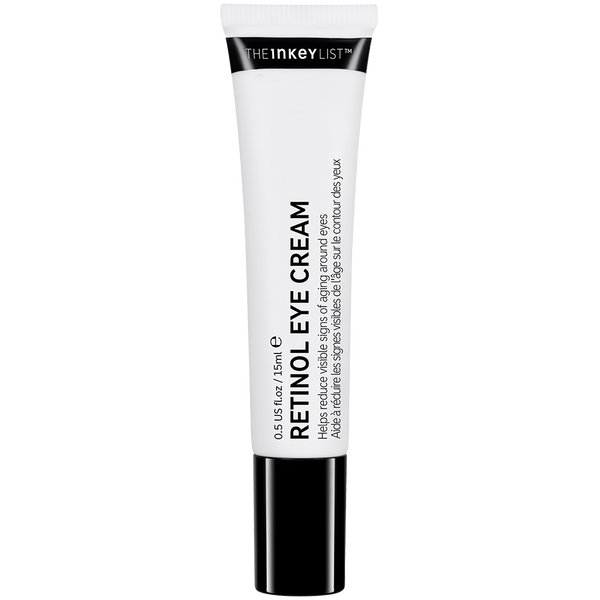
Our Retinol Eye Cream (£13) is formulated for the delicate skin of the eye contour area, where standard retinol concentrations would be too intense. It uses 3% Vitalease - a stabilised, slow-release retinoid complex developed specifically for use around the eyes. The eye area rarely purges in the same way as the rest of the face, but users may notice some mild dryness or sensitivity during the initial weeks of use. This is normal and typically resolves quickly.
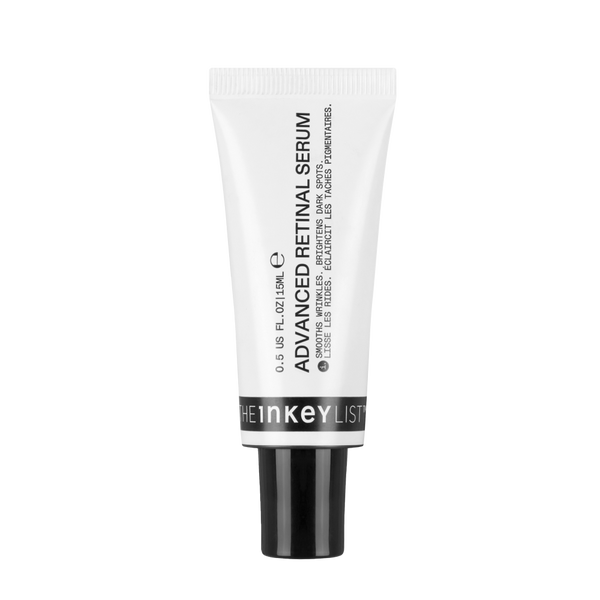
Our Advanced Retinal Serum (£18) is a step up for those who have already built a tolerance to retinol and are ready for a more advanced formulation. It contains 0.2% encapsulated Retinal - one step closer to retinoic acid in the conversion pathway than standard retinol, and capable of delivering results up to 11 times faster than standard retinol. This is not a starter product. It is more likely to trigger a noticeable purge in those new to retinoids, and is best suited to those who have already completed an adjustment period with a gentler formulation.
The decision guide is straightforward: if you are new to retinol or have reactive skin, the Starter Retinol Serum is where to begin. If you have a well-established retinol tolerance and want to progress, the Advanced Retinal Serum is the logical next step. For the eye area at any stage, the Retinol Eye Cream is appropriate.
It is also worth noting that higher concentration does not automatically equal better results - a common misconception that our guide on retinol myths addresses directly. The full retinol range is available at /collections/skin/retinol.
The Retinol Purge: What It Comes Down To
The retinol purge is temporary. For most people, it runs its course within four to six weeks - and with the right formulation, the right supporting routine, and a clear understanding of what to expect, it is entirely manageable. The key is knowing the difference between a purge and a reaction, adjusting frequency rather than stopping altogether if symptoms feel intense, and giving your skin barrier the support it needs throughout the process.
Formulation choice is not a small consideration. An encapsulated, slow-release retinol formulation meaningfully reduces the intensity of the adjustment period compared to standard delivery - and beginning at two to three nights per week rather than every night makes a genuine difference to how the first few weeks feel.
Ready to start retinol the right way? Our Starter Retinol Serum (£13) is formulated with a slow-release, encapsulated retinoid complex and active calming ingredients - clinically proven to deliver results with zero irritation in 95% of users. For those ready to progress, explore the full retinol range at /collections/skin/retinol.
Frequently Asked Questions
Got a question?
Our askINKEY team are a friendly bunch of skincare experts with deep product knowledge and zero judgement. Whether you're an ingredient obsessive or just starting out, we'll make it make sense. No question too big. No question too small. We Give A Care, Every Day.


