



Can You Use Azelaic Acid with Retinol?
Azelaic acid and retinol work brilliantly together when you keep them in separate routines. Here is exactly how to layer them, and which retinol suits your skin.
Author
askINKEY skincare advisor
Published
15 May, 2026
Time to read
13 minutes
Yes, you can use azelaic acid with retinol, but not at the same time and not in the same routine step. That single sentence answers the question most people arrive with, and the rest of this article explains how to actually do it without spending a fortnight repairing your skin barrier.
It is worth understanding why this pairing gets so much attention. Azelaic acid and retinol are two of the most useful actives in skincare, and they happen to solve different halves of the same set of problems. Azelaic acid calms visible redness, fades the marks left behind by blemishes and helps even out patchy tone. Retinol works on fine lines, texture and cell turnover. Put them in the same routine and you can address redness, uneven tone, post-blemish marks, fine lines and rough texture together, which is a genuinely broad brief for two serums.
The honest caveat is equally simple. Stacked into a single sitting, one straight after the other, the combined load can push your barrier past its capacity to recover. That is not a dramatic warning about ingredients reacting badly in a bottle. It is a practical point about how much your skin can process in one go. Get the timing right and these two are excellent partners. Get it wrong and you will spend weeks dealing with flaking, tightness and the kind of stinging that makes you abandon both.
Before you introduce either active, patch test. Apply a small amount to a discreet area, wait 24 hours, and check for a reaction before you commit it to your face. Both of these products carry that instruction for a reason, and our patch test guide walks through how to do it properly.
Here is what this article covers: what each ingredient actually does on the skin, why they complement each other so well, why they need to stay in separate routines, exactly how to layer them across an AM/PM split or on alternate days, which retinol suits your skin, how to adapt the whole thing to your skin type, and answers to the questions people ask most.
If you want the deeper ingredient science, our azelaic acid ingredient guide and retinol ingredient guide go further than we will here. And if you already know you want to try this pairing, the three products this article keeps coming back to are the 10% Azelaic Acid Serum for Redness Relief at £16.00 for 30ml, the Starter Retinol Serum at £13.00 for 30ml, and the Advanced 0.2% Retinal Serum at £18.00 for 15ml.
Let us start with what each ingredient is doing once it is on your face, because the routine advice makes far more sense once you understand the mechanism.
What Azelaic Acid and Retinol Each Do
Most skincare advice tells you what to do without telling you why. That is how people end up following rules they cannot adapt when their skin changes. So before any routine building, here is what is genuinely happening at skin level.
Azelaic acid: three jobs, one ingredient
Azelaic acid is a naturally occurring dicarboxylic acid. It is found in barley, wheat and rye, though the version in skincare is produced in a lab for stability and consistency. What makes it unusual is that it works through three separate mechanisms at once, which is why it shows up in recommendations for such a wide range of concerns.
The first is anti-inflammatory action. Azelaic acid calms the inflammatory pathways that drive visible redness, which is why it has become a mainstay for skin that flushes easily or carries a persistent flush across the cheeks and nose. If redness is your main concern, our guide to what redness actually is covers the different types and what tends to trigger them.
The second is tyrosinase inhibition. Tyrosinase is the enzyme that controls melanin production. By partially inhibiting it, azelaic acid reduces the formation of new pigment, which makes it genuinely useful for post-blemish marks and uneven tone rather than just masking them. This is a source-level intervention, not a surface one.
The third is mild keratolytic activity. Azelaic acid encourages gentle shedding of surface cells, helping to keep pores clear and skin texture smoother. It is far gentler than a traditional exfoliating acid, but the effect is real, and it matters for the load-management conversation later in this article.
These three mechanisms are well documented. A 2024 peer-reviewed review of azelaic acid’s mechanisms of action and clinical applications covers the anti-inflammatory, tyrosinase-inhibiting and anti-keratinisation effects in detail, and is worth reading if you like your skincare claims with a citation attached.
Azelaic acid is one of the rare actives that works on redness, pigmentation and texture at the same time, through three different biological routes.
Two practical points make azelaic acid unusually easy to work with. It does not cause photosensitivity and it is stable in daylight, so you can use it morning or evening with no penalty either way. And it is among the small number of actives generally considered suitable during pregnancy and breastfeeding, which is worth knowing if you are looking for options during a period when most of your usual routine is off the table. As always, check with your midwife or GP about your specific situation.
Our 10% Azelaic Acid Serum for Redness Relief is clinically proven to reduce redness in four days, and 91% agreed skin felt instantly soothed. At £16.00 for 30ml, it is designed to be the calming step you can use daily without thinking too hard about it.
Retinol: the gold standard, with conditions attached
Retinol is a vitamin A derivative, and it remains the most researched anti-ageing active in skincare. It works by binding to nuclear receptors in skin cells and influencing gene expression, which accelerates cellular turnover, supports collagen production, smooths fine lines, refines texture and helps even tone by speeding the shedding of already-pigmented surface cells. The research on retinoids and skin ageing is extensive and consistent, which is why retinol has held its position for decades while other ingredients have come and gone.
The conditions are where people trip up. Retinol increases photosensitivity and degrades in UV light, so it belongs in your evening routine only. It is not suitable during pregnancy. And it needs a gradual introduction, because skin that has never encountered a retinoid usually goes through an adjustment period before it settles.
Our two retinols take different approaches to that adjustment problem.
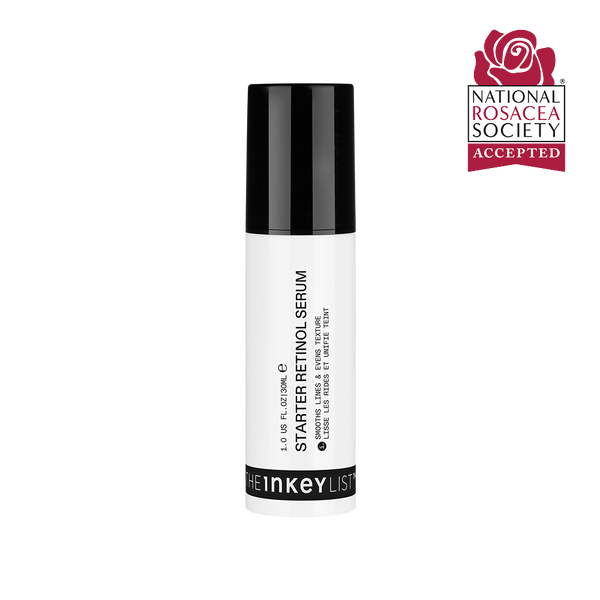
The Starter Retinol Serum, £13.00 for 30ml, uses 1% Granactive Pro+ and 0.01% Retinal in a slow-release encapsulated formula. The encapsulation is the point. It releases the active gradually rather than all at once, which is how the formula achieved results where 95% experienced zero irritation and delivered 2x more effective results than standard retinol. On performance, it smooths fine lines from 7 days. The asterisks matter here and are unpacked at the end of this article, but for clarity as we go: the zero irritation and 2x effectiveness figures both come from 4-week in vitro studies, and the fine line smoothing figure comes from a 4-week clinical study of 30 participants.*
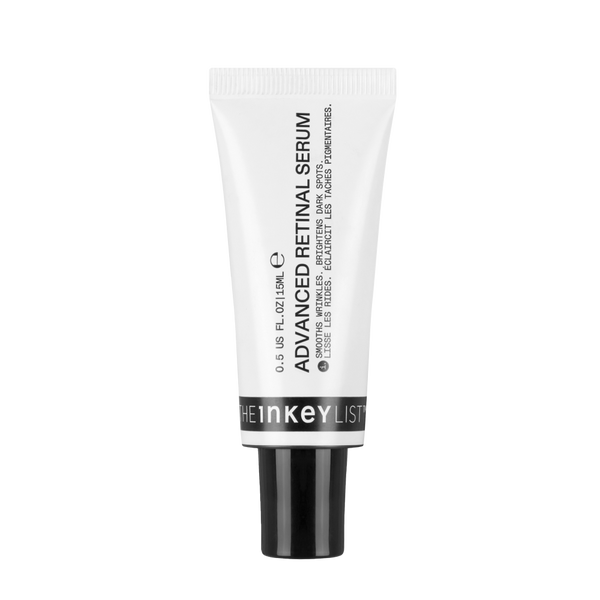
The Advanced 0.2% Retinal Serum, £18.00 for 15ml, uses encapsulated retinal rather than retinol. Retinal sits one conversion step closer to retinoic acid, the form your skin actually uses, which is why it converts up to 11x faster than standard retinol. That figure is drawn from G. Siegenthaler et al., Retinol and retinal metabolism, Biochemical Journal, 1990, 268, pp 371-378. In use, it delivers a visible reduction in deep wrinkles in 1 week, based on an 8-week clinical study of 26 participants. If the retinol and retinal distinction is new to you, our post on retinol vs retinal covers the difference properly rather than in passing.
The one difference that shapes your entire routine
Everything above matters, but one difference determines how you build your routine: photosensitivity.
Azelaic acid has none. Retinol has significant implications. That asymmetry is why the morning and evening split works so neatly. You are not compromising by separating them or settling for a workaround. You are putting each ingredient in the slot where it performs best. Azelaic acid is happy in daylight under SPF. Retinol needs the dark. The routine practically designs itself.
Now that the mechanisms are clear, let us look at why these two are better together than either is alone.
Why Azelaic Acid and Retinol Work Well Together
There is a principle worth internalising, because it will improve every skincare decision you make from here: the best ingredient pairings address the same concerns through different biological pathways.
Two ingredients doing identical jobs give you diminishing returns and an increased chance of irritation. Two ingredients approaching the same concern from different angles give you coverage that neither could achieve alone. Azelaic acid and retinol are a textbook example of the second category.
Retinol operates through nuclear receptors and gene expression, changing how skin cells behave at a fundamental level. Azelaic acid operates through enzyme inhibition and anti-inflammatory pathways, changing the environment those cells sit in. There is no chemical conflict between them when they are used in separate routines. They are simply working different shifts on different problems.
If you have redness-prone skin but also want anti-ageing results
This is the situation where the pairing earns its reputation, and it is a common one. Plenty of people want the wrinkle and texture benefits of retinol but have skin that reddens at the slightest provocation. Historically that meant choosing between the two.
The AM/PM split solves it. Azelaic acid’s calming action in the morning actively counterbalances the adjustment period while retinol works overnight. You are not just tolerating two actives in the same routine, you are using one to buffer the effects of the other. That is the adjustment period advantage, and it is the strongest single argument for this pairing.
If you have blemish-prone skin
Here the division of labour is almost tidy. Retinol regulates cell turnover, which helps prevent the congestion that leads to blackheads and breakouts in the first place. Azelaic acid works on what breakouts leave behind, the dark marks and lingering redness that often outlast the blemish itself by months.
Cause and aftermath, covered together. Most people dealing with blemish-prone skin are fighting both battles simultaneously, and using a single active means one of them goes unaddressed.
If you have uneven tone or hyperpigmentation
This is where the different-pathways principle is most visible.
Azelaic acid targets pigmentation at the source through tyrosinase inhibition, reducing the production of new melanin. Retinol accelerates the turnover of cells that are already pigmented, moving existing discolouration towards the surface and off your face faster. One slows the tap, the other empties the sink.
Neither approach is complete alone, which is why patchy tone is so stubborn when you only use one. If uneven tone is your primary concern, our guide to what hyperpigmentation is explains the different types, because the type you have affects how quickly you should expect to see change.
About the adjustment period
New retinol users frequently go through a phase where skin looks temporarily worse before it looks better. Congestion surfaces, texture roughens, tolerance dips. It is a well-documented adjustment, and it is the point at which most people give up on retinol entirely.
Having azelaic acid in your morning routine gives you a consistent anti-inflammatory counterweight to that period. It does not eliminate the adjustment, and anyone claiming otherwise is overselling. But it does make it considerably more manageable, and it means you have something actively working on redness during the weeks when your skin is most likely to show it.
If you want to understand what is actually happening during that phase, our post on the retinol purge, whether it is real and how long it lasts is the specific read for retinol adjustment, and our complete guide to skin purging covers the broader phenomenon across other actives.
The case for the pairing is strong. Which makes it all the more important to be clear about the one thing you must not do.
Why You Should Not Use Them at the Same Time
Search this topic and you will find plenty of content warning you not to mix azelaic acid and retinol, usually without explaining why. That vagueness is unhelpful, because it leaves you unable to judge edge cases or adapt when your skin changes.
So here is the real reason.
It is not about chemistry. It is about load management.
Azelaic acid and retinol do not react badly with each other. There is no destabilising interaction, no neutralising effect, no ingredient incompatibility in any meaningful chemical sense. If you accidentally apply both one evening, nothing dramatic happens in the moment.
The issue is cumulative demand on your skin barrier.
Two keratolytic ingredients, one application window
Both ingredients have keratolytic properties, meaning both encourage the shedding of surface skin cells. Retinol does this aggressively by accelerating turnover. Azelaic acid does it gently through its mild exfoliating action.
Individually, both are manageable. Stacked into one application window, the combined exfoliating load can outpace your barrier’s ability to recover between applications. Your skin barrier is not an unlimited resource. It repairs itself continuously, and it repairs at a fixed rate that you cannot rush.
When the demand exceeds the repair rate, you get the familiar set of consequences: dryness that no amount of moisturiser seems to fix, flaking around the nose and mouth, persistent redness that outlasts a normal adjustment period, and prolonged sensitivity where products you have used happily for years suddenly sting.
That is barrier stress, and it is entirely avoidable with better scheduling. Our guide to what a damaged skin barrier isexplains the signs in more detail, and if you recognise yourself in that list already, our post on what to do if you have over-exfoliated has the recovery steps.
The frustrating part is that barrier damage undoes the very results you were pursuing. Compromised skin looks redder, feels rougher and reflects light less evenly. You end up further from your goal than when you started, having used more product to get there.
Retinol is PM only, and this one is not negotiable
Separately from the load question, retinol belongs in your evening routine. Two reasons, both practical.
First, retinol increases photosensitivity. Your skin becomes more vulnerable to UV damage, which is counterproductive when UV exposure is the primary driver of the visible ageing you are using retinol to address.
Second, retinol degrades in UV light. Apply it in the morning and a meaningful proportion of the active breaks down before it can do anything useful. You are paying for an ingredient and then destroying it.
This is consistent with American Academy of Dermatology guidance on retinoids, and it is why every retinol routine in this article sits in the evening.
Sensitivity is amplified during the adjustment period
The first four to eight weeks of retinol use are when your skin is least equipped to handle additional actives. Barrier function is temporarily reduced while your skin adapts to the increased turnover rate. Tolerance is lower than it will be at week twelve.
Introducing a second keratolytic ingredient into that same window is poor timing. The research on reducing retinoid-induced skin irritation consistently points towards hydration and barrier support as the priority during this phase, not additional actives.
This is precisely why the AM/PM split works so well. Azelaic acid still gets used daily. It just gets used at a point in the day when it is supporting your barrier rather than competing for its recovery capacity.
The short version
- Do use azelaic acid in the morning and retinol in the evening.
- Do use them on alternate days if your skin is sensitive, reactive or new to retinol.
- Don’t apply them one after the other in the same routine, in either order.
For the wider picture on retinol compatibility beyond azelaic acid, our post on what not to mix with retinol covers the full set.
The rule is straightforward. The practical execution is where most of the value sits, so let us get into it.
How to Layer Azelaic Acid and Retinol: AM/PM, Alternate Days and Night Use
There are two methods that work. Both are effective. The difference is pace, not outcome.
Method one is the AM/PM split, where you use azelaic acid every morning and retinol every evening. Method two is alternate days, where you separate the two actives across different days entirely. Choose based on how your skin currently behaves, not on how quickly you want results.
Before either method, patch test. Apply a small amount of the new product to your inner forearm or behind your ear, leave it 24 hours, and check the area before you go anywhere near your face. It is a tedious step that people skip constantly, and it is the cheapest possible insurance against a reaction on the most visible part of your body. The full patch testing guide covers the details.
Method 1: the AM/PM split, recommended for most skin types
This is the default approach for skin that is not currently reactive and has some retinoid experience.
Morning routine:
- Cleanse.
- Apply Hyaluronic Acid Serum to damp skin. Hyaluronic acid draws water into the skin, and applying it damp gives it something to work with. Our guide to what hyaluronic acid is explains why the damp skin instruction matters more than people assume.
- Apply the 10% Azelaic Acid Serum for Redness Relief. This is your morning active.
- Moisturise with Omega Water Cream, £14.00 for 50ml, or a richer option if your skin prefers it.
- Apply Dewy Sunscreen SPF 30. Every morning, without exception. If you want the reasoning rather than the instruction, our guide to what SPF is covers it.
Evening routine:
- Cleanse.
- Apply Hyaluronic Acid Serum to damp skin.
- Optional: apply Niacinamide Serum, £12.00, if you want additional barrier support.
- Apply your retinol to dry skin. Damp skin increases penetration, which sounds desirable but mainly increases irritation.
- Moisturise with Bio-Active Ceramide Moisturiser, £20.00. Ceramides are a core structural component of your barrier, and replacing them during retinol use is genuinely useful rather than a nice-to-have. Our guide to what ceramides are explains their role.
Method 2: alternate days and alternate nights, recommended for sensitive or rosacea-prone skin, or anyone new to retinol
Alternate days and alternate nights mean the same schedule. You will see both phrasings used, and neither is more correct than the other, since the actives in question sit in different halves of the day anyway.
The schedule works like this. On day one, use azelaic acid in the morning and skip retinol at night, using hydration and moisturiser only. On day two, use retinol at night. Alternate from there.
This halves your retinol exposure while keeping azelaic acid consistent, which is exactly the right balance for skin that needs time to adapt. It is slower, and that is the point. Skin that builds tolerance gradually ends up tolerating more in the long run than skin that is pushed too fast and forced into a recovery period.
Build for four to six weeks on this schedule before considering anything more frequent. If you are entirely new to retinoids, our post on retinol for beginners and how to start without irritating your skin covers the build-up in more detail.
How to layer azelaic acid and retinol, step by step
Here is the part that surprises people: there is no same-routine layering order to solve. Azelaic acid and retinol sit in different routines, so the question of which goes first never arises between them.
What you do need is the correct order within each routine.
Within your morning routine, the order is: cleanser, hyaluronic acid serum on damp skin, azelaic acid serum, moisturiser, SPF.
Within your evening routine, the order is: cleanser, hyaluronic acid serum on damp skin, optional niacinamide serum, retinol on dry skin, moisturiser.
The governing principle is thinnest to thickest, water-based before oil-based, with SPF always last in the morning. Wait until each layer has absorbed before applying the next. You do not need to time this with a stopwatch, but applying a serum onto a still-wet layer dilutes it and reduces how much actually reaches your skin.
Using azelaic acid and retinol at night
Both ingredients can be used in the evening. Azelaic acid can be. Retinol must be.
If you want both at night, they go on alternate nights, never stacked in the same session. Azelaic acid on Monday evening, retinol on Tuesday evening, and so on. What does not work is azelaic acid followed by retinol in the same routine, which is the exact load-stacking scenario the previous section explained.
For most people, moving azelaic acid to the morning is simpler and gets you a daily calming step at no cost. But if you prefer an evening-only routine, alternate nights is the workable version.
Four things that make the difference
- Start on alternate days if either active is new to you. Frequency can always increase. Recovering from an over-enthusiastic start takes far longer than building up slowly would have.
- Hydrate before retinol. Hyaluronic acid on damp skin before your retinol reduces irritation without reducing efficacy. Our post on using hyaluronic acid and retinol together explains why this works.
- SPF every morning, without exception. Retinol increases photosensitivity, and unprotected sun exposure undoes the results you are working towards. This is not optional.
- If irritation appears, reduce retinol frequency before dropping azelaic acid. Retinol is almost always the source. Drop to twice weekly, let skin recover, then rebuild.
For a UK clinical perspective on both ingredient categories, NHS guidance on treatments for blemish-prone skin covers topical retinoids and azelaic acid, and is a useful non-commercial reference point.
The method depends on choosing the right retinol, which is where a lot of routines go wrong before they start.
Which INKEY Retinol Is Right for You?
We make two retinols. They are not a good and better version of the same thing. They are built for different skin, and choosing wrongly is the most common reason people conclude that retinol does not suit them.
Starter Retinol Serum, £13.00 for 30ml
This is the retinol we recommend for most people beginning their retinoid journey, and it is explicitly suitable for sensitive skin and rosacea-prone skin.
It combines 1% Granactive Pro+ with 0.01% Retinal in a slow-release encapsulated formula. Encapsulation is the reason this works for reactive skin. Rather than delivering the full dose immediately, the formula releases the active gradually over time, which spreads the workload and reduces the shock to the barrier.
The results support the approach. 95% experienced zero irritation. The formula is 2x more effective than standard retinol. 90% saw significant clinical improvement in wrinkles in 4 weeks. And it smooths fine lines from 7 days.
Full substantiation, first mention: the zero irritation figure comes from a 4-week in vitro study. The 2x effectiveness figure comes from a 4-week in vitro study. The 90% wrinkle improvement figure comes from a 12-week consumer study of 130 participants. The fine line smoothing figure comes from a 4-week clinical study of 30 participants.
At £12.00 for 30ml, it is also the more economical entry point, which matters when you are trialling an ingredient you may need weeks to adjust to.
Advanced 0.2% Retinal Serum, £18.00 for 15ml
This is for experienced retinoid users only.
It uses encapsulated retinal at 0.2%. Retinal sits one conversion step closer to retinoic acid than retinol does, which means less conversion work for your skin and faster results. It converts up to 11x faster than standard retinol, delivers a visible reduction in deep wrinkles in 1 week, and produced 85% firmer, more lifted skin in 4 weeks*.
Full substantiation, first mention: the conversion speed figure is cited from G. Siegenthaler et al., Retinol and retinal metabolism, Biochemical Journal, 1990, 268, pp 371-378. The deep wrinkle figure comes from an 8-week clinical study of 26 participants. The firmness figure comes from an 8-week consumer trial of 105 participants.
Important, and stated plainly: the Advanced 0.2% Retinal Serum has not been tested on sensitive skin or on rosacea-prone skin. If your skin is reactive, sensitive or rosacea-prone, use the Starter Retinol Serum instead. We would rather tell you a product is not right for you than sell you something your skin was never assessed for.
If you are using Advanced Retinal, prioritise barrier support alongside it. The Ectoin Hydro-Barrier Serum, £16.00, is designed for exactly this, and our guide to what ectoin is explains how it works. Pair it with the Bio-Active Ceramide Moisturiser, £20.00, to replace the barrier lipids that higher-strength retinoid use depletes.
The quick decision
- New to retinol, sensitive skin, or rosacea-prone skin: Starter Retinol Serum, used on alternate days for the first four to six weeks.
- Experienced retinoid user with skin that tolerates nightly retinol well: Advanced 0.2% Retinal Serum, on the full AM/PM split, with barrier support prioritised. Note again that it has not been tested on sensitive or rosacea-prone skin.
- Still unsure: start with our retinol ingredient guide, then read retinol vs retinal, which vitamin A is right for youfor the direct comparison, or browse our roundup of the best retinol serums and creams for 2026.
Both retinols are also available in Duo formats, including the Advanced 0.2% Retinal Serum Duo, if you are restocking something you already know works for you.
Product choice settled, the next variable is your skin type, which changes the details more than it changes the principles.
Azelaic Acid and Retinol for Your Skin Type
The AM/PM split and the alternate days schedule work across skin types. What changes is the pace, the supporting products and, in one case, which retinol you should be using at all.
Sensitive or rosacea-prone skin
If your skin is sensitive or rosacea-prone, this pairing can work well for you, but the details are not optional.
Use the Starter Retinol Serum. It is the only retinol we recommend for this skin type. It is explicitly suitable for sensitive and rosacea-prone skin, and its encapsulated slow-release format is the reason. This is not a starting point you are expected to graduate from. For reactive skin, it is the right long-term choice.
Start on alternate days. Do not rush towards nightly retinol. Spend four to eight weeks building tolerance before you even consider moving to the full AM/PM split, and if your skin is still adjusting at week eight, stay where you are. There is no prize for getting there faster.
Azelaic acid, by contrast, can be used every single morning as a consistent calming step. Because it carries no photosensitivity burden, there is no downside to daytime use, and its anti-inflammatory action is most useful when it is running continuously rather than intermittently.
On retinol nights, apply the Ectoin Hydro-Barrier Serum between your hydration step and your retinol. On non-retinol nights, use hydration and barrier support only. No actives, no exceptions. Those nights are doing real work.
If you have diagnosed rosacea, or suspect you might, speak to a GP or dermatologist before starting any new active. Rosacea has several subtypes and they respond differently to treatment. The British Association of Dermatologists patient information leaflet on rosacea is a reliable UK starting point.
For a fuller treatment of both halves of this question, read azelaic acid for rosacea-prone skin, does it actually work and can you use retinol with rosacea-prone skin.
Oily or blemish-prone skin
This is arguably the pairing’s most efficient use case, because the two ingredients divide the work almost perfectly.
Retinol is your proactive step. By regulating cell turnover, it helps prevent the congestion that produces blackheads and breakouts in the first place. Azelaic acid handles the aftermath, working on the dark marks and lingering redness that blemishes leave behind, often long after the blemish itself has gone.
Morning: cleanse, hyaluronic acid on damp skin, 10% Azelaic Acid Serum for Redness Relief, then Omega Water Cream, £14.00 for 50ml. The lightweight gel-cream texture hydrates without adding weight, which oily skin usually appreciates. Finish with Dewy Sunscreen SPF 30.
Evening: cleanse, hyaluronic acid on damp skin, retinol on dry skin, then Omega Water Cream again.
One warning specific to this skin type. Oily skin often tolerates actives well initially, which encourages people to add more, faster. Barrier damage in oily skin is genuinely common and frequently misread as a bad breakout, leading people to escalate their actives at exactly the wrong moment.
Mature or anti-ageing focused skin
If fine lines, firmness and loss of elasticity are your priorities, this is where you can build the most sophisticated version of the routine.
Experienced retinoid users can use the Advanced 0.2% Retinal Serum on the full AM/PM split. If you are newer to retinoids, build with the Starter Retinol Serum first. There is no rush, and starting at the deep end tends to end with abandoning the routine altogether.
The addition worth knowing about is the Exosome Glow Serum, £20.00. Applied before your Advanced Retinal, it works alongside it rather than replacing anything in your routine. Used together, the pairing is clinically proven to reduce fine lines by 82% in 8 days. That figure comes from a clinical study of 26 participants.*
The order is specific and worth getting right. Cleanse, hyaluronic acid on damp skin, Exosome Glow Serum, then Advanced Retinal, then Bio-Active Ceramide Moisturiser. Our post on boosting your retinol results with exosome explains the reasoning behind that sequence.
Azelaic acid still earns its morning slot here. Uneven tone and post-inflammatory marks become more visible with age as cumulative sun exposure accumulates, and tyrosinase inhibition addresses that directly.
SPF remains non-negotiable, and if anything it matters more in an anti-ageing routine than anywhere else. UV exposure is the dominant driver of visible ageing, and there is no retinoid strong enough to outrun it. For the wider picture, our complete step-by-step guide to the best anti-ageing skincare routine puts all of this in sequence.
Combination skin
Combination skin does well on the standard AM/PM split with minimal modification.
Azelaic acid in the morning sits well under both SPF and makeup, absorbing quickly without pilling. Retinol in the evening handles texture across the whole face, including the areas that behave differently from each other.
Use Omega Water Cream both morning and evening. It is light enough for the oilier zones and hydrating enough for the drier ones, which saves you from running two separate moisturisers.
If you want a little more support in the morning, Niacinamide Serum, £12.00, sits comfortably alongside azelaic acid. Niacinamide helps regulate oil production in the T-zone while supporting barrier function across the drier areas, which makes it a natural fit for skin doing two things at once. Our guide to what niacinamide is covers its full range of effects.
That covers the main variations. The questions below are the ones people ask most often once they have started.
Conclusion: The Bottom Line on Azelaic Acid and Retinol
Yes, you can use azelaic acid with retinol. Keep them in separate routines and you get the benefit of both without the barrier cost of stacking them.
Azelaic acid in the morning, retinol in the evening. Or both on alternate days while your skin builds tolerance. Two schedules, both effective, and the only real decision is which one matches how your skin behaves right now rather than how you would like it to behave.
What you get from the pairing is genuine breadth. Redness, post-blemish marks, uneven tone, fine lines, texture and collagen support, addressed by two ingredients working through completely different biological pathways. Very few combinations cover that much ground with so little conflict.
Three things determine whether it works long term. Start slowly, because tolerance built gradually lasts. Support your barrier with hydration and a good moisturiser, because the barrier is the limiting factor on everything else. And wear SPF every morning without exception, because retinol increases photosensitivity and unprotected sun undoes the work.
One point worth repeating: if your skin is reactive, sensitive or rosacea-prone, stay with the Starter Retinol Serum. It is the retinol assessed and formulated for that skin, and it is not a stepping stone you are expected to move on from.
Claim substantiation for this article. For the Starter Retinol Serum, 95% experienced zero irritation is based on a 4-week in vitro study, and 2x more effective than standard retinol is based on a 4-week in vitro study. 90% saw significant clinical improvement in wrinkles in 4 weeks is based on a 12-week consumer study of 130 participants. Smooths fine lines from 7 days is based on a 4-week clinical study of 30 participants. For the Advanced 0.2% Retinal Serum, up to 11x faster than standard retinol is cited from G. Siegenthaler et al., Retinol and retinal metabolism, Biochemical Journal, 1990, 268, pp 371-378. Visible reduction in deep wrinkles in 1 week is based on an 8-week clinical study of 26 participants, and 85% firmer, more lifted skin in 4 weeks is based on an 8-week consumer trial of 105 participants. The 82% reduction in fine lines in 8 days achieved by Exosome Glow Serum used with Advanced 0.2% Retinal Serum is based on a clinical study of 26 participants.
For everything else azelaic acid can do, our azelaic acid ingredient guide is the full deep dive, and our guide to what redness is is worth reading if that is your primary concern.
Ready to Try Azelaic Acid and Retinol Together?
Three products, all under £20.
10% Azelaic Acid Serum for Redness Relief, £16.00 for 30ml. Clinically proven to reduce redness in four days, with 91% agreeing skin felt instantly soothed. Your morning active, no photosensitivity, suitable for daily use.
Starter Retinol Serum, £13.00 for 30ml. 95% experienced zero irritation, and it smooths fine lines from 7 days. Suitable for sensitive and rosacea-prone skin, and the beginner-friendly entry point into retinoids.
Advanced 0.2% Retinal Serum, £18.00 for 15ml. Up to 11x faster than standard retinol*, for experienced retinoid users. Please note this product has not been tested on sensitive skin or on rosacea-prone skin.
If fine lines are your focus, add the Exosome Glow Serum, £20.00, applied before your Advanced Retinal for a pairing clinically proven to reduce fine lines by 82% in 8 days*.
Full substantiation for all asterisked claims appears in the disclaimer paragraph above.
Want to go deeper before you buy? Start with our azelaic acid ingredient guide for the complete picture on the ingredient, then read what not to mix with retinol to make sure the rest of your routine is working with you rather than against you.
Frequently Asked Questions

Got a question?
Our askINKEY team are a friendly bunch of skincare experts with deep product knowledge and zero judgement. Whether you're an ingredient obsessive or just starting out, we'll make it make sense. No question too big. No question too small. We Give A Care, Every Day.


