



The Moisture Sandwich Method: Your Gentle Guide to Using Retinol
The moisture sandwich method layers moisturiser around your retinol to minimise irritation - here is exactly how to do it.
Author
askINKEY skincare advisor
Published
08 January, 2026
Time to read
9 minutes
Starting your retinol journey but worried about irritation? The moisture sandwich method is the answer. It is a simple technique that layers moisturiser around your retinol serum to minimise irritation while keeping all of the benefits, and it takes about sixty extra seconds in your evening routine. Perfect for sensitive skin and retinol beginners.
If you have ever hovered over a retinol product wondering whether your skin can handle it, you are in good company. Retinol has one of the strongest evidence bases of any skincare ingredient, and it also has a reputation for causing dryness, redness and flaking when people dive in too quickly. That reputation puts a lot of people off before they even start, which is a shame, because the problem is rarely retinol itself. The problem is usually how it is introduced.
The moisture sandwich method solves this. Rather than asking your skin to face retinol head-on, you cushion it. Moisturiser goes on first, retinol goes in the middle, and moisturiser goes on top. That is the whole technique. No complicated schedules, no cabinet full of extra products, no guesswork. Just a smarter layering order that lets your skin adapt gradually while the retinol gets on with its work.
In this guide we will cover exactly what the moisture sandwich method is, why it works on a skin-science level, the precise 3-step routine to follow tonight, the daytime step you must not skip, what to do if your skin still feels sensitive, and answers to the questions we get asked most often. By the end, you will have everything you need to start retinol with confidence rather than caution.
Let us start with the basics, so you know exactly what this method is before we get into why it works so well.
What is the Moisture Sandwich Method?
The moisture sandwich method does exactly what the name suggests: it “sandwiches” your retinol serum between two layers of moisturiser. You apply a thin layer of moisturiser to clean skin, follow it with your retinol, and then finish with another thin layer of moisturiser on top. Also known as buffering, this technique creates a protective cushion around the active ingredient, which lets retinol work effectively while significantly reducing the risk of irritation, dryness and sensitivity.
Think of it this way. When retinol is applied directly to bare skin, it absorbs quickly and at full strength. For skin that has never encountered retinol before, that sudden introduction can be more than it is ready for, and the classic signs of adjustment - tightness, dryness, a little redness - tend to show up faster and feel stronger. When you apply moisturiser first, the retinol has to work its way through that hydrating layer. It still gets where it needs to go, but it arrives more gradually. The top layer of moisturiser then locks in hydration and reinforces your skin’s outer defences overnight, so your skin wakes up comfortable rather than parched.
The technique was originally developed for those with sensitive skin or retinol beginners who wanted the well-documented benefits of retinol without the rough introduction. Over time, it has become something of a gold standard for gentle retinol use in general. Dermatologists and skincare formulators alike recommend the sandwich method for retinol beginners precisely because it removes the biggest barrier to consistency: discomfort. If your skin feels fine, you keep going. If it stings and flakes, you stop, and you lose the long-term results that only consistent use delivers.
One point worth clearing up early: sandwiching does not “cancel out” your retinol. This is the most common worry we hear, and it is understandable. If moisturiser slows the retinol down, surely it makes it weaker? Not in any way that matters. The moisturiser layers moderate the speed of delivery, not the destination. Your skin still receives the retinol; it simply receives it in a way it can handle. The evidence backs this up, and we will get to the clinical results later in this guide - spoiler: they are achieved without irritation, which is rather the point.
It is also worth saying what the moisture sandwich method is not. It is not a trend hack or a viral shortcut. It is a straightforward application of two well-understood principles of skin science: hydrated skin tolerates actives better, and a supported skin barrier is a calmer skin barrier. There is no mystery ingredient and no secret step. That simplicity is exactly why it works for so many people, from complete beginners to those who tried retinol once, had a bad week, and swore off it forever.
If that second group sounds like you, this method is your route back in. The difference between your first attempt and this one is not willpower or tougher skin. It is technique.
So that is the what. Now for the why - because understanding the reasoning behind the method makes it far easier to trust the process on the nights when you are tempted to skip a layer.
Why the Moisture Sandwich Method Works
The moisture sandwich method is not just a comfort blanket for nervous beginners. There is genuine skin science behind why layering moisturiser around retinol changes the experience so dramatically, and understanding it will make you a smarter skincare user across your whole routine, not just this one.
Here is the short version before we break it down: retinol accelerates skin cell turnover, which is where its smoothing and tone-evening benefits come from. That same acceleration temporarily asks a lot of your skin’s outer layer, the barrier that keeps moisture in and irritants out. If that barrier is well-hydrated and well-supported, it copes admirably. If it is dry or compromised, retinol’s adjustment period gets louder and less pleasant. The sandwich method stacks the odds in your barrier’s favour from the very first application.
The benefits fall into four clear categories:
-
Gentle Introduction - the method gradually introduces retinol to your skin, reducing the risk of redness and irritation. The first layer of moisturiser slows the rate at which retinol absorbs, which means your skin adjusts to the ingredient over weeks rather than being confronted by it overnight. Gradual adaptation is the single biggest factor in whether someone sticks with retinol long enough to see results.
-
Hydration Boost - it prevents the drying effects commonly associated with retinol use. Retinol’s adjustment period often shows up first as dryness and tightness, and if your skin is already running low on water, the effect compounds. If your skin regularly feels tight, dull or thirsty, it is worth understanding dehydrated skin properly, because dehydration and retinol sensitivity feed each other. Sandwiching delivers hydration before and after the active, so your skin’s water levels stay topped up all night.
-
Barrier Support - the method maintains your skin’s protective barrier while retinol works. Your barrier is the outermost layer of skin, a structure of cells and lipids that behaves like mortar between bricks. When it is intact, it holds moisture in and keeps irritants out. When it is compromised, everything stings more, including ingredients that a healthy barrier would shrug off. If you have ever wondered why your skin suddenly reacts to products it used to tolerate, a damaged skin barrier is very often the culprit, and it is worth reading up on the signs. The sandwich method protects the barrier on both sides of the retinol step, so it never has to fend for itself.
-
Reduced Irritation - the method is ideal for sensitive skin types who want retinol’s benefits without the sensitivity. Retinol irritation is the number one reason people abandon the ingredient, usually within the first two to three weeks, right before the visible benefits would have started arriving. By buffering the active between two hydrating layers, the sandwich method keeps irritation low enough that consistency becomes easy rather than heroic.
The common thread running through all four benefits is this: a strong barrier and good hydration levels are what allow skin to tolerate retinol comfortably, because a hydrated, intact barrier slows the penetration of the active and keeps the skin’s own defences calm while it adapts. That is the entire mechanism in one sentence. Everything else - the layering order, the product choices, the timing - flows from it.
There is also a psychological benefit that deserves a mention, even though you will not find it on an ingredients list. Skincare consistency lives or dies on how a routine feels. A routine that leaves your face tight and stinging is a routine you will quietly abandon by week three. A routine that leaves your skin comfortable is one you will actually keep, and with retinol, keeping the routine is the whole game. The results you are after - smoother texture, more even tone, softened fine lines - are the product of months of steady use, not a fortnight of gritted teeth.
This is why we describe the moisture sandwich method as the gentle route rather than the slow route. It is not a compromise version of retinol for people who cannot handle “the real thing”. It is simply the version most likely to still be part of your routine six months from now, and six months of comfortable, consistent retinol will always beat six days of aggressive use followed by a drawer full of abandoned products.
Convinced by the why? Good. Here is the exact routine to follow tonight, down to product amounts and order.
How to Use: The 3-Step Moisture Sandwich
This is the practical heart of the whole method, and the best news is how little there is to remember. Three steps, two products, one evening routine. Here is exactly how to build your moisture sandwich.
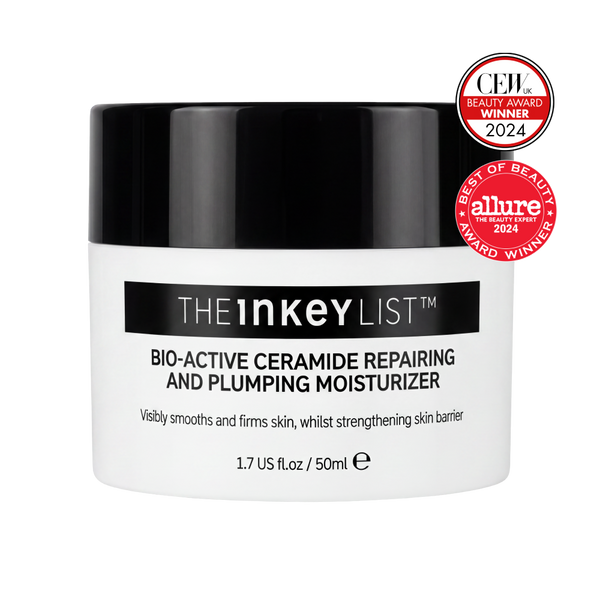
Step 1: After cleansing, apply a thin layer of Bio-Active Ceramide Moisturiser
Start with clean, lightly towel-dried skin. Take a small amount of Bio-Active Ceramide Moisturiser (£20.00) and smooth a thin, even layer across your whole face. The keyword here is thin - you are building a cushion, not a wall. Give it a minute or two to settle before the next step. This bottom layer is what slows the retinol’s absorption and gives your skin its first line of hydration for the night.
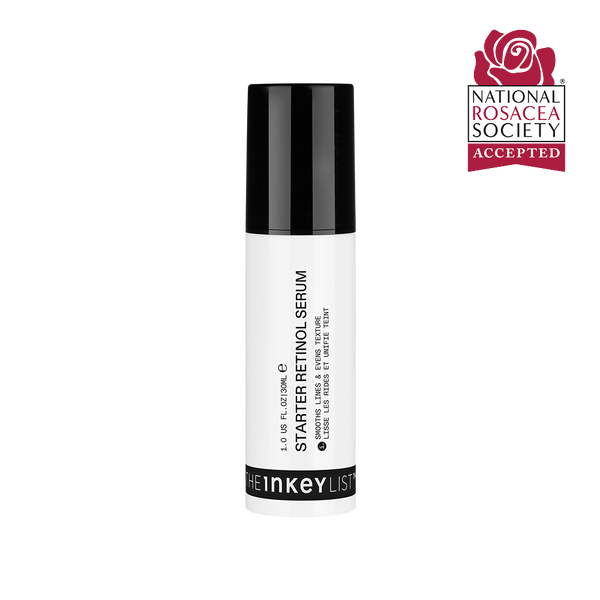
Step 2: Apply a pea-sized amount of Starter Retinol Serum
Yes, a pea-sized amount really is enough for your entire face. Dispense a pea-sized amount of Starter Retinol (£13.00) and gently smooth it over your face, avoiding the immediate eye area and the corners of your nose and mouth, where skin is thinnest and most reactive. Resist the urge to use more. With retinol, more product does not mean faster results; it just means a higher chance of irritation. Consistency, not quantity, is what delivers.
Step 3: Apply another thin layer of Bio-Active Ceramide Moisturiser
Wait a couple of minutes for the retinol to absorb, then finish with a second thin layer of Bio-Active Ceramide Moisturiser. This top layer seals in hydration, reinforces your barrier overnight and completes the sandwich. That is it. You are done.
Why does the Bio-Active Ceramide Moisturiser work so well as your sandwich layer?
In a word: ceramides. Ceramides are skin-identical lipids - fats that occur naturally in your skin and form the foundation of its protective barrier. They are the mortar between the bricks we described earlier, and when your skin has enough of them, that barrier stays supple, resilient and far better equipped to handle actives. Using a ceramide-rich moisturiser as both slices of your sandwich means you are not just buffering the retinol; you are actively replenishing the exact lipids your barrier needs to stay strong while the retinol works. This is what makes retinol significantly more tolerable, night after night. Discover everything about ceramides and how they work if you want the full ingredient deep-dive.
One important timing note: this is a PM-only routine. Retinol belongs in the evening, full stop. It can degrade in sunlight, and your skin does its most significant repair work overnight, which makes the evening the natural home for this routine. Cleanse, sandwich, sleep. Your morning routine is a separate matter, and we will get to the most important part of it in the next section.
A few practical pointers that make the routine even smoother:
- Start on dry skin. Damp skin can increase the penetration of actives, which is the opposite of what you want when introducing retinol gently. Let your face dry fully after cleansing before beginning Step 1.
- Give each layer a moment. A minute or two between steps stops the products from pilling and lets each layer do its job. Brush your teeth between layers if you need a built-in timer.
- Begin with 2-3 nights per week. You do not need to sandwich every single evening from day one. Start with two or three retinol nights a week, keep your skin comfortable, and build up gradually. We cover the exact frequency schedule in the FAQs below.
- Keep it boring. On retinol nights, this three-step routine plus your cleanser is genuinely all you need. Do not stack exfoliating acids or vitamin C on top. Simplicity is a feature here, not a limitation.
You will notice we are keeping this routine deliberately tight: one gentle retinol, one ceramide moisturiser, three steps. There are stronger retinoid formats and targeted retinol products out there, but if you are new to the ingredient, the beginner routine above is exactly where to start. Master this first. Everything else can come later, if you ever need it at all.
Your evenings are now sorted. But retinol is a two-part commitment, and the second part happens after sunrise.
Don’t Forget Daytime: Why SPF is Essential with Retinol
Here is the one rule that applies to everyone using retinol, regardless of skin type, product strength or how carefully you sandwich: wear sunscreen every morning. Retinol increases your skin’s sensitivity to UV light, which means daily SPF is a non-negotiable partner to any retinol routine, not an optional extra. Apply a broad-spectrum SPF every morning as the final step of your AM routine - and yes, that includes cloudy UK days, because UV rays do not take the day off just because the sun is hiding behind a grey sky.
Think of it as protecting your investment. Every night, your moisture sandwich routine is working towards smoother texture and more even tone. Unprotected sun exposure works directly against both of those goals, undoing progress while your skin is at its most photosensitive. Skipping SPF while using retinol is a bit like doing your washing up and then leaving the clean dishes out in the garden. If you need a daytime option, INKEY’s SPF collection starts from £15.00, so completing the routine does not need to complicate it.
With your evenings sandwiched and your mornings protected, there is one more topic worth addressing honestly: what to do if your skin still feels sensitive.
Managing Retinol Irritation and Gentler Alternatives
Let us be straight with you, because honest guidance beats reassuring guidance every time: even with the moisture sandwich method, some people will experience a little adjustment in the first few weeks of retinol use. Slight dryness, occasional tightness, maybe a touch of flaking near the nose or chin. This is common, it is normal, and it is precisely the kind of mild response the moisture sandwich exists to minimise. Your skin is meeting a new active and recalibrating. For most people, this settles within two to four weeks and then simply stops being a thing.
The skill worth learning is telling the difference between adjustment and a genuine signal to slow down. Mild, occasional dryness that responds well to moisturiser? Adjustment. Carry on. Persistent redness, stinging when you apply products, or flaking that spreads rather than settles? That is your skin asking for a slower pace, and the right response is to reduce frequency, not push through. Drop back to once or twice a week, keep both moisturiser layers generous, and let your skin catch up. There are no prizes for enduring discomfort, and there is no version of retinol success that requires it.
If your skin is reactive by nature rather than just new to retinol, you deserve more than a paragraph. We have written a complete deep-dive for exactly your situation: Retinol for Sensitive Skin: Your Complete Guide covers product selection, patch testing, frequency schedules and troubleshooting in full detail. Rather than compress all of that here, we would point you straight to it - it is the most thorough resource in our retinol library for sensitive skin types.
There is also a structural alternative worth knowing about: skin cycling. Where the moisture sandwich changes how you apply retinol on a given night, skin cycling changes which nights you use it at all, building scheduled recovery nights into your weekly routine. A typical cycle might be one exfoliation night, one retinol night, then two dedicated recovery nights of nothing but hydration and barrier support, repeating on a four-night loop. The two approaches are not rivals - plenty of people sandwich their retinol on cycling nights and get the benefits of both. If you like the reassurance of a fixed schedule with built-in rest, cycling is well worth a read.
And one more thing, because it needs saying out loud: going slowly is not falling behind. Skincare culture can make it feel like everyone else is tolerating stronger products on more nights than you, and that your careful, buffered, twice-a-week routine is somehow the remedial class. It is not. Consistency beats intensity every single time with retinol. The person who uses a gentle retinol twice a week for a year will see dramatically more benefit than the person who used a strong one nightly for three weeks and then quit. You are not behind. You are doing it properly.
Now let us tackle the questions we get asked most, including the big one about moisturiser order.
The Gentle Way In: Your Moisture Sandwich Takeaway
Moisturiser, retinol, moisturiser - the moisture sandwich method really is the simplest way to get retinol’s benefits with less irritation. The results come with consistency, and the clinical data shows visible smoothing from as little as 7 days, so you are not trading effectiveness for comfort; you are getting both. You do not need more products, a stronger formula or a complicated schedule. You need the right order, two well-chosen products and a little patience.
That is the quiet truth about good skincare that rarely makes the headlines: the best routine is not the most aggressive one. It is the one you will still be doing this time next year.
Ready to build your sandwich tonight? The complete two-product routine is Starter Retinol (£13.00) and Bio-Active Ceramide Moisturiser (£20.00) - everything you need for under £35. And if you want to go deeper on retinol, read our complete Retinol ingredient guide.
Frequently Asked Questions
Got a question?
Our askINKEY team are a friendly bunch of skincare experts with deep product knowledge and zero judgement. Whether you're an ingredient obsessive or just starting out, we'll make it make sense. No question too big. No question too small. We Give A Care, Every Day.


