



Can You Use Niacinamide With Retinol?
Niacinamide and retinol work well together, and the order matters: niacinamide first, retinol second, moisturiser to finish.
Author
askINKEY skincare advisor
Published
17 May, 2026
Time to read
20 minutes
Yes, you can use niacinamide with retinol, and niacinamide goes on first. There is no credible evidence that these two ingredients cancel each other out, and plenty of evidence that they work better as a pair than either does alone.
The hesitation is understandable. Somewhere along the way, niacinamide picked up a reputation as the ingredient that ruins everything it touches. That reputation was never earned, and it certainly had nothing to do with retinol.
This guide covers the science behind why the pairing works, the correct order to apply them in, how to layer them with hyaluronic acid, ceramides and peptides, complete morning and evening routines for beginners and experienced users, guidance by skin type, and answers to the thirteen questions people ask most.
Start with the 10% Niacinamide Serum and browse the full retinol collection if you want to see the options before you read on.
Can You Use Niacinamide With Retinol? The Short Answer
Yes. Niacinamide and retinol can be used together, in the same routine, on the same night, and niacinamide goes on first.
There is no documented negative interaction between the two. Pharmacological reviews find no evidence that niacinamide chemically inactivates retinol or interferes with how it works on the skin. Far from being a risky pairing, both ingredients are widely recommended in evidence-based skincare. A 2025 Delphi consensus study of cosmetic dermatologists, published in the Journal of the American Academy of Dermatology, asked 62 dermatologists which topical ingredients they recommend for common concerns. Retinoids reached consensus for fine lines and wrinkles, dark spots and enlarged-looking pores. Niacinamide reached consensus for redness and dark spots. Between them, they cover a lot of ground.
Here is the whole answer in three lines, for anyone who wants to stop reading and go and do it:
- Apply niacinamide to clean skin.
- Wait 30 to 60 seconds for it to absorb.
- Apply retinol, then finish with moisturiser.
That is it. No 20-minute waits, no alternating weeks, no elaborate scheduling.
So where did the worry come from? The confusion traces back to an entirely separate debate about niacinamide and Vitamin C, one that has since been largely resolved in niacinamide’s favour. Retinol was never part of that conversation. The two discussions simply got tangled together online, and the caution stuck to the wrong ingredient.
Is it safe to use retinol and niacinamide together? For most people, yes, and niacinamide often makes retinol easier to tolerate rather than harder. The usual caveats around retinol still apply, and we cover who should wait later in this guide.
One last thing to set expectations before we go deeper. These two ingredients do not run on the same schedule. Niacinamide is a daily ingredient, morning and evening, with no build-up period required. Retinol starts at two to three nights per week and increases slowly from there. You are not pairing them step for step. You are building niacinamide into the background of your routine and introducing retinol on top of it.
If your next question is what cannot go alongside retinol, that has its own guide: what not to mix with retinol.
Having established that the answer is yes, it is worth understanding why. The mechanism is genuinely elegant, and once you see it, the pairing stops feeling like a gamble and starts feeling obvious.
Why Niacinamide and Retinol Work Well Together
Most ingredient pairings are tolerated. This one is complementary, which is a meaningfully different thing. To see why, you need to know what each ingredient is actually doing once it reaches the skin.
What retinol is doing
Retinol is a derivative of Vitamin A. Once absorbed, it converts into retinoic acid, the form your skin can actually use, which binds to retinoid receptors in your skin cells. Those receptors influence how quickly cells turn over and how the skin behaves at a structural level.
In practice, that means three things over time. Cell turnover speeds up, so dull surface cells are replaced more efficiently and texture looks smoother. Retinol supports collagen production, which is why it is the most studied ingredient in the visible ageing category. And because turnover keeps the pore lining clearer, congestion has less opportunity to build, so pores look refined rather than blocked.
Retinol is not a quick fix. It is a long game, and it rewards consistency far more than intensity. If you want to understand why a higher percentage is not automatically a better result, we have covered that separately in what percentage retinol should I use.
The honest trade-off
Here is the part that often goes unsaid. Accelerating cell turnover asks something of your skin, and in the early weeks your skin will usually let you know.
Dryness. Tightness. A slight roughness that was not there before. Sometimes flaking around the nose and mouth, sometimes a stinging sensation when you apply anything else. This is the retinol adjustment period, it is common, and it is temporary for most people.
It is also the single most common reason people abandon retinol. They start in week one with enthusiasm, hit the rough patch in week three, decide their skin does not get on with retinol, and stop. The ingredient rarely failed them. The support around it did.
That is the gap niacinamide fills.
What niacinamide is doing
Niacinamide is Vitamin B3, and it works through routes that have nothing to do with retinoid receptors. That separation is precisely why the two do not interfere with each other.
Niacinamide helps regulate sebum production, which is why oily and blemish-prone skin tends to respond to it quickly. It supports your skin’s own production of ceramides, the lipids that hold your barrier together and keep water in. It helps calm visible redness and reduces inflammation, which is what makes reactive skin feel less reactive. And it interrupts the transfer of melanin to surface skin cells, which is why it is a mainstay for uneven tone and the marks left behind after a breakout.
Read those two ingredient profiles side by side and the logic writes itself. Retinol accelerates renewal and temporarily stresses the barrier in the process. Niacinamide supports the barrier and helps it cope. One creates the demand, the other helps meet it.
Niacinamide does not just tolerate retinol. It supports it. Retinol drives renewal, and niacinamide supports the barrier that renewal temporarily stresses.
The evidence behind the pairing
This is not purely theoretical. A 2016 study published in the Journal of Drugs in Dermatology followed 25 people using a night cream that combined 0.5% retinol with 4.4% niacinamide, alongside resveratrol and hexylresorcinol, over ten weeks. Fine lines, radiance and smoothness improved measurably by week two, with hyperpigmentation and evenness of tone following by week four.
The tolerability findings are just as useful, and they match the trade-off described above. Participants did experience mild retinoid irritation early on, including some flaking and redness. By week ten, that had settled, with no reported stinging, itching, dryness or tingling. The adjustment period was real, and it passed.
Two caveats worth stating plainly. That study was open-label rather than blinded, with a small group, and the formula contained four active ingredients rather than two, so it cannot isolate niacinamide’s specific contribution. What it does illustrate well is the shape of the journey: early adjustment, then improvement.
Closing the myth properly
Now the origin story, because it deserves to be put to bed.
In the 1960s, chemists observed that when niacinamide and pure L-ascorbic acid were combined under extreme laboratory conditions, roughly 90°C and a pH close to 2, some of the niacinamide converted into nicotinic acid, which can cause temporary skin flushing. That observation was real. What it was not was representative of anything happening in a finished skincare formula or on human skin. Modern products sit at cosmetic pH, they are applied at skin temperature, and the conditions of that experiment simply do not occur.
Note what is missing from that story entirely: retinol. It was never in the experiment. The niacinamide and Vitamin C debate and the niacinamide and retinol question are two separate conversations that got conflated as the myth travelled. If you specifically want the Vitamin C pairing answered, that lives in can you use Vitamin C and retinol together.
While we are being honest about side effects
Some people experience a period of increased breakouts when they begin retinol. This is not the same as irritation and it is not a sign the product is wrong for you, though it is easy to confuse the two. Rather than half-explain it here, we have a full guide: what is skin purging.
And if you are weighing retinol against its more potent relative, retinol vs retinal covers the difference in form, strength and who each one suits.
The mechanism also explains why barrier support is not optional alongside retinol. If you are not sure whether your barrier is already struggling, what is a damaged skin barrier will tell you what to look for.
With the science settled, the practical question is the one everyone actually types into a search bar: which one goes on the skin first?
Niacinamide Before or After Retinol? The Correct Order
Niacinamide goes before retinol. Every time.
That is the rule, and there is no situation in a standard routine where you would reverse it.
There are two reasons, and they carry different weight.
The first is the general layering principle: thinnest to thickest. Water-based serums go on before oils and creams, because a lightweight formula can penetrate through to the skin but struggles to get through a richer layer sitting on top of it. Niacinamide serum is typically lighter than a retinol formula, so it naturally comes first.
The second reason matters more. Niacinamide is not just queueing politely in front of retinol. It is doing preparatory work. Applying it first means retinol arrives at a surface that is already calmer, better hydrated and better supported. You are laying groundwork rather than firefighting afterwards.
Do you need to wait between them?
Thirty to sixty seconds. That is all.
The 20-minute waiting rule that circulates online is not necessary and, for most people, it is the thing that quietly kills the routine. A step that takes half an hour to complete is a step you will skip on a Tuesday when you are tired.
What you are actually waiting for is absorption, not some chemical settling period. Apply your niacinamide, let it sink in until your skin no longer feels wet to the touch, then go in with retinol. If you are in the bathroom brushing your teeth, that is your interval right there.
What goes wrong if you reverse the order
Nothing dramatic. You will not damage your skin by applying retinol first, and this is worth saying plainly because skincare advice has a habit of catastrophising.
But you do lose the advantage. Applying retinol first means your niacinamide is landing on top of an already-active step rather than preparing the ground beneath it. The supportive benefit is largely forfeited, and you are relying on niacinamide to catch up rather than get ahead. You have not broken anything. You have simply spent your niacinamide badly.
Niacinamide or retinol first? Niacinamide. Consistently, every night.
The full PM order
Here is how to layer niacinamide and retinol within a complete evening routine.
- Cleanse. Start with the Oat Cleansing Balm to remove SPF, makeup and the day. Actives cannot work properly through a layer of what your skin collected since morning.
- Hyaluronic Acid Serum. Apply the Hyaluronic Acid Serum to slightly damp skin. Damp matters, because hyaluronic acid is a humectant and works by drawing water in.
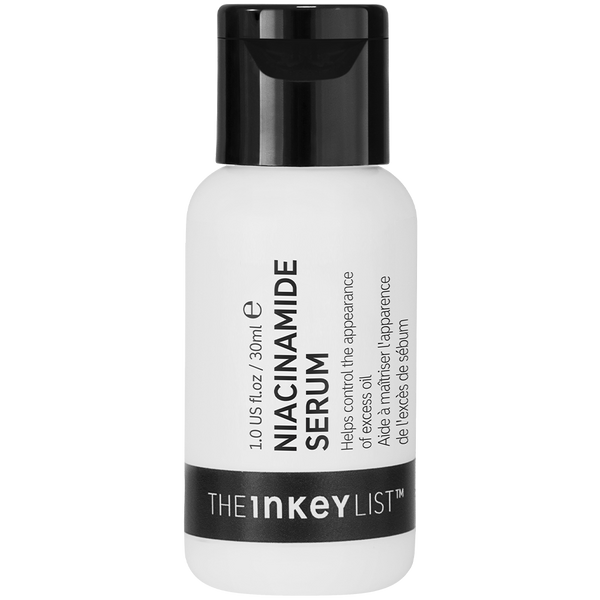
- 10% Niacinamide Serum. Two to three drops of the 10% Niacinamide Serum, pressed over the face. Give it 30 to 60 seconds.
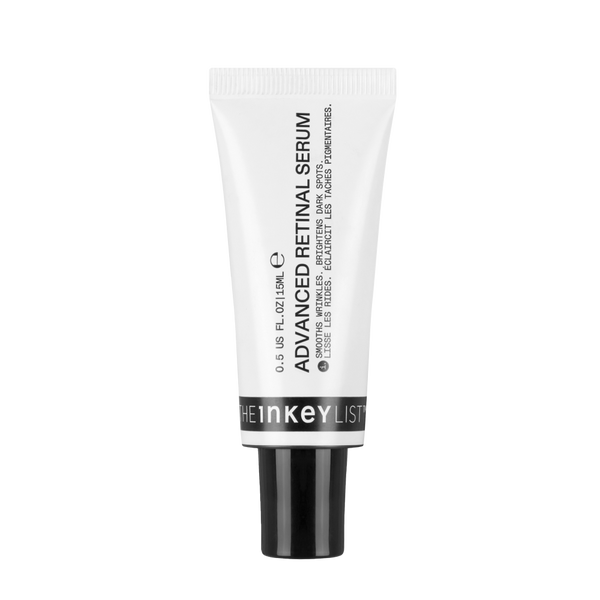
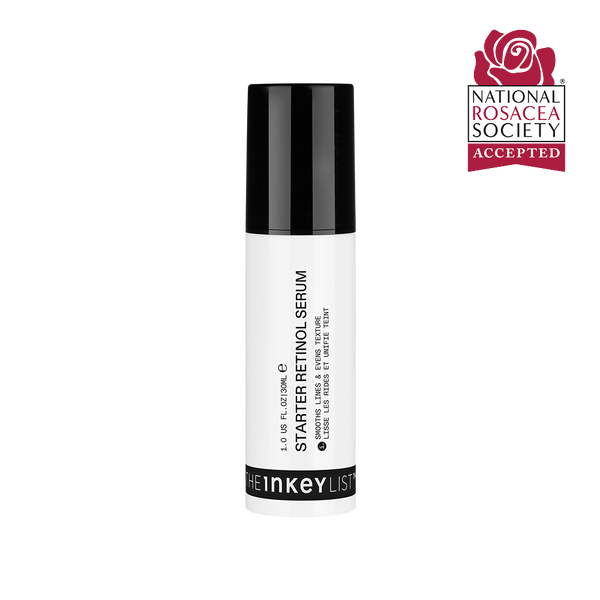
- Retinol. Either the Starter Retinol Serum if you are new to it, or the Advanced 0.2% Retinal Serum if you have already built tolerance. A pea-sized amount for the whole face.
- Retinol Eye Cream. The Retinol Eye Cream is formulated for the thinner skin around the eyes, where a face retinol is often too much.
- Bio-Active Ceramide Moisturiser. Finish with the Bio-Active Ceramide Moisturiser to seal everything in and support the barrier overnight.
Six steps, one direction, no guesswork. If you want the wider principle behind why routines are sequenced this way, how to build your skincare routine covers the framework.
Can you use them at different times of day?
Yes, and for some people this is the better approach.
Niacinamide in the morning, retinol at night is a completely valid split. It gives each ingredient its own slot, reduces the total load on your skin in any single sitting, and is often the gentler option for reactive or easily overwhelmed skin. You lose none of niacinamide’s benefit by moving it to the morning. If anything, its sebum-regulating action is useful under makeup and SPF.
What is not negotiable is that retinol stays in the evening. Two reasons. Retinol increases photosensitivity, so your skin is more vulnerable to UV while you are using it. And retinol itself degrades in UV light, so a morning application is partly wasted before it has had a chance to work.
If you want both ingredients in the same evening routine, that works too. The split is an option, not a correction.
How often should you use each?
This is where most routines go wrong, because people assume the two ingredients need to match.
They do not.
Niacinamide: daily, morning and evening. No ramp-up, no adjustment period, no building tolerance. It is a well-tolerated ingredient and you can use it from day one at full frequency.
Retinol: two to three nights per week to start. Build gradually over four to six weeks. If your skin is comfortable after a month at two nights, move to three. Then four. Some people eventually reach nightly use, and plenty of people get excellent results staying at three or four nights indefinitely. There is no prize for nightly.
The crucial point: niacinamide does not need to mirror retinol’s frequency. On nights when you are not using retinol, you still use niacinamide. It is the constant in the routine, not the companion. In fact, your non-retinol nights are when niacinamide is doing some of its most useful work, supporting the barrier between active sessions.
Most routines are not just two actives, though. So the next question is what else can safely join them.
Layering Retinol, Niacinamide, Hyaluronic Acid, Ceramides and Peptides
Very few people run a two-ingredient routine. Once you know niacinamide and retinol can coexist, the follow-up is immediate: what about everything else already on the shelf?
Here are the three combinations people ask about most, each answered directly.
Can you use retinol with niacinamide and hyaluronic acid?
Yes, and it is the most reliable three-way combination in skincare.
Hyaluronic acid is a humectant, not an active. It does not compete with niacinamide or retinol for receptors, it does not alter pH in a way that matters, and it has no mechanism by which it could interfere with either. All it does is hold water in the skin, which is exactly what skin using retinol tends to need.
Apply it second, straight after cleansing, onto slightly damp skin. That word damp does real work. A humectant draws moisture from whatever is available, so applying it to a dry face in a dry room means it has less to pull from. Leave your skin faintly moist after cleansing and it has something to hold onto.
Order: cleanse, hyaluronic acid, niacinamide, retinol, moisturiser. For a deeper look at that specific pairing, see hyaluronic acid and retinol: can you use them together.
Can I use ceramides with niacinamide and retinol?
Yes, and ceramides are arguably the most valuable addition to a retinol routine.
Ceramides are lipids that sit between your skin cells and hold the barrier together. Retinol temporarily stresses that barrier, so replenishing ceramides is direct support, applied precisely where the demand is.
Here is the part worth understanding. Niacinamide supports your skin’s own ceramide production from within. A ceramide moisturiser delivers them topically, on the surface. These are two different routes to the same outcome, and they complement rather than duplicate each other. Using both is not redundant. It is a supply line running in two directions.
Ceramides close the routine. They are the last step because their job is to seal, not to penetrate. For more on how ceramides behave alongside other actives, read can you use ceramides with every active.
Can I use niacinamide, retinol and peptides together?
Yes. Peptides sit comfortably alongside both.
Peptides are short chains of amino acids that support the look of firmness and smoothness. They are generally gentle, well tolerated and not prone to conflicting with other ingredients, which makes them an easy addition to a routine already running two actives.
It is a question we are asked often and one that rarely gets a straight answer, so here is the plain version: peptides and retinol are not rivals, and you do not need to choose. If you are weighing one against the other rather than combining them, peptides vs retinol sets out the comparison.
The full stack, in order
Putting all of it together, a complete layered routine runs like this.
- Cleanse with the Oat Cleansing Balm.
- Hyaluronic acid on slightly damp skin.
- Niacinamide, then 30 to 60 seconds.
- Retinol.
- Eye cream.
- Ceramide moisturiser to seal.
Peptides slot in alongside your serums, before the moisturiser.
One honest caution
Do not build this all at once.
If you introduce four new products on the same night and your skin reacts, you have no way of knowing which one caused it. You will either abandon the whole routine or spend weeks reintroducing things one at a time to find the culprit. Either way you have lost time.
Add one product. Give it a week or two. Add the next. It feels slower and it is genuinely faster, because you never have to backtrack.
If retinol is leaving your skin dry
There is a technique worth knowing. The moisture sandwich involves layering hydration around your active rather than only after it, which can make retinol considerably more comfortable for dry or reactive skin. We have explained the method properly in the moisture sandwich method rather than compressing it here.
With the full stack established, here is what it looks like as an actual routine you can follow tonight.
Two Complete Routines: Beginner and Experienced
Knowing the theory is one thing. Knowing what to pick up first at the bathroom sink is another. These are complete, follow-tonight routines.
Beginner PM routine
Use this two to three nights per week. On the other nights, run the same routine and simply skip the retinol step.
- Cleanse. Oat Cleansing Balm. Massage onto dry skin, add water to emulsify, rinse.
- Hyaluronic Acid Serum. Hyaluronic Acid Serum onto slightly damp skin.
- 10% Niacinamide Serum. 10% Niacinamide Serum, two to three drops. Wait 30 to 60 seconds.
- Starter Retinol Serum. Starter Retinol Serum, pea-sized amount, avoiding the immediate eye area.
- Retinol Eye Cream. Retinol Eye Cream, tapped gently around the orbital bone.
- Bio-Active Ceramide Moisturiser. Bio-Active Ceramide Moisturiser to finish.
If your skin runs sensitive: start at two nights per week rather than three, and consider the moisture sandwich from the previous section. Applying a light layer of moisturiser before your retinol as well as after buffers the delivery without switching the ingredient off. For a fuller picture, retinol and sensitive skin is written specifically for this.
Experienced PM routine
Same structure, one substitution.
- Cleanse. Oat Cleansing Balm.
- Hyaluronic Acid Serum. Onto damp skin.
- 10% Niacinamide Serum. Wait 30 to 60 seconds.
- Advanced 0.2% Retinal Serum. The Advanced 0.2% Retinal Serum in place of the Starter Retinol, for skin that has already built tolerance.
- Retinol Eye Cream.
- Bio-Active Ceramide Moisturiser.
Note what did not change. Niacinamide stays exactly where it was.
There is a common assumption that supporting ingredients are training wheels, useful while you adjust and discardable once your skin has toughened up. That is not how this works. Tolerance to retinol means your skin copes with the process better. It does not mean the process stopped happening. A stronger retinoid asks more of your barrier, not less, so niacinamide arguably earns its place more at this stage, not less. Keep it.
AM routine
Mornings are simpler, and deliberately so.
- Cleanse. A gentle cleanse, or just water if your skin prefers it.
- Hyaluronic Acid Serum. Onto damp skin.
- 10% Niacinamide Serum. Optional, but useful. Morning niacinamide helps manage shine through the day and sits well under makeup.
- Moisturiser. For oily and combination skin, the Omega Water Cream is the lighter morning option. Keep the ceramide moisturiser for the evening, where its richer texture belongs.
- SPF, every morning without exception. Finish with Dewy Sunscreen SPF 30. This is not a seasonal step and it is not optional when you are using retinol. Retinol increases photosensitivity, and unprotected UV exposure will undo the visible progress you are working for.
One moisturiser per routine. Ceramide moisturiser closes the evening. Omega Water Cream handles the morning if you need something lighter. There is no benefit to running both in the same step.
Where the Exosome Glow Serum fits
If retinol handles renewal and niacinamide handles barrier support, the Exosome Glow Serum is the glow boosting step that layers happily with both. It sits in the morning routine after your hyaluronic acid, and it is designed to work alongside the rest of your products rather than replace anything in them.
What it delivers:
- 100% saw more glowing skin, clinically proven*
- Clinic worthy rejuvenated skin in 14 days*
- 55% reduction in visible signs of skin stress (redness, puffiness, visible irritation)***
- 63% increase in skin renewal activity in 8 hours***
- 6-in-1 skin rejuvenation: clinically proven to visibly improve radiance, hydration, tone, firmness, elasticity, and texture*
- Proven to deliver up to 12-hours of hydration**
- Helps support natural collagen production
*4-week clinical study of 26 people
**Clinical study of 31 people
***In-vitro testing of Cica Exosomes showed a 55% reduction in pro-inflammatory markers and a 63% increase in markers associated with skin renewal after 8 hours
The Exosome Glow Serum was named a CEW UK Beauty Awards Winner 2026. If you want to understand the ingredient technology itself, what are exosomes explains it, and boost your retinol results with Exosome covers how the two fit into a single routine.
Not sure which combination of these products suits you? The build your own routine tool lets you assemble a set and save up to 20%.
Routines are only half the picture, because the right approach depends on the skin you are working with.
Is This Combination Right for Your Skin Type?
The pairing is broadly suitable. The details shift depending on what your skin is already doing. Find yours below.
If you are genuinely unsure which of these describes you, what’s your skin type will help you work it out before you commit to a routine.
Oily and blemish-prone skin
This is the strongest use case for the combination, and if this is your skin, you are the reader who will notice the difference fastest.
Niacinamide regulates sebum at source rather than mopping it up after the fact, which is why oily skin tends to respond to it within weeks. It also interrupts melanin transfer, which softens the darker marks that breakouts leave behind long after the blemish itself has gone. Retinol works on the other half of the problem, keeping the pore lining clearer through turnover so congestion and blackheads have less chance to establish.
Together they address cause and aftermath at the same time. Browse blemishes and breakouts for the wider category, and what is hyperpigmentation if post-blemish marks are your main concern.
Dry skin
Both ingredients work well here. The support steps simply matter more.
Retinol can compound existing dryness, so the scaffolding around it has to be solid. Hyaluronic acid onto damp skin, every time. Ceramide moisturiser, every night, without treating it as an optional finish. And the moisture sandwich if your skin still feels tight the morning after.
Dry skin is not a reason to avoid retinol. It is a reason to build the routine properly around it.
Sensitive skin
Niacinamide is the ingredient that makes retinol accessible for sensitive skin. That is not an overstatement.
Go slower than everyone else. Two nights per week maximum to begin with, and stay there until your skin is genuinely comfortable rather than merely coping. Use the Starter Retinol Serum specifically, not the Advanced Retinal.
One mistake to avoid. There is a tempting logic that says fewer products means less risk, so sensitive skin should strip the routine back to retinol alone. Do the opposite. Niacinamide is the step making the retinol tolerable, and removing it leaves your barrier facing the active with nothing behind it. What is sensitive skin covers the wider picture of what sensitivity actually is and is not.
Combination skin
Same structure as everyone else, adjusted by zone.
Apply niacinamide across the whole face, since the oilier areas benefit from sebum regulation and the drier areas benefit from barrier support regardless. The variable is moisturiser weight. A lighter texture through the T-zone and something richer on the cheeks and jaw works better than forcing one product to serve both.
Mature skin
Both ingredients address different dimensions of visible ageing, which is why the pairing is particularly worthwhile here.
Retinol works on texture, fine lines and firmness through renewal. Niacinamide works on tone, uneven pigmentation and barrier resilience, which becomes more relevant as skin naturally produces fewer lipids over time. One addresses structure, the other addresses surface and support.
If you have already built tolerance, the Advanced 0.2% Retinal Serum is the stronger option. If you are deciding between forms, retinol vs retinal explains the difference and who each suits.
Who should not use this combination
Some honesty, without alarm.
Retinol is not suitable during pregnancy or breastfeeding. This applies regardless of strength, regardless of frequency, and regardless of what else is in your routine. Niacinamide on its own is considered safe, so you do not need to abandon the whole routine. You remove the retinol step and keep the rest.
If you are using a prescription retinoid, speak to your prescriber before adding an over-the-counter retinol. You are unlikely to need both, and stacking them raises the chance of irritation without a corresponding benefit.
If your barrier is currently compromised, showing stinging, persistent redness or flaking, pause the retinol and rebuild first with niacinamide, hyaluronic acid and ceramides. Reintroduce retinol once your skin is settled. This is a delay, not a defeat.
The Answer Is Yes, Here Is What To Do With It
Niacinamide and retinol are not a risky pairing. They are a well-supported one, backed by clinical evidence and by broad dermatological consensus. The hesitation that kept these two ingredients apart in people’s routines was never grounded in evidence about either of them. It was inherited from a different argument entirely.
Four things to remember:
- Niacinamide before retinol, in the evening, with 30 to 60 seconds between them.
- Start retinol at two to three nights per week and build slowly over four to six weeks.
- Finish with a ceramide moisturiser, every time, without treating it as optional.
- SPF every morning, without exception.
Be realistic about timing. Niacinamide shows its hand within a month or so. Retinol takes longer, usually two to three months before the changes you are working toward become visible. Results are cumulative, which means the routine you actually keep doing will always beat the more ambitious one you abandon in week three. Consistency beats intensity, every time.
You now know the order, the frequency, the layering and the exclusions. The only remaining step is doing it tonight.
Shop the niacinamide and retinol routine, starting with the 10% Niacinamide Serum.
Still deciding? Build your own routine and save up to 20%, take the skincare quiz if you are unsure which retinol suits your skin, or read the complete skincare routine guide for the wider framework.
Frequently Asked Questions
Got a question?
Our askINKEY team are a friendly bunch of skincare experts with deep product knowledge and zero judgement. Whether you're an ingredient obsessive or just starting out, we'll make it make sense. No question too big. No question too small. We Give A Care, Every Day.


