



Retinol for Your Body, Neck and Chest: How to Use It Without Irritation
Yes, you can use retinol on your neck and chest - here's how to do it safely, area by area, without triggering irritation.
Author
askINKEY skincare advisor
Published
12 September, 2026
Time to read
17 minutes
Retinol is not only a face ingredient. It has a genuine, evidence-supported role on the neck, the chest and the backs of the hands, and it is one of the few ingredients that meaningfully addresses crepey-looking skin in those areas. It also has clear limits, and there are parts of the body where a different acid does a considerably better job.
This guide covers retinol for body use in practical terms. You will learn which areas below the jawline actually suit a retinoid, why that skin behaves differently from the skin on your face, how to apply it area by area without triggering irritation, which INKEY retinoid to choose based on your experience, and where retinol is simply the wrong tool. The areas covered explicitly are the neck, the chest and decolletage, the backs of the hands, and the arms, legs and back.
One point of honesty upfront. We do not make a dedicated body retinol lotion. This guide is about using a facial retinoid sparingly on targeted areas, which is a different proposition from applying a body cream everywhere. And if you have never used a retinoid before, begin with our guide on how to start retinol without irritating your skin, because this page assumes the basics are already covered.
What This Guide Covers, and Where to Start
Here is exactly what you will learn:
- Where retinol genuinely works below the jawline, and where it does not
- Why neck and chest skin is thinner, more reactive and quicker to irritate
- How to apply retinol area by area, from neck to chest to the backs of the hands
- How to build tolerance over weeks without triggering a reaction
- The SPF rule that determines whether any of this works
- Who should avoid retinoids entirely, and when to see a professional
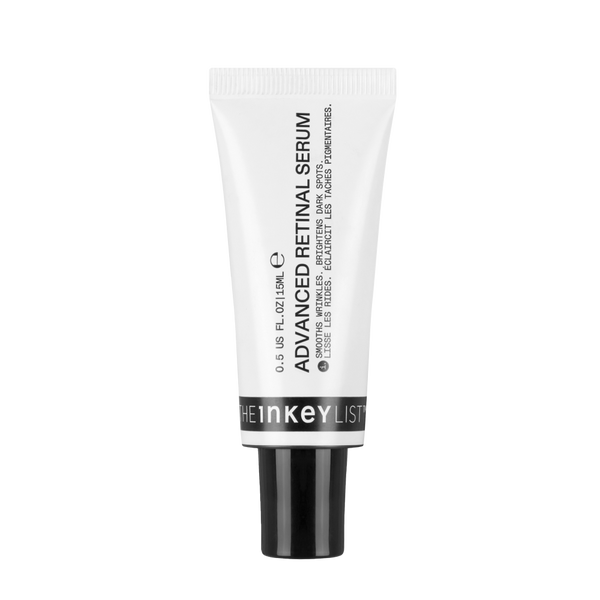
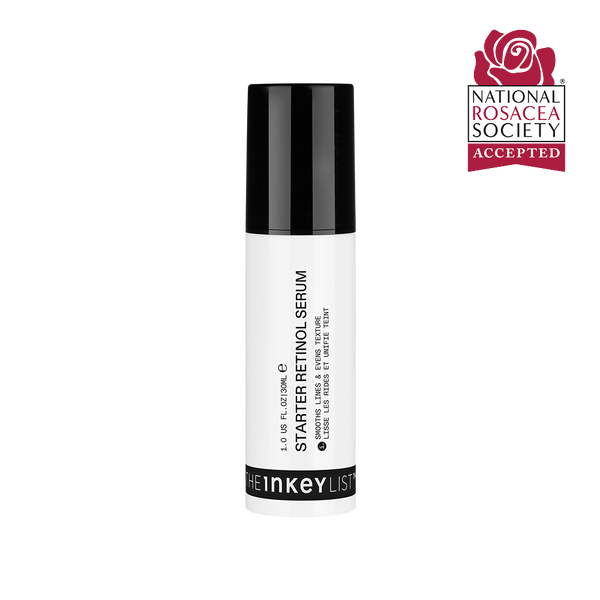
Two products do most of the work here. Our Starter Retinol Serum (£13) is the gentle option and our recommendation for thinner neck and chest skin, formulated with 1% Granactive Pro+ and 0.01% Retinal. Our Advanced 0.2% Retinal Serum (£18) is the step up for those already using retinoids comfortably. If you want the ingredient science first, our retinol ingredient page goes deeper, you can see the full retinol range, and if you are still comparing, our best retinol serums and creams guide for 2026 sets the options side by side.
There is a third product that changes how the neck responds. Our Bio-Active Ceramide Neck Stick (£15) targets neck lines, crepey-looking skin and loss of firmness, and helps lift and smooth the neck and decolletage. To be completely clear: this is a ceramide product, not a retinol. It contains no retinoid whatsoever. It is the barrier-supporting, firming partner to your retinoid rather than a substitute for it.
One boundary worth flagging now. If your actual concern is rough texture on the upper arms, bumpy skin, ingrown hairs or keratosis pilaris, retinol is not the answer. Glycolic acid is. We cover that properly further down, because we would rather direct you to the right product than sell you the wrong one.
Before the body-wide guidance, a quick checkpoint on the question most people want settled.
Can You Use Retinol on Your Neck and Chest?
Yes. You can use retinol on your neck and chest, provided you use less product than on your face and build up slowly.
This is not a workaround. It is what our own products instruct. Both our Starter Retinol Serum and our Advanced 0.2% Retinal Serum carry directions telling you to smooth a pea-sized amount into face and neck. The neck is written into the on-pack usage directions.
Smooth a pea-sized amount into face and neck.
When a brand includes the neck in its official directions, that application has been considered. If you have been hesitating over whether it is permitted, it is.
The qualifier carries real weight though. Neck and chest skin is structurally thinner and more reactive than facial skin, so the amount that feels comfortable on your cheeks can be far too much below the jaw. The common mistake is not using retinol on the neck at all. It is using the same quantity there as on the face.
Four rules govern everything that follows:
- PM only. Retinoids belong in the evening routine.
- Start at two to three nights a week. Not nightly, and not every other night at first.
- Always follow with moisturiser. Every application, without exception.
- Always apply SPF the next morning. Non-negotiable, explained later.
To answer the adjacent questions directly: yes, you can put retinol on your neck. Yes, you should use retinol on your neck if you are targeting fine lines, texture and sun damage and your skin tolerates it. And yes, you can use retinol on your neck and chest together, treating them as one continuous zone from jawline down across the decolletage.
If you already know your skin reacts easily, read our guidance on retinol and sensitive skin first. If you are concerned about an initial flare, our explainer on the retinol purge covers what is normal.
Permission settled. Here is why the skin below the jawline needs its own approach.
Why Skin Below the Jawline Behaves Differently
“Go gentler on your neck” is advice repeated everywhere and explained almost nowhere. The explanation is structural, and once you have it, every rule in this guide reads as logic rather than instruction.
Neck skin differs from facial skin in three measurable ways. Research into how age and modifiable risk factors relate to neck skin quality documents a thinner dermis, fewer sebaceous glands and lower vascularity compared with the face. Each has a direct consequence.
A thinner dermis means less structural collagen and elastin underneath. There is less scaffolding to begin with, so when it degrades, the visible result appears faster and more obviously than on the cheeks.
Fewer sebaceous glands means less sebum. Sebum is not merely an oiliness problem. It forms part of the skin’s natural buffering system, a lipid layer moderating how aggressively actives penetrate. With fewer oil glands, the neck has less of that cushioning, which is precisely why retinol stings more here. It is not imagined, and it does not mean you have done anything wrong.
Lower vascularity means reduced blood flow and a slower repair response. Irritation your face would recover from overnight can linger on the neck for days.
How the four areas differ in practice:
- The neck. Thin, low in oil glands, slow to recover, and in constant motion whenever you turn your head or look down at a screen.
- The chest and decolletage. Heavy and often unprotected sun exposure, sitting over the constant movement of breathing and shaped by sleeping posture.
- The backs of the hands. Thin, among the most sun-exposed skin on the body, and washed repeatedly throughout the day.
- The arms, legs and back. Thicker, tougher, far larger in surface area, and better served by a different category of ingredient.
The chest warrants particular attention because it is protected least. It is exposed in most warm-weather clothing, catches UV through car and office glass, and is routinely excluded when people apply sunscreen. Add the mechanical factor: decolletage wrinkles are partly a sleep artefact, formed by skin folding inward night after night when you sleep on your side.
This is where crepey skin is most visible. Crepey skin describes fine, closely spaced lines with a thin, papery surface quality, like crepe paper. It differs from a single deep wrinkle because it is a diffuse change in surface quality across a whole area, driven largely by cumulative sun exposure degrading collagen and elastin. Ageing contributes, but sun exposure is the dominant modifiable factor. For a fuller account, read our guide on what causes crepey skin.
A named clinical pattern makes the point well. Poikiloderma of Civatte is the reddish-brown mottled discolouration developing on the sides of the neck and across the V of the chest, directly associated with long-term cumulative sun exposure. It characteristically spares the shaded skin under the chin, which is about as clear a demonstration of sun causation as dermatology provides. If your chest looks visibly more aged than your face, sun is the likelier explanation than time alone. The Cleveland Clinic overview of sun-damaged skin and photoageing covers the broader mechanism well.
Thinner, less buffered, slower to heal and more sun-damaged. That combination is exactly why this skin benefits from a retinoid and exactly why it needs a cautious one. Now to what retinol can realistically deliver.
What Retinol Can and Cannot Do Below the Jawline
This is where most articles in this category begin overpromising. We will not.
What the evidence shows. The most useful study on this area followed 42 women over 24 weeks, treating the neck and anterior chest. Improvements arrived in a clear sequence:
- From week 2: tactile roughness improved
- From week 4: fine wrinkling, mottled pigmentation, lentigines and overall photodamage improved
- From week 8: laxity improved
- From week 12: crepiness and coarse wrinkling improved
That progression is genuinely useful because it tells you the order change arrives in. Surface texture shifts first. The deeper qualities, crepiness and coarse wrinkling, arrive last and take three months to register.
An important clarification. That study used prescription tretinoin combined with 4% hydroquinone and a copper zinc malonate lotion. It is a three-agent prescription regimen, not a cosmetic serum. We present it as directional evidence that the retinoid family improves the appearance of neck and chest skin over months. We are not presenting it as a claim about our products, and our cosmetic retinoid should not be expected to reproduce those results. Broader research on topical tretinoin for photodamage supports the same general direction on fine wrinkles, roughness and collagen. Two lanes, kept deliberately separate.
What our products are proven to do. Our Starter Retinol Serum is clinically proven to smooth fine lines in 7 days without irritation, from a 4-week clinical study of 30 participants. In that study, 95% experienced zero irritation or redness, and the formula is 2x more effective than standard retinol. Those are our figures, from our testing, describing our product. Our retinol page sets out how the actives work.
What retinol will not do. It will not replace a surgical lift. It will not tighten significant sagging. It will not restore lost volume or reverse structural laxity. It improves the appearance of texture, tone, fine lines and sun damage over a sustained period. Anyone promising more, particularly within six weeks, is overselling.
Timeframe. Below the jawline, progress is slower than on the face. Fewer oil glands and lower blood flow mean slower turnover and slower visible response. Think in months, not weeks. Anyone who treats their chest for three weeks, sees nothing and stops has not proven retinol ineffective. They have stopped roughly nine weeks before the evidence suggests change would appear.
Expectations set. Here is how to apply it.
How to Apply Retinol Area by Area
Retinol on the Neck
The neck is the highest-value area below the jawline for a retinoid, and the likeliest to react if the quantity is wrong.
- Apply at night only, starting at two to three nights a week.
- Use less than you think. The most reliable method is to use whatever remains on your fingers after your face rather than dispensing more.
- Sweep upwards from the base of the neck towards the jawline in light strokes.
- Avoid the front of the throat for your first few applications while you learn how your skin responds. It is the thinnest, most reactive part of the area.
- Always follow with a moisturiser. Our Bio-Active Ceramide Moisturiser (£20) works well here, and the full range sits in our moisturisers collection.
Pair your retinoid with our Bio-Active Ceramide Neck Stick (£15). It targets neck lines, crepey-looking skin and loss of firmness, and helps lift and smooth the neck and decolletage. To repeat, because it matters: this is a ceramide product, not a retinol. It contains no retinoid. It is the barrier-supporting partner to your retinoid, used either on alternate nights or layered after your retinoid absorbs. Ceramides matter here because they are structural lipids helping the skin barrier hold together, which is exactly what thin neck skin needs while adjusting to an active. Our ceramides collection has the wider range.
If you are searching for a retinol neck cream specifically, the honest answer is that a gentle serum plus a ceramide support step will serve you better than a single product trying to do both jobs.
Retinol on the Chest and Decolletage
Chest wrinkles have a different origin from face wrinkles, and treating them means addressing both causes.
The first is sun. The chest is exposed constantly and protected rarely. People who apply sunscreen diligently to the face routinely stop at the jawline, leaving the decolletage to absorb decades of unfiltered UV. The second is mechanical. Vertical chest lines form largely from side-sleeping, where skin folds in on itself for hours nightly, plus the constant low-level movement of breathing.
Application is straightforward:
- Use the same pea-sized-or-less principle as the neck.
- Spread thinly across the V of the chest rather than concentrating product anywhere.
- Apply on non-consecutive nights, matching your neck schedule.
- Follow with moisturiser every time.
Two honest notes. Chest skin is often the slowest area to show change, which is normal rather than a sign of failure. And daily SPF will do more for your decolletage than any active you apply at night. If you change one thing after reading this, extend your morning sunscreen below your collarbones. Treating chest wrinkles while leaving the area unprotected is running a bath with the plug out.
Retinol on the Backs of Your Hands
Using retinol for hands is legitimate, and the backs of the hands are genuinely sun-damaged and widely overlooked. The practical obstacle is washing.
- Apply at night, after your final hand wash of the day. Anything earlier goes down the drain.
- Follow with a thick moisturiser, heavier than you would use on your face.
- Apply SPF to the backs of the hands every morning. They are among the most sun-exposed skin you have.
An honest note on expectations: hand skin is thin but toughened by constant use and washing. Start at twice a week and expect gradual rather than dramatic change.
Retinol on Arms, Legs and Back: The Honest Answer
This is where we tell you not to use our retinol.
If you are dealing with rough body texture, bumpy upper arms, keratosis pilaris or ingrown hairs, glycolic acid is the better tool, not retinol. Those concerns are fundamentally about the build-up and shedding of surface skin cells around the hair follicle, and a well-formulated glycolic exfoliant addresses that mechanism far more directly and efficiently than any retinoid.
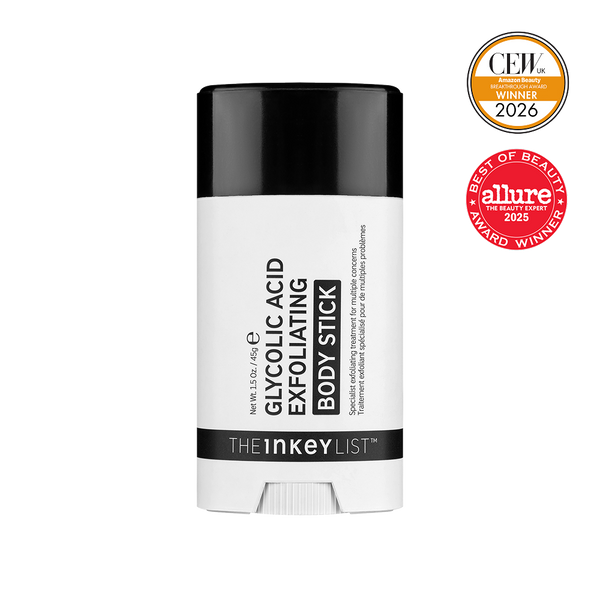
Our Glycolic Acid Exfoliating Body Stick (£15) is the right product, formulated specifically for body skin and body-sized areas. If keratosis pilaris is your primary concern, our complete guide to treating keratosis pilaris goes into proper depth, and our guide to how to exfoliate body skin covers technique. This also answers the question of whether to use retinol for keratosis pilaris: you should not, because something better exists.
For general body hydration rather than texture correction, our PHA Body Water Cream is the gentler route, and the wider body collection holds the full lineup.
The honest position, stated plainly: we do not make a dedicated body retinol lotion. Spreading a 30ml facial serum across arms, legs and back is neither practical nor cost-effective, and we are not going to pretend otherwise. Use a facial retinoid on targeted areas where skin is thin and the payoff is real, meaning neck, chest and backs of hands. Use glycolic acid on the larger, tougher, texture-driven areas.
On retinol for stretch marks, we will be careful and honest. Evidence for topical retinoids improving stretch marks is limited and results are inconsistent. Retinoids are also not advised during pregnancy or while breastfeeding, which is when many stretch marks form. We are not going to promise results we cannot support.
Finally, the eye contour is a separate job with its own formulation requirements, which is why we make a dedicated Retinol Eye Cream rather than suggesting you take a facial serum up to your lash line.
With the where and how covered, here is how to choose between our two retinoids.
Choosing Your Retinoid and Building Tolerance
Which INKEY Retinoid Should You Use?
Our Starter Retinol Serum (£13) is the recommendation for neck and chest. It suits anyone new to retinoids, anyone whose skin runs reactive, and anyone treating thin skin below the jawline regardless of experience. It contains 1% Granactive Pro+ and 0.01% Retinal, is clinically proven to smooth fine lines in 7 days without irritation, 95% of participants in our clinical study experienced zero irritation or redness, and it is 2x more effective than standard retinol. Because neck and chest skin is thinner and more reactive, choosing the gentler formula here is genuinely the better decision, not a downgrade.
Our Advanced 0.2% Retinal Serum (£18) is for experienced retinoid users only. It contains 0.2% encapsulated retinal and 2% Sirtalice, working 11x faster than standard retinol. It is the step up once tolerance is built, not a starting point. It has not been tested on sensitive or rosacea-prone skin, and if either describes you, this is not your product.
There is evidence behind the gentler-is-smarter recommendation. A long-term tolerance study comparing the retinoid family found retinol and retinaldehyde to be significantly less irritating than retinoic acid while still delivering benefit.
Less irritation means people actually keep using it. Consistency delivers results, not intensity.
That is the whole argument for starting gentle. The strongest retinoid available does nothing sitting in a drawer because it made your neck peel in week two. For the technical distinction between the two molecules, our guide on retinol vs retinal explains it. You can also browse the full retinol range, the anti-ageing collection, or our best retinol serums and creams guide for 2026 if you are still weighing options.
How to Build Tolerance Without Irritation
Follow this ramp rather than improvising:
- Weeks 1 and 2: Two nights a week, on non-consecutive nights. Moisturise immediately after, every time.
- Weeks 3 and 4: If your skin has stayed comfortable with no tightness, flaking or redness, move to three nights a week.
- Weeks 5 to 8: If still comfortable, move to every other night. For most people treating neck and chest, this is the right long-term destination.
- Beyond week 8: Only increase further if your skin has been completely settled for several weeks. Nightly application below the jawline is unnecessary for most people.
The rule governing every step: only increase frequency if your skin stays comfortable. Comfort is the signal, not the calendar.
Supporting tactics that make the ramp easier:
- Buffer it. Apply moisturiser before your retinoid on reactive areas, or mix the two in your palm. This slows penetration and reduces irritation without removing benefit.
- Add a hydration cushion. Our Hyaluronic Acid Serum on damp skin before your retinoid adds a layer of moisture that makes the active noticeably more comfortable.
- Try the moisture sandwich. It works particularly well on neck and chest. Our guide to the moisture sandwich method walks through it.
- Patch test first. Especially on the neck, where a reaction is far more visible. Here is why patch testing matters.
- Do not stack actives below the jawline. No acids, no vitamin C, no other exfoliants on the same night in the same area. Our guide on what not to mix with retinol covers the combinations to avoid.
- Pause when you need to. If skin becomes tight, flaky or red, stop for several nights, focus on moisturising, then restart at a lower frequency. Normal, not failure.
Clinical guidance for practitioners supports the same approach: start low, apply every other night, moisturise consistently and avoid stacking irritants. Unglamorous advice that works.
One rule underpins all of it, and it is not the retinoid.
SPF, Routine, Mistakes and Safety
The SPF Rule You Cannot Skip
Using retinol below the jawline without daily SPF actively works against you.
Retinoids increase sun sensitivity. The neck, chest and hands are the three areas people most reliably forget. And sun exposure is the main driver of the crepiness, mottled pigmentation and fine lines you are using the retinoid to treat. Skipping sunscreen while using retinol on your chest undoes each night’s work every morning. The Cleveland Clinic guidance on sun damage and photoageing sets out the mechanism.
Apply a broad spectrum sunscreen every morning to face, neck, chest and the backs of the hands, and reapply across long days outdoors. Our Dewy Sunscreen SPF 30 works comfortably under makeup and across the neck and chest, and our SPF guidance page explains how to apply enough of it. British weather is not an exemption, incidentally. UVA passes through cloud and glass year-round.
A Simple Weekly Routine for Neck, Chest and Body
- Two to three evenings a week: Cleanse. Apply your retinoid thinly to face, neck and chest. Follow with moisturiser. Finish with the Neck Stick step.
- Remaining evenings: Cleanse, hydrate, moisturise. No actives below the jawline.
- One to two times a week in the shower: Glycolic body stick on arms, legs or back for texture.
- Every morning without exception: Moisturiser and SPF on face, neck, chest and hands.
That is the entire routine. Deliberately simple, because complicated routines get abandoned.
Mistakes to Avoid
- Using the same amount of product on your neck as on your face.
- Applying to freshly shaved or waxed skin.
- Layering retinol over other actives below the jawline.
- Stopping after two weeks because nothing has changed. Below the jawline, meaningful change takes months.
- Skipping SPF.
- Using retinol on the body to treat keratosis pilaris. That is a glycolic acid job.
- Treating the chest only in summer. It is a year-round area.
Who Should Not Use Retinol, and When to See a Professional
Retinoids are not advised during pregnancy or while breastfeeding without speaking to a doctor first. This applies to the neck and chest exactly as it does to the face.
If you have rosacea, eczema or a compromised barrier on the neck or chest, speak to a healthcare professional before starting. You should not use our Advanced 0.2% Retinal Serum, which has not been tested on sensitive or rosacea-prone skin. If you suspect you are simply on the reactive end of normal rather than managing a diagnosed condition, our guide on retinol and sensitive skin will help you judge.
Persistent redness, a rash, or a reaction that does not settle within a few days of pausing means stop and seek advice. Retinol can cause irritation resembling a rash on the neck, usually from too much too soon, but anything that does not resolve after stopping is worth having looked at properly.
Significant laxity or sagging is beyond what any topical can address. We would rather say so than take your money. If that is your main concern, a consultation with a qualified professional is the honest route.
For further reading on related neck concerns, we have separate guides on how to get rid of neck lines and on fighting tech neck.
The Bottom Line on Retinol for Your Body
Retinol has a genuine, evidence-supported place below the jawline, specifically on the neck, the chest and the backs of the hands. The rules that determine whether it works are unglamorous and consistent: use less product than on your face, apply in the evening only, start at two to three nights a week, follow with moisturiser every single time, and apply SPF every morning without exception.
On thin, reactive skin, gentler is the smarter choice rather than the cautious one, which is why our Starter Retinol Serum is our recommendation for the neck and chest. For rough body texture, bumpy arms and ingrown hairs, glycolic acid remains the right tool, and we would rather point you there than sell you a retinoid that will underperform.
Progress below the jawline is measured in months. Consistency beats intensity every time, and the routine you can genuinely maintain will always outperform the aggressive one abandoned in week three.
If you are new to retinoids, start with our Starter Retinol Serum (£13) and pair it with our Bio-Active Ceramide Neck Stick (£15) for the neck. Browse the full retinol range or read our retinol ingredient guide if you want the science first, and if you are still comparing options, our best retinol serums and creams guide for 2026 will help you decide. Because at The INKEY List, we give a care.
Frequently Asked Questions
Got a question?
Our askINKEY team are a friendly bunch of skincare experts with deep product knowledge and zero judgement. Whether you're an ingredient obsessive or just starting out, we'll make it make sense. No question too big. No question too small. We Give A Care, Every Day.


