



How to Prevent Jowls: What Actually Works, and What Doesn’t
What causes jowls, whether face yoga helps, and the prevention habits that stand up to the evidence.
Author
askINKEY skincare advisor
Published
05 September, 2026
Time to read
10 minutes
Jowls are the soft, slightly loose skin and tissue that form along and just below the jawline as facial structure and skin quality change with age. This article explains how to prevent jowls as far as that is genuinely possible, and it is honest about where the limits are.
Here is what we cover: what jowls are and where they form, what causes them, whether facial exercises and face yoga help, at what age they typically start, the prevention habits with real evidence behind them, what skincare can genuinely do, and when it is worth speaking to a professional. The face yoga question comes up early, because it is the thing most people want answered first.
Before any of that, the honest expectation. You cannot prevent ageing, and no topical product changes facial structure. What you can do is slow the skin-quality contributors and delay visible change. Everything that follows sits inside that boundary.
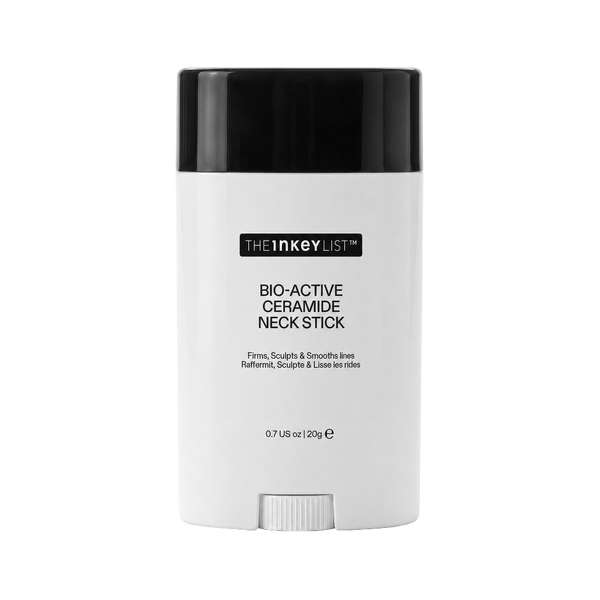
Our Bio-Active Ceramide Neck Stick (£15) is made for this exact area, so it appears a few times below. If you are working through several concerns, our 10 Most Common Skincare Concerns guide is the wider hub, and our anti-ageing collection is the category to browse.
Let’s begin with what is actually happening under the skin.
What Are Jowls, and Where Do They Form?
Jowls form where the jawline meets the lower cheek. They appear as skin and soft tissue that once sat higher on the face descend and settle along the jaw, softening what used to be a defined edge.
The location is the key to understanding them. The jawline is a junction where bone, fat, ligament and skin all meet, so a change in any one of the four shows up in the same spot. That is why the jaw often registers visible change before people expect it, and why it can look quite different depending on the angle or the lighting. Research in the Journal of Cosmetic Dermatology describes lower face ageing as precisely this layered process, involving fat pad descent and the loosening of retaining ligaments.
It is worth separating jowls from the concerns they get confused with, because they are not the same and they do not respond to the same things.
- Jowls are a contour concern at the jaw junction.
- Horizontal neck lines are creases across the neck, covered properly in how to get rid of neck lines.
- Crepey skin is a texture concern, explained in what causes crepey skin.
- A double chin relates to fullness beneath the chin, which is different again.
Plenty of people have more than one at the same time. Knowing which is which is what stops you buying the wrong thing.
Sagging jowls: what does that actually mean?
Sagging jowls describes the point at which that softness along the jaw becomes a visible loss of definition rather than a subtle change. It is the same process, further along.
The word sagging does a lot of work in skincare marketing, so let’s be specific about it here. What is sagging is not simply loose skin. It is tissue that has moved from where it used to sit, combined with skin that has less capacity to hold its shape than it once had. Both parts matter, and only one of them is influenced by what you put on your face.
That distinction sets up everything that follows, including the question most people arrive with.
What Causes Jowls? The Four Drivers
Jowls are caused by four things happening together: the jawbone loses volume, facial fat pads deflate and shift downwards, retaining ligaments loosen, and the skin loses collagen and elastin. Three of those four are structural.
Three of the four drivers behind jowls are structural. No topical product changes them. That is not a reason to give up, it is the reason the remaining advice is worth following properly.
Here is each one in turn.
Bone resorption
The jawbone changes shape over time, losing volume and definition, with the chin retruding slightly and the jaw angle softening. Research on ageing of the mandible documents these changes and what they mean aesthetically.
The jawbone is the scaffolding. When the scaffolding reduces, everything draped over it has further to fall and less to hold onto. This is structural, and no serum reaches it.
Fat pad descent and deflation
Facial fat sits in distinct compartments rather than as one even layer, and they change in two different ways. Deeper pads deflate, losing volume and support. More superficial pads descend, sliding down and gathering along the jaw.
Those are two separate processes and most articles treat them as one. Together they explain why a face can look flatter across the upper cheek and heavier along the jaw simultaneously. Structural, both of them.
Retaining ligament laxity
Retaining ligaments tether facial soft tissue to deeper structures, holding everything roughly where it belongs. Over time they attenuate and loosen, and once the tethering weakens, the tissue above is free to move.
This is why jowls can seem to appear rather suddenly to the person noticing them, even though the underlying change has been slow and steady. Structural again.
Collagen and elastin loss
This is the only driver skincare has any legitimate influence over. Skin loses collagen and elastin as we age, and the elastic fibres responsible for skin’s snap-back quality fragment and lose organisation. Skin then drapes rather than recovering when tissue beneath it shifts.
Even here, keep the scope honest. The influence is on skin quality, firmness and appearance, not on structure. For the full picture, read collagen for skin: what you need to know.
Menopause deserves a specific mention. According to the American Academy of Dermatology, skin loses approximately 30% of its collagen in the first five years after menopause. A drop that steep in that short a window is why jawline change so often feels like it accelerated rather than crept. If loss of firmness sits alongside other concerns for you, our 10 Most Common Skincare Concerns guide covers how they interact.
Now, the question that brings more people to this topic than any other.
Do Facial Exercises or Face Yoga Prevent Jowls?
The evidence that facial exercises or face yoga prevent or reduce jowls is weak. The research is limited, the studies that exist are small, and none of them demonstrate an effect on the structural drivers described above.
This deserves a proper explanation rather than a one-line dismissal, because it is a reasonable question and the reasoning matters.
The core issue is mechanism. Jowls are largely a matter of bone volume, fat pad position and ligament laxity. Facial exercises work the muscles. But strengthening a muscle does not restore lost bone, does not lift a fat pad back to where it used to sit, and does not re-tension a ligament that has attenuated. The muscle is simply not the thing that changed.
There is a second consideration. Some facial exercise routines involve repeated, exaggerated expressions held or repeated many times. Repetitive creasing is not obviously beneficial for skin that is already losing elasticity. We would not go as far as saying face yoga causes lines, because the evidence does not support that claim either. But the argument that it prevents them is not well supported, and the opposite argument is at least as plausible.
Does face yoga work for jowls?
For the structural component, no. There is no good evidence that face yoga alters bone, fat pad position or ligament tension.
For how your face feels and looks day to day, it is more nuanced. Facial massage feels genuinely pleasant, encourages a few minutes of attention to an area most people ignore entirely, and can temporarily reduce the look of puffiness, particularly in the morning. That is a real benefit, just a modest and short-lived one. It is not the same as prevention.
We are not being sniffy about this. Face yoga is free, non-invasive and enjoyable, and those are entirely sensible reasons to try something. Our job is to be honest about what it does, not to make anyone feel silly for asking.
How to minimise the appearance of jowls day to day
If you want a daily ritual that feels like face yoga but delivers something measurable alongside it, use our Bio-Active Ceramide Neck Stick (£15) with upward strokes across the neck and jawline. It is a solid, gua sha-inspired stick designed for exactly this area.
Be clear on what that is and is not. It is an effective way to apply actives to the jaw and neck daily, plus a pleasant two-minute habit. It is not a lifting exercise, and we would not describe it as one.
Beyond that, the day-to-day levers that genuinely affect how defined a jawline looks are hydration, barrier support and sun protection, all covered below. For a related read on the same visual goal via evidence-backed routes, see how to get plump skin.
With the biggest question answered, let’s talk about timing.
At What Age Do Jowls Start, and Can You Really Prevent Them?
Most people notice softening along the jawline from their late 30s into their 40s. The underlying changes begin earlier, and the timing varies considerably with genetics, cumulative sun exposure and lifestyle.
That variation is substantial. Two people of the same age can read a decade apart, and much of that difference traces back to accumulated UV exposure rather than genetic luck.
Can you prevent jowls outright? No. You cannot prevent ageing and you cannot prevent structural change. What you can do is slow the skin-quality contributors and delay when visible change appears. When people search how to stop jowls, that is the real answer to the question underneath it: progression can be influenced, at the skin-quality level.
Can you prevent jowls in your 20s and 30s?
This is the highest-leverage window. In your 20s and 30s you are protecting collagen and elastin you still have, rather than trying to compensate for what has already gone. Preservation is far easier than improvement, and sun protection in particular compounds across decades.
For more on timing, see when should I start using anti-ageing products.
Is it too late to start?
No. Sun protection and retinoid use improve skin quality at any age, even when the structural component is already well established. Improved hydration, smoother texture and better firmness all change how the jawline reads.
What shifts with age is the realistic expectation, not whether the habits are worth having. Our best anti-ageing skincare routine is the natural next read.
Now for the habits with genuine evidence behind them.
The Prevention Habits With the Strongest Evidence
Prevention advice varies wildly in quality. Some of it has randomised controlled trials behind it. Some of it is a plausible-sounding theory repeated often enough to feel true. Here it is, ranked honestly.
Daily broad-spectrum sun protection: highest evidence
This is the strongest lever available, and nothing else is close.
UV exposure is the main driver of premature collagen and elastin breakdown. It activates enzymes that degrade the collagen and elastin you already have, while suppressing new production. Because collagen and elastin loss is the one jowl driver that responds to anything you do, protecting it is where effort pays best. The British Journal of Dermatology treats UV protection as foundational to any topical rejuvenation strategy, and a randomised controlled trial on daily sunscreen use found roughly 24% less skin ageing among daily broad-spectrum users compared with discretionary use.
The practical failure point is specific and almost universal. People stop applying at the jawline. The face is protected, the jaw and neck are not, and after enough years that under-protection shows in precisely the area this article is about.
Our Dewy Sunscreen SPF 30 (£15) is 50ml, broad-spectrum against UVA and UVB, and suitable during pregnancy and breastfeeding. Usefully for this topic, its own usage guidance is to apply generously to face and neck, which is exactly the point being made here. Browse our SPF collection, or read our guide to SPF for the category basics.
Not smoking: strong evidence
The evidence here is unusually persuasive, because the research design controlled for genetics almost perfectly.
A study of identical twins published in Plastic and Reconstructive Surgery compared standardised photographs of twin pairs with differing smoking histories. Smoking primarily affected the middle and lower thirds of the face, with jowls among the features most clearly worsened, while the upper face showed far fewer differences.
In identical twins, as little as a five-year difference in smoking history produced visible differences in facial ageing, concentrated in the middle and lower thirds of the face.
Identical genes, identical bone structure, different jawlines. It is difficult to argue with.
Stable weight: moderate evidence
Repeated significant weight fluctuation stretches and re-stretches the skin of the lower face. Each cycle asks skin to accommodate a different volume, and skin with reduced elasticity recovers less completely each time.
This is presented neutrally. Weight changes for many reasons, plenty of them outside anyone’s control. The point is only that repeated large swings place more demand on skin elasticity than a steady weight does.
Sleep position: low evidence
You will find a great deal of confident advice about sleeping on your back to prevent jowls. Treat it with scepticism.
The mechanism is plausible, since side sleeping does compress one side of the face for hours. But the evidence that it meaningfully causes or prevents jowls is weak, and we would rather label a theory as a theory. If you sleep on your back already, good. If you do not, this is not worth worrying about.
Ranking these honestly tells you where to put your attention: a great deal on sunscreen, essentially none on your pillow.
Behaviour covered. On to what you actually apply.
What Skincare Can Genuinely Do for Sagging Jowls, and Where the Ceiling Is
Skincare improves skin quality, firmness and the appearance of the jaw and neck. It does not change bone, fat pads or ligaments. That ceiling applies to every product from every brand, ours included.
If you have been searching for a jowls treatment, this is the honest framing: there is no topical treatment for jowls as a structural concern, but there is genuinely useful topical care for the skin quality that affects how they look. Within that ceiling, here is what carries the most weight.
Retinoids: highest evidence
Retinoids are the clinical gold standard for improving skin firmness and texture. They support skin renewal and the appearance of firmness with consistent, long-term use, and the British Journal of Dermatology covers them as a core topical rejuvenation strategy.
Two honest caveats. Results are gradual, measured in months. And consistency matters far more than strength, because a gentle retinoid used regularly for a year beats a strong one abandoned in week three. If you are starting out, our Starter Retinol Serum (£13) is the sensible entry point for exactly the reader this article is written for. Read retinol explained for the basics.
Peptides: moderate evidence
Peptides are short chains of amino acids that act as signals in the skin, supporting the appearance of firmness. The evidence is moderate, which is better than nothing and not as strong as retinoids, and we would rather say so.
We cover it honestly in do peptides really work, and peptides vs retinol helps if you are choosing between them. See also peptides explained and our peptides collection.
Ceramides: barrier support and the appearance of firmness
Ceramides are lipids that occur naturally in your skin barrier. A well-supported barrier holds hydration, and better-hydrated skin looks smoother and firmer along the jaw. It is an appearance benefit, and unlike retinoids it shows up quickly, which makes the two a sensible pairing. See ceramides explained, our ceramides collection, and our Bio-Active Ceramide Moisturiser (£20).
The product built for this area
Our Bio-Active Ceramide Neck Stick (£15) exists because the jaw and neck junction is the bit almost everyone skips.
What it is: a solid, gua sha-inspired stick for the neck, jawline and decolletage. 20g, vegan.
Why it works: 0.2% Bio-Active Ceramide NP, 1% Gatuline In-Tense MB and 2% CO2llageneer. It is anhydrous, so there is no pH conflict and it layers with retinol, vitamin C and AHAs or BHAs. It contains no retinol, making it suitable during pregnancy and breastfeeding.
How to use it: glide upward across the neck and jawline, AM and PM, after serums and before moisturiser.
On results: it is clinically proven to improve tightness of the jawline (by 32% in 56 days). Clinically tested on 28 participants over 8 weeks. It is also clinically proven to improve the lifted appearance of the neck and jawline (by 26% in 8 weeks/56 days). Clinically tested on 28 participants over 8 weeks.
We attach the study condition to every claim deliberately. If you want to know what this language means when any brand uses it, read what does dermatologically and clinically tested mean.
Two others that fit here. Our 15% Vitamin C + EGF Serum (£16) offers antioxidant support against photoageing, tying back to the UV point. And our Exosome Glow Serum (£20) targets visible loss of firmness and helps redefine facial contours.
Let’s turn all of that into a routine.
A Simple Daily Routine for the Jaw and Neck
None of this is complicated. The difficulty is repetition, not complexity.
Morning:
- Gentle cleanse.
- Antioxidant serum.
- Neck Stick, gliding upward across the neck and jawline.
- Moisturiser, from our moisturisers collection.
- SPF, extended down over the jaw and onto the neck.
Evening:
- Cleanse. Our Oat Cleansing Balm (£15) is a gentle first cleanse if you wear SPF and makeup daily.
- Retinoid, on alternating nights to start.
- Neck Stick.
- Moisturiser.
If retinoids are new to you, the alternating-nights instruction is not optional. Retinol for beginners: how to start without irritating your skin covers building tolerance without the irritation that makes most people give up.
The one line worth remembering from all of this: extend everything past the jawline. Most routines stop at the chin. The jaw and neck get a fraction of the care the face does, year after year, and it shows exactly where you would predict.
Consistency beats intensity. The clinical results above came from daily use across eight weeks, not from occasional effort. Two minutes every day outperforms twenty minutes once a week.
For neck-specific product depth, fight tech neck goes further than we do here. For overall structure, see our skincare routine guide and 10 Most Common Skincare Concerns.
When to consider seeing a professional
If the structural component is your main concern, a qualified professional can talk through the options with you. Skincare will not replicate structural intervention, and we will not suggest it can.
That is simply where the honest boundary sits. Skincare and good habits do real work on skin quality. If what bothers you is the structure underneath, that is a different conversation with a different kind of expert.
The Honest Summary on Preventing Jowls
You cannot prevent ageing, and no topical product changes facial structure. What you can do is slow the skin-quality contributors and delay visible change, which is a genuinely worthwhile use of your effort and money.
The priority order is straightforward. Daily sun protection first, because the evidence is strongest by a clear margin. Not smoking second, because the twin research is unusually difficult to argue with. Consistent retinoid use and firming skincare third, because they work on the one driver that responds to topical care.
Then the smallest change with the biggest return: extend your routine past the jawline. Our anti-ageing collection is a sensible place to begin.
If you want something made specifically for the jaw and neck junction, that is precisely what our Bio-Active Ceramide Neck Stick (£15) is designed for. And if jowls sit alongside other concerns, our 10 Most Common Skincare Concernsguide will help you work out what to tackle first.
Because at The INKEY List, We Give A Care.
Frequently Asked Questions
Got a question?
Our askINKEY team are a friendly bunch of skincare experts with deep product knowledge and zero judgement. Whether you're an ingredient obsessive or just starting out, we'll make it make sense. No question too big. No question too small. We Give A Care, Every Day.


