



Can You Use Glycolic Acid When Pregnant? What the Guidance Actually Says
Glycolic acid when pregnant is generally considered suitable at over-the-counter strengths - here's what the guidance says, which percentages matter and what to pause instead.
Author
askINKEY skincare advisor
Published
05 August, 2026
Time to read
10 minutes
Topical glycolic acid at the low concentrations used in over-the-counter skincare is generally considered suitable to use when pregnant, and it is always worth confirming with your GP or midwife before you start or continue any active. That is the short answer, and most readers searching for glycolic acid when pregnant want it in the first line rather than four hundred words down the page.
This article covers what the medical guidance actually says, which percentages matter and why, which ingredients are more commonly paused instead, how to adjust your routine so your skin stays comfortable, how glycolic acid works on the body as well as the face, and where breastfeeding fits in.
The confusion is understandable. Pregnancy skincare advice online is inconsistent, and exfoliating acids tend to get grouped into one category when they behave very differently from one another. Glycolic acid works at the surface of the skin. Retinoids are absorbed systemically. Those two facts sit at the heart of why the advice differs, and they are why so much generic “avoid all actives” advice ends up being unhelpful.
If you want the product itself, our Glycolic Acid Toner is £14 and lists pregnancy and breastfeeding under Suitable for. For the wider picture, read our guide to pregnancy safe skincare, and for everything the ingredient does outside of pregnancy, our glycolic acid ingredient page is the deeper resource.
The Short Answer: Is Glycolic Acid Safe in Pregnancy?
Glycolic acid used topically, in the concentrations found in over-the-counter skincare, is generally considered safe during pregnancy. It works at the surface of the skin and only minimal amounts are expected to be absorbed into the bloodstream. Confirming with your GP or midwife is still the sensible step, particularly if you are using anything prescription.
That absorption point is the entire reason glycolic acid is treated differently to retinol. An ingredient that stays at the surface and is not meaningfully absorbed systemically presents a different question to one that enters circulation. Glycolic acid is water-soluble, it acts on the outermost layer of skin, and Cleveland Clinic describes it as generally safe in pregnancy when used in low concentrations, while recommending you check with your provider.
We will be transparent about our own position too. Our Glycolic Acid Toner lists pregnancy and breastfeeding under Suitable for on its product page, and our FAQs state it is pregnancy safe. We still recommend you check with your GP or midwife, because we do not know your medical history and they do.
There are two situations that genuinely warrant a conversation before you proceed. The first is professional or in-clinic chemical peels, which use far higher concentrations than anything sold for home use and belong in a different category entirely. The second is any prescription skincare you are already using, whether that is a topical retinoid, an antibiotic or a pigmentation treatment. In both cases the answer is not necessarily no, it is simply that the decision should involve the person overseeing your care.
That covers the headline. The next question is usually what glycolic acid actually is.
What Glycolic Acid Is and How It Works on Skin
Glycolic acid is an alpha hydroxy acid, or AHA, and it is the smallest AHA molecule of the group. It is derived from sugar cane and it is water-soluble.
Its job is straightforward. It loosens the bonds holding dead cells together at the surface of the skin so those cells shed more easily, which is why skin tends to look brighter and feel smoother with consistent use. It works on the outermost layer rather than travelling deep into the skin.
That surface-level mechanism is the pregnancy-relevant part. Because glycolic acid acts where it is applied and only minimal amounts are expected to be absorbed systemically, it is treated very differently to ingredients that are absorbed into the bloodstream and act throughout the body. The distinction is not marketing, it is pharmacology, and it is the reason medical bodies place glycolic acid and retinoids in separate categories.
If you want the full picture of what the ingredient does for texture, tone and clarity outside of pregnancy, our glycolic acid ingredient page and the wider glycolic acid collection cover it properly. For now, back to the guidance.
What the Guidance Says About AHAs in Pregnancy
This is the part that matters most, because on a topic like this our opinion is worth considerably less than what the medical bodies actually publish.
The American College of Obstetricians and Gynecologists addresses skin conditions in pregnancy directly. In its guidance on treating breakouts during pregnancy, ACOG lists glycolic acid among the over-the-counter ingredients that can be used, alongside topical benzoyl peroxide, azelaic acid and topical salicylic acid. That is a named, mainstream obstetric body putting glycolic acid on the usable list rather than the avoid list.
The American Academy of Dermatology goes a step further. Rather than simply permitting it, the AAD suggests applying a product containing glycolic acid in the evening as part of a pregnancy skincare routine, specifically in the context of pregnancy-related changes in skin colour. The same guidance names retinoids and hydroquinone among the ingredients to avoid. It is a useful page precisely because it draws that line clearly.
Cleveland Clinic is consistent with both, describing glycolic acid as generally safe during pregnancy in low concentrations and drawing a distinction between lower-strength products intended for home use and higher-strength in-office treatments, while advising you check with your healthcare provider.
For the underlying reasoning, the most useful source is a review by Bozzo and colleagues published in Canadian Family Physician, which examined the safety of skincare products in pregnancy.
Apart from a small number of specific agents, skincare products act locally and are expected to result in minimal systemic exposure, which is why topical glycolic acid use is not considered a concern in pregnancy.
Here is where we will be honest rather than selective, because you deserve the limitation as well as the reassurance. That same review is explicit that well-controlled human studies of glycolic acid use in pregnancy have not been conducted. The confidence in topical use is based on the expectation of minimal systemic absorption rather than on large human trials. The review also notes that animal studies have shown adverse reproductive effects, but at systemic doses far above anything achievable through a topical cosmetic product applied to the skin. That is important context, not a hidden warning. High-dose systemic animal exposure and a few millilitres of toner swept over your face at night are not comparable scenarios, and the review’s own conclusion reflects that.
We would rather state that plainly than pretend the evidence base is something it is not. Confidence with context is more useful to you than reassurance with the caveats removed.
For UK readers, it is worth noting how differently the regulatory position reads for retinoids. The European Medicines Agency has confirmed that oral retinoids are contraindicated in pregnancy, with formal pregnancy prevention measures attached to their use. Nothing remotely comparable exists for topical glycolic acid. That contrast is the clearest illustration of why the two ingredients should never be lumped together, and it leads directly into the question everyone asks next.
What Percentage of Glycolic Acid Is Safe During Pregnancy?
The guidance consistently uses the phrase “low concentration” without always defining it in numbers, which is frustrating when you are standing in front of your bathroom shelf trying to make a decision. In practice, what that phrase means is over-the-counter leave-on skincare rather than professional treatments. The meaningful line is not a specific percentage, it is the difference between a product formulated for daily home use and a clinical procedure performed under supervision.
There is also a formulation point that matters more than the number on the front of the bottle. Concentration and pH work together to determine how active a formula actually is. A lower percentage at a very low pH can behave more aggressively than a higher percentage at a higher pH, because pH governs how much of the acid is in its free, active form. This is why comparing two products on percentage alone tells you very little, and why a well-formulated 10% product can be gentler in practice than a poorly balanced 5% one.
Is 7% glycolic acid safe during pregnancy?
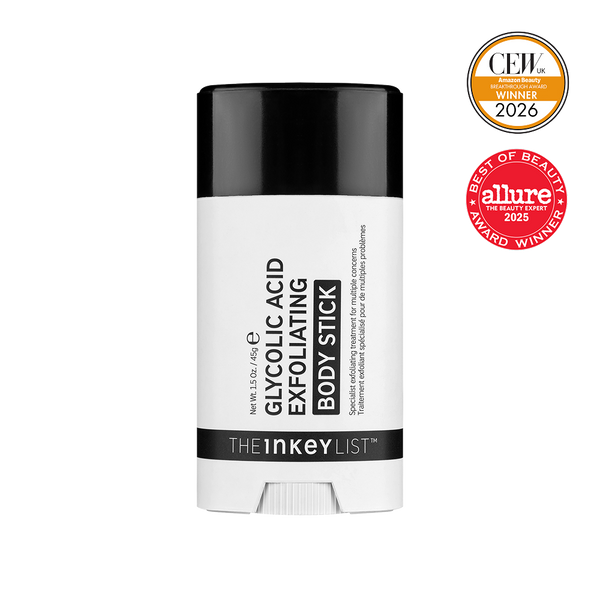
Yes, 7% sits comfortably within the over-the-counter range that guidance describes as low concentration, and it is generally considered suitable during pregnancy. Our Glycolic Acid Exfoliating Body Stick contains 7% glycolic acid and lists pregnancy and breastfeeding under Suitable for. As with any active, run it past your GP or midwife if you have any doubt.
Is 10% glycolic acid safe during pregnancy?
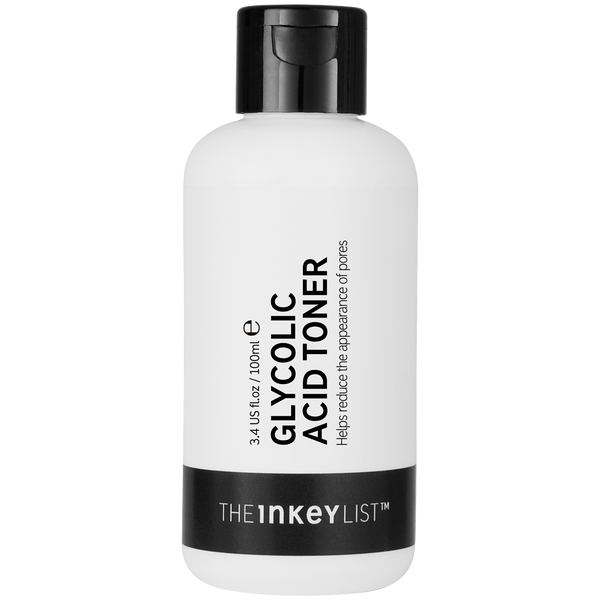
10% is still an over-the-counter concentration and is generally considered suitable in pregnancy. Our Glycolic Acid Toner is 10% glycolic acid with 5% witch hazel, formulated at pH 3.6 to 4.0, and its product page lists pregnancy and breastfeeding under Suitable for. We would still say confirm with your GP or midwife, and pay closer attention to how your skin responds than to the number itself.
What about glycolic acid peels in pregnancy?
Professional and in-clinic peels are a different category. They use much higher concentrations, they are applied under supervision, and they are not comparable to a leave-on product formulated for home use. This is not scaremongering, it is simply a conversation to have with the practitioner performing the treatment and with your GP or midwife before booking.
Full transparency on our own formulations, because most brands will not give you the numbers. The toner is 10% at pH 3.6 to 4.0, fragrance-free, gluten-free and Vegan Society certified. The Body Stick is 7% glycolic acid with 0.5% salicylic acid and 10% shea butter, in a waterless formula that has no pH. You can see the whole range on our glycolic acid collection page.
Here is the practical close, and it is the most useful thing in this section. The concentration in a standard at-home product is usually not the issue in pregnancy. Tolerance is. Skin frequently becomes more reactive during pregnancy, so a routine you handled easily before may suddenly feel like too much. Judge by how your skin responds rather than by the percentage on the label.
Why Glycolic Acid Is Treated Differently to Retinol
This is the confusion that drives most of the searching, so it is worth resolving cleanly.
Retinoids are vitamin A derivatives. They are absorbed systemically, and regulators including the EMA treat oral forms as contraindicated in pregnancy with formal prevention measures attached. Topical retinol is routinely paused as a precaution on the same reasoning. Our retinol page and our guide to what not to mix with retinol cover the ingredient itself in depth. Glycolic acid, by contrast, is a surface exfoliant with minimal expected systemic absorption. Different ingredients, different evidence, different advice.
The practical consequence is the interesting bit. If you have paused retinol for the duration of your pregnancy, glycolic acid is frequently where people turn for texture and radiance, and that instinct is consistent with the AAD’s own suggestion of an evening glycolic acid product. You are not left with nothing. You are working with a different tool.
If your previous routine involved alternating glycolic acid on some nights and retinol on others, that schedule simplifies considerably while retinol is on pause. Fewer moving parts, fewer nights to track.
One important caution though. Do not compensate for the paused retinol by increasing your glycolic acid frequency. More is not better with exfoliating acids, and over-exfoliated skin is uncomfortable at the best of times, let alone when your skin is already more reactive than usual. If you find you have pushed too far, our guide on what to do if you have over-exfoliated will help you recover.
Retinol is not the only ingredient people ask about, so here is the wider picture in brief.
Ingredients Commonly Paused in Pregnancy
This section is deliberately short. Each of these has its own dedicated guide, and pointing you to the right one is more useful than half-covering it here.
- Retinoids and retinol. Vitamin A derivatives, systemically absorbed, and the ingredient most consistently paused in pregnancy by regulators and dermatology bodies alike.
- Hydroquinone. A prescription-strength pigmentation treatment with notably higher systemic absorption than most topicals, which is why the AAD names it among ingredients to avoid.
- High-strength salicylic acid. Low-level topical salicylic acid appears on ACOG’s usable list. Higher-strength treatments and peels are the ones typically paused. Our full guide on salicylic acid in pregnancy has the detail.
- Vitamin C, PHAs and bakuchiol. All common questions, all with their own answers. See vitamin C when pregnant, PHAs in pregnancy and bakuchiol in pregnancy.
The general principle holds across all of them. Most over-the-counter topicals are low-absorption products acting at the surface, the exceptions are well documented and few in number, and your GP or midwife can confirm what applies to your circumstances. Our pregnancy safe skincare guide is the pillar that ties the whole cluster together.
One point worth pre-empting. ACOG lists topical salicylic acid among the ingredients that can be used during pregnancy, which is why our Body Stick, which contains 0.5% salicylic acid alongside its 7% glycolic acid, still lists pregnancy and breastfeeding under Suitable for. We would rather flag that now than have you discover it on the ingredients list and wonder why we did not mention it.
Now to the more encouraging side of this, which is what glycolic acid can actually do for pregnancy skin.
Pregnancy Skin Changes Glycolic Acid May Help With
Permission is one thing. Usefulness is another. Pregnancy brings a set of skin changes that exfoliation is genuinely well suited to, and a couple it is not.
Dullness and surface buildup
Hormonal shifts, disrupted sleep and changes in circulation all contribute to skin looking flatter and less reflective than usual. Because glycolic acid loosens dead cells at the surface, it addresses this directly. Skin that sheds more efficiently reflects light better, which reads as radiance. This is the change most people notice first, and it is often the fastest.
Uneven texture and congestion
Rough patches, visible blackheads and a generally uneven surface become more common as oil production shifts during pregnancy. Regular gentle exfoliation helps keep the surface clearer and smoother over time. If breakouts and blemishes have increased, the same mechanism that clears surface buildup also helps keep pores from becoming congested. Our guide on how to improve skin texture goes further on this.
Darker marks and patches, including melasma
Here we need to be honest rather than optimistic. Melasma, sometimes called the mask of pregnancy, is a hormonally driven form of pigmentation that is extremely common during pregnancy and frequently persistent. Exfoliation can improve surface dullness and help with the appearance of uneven tone, but it will not resolve hormonal pigmentation on its own, and sun exposure is one of the strongest drivers of it. Our guides on melasma and hyperpigmentation go into what actually helps.
It is worth noting that the AAD’s suggestion of an evening glycolic acid product is framed specifically around pregnancy-related changes in skin colour. That is a meaningful endorsement of the approach, but it is a suggestion about managing appearance, not a promise of clearance. Any brand telling you an at-home acid will clear pregnancy melasma is overselling.
The single highest-value habit alongside any exfoliating acid is daily sun protection. This is doubly true if pigmentation is your concern, because unprotected sun exposure will undo the work faster than any product can do it. Our Dewy Sunscreen SPF 30 is a comfortable daily option, and our SPF page explains what to look for more broadly.
Knowing what it helps with is only half of it. How you use it matters just as much.
How to Use Glycolic Acid Safely During Pregnancy
The practical rules are simple, and they matter more in pregnancy than at any other time because your skin’s tolerance may have shifted without warning.
- PM only. Our Glycolic Acid Toner is formulated for evening use, which also aligns with the AAD’s suggestion of an evening glycolic acid product.
- Start with one to three times per week. Build gradually from there if your skin is comfortable. Never begin with daily use.
- Patch test first. This is standard advice that becomes genuinely important in pregnancy, because skin can react differently than it did before. Our guide on why you should patch test explains the method.
- Do not layer with other exfoliating acids, retinol or vitamin C in the same routine. Alternate across different nights instead. Our guide to using acids in your skincare routine covers sensible combinations.
- Wear sun protection every day. Exfoliated skin is more vulnerable to UV, and pigmentation is one of the most common pregnancy skin complaints.
A simple evening routine looks like this:
- Cleanse with our Oat Cleansing Balm, £15 for 150ml, to remove makeup, SPF and the day without stripping the skin.
- Apply a hydrating serum to damp skin. Our hydrators collection has options depending on how your skin is behaving.
- Sweep our Glycolic Acid Toner over face and neck with a cotton pad, avoiding the eye area. If you are new to toners generally, our guide on whether you need a toner is a useful primer.
- Seal everything in with our Bio-Active Ceramide Moisturiser, £20, or another barrier-supporting option from our moisturisers collection.
A mild, short-lived tingle when you apply an acid is normal. Severe stinging, burning, persistent redness or a tight, uncomfortable feeling that lasts is not. If that happens, reduce frequency or stop and let your barrier recover.
The pregnancy-specific note is this. If your skin has become more sensitive than it used to be, reduce frequency rather than pushing through. Twice a week on comfortable skin will always deliver more than four times a week on irritated skin. Our toner is not recommended for sensitive skin, and our PHA Toner is the gentler alternative if that describes you now.
Is glycolic acid toner safe during pregnancy?
A glycolic acid toner used at over-the-counter strength is generally considered suitable in pregnancy. Our Glycolic Acid Toner is 10% glycolic acid at pH 3.6 to 4.0 and lists pregnancy and breastfeeding under Suitable for. Use it in the evening, one to three times per week to begin with, and confirm with your GP or midwife if you have any concerns.
Can you use glycolic acid in the third trimester?
The guidance does not change by trimester. Glycolic acid is treated the same way in the third trimester as in the first, because the reasoning about surface action and minimal systemic absorption does not shift as pregnancy progresses. What often does change is skin sensitivity and general comfort, so you may find you want to use it less frequently later on. Check with your GP or midwife if anything feels different.
Face is only part of the story though, and body concerns are where pregnancy often shows up most.
Glycolic Acid on the Body During Pregnancy
Body skin gets overlooked in pregnancy skincare conversations, which is odd, because it is frequently where the most noticeable changes happen. Keratosis pilaris bumps on the arms and thighs can become more prominent. Ingrown hairs increase, particularly when hair removal becomes more awkward. Elbows, knees and heels get rougher. Body breakouts appear on the back and chest. Underarm and bikini line discolouration becomes more visible.
The same absorption logic applies to body skin as to the face. Glycolic acid applied topically acts at the surface, and only minimal amounts are expected to be absorbed systemically, which is why topical body use is generally considered suitable in pregnancy. Confirm with your GP or midwife, as always.
Our Glycolic Acid Exfoliating Body Stick is £15 for 45g and was built for exactly these concerns. It contains 7% glycolic acid, 0.5% salicylic acid and 10% shea butter in a waterless formula, so there is no pH to consider. It is fragrance-free, gluten-free, alcohol-free, silicon-free, clinically tested and Vegan Society certified, and its product page lists pregnancy and breastfeeding under Suitable for.
On that 0.5% salicylic acid, we would rather address it head on. Some readers will spot salicylic acid on the ingredients list and immediately worry, because it is one of the ingredients that gets flagged in generic pregnancy advice. The context matters. This is a low level in a leave-on topical product, and ACOG lists topical salicylic acid among the over-the-counter ingredients that can be used during pregnancy. The concerns you may have read about relate to high-strength treatments and oral forms. Confirm with your GP or midwife, and read our dedicated guide on salicylic acid in pregnancy if you want the full reasoning.
The Body Stick is for body only. It is not formulated for the face or neck. For facial use, our Glycolic Acid Toner or our gentler PHA Toner are the appropriate choices.
Practical notes for using it well:
- Apply directly to clean, dry skin. There is no need to rinse it off.
- Start with two to three times per week and build from there.
- Avoid broken, cracked or actively irritated skin.
- Wait at least eight hours after hair removal before applying.
- On underarms, wait ten to fifteen minutes before applying deodorant.
- Apply sun protection to any treated areas that will be exposed to daylight.
One sensible pregnancy addition. Avoid the bump area if the skin there is stretched, itchy or irritated. Stretching skin is already under mechanical stress and adding an exfoliating acid to it is unnecessary.
The verified claims for the Body Stick, with their study footnotes:
- Clinically proven to visibly improve keratosis pilaris in 7 days **4-week clinical study of 21 people
- Visibly reduces ingrown hairs after 7 days *4-week consumer study of 100 people
- Visibly improves dry, rough and flaky skin after first use *
- Visibly improves dry, hard, cracked heels in 3 days *
- Visibly reduces underarm and bikini line discolouration after 28 days *
- Visibly reduces body breakouts in 7 days *
For more on the specific concerns, our complete guide to treating keratosis pilaris and our guide on how to exfoliate body skin both go deeper.
Of course, some readers will read all of this and still prefer to keep things simple. That is a completely reasonable position.
Gentler Alternatives If You Would Rather Skip Acids
Deciding to simplify your routine during pregnancy is a perfectly valid choice, and we are not going to try to talk you out of it. Plenty of people want fewer variables and fewer things to think about during these nine months, and that instinct usually serves their skin well.
If you want the benefits of exfoliation with a lower risk of irritation, polyhydroxy acids are the gentler route. PHA molecules are considerably larger than glycolic acid molecules, so they work more slowly and stay at the very surface, which typically means less irritation for reactive skin. They also have humectant properties, meaning they draw in moisture as they work. Our comparison of PHA toner versus glycolic acid toner breaks down the difference properly, and our guide on PHAs in pregnancy covers the safety question.
For the face, our PHA Toner is £14. Our own Glycolic Acid Toner page already directs sensitive skin here, so this is a genuine recommendation rather than an upsell. For the body, our PHA Body Water Cream is £15 and works well either alongside the Body Stick on alternate days or entirely instead of it.
There is also a strong case for skipping exfoliating actives altogether and focusing on hydration and barrier support. A gentle cleanser like our Oat Cleansing Balm, a hydrating serum and a barrier-supporting moisturiser will do more for day-to-day comfort during pregnancy than almost any active ingredient. Pregnancy skin is frequently drier, itchier and more reactive, and those three steps address that directly.
Pausing an ingredient is not a setback. Your skin does not lose progress because you took a break, and everything you paused will still be there afterwards.
Speaking of afterwards, breastfeeding is the next question most people have.
Can You Use Glycolic Acid While Breastfeeding?
Yes, glycolic acid is generally considered suitable while breastfeeding, and the reasoning is identical to pregnancy. It acts at the surface of the skin with minimal expected systemic absorption, which is why Cleveland Clinic groups pregnancy and breastfeeding together in its guidance. Confirm with your GP or midwife, particularly in the early weeks.
Both our Glycolic Acid Toner and our Glycolic Acid Exfoliating Body Stick list pregnancy and breastfeeding under Suitable for on their product pages.
One practical point that is easy to miss. Avoid applying exfoliating acids to the chest or breast area where an infant may make direct contact. This is straightforward common sense rather than a specific warning about glycolic acid, and it applies to most leave-on actives.
Skin often changes again postpartum as hormones shift back, so reintroduce actives gradually rather than picking up exactly where you left off. Treat it as starting fresh, at one to three times per week, and build from there based on how your skin actually responds.
When to Speak to a Professional
There are a handful of situations where a conversation is genuinely worth having before you make a decision:
- You are using, or considering, any prescription skincare.
- You are planning a professional or in-clinic chemical peel.
- You have a diagnosed skin condition such as eczema, psoriasis or dermatitis.
- Your skin has become markedly more reactive than it used to be.
- You have pigmentation changes you would like assessed properly.
Our position is straightforward. We can explain what an ingredient does, how it behaves on skin and what published guidance from bodies like ACOG says about it. What we cannot know is your medical history, your pregnancy or anything else specific to you. Your GP or midwife can, and that is why every safety statement in this article is paired with the recommendation to check.
Checking is routine, not a red flag. Asking your midwife about a toner at a scheduled appointment takes thirty seconds and removes the doubt entirely. Our pregnancy safe skincare guide is a good thing to read beforehand so you arrive with the right questions.
Conclusion
Topical glycolic acid at over-the-counter concentrations is generally considered suitable both during pregnancy and while breastfeeding. Guidance from ACOG, the AAD and Cleveland Clinic supports this, the reasoning rests on the fact that it acts at the skin surface with minimal expected systemic absorption, and confirming with your GP or midwife is always the sensible final step. The practical rules are simple enough to remember: evenings only, one to three times per week to start, patch test first, avoid layering with other acids, and protect your skin from the sun every day.
The single most useful thing to take away is this. The ingredient most people need to pause during pregnancy is retinol, not glycolic acid. Those two get grouped together constantly in generic advice, and they should not be. Clear guidance, proven ingredients and a routine you can actually keep up with will always beat an anxious internet search at eleven at night.
Ready to Build a Routine That Works Through Pregnancy?
For your face, our Glycolic Acid Toner is £14, formulated at 10% with a pH of 3.6 to 4.0, and lists pregnancy and breastfeeding under Suitable for.
For body concerns like keratosis pilaris, ingrown hairs and rough patches, our Glycolic Acid Exfoliating Body Stick is £15 and delivers 7% glycolic acid with shea butter.
If you would rather go gentler, our PHA Toner is £14 and is our recommendation for more sensitive or reactive skin. You can browse everything on our glycolic acid collection page.
Not sure where to start? Our skincare quiz will build a personalised routine based on your skin, with no purchase needed.
Whatever you choose, run it past your GP or midwife first. It takes a moment and it settles the question properly.
Frequently Asked Questions
Got a question?
Our askINKEY team are a friendly bunch of skincare experts with deep product knowledge and zero judgement. Whether you're an ingredient obsessive or just starting out, we'll make it make sense. No question too big. No question too small. We Give A Care, Every Day.


