



Can You Use Vitamin C When Pregnant?
Wondering if Vitamin C is safe during pregnancy? Discover why this antioxidant is considered pregnancy-friendly, how it helps brighten and protect skin, and the best way to include it in your daily routine.
Author
askINKEY skincare advisor
Published
07 July, 2026
Time to read
13 minutes
Yes - topical vitamin C is widely considered safe to use during pregnancy. That is the short answer, and it is the right place to start. If you have been staring at your serum wondering whether to put it back on the shelf for the next nine months, the evidence points clearly in one direction: you do not need to.
Before going further, one important note: this blog focuses entirely on topical vitamin C - meaning vitamin C applied to the skin in the form of serums, moisturisers, and other skincare products. This is a completely separate conversation from oral vitamin C supplementation during pregnancy, which is governed by different considerations and guidance. If you have questions about vitamin C supplements, please speak with your midwife, GP, or healthcare provider. As with any change to your skincare routine during pregnancy, it is always advisable to consult your healthcare provider for personal guidance specific to your situation.
What this blog covers: the science behind why topical vitamin C is considered safe during pregnancy, the specific forms of vitamin C best suited to pregnancy-sensitised skin, the real skin benefits vitamin C can offer at a time when your complexion needs all the help it can get, which INKEY products are confirmed pregnancy and breastfeeding safe, how to build vitamin C into your routine safely, what to avoid layering it with, and answers to the most-searched questions on this topic.
For a complete overview of how vitamin C works in skincare, visit our What is Vitamin C? guide. And if you want the broader picture of how pregnancy affects your skin and which ingredients to navigate carefully, our complete guide to pregnancy-safe skincare is the place to start.
Why Pregnancy Changes Your Skin
Pregnancy does not just change your body - it changes your skin in ways that can feel sudden, unpredictable, and occasionally frustrating. Understanding what is actually happening beneath the surface makes it much easier to choose the right ingredients and set realistic expectations for what your skincare can do.
The most significant driver of pregnancy-related skin changes is oestrogen. As oestrogen levels surge, melanin production increases dramatically - and with it, the likelihood of hyperpigmentation. Melasma, sometimes referred to as the “mask of pregnancy,” is one of the most common skin concerns during this period, typically presenting as brown or grey-brown patches across the cheeks, forehead, upper lip, and chin. It affects a significant proportion of pregnant women, and it is directly linked to the hormonal changes that stimulate melanocytes - the cells responsible for producing melanin - into overdrive.
Beyond pigmentation, hormonal shifts during pregnancy can slow the rate of skin cell turnover. The result is often dullness and an uneven complexion - that feeling that your skin has lost its usual brightness or clarity. This is not permanent, but it is real, and it is one of the reasons why the right skincare ingredients matter more than ever during pregnancy.
Skin sensitivity also tends to increase. Products and ingredients that your skin previously tolerated comfortably can suddenly feel irritating, tight, or reactive. This heightened sensitivity is one of the key reasons why the form of vitamin C used in a product becomes especially important during pregnancy - more on that in the sections ahead.
Finally, there is UV sensitivity to consider. Pregnancy increases photosensitivity, meaning the skin is more vulnerable to UV-induced damage and more prone to developing or worsening pigmentation when exposed to sunlight. This amplifies the need for reliable antioxidant protection - which is precisely one of vitamin C’s most well-established roles in skincare.
For a full breakdown of how pregnancy affects your skin and which ingredients to navigate carefully, see our complete guide to pregnancy-safe skincare.
Understanding why your skin behaves differently during pregnancy makes the case for vitamin C far clearer - and it is a case worth making properly.
Is Topical Vitamin C Safe During Pregnancy?
This is the question most people are really here to answer, and it deserves a thorough, science-backed response - not a vague “probably fine” or an overcautious “speak to your doctor and avoid everything.” The evidence here is clear, and it is worth walking through it carefully.
The direct answer: Yes. Topical vitamin C is widely considered safe during pregnancy. The distinction between topical and oral use is the critical starting point. When you apply a vitamin C serum to your skin, you are not ingesting it, and it does not behave in the same way as a supplement taken orally.
Why topical vitamin C is considered safe - the science:
Vitamin C is water-soluble. This is significant. As noted in a clinical review published in the NIH/PubMed database, topical vitamin C works primarily within the upper layers of the skin - the epidermis and dermis. Its systemic absorption - meaning the amount that actually enters the bloodstream - is minimal at the concentrations used in standard skincare formulations. This is fundamentally different from orally ingested supplements, which are absorbed through the digestive system and enter the bloodstream directly.
Harvard Health Publishing describes topical vitamin C as a skin antioxidant that combats free radical damage and can improve overall skin appearance - benefits that are well-established and carry no systemic risks associated with topical application. The ingredient has been studied extensively in dermatology for decades, and its safety profile in topical use is well-documented.
Vitamin C is not a retinoid:
One of the most common points of confusion when navigating pregnancy skincare is the grouping of “active ingredients” together as a single category to avoid. This is not accurate. Retinol and prescription retinoids - derivatives of vitamin A - are among the most consistently advised-against skincare ingredients during pregnancy. They carry a different risk profile entirely, related to how vitamin A derivatives can behave systemically when absorbed. Unlike retinol, which is a vitamin A derivative and is avoided during pregnancy, vitamin C is ascorbic acid - a completely separate molecule with a completely different mechanism of action and absorption profile.
Vitamin C is not a high-absorption acid with pregnancy restrictions:
Certain ingredients are avoided during pregnancy due to concerns about systemic absorption at higher concentrations - high-percentage salicylic acid treatments and hydroquinone are the most commonly cited examples. Topical vitamin C in standard skincare concentrations does not share these concerns. It does not penetrate the skin barrier in significant quantities, and there is no clinical evidence linking topical vitamin C use to adverse pregnancy outcomes.
A note on formulation:
Not all vitamin C formulas are equal, and during pregnancy, the specific form of vitamin C in a product matters. High-concentration L-Ascorbic Acid formulas, while highly effective, carry a greater potential for skin irritation - which can become more pronounced when skin is already sensitised by hormonal changes. Stable, gentler derivatives like Ascorbyl Glucoside and Sodium Ascorbyl Phosphate offer the same core benefits with significantly lower irritation risk, making them the more practical choice during pregnancy. This is covered in depth in the next section.
The scientific picture is consistent: topical vitamin C, particularly in stable, well-formulated concentrations, is considered safe for use during pregnancy. As always, consult your midwife or GP if you have any personal concerns or if your skin is behaving unusually during this time.
INKEY’s Pregnancy-Safe Vitamin C Options
Knowing that topical vitamin C is safe is one thing. Knowing which products to choose - and why - is where the practical decision-making happens. Both of the following INKEY vitamin C products are explicitly confirmed as pregnancy and breastfeeding safe, and both are formulated with the gentler, stable vitamin C derivatives that are most appropriate for pregnancy-sensitised skin.
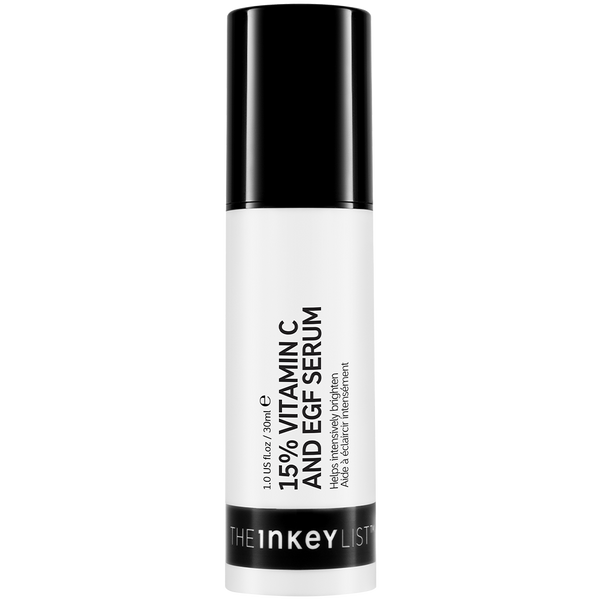
15% Vitamin C + EGF Serum - £16
The 15% Vitamin C + EGF Serum is the most targeted vitamin C option in the range, and it is where the most impressive clinical evidence sits.
The active form of vitamin C in this formula is 15% Ascorbyl Glucoside - vitamin C bonded to glucose, which creates a significantly more stable and gentler derivative than L-Ascorbic Acid. Ascorbyl Glucoside converts to active vitamin C on the skin, delivering brightening, antioxidant, and pigmentation-targeting benefits without the irritation risk that can come with higher-concentration L-Ascorbic Acid formulas. For skin that has become more reactive during pregnancy, this stability is not just a convenience - it is a meaningful practical advantage.
Alongside Ascorbyl Glucoside, the formula contains 1% Epitensive EGF - a plant-derived Epidermal Growth Factor that supports skin renewal and elasticity. During pregnancy, when skin elasticity becomes a concern and cell turnover slows, the combination of a brightening vitamin C derivative with a skin-renewal support ingredient makes this a particularly well-suited choice.
The clinical results speak for themselves: in a four-week independent consumer trial of 64 participants, 87% agreed that their skin looks brighter, 88% saw visible improvement in skin tone and texture, and 84% agreed that their skin looks healthier and less dull.
The formula is fragrance-free, vegan certified, and dermatologically tested - all of which matter when your skin is at its most sensitive.
Vitamin B, C & E Moisturiser - £12
The Vitamin B, C & E Moisturiser is the everyday multitasker - a lightweight, hardworking moisturiser that also confirmed as pregnancy and breastfeeding safe.
The vitamin C in this formula is Sodium Ascorbyl Phosphate - another stable, gentle derivative with a low irritation profile, well-suited to daily use on sensitised skin. It works alongside Niacinamide (Vitamin B3) - which helps to support skin barrier function and even out skin tone - and Vitamin E, a complementary antioxidant that works in synergy with vitamin C. Together, these three ingredients create a straightforward, reliable daily moisturiser that supports the skin through the complexity of pregnancy-related changes.
At £12 for 50ml, it is also one of the most accessible options for daily vitamin C maintenance.
For anyone looking to maintain a simple, evidence-backed routine during pregnancy, combining the 15% Vitamin C + EGF Serum with the Vitamin B, C & E Moisturiser gives you layered antioxidant protection, brightening, and skin renewal support - all from confirmed pregnancy-safe formulas.
You can browse the full range of pregnancy and breastfeeding-safe INKEY products at the pregnancy and breastfeeding safe collection, and explore all vitamin C products at the vitamin C collection.
The form of vitamin C matters as much as the fact of using it - and that is worth exploring in more detail.
Understanding the Different Forms of Vitamin C
Walk into any skincare conversation about vitamin C and you will quickly encounter a range of terms - L-Ascorbic Acid, Ascorbyl Glucoside, Sodium Ascorbyl Phosphate. These are not interchangeable. They describe genuinely different molecules with different properties, different stability profiles, and different levels of skin tolerance. During pregnancy, when skin sensitivity is heightened and you are understandably cautious about what you apply, understanding these differences helps you make a genuinely informed choice.
For a deeper dive into all things vitamin C in skincare, visit the Vitamin C ingredient guide.
L-Ascorbic Acid
L-Ascorbic Acid is the purest and most potent form of vitamin C used in skincare. It is the form that appears most frequently in clinical research, and it delivers results at concentrations typically ranging from 10% to 20%. The trade-off is instability - L-Ascorbic Acid oxidises quickly when exposed to air and light, which is why many high-strength vitamin C serums come in opaque or airless packaging. More significantly for pregnancy: it carries a higher potential for skin irritation, particularly at higher concentrations. Low pH formulations needed to stabilise L-Ascorbic Acid can cause stinging, redness, or sensitivity reactions on skin that is already reactive. This does not make it unsafe during pregnancy - it simply makes it less practical for many people whose skin has become more sensitised.
Ascorbyl Glucoside
Ascorbyl Glucoside is a stabilised vitamin C derivative created by bonding ascorbic acid to a glucose molecule. This bond gives it significantly greater stability than L-Ascorbic Acid - it does not oxidise as readily, which means the formula remains effective for longer. On the skin, the glucose bond is cleaved by naturally occurring skin enzymes, releasing active vitamin C at the skin’s surface. The result is the same core benefits - antioxidant protection, tyrosinase inhibition for pigmentation, collagen support - delivered in a format that is substantially gentler and better tolerated. This is the form used in the 15% Vitamin C + EGF Serum, and it is the form most suited to pregnancy-sensitised skin.
Sodium Ascorbyl Phosphate
Sodium Ascorbyl Phosphate is another stable, water-soluble vitamin C derivative with a low irritation potential, making it suitable for daily use on a wide range of skin types. It converts to ascorbic acid after absorption, delivering antioxidant and brightening activity with excellent tolerability. This is the form used in the Vitamin B, C & E Moisturiser, where it works alongside Niacinamide and Vitamin E for a comprehensive daily antioxidant moisturiser.
The practical conclusion for pregnancy:
During pregnancy, stable derivatives - Ascorbyl Glucoside and Sodium Ascorbyl Phosphate - are the most appropriate forms to prioritise, not because L-Ascorbic Acid is inherently unsafe, but because the practical tolerance advantages are significant when your skin is in a more reactive state. Gentler formulations used consistently will outperform a more potent formula that your skin resists.
Understanding which form you are working with empowers you to understand exactly why a product is going to work - and how to use it most effectively alongside the other steps in your routine.
What Vitamin C Can Do for Your Skin During Pregnancy
The case for including vitamin C in your pregnancy skincare routine is not just about what it does not harm. It is about what it actively offers - and during pregnancy, several of those benefits are especially relevant.
Targeting melasma and hyperpigmentation safely
Melasma is one of the most common and most distressing skin concerns during pregnancy. The challenge it presents is partly biological - the hormonal drivers are difficult to counteract entirely while pregnant - and partly practical, because several of the most effective depigmenting ingredients are not recommended during pregnancy. Hydroquinone, for example, is typically advised against due to its high absorption rate and the concerns this raises in a pregnancy context.
Vitamin C steps in as a pregnancy-compatible alternative with genuine evidence behind it. It works by inhibiting tyrosinase - the enzyme directly responsible for driving melanin production in the skin. By disrupting this process at the enzymatic level, vitamin C helps to suppress the overproduction of melanin that leads to dark patches and uneven tone. It does not bleach existing pigment in a harsh sense, but rather works to moderate the melanin production process at the source. As noted in the NIH clinical review of topical vitamin C, this tyrosinase-inhibiting mechanism is one of the most well-documented actions of ascorbic acid in dermatology.
Antioxidant protection during increased UV sensitivity
Pregnancy increases photosensitivity - meaning the skin is more vulnerable to UV-induced free radical damage, which in turn can worsen pigmentation, accelerate collagen breakdown, and compromise overall skin quality. Vitamin C is one of skincare’s most effective antioxidants. It works by neutralising free radicals generated by UV exposure and environmental pollution before they can trigger an oxidative stress response in skin cells. According to Harvard Health Publishing, applying topical vitamin C can combat free radicals and meaningfully improve skin’s overall appearance over time.
It is worth being clear: topical vitamin C is not a sunscreen and does not replace SPF. It works alongside UV protection, not instead of it. But as a complementary layer of antioxidant defence applied in the morning, it is a genuinely valuable addition.
Brightening and radiance restoration
The dullness and uneven tone that often accompanies pregnancy is a direct result of slowed cell turnover and increased melanin activity. Vitamin C addresses both: its tyrosinase-inhibiting action moderates melanin overproduction, and its antioxidant activity supports a more even, healthier-looking complexion over time. In the four-week independent consumer trial of the 15% Vitamin C + EGF Serum, 87% of participants agreed their skin looked brighter, and 84% agreed it looked healthier and less dull - results that are particularly meaningful when pregnancy has taken some of that luminosity away.
Collagen support
Vitamin C plays a direct role in collagen synthesis. It acts as a cofactor for the enzymes prolyl hydroxylase and lysyl hydroxylase, which are essential to the stabilisation of the collagen structure. During pregnancy, when the skin is under significant physical and hormonal stress, supporting the skin’s collagen framework has both immediate and longer-term benefits for elasticity and firmness. This is another area where the combination of Ascorbyl Glucoside with EGF in the 15% Vitamin C + EGF Serum offers complementary support - EGF contributes to skin renewal while vitamin C supports the structural integrity of the skin beneath.
Gentle enough for sensitised pregnancy skin
When formulated as a stable derivative like Ascorbyl Glucoside or Sodium Ascorbyl Phosphate, vitamin C is well-tolerated even by skin that has become more reactive during pregnancy. The fragrance-free, dermatologically tested formulation of the 15% Vitamin C + EGF Serum is designed to deliver results without the irritation that can accompany stronger actives.
The benefits are substantial, the evidence is solid, and the practical application is straightforward - which is what the next section addresses.
How to Use Vitamin C During Pregnancy
Knowing that vitamin C is safe and beneficial is one thing. Knowing exactly how to use it - where it fits in your routine, how to apply it, what to layer it with, and what to avoid - is where theory becomes daily practice.
Routine Placement and Application
Step 1 - Cleanse. Start with clean skin. Apply the 15% Vitamin C + EGF Serum after cleansing, ideally on slightly damp skin, which can support absorption.
Step 2 - Apply the serum. Use a pea-sized amount. Pat gently into the face and neck - do not rub. The patting motion helps the formula absorb without dragging sensitive skin. Wait approximately 60 seconds before moving to the next step, allowing the serum to settle properly.
Step 3 - Moisturise. Follow with the Vitamin B, C & E Moisturiser. This layers complementary antioxidant support - Sodium Ascorbyl Phosphate, Niacinamide, and Vitamin E - over the serum, while also providing the hydration barrier your skin needs.
Step 4 - SPF. In the morning, finish with the Dewy Sunscreen SPF 30. This step is non-negotiable during pregnancy. Given the increased UV sensitivity and the fact that UV exposure directly worsens melasma, applying a broad-spectrum SPF every morning is the single most important thing you can do to protect the results vitamin C is working to deliver. Vitamin C and SPF are a complementary pairing - antioxidant protection and UV filtering working in tandem.
Timing: Morning use is recommended. Vitamin C’s antioxidant function is most valuable during daylight hours when UV and pollution exposure are at their peak.
For more guidance on timing and routine building, see our when to use vitamin C guide.
Frequency and Building Up
Daily use is safe and, with consistent use, is where the best results come from. However, if you are new to vitamin C or your skin has become particularly sensitive during pregnancy, starting with every other morning and building to daily use over one to two weeks is a sensible approach. Consistency over time matters more than intensity - a gentle formula used every morning for eight weeks will outperform an aggressive formula used sporadically.
Always patch test any new product before adding it to your full routine. Apply a small amount to the inner arm or behind the ear, wait 24 hours, and check for any reaction before applying to your face.
What to Avoid Alongside Vitamin C
Retinol and retinoids: Avoid entirely during pregnancy. For more on why, see the retinol ingredient guide and our blog on using vitamin C and retinol together.
Hydroquinone: Typically advised against during pregnancy due to its high absorption rate. Vitamin C is the safer, evidence-backed alternative for pregnancy-related pigmentation.
High-concentration L-Ascorbic Acid formulas: Not specifically unsafe, but higher irritation risk makes stable derivatives the more practical pregnancy choice.
AHAs and BHAs in the same routine step: Do not layer vitamin C with AHA or BHA exfoliants at the same time. If you use exfoliating acids in your routine, keep them in a separate routine step - for example, a gentle acid toner in the evening only, if your healthcare provider is comfortable with your continued use of those ingredients during pregnancy.
Safe and Complementary Ingredient Pairings
Vitamin C + Hyaluronic Acid: A consistently safe and complementary pairing. Hyaluronic acid provides hydration without interfering with vitamin C’s activity. Applying a hyaluronic acid product to slightly damp skin before your vitamin C serum can support both hydration and absorption.
Vitamin C + Niacinamide: Safe when vitamin C is formulated as Ascorbyl Glucoside, as in INKEY’s 15% Vitamin C + EGF Serum. There is an older concern about combining vitamin C with niacinamide causing temporary flushing - this is largely associated with high-concentration L-Ascorbic Acid formulas, not stable derivatives. The Vitamin B, C & E Moisturiser actually combines Sodium Ascorbyl Phosphate and Niacinamide in a single formula, demonstrating their compatibility. For more on niacinamide, visit the ingredient guide.
Vitamin C + Peptides: A safe and complementary combination. Peptides support skin firmness and renewal and do not interfere with vitamin C’s action.
With your routine mapped out, the final section addresses the specific questions people search most often on this topic.
The Bottom Line on Vitamin C During Pregnancy
Topical vitamin C is widely considered safe during pregnancy. It is water-soluble, minimally absorbed into the bloodstream through the skin, and is not a retinoid - the category of skincare ingredients most consistently advised against during pregnancy. The evidence from clinical dermatology research, including the NIH/PubMed review of topical vitamin C and guidance from Harvard Health Publishing, supports its use as a safe and effective topical ingredient.
The form matters. Stable derivatives - Ascorbyl Glucoside and Sodium Ascorbyl Phosphate - are the most appropriate choices during pregnancy, offering the same core benefits as L-Ascorbic Acid with a significantly lower risk of irritation on skin that has become more reactive.
Vitamin C is also one of the most relevant ingredients you can use during pregnancy, addressing the specific concerns that hormonal changes bring: melasma and hyperpigmentation, dullness, uneven tone, and the need for reliable antioxidant protection during a period of heightened UV sensitivity. Results build with consistency - daily use over four to eight weeks is where the real progress happens.
In the morning, pair your vitamin C serum with the Dewy Sunscreen SPF 30. The SPF protects the results your vitamin C is working to create, and during pregnancy - when UV sensitivity is elevated and melasma is at its most active - this pairing is especially important.
Finally: as with any change to your skincare routine during pregnancy, always consult your midwife, GP, or healthcare provider before making adjustments. This blog is for informational purposes and is not a substitute for professional medical advice tailored to your individual circumstances.
For more on pregnancy-safe skincare choices, visit our complete guide to pregnancy-safe skincare, explore the What is Vitamin C? ingredient guide, or browse the full pregnancy and breastfeeding-safe collection.
Ready to Start? Shop Pregnancy-Safe Vitamin C
If you are ready to add a pregnancy-safe vitamin C into your routine, here is where to begin:
The 15% Vitamin C + EGF Serum (£16 / 30ml) is the targeted, clinically evidenced choice - confirmed pregnancy and breastfeeding safe, formulated with gentle Ascorbyl Glucoside, and backed by results from an independent consumer trial. It is the serum to reach for when brightening, melasma management, and skin renewal are the priority.
The Vitamin B, C & E Moisturiser (£12 / 50ml) is the everyday essential - a confirmed pregnancy-safe moisturiser combining Sodium Ascorbyl Phosphate, Niacinamide, and Vitamin E for daily antioxidant support and skin barrier care.
Use both together for layered vitamin C coverage: serum in the morning, moisturiser to follow, SPF to finish.
Or browse the full pregnancy and breastfeeding-safe collection to explore every INKEY product confirmed safe for use during and after pregnancy.
Frequently Asked Questions
Got a question?
Our askINKEY team are a friendly bunch of skincare experts with deep product knowledge and zero judgement. Whether you're an ingredient obsessive or just starting out, we'll make it make sense. No question too big. No question too small. We Give A Care, Every Day.


