



Hyaluronic Acid and Retinol: Can You Use Them Together?
Hyaluronic acid and retinol are better together - here’s the right order to apply them, and how to get results without the dryness.
Author
askINKEY skincare advisor
Published
17 May, 2026
Time to read
19 minutes
Yes, you can use hyaluronic acid and retinol together, and most skin does better when you do. The question comes up constantly because retinol has a reputation for dryness, flaking and tightness, so people assume actives are safest kept apart. In this case the opposite is true. Hyaluronic acid hydrates and cushions the skin. Retinol drives renewal. Adding hydration alongside retinol helps offset the dryness retinol can cause, which makes the routine easier to stick with.
The short version of the layering answer: apply hyaluronic acid first onto slightly damp skin, wait for it to sink in, then apply retinol, then seal everything with a moisturiser.
Below we cover the layering order in detail, full AM and PM routines, guidance by skin type, where an exosome serum fits, and clear answers to the questions we get asked most. Understanding what each ingredient actually does is what makes the pairing make sense, so that is where we will start.
Hyaluronic Acid vs Retinol: What Each Ingredient Does
The most common misunderstanding about this pairing is that the two ingredients are doing similar jobs and therefore compete. They are not, and they do not. They sit at opposite ends of what skincare can do for skin, which is precisely why they work so well in the same routine.
-
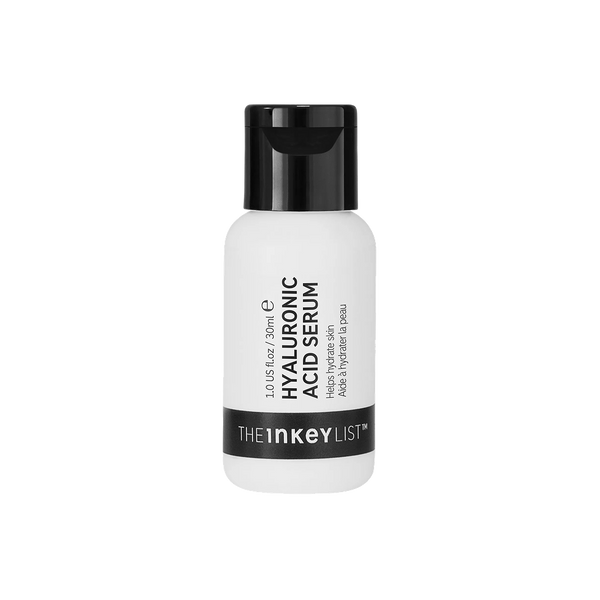
Hyaluronic acid is a humectant. It draws water into the upper layers of the skin and holds it there. That is why skin looks plumper, smoother and more bouncy almost immediately after you apply it. It is a hydration ingredient, not a renewal ingredient. It does not resurface, exfoliate or change how quickly your skin cells turn over. It changes how much water your skin is holding, and water content is responsible for far more of how skin looks day to day than most people realise. Our Hyaluronic Acid Serum uses 2% pure hyaluronic acid at three different molecular weights, so hydration is delivered across multiple layers of the skin rather than sitting only on the surface, plus Matrixyl 3000 to help plump and smooth the appearance of skin. It is £12.
-
Retinol is a renewal ingredient. A vitamin A derivative, retinol encourages skin to turn over more efficiently. Over time that is what improves the look of fine lines, uneven tone and rough texture. Retinol is also well established as supporting collagen production, which is the underlying reason it has held its position as one of the most studied ingredients in skincare for decades. Retinol works on a timeline of weeks and months, not minutes.
Here is the difference in one line: hyaluronic acid works on water content, retinol works on renewal. They are solving genuinely different problems. That is not a conflict, it is a complementary pairing.
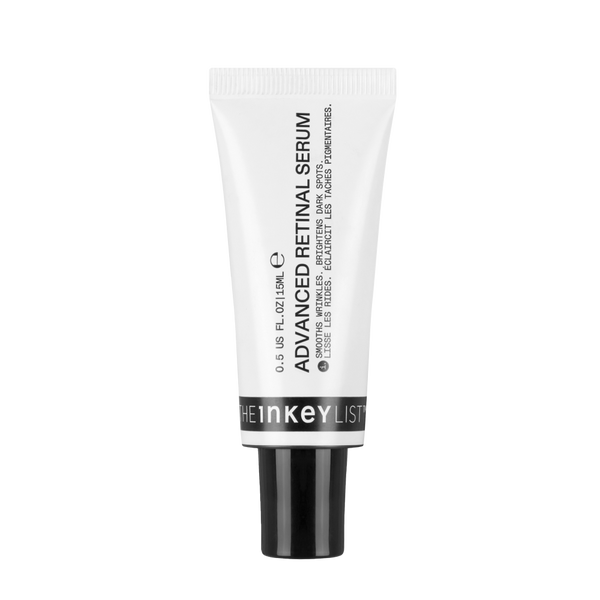
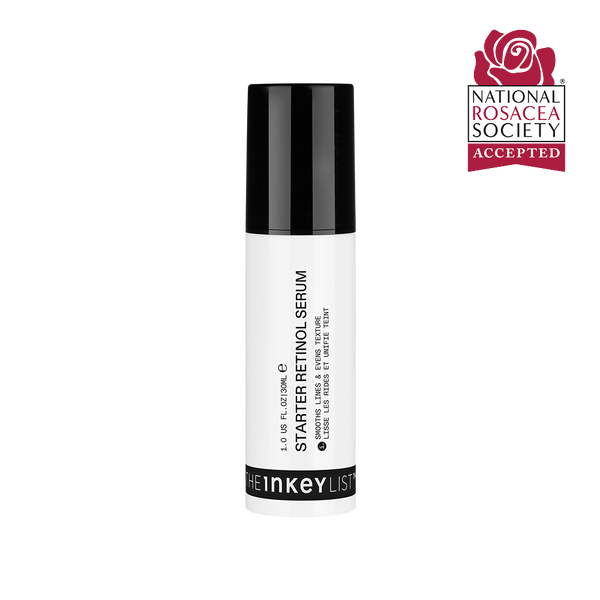
Strength matters with retinol, and it is worth being honest about that. Most people should begin with Starter Retinol, a gentler formula designed for skin that has not used a vitamin A derivative before, and move to Advanced Retinal later, once skin is comfortable and you know how it responds. If you want the full breakdown of how the two differ and which is right for you, we have covered it properly in retinol vs retinal.
What happens when you put the two together is the more interesting question, and it is the one the evidence actually speaks to.
Why Retinol and Hyaluronic Acid Work Better Together
Retinol asks a lot of the skin. That is not a criticism of retinol, it is simply how it works. Encouraging faster cell turnover means the skin’s outermost layer is changing more rapidly than it normally would, and while that process is happening the barrier can become temporarily less effective at holding water in. That is the honest mechanism behind the dryness, tightness and flaking that people associate with starting retinol.
Hydration and barrier support are what make that ask sustainable. Hyaluronic acid cushions the skin and helps offset the dryness and tightness, particularly during the first few weeks when skin is still adjusting. It is not cancelling out the retinol. It is making the conditions right for the retinol to be tolerated.
There is credible science behind this principle. A 2024 review in Dermatology Research and Practice examining strategies to reduce retinoid-induced skin irritation looked across the published research on how to make retinoids gentler in use. Among the approaches identified, the authors highlight adding ingredients with anti-irritation activity, improving the skin barrier, and increasing skin hydration within the formulation itself. The principle is the one that matters here: when hydration and barrier support are built into the routine, tolerability improves, and people are more able to keep using their retinol consistently rather than abandoning it after a difficult fortnight.
To be precise about what that review does and does not say, it is not a study of hyaluronic acid. It is a review of formulation strategies, and the hydration-and-barrier principle is what transfers to how you build a routine at home. One of the ingredients the review does specifically name among the barrier-supporting options is ectoin, which is worth knowing if you find retinol particularly drying. Our Ectoin HydroBarrier Serum is built around exactly that, and if you want the full method for combining the two we have written it up in how to use ectoin with retinol and other actives.
This is also why we would gently push back on the idea that a stronger retinol is automatically a better one. Tolerability matters more than potency, because the retinol that works is the one you can actually keep using. A 0.2% formula applied three nights a week for a year will do considerably more for your skin than a high-strength product that you gave up on in week three because your cheeks were flaking. Consistency beats strength, every time.
None of this means retinol plays nicely with absolutely everything. There are ingredients that genuinely need a little care when combined with it, and rather than digress here, we have set them out clearly in what not to mix with retinol.
With the case for the pairing made, the practical question is the one most people actually came here for: which one goes on first.
Hyaluronic Acid Before or After Retinol: The Right Layering Order
Hyaluronic acid goes on first. That is the answer, and here is the reasoning behind it.
The general rule for layering skincare is thinnest to thickest, water-based before oil-based. A hyaluronic acid serum is a lightweight, water-based formula. A retinol is typically richer. Applying the lighter, water-based product first means it can reach the skin without having to push through a heavier layer.
There is a second reason that matters just as much. Hyaluronic acid is a humectant, which means it works by drawing on available water. Apply it to slightly damp skin, not soaking wet and not completely dry. If your skin is bone dry and the air around you is dry too, a humectant has less to draw on and simply cannot do its best work. Press it in within a few seconds of cleansing, while your face still feels faintly damp.
The three-step order
- Cleanse, then leave skin slightly damp rather than towelling it completely dry.
- Hyaluronic Acid Serum onto that damp skin. Press, do not rub.
- Retinol once the serum has absorbed. Give it 30 to 60 seconds. A pea-sized amount is enough for the whole face.
- Moisturiser to seal everything in.
Can you apply hyaluronic acid after retinol instead? Yes. Some people prefer it, especially if their skin feels tight once the retinol goes on. It is not wrong. It is a comfort preference, and skincare you are comfortable with is skincare you will keep doing. The before-and-damp method is what we recommend as the default because it makes the most of how a humectant actually behaves, but there is no harm in reversing it if that feels better on your face.
The moisture sandwich
If retinol is drying you out, the moisture sandwich is worth knowing. Hydrate, apply retinol, then seal with moisturiser, so the retinol sits between two layers of hydration rather than going onto bare skin. Some people add a light layer of moisturiser before the retinol as well as after. It buffers the formula slightly, and for sensitive or reactive skin that small adjustment can be the difference between sticking with retinol and giving up on it.
The sealing step is not optional, and it is doing more work than people assume. Bio-Active Ceramide Moisturiser locks the previous layers in and reinforces the barrier itself. Ceramides are lipids that occur naturally in the skin and help hold everything together, which is directly relevant when you are using an ingredient that can temporarily leave the barrier less resilient. It is £20.
One more option for anyone who wants extra support: niacinamide can sit between the hyaluronic acid and the retinol as a buffer. It is a popular approach and it works well for a lot of people. We have answered that pairing in full in can you use niacinamide with retinol, so we will leave it there rather than repeat ourselves.
Order settled. Now let us set it into the shape of a full day.
AM and PM Routines: Where Hyaluronic Acid and Retinol Fit
Retinol is a PM-only ingredient. Not because of superstition or habit, but because vitamin A derivatives can make skin more sensitive to sunlight. Using it at night avoids that window entirely and lets the ingredient work while you sleep.
Hyaluronic acid, by contrast, is a genuine all-day ingredient. There is no reason to restrict it to the evening, and skin that stays hydrated through the day simply looks better.
Your AM routine
- Cleanse, leaving skin slightly damp.
- Hyaluronic Acid Serum pressed into damp skin.
- Moisturiser to seal.
- SPF as the final step, every single morning.
That last step is not a formality. The American Academy of Dermatology advises that retinoids can make skin more sensitive to sunlight, which is why they recommend applying them at night and protecting skin during the day. Their guidance covers daily sunscreen, sun-protective clothing and seeking shade where you can. If you are putting in the effort with retinol at night, daily SPF is what protects that effort. Dewy Sunscreen SPF 30 finishes the morning routine without the heaviness people often associate with sunscreen.
Your PM routine
- Cleanse thoroughly, leaving skin slightly damp.
- Hyaluronic Acid Serum onto damp skin.
- Retinol, once the serum has absorbed.
- Moisturiser to seal and support the barrier overnight.
- Optional: Retinol Eye Cream for the eye area, which is thinner and more delicate than the rest of the face and benefits from a formula built for it.
On frequency, be realistic. Start retinol two or three nights a week and build up gradually as your skin tolerates it. There is no prize for going nightly in week one, and pushing too hard too soon is the single most common reason people conclude that retinol does not work for them. On your off nights, keep hydrating and let hyaluronic acid do the work. Consistency over intensity is the whole game.
One small aside, since it comes up: if your retinol looks yellow, that is normal and we have explained why retinol is yellow if you are curious.
If you are building a routine from scratch rather than slotting these two into something existing, start with how to start a skincare routine for your skin type.
The same routine needs small adjustments depending on what your skin is actually doing, so let us get specific.
Hyaluronic Acid and Retinol by Skin Type
Sensitive skin
Hydrate first, always, and let the hyaluronic acid absorb fully before the retinol goes anywhere near your face. Start at the lowest frequency you can, two nights a week maximum, and build from there slowly. Use the moisture sandwich as your default method rather than as an emergency fix. Ectoin HydroBarrier Serum is worth considering for extra reinforcement if sensitive skin is your baseline. If skin becomes actively irritated, stop the retinol and focus on hydration and repairing your damaged skin barrier until things settle. Pausing is not failing.
Dry and dehydrated skin
These are not the same thing, and the distinction is useful. Dry skin lacks oil. Dehydrated skin lacks water. Hyaluronic acid addresses water, which is why dehydrated skin often responds to it so quickly. Damp application matters more for this group than any other, so do not skip it. Always seal with a moisturiser afterwards, and Bio-Active Ceramide Moisturiser is the natural partner here. If you are dealing with dry indoor air, central heating or air conditioning, a hydrating mist before your serum gives the humectant more to work with.
Blemish-prone skin
Retinol supports clearer-looking skin over time by encouraging renewal, which is why this pairing suits blemish-prone skin well. There is a persistent myth that hydration makes breakouts worse. It does not. Stripping skin of moisture tends to make things worse, not better, because skin that feels tight and uncomfortable is rarely skin that is behaving itself. Keep textures light rather than skipping hydration altogether. Omega Water Cream is an oil-free, water-based option that seals without heaviness. For extra support with oil and texture, how and when to use niacinamide is a useful next read.
Mature skin
This is where the pairing delivers most visibly, because it works on two timelines at once. Hyaluronic acid gives immediate plumpness and smoothness. Retinol works underneath that, over weeks and months. Retinol supports collagen production, and that is what underpins the long-term change in the look of fine lines and hyperpigmentation. Consider stepping up to Advanced Retinal once your skin is comfortable with Starter Retinol. Barrier support becomes more important with age, so treat the ceramide moisturiser step as essential rather than optional.
For readers who want hydration and glow support in a single step, there is a newer option worth knowing about.
Adding an Exosome Serum to Your Hyaluronic Acid and Retinol Routine
Exosome Hydro-Glow Complex earns its place in this specific article for a straightforward reason: it contains both hyaluronic acid and ectoin, the two ingredients already established above as the hydration and barrier-support side of this routine. If you have read this far and been persuaded that hydration is what makes a retinol routine sustainable, this is a glow boosting way to deliver more of it in one step.
Where it sits is simple. Apply it after cleansing, onto damp skin, before your retinol. It is compatible with a retinol routine rather than a replacement for one, and it slots into the same water-based-first logic as everything else in this article.
On what it does, we will let the clinical figures speak rather than adjectives:
- 100% saw more glowing skin, clinically proven*
- Clinic worthy rejuvenated skin in 14 days*
- 55% reduction in visible signs of skin stress (redness, puffiness, visible irritation)*
- Proven to deliver up to 12-hours of hydration**
If you want the full method for using exosomes alongside a vitamin A routine, we have covered it in boost your retinol results with exosome. And if you are weighing exosomes against the other glow ingredients competing for a place in your routine, vitamin C vs niacinamide vs exosomes is the honest comparison.
*4-week clinical study of 26 people
**Clinical study of 31 people
*In-vitro testing of Cica Exosomes showed a 55% reduction in pro-inflammatory markers and a 63% increase in markers associated with skin renewal after 8 hours.
The Takeaway
Hyaluronic acid and retinol work better together than either does alone. One hydrates, one renews, and the hydration is what makes the renewal comfortable enough to stick with. The order is hyaluronic acid on slightly damp skin, then retinol once it has absorbed, then moisturiser to seal.
Two habits determine your results more than any product choice: wearing SPF every morning, and building your retinol frequency up slowly rather than rushing it. Neither is glamorous. Both are what actually produce visible change.
Consistency, not intensity, is what changes skin. A routine you can follow on a Tuesday in February is worth far more than a perfect one you abandon.
Ready to build it? Start with Hyaluronic Acid Serum as your hydration step, paired with a retinol suited to your experience level. If you are not sure where to begin, how to start a skincare routine for your skin type will walk you through it before you buy anything at all.
Because at The INKEY List, We Give A Care.
Frequently Asked Questions
Got a question?
Our askINKEY team are a friendly bunch of skincare experts with deep product knowledge and zero judgement. Whether you're an ingredient obsessive or just starting out, we'll make it make sense. No question too big. No question too small. We Give A Care, Every Day.


