



Retinol and Rosacea-Prone Skin: Why Calming Redness Comes First
Retinol is not off the table for rosacea-prone skin, but it is rarely the right starting point. Here is the order that actually works.
Author
askINKEY skincare advisor
Published
30 January, 2026
Time to read
17 minutes
Can you use retinol if you have rosacea-prone skin? The honest answer is: sometimes, later, and rarely as your starting point. Retinol is not automatically off the table. It is just very seldom the right first move.
That answer frustrates people, because the question sounds like it should have a yes or a no attached to it. The reason it does not is that rosacea is not one thing. It shows up differently in different people, and the right answer depends entirely on which features you actually have. Someone whose main experience is persistent flushing across the cheeks is in a completely different situation from someone who gets occasional bumps and is otherwise comfortable. Same condition, different calculation.
So the spine of this article is a sequence rather than a verdict. Calm the redness first. Support the barrier. Get a proper diagnosis. Then, and only then, consider whether a gentle retinol has any role at all in what you are doing.
One signpost before we start, because it will save some of you a great deal of time. If your skin is sensitive but you have never been diagnosed with rosacea, start here instead with our guide to retinol on sensitive skin. That article is written for reactive skin generally and it covers the practical how-to in detail. This one is written for rosacea-prone skinspecifically, and it is about the decision rather than the method.
Here is what follows: how to tell rosacea apart from general sensitivity, what to prioritise instead of retinol, and the specific conditions under which retinol might be worth raising with a professional. Where you land depends on how your rosacea presents, so that is where we begin properly.
What Rosacea Actually Is, and Why It Changes the Retinol Question
Rosacea is a long-term inflammatory skin condition that mainly affects the central face: the cheeks, nose, chin and forehead. It involves some combination of flushing, persistent redness, visible blood vessels and, in a good proportion of people, papules and pustules. Not everyone gets all of it. Almost nobody gets exactly the same mix as the person next to them.
That last point used to be handled badly. For years, rosacea was sorted into four rigid subtypes, and the assumption was that you belonged in one box. Clinical thinking has moved on. Current guidance, including the British Association of Dermatologists guidelines for the management of people with rosacea 2021, describes people by the features they actually present with rather than assigning them a category. The shift is sometimes called phenotype-led assessment, and phenotype here just means the observable set of features you have.
The reason for the change becomes obvious the moment you look at the numbers.
The four feature groups, and how common each one is
A systematic review and meta-analysis of 39 studies put pooled frequencies at the following:
- Persistent redness with flushing and visible vessels (the clinical term is erythematotelangiectatic, which breaks down into erythema meaning redness and telangiectasia meaning small visible blood vessels). Roughly 57%. This is the presentation most people picture when they hear the word rosacea: colour across the central face that does not fully settle, episodes of flushing that come and go, and sometimes fine visible vessels around the nose and cheeks.
- Papules and pustules (papulopustular). Roughly 43%. Small inflamed bumps and spots, often mistaken for acne, though they behave differently and typically arrive without blackheads.
- Thickening of the skin (phymatous). Roughly 7%. Skin becomes thicker and more textured over time, most commonly on the nose.
- Eye involvement (ocular). Roughly 11%. Dryness, grittiness, irritation or redness affecting the eyes and eyelids.
Now do the arithmetic. Those figures add to well over 100%, and that is not an error in the data. It is the whole point. People overlap. A very large number of people with rosacea have persistent redness and papules, or flushing and eye irritation. The old four-box model could not accommodate that, which is exactly why it was retired in favour of describing features.
This overlap is also why “what should I use for rosacea?” has no single answer, and why any article that gives you one should be treated with suspicion. The useful question is narrower: what should someone with your combination of features prioritise?
How common is rosacea, honestly
You will see very large headline numbers attached to rosacea, and many of them are recycled without a source. Here is what the evidence actually supports. A pooled analysis of general-population studies by Gether and colleagues, published in the British Journal of Dermatology in 2018, put global prevalence at 5.46% of adults. Roughly 5% is a fair way to hold that figure in your head.
UK-specific prevalence data is genuinely sparse, and we would rather say so than invent a national headcount to sound authoritative. What is reasonable to conclude is that rosacea is common, considerably more common than most people assume, and that a meaningful number of people living with it have never had it named.
Why the phenotype changes the retinol maths
Here is where this connects back to the question you came with.
Retinol is an ingredient known to cause temporary irritation while skin adjusts to it. That is not a design flaw, it is a predictable part of how retinoids work, and for most skin types it is manageable. If your dominant feature is persistent redness and flushing, you are being asked to accept temporary irritation on skin whose defining characteristic is already being inflamed and easily provoked. The risk-to-benefit calculation is poor, and it is poor in a fairly obvious way.
If your dominant feature is occasional papules on skin that is otherwise stable and comfortable, the same calculation looks different. Not automatically favourable, but different. Understanding what redness is and what causes it helps here, because it clarifies that visible redness and reactive discomfort are not always the same problem with the same solution.
Which raises an awkward question that a lot of readers are quietly carrying: how do you know whether you have rosacea at all, or whether your skin is simply sensitive? That distinction changes everything about what comes next, so it deserves a section of its own.
Rosacea or Sensitive Skin? How to Tell the Difference
This is the most useful thing in this article, and it is the question that trips up the largest number of people.
General skin sensitivity and rosacea overlap heavily in how they feel. Both can sting. Both can flush. Both can make you cautious about trying anything new. Because the lived experience is so similar, enormous numbers of people end up following advice written for a situation they are not actually in, wondering why it is not working as well as it seems to for everyone else.
The two patterns do differ, and once you know what to look for the differences are reasonably clear.
More typical of general sensitivity
- Trigger-linked. Reactions tend to follow something identifiable: a new product, a fragranced formula, an active used too often, cold wind, a harsh cleanser.
- It settles. Remove the trigger and the skin calms down, usually within days.
- Location is flexible. It can affect any area of the face, and it can affect the body too.
- No fixed baseline colour. Between reactions, skin generally returns to its normal tone.
- Visible vessels are uncommon. You may get flushing, but persistent thread veins are not a typical feature.
- It does not usually progress. Sensitivity can fluctuate over the years, but it does not tend to follow a steadily building trajectory.
More typical of rosacea
- Persistent central-face redness. Colour across the cheeks, nose, chin or forehead that does not fully resolve, even on good days.
- Recurring flushing episodes. Sudden warmth and colour that arrives, lingers, and recedes, often repeatedly.
- Visible blood vessels. Fine red lines, particularly around the nose and cheeks, that stay put.
- Papules and pustules in some people. Inflamed bumps that are not quite acne and do not respond like acne.
- Central-face concentration. The pattern tends to respect that distribution rather than wandering.
- A pattern that builds over years. Many people describe flushing in their twenties that gradually became persistent colour later on.
- Sometimes eye symptoms. Grittiness, dryness or irritation alongside the facial signs.
Common rosacea triggers are worth knowing purely as recognition cues: heat, sun exposure, alcohol, spicy food, stress, sudden temperature changes and hot drinks. If you read that list and something clicked, that is information. It is not a list of things to eliminate from your life out of fear, and we would encourage you not to treat it that way. It is a pattern you can bring to an appointment.
The distinction in one line: sensitive skin describes how your skin behaves. Rosacea is a diagnosis. Only one of them comes with prescription treatment options.
Why this matters more than it might seem
That callout is doing a lot of work, so let us unpack it properly.
“Sensitive skin” is a description. It is a useful one, and if that is your situation then a well-judged routine built around gentleness and barrier support is genuinely the right approach. Our guide to what sensitive skin actually means covers that territory in full.
Rosacea is a different category of thing. It is a recognised medical condition with an established clinical pathway, and the British Association of Dermatologists guidelines set out evidence-based treatment options that are genuinely effective for a lot of people. Those options are prescription medicines. No cosmetic product substitutes for them, ours very much included.
The practical consequence is this. If you have undiagnosed rosacea and you have spent three years following excellent advice written for sensitive skin, you have probably been reasonably comfortable and you have almost certainly been missing something that would have worked better. That is the real cost of the confusion, and it is why we would rather spend a long section on the distinction than rush you toward a recommendation.
To be direct about the limits here: the goal is not for you to diagnose yourself from a blog post, and you should not. Several other conditions can look similar to rosacea, including seborrhoeic dermatitis, contact dermatitis and lupus, which is another reason a professional opinion carries weight that a checklist cannot. The goal is narrower and more achievable. It is for you to work out whether it is worth getting properly assessed.
And if this section has told you the opposite, that your skin is reactive rather than rosacea-prone, then our full guide to retinol on sensitive skin is the article written for you. It handles the practical side that this one deliberately does not.
For everyone still here: whichever camp you are in, something needs to happen before retinol becomes a sensible conversation.
Calm First: What Comes Before Retinol
The core of the sequencing argument is not complicated. Adding an ingredient known for temporary irritation to skin that is already inflamed works against you. You end up spending weeks managing a reaction you introduced, on top of the redness you were trying to address in the first place.
This is not caution for the sake of caution. It is order of operations. Calm comes first because calm is what makes everything after it possible.
What the clinical evidence says, and what it is about
This next part is the medical thread. It concerns prescription treatment, and we are going to be precise about it before switching to what our own products are for.
The BAD 2021 guideline, at Recommendation R9, states:
“Offer either ivermectin, metronidazole or azelaic acid as first-line topical treatment options to people with papulopustular rosacea. Discuss the potential for irritancy of different products and formulations prior to prescribing the topical agent.” British Association of Dermatologists guidelines for the management of people with rosacea 2021
Two precision points, because this recommendation gets misquoted constantly.
First, azelaic acid is one of three first-line options, not the first-line option. Ivermectin and metronidazole sit alongside it, and both of those are prescription-only in the UK. Which one suits a given person is a clinical judgement, not a shopping decision.
Second, R9 applies specifically to papulopustular rosacea, the bumps-and-spots presentation. It is not a blanket recommendation for everyone with rosacea. If your presentation is dominated by persistent redness and flushing without papules, this particular recommendation is not describing your situation.
It is also worth noticing that the guideline itself pauses to flag irritancy before prescribing. Even within a clinical pathway, using prescription-strength actives, tolerability is treated as a live concern. That tells you something useful about how carefully rosacea-prone skin needs to be handled.
Switching threads: what our cosmetic serum is, and is not
That was the medical thread. Here is the cosmetic one, and the distinction genuinely matters.
Everything above concerns prescription-strength azelaic acid used as a medical treatment under clinical supervision. Our 10% Azelaic Acid Serum for Redness Relief is a different proposition. It is a cosmetic product, formulated to help reduce the appearance of redness and soothe skin that feels irritated, and it is described on site as suitable for sensitive and rosacea-prone skin. It is not a treatment for rosacea, it is not a substitute for anything a clinician prescribes, and we will not present it as one.
If you want the ingredient science, what azelaic acid is and how it works covers the mechanism properly. And if you want the harder question of how well it performs for this specific audience, we have already examined that in detail: we looked at whether azelaic acid actually delivers for rosacea-prone skin, and rather than re-argue it here, we would point you there.
The step almost everyone underestimates
Before any serum, there is cleansing, and harsh cleansing quietly undoes everything else you are doing.
If your cleanser leaves skin tight, squeaky or faintly stinging, that sensation is not cleanliness. It is your barrier telling you it has lost more than it should have. For rosacea-prone skin, a cleanser that strips is not a neutral step in the routine, it is an active contributor to the problem.
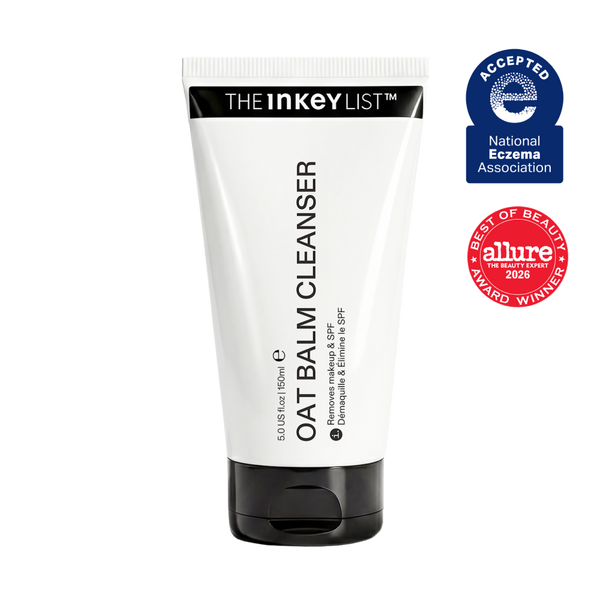
Our Oat Cleansing Balm is the appropriate choice at this stage. It contains 1% colloidal oatmeal to visibly reduce redness and soothe, and it removes the day without demanding anything from your barrier in exchange. The wider redness collection covers the other calming steps that sit alongside it.
Calming, though, is only half the groundwork. The other half is structural, and it is the part that determines whether retinol is even a question worth asking.
Barrier Stability: The Checkpoint You Have to Pass
Your skin barrier is the outermost layer of the skin, a compact arrangement of cells and lipids that holds water in and keeps irritants out. When it is intact, it is unglamorous and silent. When it is compromised, everything becomes harder.
For rosacea-prone skin the stakes are higher than usual. A weakened barrier means more water escaping, more reactivity to things that previously caused no trouble, and a substantially greater chance that any active ingredient stings, burns or provokes a flare. If you have ever applied a product that used to be fine and found it suddenly unbearable, a compromised barrier is the most likely explanation. Our guide to what a damaged skin barrier looks likeis worth a read if you are unsure where yours stands.
The checkpoint, stated plainly
This is the gate between “calming” and “considering retinol”, and it needs to be testable rather than vague. Ask yourself:
- Does a plain moisturiser go on without stinging? Not a treatment product. A basic moisturiser. If that stings, nothing more demanding belongs on your face.
- Is your skin free of tightness and flaking? Comfortable at rest, not just comfortable immediately after applying something.
- Are you outside a flare? Not tailing off from one, not sensing one building. Outside it.
- Has this been steady for a sustained stretch? Weeks of consistency, not two good days in a row.
- Is your current routine genuinely comfortable? If you are already tolerating your existing products rather than getting on with them, adding to the load is the wrong direction.
If you cannot answer yes to all five, you have not passed the checkpoint. That is not a setback, it is just information.
And here is the honest part that most articles skip. Plenty of people with rosacea-prone skin never pass this checkpoint comfortably. Their skin remains reactive enough that retinol is never a sensible proposition, and they get better long-term results from a calm, consistent routine than they ever would from persisting with an active that fights them. That is a legitimate outcome. It is not a failure, and it is not a stage you are supposed to graduate from. Implying that everyone eventually reaches the retinol chapter would be more flattering and less true.
What actually supports the barrier
Two products carry this stage.
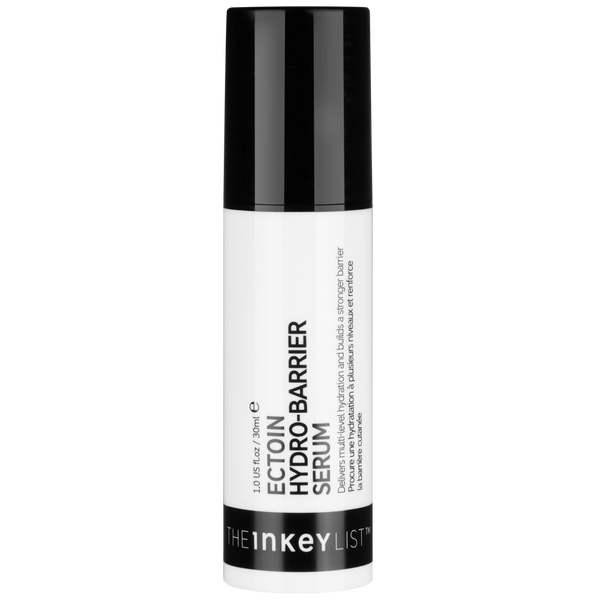
Our Ectoin Hydro-Barrier Serum is built for exactly this brief: 2% ectoin, 2.5% hyaluronic acid, and a 1% barrier blend of three ceramides, positioned for sensitive, dehydrated and irritation-prone skin. Ceramides matter here because they are lipids your barrier already uses structurally, so you are resupplying something familiar rather than introducing something novel. What ceramides do explains that in more detail.
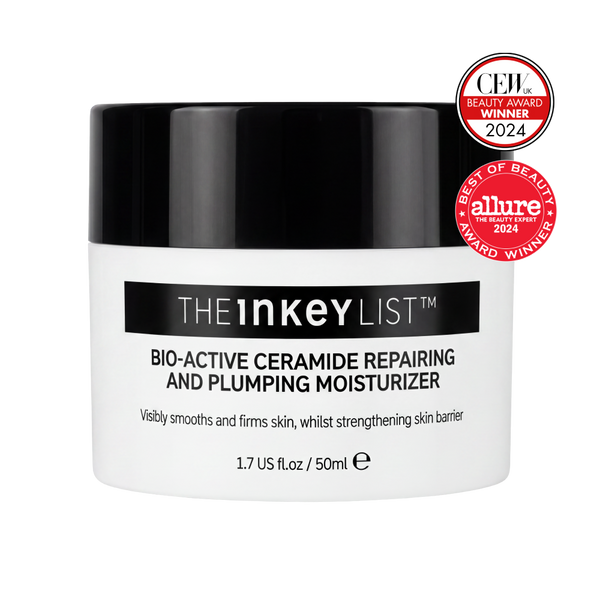
Then Bio-Active Ceramide Moisturiser to support and strengthen the barrier and hold that work in place. Our full range of moisturisers offers alternatives if the texture is not right for you, and texture preference matters more than people admit, because a moisturiser you dislike is a moisturiser you skip.
One principle worth internalising: consistency beats intensity. A simple routine used reliably does more for barrier stability than an elaborate one used erratically. Rosacea-prone skin responds to steadiness, and steadiness is easier to maintain when there is less to maintain.
We have kept this deliberately brief, because barrier repair for rosacea-prone skin deserves more room than a subsection. If that is where you are, the barrier-first approach for rosacea-prone skin is the dedicated guide and it goes considerably deeper than this.
With the groundwork defined, we can finally address the question you actually arrived with.
So Can You Actually Use Retinol With Rosacea-Prone Skin?
The direct answer: topical retinoids in rosacea are off-label and conditional. Not contraindicated outright, but nowhere near a standard recommendation.
Let us look at why, honestly.
What the evidence base looks like
Limited and mixed is the fair characterisation. Retinoids do not appear among the recommended first-line or second-line topical options in the BAD 2021 guideline for rosacea. That absence is meaningful. Guideline development involves systematically reviewing available evidence, and ingredients that earn a recommendation earn it on that basis. Retinoids did not.
Some small studies have explored topical retinoids in papulopustular rosacea, and a systematic review of topical retinoids in rosacea reflects the state of that literature. The picture is inconsistent, the studies are small, and the evidence base sits well behind azelaic acid, ivermectin and metronidazole. “Some researchers have investigated this” and “this is an established option” are very different statements, and the gap between them is where a lot of confident internet advice goes wrong.
The clearest published statement of the position comes from the American Academy of Dermatology:
“If someone has a lot of redness or inflammation in their skin, they should avoid retinoids and ask their dermatologist about other therapies that are more directed to a condition called rosacea.” - Anne Chapas, MD, FAAD, quoted by the American Academy of Dermatology on retinoids and retinol
That is a US source, and UK readers should route through the NHS and their GP rather than seeking out a private dermatologist as a first step. But it is the plainest published articulation of the principle this whole article is built on, and it deserves quoting directly rather than paraphrasing into something softer.
Why retinol irritates, in plain English
Worth understanding rather than simply accepting.
Retinoids work by accelerating skin cell turnover and influencing how skin cells behave and mature. That is precisely why they are effective for texture and fine lines. The side effect of that acceleration is a period of temporary barrier disruption while skin adapts, which is what dryness, flaking and sensitivity during the adjustment phase actually represent. What retinol is and how it works covers the mechanism in full.
Now combine those two effects with skin that is already inflamed and already barrier-compromised. Increased turnover plus temporary barrier disruption is a genuinely poor pairing for skin whose defining feature is a low threshold for inflammation. The caution is mechanistic, not superstitious.
What this means for you, specifically
Three situations, three different answers:
During an active flare: no. Not a reduced amount, not less often. No. Skin mid-flare has no capacity to absorb an additional challenge.
Where persistent redness and flushing dominate: generally not, or only with professional guidance. This is the presentation the AAD quote speaks to most directly. If visible colour is your primary concern, retinol is not the tool addressing it, and it may well make the picture worse before it makes it better.
Where inflammation is controlled, the barrier is genuinely stable, and your interest is texture or fine lines rather than the rosacea itself: it may be reasonable to discuss with a professional. Note the framing. Not “go ahead”, but “worth raising with someone who can see your skin”.
Being straight about our own product page
There is something we should address head-on rather than leave you to discover as an apparent contradiction.
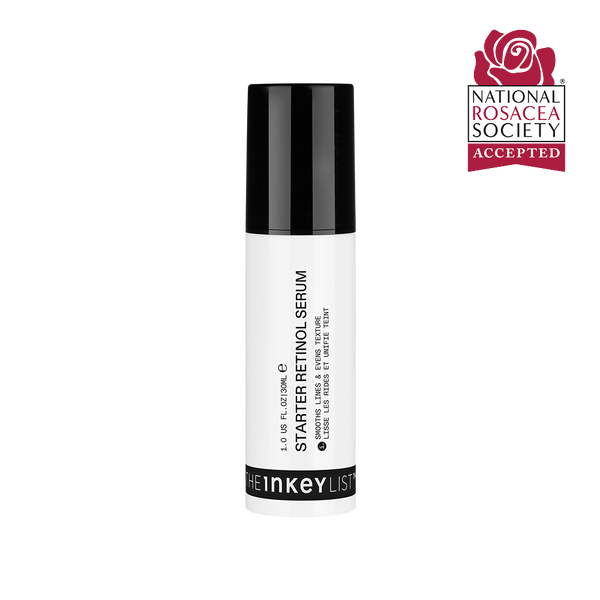
Our Starter Retinol Serum is described on site as a perfectly suited retinol for beginners, users with sensitive skin and rosacea-prone skin. Rosacea-prone skin is listed under Suitable for. The product FAQ asks directly whether it is suitable for rosacea-prone skin and answers: yes, but we always advise completing a patch test before use.
All of that is true, and we stand behind it. It also sits alongside an article telling you retinol is rarely the right first step. Both things hold, and here is why they are not in conflict.
Suitability is a property of the formula. Timing is a property of your skin right now. Saying a formula is suitable for rosacea-prone skin means it has been developed with that skin in mind: gentler retinoid delivery, soothing and barrier-supporting ingredients built into the same bottle. It does not mean retinol is the appropriate next step for skin that is currently inflamed, currently flaring, or currently undiagnosed. A formula can be the right one to reach for when the time is right while the time is not right yet, or ever. Those are separate questions and conflating them is how people end up irritated and discouraged.
If you have passed the checkpoint, spoken to a professional, and a gentle retinol is on the table, here is what is in the formula, leading with the part that matters most for this audience:
- 0.2% SymRelief® 100. A calming ingredient that soothes skin and supports the barrier. It helps reduce redness and discomfort, particularly when skin is feeling sensitive. For a rosacea-prone reader this is the most relevant thing in the bottle, which is why it comes first here rather than as a footnote.
- 1% Granactive Pro+. A next-generation retinoid combined with encapsulation technology, to help smooth fine lines and refine texture while staying gentle on skin.
- 0.01% Retinal. A high-performance retinoid giving an extra efficacy boost without added irritation.
- 0.5% Amisol Trio. A lipid complex that keeps skin hydrated and supports the barrier, helping counteract the dryness retinoids can cause.
The retinoid system is a slow-release, encapsulated Dual-Retinoid Complex, meaning the actives are released gradually rather than all at once. Squalane appears in the formula as a supporting emollient. The on-site descriptor is: A gentle retinol that smooths fine lines in 7 days\ - perfect for sensitive skin and retinol beginners.*
Now the closing note, and we mean it. Plenty of people with rosacea-prone skin get better results by not using retinol at all. Redness that stays calm, a barrier that holds, and a routine that never fights you is a genuinely good outcome, and it is one that a lot of people reach by leaving retinol alone entirely. If that is where you land after reading this, you have not missed out on anything.
For those who reach this point with a professional’s agreement, there are principles worth knowing.
If You Do Try It: Principles That Reduce the Risk
This section is organised around principles rather than schedules, deliberately. Rosacea-prone skin varies too much for a timetable to be responsible, and if you want structured guidance on introducing retinol to reactive skin, our sensitive skin retinol guide handles the practical side in the detail it deserves.
1. Patch test properly. Not one dab on the back of your hand. A small amount on a discreet area, ideally somewhere on the face that is not your most reactive zone, repeated over several days, watching for delayed reactions as well as immediate ones. This mirrors our own published advice for this product on rosacea-prone skin, so it is our stated position rather than generic caution. Why patch testing matters explains the reasoning.
2. One new thing at a time. Introducing retinol alongside a new cleanser, a new acid or a new anything makes it impossible to identify the culprit if your skin reacts. You will be left guessing, and the usual response to guessing is to abandon everything at once, including the things that were helping.
3. Less is more, and less often is fine. A small amount, used infrequently, indefinitely if that is what suits your skin. There is no obligation to build up to nightly use, and no benchmark you are failing to meet by staying where you are comfortable. Frequency guidance for this product lives on the product page, and it belongs there rather than here.
4. Buffer with moisture. Applying retinol over or after a moisturiser reduces irritation by moderating how quickly it reaches the skin. Bio-Active Ceramide Moisturiser works well for this. The full technique is covered in the moisture sandwich method, which is where that walkthrough belongs.
5. Know the difference between adjusting and reacting. Mild dryness or slight flaking that settles within a few days is adjustment. Stinging, burning, spreading redness, new bumps or a flare that arrives after application is a reaction. The first group may pass. The second group means stop, and stopping promptly is what prevents a small problem becoming a long recovery.
6. Stop during a flare. Not pause and push through, not reduce and persevere. Stop. Return to calming and barrier support, let things genuinely settle, and revisit the question later or not at all.
7. Retinoids and daylight need managing together. Retinoids can leave skin more sensitive to the sun, so evening use only. Daily sun protection matters more, not less, and that holds through British winters and overcast days. Shade and a hat during bright spells cost nothing and help, particularly if sun is one of your flushing triggers.
8. You are allowed to stop. Abandoning retinol because it does not suit your skin is a sensible decision based on evidence you gathered from your own face. It is not a failure of persistence.
All of this assumes something we should now address directly, which is that you know what you are dealing with.
When to See a Professional, and Why It Is Worth It
The reason to get assessed is not caution. It is that rosacea has established, effective treatment options that skincare cannot replicate, and a diagnosis is what opens that door.
That is the substantive argument, and it comes before any disclaimer. Prescription topicals like ivermectin, metronidazole and azelaic acid, alongside other options a clinician may consider, exist because they work for a lot of people. If you have rosacea and have never been diagnosed, you have never been offered them.
Signs it is worth getting checked
- Persistent central-face redness that does not settle between episodes
- Recurring flushing that arrives without an obvious cause
- Visible blood vessels across the cheeks or around the nose
- Papules or pustules that behave differently from ordinary breakouts
- Eye irritation, grittiness or dryness alongside facial redness
- Redness that is clearly worsening over time
That fifth point deserves emphasis. Around 11% of people with rosacea have ocular involvement, and it is easy to miss because most people do not connect sore, gritty eyes with a skin condition. It can also precede the skin signs. If both are happening, mention both at your appointment, because it needs proper attention and it will not be picked up if you only describe your cheeks.
What actually happens at an appointment
Less than people imagine, which is usually a relief. A clinician looks at your skin, asks about your history and what seems to set it off, and talks through the options. There is no invasive testing involved in a straightforward rosacea assessment. Bringing a few photographs taken during a flare is genuinely useful, since skin has an inconvenient habit of behaving itself in waiting rooms.
In the UK, start with your GP. The NHS has guidance on rosacea that is worth reading before you go, and your GP can prescribe directly or refer you to a dermatologist if your case warrants it. You do not need to arrange specialist care yourself, and you do not need to have exhausted every skincare option first.
This is also our own stated position, so it is worth repeating plainly: prioritise calming redness first, gradually introduce other actives as your skin tolerates them, and consult a professional for a proper diagnosis. The British Association of Dermatologists guidelines set out what evidence-based care looks like, and it is care worth having.
One final boundary, stated without ambiguity. INKEY products are cosmetic. They can help reduce the appearance of redness and support a comfortable, resilient barrier, and our redness collection is built to do exactly that. They do not diagnose, treat or cure rosacea, and nothing in this article should be read as suggesting otherwise.
The Short Version
Retinol is not banned for rosacea-prone skin. It is simply rarely the right starting point, and for a good number of people it never becomes appropriate at all.
The order that makes sense runs in four beats. Work out whether you are dealing with rosacea or general sensitivity, because that single distinction changes everything downstream. Get calming underway and get properly assessed. Establish genuine barrier stability, judged against a real checkpoint rather than a hopeful guess. Then, and only then, consider whether a gentle retinol has any role in what you are trying to achieve.
If you take one thing from this, make it the first beat. Knowing which of those two situations you are actually in determines whether the advice you have been following was ever written for you. It is worth resolving before anything else.
And a realistic note on expectations. Rosacea-prone skin tends to reward consistency and restraint far more than it rewards ambition. The instinct when redness persists is to add something. Usually the better move is to subtract, simplify, and give a short routine long enough to prove itself. Doing less, reliably, beats doing more. Our redness collection is built on that principle.
What to Do Next
If persistent facial redness is your situation, the highest-value next step is not a product. It is getting it properly assessed by your GP, because a diagnosis opens options that no skincare routine can offer.
Alongside whatever a professional recommends, if you are looking to support a calmer-looking complexion, our 10% Azelaic Acid Serum for Redness Relief and the wider redness collection are formulated with sensitive and rosacea-prone skin in mind. If you would rather understand the ingredient before you decide, what azelaic acid is explains it properly.
Because at The INKEY List, We Give A Care.
\ 4-week clinical study on 30 participants. ** 4-week in vitro study.*
SymRelief® is a registered trademark of Symrise AG.
This article is for general information and is not medical advice. Rosacea is a medical condition and should be assessed and managed by a qualified healthcare professional.
Frequently Asked Questions

Got a question?
Our askINKEY team are a friendly bunch of skincare experts with deep product knowledge and zero judgement. Whether you're an ingredient obsessive or just starting out, we'll make it make sense. No question too big. No question too small. We Give A Care, Every Day.


