



Body Wash vs Body Scrub vs Body Stick: Which Body Exfoliator Is Right for You?
Body wash, body scrub or body stick? A straight comparison of the three body exfoliator formats, and how to tell which one your skin actually needs
Author
askINKEY skincare advisor
Published
12 September, 2026
Time to read
13 minutes
There are three main ways to exfoliate body skin. You can use a rinse-off exfoliating body wash in the shower. You can use a manual body scrub. Or you can use a leave-on option that stays on your skin after you have finished in the bathroom, such as a body stick or an exfoliating body moisturiser. Most people choose badly, and the reason is consistent: they compare ingredient lists before they compare formats.
That is the wrong order. This guide compares the three body exfoliator formats, explains what each one is genuinely good at, and helps you work out which one belongs in your bathroom.
Here is the single most useful idea on this page, stated up front. The format decides how much of your body actually gets exfoliated, how long the active ingredient stays in contact with your skin, and how easy the step is to keep doing week after week. The ingredient matters enormously. It decides what a product is capable of. But the format decides whether you ever use it long enough to find out.
This page will not teach you technique. It will not tell you how often to exfoliate. Both of those questions are answered properly elsewhere: our guide on how to exfoliate body skin covers method and per-area instruction, and our guide on how often to use glycolic acid covers frequency by format. If you already know which format you want, those are the pages to read next.
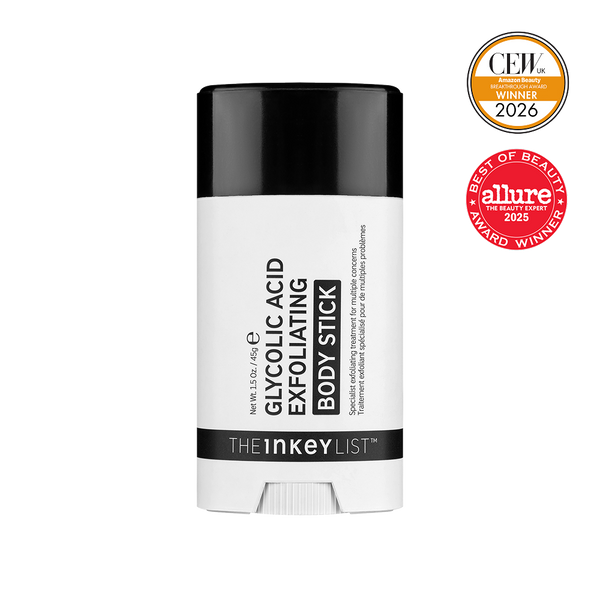
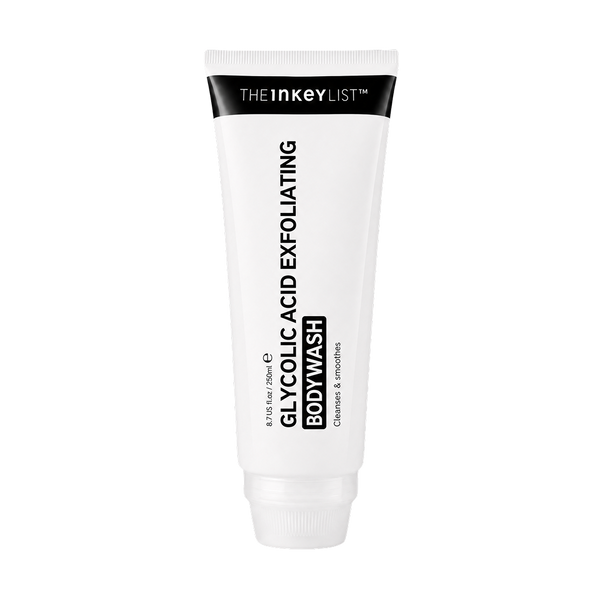
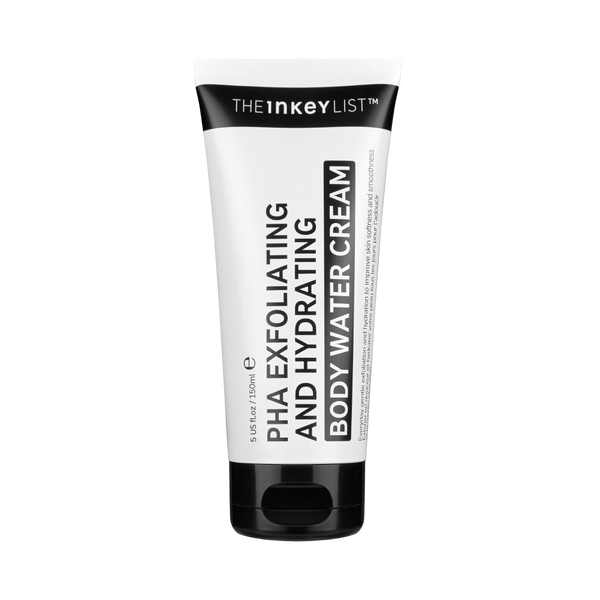
Across our body range we make three of the four formats discussed here. The rinse-off option is our Glycolic Acid Exfoliating Body Wash (£12 / 250ml). The targeted leave-on option is our Glycolic Acid Exfoliating Body Stick (£15 / 45g). The gentle daily option is our PHA Body Water Cream (£15). We do not make a body scrub, and we will explain why that matters when we get to it.
What you will find in this guide:
- What “format” actually means, and the three variables that separate the options
- Exfoliating body wash: what it does well, where it falls short, and who should buy it
- Body scrub: an honest assessment of a format we do not sell
- Body stick: why precision beats coverage for concentrated concerns
- Exfoliating body moisturiser: the gentlest daily route
- A scenario-by-scenario guide to choosing, plus whether you need more than one
Before comparing the three products, it helps to understand what separates the formats mechanically. That is where we will start.
What “Exfoliator Format” Actually Means, and Why It Decides Everything
Every conversation about body exfoliation gets stuck on percentages. Five per cent versus seven per cent. Glycolic versus salicylic versus lactic. Those numbers are real and they matter, but they are the second question. The first question is what kind of thing the product is, and how that shape determines what it can physically do to your skin.
There are three formats worth knowing.
Rinse-off chemical exfoliation is an exfoliating acid delivered in something you wash off, usually a body wash or cleanser. You apply it in the shower, it works for the length of time it is on your skin, and then it goes down the drain.
Manual exfoliation, also called physical exfoliation, works by friction. Particles, grains, a textured mitt, a flannel or a brush physically dislodge dead cells from the surface of your skin. Body scrubs are the best known version of this.
Leave-on chemical exfoliation is an acid in a base that stays on the skin. Nothing rinses away, so the active carries on working long after you have got dressed. Body sticks and exfoliating body moisturisers both sit in this category, at opposite ends of the strength range.
The three variables that actually separate the formats
Almost every meaningful difference between these products reduces to three things. We will keep returning to them, so they are worth learning now.
Coverage is how much of your body the format realistically treats in one use. A wash covers everything your hands and a brush head can reach, which is most of you. A stick covers exactly the patches you glide it over, which is a fraction of you. This is not a quality judgement. It is geometry.
Contact time is how long the active stays on your skin. A rinse-off product might have sixty seconds. A leave-on product has hours. Contact time is the single biggest reason two products with similar ingredient lists produce very different results.
Precision is how accurately you can target one specific area without affecting everything around it. High precision means you can work on the backs of your arms while leaving the rest of you alone. Low precision means you exfoliate broadly or not at all.
Score the formats against those three and the picture clarifies immediately. Rinse-off wins on coverage and loses on contact time. Leave-on wins on contact time and precision, and is impractical for whole-body use. Manual wins on immediate, tactile smoothness you can feel the moment you step out of the shower, and loses on consistency and depth.
The ingredient decides what the product can do. The format decides whether it ever gets used.
Chemical versus physical, explained without loading the dice
There is a lot of lazy writing on this subject, most of it implying that chemical exfoliation is sophisticated and physical exfoliation is crude. That is not a fair description of how skin works.
Chemical exfoliants dissolve the bonds that hold dead surface cells to one another, so those cells release and shed in the normal course of things. Physical exfoliants remove dead cells by abrasion, rubbing them away. Both genuinely remove dead skin. They do it by different mechanisms, they suit different jobs, and neither is automatically better for every person or every part of the body. The heel of your foot and the skin on your inner arm are not the same material and do not want the same handling.
The ingredients themselves are worth a brief introduction, though we will not go deep here because we have a page that does. Glycolic acid is an alpha hydroxy acid with a small molecular size, which is why it is the workhorse of body exfoliation. Lactic acid is a larger AHA that exfoliates while also conditioning, so skin feels less tight afterwards. Salicylic acid is a beta hydroxy acid, and the important thing about it is that it is oil-soluble, so it can get inside the pore rather than working only on the surface. If you want the full comparison, we have written about glycolic acid versus salicylic acid in detail. PHA, or polyhydroxy acid, has a larger molecule again. It works more slowly and stays nearer the surface, which makes it the sensible choice for daily use and for skin that reacts easily.
The principle that governs all of it
One rule cuts across every format, and it comes from dermatology rather than from marketing. The American Academy of Dermatology’s guidance on exfoliating safely at home makes two points that should shape how you read the rest of this article. The first is that how often you exfoliate depends on both your skin type and the method you are using, and that the more aggressive the method, the less frequently it should be done. The second is that method should be matched to skin type: gentler chemical options for skin that is dry, sensitive or prone to breakouts, with stronger or mechanical approaches better suited to more robust skin. The AAD also notes that more aggressive exfoliation carries a higher risk of worsening dark marks on deeper skin tones, which is a genuinely important caveat that rarely makes it into product copy.
If your skin is reactive, that changes the calculation before you have even looked at a single percentage, and we have a separate guide to the best exfoliator for sensitive skin that goes further than we can here.
With coverage, contact time and precision established, the first format to examine is the one most people reach for first: the exfoliating body wash.
Exfoliating Body Wash: Best for All-Over Coverage in the Shower
An exfoliating body wash is a cleanser that also exfoliates. You use it in the shower where you would use any other body wash, it works while it is on your skin, and you rinse it away. That last detail is the whole story of this format, for better and for worse.
What it is good at
Coverage is unbeatable. In a single step, you can treat arms, legs, back, chest, shoulders and everywhere in between. No other format comes close on surface area per minute spent. If your concern is spread across large parts of your body rather than concentrated in one place, this is the format that matches the shape of the problem.
It reaches the places that defeat other formats. The middle of your back is difficult to reach with a targeted product and genuinely awkward to treat consistently. A wash with a brush head handles it. If body breakouts across the back and chest are what brought you here, coverage is the variable that matters most, and a wash is the format built for it.
Short contact time lowers the irritation risk at a given concentration. Because the formula is on your skin for a minute or two rather than eight hours, you can use a meaningful acid level without the same likelihood of leaving skin uncomfortable. This is the underrated advantage of rinse-off exfoliation and the reason it suits people who have been burned, metaphorically, by something too strong.
It slots into a habit you already have. You are already showering. You are already using something to wash with. Replacing one product with another requires no new behaviour, no extra minutes and no remembering. In practice this matters more than almost any formulation detail, because the exfoliator that works is the one you are still using in two months.
Realistically, the areas a body wash covers well include:
- Upper arms and forearms
- Shoulders, upper back and the middle of the back
- Chest and décolletage
- Legs, front and back
- Buttocks and hips
Where it falls short
It rinses off. That is not a flaw in any particular product, it is the definition of the category, but it has consequences. The actives get a fraction of the contact time a leave-on product gets, which means the work happens gradually and depends on repetition rather than intensity.
It is also not a precision instrument. If your concern is one stubborn patch on the backs of your upper arms, delivering acid to your entire body in order to reach that patch is an inefficient way to solve the problem. You will use more product, you will spend more money, and the patch will still be receiving less concentrated attention than a targeted format would give it.
Some people also expect the immediate, squeaky smoothness of a grainy scrub and do not get it. A chemical wash works at the level of cellular bonds rather than surface debris, so the change arrives over weeks rather than in the first thirty seconds.
Our version, plainly described
Our Glycolic Acid Exfoliating Body Wash is £12 for 250ml. It pairs 5% Glycolic Acid with 5% Lactic Acid, and is designed for use two to three times a week in the shower. The dual-acid approach is deliberate: glycolic does the primary work on surface build-up, while lactic acid exfoliates and conditions at the same time, so skin is not left feeling tight and stripped afterwards. It is fragrance-free and vegan, and it is not suitable for use on the face.
It has a built-in exfoliating brush head, and we should be straightforward about what that does. It distributes the formula evenly and adds a light mechanical assist, which helps on textured areas. It is not essential to the formula working. Plenty of people prefer to dispense the product and use their hands or a flannel instead, particularly on more delicate areas, and that is a perfectly good way to use it. Both approaches work.
On practical value, which is the sort of thing a buyer’s guide should actually tell you: a 250ml tube lasts roughly ten to fourteen weeks at two uses per week, or roughly seven to nine weeks at three uses per week. If you are a consistent user, the Glycolic Acid Exfoliating Body Wash Duo at £22.80 is the logical way to buy it.
One note on legs. If it is post-shaving texture, visible bumps or darker dots after hair removal that you are dealing with, that concern has a name and its own guide. Read ours on strawberry skin for the detail, because the answer there involves more than just picking a format.
Choose an exfoliating body wash if your concern covers large areas, if you want the lowest-effort option, or if you want to exfoliate your back and chest without contorting.
The body wash is the highest-coverage option available to you. It is not, however, the format most people actually own. That would be the body scrub.
Body Scrub: What It Does Well, and Where It Falls Short
We do not make a body scrub. This section exists because a scrub is a legitimate format that millions of people use happily, and if you have landed on a page comparing three formats you deserve a straight comparison of all three rather than a sales pitch dressed up as one.
We do not sell a body scrub. That does not make it a bad product, it just means we are the wrong people to sell you one.
With that established, here is the honest assessment.
Where a scrub earns its place
- Instant, tactile smoothness. You feel the difference immediately, in the shower, on the day. No other format delivers that same-minute payoff, and there is nothing trivial about it. If you have an event tomorrow, a scrub is the correct tool.
- Cost and availability. Scrubs are inexpensive and sold everywhere. For anyone experimenting with body exfoliation for the first time, the barrier to entry is close to zero.
- Genuinely effective on thick, robust skin. Heels, elbows and knees have a substantially thicker outer layer than the skin on your inner arm. Friction is a reasonable and effective approach there, and it works faster than waiting for acids to soften built-up hardness.
- Excellent preparation. Buffing before hair removal helps free trapped hairs and gives a cleaner result. Buffing before self-tan removes the uneven patches that cause streaking. These are preparation jobs, and a scrub does them well.
- The sensory experience. People enjoy scrubs. That enjoyment translates into consistency, and consistency is the whole game. A format you look forward to beats a superior format you resent.
Where a scrub struggles
Results are surface-level and short-lived. A scrub removes loose dead cells sitting on top of your skin. It does not change the rate at which new build-up forms, so the smoothness fades over the following days and you are back where you started.
Pressure is inconsistent, and this is the most underappreciated problem with the format. How much exfoliation you get depends entirely on how hard you rubbed on a given day, how long you spent, and what mood you were in. Two people using the same jar get different results, and one person using it across a month gets different results each time. Chemical formats deliver the same dose every time. Manual formats do not.
Friction is a blunt instrument on skin that is already struggling. If an area is bumpy, red, irritated or actively breaking out, rubbing it harder is more likely to increase redness than reduce it. This is exactly the scenario the AAD guidance referenced earlier warns about, where matching method to skin condition matters more than intensity, and where aggressive mechanical exfoliation on reactive or deeper-toned skin risks leaving marks behind rather than clearing them.
Most importantly, a scrub does not address the keratin build-up sitting inside the follicle. This is the structural reason rough bumps return within days of scrubbing. The bump is not primarily surface debris. It is a plug, and surface friction cannot reach it. This is the central mechanism behind keratosis pilaris, and it explains why so many people scrub harder, get temporarily smoother skin, and find the same texture back by the weekend.
On sugar, salt, beads and cloths
It is worth being fair about the variation within the category, because “scrub” describes a wide range of products. Particle size, shape and hardness change the experience considerably. Finer, rounded particles feel milder. Larger, irregular or angular particles are more abrasive and more likely to cause micro-irritation on thinner skin. Textured cloths and mitts are a gentler form of manual exfoliation that many people with reactive skin get on with better than a granular scrub. None of these is inherently good or bad. They are different degrees of the same mechanism, and the right degree depends on which part of your body you are using it on.
Body scrub versus body wash: the direct comparison
This is a common question, so here is a direct answer. A body scrub is usually an additional step you use occasionally for an immediate result. An exfoliating body wash replaces your existing cleanser and works gradually through repeated, low-intensity exposure. The scrub gives you more noticeable smoothness today. The wash gives you more consistent texture change over six weeks, across more of your body, with less variability and less risk of overdoing it on a day when you are feeling enthusiastic.
If you want both, they are not mutually exclusive. Just do not use them in the same shower, and do not use a scrub on an area that is currently irritated.
The honest conclusion is this: a scrub is fine, and for certain jobs it is the right tool. It is simply rarely the most efficient answer for texture problems that keep coming back, because recurring texture is usually a build-up issue rather than a surface-debris issue, and those are different problems requiring different mechanisms.
Choose a body scrub if you want instant smoothness before an event, if you are prepping for hair removal or self-tan, or if you are targeting tough skin on heels, knees and elbows. Choose a chemical option if the same rough texture keeps coming back.
If recurring texture is the issue, the answer is usually a format that stays on the skin and keeps working. Which brings us to the body stick.
Body Stick: Best for Targeted, Leave-On Precision
A body stick is a solid, leave-on format that you glide directly onto dry skin, usually after showering. Nothing rinses away. The actives stay on your skin and keep working for hours, which makes this the format with the highest contact time of the four discussed here.
What it is good at
Contact time and precision, together. These are the two variables where rinse-off formats are weakest, and a stick maximises both simultaneously. You are delivering actives to exactly the area you want, and those actives stay there. For a concern concentrated in one or two patches, this combination is difficult to beat.
A higher active concentration becomes workable. Because the application area is small and deliberate, a formula can carry more acid than would be sensible across your entire body. You are not scaling exposure up with surface area, so the potency is targeted rather than total. That is the logic behind the format existing at all.
Practical advantages that sound minor and are not. There is nothing to decant, nothing to pour into your palm, no slippery bottle, no mess. It travels without leaking. It applies in about fifteen seconds. Small frictions are what kill routines, and a stick removes most of them.
Where it falls short
It is not designed to cover your whole body, and attempting that is slow, tedious and expensive. If your concern is genuinely all over, this is the wrong tool and a wash is the right one.
It also requires a deliberate new step. Unlike a body wash, which replaces something you already do, a stick asks you to remember to do something additional after your shower, on dry skin, before you get dressed. For some people that is effortless. For others it is the step that quietly gets skipped in week three. Be honest with yourself about which you are.
Our version, plainly described
Our Glycolic Acid Exfoliating Body Stick is £15 for 45g. It combines 7% Glycolic Acid with 0.5% Salicylic Acid and 10% Shea Butter, and is applied AM or PM directly to clean, dry skin.
The logic of that combination is worth spelling out, because it is not arbitrary. Glycolic acid works on the build-up sitting at the surface, loosening the bonds between dead cells. Salicylic acid is oil-soluble, so it gets inside the pore and works on the plug that surface exfoliation cannot reach. Shea butter, at a substantial 10%, offsets the dryness that a higher acid level could otherwise leave behind. Each element is doing a job the others cannot.
The on-site claim is that it is clinically proven to tackle keratosis pilaris (KP) bumps, ingrown hairs, rough skin and body breakouts in just 7 days*. It currently holds 4.4 stars from 661 UK reviews, which is a reasonable body of feedback to judge it by. Like our body wash, it is not suitable for use on the face.
Where precision genuinely beats coverage
Five situations where a targeted format is the more sensible choice:
- Bumpy upper arms and thighs, where rough texture is concentrated in defined patches rather than spread evenly
- Ingrown hairs, which are localised by nature and respond to sustained, focused exfoliation around the follicle
- Dark marks left behind after body breakouts, which sit in specific spots and benefit from consistent contact rather than brief exposure
- Underarms, a small area with its own particular concerns around texture and tone
- Cracked heels, where thickened skin needs sustained work that a thirty-second rinse-off simply cannot deliver
Each of those has a guide of its own if you want to go deeper. This page is about choosing the format, not working through each concern, and we would rather send you to the page that covers your specific situation properly.
If you are working on more than one area, or you already know you will restock, the Glycolic Acid Exfoliating Body Stick Duo is £28.50.
Choose a body stick if your concern is concentrated in specific areas, if you want the strongest of our body formats, or if you want something precise and travel-friendly.
Both the wash and the stick are active steps that ask something of you. There is a third approach, gentler and lower-effort, for people who would rather exfoliate daily without thinking about it at all.
Exfoliating Body Moisturiser: The Gentlest Daily Option
An exfoliating body moisturiser is exactly what the name suggests: a body moisturiser that contains a gentle exfoliating acid, so exfoliation and hydration happen in one step rather than two. It is the least dramatic format on this page and, for a specific kind of person, the most useful.
Why PHA suits this job
PHA molecules are larger than glycolic acid molecules. That single physical difference drives everything else. Larger molecules penetrate more slowly and stay nearer the surface, which means gentler action, less likelihood of stinging, and a formula that can reasonably be used every day rather than a few times a week. It is a slower, steadier form of exfoliation.
There is real formulation science behind why this works the way it does, and we have written it up separately in the science behind our PHA Body Water Cream if you want the detail rather than the summary.
What it is good at
It is the gentlest of the formats, which makes it the sensible entry point for anyone whose skin reacts easily or who has previously tried something too strong and given up. It suits daily use once your skin has adjusted. If your skin is dry as well as textured, this format addresses both at once rather than making you choose.
Most importantly, it solves the single most common failure point in body routines: people exfoliate and then never moisturise. They buy the active product, use it faithfully, skip the follow-up step because it is one thing too many, and end up with skin that feels tight and looks worse than when they started. Combining the two removes the step that always gets dropped.
The best body exfoliator is the one still in your routine in six weeks.
Where it falls short
It is the slowest-acting option here, and that is the honest trade-off for the gentleness. If you have significant rough texture concentrated in one area, this on its own will take considerably longer to shift it than a targeted stick would. It is a maintenance and gradual-improvement format, not a rapid-intervention one.
Our version, plainly described
Our PHA Body Water Cream is £15. It uses 3% PHA alongside jojoba and rice bran, working as a 2-in-1 exfoliating body moisturiser. The on-site claim is that it is a clinically proven 2-in-1 exfoliating body moisturiser delivering smooth, hydrated skin in just 7 days*. It holds 4.5 stars from 290 UK reviews.
It is also suitable during pregnancy and breastfeeding, which is a common reason people arrive at this format. If that applies to you, read our guide to pregnancy-safe skincare for the broader picture, and check with your doctor about your individual circumstances rather than relying on any article, including this one. For a gentler pairing, The Bump Smoothing Body Duo is £25.65.
Think of this format as the maintenance layer. Plenty of people use an active format two or three times a week and this one daily, and that combination tends to hold results better than either alone. If sensitivity is your primary concern, our guide to the best exfoliator for sensitive skin is the more thorough read.
Choose an exfoliating body moisturiser if your skin is sensitive or dry, if you want a daily step rather than a weekly one, or if you want to maintain results you have already achieved.
With all three formats explained, the practical question is which one to buy, and whether you need more than one.
How to Choose: Matching Format to Your Skin, Your Concern and Your Routine
The decision rule is short. Match the format to where your concern actually is, and to how much time you will realistically give it. A coverage problem points to a wash. A spot problem points to a stick. A sensitivity or maintenance problem points to a daily exfoliating moisturiser. An event tomorrow points to a scrub. Everything below is that rule applied to the situations people actually turn up with.
If your concern is rough, bumpy skin on the backs of your arms and thighs. This is the classic KP presentation, and the honest answer is that a stick is the better first purchase. The bumps are concentrated in defined areas, they involve build-up inside the follicle rather than on top of it, and the combination of high contact time and salicylic acid getting into the pore is what shifts them. A wash helps, but it is working against the clock every time you rinse.
If your concern is breakouts across your back, chest and shoulders. Coverage wins here, decisively. The affected area is large, much of it is difficult to reach, and trying to spot-treat a whole back is unrealistic. Start with the body wash. If a few specific marks linger after the general texture improves, add a stick for those.
If your concern is dull, uneven-looking legs, especially after shaving. Legs are a large surface area with a whole-limb concern, so this is wash territory. Use it consistently rather than aggressively, and give it several weeks. If bumps and darker dots after hair removal are the specific issue, the strawberry skin guide linked earlier is the more precise read.
If your concern is one or two stubborn patches, dark marks or ingrown hairs. Stick, without hesitation. This is exactly the job the format was designed for. Buying a wash to solve a problem the size of a postcard is spending more to achieve less.
If your skin is sensitive, dry or easily irritated. Start with the PHA Body Water Cream and nothing else. Give it three or four weeks before you consider adding anything. The most common mistake reactive skin makes is starting at the strength that worked for somebody else, reacting badly, and concluding that exfoliation is not for them. Start gentle, build slowly.
If your concern is cracked heels, elbows and knees. These are the areas where a scrub genuinely competes, because the skin is thick and friction is effective. A stick also works well here and lasts longer between uses. If you own a scrub already, use it on these areas and spend your money on a chemical format for everywhere else.
If you are pregnant or breastfeeding. The PHA Body Water Cream is suitable, and The Bump Smoothing Body Duoat £25.65 is the relevant pairing. Please check with your doctor about your own situation before adding anything new, because general guidance is not personal advice.
If you have limited time, or a history of abandoning routines. Be ruthless with yourself here. Choose the body wash, because it replaces a step you already perform rather than adding one. The theoretically optimal routine you abandon in a fortnight is worth less than the adequate routine you keep. If buying in bulk helps you stay consistent, the Glycolic Acid Exfoliating Body Wash Duo at £22.80 removes the run-out-and-forget failure mode.
Can you combine formats?
Yes, and the three we make are designed to work together rather than compete. The logic is straightforward: the wash handles coverage, the stick handles precision, and the PHA cream handles daily maintenance. Two formats, one goal. The most common effective combination is a wash two or three times a week for general texture, plus a stick on the specific areas that need more, with the PHA cream daily underneath both. The Exfoliating Body Duo at £28.50 pairs the stick and the PHA cream, which is the most popular starting combination for people with one concentrated concern and generally sensitive skin.
Do not stack everything at once
Here is the caution, and it matters more than any product recommendation on this page. More formats is not more results. Skin has a finite tolerance for exfoliation, and exceeding it produces exactly the symptoms people are usually trying to fix: redness, tightness, sensitivity and a compromised barrier that makes everything look worse.
The sensible approach is sequential. Add one format. Use it for three or four weeks. Let your skin adjust and see what it actually does. Then, if you still want more, add a second. This also has a diagnostic benefit: if something irritates you, you know precisely which product caused it. The dermatology principle referenced earlier applies directly here, that potency and frequency move in opposite directions, and frequency by format is covered properly on our dedicated frequency guide rather than here.
If you have read all of this and still cannot decide, our skin quiz will give you a personalised recommendation based on your skin rather than on averages. You can also see every option in our body range in one place.
Once you have chosen your format, the next question is how to use it well, and that is covered in full in our guide to how to exfoliate body skin.
A few practical questions come up whichever format you choose. Here are the answers.
The Bottom Line on Choosing a Body Exfoliator
Coverage points to a wash. Precision points to a stick. Sensitivity and maintenance point to a daily exfoliating moisturiser. A scrub is a useful tool for instant smoothness and tough areas like heels and elbows, rather than a fix for texture that keeps coming back.
We make three of those four formats and we do not make the fourth, which is why this page told you honestly what a scrub is good at instead of talking you out of one. We would rather you bought the right product than the most expensive one, because a body exfoliator that suits your skin and your routine is the only one that will still be in your bathroom in two months.
That is the last thing worth saying. Consistency beats intensity every time on body skin. Results build over weeks, not days, and the gentlest format used faithfully will outperform the strongest one used twice and abandoned.
Ready to choose? See all three formats side by side in our body range, or take our skin quiz for a personalised recommendation based on your skin rather than on somebody else’s.
Because at The INKEY List, We Give A Care.
Clinical claims refer to the individual product studies referenced on each product page.
Frequently Asked Questions
Got a question?
Our askINKEY team are a friendly bunch of skincare experts with deep product knowledge and zero judgement. Whether you're an ingredient obsessive or just starting out, we'll make it make sense. No question too big. No question too small. We Give A Care, Every Day.


