



Glycolic Acid for Feet: How to Soften Hard Skin, Cracked Heels and Calluses
Glycolic acid can soften hard skin and cracked heels, but foot skin plays by different rules - here's how to use it safely, how long it takes, and when to see a podiatrist.
Author
askINKEY skincare advisor
Published
05 August, 2026
Time to read
9 minutes
The skin on your feet is the thickest on your body, and the soles have no oil glands at all. That combination is the reason hard skin on feet, calluses and cracked heels build up faster there than anywhere else, and why the moisturiser that keeps your arms comfortable does very little for your heels. Glycolic acid is an alpha hydroxy acid, a water-soluble exfoliating acid that loosens the bonds holding dead skin cells together so they can shed more easily. That mechanism is exactly why it turns up in products aimed at tough, thickened areas like heels and soles, and why glycolic acid for feet is a genuinely sensible idea rather than a trend.
This article covers the practical detail. You will learn why feet behave differently to the rest of your body, what glycolic acid does and does not do on plantar skin, how it compares with urea and salicylic acid, and a step by step weekly foot routine you can start tonight. It also covers how often to exfoliate, how long results realistically take, and the specific signs that mean you should see a GP or podiatrist rather than reaching for a cosmetic exfoliant.
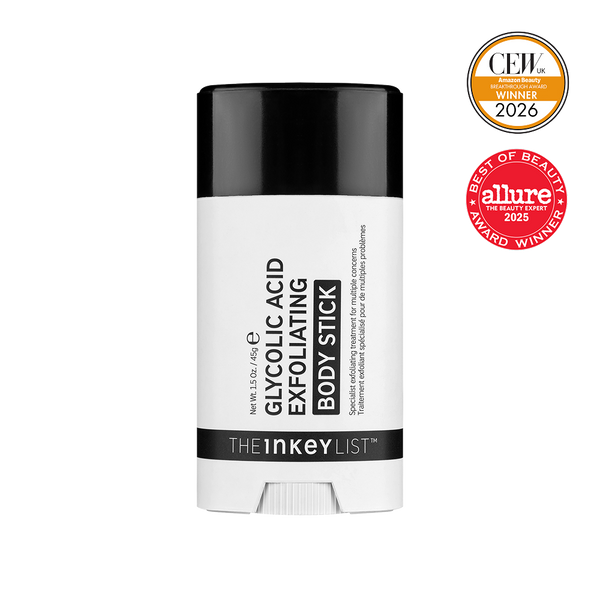
If you want to see the options first, our body care range has a “Dry and cracked heels” filter, and our Glycolic Acid Exfoliating Body Stick (£15) is the product most people reach for here. But read the anatomy first. It changes how you use everything else.
Why Feet Get Hard Skin and Cracked Heels When the Rest of Your Body Does Not
Your feet are not misbehaving. They are built differently.
Start with the outermost layer of your skin, called the stratum corneum. It is made up of flattened dead cells held together by lipids, and the standard way to picture it is bricks and mortar: the dead cells are the bricks, and the fatty material between them is the mortar. This layer is your barrier. It holds water in and keeps irritants out.
On most of your body, that layer is only around fifteen to twenty-five cell layers deep. On your palms and the soles of your feet, it can reach roughly one hundred layers. Measured in thickness rather than cell count, the difference is starker still: somewhere around ten to twenty micrometres on your forearm, against several hundred micrometres on the sole. Your feet are not slightly thicker than the rest of you. They are in a different category.
Then there is the fact that changes everything about how you should treat them.
The soles of your feet have no oil glands. They physically cannot moisturise themselves.
This is not a simplification. Dermatology’s standard reference text, Fitzpatrick’s Dermatology in General Medicine, states that the palms and soles, having no hair follicles, are totally devoid of sebaceous glands. Sebaceous glands sit alongside hair follicles and produce sebum, the oily film that keeps skin supple and slows water loss. Your face has thousands of them. Your soles have none.
So your feet carry the thickest, most water-hungry barrier on your body, with no built-in system for keeping it soft. Dry feet are not a sign you have neglected them. They are the default state of skin that has no way to oil itself.
Pressure, friction and why heels crack at the edges
Now add load. Every step you take compresses the skin of your heel and sole between your body weight and the ground. Skin responds to repeated pressure and friction by thickening deliberately, laying down more of that dead cell layer exactly where the force is greatest. The clinical term for this thickening is hyperkeratosis, and a callus is simply a localised patch of it.
Here is the reframe worth holding on to: a callus is not a fault. It is a defence. Your body built it on purpose, in the right place, for a good reason. The problem is not that it exists but that it can overshoot, becoming so thick and inflexible that it stops behaving like skin.
That is where cracks come from. When you stand, the fat pad under your heel spreads sideways and the skin at the rim has to expand with it. Supple skin stretches. Thick, dry, rigid skin does not, so it splits. That is why cracked heelsappear around the outer edge of the heel rather than in the middle, and why the splits, known clinically as fissures, run in the direction they do. A fissure is a linear break that extends deeper than a surface flake.
Clinical guidance from BPAC on cracked heels sets out the contributing factors, and most are ordinary life rather than anything unusual:
- Open-backed shoes and sandals, which let the heel fat pad expand sideways with nothing to contain it
- Standing for long periods, particularly on hard floors
- Hot weather, which drives moisture loss and usually comes with more open footwear
- Long, hot showers and baths, which strip what little surface lipid the skin has
- Age, as skin becomes thinner, drier and less elastic over time
- Body weight distribution, which changes the load your heels absorb
- Low humidity, including heated indoor air through the winter
Notice that none of these is a hygiene failure. Hard skin on feet is a mechanical and anatomical outcome, not a verdict on how well you look after yourself.
This anatomy is also why feet need their own approach rather than an extension of your body routine. We cover general technique in our guide to how to exfoliate body skin, and everything below assumes you are treating feet as the separate case they are. If you want to compare formats, our body exfoliators sit together in one place.
The question, then, is what an acid can actually achieve against a barrier built to withstand your entire body weight.
What Glycolic Acid Actually Does to Hard Skin on Feet
Glycolic acid is a keratolytic. That word gets used a lot and explained rarely, so: a keratolytic is an ingredient that helps break down and loosen the build-up of keratin, the tough structural protein that makes up those flattened dead cells. It does not scrub, sand or dissolve tissue. It works chemically on the mortar between the bricks.
Here is the mechanism in three steps.
- It weakens the bonds between dead cells. The acid interferes with the cohesion holding corneocytes together in the outermost layers of the stratum corneum.
- Loosened cells shed more readily. Shedding is something your skin does continuously anyway. Glycolic acid makes it happen more efficiently in an area where compacted dead skin has outpaced natural turnover.
- The remaining surface takes up moisture better. Once the compacted top layer thins, hydrating ingredients applied afterwards have a far easier job.
The smallest AHA molecule, and why that matters on feet
This is the core argument for using glycolic acid specifically, rather than any exfoliating acid you happen to own.
Glycolic acid is the smallest of the alpha hydroxy acids, with a molecular weight of around 76 Daltons. For comparison, lactic acid sits at roughly 90 and mandelic acid at roughly 152. In skincare generally this is treated as a footnote. On feet it is the whole point.
Think back to the diffusion path. On your forearm, an acid crosses maybe ten to twenty micrometres of barrier, and molecular size barely decides the outcome. On a callused heel, it faces several hundred micrometres of densely compacted dead cells and lipid. Larger molecules tend to stall in the outermost layers. Smaller ones travel further before they run out of road.
The small molecule advantage compounds exactly where the barrier is thickest. That is the whole case for glycolic acid on plantar skin, and it is why the ingredient that can feel assertive on facial skin is often well matched to a heel.
Why strength alone is not the answer: concentration and pH
The instinct with tough skin is to reach for the highest percentage available. The research does not support that instinct.
The frequently cited 1996 work on the clinical and histological effects of glycolic acid at different concentrations and pH levels tested formulations across a range of strengths and pH values, and found that outcomes depended on both variables together rather than on percentage alone. More recent work found that glycolic acid adjusted to pH 4 stimulates epidermal renewal in human skin without provoking the inflammatory response that harsher conditions can trigger.
The reason is chemistry. Glycolic acid only diffuses efficiently in its uncharged free acid form, and how much of the product exists in that form depends on the formulation’s pH. A thoughtfully formulated acid at an appropriate pH can outperform a blunt high-percentage one, while being far more comfortable to live with. Translated into practice: a well-made product used consistently beats an aggressive product used badly, every time. Our guide to using acids in your skincare routine covers this principle in more depth, and the full ingredient explainer lives at What is Glycolic Acid?.
What glycolic acid will not do
Being straight about limits is more useful than overselling, so:
- It will not dissolve a thick callus overnight. You are working against months of accumulated build-up. It comes down gradually.
- It will not heal a deep, painful or bleeding fissure. Broken skin is not a job for a cosmetic exfoliant, and you should not apply acid to it.
- It will not treat athlete’s foot or a verruca. One is fungal, the other viral. Exfoliation addresses neither.
- It will not replace professional care where professional care is what the situation needs.
For everyday hard skin, rough heels, dead skin on feet and general dryness, though, it is one of the most sensible tools available. Format matters more than people expect: our Glycolic Acid Exfoliating Body Stick (£15) suits feet particularly well because you can run it directly over a heel or the ball of the foot with no decanting, no mess and no getting product all over your hands. You can see how it sits alongside the rest of the range in our glycolic acid collection.
Glycolic acid is not the only ingredient with a legitimate claim to this job, though, and it would be dishonest to pretend otherwise.
Glycolic Acid vs Urea vs Salicylic Acid for Feet
Three ingredients dominate serious conversation about hard skin on feet. They work by genuinely different mechanisms, which is why comparing them as rivals misses the point.
Urea: hydrates at low percentages, softens hard skin at high ones
Urea is dose-dependent, and that single fact explains everything about how it is used on feet.
Urea occurs naturally in your skin as part of its natural moisturising factor, the mix of water-attracting compounds that keeps the stratum corneum pliable. At lower concentrations, roughly two to ten percent, it works as a humectant, meaning it draws and holds water in the outer layers. At higher concentrations, above roughly ten percent, it takes on keratolytic behaviour too, softening and breaking down thickened skin so it can be shed or gently filed away.
That dual action is why urea appears so often in foot-specific formulations, and why the American Academy of Dermatology’s guidance on how to care for dry, cracked heels references creams containing ten to twenty-five percent urea. If you have been searching “urea 10 cream” or “urea for feet”, that guidance is where the number comes from.
We do not make a urea product, and we are telling you about it anyway, because you deserve to understand the ingredient landscape rather than only the part of it we sell. If you want the fuller ingredient story, we have written about urea as an ingredient purely from an education standpoint.
Salicylic acid: oil-soluble, and best aimed at a specific spot
Salicylic acid is the targeted option, better suited to a defined callus than to a whole foot.
Salicylic acid is a beta hydroxy acid, or BHA. The meaningful difference from an AHA is solubility: BHAs are oil-soluble, so they penetrate into sebum-rich environments in a way water-soluble acids cannot. On the face, where oil glands are dense, that is a significant advantage.
On the sole, where there are no oil glands at all, that particular advantage largely disappears. What remains is a well-established keratolytic with a long history in corn and callus treatment, which is why the AAD’s guidance on how to treat corns and calluses mentions it. In practice it tends to be used as a concentrated spot treatment on a specific lesion rather than spread across an entire heel and sole. For the general AHA versus BHA question beyond feet, see our comparison of glycolic acid vs salicylic acid.
Glycolic acid: the practical choice for broad areas of hard skin
Water-soluble, smallest molecule, and well suited to treating a whole foot rather than one spot.
Glycolic acid’s strengths line up with the actual shape of the problem. Hard skin on feet is rarely one neat circle. It is a broad region across the heel, spreading along the outer edge and up under the ball of the foot. Glycolic acid works comfortably across an area that size, penetrates compacted skin efficiently because of its molecular size, and leaves the surface primed for whatever you apply afterwards.
It is the practical all-rounder for hard skin and rough heels. It is not the answer to everything, and anyone telling you otherwise is selling rather than explaining.
PHA: the gentler option when your skin is sensitive
Bigger molecule, slower penetration, considerably gentler.
Polyhydroxy acids, or PHAs, are chemically related to AHAs but built on substantially larger molecules. They penetrate more slowly and more superficially, which makes them a good deal gentler and a reasonable starting point if your skin runs sensitive or reactive, or if you are exfoliating the thinner skin on the tops of your feet and around your ankles.
Our PHA Body Water Cream (£15) works either as a gentler alternative or as the hydrating layer that follows a stronger acid. There is more on the ingredient class at What is PHA?, and our guide to the best exfoliator for sensitive skincovers how to choose if irritation is your main concern.
Acids loosen. Moisture keeps it from coming back. You want both.
Which is the point where theory needs to become a routine you will actually repeat.
How to Get Rid of Hard Skin on Feet: A Simple Weekly Routine
Four steps. Ten minutes. The order matters more than the products.
-
Soften first. Give your feet five to ten minutes in warm water, in the bath, the shower or a basin. Hydrated skin is dramatically more responsive to both acid and any mechanical work, and attempting either on dry, rigid skin is both less effective and more likely to cause damage. Keep the water warm rather than hot, and do not extend the soak. Prolonged exposure to hot water strips the barrier you are trying to rebuild.
-
Apply glycolic acid to clean, slightly damp skin. The AAD’s dry, cracked heels guidance specifically recommends applying within about five minutes of bathing while skin is still damp, because that traps water rather than letting it evaporate. Cover the heel, the sole, the ball of the foot and any rough patches. This is where a stick format earns its place: our Glycolic Acid Exfoliating Body Stick (£15) glides straight over a heel with no decanting and no residue on your palms, which matters when the surface you are treating is the one you are about to stand on.
-
Seal it in. This is the step people skip, and skipping it is the single most common reason hard skin returns. There is direct evidence behind it: a systematic review of moisturisers for the treatment of foot xerosis, xerosis being the clinical term for abnormally dry skin, found that consistent moisturising meaningfully improves dry foot skin. Remember that your soles cannot produce their own surface oil, so this layer is not a finishing touch. It is the substitute for a system your feet do not have. For very dry, rough areas our Bio-Active Ceramide Moisturiser(£20) supports the barrier with ceramides, the lipids that make up the mortar between skin cells. For a lighter daily option, or if your skin is sensitive, our PHA Body Water Cream (£15) hydrates while exfoliating gently, and we have written up the science behind the PHA Body Water Cream if you want the detail.
-
Mechanical removal, done carefully. A foot file or pumice stone earns its keep here, but only on softened skin and only with light pressure. Work gradually, in one direction, checking as you go. Stop well before the skin feels tender, sore or warm. The aim is to reduce thickness over several sessions, not to clear it in one. If you overdo it, our guide on what to do if you have over exfoliated will help you recover.
Never use a blade, razor or callus shaver on your own feet at home.
That warning is worth its own line. Removing too much callus at once exposes tender skin underneath that was never meant to be surface skin, which frequently makes cracking worse rather than better, and carries a real risk of cutting yourself. Blade debridement is a clinical procedure performed by professionals who can see what they are doing and manage the consequences.
How often to exfoliate your feet
Start once a week. If your skin is comfortable after two or three weeks, build to twice, and up to three times weekly if it continues to tolerate it well.
Feet handle more frequency than faces because the barrier is so much thicker, but frequency should still be earned rather than assumed, and the tops of your feet are a different matter entirely. Our dedicated guide on how often to use glycolic acid covers the general principles across skin types.
Three small habits that make a disproportionate difference:
- Cotton socks overnight after moisturising, which keeps product in contact with skin instead of on your bedding
- Replace worn-through footwear, since a flattened heel counter or thinned sole changes how pressure lands
- Avoid standing barefoot on hard floors for long stretches, particularly tile and laminate
Consistency beats intensity. Twice a week, every week, will outperform one aggressive session a month.
That routine covers the general case. Most people, though, arrive with something more specific in mind.
Cracked Heels, Foot Odour and Other Common Foot Concerns
Cracked heels and heel fissures
The distinction that matters here is between cosmetic dryness and a clinical problem, and it is not a subtle one.
Heels that are dry, rough, flaky and starting to show fine surface lines are firmly in cosmetic territory. This is precisely the situation consistent glycolic acid exfoliation plus diligent moisturising is built for. You are thinning the rigid layer so it can flex again, and restoring the water content that keeps it flexible.
Deep fissures are a different matter. DermNet’s guidance on cracked heels describes fissures that extend into the deeper layers of skin, which can be painful, can bleed, and can become infected. If your heels are painful to walk on, bleeding, weeping or showing any sign of infection, that is a clinical issue and outside what any cosmetic exfoliant should be asked to handle.
Do not apply acid to broken or bleeding skin. Not a weaker version, not a smaller amount. Let it heal, or get it looked at, and resume prevention afterwards. Prevention is genuinely where this routine shines: keeping heels supple is far easier than repairing them once they split, and the BPAC clinical review makes clear how much of the problem traces back to inflexible, dehydrated skin under load.
Foot odour and why exfoliation helps
Here is the honest version, because this is where foot content usually starts overclaiming.
Foot odour is produced by bacteria. Your feet have a high density of sweat glands, and the bacteria that live naturally on skin metabolise that sweat along with shed dead skin, releasing the compounds responsible for the smell. Sweat itself is close to odourless. The smell is a by-product of that breakdown process.
So exfoliation can help, indirectly, by reducing the accumulated dead skin available as a food source. That is a real and reasonable mechanism. What it is not is a deodorant or an antibacterial treatment, and glycolic acid should not be presented as either. We go further into the odour mechanism in our piece on glycolic acid for armpits, where the skin biology is closer to the classic case.
Practical measures do most of the heavy lifting:
- Dry thoroughly between your toes after every shower, since trapped moisture is the main driver
- Rotate your shoes so each pair dries completely for at least a day between wears
- Choose breathable footwear and moisture-wicking socks over synthetics that hold damp
- Change socks daily, more often in hot weather or after exercise
Rough toes, the ball of the foot and the tops of your feet
Do not treat the foot as one uniform surface, because it is not one.
The sole and heel carry that hundred-layer barrier. The top of the foot, the toes and the area around the ankle are far thinner, much closer to the skin on the back of your hand. Applying the same amount of product at the same frequency across both will leave your heel underserved and the top of your foot irritated.
Use less product and less frequency above the sole line, and always follow with moisturiser. Concentrate the effort where the thickness actually is.
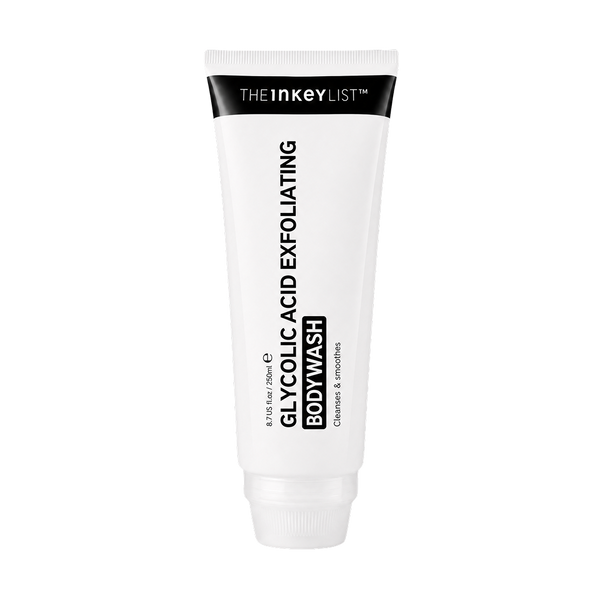
If rough or bumpy texture extends up your legs, that may be a separate concern altogether, and our complete guide to treating keratosis pilaris covers it properly. For bumps related to hair removal, see glycolic acid for ingrown hairs. If you would rather exfoliate in the shower across a wider area, our Glycolic Acid Exfoliating Body Wash is another route, and we introduced it in this piece on the body wash launch.
How long until you see smooth feet
Realistic timelines, because vague answers help nobody.
Softer, smoother-feeling skin is commonly noticed within one to two weeks of consistent use. That early change is mostly surface: loosened dead cells shedding and better water retention in the outer layers.
Visible reduction in genuinely thickened areas takes longer, typically four to six weeks. That is not a product limitation, it is skin biology. Full epidermal turnover takes weeks, and on the thickest skin on your body it takes longer still.
You are working through skin that took months to build. Give it four to six weeks.
And then keep going, because this is maintenance rather than a cure. The pressure and friction that created the hard skin have not gone anywhere, and your soles still have no oil glands. Smooth feet are a routine, not a destination.
Some foot concerns, though, are not cosmetic at all, and recognising which is which matters more than any of the above.
When to Stop and See a GP or Podiatrist
Some foot concerns need a professional, not a skincare product.
If you have diabetes, do not self-treat foot skin with exfoliating acids or a foot file without professional guidance.Speak to your GP, your diabetes team or a podiatrist first. Diabetes can reduce sensation in the feet and slow healing, which means a small injury you cannot feel can become a serious problem before you notice it. The AAD’s guidance on corns and calluses names diabetes explicitly as a reason to seek professional care rather than treating at home. This is not a cautious disclaimer. It is the most important sentence in this article.
See a healthcare professional if any of the following apply:
- You have diabetes, whatever the state of your feet
- You have peripheral neuropathy or any reduced sensation in your feet, because if you cannot reliably feel your feet, you cannot feel when you have gone too far
- You have poor circulation or peripheral arterial disease, which slows healing and raises the stakes on minor skin damage
- You have deep, painful or bleeding fissures, which are a clinical issue rather than a cosmetic one
- You see signs of infection: increasing redness, heat, swelling, pus, spreading pain, or feeling generally unwell
- You suspect athlete’s foot, typically itchy, flaking or cracking skin between the toes, which is fungal and needs antifungal treatment
- You have a verruca, which is viral and will not respond to a cosmetic exfoliant
- A callus is thickening rapidly, is very painful, or has appeared somewhere unexpected
- You cannot explain a change in your foot skin, or you are simply unsure what you are looking at
If you are pregnant, managing a diagnosed skin condition, or uncertain whether a product suits you, check with a healthcare professional before starting.
None of this is cause for alarm. Most hard skin and most dry heels are ordinary and respond well to ordinary care. But knowing when a skincare product is the wrong tool is part of looking after your skin properly, and no exfoliant is worth risking a foot over.
With the boundaries clear, here are the questions that come up most.
The Short Version
Feet have the thickest skin on your body and no oil glands to keep it supple, which is why hard skin on feet, calluses and cracked heels need deliberate care rather than occasional attention. The method is straightforward: soften in warm water, exfoliate with glycolic acid, seal with a moisturiser, and reduce thickness gradually with a file rather than aggressively.
Expect softer skin within one to two weeks and meaningful change in thickened areas over four to six. Consistency outperforms intensity every time, and because the pressure and dryness never stop, neither does the maintenance.
And know the boundary. If you have diabetes, reduced sensation, poor circulation, deep fissures or any sign of infection, see a GP or podiatrist rather than reaching for an exfoliant. Used sensibly and within its limits, glycolic acid for feet is one of the most effective and least complicated things you can do about hard skin.
Ready to build the routine? Soften, exfoliate, seal. Our Glycolic Acid Exfoliating Body Stick (£15) handles the exfoliating step and our PHA Body Water Cream (£13) handles the sealing. Browse body care and use the “Dry and cracked heels” filter to get there faster, or read What is Glycolic Acid? first. Clear guidance, proven ingredients, real results.
Frequently Asked Questions
Got a question?
Our askINKEY team are a friendly bunch of skincare experts with deep product knowledge and zero judgement. Whether you're an ingredient obsessive or just starting out, we'll make it make sense. No question too big. No question too small. We Give A Care, Every Day.


