



Strawberry Skin: What Causes It and How to Get Rid of It
Those tiny dark dots on your legs after shaving aren't dirt — and they aren't your fault. Here's what strawberry skin actually is, and what genuinely helps.
Author
askINKEY skincare advisor
Published
13 April, 2026
Time to read
8 minutes
Strawberry skin, also called strawberry legs, is the name for the small dark dots that appear in your hair follicles, most often on the legs after shaving. The pattern looks a lot like the seeds sitting in the surface of a strawberry, which is exactly where the name comes from.
Here is the most important thing to know first. Those dots are not dirt. They are not a sign that you have not washed properly, and they are not a hygiene failure. They are the contents of a blocked hair follicle darkening on contact with air.
Strawberry skin happens across all skin tones and all skin types. If you shave, you are in the majority. It is one of the most common body skin concerns there is, and it is cosmetic rather than medical.
This article covers what actually causes strawberry legs, what genuinely helps to clear them, how to shave in a way that stops triggering them, and how long real results take. Before deciding what to do about it, it helps to understand what is happening inside the follicle itself.
What Is Strawberry Skin?
Strawberry skin is the appearance of darkened, open hair follicles across an area of body skin. The legs are the most common location because they are shaved most often, but it turns up on the arms, chest and back too. Look closely and you will see the dots sit inside the follicle openings rather than on top of the skin.
The mechanism is straightforward once you break it into three steps.
Step one. A hair follicle gradually fills with a mix of sebum, which is your skin’s natural oil, and dead skin cells that have not shed properly. This creates a soft plug sitting in the follicle opening.
Step two. Shaving, waxing or any other hair removal cuts or pulls the hair away at the surface. That leaves the plug exposed to the open air for the first time.
Step three. The exposed surface of that plug darkens. This is oxidation, and it is the same process that makes a blackhead on your face look black.
That last point is worth sitting with, because it dismantles the single most persistent myth about strawberry legs. The dark colour is not trapped dirt. Dermatology resource DermNet puts it about as plainly as it can be put, describing open comedones as “black because of surface pigment (melanin), rather than dirt”. Scrubbing harder will not lift a colour that was never dirt to begin with. It will only irritate the follicle you are trying to clear.
Dermatologists describe the effect in almost exactly the terms you would use yourself when you first noticed it.
“These dark spots look like seeds on the pitted surface of strawberries,” says dermatologist Matthew Janik, MD. “The good news is, they’re harmless.” Source: Cleveland Clinic
Harmless is the operative word. Strawberry skin is not an infection, it is not contagious, and it is not a sign that anything is wrong with your health. It is a cosmetic concern, which means treating it is entirely a matter of whether youwant to, not whether you need to.
Strawberry Skin Across Different Skin Tones
Strawberry skin occurs on every skin tone. What changes is how it reads visually.
On deeper skin tones, the dots can appear more pronounced, partly because the contrast with the surrounding skin sits differently, and partly because post-irritation darkening can layer on top of the dots themselves. Shaving irritation, ingrown hairs and friction can all leave marks that linger after the follicle itself has cleared. If that lingering darkness is your main concern rather than the dots, you may find more relevant guidance in our hyperpigmentation hub.
This is a difference in visibility, not a different condition. The underlying mechanism is identical.
Why Some People Notice It More Than Others
Follicle size varies from person to person, and it is largely genetic. Some people simply have naturally more prominent follicles on the legs, which means any blockage inside them shows up more clearly. You cannot change the size of your follicles. You can absolutely keep them clear.
So that is what strawberry skin is. The next question is why it is happening to you specifically, and that comes down to a handful of very identifiable triggers.
What Causes Strawberry Skin?
Most people find their own trigger somewhere in the list below, and often it is more than one working together. Before you read it, one thing worth saying clearly: none of these are things you did wrong. Shaving technique in particular is something almost nobody is ever actually taught.
-
Shaving. The most common trigger by a distance. A blunt blade drags rather than cuts. Dry shaving with no cream or gel removes the slip the blade needs. Shaving against the direction of growth cuts closer but irritates the follicle opening far more. Repeated close shaving keeps that opening in a permanently aggravated state, which is why strawberry legs after shaving is such a familiar pattern.
-
Clogged follicles. A build-up of sebum and dead skin cells inside the follicle. This is the raw material for the whole problem. Hair removal does not create the plug, it simply reveals it. This is the same congestion processthat happens on the face, just playing out on thicker body skin, and it is also why some people notice the dots even during stretches when they are not shaving much at all.
-
Dry skin and slow cell turnover. When dead cells are not shedding efficiently, they accumulate around and inside the follicle opening. Dry skin compounds the problem twice over, because it makes the surrounding surface look duller and flatter, which increases the contrast and makes the dots stand out more sharply than they otherwise would.
-
Naturally prominent follicles. Larger, more visible follicles on the legs are genetic. Not a flaw, not something you caused, and not something any product will shrink. What you can do is keep them from congesting.
-
Post-irritation darkening. Razor burn, ingrown hairs and repeated friction from tight clothing can all leave marks that sit alongside the dots and make the overall appearance more pronounced. This is a pigmentation response rather than a blockage, which is why it behaves differently and takes longer to fade.
-
Congestion on the back, chest and shoulders. Strawberry skin is not exclusively a leg concern. These areas have a high density of oil glands, and they are frequently under fabric. If congestion on your back or chest is your primary concern rather than your legs, our back and body acne guide goes deeper into that specific territory.
When It Is Not Strawberry Skin
One important caveat, stated without alarm. If your follicles become genuinely inflamed rather than simply dark, that is a different situation. Signs to watch for are pain, itching, pus-filled bumps, warmth, or an area that is visibly spreading. That is more consistent with folliculitis than with strawberry skin, and it may need medical input rather than skincare.
If that sounds like you, speak to a GP or a pharmacist rather than trying to exfoliate your way through it. Exfoliating actively inflamed skin will make it worse, not better.
Strawberry Skin or Something Else?
Body bumps are not all the same thing, and telling them apart determines what will actually work.
Strawberry skin presents as flat dark dots sitting inside the follicle. They are most obvious in the days after shaving. To the touch, the skin feels smooth or only very slightly textured.
Rough, raised, grainy bumps that feel like sandpaper and cluster on the upper arms and thighs are keratosis pilaris, which is a different concern with a different cause and a different fix. If that description matches your skin better than the flat dots do, go straight to our complete guide to treating keratosis pilaris instead, and the NHS has a clear overview if you want a medical reference point.
Body breakouts are raised, sometimes tender or inflamed spots rather than flat dots, and they tend to appear on the back, chest and shoulders.
It is entirely possible to have two of these at once, or all three. Plenty of people do. The routine set out in this article is built specifically around the flat dark dots.
Having identified what is causing it, the practical question is what actually clears it.
How to Get Rid of Strawberry Skin
The short answer is regular, gentle chemical exfoliation. The longer answer explains why that particular approach works when several more intuitive ones do not.
Why Chemical Exfoliation Beats Scrubbing
The instinct when you see dark dots is to scrub them off. It is a reasonable instinct and it does not work, for a specific structural reason.
Scrubs, stiff brushes and coarse mitts work on the surface of the skin. The blockage causing strawberry skin sits insidethe follicle opening, below the level a physical exfoliant can reach. So you get all of the friction and none of the clearing. Worse, on skin that is already irritated from shaving, that extra abrasion can drive post-irritation darkening, which means the scrubbing actively contributes to the appearance you are trying to reduce.
To be fair to physical exfoliation, it is not the enemy. A gentle scrub has a legitimate place in body care for smoothing rough, dry surface texture. It is simply the wrong tool for a follicle-level blockage.
Chemical exfoliants work differently. Rather than abrading the surface, they loosen the bonds holding dead skin cells together so those cells shed evenly, including from around and inside the follicle opening. Less force, more precision. If you want the broader technique beyond this one concern, our guide on how to exfoliate body skin covers the full picture.
The Three Acids Worth Knowing
Glycolic acid is an alpha hydroxy acid, and it has the smallest molecular size of the AHAs. That size is the whole point. It works efficiently on surface build-up and helps clear the blockages sitting right at the follicle opening, which is precisely where strawberry skin lives. For this concern, glycolic acid is the lead actor.
Lactic acid is also an AHA, with a larger molecule and a gentler pace. It brings something glycolic does not: a genuine moisturising benefit. That matters more than it sounds, because exfoliation without hydration leaves skin tight and dry, and dry skin is the exact condition that makes strawberry skin look more obvious.
Salicylic acid is a beta hydroxy acid and it is oil-soluble, meaning it can travel into an oil-filled follicle. That makes salicylic acid excellent for raised, inflamed body breakouts, and better suited to those than to flat dark dots. It earns a supporting role in this routine rather than the lead. If you are weighing the two against each other, we break the comparison down properly in glycolic acid vs salicylic acid: which is right for your skin.
The Body Wash Built for This Exact Job
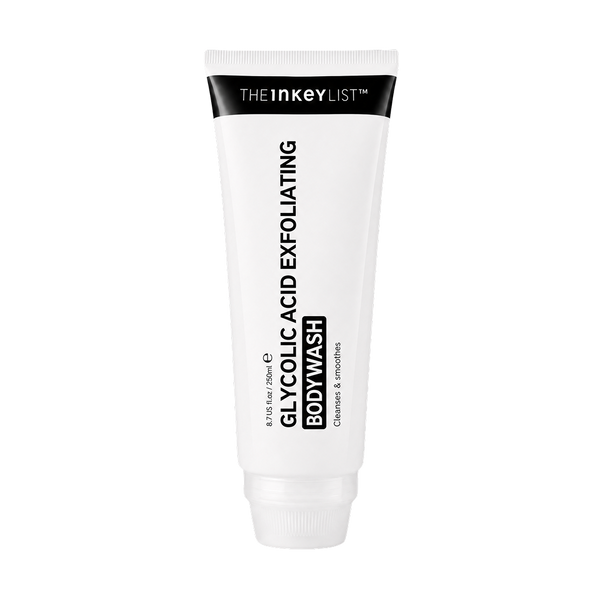
Our Glycolic Acid Exfoliating Body Wash, £12.00 for 250ml, pairs 5% Glycolic Acid with 5% Lactic Acid.
The logic of that pairing is the whole formulation story. Glycolic leads the exfoliation, getting into the surface build-up and the follicle openings where the blockage sits. Lactic supports it at a gentler pace and adds the moisturising benefit, so your skin is not left tight and dry afterwards. Two acids, two jobs, one rinse-off step.
It has a built-in exfoliating brush head, and it is worth being precise about what that is for. It is there to distribute the formula evenly across large areas like the back of your legs or your back, where hands alone tend to miss patches. It is an applicator, not a scrubber. The acids do the exfoliating.
The wash is vegan and fragrance-free, and it is formulated for arms, legs, back and chest. It is not for use on the face.
How Often to Use It
Use it 2-3 times per week. Start with twice weekly and build to three times as your skin adjusts.
Not daily. Consistency matters far more than frequency here, and body skin responds better to a sustainable rhythm than to an aggressive one. Three well-spaced sessions a week will get you further than seven that leave your skin irritated by day four.
How to Use It
- In the shower, on wet skin.
- Apply using the brush head.
- Massage in circular motions for 30-60 seconds on the areas you are targeting.
- Rinse thoroughly.
- Follow with a nourishing body moisturiser.
That final step is not optional. Exfoliating and then leaving skin bare is how people end up tight, flaky and convinced the product did not suit them.
The INKEY Tip Worth Remembering
For strawberry skin specifically, use the Body Wash before shaving or hair removal for a smoother result. The glycolic acid helps clear the pore blockages that cause strawberry skin in the first place, so the blade meets a clear follicle rather than a congested one. It is a small sequencing change and it is one of the most useful things in this entire article.
As with any new active, patch test first. If you have never done one properly, we explain the method in why do I need to do a patch test.
One honest note on availability: the Glycolic Acid Exfoliating Body Wash is an INKEY Lab exclusive, and INKEY Insiders get first access to it.
A single hero step will take you a long way. It goes further as part of a simple weekly routine.
Your Simple Strawberry Skin Routine
Three steps. One in the shower, one on targeted areas, one every day.
Step One: Exfoliate in the Shower
The Glycolic Acid Exfoliating Body Wash, £12.00, used 2-3 times per week on arms, legs, back and chest.
Yes, this is the second time you are reading that frequency. It is the single instruction people most often get wrong, so it is worth repeating. Twice weekly to begin with, building to three times as your skin adjusts.
Step Two: Treat Your Targeted Areas
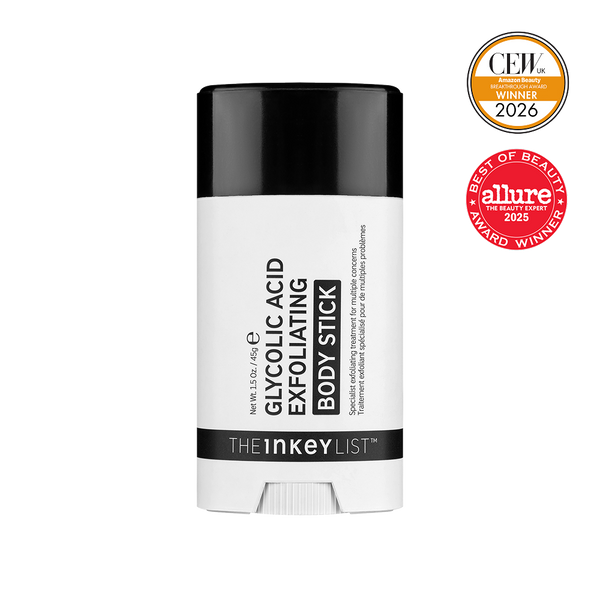
The Glycolic Acid Exfoliating Body Stick, £15.00 for 45g, combines 7% Glycolic Acid with 0.5% Salicylic Acid and 10% Shea Butter. It is leave-on, applied to clean dry skin with no rinsing, and it works AM or PM.
This is a spot treatment for specific problem areas, not an all-over product. Think bikini line, underarms, or one stubborn patch on the thighs. Start 2-3 times weekly and increase as your skin tolerates it.
Two pieces of timing that genuinely matter:
- Wait 8 hours after hair removal before applying it.
- On underarms or bikini line, wait 10-15 minutes before applying deodorant.
The Body Stick visibly reduces ingrown hairs in 7 days* and visibly reduces underarm and bikini line discolouration in 28 days*. It is an award winner and one of our most highly rated body products.
Step Three: Moisturise Daily
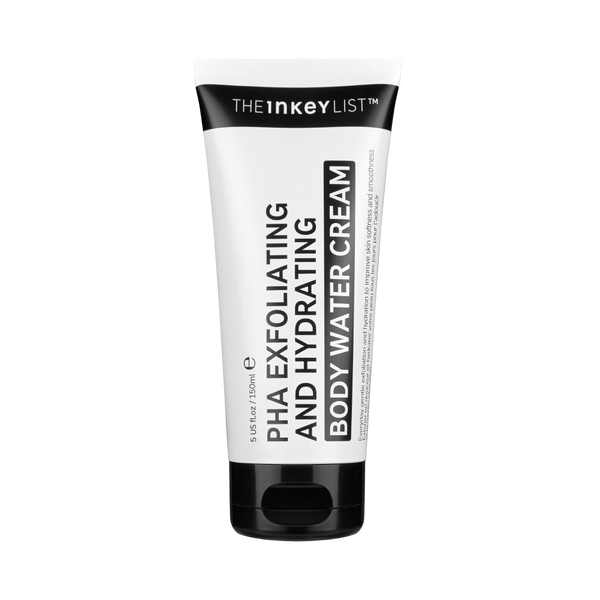
The PHA Body Water Cream, £15.00 for 150ml, contains 3% PHA in the form of Gluconolactone, plus jojoba and rice bran. Use it AM and PM on clean dry skin, massaged in with circular motions.
Polyhydroxy acids are the gentlest members of the hydroxy acid family, with a larger molecular size that means they work more slowly and more superficially. If the ingredient is new to you, our PHA guide explains how it differs from the AHAs above, and there is further formulation detail in the science behind the product: PHA Body Water Cream.
It is clinically proven to reveal brighter, smoother and more even body skin in 1 week** and clinically proven to strengthen the skin barrier and improve hydration**. In testing, 97% said it was gentle enough for daily use.
Important: this is the moisturiser. There is no need to layer another one on top of it.
Two Products, Two Jobs, Two Places
The Body Stick and the PHA Body Water Cream are designed to work in different territories.
The Body Stick is concentrated treatment for targeted areas. The PHA Body Water Cream is your daily all-over moisturiser for everywhere else. Give each one its own area and each can do its job properly, which is exactly how the routine is built to run.
Sunlight and SPF
AHAs increase photosensitivity. Any area you have exfoliated that will be exposed to sunlight needs sun protection, and in the UK that includes bright overcast days, not just obvious sunshine. Our SPF guide covers the principles if you want the detail.
Looking After Your Barrier
More exfoliation is not better exfoliation. If your skin feels tight, stings on application, looks red or starts flaking, that is a signal to scale back rather than push through. Those are the early signs of a compromised barrier, and our damaged skin barrier guide explains how to recover if you have already overdone it.
What the Routine Actually Costs
Honest numbers. The Body Wash is £12.00, the Body Stick is £15.00, and the PHA Body Water Cream is £15.00.
On tube life, a 250ml Body Wash lasts roughly 10-14 weeks at twice weekly use, or around 7-9 weeks at three times weekly. That is a realistic estimate rather than a best case, and it should help you judge whether the routine fits your budget before you commit to it.
Pregnancy and Breastfeeding
Three separate answers here, and it is worth keeping them separate.
The Glycolic Acid Exfoliating Body Stick is safe to use in pregnancy and while breastfeeding. The PHA Body Water Cream is also safe in pregnancy and while breastfeeding, and it is non-comedogenic and vegan.
For the Glycolic Acid Exfoliating Body Wash, we advise checking with your doctor before using AHA products during pregnancy or breastfeeding.
One Note for Fake Tan Users
The PHA Body Water Cream is fake tan friendly. Use it before tanning to smooth the skin so colour applies more evenly, and after tanning to help it fade evenly rather than patchily. Given how much of the UK relies on a bottle rather than the weather, this is a genuinely useful detail.
A routine treats what is already on your skin. Preventing the next round comes down to how you remove the hair.
How to Shave Without Causing Strawberry Skin
Almost nobody is taught how to shave. It is one of those skills that is assumed rather than explained, and most of us learned by copying whoever we happened to be watching. So if your technique has been contributing to strawberry legs, that is a gap in instruction, not a personal failing.
Here is the method that actually protects your follicles.
- Exfoliate before you shave, not after. Use the Glycolic Acid Exfoliating Body Wash before hair removal so the blade meets clear follicles rather than congested ones. Exfoliating freshly shaved skin does the opposite of helping.
- Soften the hair first. Shave a few minutes into a warm shower rather than the moment you step in. Warm, damp hair cuts far more easily than dry hair.
- Never dry shave. Always use a shaving cream, gel or oil. Dry shaving strips the slip the blade needs and drags the follicle with every stroke.
- Use a sharp blade and replace it regularly. A blunt blade tugs at the hair instead of cutting cleanly, and that tugging is what irritates the follicle opening.
- Shave in the direction of hair growth. It is a less close shave. It is also dramatically less irritating, and for strawberry skin that trade is worth making.
- Do not press. Let the weight of the blade do the work, and rinse it frequently so it is not redistributing what it has already removed.
- Rinse with cool water and pat dry. Rubbing with a towel undoes some of the care you just took.
- Moisturise straight after with the PHA Body Water Cream, while skin is still slightly damp.
One point of sequencing so the timings in this article do not contradict each other: if you use the Body Stick, wait 8 hours after hair removal before applying it. Exfoliate before you shave, moisturise immediately after, and save the leave-on treatment for later in the day or the following morning.
Does Waxing, Epilating or Laser Hair Removal Help?
This deserves an honest answer rather than a convenient one.
Waxing removes hair from the root, so there is no cut end sitting at the surface of the follicle. Regrowth is slower, and some people find the dots look less obvious in the weeks between appointments. It is not a clean win though. Waxing carries its own risk of irritation and ingrown hairs, and critically, it does nothing at all about a follicle that is already congested. Pulling the hair out does not remove the plug of oil and dead cells around it.
Epilating works on a similar principle and brings similar results, along with similar risks. On sensitive skin it can be noticeably irritating, and irritation is one of the things that makes strawberry skin look worse.
Laser hair removal reduces hair growth over a course of sessions, which in turn reduces the amount of shaving that triggers the appearance in the first place. That is a real benefit and worth stating clearly. The caveats are equally real. It is a professional treatment, it represents a significant cost, results vary between individuals and across different hair and skin types, and it is not a treatment for congestion. Anyone considering it should speak to a qualified practitioner about their specific hair and skin type before committing.
The honest conclusion. Changing your hair removal method can reduce the trigger. It cannot clear a blocked follicle. Whichever method you choose, regular gentle chemical exfoliation is what addresses the blockage itself. That is the part of the equation that does not change.
With treatment and prevention both covered, the obvious remaining question is when you will actually see a difference.
How Long It Takes and the Mistakes That Slow You Down
Body skin is thicker than facial skin and it turns over more slowly. Results take longer here than they would on your face, and any product promising otherwise is not being straight with you.
A Realistic Timeline
Within the first week. Skin feels smoother and looks less dry. The PHA Body Water Cream is clinically proven to reveal brighter, smoother and more even body skin in 1 week** and visibly reduces dry, flaky body skin in 7 days**. Texture and hydration are the fastest-moving parts of this.
Around one week on targeted areas. The Body Stick visibly reduces ingrown hairs in 7 days* and visibly reduces body breakouts in 7 days*.
Around four weeks. The Glycolic Acid Exfoliating Body Stick visibly reduces underarm and bikini line discolouration in 28 days*. Discolouration always takes longer to shift than texture does. That is true of pigmentation anywhere on the body and it is not a sign the routine is failing.
Beyond that, this is maintenance. Your follicles will keep producing oil and shedding cells for as long as you have skin. Stop the routine and they will gradually congest again. This is management, not a one-time fix, and knowing that upfront is what stops people feeling let down at month three.
A note of transparency on the Body Wash: we do not have a published consumer or clinical study attached to it, so we are not going to attach a number of days to it. What we can tell you is the mechanism, which is that glycolic and lactic acid clear the build-up sitting in and around the follicle opening, and that it works as part of the routine above.
The Mistakes That Slow Progress
Each of these is a fix rather than a failure.
- Over-exfoliating. More often is not better. Stick to 2-3 times per week with the Body Wash. Irritated skin looks worse, not better.
- Skipping moisturiser. Exfoliation without hydration leaves skin tight and dry, and dry skin makes the dots more visible. You undo your own work.
- Adding a harsh scrub on top. Layering physical exfoliation onto chemical exfoliation is one of the fastest routes to irritation. Choose one approach.
- Using the Body Stick and the PHA Body Water Cream on the same patch. Give each product its own area so each can do the job it was formulated for.
- Shaving with a blunt blade. This quietly undoes your progress between sessions, no matter how good the rest of the routine is.
- Skipping SPF on exfoliated areas that see sunlight. Photosensitivity is real, and sun exposure on freshly exfoliated skin can deepen the very discolouration you are working on.
- Stopping at two weeks. This is the single most common reason people conclude that nothing works. At two weeks you are only just entering the window where the evidenced changes begin.
If Your Skin Becomes Irritated
Pause exfoliation entirely. Focus on moisturising and barrier support until your skin feels comfortable again, then reintroduce the acids gradually, starting at once a week rather than jumping back to three times. Our damaged skin barrier guide walks through recovery properly if you need it.
There is no prize for pushing through discomfort. The routine only works if your skin can tolerate it consistently.
The Takeaway on Strawberry Skin
Three things to hold onto. Strawberry skin is oxidised build-up inside the hair follicle, not dirt, and not something you caused. Gentle, consistent chemical exfoliation is what clears it. Better shaving technique and daily moisturising are what keep it from coming back.
Be realistic about the pace. Texture improves first, discolouration takes longer, and consistency beats intensity every single time.
The routine, simply: exfoliate 2-3 times per week, treat your targeted areas, moisturise daily, and protect exfoliated skin with SPF.
Clear guidance. Proven ingredients. Real results. Because at The INKEY List, we give a care.
Where to Start
Not sure where to begin, or dealing with more than one concern at once? Build a personalised routine with INKEY Recipe and get guidance matched to your skin.
Ready to start with the hero step? The Glycolic Acid Exfoliating Body Wash is an INKEY Lab exclusive, and INKEY Insiders get first access.
*4-week consumer study of 100 people.
**4-week clinical trial of 21 people.
Frequently Asked Questions
Got a question?
Our askINKEY team are a friendly bunch of skincare experts with deep product knowledge and zero judgement. Whether you're an ingredient obsessive or just starting out, we'll make it make sense. No question too big. No question too small. We Give A Care, Every Day.


