



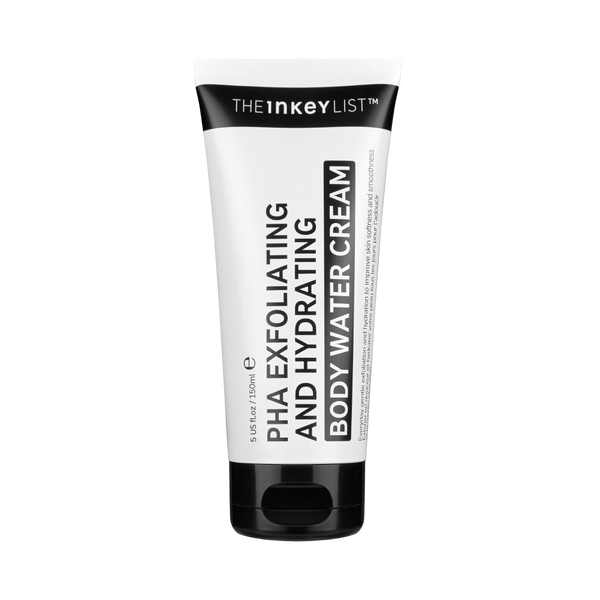
The Science Behind The Product: PHA Body Water Cream
Body skin is thicker, drier and slower to renew than your face, so moisturiser alone is not enough. Here's how 3% PHA exfoliates and hydrates in one daily step.
Author
askINKEY skincare advisor
Published
23 April, 2024
Time to read
6 minutes
When it comes to body skin, moisturising on its own is not enough. Most people apply a body lotion, wait for smoother skin, and end up disappointed when nothing much changes. The reason is simple. A chemical exfoliant for body skin is the step most routines are missing, and without it, moisturiser is doing only half the job.
Body skin is not the same as facial skin. It is thicker, it produces less oil, and its skin cell turnover rate is slower. That combination makes it prone to becoming dry, rough and dull, and it also plays into more stubborn concerns such as KP bumps, ingrown hairs and body breakouts. Effective exfoliation is essential.
This article breaks down what PHA actually is, how PHA Body Water Cream exfoliates and hydrates at the same time, how PHA compares to AHA and BHA, exactly how and when to use it, and how to pair it with a targeted exfoliant for specific areas.
Why body skin needs more than moisturiser
If your body lotion has stopped delivering, it is not because you picked the wrong one. It is because moisturiser was never designed to solve the problem you actually have.
Body skin is structurally different from the skin on your face. It is thicker. It has fewer oil glands, so it produces less of the natural oil that keeps skin soft and supple. And its cell turnover is slower. Cell turnover is simply the process by which your skin makes new cells underneath and sheds the old, dead ones from the surface. On the face, that cycle moves along at a reasonable pace. On the body, it takes its time.
In practice, that means dead skin cells sit on the surface for longer. And a layer of dead cells sitting on the surface is exactly what dry, rough, flaky, dull and uneven texture actually is. When you run your hand down your shin in winter and it feels like sandpaper, that is not an absence of cream. It is a build-up of cells that have not shed.
Here is the core insight, and it is the one worth carrying through the rest of this article. A standard moisturiser adds moisture on top of that build-up. It does nothing about the build-up itself. You are hydrating a surface that is still layered with dead cells. Skin feels temporarily softer, then reverts within hours. The lotion was never the problem. The missing step was.
Body skin also takes far more daily wear than your face ever does. Consider what it deals with in a normal week:
- Friction from clothing, waistbands, straps and seams, all day, every day.
- Hot showers, which feel wonderful and strip the skin’s natural oils while they do it.
- Shaving and other hair removal, which physically disrupts the skin surface.
- Weather, wind and cold.
- Central heating and air conditioning, both of which pull moisture out of the air and out of your skin.
Any one of those on its own is manageable. Stacked together, day after day, they leave skin lacking water and feeling tight, which is where dehydrated skin becomes a genuine concern rather than an occasional one. Very hot showers and harsh, stripping washes can also contribute to a damaged skin barrier, and a compromised barrier is a real driver of rough, uncomfortable body skin. Barrier disruption and surface build-up tend to travel together.
That same surface build-up also plays into more stubborn concerns that some people deal with, including KP bumps, ingrown hairs and body blemishes and breakouts, all of which we cover properly elsewhere.
So the fix is not more moisturiser. It is not a thicker cream, a richer butter, or applying twice as often. The fix is adding exfoliation into the moisturising step you are already doing. Remove the build-up, and everything else you apply works better on the skin underneath.
Which raises the obvious follow-up. If exfoliation is the missing step, the way most people go about exfoliating their body is the part genuinely worth rethinking.
What is chemical exfoliation, and why it beats scrubbing
Exfoliation is one word covering two completely different approaches, and confusing them is why a lot of body routines stall.
Chemical exfoliation uses active ingredients to loosen the bonds holding dead skin cells to the surface, so those cells shed more easily and more evenly. There is no scrubbing involved. The ingredient does the work.
Physical exfoliation is everything you do manually. Scrubs with grains or sugar, exfoliating mitts, dry brushes, textured cloths. Anything that buffs the surface by hand.
Both remove dead skin cells. They just go about it in fundamentally different ways, and on the body, that difference matters more than it does on the face.
The first reason chemical exfoliation suits body skin is coverage. Your body is a very large surface area with awkward angles, and applying consistent pressure across all of it by hand is close to impossible. Scrubbing is inherently uneven. You go harder on your shins because they feel rough, lighter on your stomach, and you skip your upper back entirely because you cannot reach it. A chemical exfoliant works evenly wherever you apply it, without you having to think about pressure at all.
The second reason is that physical scrubbing is easy to overdo, particularly on areas that are already rough or irritated. When skin feels rough, the instinct is to scrub harder. That instinct usually backfires. Vigorous scrubbing on compromised skin tends to leave it feeling sore and sensitised rather than smooth, and sore skin is not smooth skin. This is not an argument against scrubs, which have their place. It is an argument that on large areas of body skin, precision and gentleness are hard to achieve by hand.
The third reason is the most practical, and it is the one nobody talks about enough. Body exfoliation usually fails for a reason that has nothing to do with efficacy. It fails because it is a separate, effortful, rinse-off step, and separate effortful steps get abandoned. You buy the scrub. You use it enthusiastically for two weeks. Then one busy evening you skip it, and it quietly becomes something that lives on the shelf.
That is why the question “how to exfoliate your body” has a slightly different answer than it does for the face. The best chemical exfoliant for body skin is not the strongest one. It is the one you will actually use daily. Consistency across a large surface area beats intensity every time, and any format that adds friction to your routine is working against you before the ingredients get a chance.
Which leads to the logical conclusion. If the barrier to consistent body exfoliation is that it is an extra step, then the ideal solution is not an extra step at all. It is exfoliation merged into a step already in your routine. You already moisturise your body. If that moisturiser also exfoliated, the habit problem disappears entirely.
Chemical exfoliating acids are a broad family, and you may already be familiar with some of them. Glycolic acid is probably the best known, and salicylic acid is close behind. Polyhydroxy acid, or PHA, is the one that suits daily whole-body use best, and if you want the complete breakdown of the ingredient itself, our complete PHA ingredient guide covers it in full.
That thinking, gentle chemical exfoliation folded into the moisturising step you are already doing, is exactly what this formula was built around.
What is PHA Body Water Cream
PHA Body Water Cream is a 2-in-1 daily body moisturiser, powered by 3% PHA, that delivers effective chemical exfoliation and deep hydration at the same time. It is not a moisturiser with a small amount of acid added as a talking point. Exfoliating and hydrating are equally the job.
The purpose is to help you achieve and maintain smoother, brighter and more even-looking skin. Both halves of that sentence matter. Achieving smoother skin is one thing. Maintaining it is where most body routines fall down, and maintenance is precisely what a daily product is built for.
The format is central to how it works in real life. It is lightweight and instantly absorbing. It sinks straight in, leaves no trace and no sticky residue, and there is no rinsing needed. That is not a nice-to-have detail, it is the whole reason this is realistic as a daily habit. Heavy body creams that sit on the skin create a genuine barrier to consistency, because nobody wants to stand around waiting to get dressed, and nobody enjoys the feeling of cream transferring onto clothes. A texture that disappears in seconds removes the excuse.
That makes it ideal for daily body skin maintenance rather than an occasional intensive step. It is designed for the routine you repeat, not the routine you reserve for special occasions.
The results are clinically proven:
- Reveals brighter, smoother and more even body skin in just 1 week*
- Strengthens the skin barrier and significantly improves and maintains hydration*
- Visibly reduces dry, flaky body skin in just 7 days*
A few good-to-knows on the formula itself. It is fragrance-free, alcohol-free and silicone-free. It is vegan and certified by The Vegan Society. And it is suitable for use during pregnancy and breastfeeding, which is a common question with any exfoliating product and one worth answering plainly.
How does it work
When we say this formula delivers chemical exfoliation, we mean the active ingredients in it are doing the exfoliating. There is no scrubbing action, no grains, no manual buffing. You apply it like a moisturiser, because it is one.
PHA stands for Polyhydroxy Acid. The PHA used in this formula is Gluconolactone at 3%, and it works in two distinct ways at once.
First, it exfoliates. Gluconolactone gently and effectively exfoliates the skin’s surface to help remove dead skin cells. That is the build-up problem from earlier being addressed directly, rather than being covered over.
Second, it hydrates. PHA also acts as a humectant. A humectant is simply an ingredient that draws water into the skin and holds it there. If that sounds familiar, it is because the humectant most people already know is hyaluronic acid, which works on the same principle. PHA attracts moisture within the skin to increase hydration levels, so hydration is happening in the same application as the exfoliation.
PHA exfoliates the surface and pulls moisture in at the same time. That is why it can replace your body moisturiser rather than sit on top of it.
This dual action is the single most important idea in this article, so it is worth stating explicitly. Because PHA both exfoliates and hydrates, this product does not need to be layered on top of a separate moisturiser. It replaces it. Your routine does not get longer. It gets better at the same length.
Supporting the PHA are Jojoba and Rice Bran, which provide nourishing benefits to help smooth and soften the skin. They are there to make sure the formula does the moisturiser half of its job properly, not just the exfoliating half.
The formula pH sits between 4.5 and 5.0. That range sits comfortably within skin’s own preferred range, which is part of why the formula can be used daily without leaving skin feeling stripped. Acids work within a pH range, and getting that number right is as much a part of formulation as choosing the acid itself.
You may already know PHA from our skincare products rather than our body range. If you have used our PHA Toner, you have met the same ingredient family working on the face, where the same logic applies. Gentle, gradual exfoliation with hydration built in.
For everything on the ingredient itself, including how it behaves across different formats and skin types, our complete PHA ingredient guide is the deeper dive.
Understanding how PHA works naturally raises the next question. How does it stack up against the acids most people have already heard of?
PHA vs AHA and BHA: why PHA suits body skin
AHA, BHA and PHA all belong to the same broad family of chemical exfoliating acids. They all loosen the bonds holding dead skin cells to the surface. Where they differ is in how they get there, how quickly, and what else they bring with them.
AHA (Alpha Hydroxy Acid). The best-known example is glycolic acid. AHAs are water-loving, which means they work at the skin’s surface. They are very well established for smoothing texture and brightening the look of skin. Their molecules are relatively small, so they penetrate quickly and work quickly. That speed is exactly why people love them, and it is also why they can feel stronger on some skin, particularly skin that is already sensitised.
BHA (Beta Hydroxy Acid). The example almost everyone knows is salicylic acid. BHAs are oil-loving, which means they are able to get into the pore itself rather than working purely on the surface. That is why BHA is so strongly associated with blackheads, oily skin and blemishes and breakouts. If congestion is the issue, an oil-soluble acid has an obvious structural advantage.
PHA (Polyhydroxy Acid). The example in this formula is gluconolactone. The key structural difference, in plain English, is that PHA molecules are larger than AHA molecules. Larger molecules do not penetrate as quickly or as deeply, so PHA does more of its work at the surface and does it more gradually. That gentleness is the feature, not a compromise. It is the direct result of the molecular size, and it is the reason PHA is the acid most often recommended for people who find other acids too much.
There is one more difference that deserves its own paragraph, because it is the genuine differentiator. AHAs exfoliate. BHAs exfoliate. PHA exfoliates and hydrates, because it is also a humectant. On body skin, which produces less oil and is already prone to dryness, an acid that pulls moisture in while it works is solving two problems rather than creating a second one.
Now apply all of that to the specific job at hand. You are applying a product to a very large surface area. You are doing it every single day. And that surface area includes places that are freshly shaved, thin-skinned, or easily irritated by friction. Legs after shaving. The backs of the arms. Anywhere clothing rubs.
For that job, a gentler, more gradual acid is not the cautious choice. It is the sensible one. A fast, strong acid applied daily across your entire body is a lot of exfoliation to ask skin to absorb, whereas a gradual surface-level acid with hydration built in is something skin can comfortably accept as a permanent routine.
This also answers the question people ask most often about the ingredient, which is whether PHA is good for sensitive skin. PHA is generally considered the gentlest of the three acid families for exactly the molecular reason described above, and in our consumer study, 97% agreed the product was gentle enough for daily application**. If your skin tends to react to stronger actives, PHA is the logical place to start.
To be clear and honest about it, none of this makes PHA universally better than AHA or BHA. We formulate with all three, because all three are excellent at what they do. If you want fast resurfacing on a small area, an AHA is a strong choice. If congestion and blackheads are your concern, a BHA is built for that. It is not about ranking acids. It is about matching the acid to the job, and for gentle daily exfoliation across the whole body, PHA is the right tool.
Having established why PHA suits body skin, the useful next question is who specifically will get the most from it.
Who is it for
This product is perfect for anyone who already regularly uses a body moisturiser and wants to upgrade their body care routine for enhanced results. That is the clearest way to describe the fit. If moisturising your body is already a habit, this is a straight swap that adds exfoliation without adding a step.
It is suitable for everyone, with 97% agreeing the product was gentle enough for daily application**.
It has also been clinically tested and proven to be non-comedogenic. Non-comedogenic simply means the formula is designed not to clog pores, which makes it suitable for blemish-prone skin. That matters on the body, because a lot of rich, occlusive body creams are exactly the wrong thing to apply to a back or chest that is already prone to breakouts.
It is specifically useful if your body skin feels dry, rough, dull or uneven. Those are the four things surface build-up produces, and they are the four things surface exfoliation addresses.
It is also suitable during pregnancy and breastfeeding, which rules a lot of exfoliating products out and is worth knowing.
Some readers will be dealing with more targeted concerns in specific areas, such as KP bumps or ingrown hairs. Those need a more focused approach, and we cover exactly how to pair products for that further down this article.
When and how to use it
The formula is designed with no need to rinse off, so it slots into the routine you already have rather than asking you to build a new one.
You can use it as part of your current AM and/or PM routines. There is no wrong time of day.
How to apply it: apply PHA Body Water Cream onto clean, dry skin, and massage in circular motions until fully absorbed. That is the whole method. Skin should be dry rather than damp, and the cream absorbs quickly enough that you will not be waiting around.
What to expect, and when. Skin tends to feel smoother and more comfortable from the very first applications, which is the hydration working immediately. The exfoliation takes slightly longer to show. It is clinically proven to visibly reduce dry, flaky body skin in just 7 days, and to reveal brighter, smoother and more even-looking body skin in just 1 week. From there, continued daily use is what maintains the result.
One important piece of guidance. PHA can increase your skin’s sensitivity to the sun. Wear an SPF on exposed areas and limit direct sun exposure while using it. This is standard good practice with any exfoliating acid and is worth building into your routine as a habit rather than an afterthought.
Patch testing. As with any new product, it is always worth patch testing before you apply anything across a large area. Apply a small amount to a discreet patch of skin, leave it, and check how your skin responds before going all in.
Finally, set your expectations honestly. This is a maintenance product, not a one-off intensive fix. It is designed to be used every day, and the results build and hold with that consistency. Using it daily for a month will do considerably more than using it heavily for three days. Consistency beats intensity, on the body more than anywhere.
There is one use case people search for more than any other with a product like this, and it is worth its own section.
Using PHA Body Water Cream before and after fake tan
Fake tan prep is where the science covered above becomes immediately, visibly practical.
Fake tan develops on the surface layer of your skin. That is the whole mechanism. So if that surface layer is uneven and loaded with dead skin cells, the tan grabs unevenly, sits heavier in the rough patches, and fades patchily as those cells shed at different rates. Smooth base, even result. Uneven base, uneven result. It really is that direct.
Before you tan. Use the cream regularly in the week before you apply fake tan to gently exfoliate and create a smooth base. The word doing the work in that sentence is “regularly”. This is not about one aggressive session the night before. It is about a week of gentle, gradual surface exfoliation so that by the time you tan, the loose dead cells are already gone rather than being forcibly removed hours earlier.
That distinction is worth understanding, because the instinct to exfoliate before fake tan usually expresses itself as a vigorous scrub the evening before. The problem with last-minute scrubbing is that it can leave skin uneven and irritated, and irritated skin is not the ideal canvas. You are also removing cells unevenly, in whatever pattern your hand happened to apply pressure. A gradual chemical approach across the days beforehand gives you a genuinely even surface, which is exactly what tan needs.
After you tan. Keep going. Continuing to use the cream once your tan has developed can help with evening out a fading fake tan, so you get a more consistent fade rather than the patchy, blotchy stage that usually prompts people to scrub it all off in frustration. Even shedding produces an even fade.
There is a practical formula point here too. Because PHA Body Water Cream absorbs instantly and leaves no sticky residue, it does not sit on the skin the way a heavy lotion can. That is precisely what you want around tanning, where thick, greasy products are notorious for interfering with development and creating streaks.
One honest caveat. Tanning products vary enormously, and every one of them comes with its own preparation and application guidance. Always follow the instructions of whichever tanning product you are using. Our guidance on prepping the skin sits alongside those instructions rather than replacing them.
Daily all-over care handles the vast majority of body skin very well. But some areas are more stubborn than others, and those areas need something more targeted.
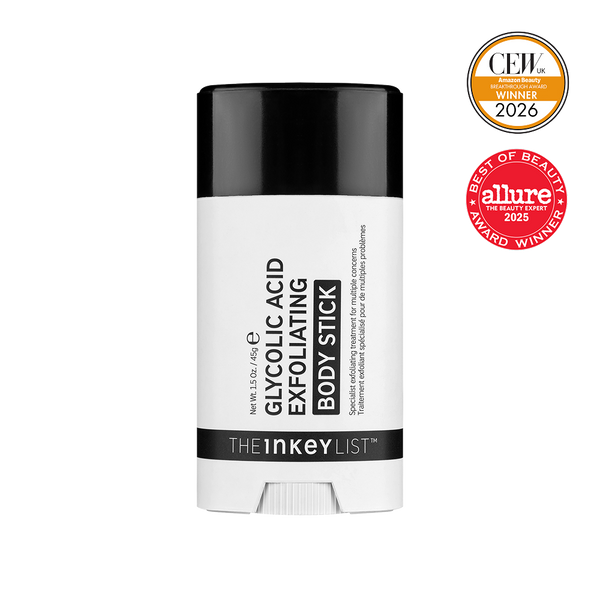
Pairing it with Glycolic Acid Exfoliating Body Stick for targeted concerns
Think of it as two jobs rather than two products competing for the same slot. The PHA cream is your daily all-over maintenance step. The Glycolic Acid Exfoliating Body Stick is your targeted step for specific stubborn areas. Different jobs, same routine.
The Body Stick is formulated with three actives working together:
- 7% Glycolic Acid to exfoliate dead skin and smooth rough texture.
- 0.5% Salicylic Acid to help unclog pores and target body breakouts.
- 10% Shea Butter to nourish and soothe.
That combination is deliberately stronger and more focused than the daily cream. It is clinically proven to tackle keratosis pilaris (KP) bumps, ingrown hairs, rough skin and body breakouts in just 7 days*.
Why a stick format. Precision. A stick lets you apply straight onto the specific area that needs it, with no mess, no rinsing, and no product wasted across areas that were doing perfectly fine without it. If the backs of your arms need attention and the rest of you does not, a stick gives you a way to treat that difference properly rather than applying a strong acid everywhere by default.
How to use it. AM or PM, applied directly onto clean, dry skin. Start with 2 to 3 times per week and build up to daily if your skin tolerates it comfortably. There is no advantage to rushing that ramp-up.
The pairing rule that actually matters. Use the Body Stick on your target areas, and the PHA Body Water Cream on everything else. Do not layer both exfoliants onto the same area on the same day. That is the single most useful practical instruction in this section, so it is worth repeating in different words. They divide the map between them. The stick takes the specific spots, the cream takes the rest. They do not overlap.
Because both products are exfoliating acids, the sun guidance applies to any exposed area you have applied either to. Wear SPF on exposed skin and limit direct sun exposure. Standard practice, but easy to forget on the body in a way people rarely forget on the face.
And one honest note to finish, because it would be easy to skip. Most people do not need both. If your body skin simply needs smoothing and hydrating across the board, and you do not have specific stubborn areas you are trying to address, the cream on its own is the complete routine. Adding a second exfoliant to a routine that does not require one gives you more to remember and no additional benefit. Buy the second product when you have the specific problem it solves, not before.
That covers the two exfoliating steps. Here is how they sit inside the wider picture.
Build your full body routine
The framework is genuinely simple. Exfoliate and hydrate daily, all over, in one step. Then target specific areas as and when they need it.
That is the entire structure. Everything else is a variation on it depending on what your skin is dealing with.
If underarm care and discolouration are on your mind, we have covered how glycolic acid works in that particular area and what to expect from it.
If you are after smoother, bump-free looking skin on your arms and legs, our guide to saying goodbye to strawberry skin goes into what causes that appearance and how to approach it.
And if KP bumps or ingrown hairs are your main concern, both have dedicated guides that go considerably deeper than we can here.
You can browse the full line-up across all body care if you want to see how the range fits together.
Whichever route you take, the thing that determines your result is not which products you own. It is whether the simple daily step actually happens. Consistency is what delivers.
The takeaway
Body skin is thicker than facial skin, produces less oil, and renews more slowly. That means moisturiser on its own leaves dead skin cells sitting on the surface, which is why dry, rough, dull and uneven texture keeps coming back no matter how much cream you apply. Adding a chemical exfoliant for body skin is what actually changes the result.
The best part is that this does not have to be an extra step. It is a better version of a step already in your routine. Exfoliation and hydration in one application, no rinsing, nothing added to your morning or evening beyond what you were already doing.
What you can expect is smoother, brighter and more even-looking skin with consistent daily use. Not an overnight transformation, and we would not tell you otherwise. Just steady, visible progress from a step that takes no longer than the one it replaces.
Because at The INKEY List, We Give A Care.
Ready to start? Add PHA Body Water Cream as your daily all-over exfoliating and hydrating step, and reach for the Glycolic Acid Exfoliating Body Stick when you have specific areas that need something more targeted. You can explore the full range over in all body care. And if you are not sure where to start, our askINKEY advisors are on live chat to talk it through with you.
\4-week clinical trial of 21 people*
\*4-week consumer study of 100 people*
Frequently Asked Questions
Got a question?
Our askINKEY team are a friendly bunch of skincare experts with deep product knowledge and zero judgement. Whether you're an ingredient obsessive or just starting out, we'll make it make sense. No question too big. No question too small. We Give A Care, Every Day.


