



Is Niacinamide the Same as Niacin? Vitamin B3 Explained
Niacin, niacinamide and nicotinamide all come from vitamin B3, but they are not interchangeable - here is what each one does for your skin.
Author
askINKEY skincare advisor
Published
20 August, 2026
Time to read
13 minutes
No, niacinamide and niacin are not the same thing. They are two different molecules from the same vitamin family, vitamin B3. That is the short answer to the niacinamide vs niacin question, and everything below explains why the distinction actually matters for your skin.
There is a third name in circulation too, and in the UK you will meet it constantly: nicotinamide. If you have been searching nicotinamide vs niacinamide and getting conflicting answers, here is the clean version. Nicotinamide and niacinamide are two names for exactly the same molecule. Nicotinamide is the term UK dermatologists, pharmacists and medical literature tend to use. Niacinamide is the term you see on skincare packaging.
So you are dealing with three names but only two molecules. Niacin is one. Niacinamide, also called nicotinamide, is the other.
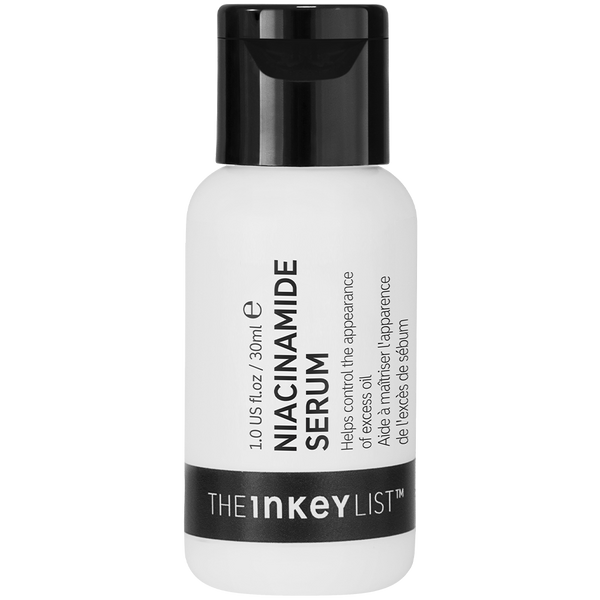
This article covers the molecular difference between them, why niacin causes flushing and niacinamide does not, why skincare formulators reach for niacinamide almost every time, and how to actually use it in a routine. If you want the ingredient deep-dive rather than the comparison, we have what niacinamide is and what it does covering that separately, and our 10% Niacinamide Serum (£12) is the product most of this article is quietly about.
Right. Short answer delivered. Here is the fuller version for anyone who wants the actual chemistry.
The Short Answer: Niacinamide vs Niacin
If you only read one section, read this one.
- Both are vitamin B3. They sit in the same family and your body converts both into the same downstream coenzymes.
- They are two different molecules. Niacin is also called nicotinic acid. Niacinamide is also called nicotinamide.
- Only niacin causes flushing. That hot, red, tingling reaction across the face and chest is a niacin thing. Niacinamide does not do it.
- Skincare uses niacinamide. Supplements more often use niacin.
- Both convert to NAD and NADP, the coenzymes your cells rely on for energy and repair processes.
That last point is why they get lumped together so often, and it is a fair reason. Nutritionally, both forms feed the same essential pathway. But the route each one takes to get there, and what it does to your skin along the way, is where they separate. The naming equivalence is well established in dermatological references, and DermNet’s overview of nicotinamide confirms the same molecule sits behind both names.
Knowing they are different is one thing. Understanding what “different” means at molecular level is what makes the rest of this make sense.
Both Are Vitamin B3, So What Is the Difference?
Vitamin B3 is a family name, not a single substance. Think of it the way you might think of “citrus”. Useful as a category, not specific enough to tell you what you are actually holding.
Two members of that family matter here. Nicotinic acid, which everyone calls niacin. And nicotinamide, which skincare calls niacinamide.
Both are built on the same core structure: a pyridine ring, which is a six-sided ring of atoms with a nitrogen in it. Identical in both molecules. The difference is what is attached to that ring at one specific spot, known as the 3-position.
Niacin (nicotinic acid)
- Carries a carboxyl group at the 3-position, written as -COOH.
- That acid group is what makes it behave the way it does in the body.
- It is the form you will most often find in supplements.
Niacinamide (nicotinamide)
- Carries an amide group at the same 3-position, written as -CONH2.
- Same ring, different attachment.
- It is the form you will almost always find in skincare.
One swap, on one position, on an otherwise identical molecule. It sounds like a technicality. It is not.
Here is why. The shape of a molecule determines which receptors it can bind to, in much the same way the shape of a key determines which locks it opens. Change the shape of the key slightly and it stops fitting one of the locks. It might still open others perfectly well, but that one door stays shut.
That is the whole story of the niacin flush, and we will pay it off properly in a moment.
Niacin = nicotinic acid. Niacinamide = nicotinamide. Three names, two molecules.
Nicotinamide vs niacinamide: sorting the names out
This is the bit that trips up UK readers specifically, and it is worth being blunt about.
Nicotinamide and niacinamide are the same ingredient. There is no difference in the molecule, no difference in what it does, no difference in quality or strength. The two words are simply different naming conventions that grew up in different places.
“Nicotinamide” is the term you will see in UK and European dermatology and pharmacology. It is what a dermatologist writes, what appears in clinical literature, and what you will find in patient information from bodies like the British Association of Dermatologists. “Niacinamide” is the term used on cosmetic packaging and ingredient lists, driven largely by international ingredient naming standards.
Same molecule. Different room, different vocabulary.
One more thing worth clearing up, because it comes up more often than you would think. Neither niacin nor niacinamide has anything to do with nicotine. The names share a root for historical reasons connected to early chemistry, not because there is any nicotine in your serum. There is not.
And to close the loop on the science: both niacin and niacinamide convert into NAD and NADP in the body. These are coenzymes, meaning helper molecules that enzymes need in order to do their jobs. Cells use them constantly for energy production and repair processes. If you want a full breakdown of niacinamide and how it works once it gets into skin, that lives on our pillar page.
With the two molecules properly separated, it is worth looking at what niacin itself actually does, because it deserves a fair hearing.
Niacin (Nicotinic Acid) Explained
Niacin is an essential nutrient. Essential in the technical sense: your body cannot make enough of it on its own, so it has to come from your diet.
You get it from a fairly ordinary range of foods:
- Meat and poultry
- Fish
- Wholegrains
- Legumes, including beans and lentils
- Fortified foods, where it has been added during manufacturing
Once it is in your system, niacin converts to NAD and NADP, the same coenzymes we mentioned earlier. Those support energy production at cellular level and play a role in cell repair. This is unglamorous, foundational biology, and it is happening in every cell you have, constantly.
Niacin also has a property that niacinamide does not share. At certain doses it has lipid-modifying effects, including raising HDL. This is a genuine functional divergence between the two molecules rather than a technical footnote, and it is the reason niacin appears in contexts that niacinamide never does. The NIH Office of Dietary Supplements niacin fact sheet is the reference point for niacin’s dietary and supplemental role if you want to read further.
We are stating that as a fact about the molecule, not as advice. We are a skincare brand. Anything involving supplements, dosages or what you should be taking is a conversation for your GP or pharmacist, and that is not us being cagey, it is us staying in our lane.
Which brings us to the reason most people have heard of niacin at all.
Niacin is the form most commonly found in supplements. That single fact is responsible for a huge amount of the confusion between the two ingredients. Someone sees niacin listed on a bottle, sees niacinamide listed on a serum, notices both are described as vitamin B3, and reasonably concludes they are the same thing arriving in two formats. It is a sensible assumption. It is just not correct.
And niacin’s defining characteristic, at least for the purposes of this article, is that at higher doses it causes flushing. Not everyone experiences it to the same degree, but it is common enough and distinctive enough to have earned its own name.
So let us unpack exactly what is happening when that occurs, because the mechanism explains everything else.
Why Niacin Causes Flushing and Niacinamide Does Not
First, what the flush actually feels like.
It typically shows up as redness, warmth and tingling, sometimes with itching, spread across the face, neck and chest. It comes on relatively quickly and it fades on its own. It is visible and it can be genuinely uncomfortable. It is also, in general terms, harmless and temporary.
Now the mechanism, step by step and in plain English:
- Niacin binds to a receptor called GPR109A. Receptors are docking points on the surface of cells. This particular one sits on immune cells found in the skin.
- That binding triggers the release of arachidonic acid. This is a fatty acid that acts as a raw material for signalling molecules.
- Arachidonic acid gets converted into prostaglandins. These are signalling compounds, and among other jobs, some of them tell blood vessels to widen.
- Blood vessels near the skin’s surface dilate. More blood flowing closer to the surface means visible redness and a sensation of heat.
That is the flush. Not an allergic reaction, not damage, not your skin objecting. A receptor gets activated and a predictable chain of events follows. The chain has been mapped in detail, and if you want the primary literature, there is research on the mechanism of niacin-induced flushing covering exactly this pathway.
Here is the payoff, and it connects straight back to the chemistry from earlier.
Niacinamide does not have the carboxyl group required to activate GPR109A. No receptor activation means no vasodilation, which means no flush. The key does not fit that particular lock. That is the entire explanation, and it is why one form of vitamin B3 turns your face red and the other one does not.
On dosage, the NIH Office of Dietary Supplements notes that flushing typically occurs at doses of 30-50mg or more of nicotinic acid. That is a useful number to have, because it makes clear this is a dose-related effect rather than something that happens with any exposure at all.
So will your niacinamide serum make you flush?
No. Applying a niacinamide serum does not cause the niacin flush. The molecule responsible is not present and the receptor involved is not being activated.
That said, skin can go red after a new product for entirely different reasons, and it is worth knowing the difference so you can read your own skin accurately.
Flushing and irritation are not the same thing. Flushing is receptor-driven vasodilation caused by nicotinic acid. Irritation is a sensitivity response to a product, an ingredient, or simply too much too soon. Different mechanism, different cause, different fix.
If your skin goes red, tight or stingy after introducing something new, that is a sensitivity or irritation response. It might be the concentration, the frequency, another active in your routine, or your barrier having a difficult week. It is not a niacin flush, because there is no niacin involved.
The practical response to irritation is usually to slow down: reduce frequency, simplify the routine for a few days, and reintroduce gradually. Niacinamide is generally well tolerated, but “generally well tolerated” is not the same as “impossible to overdo”, and we would rather be straight with you about that.
Now that the mechanism is clear, the formulation decision behind every niacinamide product on the shelf becomes fairly obvious.
Why Skincare Uses Niacinamide, Not Niacin
When a formulator is deciding whether an ingredient earns a place in a product, they are working through a shortlist of practical questions. Not marketing questions. Boring, structural ones.
- Is it stable? Will it stay intact in the formula, in the packaging, on a bathroom shelf, over time?
- Is it well tolerated? Can a wide range of skin types use it without significant reaction?
- Is it effective at a sensible use level? Does it do something meaningful at a concentration that is realistic to formulate and comfortable to apply?
- Is it pleasant to use? Does it feel acceptable on skin, or does it compromise the texture of everything it touches?
Niacinamide clears all four. Niacin does not, and the flushing response is the main reason. An ingredient that reliably turns your face red and warm is a difficult proposition for a product you are meant to apply every morning.
Niacinamide is also water-soluble, which makes it genuinely versatile to formulate with. It works in serums, in moisturisers, in cleansers. That flexibility is a large part of why you see it turning up across so many different product types rather than being confined to one format.
Does niacin have skin benefits at all?
Yes, and we would rather answer this honestly than pretend otherwise.
Niacin genuinely matters to skin health as a nutrient. It is essential, it feeds the NAD and NADP pathway that skin cells depend on like every other cell, and severe deficiency has real, documented consequences for skin. None of that is in dispute.
But being important nutritionally and being the right choice for a topical cosmetic product are two separate questions. As a topical ingredient, niacin is impractical, because the flushing response makes daily application unrealistic for most people. Niacinamide delivers vitamin B3 to skin without that trade-off.
So the honest position is not “niacin is useless”. It is “niacin is valuable, and niacinamide is the practical topical form”. Those are different statements and only one of them is true.
If you want to verify any of this yourself, the ingredients list is where to look. INCI, the international naming standard used on cosmetic packaging, is a legal requirement rather than a courtesy, and it means the same ingredient is named consistently across products. On an ingredients list, you will typically see it written as niacinamide.
You will find it at different levels across our range depending on what a product is for. Our 10% Niacinamide Serum(£12) is the dedicated option, where niacinamide is the whole point of the formula. Our Omega Water Cream (£14) takes a different approach, pairing 5% niacinamide with a ceramide complex in a lightweight moisturiser, so you get the ingredient as part of a hydrating step rather than as a standalone treat-and-target product.
That covers topical. But plenty of people arrive at this question wondering whether they should be taking vitamin B3 orally as well, so let us address that directly.
Oral Vitamin B3 vs Topical Niacinamide, and What Niacinamide Does for Skin
Oral vitamin B3 supports your whole body. It goes into general circulation and feeds the same essential pathways everywhere, skin included, but not preferentially. Topical niacinamide is applied exactly where you want it to work and is formulated specifically for skin. The two are not interchangeable, and for a skincare concern, topical is the relevant route.
Anything supplement-related, including whether you need one, is a conversation for your GP or pharmacist.
Applied topically and used consistently, niacinamide is one of the more versatile ingredients available:
- Helps control excess oil
- Supports the look of visible pores
- Helps reduce the appearance of redness
- Supports an even-looking tone
- Supports the skin barrier
Each of those deserves more than a line, which is exactly why they have their own homes. Start with what niacinamide is and how it works for the full picture. If tone is your focus, read niacinamide for hyperpigmentation, dark spots and brightening. If your skin runs dry, is niacinamide good for dry skin answers the question properly. And if congestion and breakouts are the reason you are here, does niacinamide help with blemishes is the one to read.
That is the what. Here is the how.
How to Use Niacinamide and Choose Your Strength
Niacinamide is one of the easier actives to slot into a routine, and it does not demand much choreography.
- Cleanse. Start on clean skin so nothing is sitting between the serum and your face.
- Apply your niacinamide serum. A few drops, pressed or smoothed over the face while skin is still slightly damp.
- Moisturise. Seal everything in and support the barrier.
You can use it in the morning, in the evening, or both. It does not require a particular time of day to work.
Layering is the most common follow-up worry, and the short version is that niacinamide plays well with most things. Rather than relitigate the two biggest questions here, we have answered them in full: can you use niacinamide with retinol and can you use niacinamide and vitamin C together. For general routine placement, how and when to use niacinamide goes deeper.
Which strength should you choose?
More is not automatically better. This is worth saying plainly, because percentage numbers on packaging invite the assumption that a bigger number is a better product, and that is not how actives work.
Here is a sensible ladder:
- New to niacinamide, or targeting a mix of concerns: our 10% Niacinamide Serum (£12). This suits most people and most concerns, and it is the right starting point for the vast majority of routines.
- Specifically targeting excess oil and shine: our 20% Niacinamide Serum, for people who already know their skin tolerates niacinamide well and want a more focused approach.
- Want it built into your moisturiser step: our Omega Water Cream (£14), a lightweight moisturiser with 5% niacinamide and a ceramide complex.
- Need barrier support alongside: our Bio-Active Ceramide Moisturiser (£20), which pairs comfortably with a niacinamide serum underneath.
If you are undecided, you can shop all niacinamide and compare formats rather than percentages.
On expectations, we will be straight with you. Niacinamide is a consistency ingredient, not an overnight one. Use it regularly over several weeks and give your skin time to respond. Skipping it for a fortnight and then using it three times in one day is not a strategy. Steady, unremarkable, daily use is what actually works.
That covers the practicalities. Here are the remaining questions people arrive with.
The Difference, Settled
Niacinamide and niacin belong to the same vitamin family, vitamin B3, but they are two distinct molecules. One carboxyl group swapped for an amide group is the difference between an ingredient that causes flushing and one that does not, and that is precisely why skincare formulates with niacinamide rather than niacin.
And the naming point, one final time, because it is the one that causes the most confusion here in the UK: nicotinamide and niacinamide are the same thing. If your dermatologist says nicotinamide and your serum says niacinamide, you are looking at the same molecule wearing two different labels.
Ready to put it to work? Our 10% Niacinamide Serum (£12) is the everyday starting point, and you can find it right here: our 10% Niacinamide Serum. If you would rather browse the full range of formats and strengths first, explore niacinamide and pick what fits your routine.
Because at The INKEY List, We Give A Care.
Frequently Asked Questions
Got a question?
Our askINKEY team are a friendly bunch of skincare experts with deep product knowledge and zero judgement. Whether you're an ingredient obsessive or just starting out, we'll make it make sense. No question too big. No question too small. We Give A Care, Every Day.


