



Is Niacinamide Good for Dry Skin? Benefits & How to Use
Niacinamide isn’t just for oily skin, here’s how it rebuilds ceramides, strengthens a dry skin barrier, and exactly how to layer it for lasting hydration.
Author
askINKEY skincare advisor
Published
17 May, 2026
Time to read
8 min
Yes, niacinamide is good for dry skin. It is suitable for dry skin, dehydrated skin and skin that happens to be both at once, and it is not an ingredient you need to avoid because your skin feels tight or flaky.
Somewhere along the way, niacinamide picked up a reputation as an oily skin ingredient. That label is not wrong, but it is incomplete, and it has left a lot of people with dry skin skipping something their barrier would genuinely benefit from. The short version of why it works: niacinamide supports your skin’s natural production of ceramides, helps strengthen the skin barrier and helps reduce the water your skin loses through the day.
Below we cover what niacinamide actually is, how it supports your barrier, the difference between dry and dehydrated skin, how to pair it with hyaluronic acid, and exactly how to layer it morning and night. If you want the full ingredient deep dive first, start with what niacinamide is and everything it does.
What Niacinamide Actually Is, and Why It Suits Dry Skin
Niacinamide is a form of vitamin B3. It is water-soluble, which means it dissolves in water rather than oil, and your skin can put it to work directly rather than having to convert it into something else first. That is the whole chemistry lesson. If you want the complete breakdown of every benefit it offers, our full niacinamide guide is the place to go.
What matters more here is the type of ingredient it is. Niacinamide is a multi-tasker rather than a single-concern active. It is not one of those ingredients that does one job for one skin type and nothing for anybody else. It works across a range of concerns at once, which is precisely why it turns up in so many formulas and why it has become one of the most widely used ingredients in skincare.
It is best known for helping to control excess oil. That is its most visible effect, its most photographed effect and, frankly, its most marketed one. Which is exactly how the myth took hold.
Why Niacinamide Is Not Just for Oily Skin
Oil control is easy to see. You notice shine disappearing from your T-zone by lunchtime. You do not notice, in the same immediate way, that your barrier is quietly getting better at holding onto water. So the visible benefit became the headline benefit, niacinamide got filed under oily skin, and everyone with dry skin scrolled past. If oil control is your main concern, our full guide to oily skin covers that side of things properly.
But here is the distinction that matters, and it is the one most people miss. Balancing oil is not the same as drying skin out.
Helping your skin regulate how much oil it produces is a completely different mechanism from stripping moisture out of it. Niacinamide does not remove moisture from your skin. It does not dehydrate you. It is not an astringent, it is not a stripping agent, and it does not work by drying anything up.
In fact, the same properties that help regulate oil also support your skin’s barrier and help it hold onto water. That second half of the job description is exactly what dry skin is short of. Niacinamide for dry skin is not a workaround or a compromise, it is the ingredient doing the other thing it has always done, just for a different reason.
So let us be clear about it. If you have dry skin, niacinamide is not an ingredient you need to avoid. If you want more detail on timing and frequency specifically, we cover how and when to use niacinamide separately.
Understanding that niacinamide supports rather than strips is the first step. The second is understanding the mechanism that makes it genuinely valuable for dry skin, which comes down to ceramides.
How Niacinamide Supports Ceramide Production and Your Skin Barrier
Picture the surface of your skin as a brick wall. Your skin cells are the bricks. The lipids between them, including ceramides, are the mortar holding the whole structure together. Ceramides make up a significant portion of that mortar, and their job is to keep the wall sealed.
When ceramide levels drop, the mortar thins. Gaps open up between the bricks. Two things then happen at once, and neither is good. Moisture escapes more easily from the inside out, and irritants get in more easily from the outside in.
That is not an abstract problem. It is the direct cause of what you actually see and feel. Dryness. Tightness, especially after cleansing. Flaking. Patches that will not smooth out no matter how much moisturiser you apply. Skin that suddenly reacts to products it was fine with a month ago. Those are all symptoms of the same underlying issue, which is a barrier that has lost some of its mortar.
This is where niacinamide earns its place in a dry skin routine. Niacinamide helps support your skin’s own natural production of ceramides and other barrier lipids.
That distinction is the whole argument of this article, so it is worth slowing down on. Most hydrating products work by sitting on top of your skin and either adding moisture or reducing how much escapes. That is useful and there is nothing wrong with it. But niacinamide works differently. Rather than only topping up the mortar from the outside, it helps your skin get better at making its own. You are supporting the wall’s ability to maintain itself.
The practical payoff is straightforward. A stronger barrier holds water more effectively. Skin that holds water more effectively stays hydrated for longer between applications. You are not chasing comfort every three hours, because your skin is doing more of the work itself.
It also helps to know what depletes ceramides in the first place, because a lot of it is avoidable. Ceramide levels naturally decline as we get older, which nobody can do much about. But they are also affected by cold weather, central heating, very hot showers, harsh cleansers and over-cleansing. If your skin is noticeably worse in January than in June, or worse since you started washing your face twice with a foaming cleanser, that is your barrier telling you something.
If you suspect your barrier is already compromised rather than just a bit dry, that needs a slightly different approach and a bit more patience. We have a dedicated guide to a damaged skin barrier that walks through it properly. And because dry, barrier-compromised skin is so often sensitive skin too, it is worth reading how to hydrate sensitive skin without causing irritation if products have started stinging.
Once you understand that barrier strength and water loss are directly linked, there is a distinction worth getting right, because most people get it wrong.
Dry vs Dehydrated Skin: What’s the Difference?
These two words get used interchangeably constantly, and they are not the same thing. Getting this right changes what you reach for.
Dry skin lacks oil.
- It is a skin type, not a temporary state
- It tends to be a long-term characteristic of your skin
- It often feels rough, tight or flaky
- It can show visible dry patches, particularly around the cheeks, nose and anywhere the skin is thinner
- It is caused by your skin producing less oil than it needs to stay comfortable
Dehydrated skin lacks water.
- It is a condition, not a type, which means it is temporary and changeable
- It can happen to any skin type, including oily skin
- It often looks dull and flat, with less bounce than usual
- It feels tight, sometimes even when it looks fine
- Fine lines can appear more pronounced than they normally do
Here is the part that causes the confusion. You can absolutely be both at once. Dry skin that has also become dehydrated is extremely common, especially in winter, and it is why people end up frustrated when a rich oil-based cream does not fix the dullness or a watery hydrating serum does not fix the flaking. You are solving one half of a two-part problem.
Niacinamide is useful in both cases, which is one of the reasons it is such a practical ingredient to build a routine around. It supports the barrier that holds water in, which helps dehydrated skin, and it supports the lipids that keep skin comfortable and supple, which helps dry skin. You are not choosing a side.
If you want to go deeper on the water side of things specifically, dehydrated skin covers the causes and fixes in full. Still not sure which camp you fall into? These 7 signs your skin is dehydrated you might be missing are a good self-check.
Niacinamide and Water Loss (TEWL) Explained
Transepidermal water loss, usually shortened to TEWL, is the water that naturally evaporates from the surface of your skin throughout the day. It is happening right now, to everyone, constantly.
A small amount of it is completely normal and not something to worry about. The problem starts when the barrier is weakened. Go back to the brick wall for a second. When the mortar thins and gaps open, far more water escapes than should, and the result is skin that feels tight, looks dull and never quite seems to stay comfortable no matter what you put on it.
Because niacinamide supports ceramide production and barrier strength, it helps your skin hold onto more of its own water. It is worth framing that accurately. It is not sealing your skin shut or trapping moisture behind a film. It is helping your skin do a better job of keeping what it already has.
For the full explanation, including what makes TEWL worse and how to measure the difference, read what is TEWL, transepidermal water loss.
And if you have oily skin and have been reading this thinking none of it applies to you, it might. Here is why oily skin gets dehydrated too.
Once you know whether you are short on oil, water or both, the next question is what to pair niacinamide with.
Niacinamide and Hyaluronic Acid: The Pairing for Dry Skin
Let us answer the underlying question first, because it is the one people are really asking. Yes, you can absolutely use niacinamide and hyaluronic acid together. They are complementary, not conflicting. There is no reaction to worry about, no waiting time required between them, and no reason to alternate days.
They also happen to be one of the most sensible combinations you can put on dry skin, and the reason comes down to a clean division of labour.
Hyaluronic acid is a humectant. Humectants attract and hold water, drawing it into the upper layers of the skin. Think of it as the delivery.
Niacinamide supports the barrier so that the water stays there. Think of it as the storage.
One brings water in. The other helps keep it in. Neither is doing the other’s job, which is exactly why they work well side by side rather than competing for the same real estate.
This also explains something a lot of people with very dry skin have experienced without quite understanding why. You apply a hyaluronic acid serum, your skin feels lovely for an hour, and then it feels tight again. It is not that the serum was not working. It is that drawing water into the skin without a strong barrier to hold it means the water escapes again. You filled the bucket, but the bucket has holes in it. Pairing hyaluronic acid with niacinamide addresses both halves.
Glycerin is another humectant doing very similar work, and you will find it quietly present in a huge number of formulas including cleansers and moisturisers. You do not need to seek it out separately, but it is worth knowing what it is doing when you see it on an ingredients list.
Did You Know? Apply hyaluronic acid to damp skin, not dry skin. Humectants draw in water from whatever is available, so giving them water at the surface to work with makes a real difference to how comfortable your skin feels afterwards. A quick spritz of a face mist before your serum is the easiest way to do this, or simply apply straight after cleansing while your skin is still slightly damp. Just do not let it be dripping wet.
There is a third hydrator worth knowing about if your dry skin is also sensitive or easily irritated. Ectoin is a hydrator that also helps protect the skin against environmental stress, and it tends to be extremely well tolerated, which makes it a useful option when your skin is in a reactive phase. It can be used as an alternative to hyaluronic acid or alongside it. If you are weighing up which one suits you, we compare them directly in ectoin vs hyaluronic acid, what’s the difference.
Knowing what to pair is one thing. Knowing the order to apply it in is what actually makes it work.
How to Layer Niacinamide in a Dry Skin Routine
One principle covers most of this. Apply from thinnest to thickest texture, and always finish the morning with SPF.
AM Routine for Dry Skin
- Cleanse with a gentle, non-stripping cleanser. This step sets the tone for everything that follows. If you strip your skin at the first step, every product afterwards has to work harder just to get you back to neutral.
- Optional: mist or dampen the skin. A quick spritz gives your next step something to work with.
- Apply hyaluronic acid serum to damp skin.
- Apply niacinamide serum. Let it settle for a moment before moving on.
- Apply a barrier-supporting moisturiser to lock the hydration in.
- Finish with SPF. Every morning, all year round, regardless of weather. Our SPF guide explains why this is non-negotiable, including on grey days.
PM Routine for Dry Skin
- Cleanse. If you have worn makeup or SPF, double cleanse with a balm first, then follow with your usual cleanser.
- Apply a hydrating serum to damp skin. Some hydrating serums include peptides such as Matrixyl 3000 for added support.
- Apply niacinamide serum.
- Seal with a richer barrier moisturiser. Evening is when you can afford a heavier texture, since you are not layering makeup or SPF over it.
A note on retinol. If you use retinol, it belongs in your PM routine and it can be layered with niacinamide without any issue. Niacinamide can actually help support the skin while you are using retinol, which is particularly useful if dryness is your main concern. We go through the detail in can you use niacinamide with retinol.
If your skin is dry in places but oily through the T-zone, a lighter oil-free water cream such as Omega Water Cream may suit you better in the morning, though it may not be enough on its own if your skin is very dry, and it is worth understanding why oily skin gets dehydrated too before you adjust anything.
One last piece of advice that applies to everyone. Introduce one new active at a time and give it a few weeks before adding the next. If you add three products at once and your skin reacts, you will have no idea which one caused it. Slow is faster in the long run.
Now for the specific products that fill each of those steps.
Key INKEY Products for Dry Skin
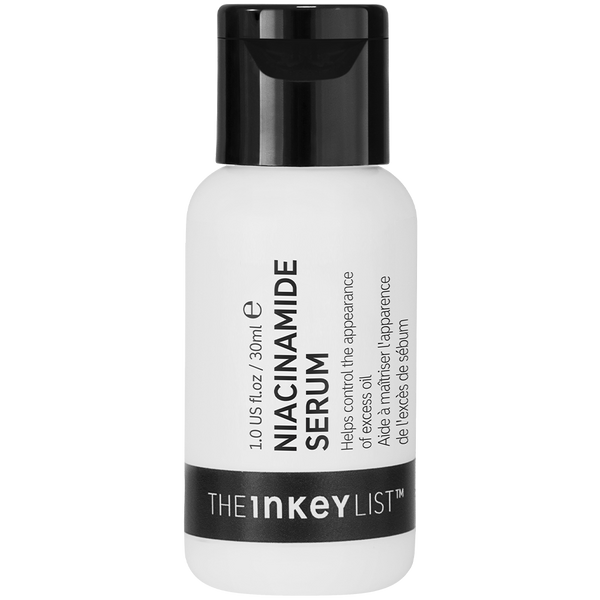
Niacinamide Serum - £12
- 10% Niacinamide plus 1% Hyaluronic Acid
- Helps balance excess oil while supporting the skin barrier
- Helps improve overall skin texture
- The core product for everything discussed in this article
Hyaluronic Acid Serum, 30ml - £12
- 2% pure Hyaluronic Acid at 3 molecular weights, so hydration is delivered at different depths
- Includes Matrixyl 3000 for added support
- Apply to damp skin for best results
Ectoin Hydro-Barrier Serum - £16
- 2% Ectoin, 2.5% multi-molecular Hyaluronic Acid and 1% Barrier Blend containing 3 ceramides
- Clinically proven to hydrate and strengthen the barrier in 15 minutes
- Visibly restores bounce in 3 days
- Visibly improves 5 signs of a compromised skin barrier
- A strong choice if your dry skin is also sensitive or reactive
Clinical study of 31 people. 4-week clinical study of 26 people.
Bio-Active Ceramide Moisturiser - £29
- Clinically proven to repair and strengthen the skin barrier from first use
- Clinically proven to deliver 24-hour hydration
- Up to 4X visible wrinkle reduction versus standard ceramide formulations
- 100% saw a clinical improvement in 6 signs of ageing in 28 days
- The barrier-supporting moisturiser step in both routines above
4-week clinical study of 20 people. 12-week independent clinical study of 30 people for the 4X ceramide comparison.
Oat Cleansing Balm, 150ml - £15
- 5% Oat Kernel Oil
- Clinically proven 12hr hydration
- Clinically proven to reduce skin redness after 4 weeks
- Supports skin barrier function
- Holds the National Eczema Association Seal of Acceptance
- Your first cleanse in the evening if you have worn makeup or SPF
Milk Cleanser, 180ml - £15
- Gentle cream-to-milk texture
- Removes makeup and SPF without stripping
- A good everyday option if foaming cleansers leave your skin feeling tight
Dewy Sunscreen SPF 30 - £15
- Available in the UK
- Hydrating finish rather than a matte one, which suits dry skin
- The final step of every morning routine
How Long Does It Take to See Results?
Honest answer: it depends on which benefit you are waiting for.
Hydration-led benefits arrive fastest. Comfort, softness and skin that stops feeling tight after cleansing can be noticed quickly, sometimes within the first few uses. The Ectoin Hydro-Barrier Serum is clinically proven to hydrate and strengthen the barrier in 15 minutes and to visibly restore bounce in 3 days, and the Bio-Active Ceramide Moisturiser is clinically proven to repair and strengthen the skin barrier from first use.
Barrier support and changes in tone and texture take longer. Those build with consistent use over several weeks rather than days, which is why the studies behind these claims run over 4 weeks and, in one case, 12.
The most useful thing you can do is prioritise consistency over intensity. More product applied more often is not the answer for dry skin, and it can make things worse by overwhelming a barrier that is already struggling. A simple routine you actually follow every day will outperform an elaborate one you follow sporadically.
Results vary from person to person, and your skin will have its own timeline.
Optional Glow Step: Exosome Glow Serum
Entirely optional, and strictly a glow step rather than a barrier one. Exosome Glow Serum - £20 - is 6-in-1 skin rejuvenation: clinically proven to visibly improve radiance, hydration, tone, firmness, elasticity and texture. It delivers clinic worthy rejuvenated skin in 14 days, with 100% saw more glowing skin, clinically proven. It is also proven to deliver up to 12-hours of hydration and helps support natural collagen production. In-vitro testing showed a 55% reduction in visible signs of skin stress (redness, puffiness, visible irritation) and a 63% increase in skin renewal activity in 8 hours.* Learn more about exosomes.
4-week clinical study of 26 people.
Clinical study of 31 people. In-vitro testing of Cica Exosomes showed a 55% reduction in pro-inflammatory markers and a 63% increase in markers associated with skin renewal after 8 hours.
Here are the questions that come up most often once people have their products sorted.
The Verdict on Niacinamide for Dry Skin
Yes, niacinamide is good for dry skin. Three reasons, briefly:
- It supports your skin’s natural ceramide production
- It helps strengthen the skin barrier
- It helps reduce the water your skin loses through the day
Pair it with hyaluronic acid and you give dry skin both things it needs, water drawn in and a barrier strong enough to hold onto it. Then stay consistent. Comfort comes quickly, but the deeper changes build over weeks, not days, and a simple routine followed daily will always beat a complicated one followed occasionally.
Ready to build it? Start with the Niacinamide Serum and the Hyaluronic Acid Serum, and layer them in the order set out above. If you would rather understand the ingredient inside out before you buy anything, our full niacinamide guidehas the complete picture.
Because at The INKEY List, We Give A Care.
Frequently Asked Questions
Got a question?
Our askINKEY team are a friendly bunch of skincare experts with deep product knowledge and zero judgement. Whether you're an ingredient obsessive or just starting out, we'll make it make sense. No question too big. No question too small. We Give A Care, Every Day.


