



Hyaluronic Acid vs. Niacinamide: Which Does Your Skin Need?
Hyaluronic acid hydrates, niacinamide balances. Here is what each one does, which your skin needs, and the right order to layer them.
Author
askINKEY skincare advisor
Published
17 May, 2026
Time to read
17 minutes
Hyaluronic acid and niacinamide are two of the most talked-about ingredients in skincare, and they are constantly set against each other as if you have to pick a side. You do not. This guide covers what each ingredient actually does, who each one suits, how they compare on results and on timelines, whether they can be used together, and the correct order to layer them in a morning and evening routine.
Here is the short version, up front. Hyaluronic acid hydrates. It draws water into the skin and makes it look plumper and smoother almost immediately. Niacinamide balances and clarifies. It regulates oil, calms visible redness, supports the skin barrier and works on the appearance of pores and uneven tone over a period of weeks. They are complementary, not competing. Most people benefit from using both.
Shop the hero products featured in this guide:
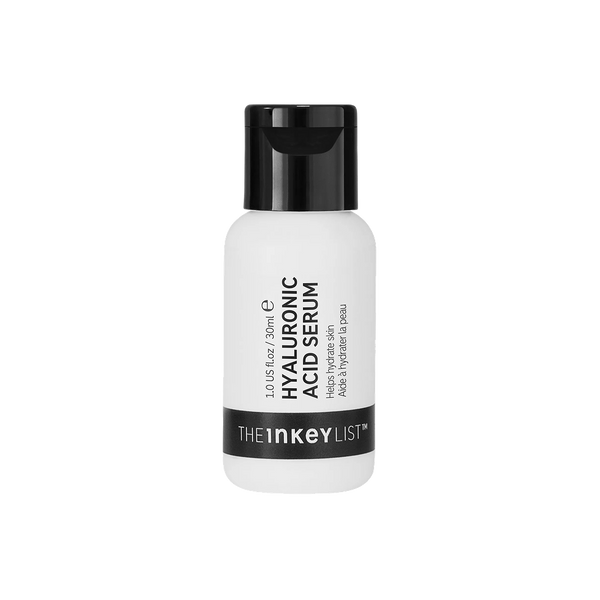
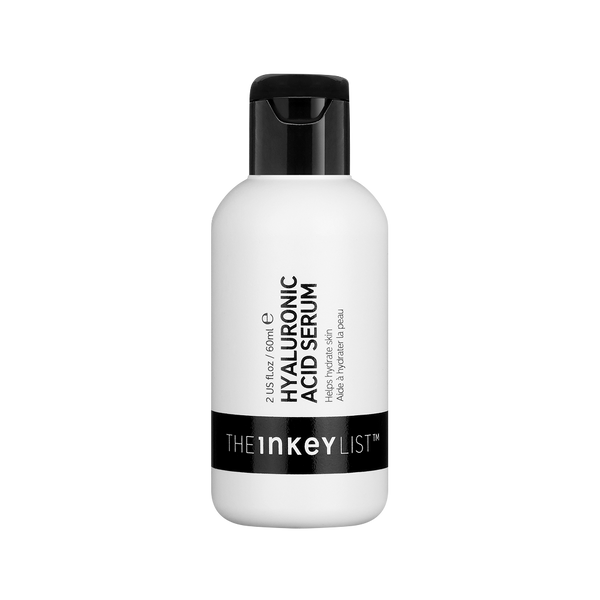
- Hyaluronic Acid Serum - from £12
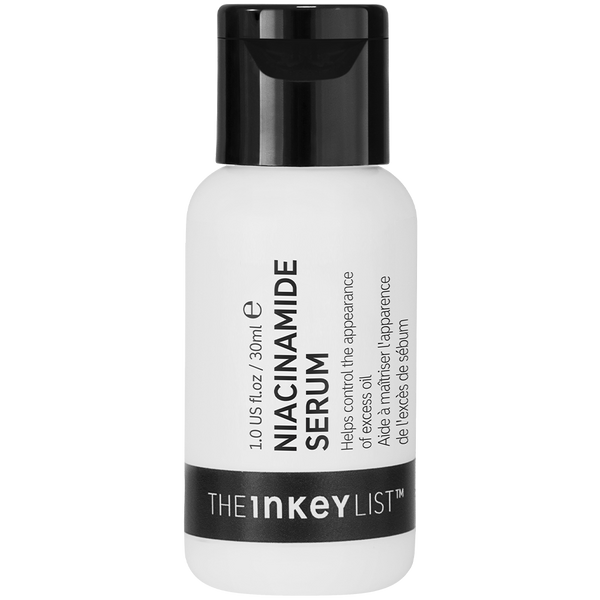
- Niacinamide Serum - £12
- Bio-Active Ceramide Moisturiser - £20
We have also added a full FAQ section at the end of this article, answering the twelve questions we get asked most often about combining these two ingredients. If you are looking for a specific answer about vitamin C, retinol, exfoliating acids or pregnancy safety, skip ahead.
Understanding the difference between these two starts with understanding what each one actually does. So let us begin with hyaluronic acid.
Hyaluronic Acid: The Skin’s Essential Hydrator
Let us clear up the name first, because it causes more confusion than any other ingredient in skincare. Hyaluronic acid contains the word “acid”, which suggests exfoliation, tingling, and the kind of ingredient you introduce cautiously and use twice a week. None of that applies here.
Hyaluronic acid does not exfoliate. It does not resurface, it does not chemically loosen dead skin cells, and it does not carry the sensitivity considerations that come with glycolic or salicylic acid. It is a humectant, which means its job is to attract water molecules and bind them. Hyaluronic acid can hold up to 1,000 times its weight in water. It occurs naturally in your skin already, where it forms part of the structure that keeps skin looking full and cushioned.
That single mechanism is the whole story, and it is worth being precise about it, because the precision is what makes the comparison with niacinamide meaningful.
Hydration is not the same as moisturising
These two words get used interchangeably and they should not be. The distinction matters enormously for how you build a routine.
Hydration is about water content. A humectant like hyaluronic acid pulls water into the upper layers of the skin, either from the atmosphere or from the deeper layers beneath. That is what makes skin look plumped and smoothed within minutes.
Moisturising is about sealing. A moisturiser contains emollients and occlusives that create a barrier over the skin, slowing the rate at which that water evaporates away again. Without that seal, the water hyaluronic acid has drawn in simply leaves.
This is why hyaluronic acid on its own is only half a step. Applying a hydrating serum and then skipping moisturiser is a bit like filling a bath without the plug in. You will get some benefit in the moment and considerably less of it an hour later. Every routine in this article ends with a moisturiser for exactly this reason, and it is the step people skip most often when their skin feels oily.
Why molecular weight matters more than percentage
Not all hyaluronic acid behaves the same way, and the variable that matters is molecular weight.
Larger hyaluronic acid molecules sit on the surface of the skin. They are excellent at delivering that immediate, visible plumping effect and at reducing surface water loss. Smaller molecules are able to travel further into the upper layers, delivering hydration where it is less immediately visible but arguably more useful.
A formula built on a single molecular weight can only do one of those two things. Our Hyaluronic Acid Serum uses 2% Multi-Molecular Hyaluronic Acid at three different molecular weights, so hydration is distributed across multiple layers rather than pooling on the surface. It is a small formulation decision with a disproportionate effect on how hydrated skin actually feels several hours after application, rather than several minutes.
If you want the full breakdown of how hyaluronic acid works, who it suits and how it fits alongside other ingredients, our ingredient guide to hyaluronic acid goes considerably deeper than we will here. This article is about the comparison, so we will keep moving.
The peptide that does the second job
Hydration is the headline, but the serum is not doing only one thing. It also contains Matrixyl 3000 Peptide, which helps to plump, firm and smooth skin. Where hyaluronic acid works on water content, the peptide works on the look of fine lines and supports firmer-looking skin over time.
The two are a natural pairing because dehydrated skin exaggerates the appearance of fine lines. Hydrate the skin and those lines soften immediately. Add a peptide that targets the appearance of firmness and you are addressing the same visual concern from two directions.
Hydration gives you the immediate result. The peptide is working on the longer view. Most people notice the first within minutes and the second across weeks.
We have written a full explainer on what Matrixyl 3000 is if the ingredient is new to you, and a broader guide to peptides more generally if you want to understand where they sit in a routine.
In an independent consumer study of 22 people carried out under dermatological control, 82% agreed their skin felt firmer, smoother and more elastic after four weeks.
The formula is fragrance-free, vegan certified, and safe to use during pregnancy and whilst breastfeeding. It comes in 30ml, 60ml and 100ml sizes, which matters more than it sounds, because hyaluronic acid is a serum most people end up using twice a day, every day, indefinitely.
What hyaluronic acid does not do
This is the part that usually gets left out, and it is the part that makes the rest of this article useful.
Hyaluronic acid does not control oil. It will not reduce how much sebum your skin produces, and it will not make an oily T-zone less shiny by mid-afternoon.
It does not reduce blemishes. It has no effect on the factors behind breakouts and it will not calm an active spot.
It does not even out skin tone. It has no action on pigment, so it will not fade post-blemish marks or address uneven colour.
It does not refine the appearance of pores. Well-hydrated skin can look smoother overall, but hyaluronic acid is not working on pore appearance directly.
None of that is a criticism. It is a specialist ingredient that does one job extremely well. But it does explain why so many people use hyaluronic acid faithfully, see genuinely hydrated skin, and still feel that something is missing. If your concerns are oil, blemishes, tone or pores, you are asking a humectant to do work it was never designed for.
Dehydrated skin and dry skin are not the same thing
One more distinction, because it changes what you should buy.
Dry skin is a skin type. It means your skin does not produce much oil. It is usually lifelong, it tends to feel tight and rough, it can flake, and it typically needs richer moisturisers and occlusive ingredients to compensate for the lipids it is not making.
Dehydrated skin is a condition. It means your skin is short of water, not oil. It can happen to any skin type, including very oily skin, and it is often temporary, brought on by weather, central heating, air travel, over-cleansing or overuse of strong actives. It looks dull, feels tight even when there is visible oil present, and fine lines appear more pronounced.
Hyaluronic acid is the correct answer for dehydrated skin specifically. For genuinely dry skin, hyaluronic acid still helps, but it needs to be paired with a moisturiser that replaces the lipids the skin is not producing on its own. Getting this distinction right is the difference between a routine that works and one that quietly underperforms for months.
So hyaluronic acid works through one focused mechanism, executed well. Niacinamide takes the opposite approach entirely, doing several different things at once.
Niacinamide: The Skin’s Multi-Tasking Active
If hyaluronic acid is a specialist, niacinamide is a generalist. It is a water-soluble form of Vitamin B3, and it is one of the most well-researched ingredients in skincare, which is part of why it appears in so many formulas across so many price points.
First, a clarification that spares a lot of unnecessary worry. Niacinamide is not niacin. Niacin, taken orally in high doses, can cause the flushing reaction some people associate with vitamin B3. Niacinamide applied topically does not do this. If you have avoided niacinamide because you read something about flushing, that concern does not apply to a serum.
What makes niacinamide unusual is that it is not doing one thing through one pathway. It is doing several things, and the reason it suits so many different people is that most of us have more than one skin concern running at the same time.
Five things niacinamide is doing at once
It regulates oil at the source. Rather than absorbing oil that has already been produced, which is what mattifying powders and clay masks do, niacinamide works at the sebaceous gland to moderate how much oil is produced in the first place. This is why the result is a genuine reduction in shine over time rather than a temporary blotting effect, and why it does not leave skin feeling stripped.
It interrupts uneven pigment transfer. Pigment is produced by melanocytes and then transferred up into the surrounding skin cells, where you see it as a dark mark or patch of uneven colour. Niacinamide interferes with that transfer step. It is not bleaching anything and it is not exfoliating pigment away. It is reducing how much pigment gets deposited where you can see it, which is why the effect is gradual and why it works particularly well on the marks left behind after a blemish has healed.
It calms visible redness. Skin that looks reactive, flushed or generally irritable often responds well to niacinamide. This is one of the reasons it suits sensitive skin despite being an active ingredient, which is a combination that does not come along often.
It supports the skin’s own ceramide production. This one is underrated. Ceramides are lipids that make up a significant portion of the skin barrier, the structure that holds moisture in and keeps irritants out. Niacinamide supports your skin’s ability to produce them itself. A stronger barrier means less water loss, less sensitivity, and better tolerance of every other active you use. If your barrier is compromised, nothing else in your routine performs properly. Our guides to ceramides and to repairing a damaged skin barrier cover this in detail, and it is worth reading if your skin has been stinging at products it used to tolerate.
It reduces the look of enlarged pores over time. Pore size is largely genetic and no topical product changes it. What does change is how visible pores appear, which is influenced by how much oil is sitting in them and how firm the surrounding skin looks. Niacinamide works on both, which is why pore appearance improves gradually rather than overnight.
Those five actions overlap in useful ways. Less oil means less congestion means fewer blemishes means fewer post-blemish marks. A stronger barrier means less redness means better tolerance means you can keep using the product long enough to see the slower benefits. It compounds.
Inside our 10% Niacinamide Serum
Our Niacinamide Serum is formulated at 10% niacinamide, at a pH of 6.09, and it contains 1% Hyaluronic Acidalongside the niacinamide. That last detail is going to become relevant later in this article, so hold onto it.
It is fragrance-free, and it is safe to use during pregnancy and whilst breastfeeding. It comes in a 30ml size and a 30ml Duo.
One point of transparency, because we would rather you heard it from us than discovered it at checkout. The 10% Niacinamide Serum is not vegan certified. It contains a single egg-derived phospholipid. If you need a vegan-certified niacinamide, our 20% Niacinamide Serum is vegan. We would rather tell you plainly than let you find out after you have bought it.
For practical guidance on where niacinamide sits in a routine and how often to use it, our guide on how and when to use niacinamide is the natural companion to this article. And if you want the full ingredient breakdown, our niacinamide page covers benefits and product selection in depth.
A realistic timeline, because this matters
The single most common reason people abandon niacinamide is that they expected it to behave like hyaluronic acid. It does not. Hyaluronic acid gives you something to see within minutes. Niacinamide gives you almost nothing to see in week one, and then delivers steadily if you stay with it.
Here is what to actually expect:
- Oil control: one to two weeks. This is the fastest visible change. Skin looks less shiny by the afternoon and makeup sits better for longer.
- Fewer breakouts: three to four weeks. As oil production settles, congestion tends to reduce with it.
- Visible pore refinement: six to eight weeks. Slower, because it depends on the cumulative effect of reduced oil and improved skin quality around the pore.
- More even skin tone: six to eight weeks. Pigment work is always the longest game in skincare, because you are waiting for existing pigment to fade whilst preventing new deposits.
Niacinamide is not a fast ingredient. It is a reliable one. The people who get the best results from it are the ones who stopped checking after week two.
Set expectations at six to eight weeks for the tone and pore benefits, use it consistently morning and evening, and judge it then. Judging it at day ten is judging it before it has done anything measurable.
With both ingredients properly defined, it becomes much easier to see why framing them as rivals misses the point entirely.
Hyaluronic Acid and Niacinamide: The Key Differences Explained
The comparison between hyaluronic acid and niacinamide is usually framed as a choice. It should not be. These two ingredients are not competing for the same job, and comparing them on quality is a bit like comparing a coat to an umbrella. They both help in bad weather. They are not interchangeable.
The genuinely useful comparison is not “which is better” but “what is each one for, and which of those jobs do I need doing”.
What hyaluronic acid does best
Hyaluronic acid owns hydration and immediate visual improvement. It is the ingredient to reach for when skin feels tight, looks dull, or has that papery quality that makes fine lines more obvious than they were last month.
Its strengths in short:
- Immediate plumping and smoothing, visible from the very first application
- Relief from tightness and that flat, dehydrated look
- Softening the appearance of fine lines caused or exaggerated by lack of water
- Making the skin a more comfortable environment for every other active in the routine
Its defining characteristic is speed. You will see something the first time you use it. That is unusual in skincare, and it is a large part of why hyaluronic acid is so many people’s first serum.
What niacinamide does best
Niacinamide owns oil, clarity and tone. It is the ingredient for the concerns that show up repeatedly rather than the ones that show up occasionally.
Its strengths in short:
- Regulating oil production so shine reduces over the course of the day
- Calming the look of blemish-prone skin and reducing congestion over time
- Fading the appearance of post-blemish marks
- Supporting the barrier so skin becomes less reactive
- Refining how visible pores appear
Its defining characteristic is accumulation. Nothing dramatic happens quickly. Quite a lot happens by week eight.
The timeline difference is the most useful distinction
If you take one practical thing from this comparison, take this. These two ingredients run on completely different clocks, and confusing the two clocks is how people end up disappointed in a perfectly good product.
Hyaluronic acid is immediate and maintained. It works from the first use and it keeps working as long as you keep using it, but it does not build. Day sixty is much like day one.
Niacinamide is progressive and cumulative. It builds. Day sixty is meaningfully different from day one, and the difference between the two is entirely down to consistency.
Neither model is superior. They are simply different, and knowing which you have bought tells you when to judge it. If you have used hyaluronic acid for a fortnight and your skin still feels tight by lunchtime, something is wrong, most likely a missing moisturiser. If you have used niacinamide for a fortnight and your skin tone has not changed, nothing is wrong at all. You are four to six weeks early.
How each one feels on the skin
The sensory difference is real and worth knowing before you buy.
Hyaluronic acid feels dewy. Skin looks fuller and slightly luminous straight after application. Some people love this. Those with very oily skin sometimes find it too much on its own in summer, which is easily solved by following with a lighter, oil-free moisturiser rather than by skipping the serum.
Niacinamide feels balanced. There is very little immediate sensory event. Over several weeks, skin gradually looks less shiny and more even in texture. It is a quieter experience, and it is the one people notice in photographs rather than in the mirror.
What they have in common
For all their differences, these two have more overlap than the “versus” framing suggests:
- Both are water-soluble, which is why they layer together without difficulty
- Both of our formulas are fragrance-free
- Both are generally suitable for sensitive skin, niacinamide unusually so for an active
- Both are safe to use during pregnancy and whilst breastfeeding
- Both can be used morning and evening, every day
- Neither requires cycling, tolerance-building or alternate-day use
That shared profile is precisely why they combine so easily, which we will come to shortly.
One sensible caveat regardless of how gentle an ingredient is. If you are introducing both at the same time and something reacts, you will have no way of knowing which one caused it. Introduce one, give it a week or two, then add the second. And if your skin is reactive, do a patch test before either goes near your face. It costs you two days and saves you a fortnight.
So which is better?
Neither. The question is malformed. Hyaluronic acid is better at hydration. Niacinamide is better at oil, clarity and tone. Ask which concerns you actually have, and the answer resolves itself.
Which brings us to the more personal version of the question.
Which One Does Your Skin Need? Choosing by Skin Type and Concern
The general comparison only gets you so far. What follows is the specific version, organised by skin type and concern, with a clear instruction at the end of each block.
If your skin is dry or dehydrated
Start with hyaluronic acid. This is the most straightforward case in the article.
If your skin feels tight after cleansing, looks dull by the afternoon, or has developed fine lines that seem to appear and disappear depending on the weather, you are short of water. Hyaluronic acid is the correct ingredient and you will see a difference immediately.
Three things determine whether it works properly:
- Apply to damp skin. Not soaking, not dry. Slightly damp, within thirty seconds or so of cleansing. A humectant applied to bone-dry skin in a dry room has less water available to work with.
- Press, do not rub. Press the serum into the skin with your palms. Rubbing a hydrating serum around wastes product and creates friction you do not need.
- Always follow with moisturiser. Non-negotiable. Without a seal, the water you have just drawn in evaporates. Our Bio-Active Ceramide Moisturiser, £20, is the natural partner here, because ceramides address the barrier weakness that often sits underneath persistent dehydration.
Your instruction: Hyaluronic Acid Serum on damp skin, pressed in, followed by a ceramide moisturiser, morning and evening.
If your skin is oily or combination
Niacinamide is your priority. It is the only one of the two that addresses oil at the source rather than managing the symptoms.
Expect the shine reduction within one to two weeks. Expect the pore appearance benefits to take six to eight. Use it twice daily and do not increase the frequency in the hope of speeding it up, because you cannot.
But here is the part that surprises people. Oily skin is very often dehydrated too. Oil and water are different things, and producing plenty of the former tells you nothing about your levels of the latter. In fact, the most common cause of dehydrated oily skin is the routine people build in response to the oil: aggressive foaming cleansers, frequent exfoliation, skipping moisturiser entirely. Strip the barrier and the skin frequently responds by producing more oil, not less. We have written about why oily skin gets dehydrated too, and it covers this pairing directly.
So hyaluronic acid still has a place in an oily routine. It just needs the right partner at the end. Rather than skipping moisturiser, use a lightweight, oil-free one. Our Omega Water Cream is oil-free and non-comedogenic, and it contains 5% Niacinamide alongside an Omega Complex, so it reinforces the same work the serum is doing.
For more on managing oily skin as a whole, our dedicated guide goes further than we can here.
Your instruction: Niacinamide Serum twice daily, Hyaluronic Acid Serum underneath it, and an oil-free moisturiser to finish. Do not skip the last step.
If your skin is blemish-prone
Niacinamide, clearly. It works on several of the factors involved at once: oil production, the appearance of congestion, visible redness around blemishes, and the marks left behind afterwards.
Two reassurances, because both questions come up constantly.
Niacinamide does not cause purging. Purging happens when an ingredient accelerates cell turnover and brings existing congestion to the surface faster than usual. Retinoids and exfoliating acids can do this. Niacinamide does not work that way, so it does not purge.
You can start it during an active breakout. There is no need to wait for clear skin first. Niacinamide is not aggressive, and calming visible redness is one of the things it does well.
Our guides on blemish-prone skin and on whether niacinamide helps with breakouts go further into the detail.
Your instruction: Niacinamide Serum morning and evening, consistently, judged at week four rather than week one.
If your skin is sensitive or reactive
Both are appropriate, introduced one at a time.
This is unusual. Most active ingredients require a conversation about tolerance with sensitive skin. Hyaluronic acid is inert enough that it rarely causes problems, and niacinamide actively supports the barrier whilst calming visible redness, which means it often improves sensitivity rather than provoking it.
The caution is about method, not ingredients. Start with hyaluronic acid for one to two weeks. Then add niacinamide, perhaps evenings only at first, building to twice daily. Both of our formulas are fragrance-free, which removes one of the more common triggers for reactive skin.
Your instruction: Hyaluronic acid first for a fortnight, then introduce niacinamide, evenings first.
If your skin is ageing or mature
This is the clearest case for using both.
Mature skin typically presents several things simultaneously: reduced natural hyaluronic acid content, a slower-repairing barrier, uneven tone accumulated over years, and loss of firmness. That is a mixture of hydration concerns and tone and barrier concerns, which is precisely one job for each ingredient.
Hyaluronic acid restores water content and softens the look of fine lines immediately, whilst the Matrixyl 3000 Peptide in our serum helps to plump, firm and smooth skin. Niacinamide works on tone and barrier resilience over the following weeks.
Your instruction: Both, twice daily, hyaluronic acid first. This is not a case where choosing one makes sense.
If your concern is uneven tone or post-blemish marks
Niacinamide, with realistic expectations.
Niacinamide addresses uneven tone by interrupting pigment transfer, so it reduces new deposits whilst existing marks fade naturally. That is a gradual mechanism and it needs six to eight weeks before you assess it. Photograph your skin at the start in consistent lighting, because gradual change is genuinely difficult to perceive day to day.
Daily SPF is not optional here. Without it, sun exposure continues depositing new pigment faster than niacinamide reduces it, and you will run to stand still.
Our guides on hyperpigmentation and on how to get rid of post-blemish dark marks cover the wider approach.
Your instruction: Niacinamide Serum twice daily, SPF every morning without exception, reassessed at week eight.
One last note on niacinamide and dry skin
There is a persistent assumption that niacinamide is only for oily skin. It is not. Its barrier-supporting action is genuinely useful for dry skin too, because a stronger barrier loses less water. We have addressed this directly in our piece on whether niacinamide is good for dry skin.
Most people reading this will have recognised themselves in more than one block, which raises the obvious question.
Can You Use Niacinamide and Hyaluronic Acid Together?
Yes. Comfortably, daily, in the same routine, morning and evening.
There is no instability between them. No irritation risk from the combination itself. No reduction in the efficacy of either. This is one of the most straightforward pairings in skincare, and the fact that it gets questioned so often says more about how much layering misinformation circulates than about the ingredients.
Why they work together rather than against each other
The reason the combination works is that the two ingredients are solving different problems through different mechanisms, and one of them makes the other more comfortable.
Hyaluronic acid draws water into the upper layers of the skin. Niacinamide then goes to work on oil production, pigment transfer, redness and barrier function. Neither interferes with the other’s mechanism, because they are not operating on the same pathway.
There is also a compounding benefit. Well-hydrated skin tolerates active ingredients more comfortably. When the barrier is functioning properly and water content is where it should be, skin is simply less likely to sting, flush or react. Applying hyaluronic acid first creates a better environment for everything that follows, not just niacinamide.
Think of it as division of labour. Hyaluronic acid creates the conditions. Niacinamide does the work.
The proof is in the formulation
Here is the most persuasive argument we can offer, and it is not really an argument at all.
Our 10% Niacinamide Serum already contains 1% Hyaluronic Acid.
If these two ingredients were incompatible, we could not have put them in the same bottle. Formulators do not combine ingredients that destabilise each other, and no brand puts a conflict into a single formula and sells it. The fact that a mainstream niacinamide serum contains hyaluronic acid as a supporting ingredient is, on its own, the end of the debate.
It also tells you something about why the combination is so common. Niacinamide benefits from being applied to hydrated skin, so including a humectant in the formula is a sensible bit of design rather than a marketing decision.
That said, 1% inside a niacinamide serum is a supporting act, not a hydration strategy. If your skin is dry or dehydrated, you still want a dedicated Hyaluronic Acid Serum underneath it, delivering 2% Multi-Molecular Hyaluronic Acid across three molecular weights. The 1% in the niacinamide formula makes that serum more comfortable. It does not replace it.
The wider layering question
Once people establish that these two combine safely, the follow-up is usually about everything else in the bathroom cabinet. That is a bigger topic than this article, so we will signpost rather than sprawl.
Niacinamide is one of the more agreeable actives to build a routine around. It pairs well with azelaic acid, which we have covered in our guide to azelaic acid and niacinamide, and it sits alongside most other ingredients without difficulty given sensible sequencing. For the combinations that genuinely do require care, our guide to skincare ingredients you should not mix is the place to start. The FAQ at the end of this article also handles vitamin C, retinol and exfoliating acids individually.
An optional step up, if you want more than hydration
For readers whose skin is already well hydrated and who want more than hydration alone, there is a step up worth knowing about.
Our Exosome Glow Serum, £20, contains Hyaluronic Acid and Ectoin, which is why it belongs in this conversation rather than a different one. It sits in the same part of the routine and it is compatible with niacinamide in exactly the same way.
It is described as 6-in-1 skin rejuvenation: clinically proven to visibly improve radiance, hydration, tone, firmness, elasticity, and texture*, and it is proven to deliver up to 12-hours of hydration**.
This is a glow boosting option rather than a replacement for either of the two serums this article is about. If hydration is your concern, the Hyaluronic Acid Serum is the right product at the right price. If oil, blemishes or tone are your concern, the Niacinamide Serum is. The Exosome Glow Serum is for people who have those bases covered and want to go further.
Having established that they work together, the one remaining question is which goes on first.
Should I Use Niacinamide or Hyaluronic Acid First? The Layering Order
Hyaluronic acid first. Niacinamide second.
That is the answer, and it does not change based on skin type, time of day or season.
The principle behind the order
Two reasons, both practical.
Hyaluronic acid needs damp skin. It is a humectant, so it works by attracting and binding water. Apply it to skin that is still slightly damp from cleansing and it has water immediately available to draw in. Apply it last, over other products, on completely dry skin, and it has considerably less to work with. This alone puts it directly after cleansing.
Niacinamide performs better on hydrated skin. It does not have the same damp-skin requirement, and it is comfortable on skin that has a light hydrating layer beneath it. Applying it second means it goes onto skin that is already in good condition.
There is also the general layering rule, which points the same way. Apply water-based products from thinnest to thickest. Both serums are lightweight, but hyaluronic acid is the more fluid of the two.
Your morning routine, in order
- Cleanse, and leave your skin slightly damp. Do not towel dry completely. Pat off the excess and move straight to the next step.
- Hyaluronic Acid Serum. A few drops, pressed into damp skin with your palms. Allow 30 to 60 seconds to absorb. Long enough to sink in, not so long that your skin dries out entirely.
- Niacinamide Serum. A few drops across the whole face, including anywhere prone to congestion. Do not restrict it to problem areas only.
- Bio-Active Ceramide Moisturiser, £20. This seals in everything underneath. Ceramides reinforce the same barrier work the niacinamide is doing from the inside, which makes it a particularly logical partner here.
- SPF. Every morning, all year round. Our Dewy Sunscreen SPF 30 sits comfortably over serums without disturbing them. If you are working on uneven tone, this step is doing as much as the niacinamide is, because unprotected sun exposure deposits new pigment faster than any topical can reduce it. Our guide to what SPF means covers how to choose one.
Your evening routine, in order
- Cleanse. Double cleanse if you have worn SPF or makeup. Leave skin slightly damp.
- Hyaluronic Acid Serum. Same method as the morning. Pressed into damp skin, 30 to 60 seconds to absorb.
- Niacinamide Serum. All over.
- Retinol, if you use one. After your serums, before your moisturiser.
- Bio-Active Ceramide Moisturiser. Overnight is when barrier repair is most active, so this step matters more in the evening than people assume.
Where retinol fits in
Retinol belongs after your water-based serums and before your moisturiser. That sequencing is standard and it does not change when niacinamide is in the routine.
There is a useful interaction here. Applying niacinamide beforehand helps buffer the skin during the adjustment period, when dryness and flaking are most likely. The barrier support niacinamide provides is exactly what skin needs whilst it acclimatises to a retinoid, which is why the two are so frequently recommended together.
If you are new to retinol or want the full picture on strengths, frequency and what to expect, our complete guide to retinol covers it properly. And for the specific combination question, we have written about whether you can use niacinamide with retinol.
Two things to avoid
Do not mix your serums together in your palm. It is tempting, and it saves perhaps twenty seconds. But combining two formulas outside the skin changes the concentration of each and the pH of the mixture, and it makes pilling considerably more likely. Apply them in sequence, with a short pause between. If products have been rolling off your skin in little balls, our guide on how to prevent pilling explains why it happens and how to stop it.
Do not skip moisturiser. This is the single most common routine error we see, and it is most common among people with oily skin, who reason that they do not need it. Hyaluronic acid without a moisturiser on top is an unfinished step, because the water it has attracted simply evaporates. If richness is the concern, use a lighter formula. Do not remove the step.
Two serums and no moisturiser is not a minimal routine. It is an incomplete one.
A handful of specific questions come up over and over. Here they are, answered directly.
Conclusion: The Final Verdict
The question was never really “hyaluronic acid or niacinamide”. It is “what does each one do, and which of those things does my skin need”.
If your skin feels tight, looks dull or reads as dehydrated, hydration is the gap and the Hyaluronic Acid Serum fills it from the first application.
If your concerns are oil, breakouts, pore appearance or uneven tone, the work is cumulative and the Niacinamide Serum is the one to commit to for six to eight weeks.
And if you recognised yourself in both descriptions, which most people do, use both. Hyaluronic acid onto damp skin, niacinamide second, moisturiser to seal it in. Twice a day. That is the whole routine.
What we would rather you took from this than any product recommendation is the underlying point about expectations. One of these ingredients shows you something in minutes and the other shows you something in weeks, and neither is better for it. Most disappointment in skincare is a timing problem wearing the costume of a product problem.
Clinically validated concentrations at £12 should not be remarkable, but for a long time they were. We think knowing what an ingredient does, and what it does not, should be part of what you get when you buy it.
Shop the duo
- Hyaluronic Acid Serum - from £12
- Niacinamide Serum - £12
Not sure where to start? Take the INKEY Skincare Quiz for a personalised routine built around your skin.
Ready to build the full thing? Build Your Own Routine and save up to 20%.
*4-week clinical study of 26 people
**Clinical study of 31 people
*In-vitro testing of Cica Exosomes showed a 55% reduction in pro-inflammatory markers and a 63% increase in markers associated with skin renewal after 8 hours.
Frequently Asked Questions
Got a question?
Our askINKEY team are a friendly bunch of skincare experts with deep product knowledge and zero judgement. Whether you're an ingredient obsessive or just starting out, we'll make it make sense. No question too big. No question too small. We Give A Care, Every Day.


